
Investindo 1,18 bilhão de yuans em um novo projeto! Esta empresa de iluminação está acelerando a criação de uma segunda curva de crescimento
On the evening of July 26, Zhejiang Chenfeng Technology Co., Ltd. (hereinafter referred to as "Chenfeng Technology") announced that the company plans to invest in and construct two major wind power projects with a total investment of approximately RMB 1.18 billion, continuously advancing its new energy layout.
This is another major move by Chenfeng Technology in the field of new energy, following the announcement in May this year of a planned investment of 1.315 billion yuan to build two energy storage power station projects.
1
The announcement shows that the projects to be invested and constructed this time are the Xing'an League Horqin Right Middle Banner 100,000 kW Grid-connected Wind Power Project of Keyouzhongqi Northern Power Grid New Energy Co., Ltd. (hereinafter referred to as the "Keyou Wind Power Project") and the Tongliao City Kailu County 200,000 kW Grid-connected Wind Power Project of Kailu County Northern Power Grid New Energy Co., Ltd. (hereinafter referred to as the "Kailu Wind Power Project").
Specifically, the Keyou Wind Power Project is located in Horqin Right Middle Banner, Xing'an League, Inner Mongolia, with a total investment of 360 million RMB and supporting 1.25MW/5MWh energy storage facilities. The projected after-tax investment return rate is 7.18%. The Kailu Wind Power Project is located in Kailu County, Tongliao City, Inner Mongolia, with supporting construction of a 20MW/10MWh energy storage power station, along with other ancillary facilities such as box-type transformers. The total investment is 820 million RMB, and the projected after-tax return rate is 7.02%. Both projects are scheduled to commence construction on August 15, 2026, with construction periods of 9 months and 11 months, respectively.
The funding for this project comes from self-owned funds and bank loans. Both wind power projects are implemented by wholly-owned indirect subsidiaries.
The company stated that the project is based on the national strategy for sustainable energy development, focuses on clean power supply, and precisely aligns with the market trends of domestic power structure optimization and large-scale development of new energy, with a clear and accurate market positioning. The current development environment for the domestic new energy industry continues to improve, and the project is in line with the overall national plan for energy transition and the construction of a new power system.
Regarding the financial challenges brought by the massive investment, Chenfeng Technology issued a clear risk warning in the announcement. The company stated, "After the launch of the above projects, there will be certain pressure on the company's cash flow in the short term; the company will further increase the coordination of construction funds to ensure that the proposed projects are funded in stages and batches according to the progress."
In addition, Chenfeng Technology also pointed out: "The project may be affected by factors such as the macroeconomic environment, industry policies, market conditions, operational management, and the social environment. There are certain uncertainties and risks regarding future returns."
2
Data shows that Chenfeng Technology has been deeply engaged in the fields of green energy conservation and new energy power services, forming a dual-main-business synergy pattern of "lighting structural component manufacturing + new energy power comprehensive services", with a layout that aligns with the "dual carbon" strategy and the direction of new power system construction.
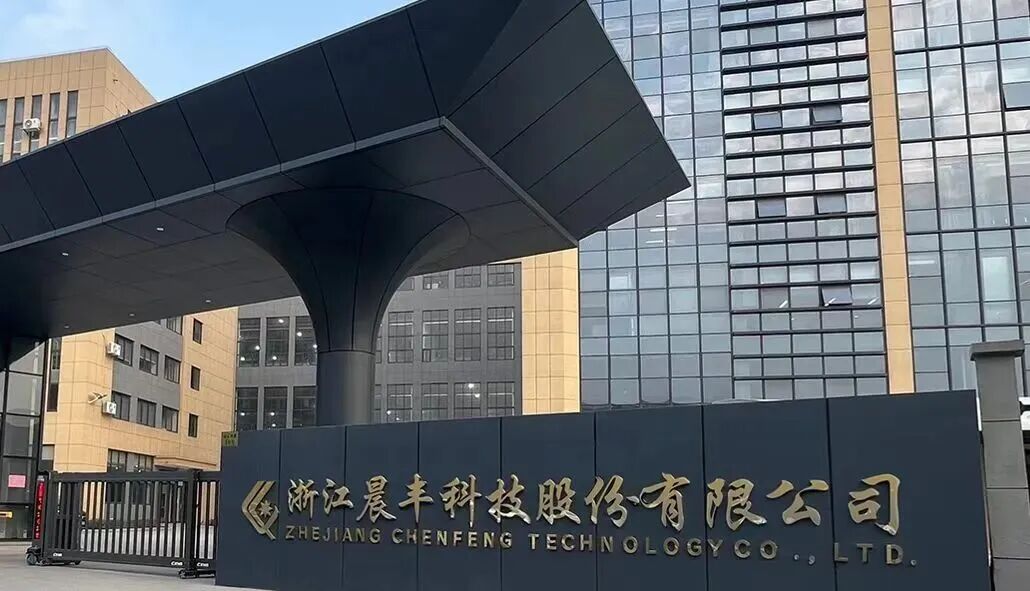
Among them, the lighting business, with over 20 years of accumulation, focuses on the R&D, production, and sales of core structural components for energy-efficient lighting. The new energy business, cultivated as a second growth curve for transformation, covers wind and solar power stations, incremental distribution networks, and integrated new energy generation, distribution, and sales operations. It is reported that since the transfer of control and cross-border entry into the new energy field in 2023, the company has rapidly built a new business landscape through a dual-drive approach of acquisitions and self-construction. The two major sectors complement each other, building an industrial chain of 'energy-efficient product manufacturing + green energy supply'.
"The new energy business is an important strategic direction for the company's future development, and also a key driver for promoting the company's transformation and upgrading, as well as cultivating new growth momentum," said a relevant person in charge of Chenfeng Technology at the performance briefing. As related projects gradually enter the operational stage, the contribution of the new energy business in terms of revenue, profit, and cash flow is continuously increasing.
In the future, the company will continue to focus on the national energy transition and green, low-carbon development direction, actively seize the development opportunities in the new energy industry, adhere to the principles of prudent investment and stable operation, continuously advance project development, construction, and operation management, and continuously improve the quality of project operation and asset return levels.
Chenfeng Technology has been making frequent moves in the new energy sector. As early as May this year, the company disclosed its energy storage investment plan, intending to lay out two independent new energy storage power stations on the grid side, with a total investment of 1.315 billion yuan. Both projects adopt lithium iron phosphate energy storage systems, equipped with 220kV step-up substations, which will help enhance the regional new energy consumption capacity.
By the end of 2025, Chenfeng Technology's holding entity had a total of 11 projects in operation, including 4 grid-connected wind power projects, 2 grid-connected photovoltaic power projects, 1 incremental distribution network project with supporting wind, photovoltaic, and energy storage, and more. The installed capacity of new energy projects completed and put into operation reached 191.17 MW, with an additional 183.81 MW of new energy installed capacity under construction.
In terms of performance, in 2025, Chenfeng Technology achieved a net profit attributable to shareholders of 22.0422 million yuan, a year-on-year increase of 173.96%. Entering 2026, Chenfeng Technology's profitability has further improved, with a net profit attributable to shareholders of 9.9692 million yuan in the first quarter, turning losses into profits year-on-year.
Among them, the new energy business has become an important growth engine for Chenfeng Technology. In 2025, the company's new energy business achieved an annual operating revenue of 236 million yuan, a year-on-year increase of 42.21%, with the revenue share rising to 20.87%. Although the company's overall operating revenue decreased by 10.78% year-on-year to 1.129 billion yuan due to the contraction of the lighting business segment, the strong counter-trend growth of the new energy segment effectively offset the downward pressure on traditional businesses.
3
The transformation of Chenfeng Technology is not an isolated case. In recent years, as the traditional lighting market has experienced shrinking demand, intensified homogeneous competition, and sustained profit pressure, new energy has become a major choice for some LED lighting companies to build a second growth curve.
From the perspective of industry practice, LED companies entering the new energy sector mainly adopt several models:
- Heavy-asset power station operation: Represented by Chenfeng Technology and Roman Co., Ltd., these companies directly deploy wind, photovoltaic, and energy storage power stations through self-construction or acquisition, transforming into comprehensive new energy power service providers. This model requires significant investment but ensures stable long-term cash flow.
- Industrial chain synergy and extension: Represented by Bull Group and FSL, leveraging their original manufacturing capabilities and channel resources, extending into fields such as charging piles, energy storage, and distributed photovoltaics, which are highly related to the main business and have relatively controllable risks.
- Technology-Scenario Integration: Represented by Unilumin and Huati Technology, focusing on integrated scenarios such as light-storage integration and smart street lights + energy storage, upgrading lighting products into new energy system solutions.
Overall, the transition of LED lighting companies to new energy has become a major industry trend. This strategic shift from 'making lights' to 'generating power' is a microcosm of the green transformation in traditional manufacturing. Only by finding the right intersection between their capabilities and the new track can these companies truly cultivate a sustainable second growth curve. Cross-industry transition is no easy path; may these companies all have good fortune.
China Light
Site oficial da Associação Chinesa da Indústria de Iluminação e plataforma multimédia do setor de iluminação. Além de fornecer informações autorizadas e oportunas sobre iluminação, procuramos ser parceiros do crescimento das empresas. Da promoção de marcas e expansão de canais à consultoria, formação de talentos e participação na elaboração de normas, oferecemos serviços profissionais abrangentes para ajudar as empresas a melhorar a qualidade e a eficiência e promover conjuntamente o desenvolvimento de alta qualidade da indústria da iluminação.
Contactos para colaboração
仇纯 (Sra.): 158 6155 3579
顾君 (Sr.): 137 7157 5253