
2026年诺贝尔生理学或医学奖授予光遗传学——一种能够揭示活体大脑中神经细胞如何塑造记忆、情感与行为的方法
5 October 2026
The Nobel Assembly at Karolinska Institutet has decided to award the 2026 Nobel Prize in Physiology or Medicine jointly to:
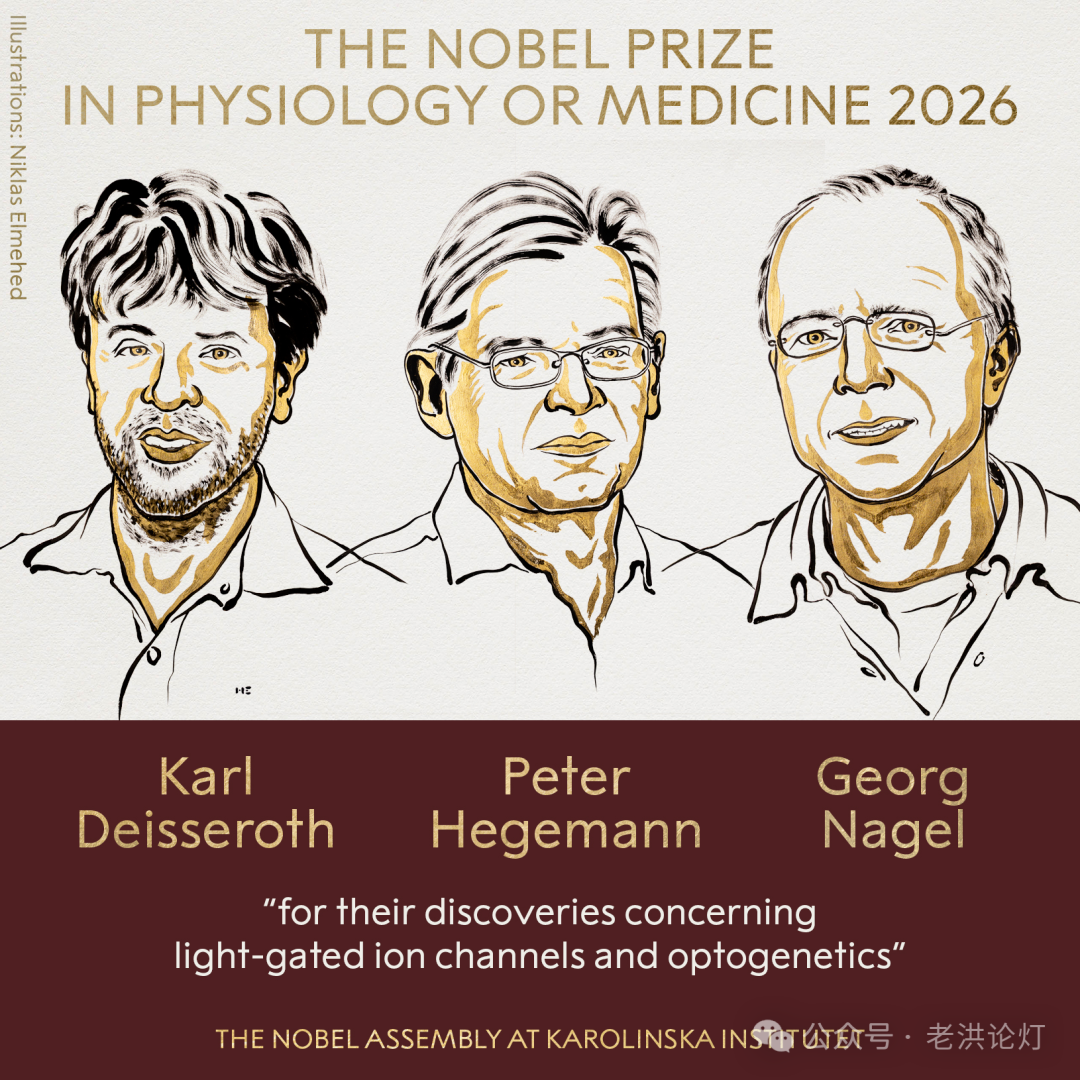
KARL DEISSEROTHThe Howard Hughes Medical Institute and Stanford University, USA
PETER HEGEMANNHumboldt University of Berlin, Germany
GEORG NAGELUniversity of Würzburg, Germany
"for their discoveries concerning light-gated ion channels and optogenetics"
Light-seeking algae gave us a switch for nerve cells
The Nobel Prize in Physiology or Medicine 2026 is awarded for optogenetics — a method that makes it possible to show how nerve cells shape memories, feelings and behaviours in the living brain. Peter Hegemann and Georg Nagel discovered a remarkable protein, channelrhodopsin, in a single-celled alga. Karl Deisseroth transformed the protein into a light-controlled switch for nerve cells. The laureates have laid the foundation of a new era in neuroscience.
How the brain governs feelings, behaviours and bodily functions has long been a mystery. In the 20th century, researchers began to investigate which areas of the brain affect which functions, but the methods used meant they could not prove causal relationships. The image they developed of the brain was like a sketch map, full of question marks and unknowns. Now all this is changing.
"Optogenetics provides opportunities for mapping the brain in a way that we could once only dream of," says Per Svenningsson, Chair of the Nobel Committee for Physiology or Medicine.
It all began with Peter Hegemann's curiosity. He wondered how Chlamydomonas, a single-celled alga, is able to swim towards a light source. In the early 2000s, he and Georg Nagel discovered channelrhodopsin, an algal protein with unique properties, found on the surface of the cell. When it is illuminated by blue light, a channel opens through the protein. Charged ions then flow into the cell, creating an electrical impulse. They found that regardless of which cell they put the protein in, those cells became light sensitive.
Karl Deisseroth introduced the gene for channel-rhodopsin into nerve cells from rats. By illuminating the cells with blue light, he was able to trigger a nerve signal. He published this breakthrough in 2005. Two years later, he made this light-controlled switch for nerve cells work in the brains of living mice.
This method for controlling nerve signals with light is now called optogenetics, and it has rapidly gained global impact. Using optogenetics, researchers have been able to reveal neural circuits governing specific memories, feelings, and behaviours relevant for neurological and psychiatric disorders. In clinical medicine, researchers are using the method in attempts to restore sight in people with visual impairment.
Optogenetics has fundamentally altered our understanding of the brain. Every day brings new discoveries, helping to solve one of humanity's great mysteries: how our incredible brain works.
Laureates (biographies)
Karl Deisseroth, born 1971. Ph.D. 1998 and MD 2000 from Stanford University, USA. D.H. Chen Professor, Professor of Bioengineering and of Psychiatry and Behavioral Sciences, at the Howard Hughes Medical Institute and Stanford University, USA.
Peter Hegemann, born 1954. Ph.D 1984 at the Max-Planck-Institute for Biochemistry, Martinsried, Germany. Hertie Senior Professor of Neuroscience, Humboldt University of Berlin, Germany. The prize awarded discoveries were made at the Max Planck Institute for Biochemistry, Martinsried, Germany.
Georg Nagel, born 1953. Ph.D. 1988 at the University of Frankfurt, Germany. Professor of Molecular Plant Physiology at the Department for Molecular Plant Physiology and Biophysics – Botany I, University of Würzburg, Germany. The prize awarded discoveries were made at Max Planck Institute for Biophysics, Frankfurt, Germany.
Prize amount: 12 million Swedish kronor, to be shared equally between the laureates.
2026年10月5日
卡罗琳医学院诺贝尔大会决定,将 2026 年诺贝尔生理学或医学奖联合授予:
卡尔·戴塞罗思(Karl Deisseroth)美国霍华德·休斯医学研究所、斯坦福大学
彼得·赫格曼(Peter Hegemann)德国柏林洪堡大学
格奥尔格·纳格尔(Georg Nagel)德国维尔茨堡大学
"表彰他们在光门控离子通道与光遗传学方面的发现。"
向光而游的藻类,给了我们一个神经细胞开关
2026 年诺贝尔生理学或医学奖授予光遗传学——一种能够揭示活体大脑中神经细胞如何塑造记忆、情感与行为的方法。彼得·赫格曼和格奥尔格·纳格尔在一类单细胞藻类中发现了一种非凡的蛋白质——通道视紫红质(channelrhodopsin)。卡尔·戴塞罗思则把这种蛋白质改造为可由光控制的神经细胞开关。三位获奖者为神经科学的新时代奠定了基础。
大脑如何调控情感、行为与身体机能,长期以来一直是个谜。20 世纪,研究人员开始探究大脑的哪些区域影响哪些功能,但受当时方法所限,无法证明其中的因果关系。他们描绘出的大脑图景,就像一张布满问号与未知点的草图。而如今,这一切正在改变。
"光遗传学为绘制大脑图谱提供了我们曾经只能梦想的机遇,"诺贝尔生理学或医学奖委员会主席佩尔·斯文宁松(Per Svenningsson)说。
一切始于彼得·赫格曼的好奇心。他想知道,单细胞藻类衣藻(Chlamydomonas)为何能够朝着光源游动。本世纪初,他与格奥尔格·纳格尔发现了通道视紫红质——一种位于细胞表面、性质独特的藻类蛋白。当它被蓝光照射时,蛋白质中会打开一条通道,带电离子随之流入细胞,产生电脉冲。他们还发现,无论把这种蛋白质放入哪一种细胞,该细胞都会变得对光敏感。
卡尔·戴塞罗思将编码通道视紫红质的基因导入大鼠的神经细胞。通过用蓝光照射这些细胞,他成功触发了神经信号,并于 2005 年发表了这一突破。两年后,他进一步让这一神经细胞的光控开关在活体小鼠的大脑中发挥作用。
这种利用光调控神经信号的方法如今被称为光遗传学,并已迅速产生全球性影响。借助光遗传学,研究人员得以揭示与特定记忆、情感和行为相关的神经环路,这些环路与神经系统疾病和精神疾病密切相关。在临床医学中,研究人员正尝试用该方法帮助视力受损者恢复视觉。
光遗传学从根本上改变了我们对大脑的理解。每一天都有新发现,帮助人类解开最重大的谜题之一:我们这颗不可思议的大脑究竟如何运作。
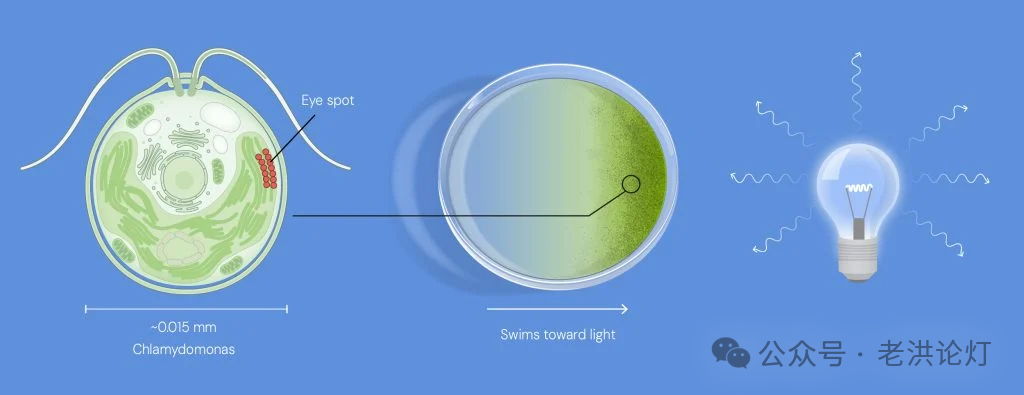
衣藻利用其“眼点”感知光线。当光线足够强时,它会游向光源。© 诺贝尔生理学或医学奖委员会。
获奖者简介
卡尔·戴塞罗思,1971 年出生。1998 年获博士学位,2000 年获医学博士学位,均出自美国斯坦福大学。现为美国霍华德·休斯医学研究所、斯坦福大学 D.H. Chen 讲席教授,生物工程学以及精神病学与行为科学教授。
彼得·赫格曼,1954 年出生。1984 年在德国马丁斯里德马克斯·普朗克生物化学研究所获博士学位。现为德国柏林洪堡大学赫蒂神经科学资深讲席教授。获奖相关发现完成于德国马丁斯里德马克斯·普朗克生物化学研究所。
格奥尔格·纳格尔,1953 年出生。1988 年在德国法兰克福大学获博士学位。现为德国维尔茨堡大学分子植物生理学与生物物理系(植物学一)分子植物生理学教授。获奖相关发现完成于德国法兰克福马克斯·普朗克生物物理研究所。
奖金金额: 1200 万瑞典克朗,由三位获奖者均分。
Source: NobelPrize.org — Press release: Nobel Prize in Physiology or Medicine 2026
URL: https://www.nobelprize.org/prizes/medicine/2026/press-release/
Credit: © The Nobel Assembly at Karolinska Institutet
更多精彩内容 敬请关注公众号/视频号
《老洪论灯》
中国之光网
中国照明电器协会官方网站,照明行业全媒体平台。我们不仅提供权威、及时的照明资讯,更致力于成为企业成长的伙伴,从品牌推广、渠道拓展、咨询到人才培训、标准参编,提供全方位专业服务,助力企业提质增效,共促照明产业高质量发展。
合作联系
仇纯(女士):158 6155 3579
顾君(先生):137 7157 5253