
Yin Kang, CEO of Signify Greater China: AI is reshaping the value of light, moving from illuminating spaces to understanding them.
Since unveiling the world’s first GenAI agent in May 2025 and deploying Interact City Flex for Dalian’s streetlight project, Signify has progressively extended AI technology to office environments and other industry applications. In September 2026, during the Shanghai International Light Festival, Signify officially launched the GenAI-powered Interact Landmark Flex. Beyond its core lighting control and operations capabilities, this system further expands into creating interactive entertainment content, helping cultural and tourism projects reduce both the cost and timeline of content planning.
With this launch, Signify’s AI-enabled Interact smart connected lighting system now covers key lighting scenarios including urban infrastructure, offices, and landscape‑based cultural and tourism venues.
During this year’s Shanghai International Light Festival, Hong Bing, Editor-in-Chief of China Light Media, engaged in an in-depth conversation with Mr. Yin Kang, CEO of Signify Greater China, discussing product differentiation, innovations in light recipes, China market strategy, and the future of the industry.
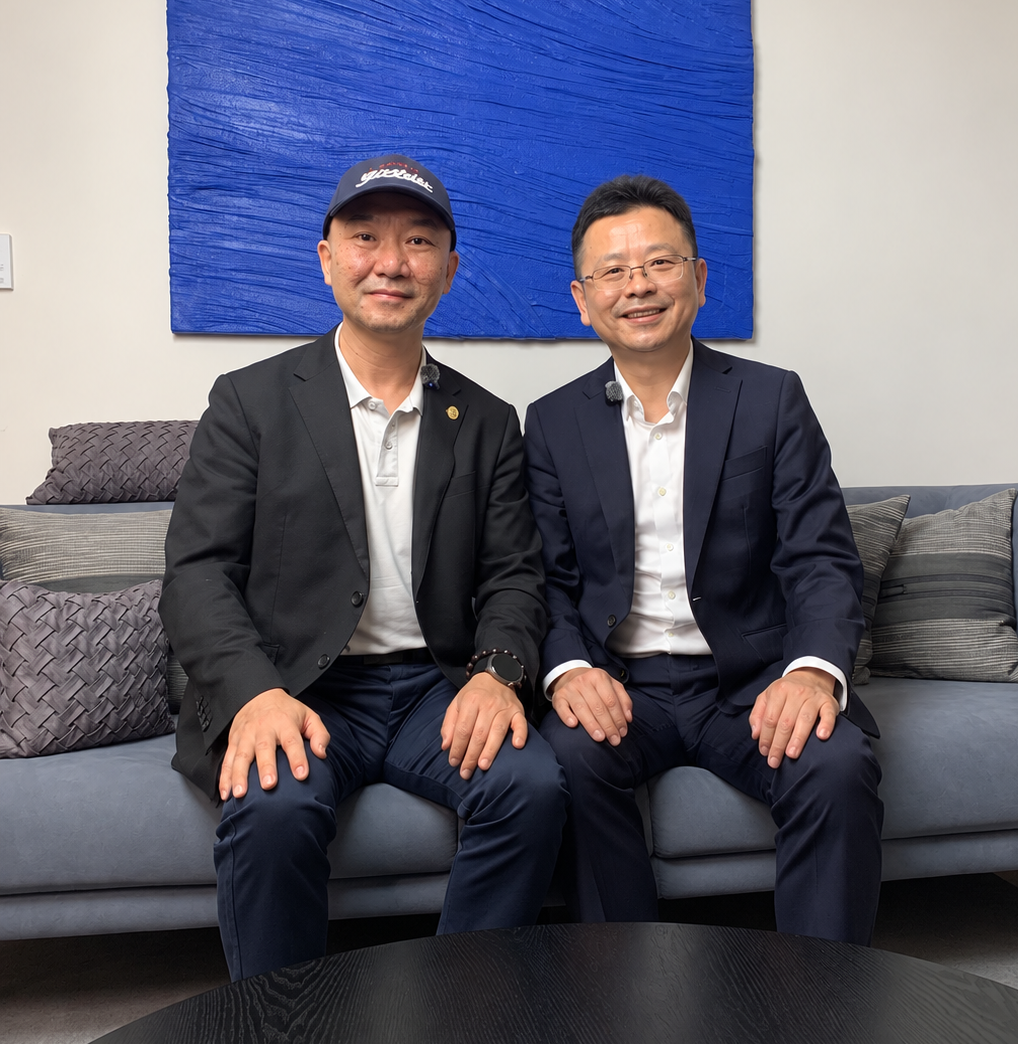
Left: Hong Bing, Editor-in-Chief of China Light Media; Right: Yin Kang, CEO of Signify Greater China
Defining Value Through Scenarios
AI Lighting Rejects “Technology for Technology’s Sake”
Hong Bing: The Interact Landmark Flex showcased at this year’s Shanghai International Light Festival differs from the Interact City Flex used in Dalian’s streetlight project. What are the key differences in their design approaches regarding AI capabilities and application scenarios? Signify’s GenAI agents have already expanded from urban streetlights to offices and cultural‑tourism settings. In your view, how does the core value of AI lighting vary across these different contexts?
Yin Kang: Our primary distinction lies not in AI itself, but in its ability to precisely address the unique business challenges of each scenario. Signify’s GenAI agents are built by integrating years of accumulated lighting‑application data with cutting-edge AI technologies, enabling us to develop specialized models tailored to specific needs.
Take urban lighting as an example: Interact City Flex primarily serves professional operations managers whose main priorities are cost reduction, efficiency gains, and safe, controllable systems. Accordingly, our AI aims to transform urban lighting from traditional passive response to intelligent decision‑making and autonomous optimization, allowing the system to “do things on its own.” Meanwhile, in office settings, AI’s value pivots toward people—adjusting the lighting environment to enhance employees’ physical and mental well‑being and productivity. The underlying data models and operational requirements here differ markedly from those in urban contexts.
The newly released Interact Landmark Flex takes Signify’s AI capabilities even further, extending them into landscape‑based cultural and tourism applications. The essence of cultural‑tourism scenarios is the experience economy, with the central challenge being real‑time interaction between people and light.
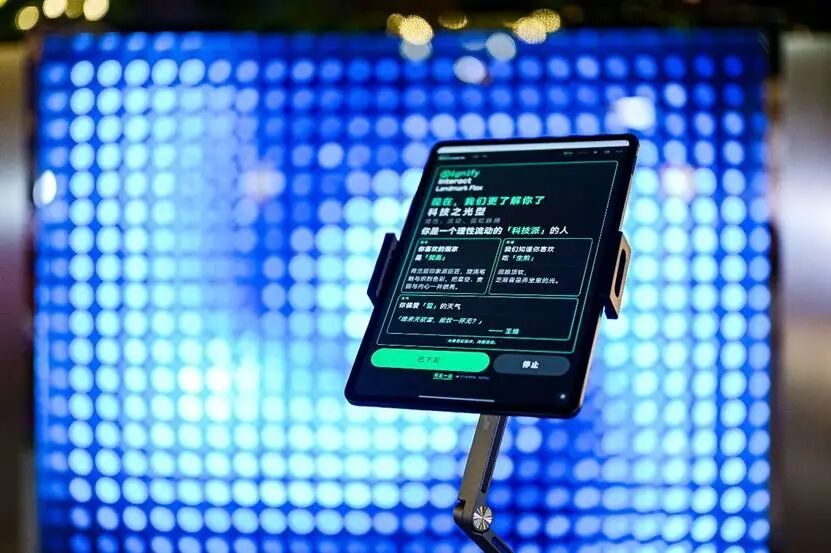
At this year’s Shanghai International Light Festival, we created an interactive installation where visitors use their mobile devices to express emotions and feelings. The AI agent interprets these inputs in real time and translates them into executable lighting scenes, turning static displays into dynamic, participatory experiences. If urban lighting focuses more on enabling the lighting system to operate autonomously, then cultural‑tourism lighting emphasizes making light more attuned to human needs and more creative.
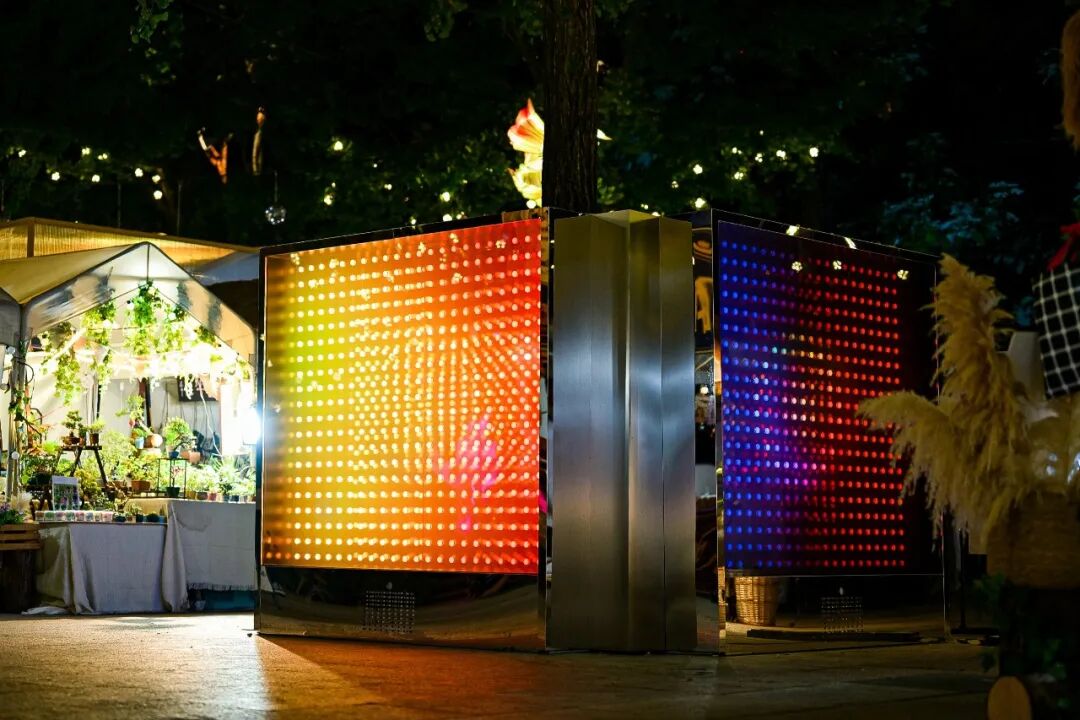
Going forward, regardless of the scenario or sector, Signify hopes that AI will genuinely solve users’ problems rather than pursuing AI for its own sake.
Reimagining Cultural‑Tourism Experiences
Unlocking the “Light Recipe” for Culture and Tourism
Hong Bing: The introduction mentions that the system can “generate a customized light recipe with one click.” In the lighting industry, light recipes have long been a critical barrier in horticultural lighting and human‑centric lighting. What exactly do you mean by “light recipe,” and how will this interactive approach redefine the connection between people and their lighting environments?
Yin Kang: In the lighting profession, a light recipe is a precise combination of parameters such as spectrum, illuminance, color temperature, luminance, and lighting timing. It directly determines the value light can deliver in a given setting. In cultural‑tourism contexts, a light recipe can be understood as an executable set of parameters designed to accurately convey a specific theme, atmosphere, or emotional tone—essentially, a lighting‑environment solution tailored to the project’s thematic requirements.
Traditionally, crafting a custom lighting environment required painstakingly adjusting individual parameters via conventional control interfaces, often coordinating multiple devices—a time‑consuming process reliant on skilled professionals. Now, AI opens up new possibilities: users can simply describe their desired light color, ambiance, or emotional state in natural language, and the AI agent translates these preferences into a corresponding “light recipe,” instantly driving the equipment to produce the intended effect.
This shift lowers the barrier to communication between people and light, providing cultural‑tourism projects with faster, more intuitive “light recipes”—whereas previously people had to learn how to control light, going forward they may only need to express themselves, and light will understand. Lighting design evolves from a technically demanding discipline requiring expert programming into a medium accessible to everyone.
More importantly, we’re delivering not a fixed light recipe, but rather the capability to rapidly generate light recipes. This capacity enables lighting systems not only to meet existing needs but also to inspire and create entirely new ones.
Rooted in China’s Innovation Ecosystem
Reinforcing the Global Lighting Landscape
Hong Bing: From Dalian’s smart streetlights to Shanghai’s Light Festival, Signify has prioritized bringing its most advanced AI technologies to China. What unique characteristics of the Chinese market have led Signify to position Greater China as a global hub for AI‑driven lighting innovation? And how will AI models successfully validated in China benefit markets worldwide?
Yin Kang: China is transitioning from a “manufacturing center” to an “innovation hub,” leading the world in smart lighting, AI, and related technologies. Beyond possessing a complete supply chain, China nurtures an exceptionally rich array of application scenarios and a vibrant AI‑innovation ecosystem. This uniquely fertile ground provides ideal conditions for validating new technologies and accelerating iterative development.
For Signify, China has long since transcended its role as a mere sales market. After years of deep localization, we’ve established a comprehensive system covering R&D, manufacturing, supply chain, and market services—making China an important global R&D and innovation center for Signify.
In the past, our model was largely about introducing global technologies into China. Today, however, we’re embracing a new strategy of “In China, for China, for the World”—gaining insights into local needs, validating innovations, and then sharing mature expertise globally. The Shanghai International Light Festival serves as an excellent example: we aim to validate new possibilities of integrating AI with lighting through real‑world scenarios, and to incorporate the capabilities and experience honed in the Chinese market into Signify’s broader global innovation framework.
Heading Toward the Era of Intelligent Services
Building an Open New Lighting Ecosystem
Hong Bing: Over the next three to five years, what kind of industrial transformation will AI bring to the lighting sector? As a leading company in the industry, what role does Signify hope to play in this transformation?
Yin Kang: In the coming three to five years, AI will drive a profound reshaping of value within the lighting industry: from traditionally supplying hardware products to comprehensively offering intelligent services and spatial experiences. On one hand, AI will equip lighting systems with the ability to understand contexts, make proactive decisions, and continuously self‑optimize; on the other hand, with the rise of generative AI, light will enter many application scenarios once thought unimaginable.
As a global leader in lighting technology, Signify boasts vast data reserves and deep industry expertise, giving us a very clear role in this transformation: rather than simply “adding” AI to lamps, we aim to truly integrate our longstanding lighting expertise, smart interconnected systems, and AI technologies, fostering an open, secure, and commercially viable smart‑lighting ecosystem that empowers the entire industry’s growth.
Signify is not just a product supplier—it’s also a provider of end‑to‑end solutions and services. Our ultimate goal remains transforming light from merely “illuminating spaces” to “understanding and serving spaces,” continually expanding the boundaries of light’s value.
Editor’s Note
Reflecting on the entire conversation, what left the deepest impression on me was not any single dazzling technical specification, but rather Signify’s rare “dual temperament”: a steady, pragmatic foundation rooted in traditional manufacturing, coupled with the keen insight and enthusiasm of a tech entrepreneur. This distinctive character perfectly captures the unique charm of Signify—a century‑old enterprise that isn’t a fleeting follower chasing trends in the AI boom, but rather a pioneer proactively embracing technological change with deep industry heritage.
From Dalian’s streetlights to Shanghai’s Light Festival, Signify’s strategic footprint in the Chinese market reveals a clear patience: refining products and validating models in the most representative scenarios before gradually expanding outward. This “deep first, broad later” approach is especially valuable in today’s fast‑paced AI race to monetize quickly.
When light ceases to be merely a tool for illumination and instead becomes a medium connecting people with space, conveying emotions and experiences, the entire industry’s competitive logic will be rewritten. Signify has hit precisely this inflection point—the leap from “hardware” to “experience.”
China Light
The official website of the China Association of Lighting Industry and a full-media platform for the lighting sector. We provide authoritative and timely lighting information while striving to be a growth partner for businesses. From brand promotion and channel expansion to consulting, talent training and participation in standards development, we provide comprehensive professional services to help businesses improve quality and efficiency and jointly advance the high-quality development of the lighting industry.
Business Contacts
仇纯 (Ms.): 158 6155 3579
顾君 (Mr.): 137 7157 5253