
One posted a robust 330% increase, while the other saw steady growth of 4%! MLS and Bull’s 2026 interim reports have been released.
Recently, MLS and Bull Group have successively released their semi-annual reports, with both revenue and net profit posting double-digit growth.
1
MLS: First-Half Net Profit of RMB 662 Million, Up 330.7% Year-on-Year
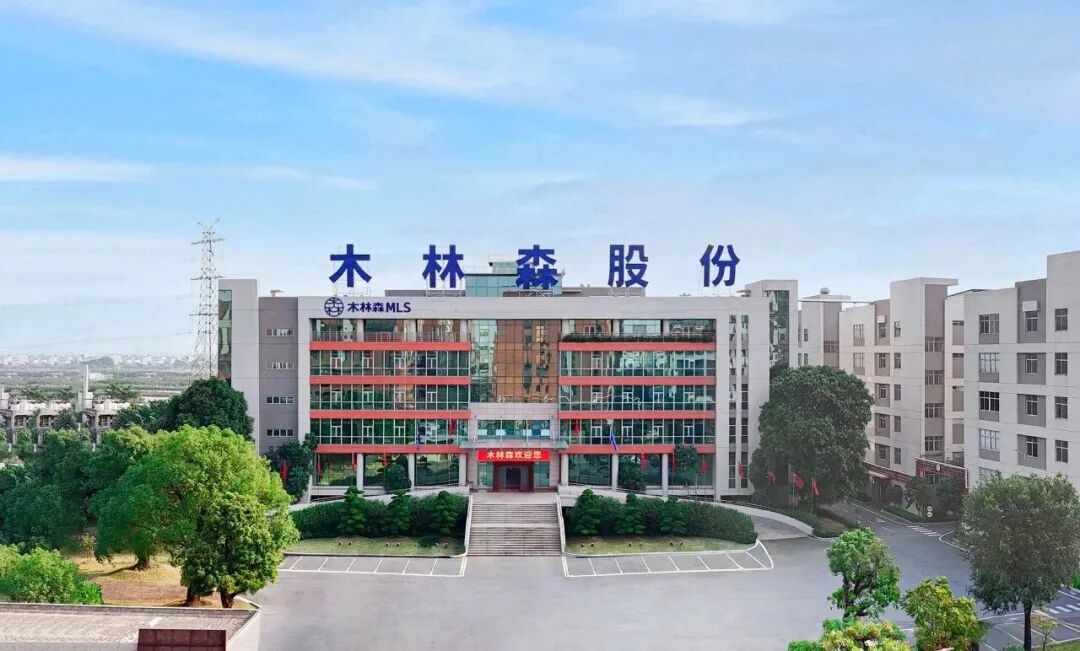
On August 27, MLS announced its 2026 semi-annual report. The company’s operating revenue reached RMB 9.795 billion, up 23.7% year over year; net profit attributable to shareholders was RMB 662 million, a 330.7% increase compared to the same period last year; net profit excluding non-recurring items stood at RMB 404 million, up 181.1% year over year; and net cash flow from operating activities totaled RMB 1.092 billion, a 195.5% year-over-year rise.
In terms of branding, the company has built a global brand portfolio centered around LEDVANCE, SYLVANIA, and MLS, with these three brands working in synergy to complement each other’s strengths.
By product category, “MLS” generated approximately RMB 5.066 billion in revenue, accounting for about 51.72% of total revenue; “LEDVANCE” reported roughly RMB 4.326 billion, representing around 44.16% of total revenue. On the market front, the company adopts a dual-brand differentiation strategy: LEDVANCE focuses on the high-end European and American markets, while the MLS brand concentrates on penetrating lower-tier domestic distribution channels.
Regionally, MLS recorded approximately RMB 5.05 billion in domestic revenue, up 47.7% year over year, and about RMB 4.74 billion in overseas revenue, an increase of 5.43% compared to the same period last year.
In the second quarter alone, the company’s revenue reached RMB 5.07 billion, up 25.8% year over year, while net profit attributable to shareholders surged by 2,144.2% to RMB 243 million.
The company stated that this rapid performance growth was primarily driven by its ongoing efforts to vertically integrate the supply chain and optimize its business structure, combined with favorable external factors such as the recovery of the LED industry and an improved competitive landscape. Specific contributing factors include:
1. Accelerated Industry Consolidation and the Trend Toward High-End Products: Strong Market Share and Resilient Profitability.
On one hand, thanks to its comprehensive industrial-chain layout, large-scale manufacturing capabilities, and well-established global sales network, the company continues to benefit from rising industry concentration, further solidifying its market share and industry standing. On the other hand, as competition shifts toward smart lighting and health-oriented light environments, the company actively promotes scenario-based smart lighting solutions, aligning with evolving high-end market demands.
Facing temporary cost pressures stemming from upstream raw-material price fluctuations, the company leverages its scale advantages and supply-chain synergies, maintaining strong bargaining power and effective cost-pass-through mechanisms, thereby effectively cushioning external cost shocks and demonstrating profitability stability and risk resilience superior to the industry average.
2. Deepening Global Channel Coverage Through Dual Brand Strategy and Enhanced Operational Efficiency.
The company has deepened its “MLS + LEDVANCE” dual-brand strategy, relying on the international reputations of LEDVANCE and SYLVANIA. Its sales network now spans more than 150 countries and regions worldwide. While consolidating its traditional strengths in Europe and North America, it is also aggressively expanding into emerging markets across Asia, Africa, and Latin America, achieving a more balanced global footprint. During the reporting period, the company strengthened strategic partnerships with key customers, maintained high capacity utilization rates, and achieved tangible results in quality improvement and efficiency gains, driving first-half performance growth.
3. Upstream Supply-Chain Expansion and Realizing Synergistic Benefits.
In January 2026, the company completed its controlling acquisition of Prui Optoelectronics, bringing LED chip research and manufacturing under its umbrella and establishing a complete end-to-end industrial chain—from chips and packaging to applications, brands, and distribution channels. Starting in the second quarter, procurement costs declined, synergies began to materialize, and overall gross margins showed signs of recovery.
Meanwhile, core businesses like LED packaging capitalized on the industry’s recovery window, reducing per-unit production costs through increased capacity, process improvements, and meticulous cost management, thereby enhancing product competitiveness. The company is also advancing product upgrades toward higher value-added offerings, ramping up R&D and mass production of premium products to refine its product mix.
As of the end of the second quarter, the company’s total assets amounted to RMB 25.267 billion, up 10.3% from the end of the previous year; net assets attributable to shareholders stood at RMB 12.054 billion, a 4.3% increase compared to the prior year.
2
Bull Group: First-Half Net Profit of RMB 2.151 Billion, Up 4.44% Year Over Year
On August 28, Bull Group disclosed its 2026 semi-annual report. In the first half of 2026, the company reported total operating revenue of RMB 8.394 billion, up 2.77% year over year; net profit attributable to shareholders reached RMB 2.151 billion, a 4.44% increase compared to the same period last year; net profit excluding non-recurring items came in at RMB 1.9 billion, up 3.13% year over year; and net cash flow from operating activities totaled RMB 2.236 billion, down 5.97% year over year.
During the reporting period, the company focused on three core business segments—electrical connectivity, smart electrical lighting, and new energy—in alignment with its strategic objectives. Among these, smart electrical lighting products include wall switches and sockets, LED lighting (including smart lighting), safety circuit breakers, smart bathroom heaters, smart clothes dryers, smart door locks, and smart curtain systems.
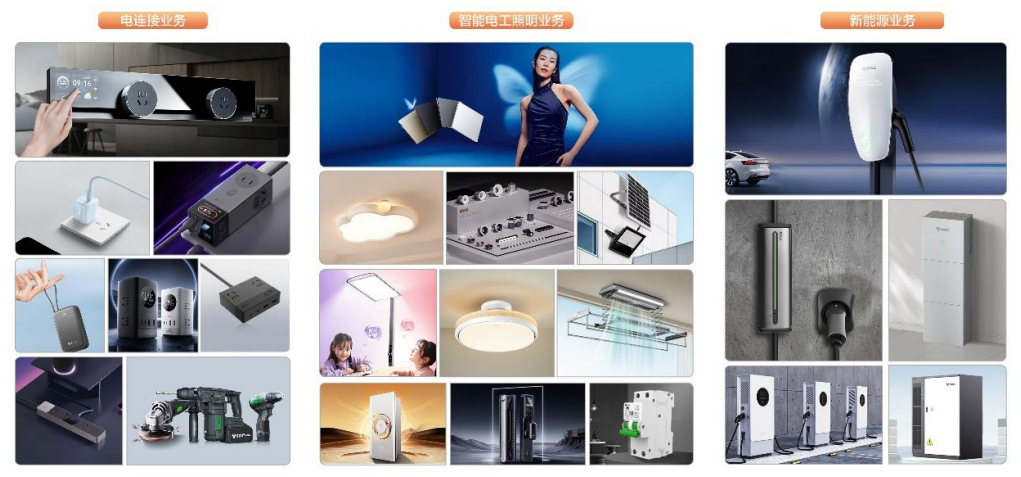
In the smart electrical lighting segment, Bull Group continued upgrading its offerings throughout the first half of the year, emphasizing “high-end, intelligent, and international” attributes. With AI-powered eye-care lighting, health-focused illumination, and home-decor aesthetics as key pillars, the company accelerated the rollout of new initiatives such as AI eye-care lamps and Muguang AI smart health lighting, while simultaneously driving iterative innovation across multiple product categories—including wall switches and lighting—and building out overseas product ecosystems.
Specifically, during the reporting period, Bull Group expedited the development of new momentum in smart health lighting, reinforcing its core competencies in AI technology and healthy lighting, and steadily advancing product evolution from basic eye protection toward proactive eye care. In the mobile lighting category, the company launched a next-generation AI street lamp, integrating advanced eye-care technologies with cutting-edge AI models. Meanwhile, the Muguang AI smart health lighting initiative centers on “AI-powered dimming plus AI voice control,” combining violet-light LED chips, MOSHome smart-control systems, TSIM AI adaptive dimming technology, and Matter gateway protocols to enable seamless whole-home smart lighting switching and elevate the interconnected smart-home experience.
The company also pushed forward innovative upgrades to core product categories like wall switches, boosting market competitiveness and share.
At the same time, leveraging product innovation, retail channel capabilities, and brand communication synergies, Bull Group continued transitioning its business model from single-product sales toward bundled, scenario-based, and intelligent solution offerings.
Furthermore, in the first half of 2026, the company proactively seized opportunities presented by AI computing infrastructure, rural infrastructure development, and global off-grid lighting markets, expediting the launch of two newly incubated ventures—data center services and solar-powered lighting—to cultivate fresh growth drivers.
The data center business starts from terminal power-distribution operations, looking ahead to future technological trends and actively developing power-supply solutions; meanwhile, the solar lighting business relies on a self-developed full-industrial-chain system, continuously refining its all-scenario product lineup while coordinating domestic channel expansion and overseas market penetration. Both new ventures have seen significant enhancements in product, channel, and brand capabilities, laying a solid foundation for subsequent large-scale development and rapid growth.