
A Comprehensive Guide to Energy Saving in Building Lighting: From Scenario Selection to Practical Implementation
On the evening of May 11, the “Fudan Light” salon was successfully held, guided by the Fudan University Alumni Association’s Lighting Alumni Group, organized by China Light Network·Ming Classroom, and supported by Zhejiang Qicheng Electrical Appliance Co., Ltd. Following the previous session on underground parking lots titled “Lighting Energy Saving at Its Prime,” this event focused on the “Building Sector,” highlighting a broader range of energy-saving lighting scenarios in buildings. Zhou Xiang, founder of Desui Lighting Technology and an alumnus of Fudan University’s Department of Physics, once again served as the keynote speaker.
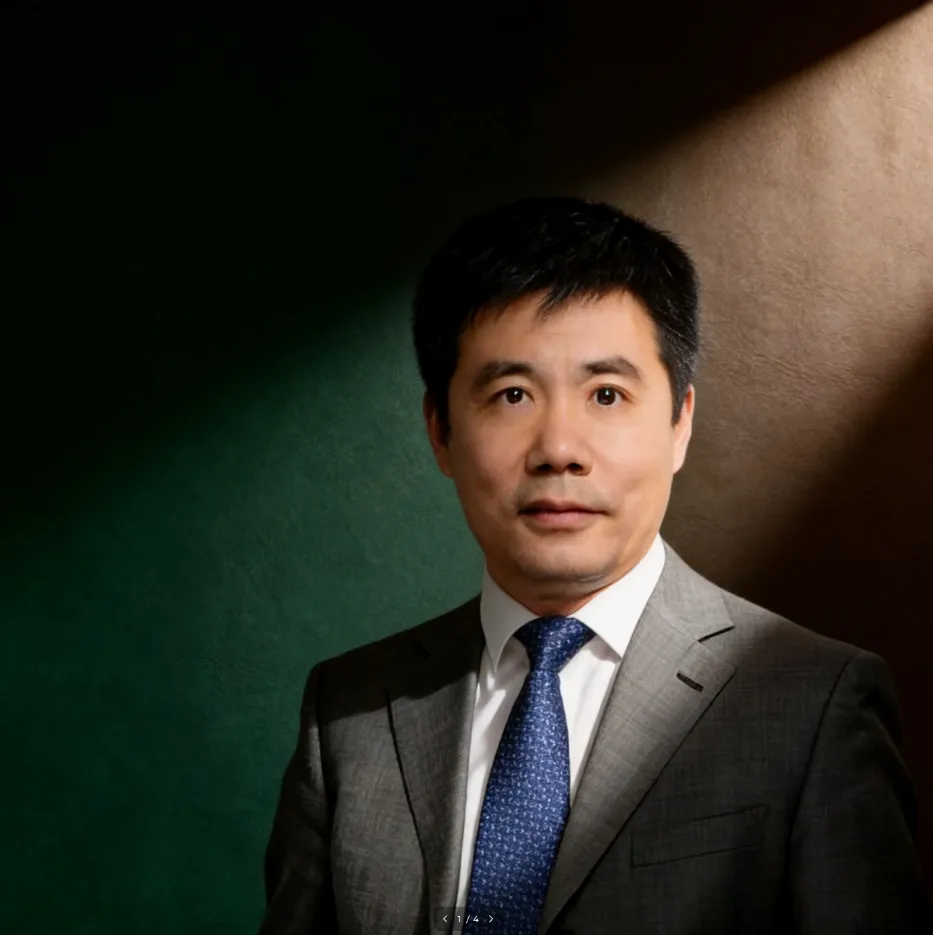
Speaker: Zhou Xiang
He systematically explained the logic, technical solutions, and practical experience behind energy-saving retrofits for five major building types—factories, hospitals, offices, commercial complexes, and warehousing/logistics facilities—providing industry professionals with a concrete framework for implementing lighting energy efficiency measures.
Why is now the best time for lighting energy saving?
At the outset, Zhou Xiang reiterated his core assertion that “lighting energy saving is at its prime,” a conclusion drawn from three key opportunities:
1. Technological maturity has entered a cost-effective sweet spot: Today, high‑efficiency LED technology, radar sensors, Bluetooth communications, and other innovations have all achieved breakthroughs, with prices dropping significantly compared to just a few years ago. This makes large‑scale implementation feasible, whether for product‑level or management‑level energy savings.
2. A surge in demand for retrofitting existing stock: Starting around 2015–2016, LED luminaires began widespread adoption. However, LEDs have long lifespans, and many fixtures have been in use for over five years, often suffering from severe lumen depreciation. Some now deliver only 30–40 lm/W, far below today’s 180–200 lm/W levels, making replacement urgently necessary.
3. Convergence of economic conditions and dual carbon goals: Businesses are under intense pressure to cut costs, and energy‑saving retrofits directly reduce operating expenses while aligning with national policies promoting carbon neutrality. The result is both economic and social benefits.
Teacher Zhou emphasized that the core principle of lighting energy saving remains a dual‑driven approach of “product‑level energy saving + management‑level energy saving”: improving luminous efficacy reduces power consumption at the same brightness, while intelligent controls enable demand‑responsive lighting. Together, these measures can achieve overall energy savings of 60%–90%, with payback periods typically ranging from one to two years.
The energy‑saving retrofit logic for five key building sectors
Teacher Zhou outlined three key criteria for determining whether a particular setting is suitable for energy‑saving upgrades:luminaire wattage should not be too low, fixture variety should not be excessive, and lighting duration should not be too short. These factors collectively determine whether the investment will yield a favorable return.
Based on this standard, factories, hospitals, offices, commercial complexes, and warehousing/logistics facilities represent the five most promising sectors for retrofitting today.
01 Factories: The sector with the greatest potential for energy savings
Factories fully meet all three criteria: production demands require long lighting hours (typically over 12 hours daily, with 24‑hour operation in shift‑based plants); fixture specifications are concentrated (mainly industrial lamps, T8 tubes, and panel lights); and high illumination requirements drive overall energy consumption.
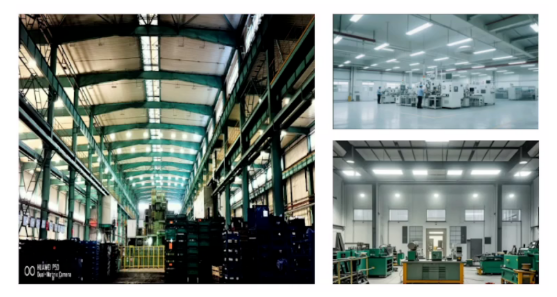
1. Traditional metal‑halide lamps offer only about 60 lm/W, whereas modern high‑efficiency industrial lamps can reach 200 lm/W; simply replacing old fixtures can cut electricity use by more than 50%.
2. Standard T8 fluorescent tubes can be reduced from 18 W to 9 W, and narrowing the beam angle optimizes light distribution—under extreme circumstances, even a 6 W tube can match the original 18 W’s desk‑level illumination.
3. Conventional panel lights typically deliver 80–85 lm/W, but high‑efficiency versions can achieve 175–180 lm/W; a 36 W conventional panel light needs only 20 W to provide equivalent brightness.
According to Teacher Zhou’s calculations, a typical 10,000 m² factory working 12 hours per day, 26 days per month, could save approximately RMB 60,000 annually in electricity costs; for shift‑based plants, annual savings may rise to RMB 150,000.
02 Hospitals: An underrated yet excellent retrofit target
Hospitals are a key focus area for Teacher Zhou’s recent initiatives, offering significant retrofit value:
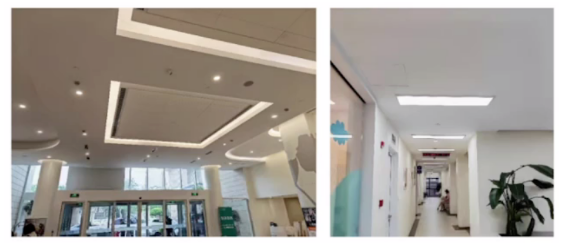
1. Long lighting durations: Common areas remain lit 24 hours a day, while other zones average over 12 hours of daily illumination.
2. Uniform fixture specifications: Downlights, T5 integrated brackets, and panel lights dominate, keeping retrofit costs relatively low.
3. Existing luminaires generally exhibit poor energy efficiency: Even mainstream brands often deliver only 70–85 lm/W, leaving ample room for improvement.
Zhou’s team is currently executing a project at a Beijing hospital where lighting upgrades alone are projected to save the facility RMB 1 million annually, with a payback period of less than two years—a result highly praised by the client. Furthermore, the new LED energy‑efficiency standards set to take effect in September 2027 will further accelerate the replacement of low‑efficiency legacy fixtures.
03 Commercial Complexes: Public‑area retrofits are paramount
The primary focus of commercial complex retrofits lies in public spaces, while tenant‑occupied areas present greater challenges due to complex fixture specifications and tenant‑borne electricity costs. Public‑area renovations must balance energy savings with customer experience:
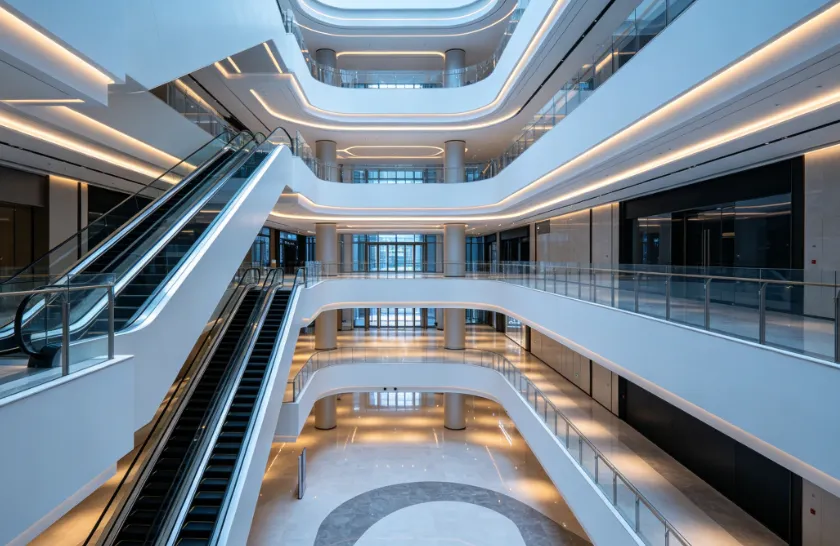
1. Shopping mall common areas need sufficient illumination to create a comfortable shopping environment; the priority is boosting luminous efficacy without compromising light quality—for example, wall‑washing downlights can achieve 130 lm/W, meeting both glare control and energy‑saving objectives.
2. Office building common areas can integrate smart sensors to automatically turn lights on when people arrive and off when they leave, further reducing energy use during off‑peak hours.
04 Office Settings: Smart automation is the key direction
Energy savings in office environments rely heavily on refined, intelligent control systems:
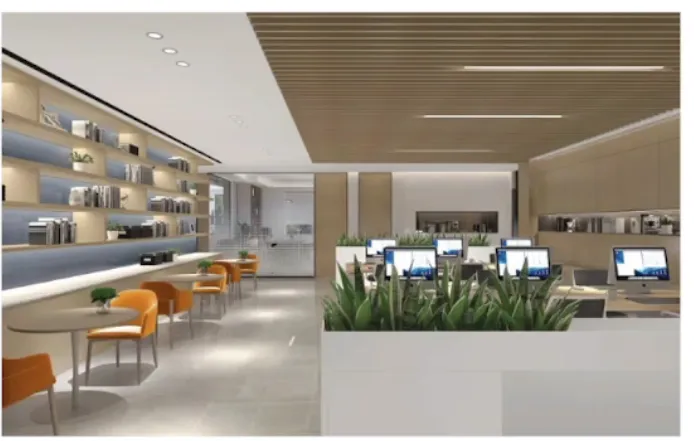
1. Adapting to overtime scenarios: Large open‑plan offices can implement zoned lighting, keeping only occupied areas at normal brightness while dimming or turning off others.
2. Maintaining constant illumination: Window‑side areas can automatically adjust light output based on natural light intensity—reducing lamp power during bright daylight hours.
3. Multi‑system integration: Coordination with HVAC, curtains, and other systems enables automatic activation when occupants are present and deactivation when empty, while also supporting one‑click switching between different modes for conference rooms, open‑plan workspaces, and other settings.
05 Warehousing and Logistics: Highly cost‑effective retrofit targets
Warehousing and logistics facilities likewise boast exceptional retrofit potential:
1. Stable lighting needs: Warehouses are enclosed spaces requiring continuous illumination day and night, with lighting durations typically ranging from 12 to 24 hours.
2. Simple fixture specifications: High‑power industrial lamps and T8 tubes dominate, keeping replacement costs low.
3. Significant scope for management‑level energy savings: Warehouse staff movements follow predictable patterns, allowing radar‑based sensing to automatically illuminate storage and retrieval zones while maintaining low brightness in unoccupied areas—further enhancing energy efficiency.
Teacher Zhou noted that post‑retrofit energy savings in warehouse settings commonly exceed 70%, making them among the highest‑return projects.
Project implementation: A full end‑to‑end process from surveying to delivery
Teacher Zhou shared a standardized roadmap for carrying out energy‑saving retrofit projects:
1 Site survey: Complete an information‑gathering form recording each luminaire’s installation location, brand, wattage, dimensions, color temperature, average daily lighting hours, electricity rates, and other details; photograph fixtures and note nameplate parameters to preliminarily assess feasibility.
2 Design phase: Conduct performance tests on existing fixtures, match them with corresponding high‑efficiency or smart replacement products, calculate energy‑saving rates, annual savings, and payback periods for each category, and draft a comprehensive retrofit plan.
3 Validation testing: Select a small pilot area to verify actual energy‑saving effects and lighting quality, gaining client approval before rolling out the solution nationwide.
4 Long‑term operations and maintenance: Provide a warranty of five years or more, leveraging cloud platforms for remote equipment monitoring, fault alerts, and feature updates to ensure stable system performance and continuously optimized user experience.
This approach has already been successfully applied in projects such as Mercedes‑Benz factories, state‑owned commercial complexes, and large chain supermarkets, delivering average energy savings of 60% and payback periods typically within two years.
Interactive Q&A
During the Q&A session, Teacher Zhou addressed audience concerns in detail:
Q: Is lighting energy saving simply a matter of replacing lamps? Can ordinary lighting manufacturers handle it?
A: It’s far more complex than just swapping out lamps. Behind lamp replacement lies a complete, integrated service capability: first comes a site survey to determine if the space is suitable for retrofitting and which products to use; next is optical design and adaptation, ensuring that post‑replacement illumination levels and light quality meet usage requirements; smart solutions also require coordinated integration of sensors, communications, cloud platforms, and software; during the construction phase, custom conversion brackets and other adaptations may be needed; finally, the subsequent energy‑performance contracting (EPC/EMC) model demands 5–10 years of ongoing maintenance and product upgrades—none of which ordinary lighting manufacturers can independently accomplish.
Q: Can current technologies guarantee a 5‑year lifespan for luminaires?
A: Absolutely. High‑efficiency lighting essentially operates on the principle of “using a big horse to pull a small cart”—high‑specification LED chips driven by lower currents, resulting in reduced power consumption, less heat generation, and dramatically lowered component stress, ultimately extending device life. All our products are designed and tested with a 5‑year warranty in mind.
Q: What special capabilities are required to engage in the lighting energy‑saving business?
A: First, a comprehensive product portfolio covering light sources, downlights, panel lights, industrial lamps, linear fixtures, and more, enabling rapid response; second, strong technical integration skills, including expertise in sensors, communications, cloud platforms, and system coordination; third, robust project management and communication abilities, capable of handling nighttime construction, multi‑departmental collaboration, and strict acceptance standards; fourth, solid foundational knowledge of lighting, ensuring compliance with illumination levels, uniformity, and glare regulations.
Q: How do solutions differ across various settings—factories, hospitals, offices, commercial complexes, etc.?
A: Each setting has its own industry standards and usage habits: factories prioritize illumination levels and durability; hospitals emphasize stability and long‑term performance; commercial spaces focus on light spots and user experience; offices value intelligence and convenience. Lighting design must precede fixture selection—no single solution fits all scenarios.
END
Note: This article is compiled from recordings of Teacher Zhou Xiang’s presentation titled “Lighting Energy Saving at Its Prime—Building Sector” delivered on May 11, 2026, at Ming Classroom, and published by Ming Classroom.
China Light
The official website of the China Association of Lighting Industry and a full-media platform for the lighting sector. We provide authoritative and timely lighting information while striving to be a growth partner for businesses. From brand promotion and channel expansion to consulting, talent training and participation in standards development, we provide comprehensive professional services to help businesses improve quality and efficiency and jointly advance the high-quality development of the lighting industry.
Business Contacts
仇纯 (Ms.): 158 6155 3579
顾君 (Mr.): 137 7157 5253