
The AI- and Zero-Carbon–Driven New Development Exchange Conference was successfully held in Pudong.
Recently, the “AI‑Based and Zero‑Carbon New Development Exchange Conference,” hosted by the Shanghai Pudong Intelligent Lighting Association and organized by Yunsmart, was successfully held.
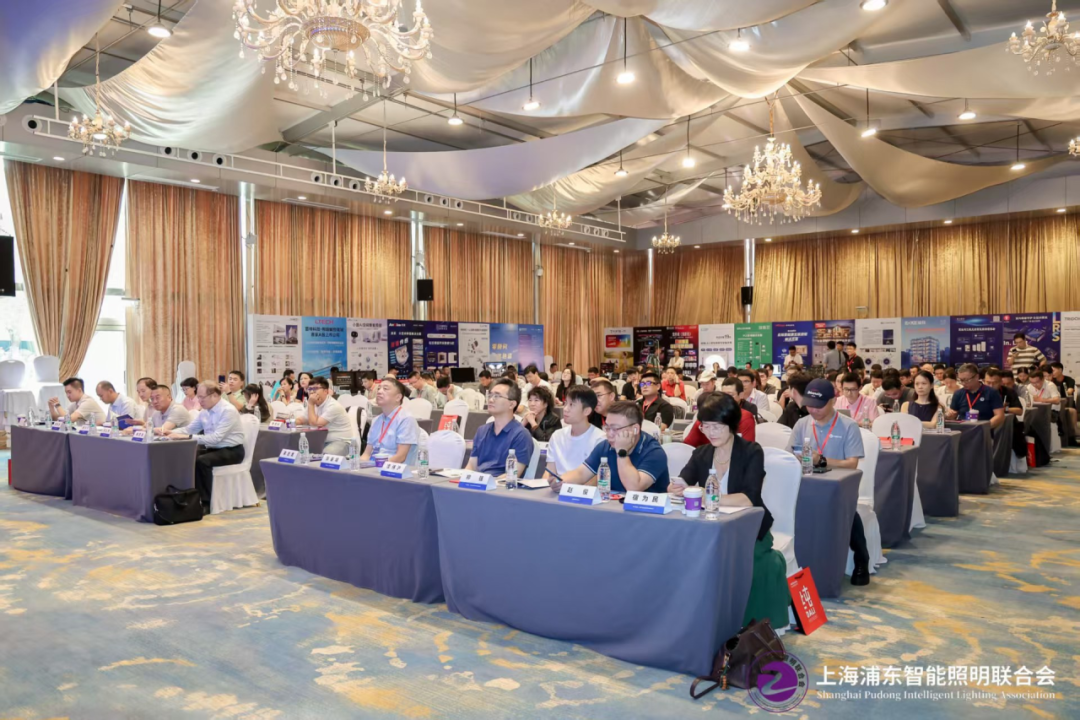
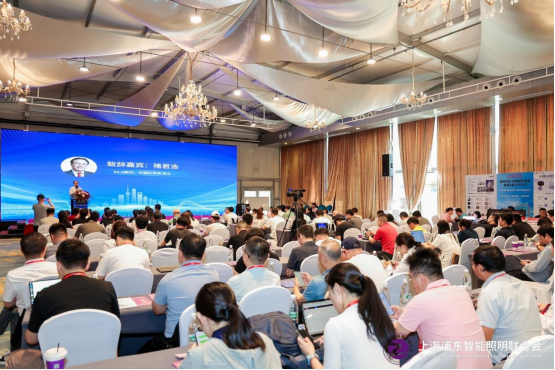
Nearly 200 industry professionals from lighting companies across China, as well as representatives from smart city ecosystems and supply chain networks, gathered in Pudong. Eight thematic presentations delivered a series of insightful discussions, focusing on AI‑driven innovation and zero‑carbon development, guiding the lighting industry toward green, low‑carbon transformation. These efforts also contributed practical, implementable solutions to support urban smart upgrades and the achievement of carbon neutrality goals. The entire event was simultaneously livestreamed, attracting over 1,000 viewers.
Key guests attending the conference included: Academician Chu Junhao of the Chinese Academy of Sciences, Advisor to the Association; Zhang Shiwei, Party Secretary and Executive Vice Chairman of the Pudong New Area Science and Technology Association; Zhang Junping, Full‑time Vice Chairman of the Pudong New Area Science and Technology Association; Li Zhijun, Founding President and Chair of the Standards Committee of the Shanghai Pudong Intelligent Lighting Association; Dai Zhaoliang, Party Secretary and Acting President of the Shanghai Pudong Intelligent Lighting Association; and Lu Qiwen, Head of the Quality Development and Standards Innovation Division at the Pudong New Area Market Supervision Administration.
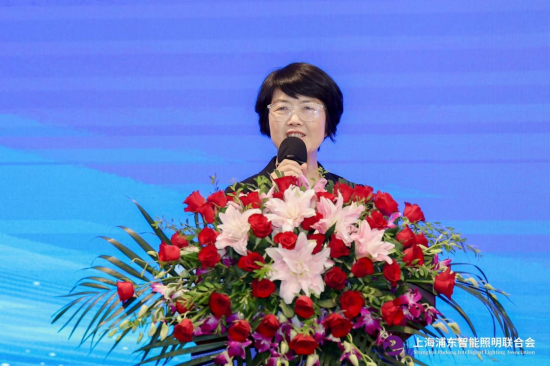
In the afternoon, the conference officially commenced under the chairmanship of Dr. Su Weimin, Vice President of SILA and Director of SILA’s Smart City and Dual‑Carbon Specialized Committees.
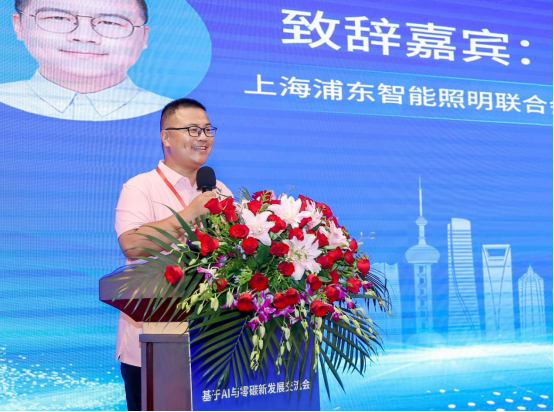
Speech by Dai Zhaoliang, Party Secretary and Acting President of the Shanghai Pudong Intelligent Lighting Association
The Acting President extended a warm welcome to all leaders, distinguished guests, and industry peers present at the event, expressing special gratitude to the Pudong Science and Technology Association for its longstanding support and guidance in advancing the Association’s mission. He noted that the lighting industry is currently undergoing profound transformation, with traditional growth models facing significant challenges. However, the deep integration of AI technologies and zero‑carbon objectives is opening up entirely new avenues for expansion. The Association remains firmly aligned with the pulse of the industry, committed to further strengthening its strategic focus on artificial intelligence, health‑tech, and green, low‑carbon initiatives. It will continue to promote standardization and cross‑industry collaboration, breaking down silos to build an open ecosystem where light connects everything.
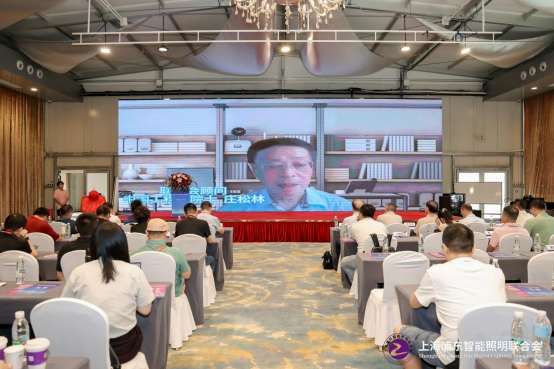
Speech by Academician Zhuang Songlin of the Chinese Academy of Engineering, Advisor to the Association
Academician Zhuang emphasized that AI and green, low‑carbon principles are fundamentally reshaping the lighting industry, with smart lighting serving as a key technological enabler for achieving dual‑carbon goals. He commended the Shanghai Pudong Intelligent Lighting Association for its role as a bridge—“rooted in Pudong, serving the nation”—and for its achievements in standards development and ecosystem building. He congratulated the Association on the release of the white papers “Technical Specifications for Dynamic Artificial Light LED Lighting Products” and “Case Studies on Low‑Carbon Lighting Applications in Parking Garages,” calling them important breakthroughs in industry standardization and the translation of innovative ideas into practical applications. He urged deeper integration between technological innovation and market demand, stronger supply‑chain coordination, and continued refinement of the standards framework, expressing hope that China’s intelligent lighting sector will make even greater contributions to the global green transition.
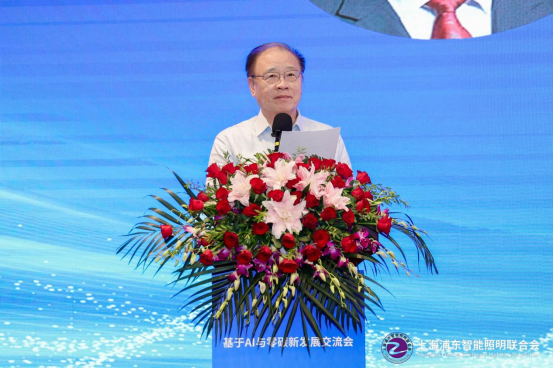
Speech by Academician Chu Junhao of the Chinese Academy of Sciences, Advisor to the Association
Academician Chu underscored that the 15th Five‑Year Plan has entered a critical phase of implementation, with the twin pillars of greening and digitalization driving high‑quality industrial development. From the perspective of semiconductor physics research, he explained that the iterative leaps witnessed in the lighting industry essentially reflect continuous advances in photon generation, transmission, and reception efficiency across the entire optoelectronic chain. The deep integration of AI technology is accelerating this progress, providing crucial technical support for energy‑efficient building retrofits and refined urban management. He encouraged industry stakeholders to translate policy momentum into tangible industrial impetus, deepen technological innovation within specific application scenarios, and work together to position Pudong as a cutting‑edge hub for zero‑carbon transformation in intelligent lighting, illuminating a zero‑carbon future with the light of innovation.
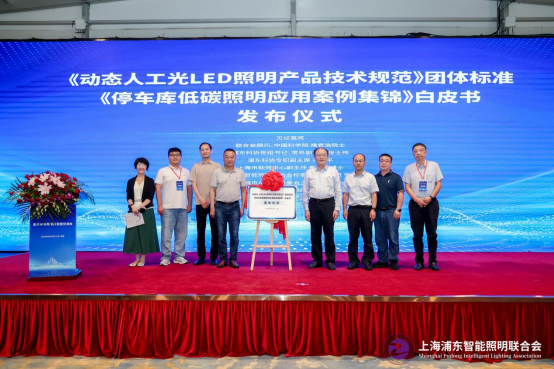
At the event, a solemn launch ceremony was held, unveiling the group standard “Technical Specifications for Dynamic Artificial Light LED Lighting Products” and the white paper “Case Studies on Low‑Carbon Lighting Applications in Parking Garages.” Guests from government, business, and academia—including Academician Chu Junhao of the Chinese Academy of Sciences, Party Secretary and Executive Vice Chairman Zhang Shiwei of the Pudong Science and Technology Association, Full‑time Vice Chairman Zhang Junping, relevant officials from the Shanghai Energy Efficiency Center, Chair of the Standards Committee Li Zhijun, Director of SILA’s Smart City and Dual‑Carbon Specialized Committees Dr. Su Weimin, representatives from Opple Lighting, and Li Xueke, Director of Green Lighting Products at Tianyi IoT—jointly witnessed the official release of these landmark industry achievements, providing authoritative guidelines and practical roadmaps for standardized, scenario‑based deployment of low‑carbon lighting products.
Relevant official from the Shanghai Energy Efficiency Center
Speech topic: Actively yet prudently advancing carbon peaking and accelerating the new journey of green transformation
The official from the Shanghai Energy Efficiency Center presented an overview of the “15th Five‑Year Plan Action Plan for Carbon Peaking,” highlighting that the plan centers on green energy transition and industrial decarbonization. Quantitative targets include reducing per‑unit GDP carbon emissions by 17% by 2030 compared to 2025 and increasing non‑fossil fuel consumption to 25%. Key tasks encompass robust development of wind, solar, nuclear power; enhanced absorption of renewable energy; deep decarbonization of industry, buildings, and transportation; construction of zero‑carbon parks and factories; and strengthening systems for carbon emission accounting, technological support, and green finance—all working in concert to ensure timely achievement of carbon peaking goals.
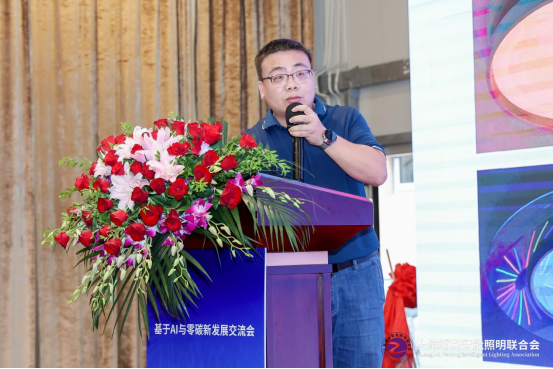
Representative from Opple Lighting
Speech topic: Analysis of the “Technical Specifications for Dynamic Artificial Light LED Lighting Products” standard
The Opple representative focused on interpreting the “Technical Specifications for Dynamic Artificial Light LED Lighting Products.” This standard aims to guide the industry’s evolution from “basic illumination” toward “healthy lighting environments.” Technically, it defines core metrics such as wide color gamut, high color rendering index, low blue light, and flicker‑free operation, while innovatively introducing an evaluation system based on physiological equivalence to natural light efficacy. The standard provides a vital foundation for industrial upgrading and market regulation, offering clear direction for corporate R&D and effectively safeguarding consumer rights, thereby strongly supporting the high‑quality development of the lighting sector.
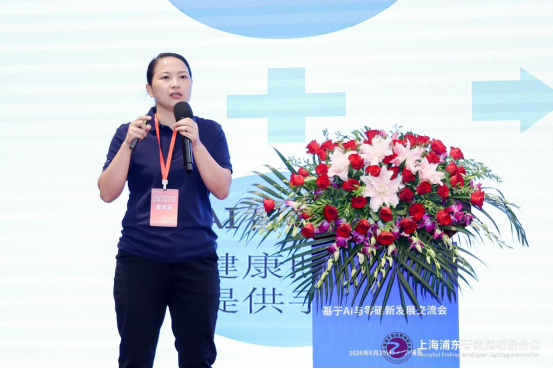
Luminus FAE Meng Shuang
Speech topic: High‑brightness chips powering new developments in lighting energy efficiency
Meng highlighted Luminus’s innovative applications of high‑brightness chips in energy‑saving lighting. The company boasts a comprehensive product portfolio spanning the full spectrum from 260 nm to 1,060 nm, with core strengths in ultra‑high current density, advanced spectral control, and ceramic phosphor technology. Mid‑power offerings range from the 2835 to the 7070 series, delivering steadily improving luminous efficacy; COB solutions enable dimming and color tuning, while a rich lineup of high‑power white‑light products caters to diverse professional lighting needs. The UV series covers UVA, UVB, and UVC applications in sterilization, medical settings, and plant lighting. Additionally, the company maintains forward‑looking positions in projection displays, automotive lighting, laser technology, and Micro‑LED fields, continuously driving innovation in lighting technology.
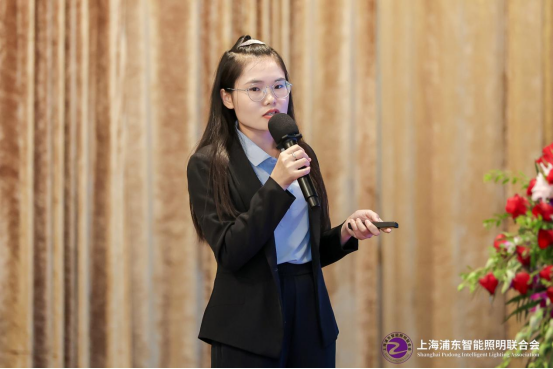
Yang Wenyu, Sales Director at Glansbay
Speech topic: Creating a new experience in smart, energy‑efficient buildings
Yang shared Glansbay’s “hardcore” capabilities. The company has independently developed the GS‑LINKER ultra‑large‑scale self‑organizing network protocol, supporting over 100,000 nodes with exceptional reliability and millisecond‑level self‑healing capacity. The system requires no gateway for configuration, significantly saving cabling and installation time. Leveraging AI technology, it enables adaptive energy‑saving control and automatic mapping, achieving energy savings of up to 90%. The company has already implemented numerous benchmark projects for Huawei, NetEase, Dahua, and others, dedicated to promoting building energy efficiency and carbon reduction through wireless technology.
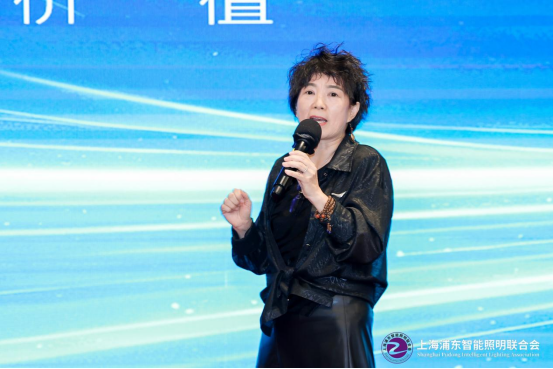
Coco, Brand Director at Boke
Speech topic: Meeting BOKE—making light more valuable
Starting from the company’s history and technological accumulation, Coco outlined Boke’s growth trajectory since its founding in 2010. As a national-level high‑tech enterprise specializing in niche markets, Boke has deeply cultivated LED drivers and intelligent lighting systems, mastering core technologies such as DALI‑2, DALI+, and flicker‑free operation. Its products serve office, commercial, and rail transit settings, reaching customers in over 100 countries and regions worldwide. She highlighted Boke’s full membership in the DALI Alliance, dual certifications from UL and TUV, and automated production facilities, sharing case studies such as the Shenzhen Ping An Financial Center and Berlin Airport.
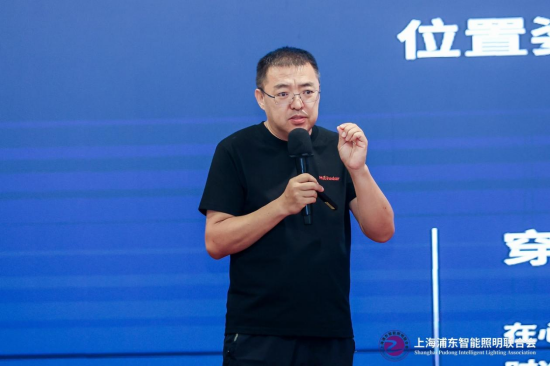
Li Gang, General Manager of Yunfan Ruida
Speech topic: Unlocking the “full‑layer scene” perception capability of smart spaces
Li focused on cutting‑edge applications of millimeter‑wave radar technology, elaborating on Yunfan Ruida’s extensive achievements in the “sensor + solution” domain. The company has independently developed underlying algorithms and antenna technologies, enabling precise human presence detection, fall‑alarm alerts, and sleep‑breathing monitoring—all while maintaining privacy and low power consumption. He emphasized the company’s end‑to‑end customized services, from modules and communications to cloud platforms, along with large‑scale implementations in smart hotels, offices, and wellness facilities, showcasing the broad potential of millimeter‑wave radar in whole‑house smart scenarios.
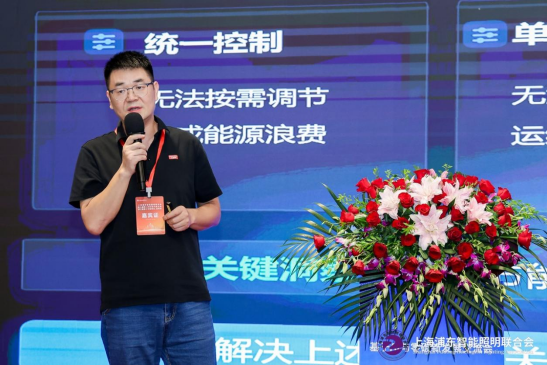
SILA Deputy Secretary-General and Edimine Marketing Director Wei Jianqiang
Speech topic: Pure DALI‑driven low‑carbon development
Wei shared the core value of pure DALI‑driven approaches in advancing low‑carbon goals. He pointed out that DALI, as an international open standard, addresses longstanding pain points in traditional lighting control through single‑lamp addressing, two‑way communication, and open interoperability. DALI‑driven solutions offer three pathways to low carbon: precision energy saving via on‑demand lighting; measurable, traceable digital management; and standardized ecological empowerment for circular economy. Drawing on Edimine’s product matrix, he demonstrated DALI’s widespread adoption in hotels, subways, and commercial settings, underscoring DALI’s emergence as a “common language” across the lighting supply chain, helping China realize its dual‑carbon targets.
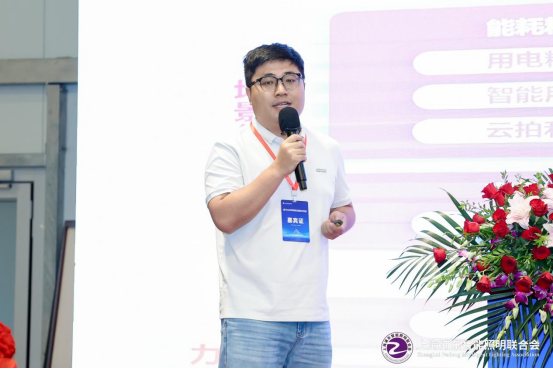
Li Xueke, Director of Green Lighting Products at Tianyi IoT
Speech topic: Tianyi IoT supporting AI‑driven, low‑carbon, bidirectional development in the lighting industry
Li emphasized that Tianyi IoT is pursuing a technological strategy centered on “intelligence, greenness, and certainty,” leveraging its self‑developed CTWing OS and AIoT platform to drive the lighting industry toward deeper integration of energy efficiency, health, and smart features. The company has launched cloud‑based AI modules and green, energy‑saving IoT platforms, harnessing tidal‑energy‑saving brain technology to enable human‑centric lighting and adaptive dimming, with over 5,000 green projects already deployed nationwide. Li stressed the importance of continuing to open ecological partnerships, integrating resources from thousands of collaborators, and implementing integrated solutions that combine sensing, intelligence, and green initiatives, thereby supporting China’s new industrialization and digital transformation and jointly building a future of smart, healthy lighting.
Peak Dialogue: Leading the Times
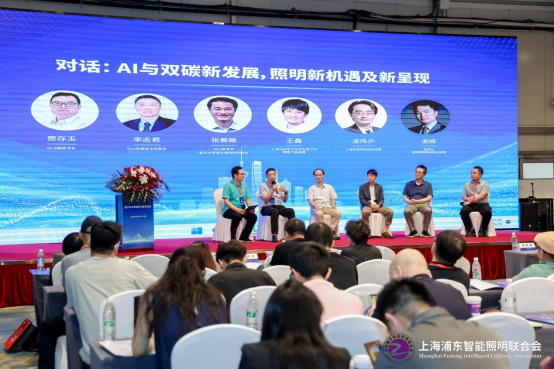
The centerpiece of this exchange—the roundtable discussion themed “AI and Dual‑Carbon New Development: New Opportunities and Presentations in Lighting”—was chaired by Jia Cunyu, Deputy Secretary-General of SILA. Participants included Li Zhijun, Chair of the Association’s Standards Committee; Professor Zhang Shanduan, Director of the Institute of Electric Light Sources at Fudan University; Wang Xin, Product Manager for ABB Lighting; Ling Weihu, Executive Deputy General Manager of Shanghai Yaming; and Xie Hui, General Manager of the Golden Light Indoor Lighting Division—representatives spanning standards, research, foreign‑invested electrical equipment, leading lighting brands, and IoT platforms. Together, they reached consensus: AI and dual‑carbon goals are profoundly reshaping the value logic of lighting. As the industry enters a bottleneck phase, it must leverage AI to enhance human‑centered experiences and break free from the cycle of “quantity‑price‑decline”; when pursuing dual‑carbon pathways, priority should be given to ensuring safe, healthy lighting environments before steadily advancing energy‑saving and carbon‑reduction measures, while concurrently establishing auditable carbon data management systems. The most pressing challenge today lies in the lack of unified data standards, prompting participants to call for the rapid establishment of an industry‑wide AI‑shared database, replacing homogeneous internal competition with cross‑sectoral collaboration, and collectively propelling the lighting industry into a new stage of high‑quality development.
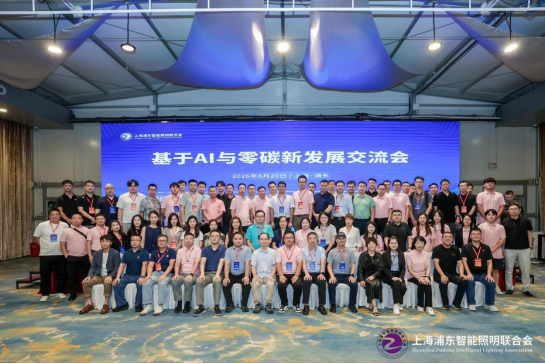
This exchange leveraged the Association’s industrial ecosystem resources, breaking down communication barriers among government agencies, universities, and upstream/downstream partners in the supply chain. By mobilizing standards, technology, real‑world scenarios, and ecological considerations, the event accelerated the large‑scale deployment of AI technologies and zero‑carbon concepts in commercial and engineering smart lighting applications. Moving forward, the Shanghai Pudong Intelligent Lighting Association will continue to deepen its engagement in the dual‑carbon and AI convergence track, refine the industry’s standards framework, and establish regular platforms for technical exchanges, helping China’s lighting sector complete its green, smart, and digital transformation and contributing sustained industrial strength to urban zero‑carbon initiatives and the development of next‑generation smart buildings.
Source: Shanghai Pudong Intelligent Lighting Association, Pudong Science and Technology Association