
In-depth Review | Dr. Huang Feng × Li Jinbiao Explain Digital Addressable Lighting Interface Technology and Latest Breakthroughs → Call for Participating National Standards Organizations Now Underway!
Old Hong on Lighting × DALI Alliance

In the wave of innovation in smart lighting technology, the DALI (Digital Addressable Lighting Interface) protocol is reshaping the industry landscape with its core advantages of simplicity and stability, openness and interconnectivity.
Recently, Dr. Huang Feng, Chairman of the DALI Alliance China Focus Group, and Mr. Li Jinbiao, Leader of the DALI Alliance China CFG Technical Group, conducted an in-depth technical seminar to explain the underlying logic, practical applications, and future trends of DALI technology.
This article will fully present the core viewpoints of both experts and summarize the highlights from the interactive Q&A session at the event.
Dr. Huang Feng: The "Underlying Code" of DALI Technology and Its Scene Revolution
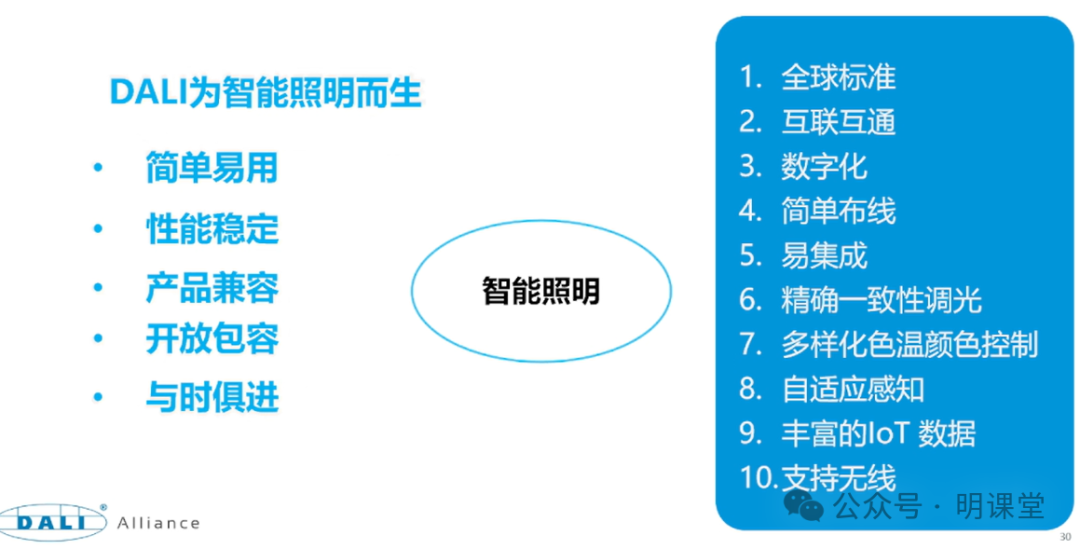
DALI ── Born for Smart Lighting: Simple, Stable, Compatible!
1. Three Core Advantages Establish Industry Leadership
● Extremely Simple and Stable Communication Logic
Utilizing Manchester encoding with strong anti-interference capabilities; bus-based wiring eliminates polarity, supporting combined control and power supply in the same conduit, increasing installation efficiency by 40%.
● Fully Open Interconnection System
Based on the IEC 62386 international standard, it achieves full compatibility across all seven layers of the OSI model, from physical to application layers, supporting single-host, multi-host, and hostless architectures.
● Precise Control Capabilities
Supports DT6 consistent dimming (with precision up to 0.1%), DT8 color temperature control, and RGB multi-channel control, meeting the demands of specialized settings such as art museums and hospitals.
2. Scenario Penetration from Public Buildings to High-End Properties
● Public Building Sector
Projects like Beijing Daxing Airport and Xiamen Metro use DALI systems to achieve zoned control of tens of thousands of luminaires, with a failure rate below 0.1%;
● Commercial Space Sector
Shanghai Estée Lauder offices and Shenzhen Ping An Finance Centre leverage DALI data functions to reduce energy consumption by 30%;
● High-End Property Sector
Projects such as Shenzhen Prince Bay and Chongqing Shangfeng Avenue apply DALI technology to enable personalized lighting management for large apartments and villas.
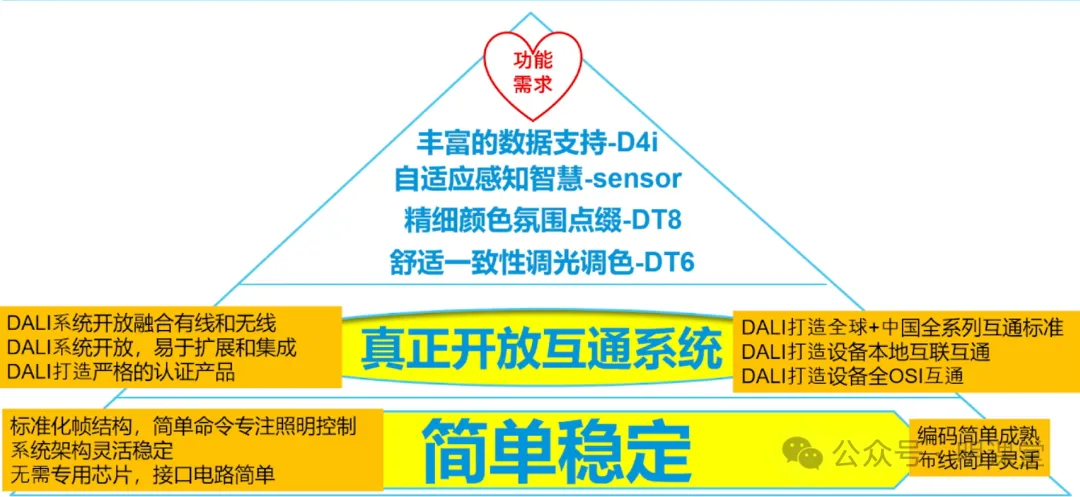
DALI Smart Lighting Control Protocol ── Comprehensive Advantages
Mr. Li Jinbiao: Evolution of DALI Technology and Cutting-Edge Breakthroughs
Mr. Li Jinbiao, R&D Director of Guangdong Baike Power Supply, systematically reviewed the development history of DALI technology and detailed the latest technological breakthroughs expected in 2025.
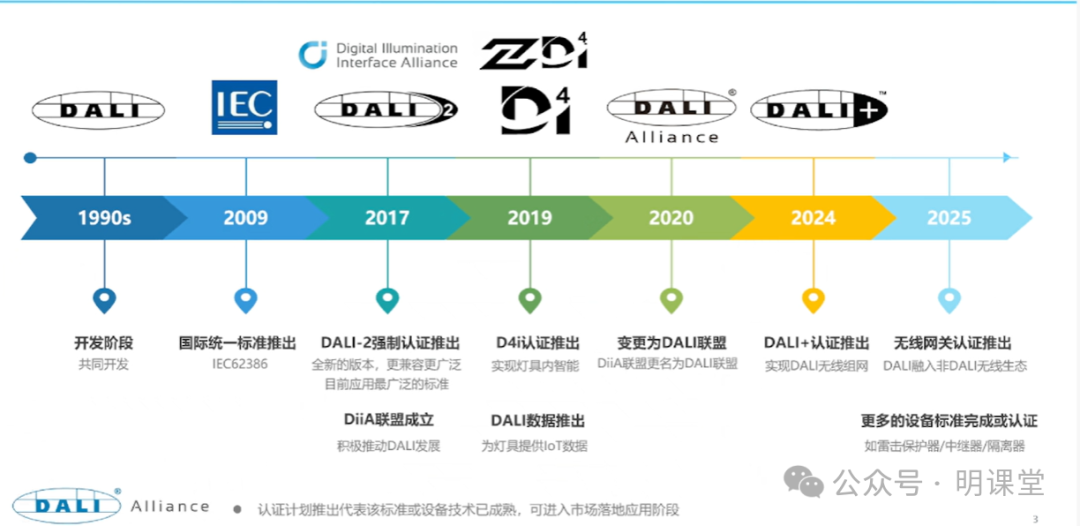
DALI Development Milestones
1. Technological Evolution: A Leap from Protocol to Ecosystem
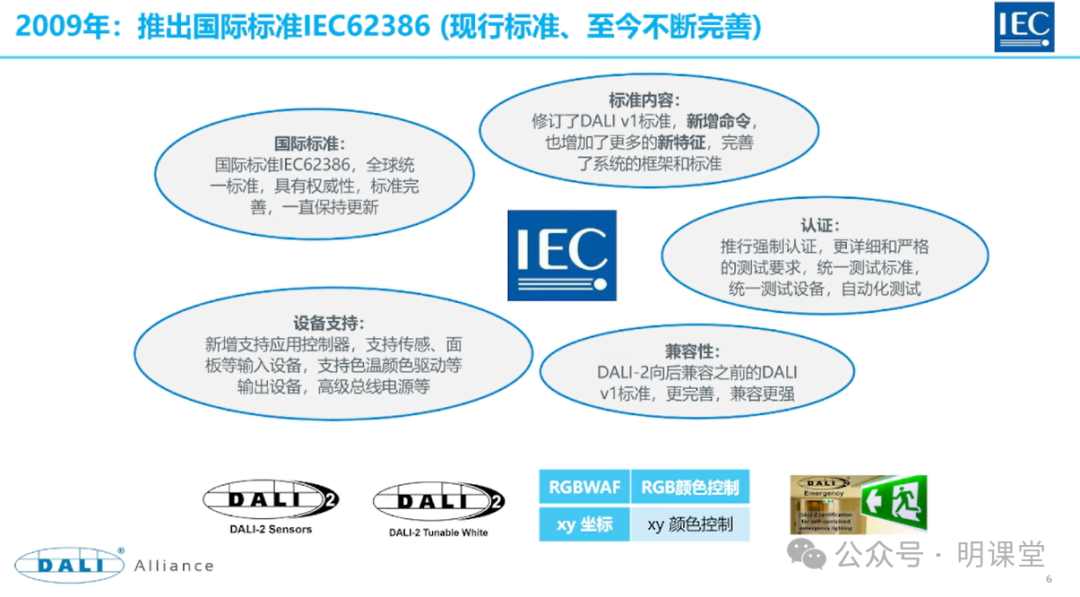
● 2009: Release of the IEC 62386 international standard, unifying specifications for control devices (such as LED drivers), control equipment (such as sensors and control panels), and other components;
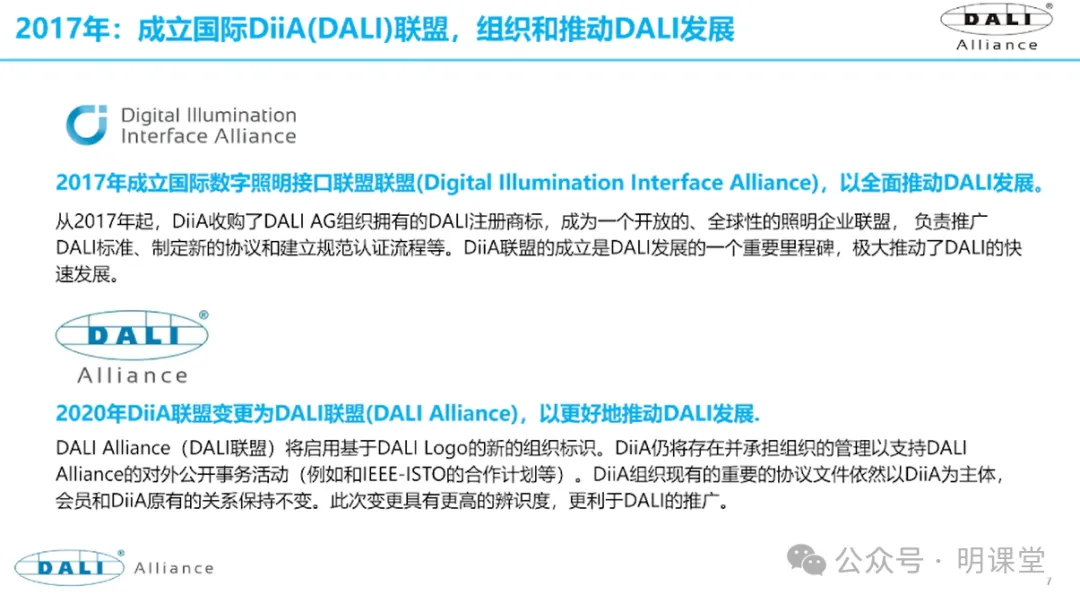
In 2017, the Digital Illumination Interface Alliance was established to comprehensively promote DALI development.
In 2020, the DiiA Alliance was rebranded as the DALI Alliance to better advance DALI initiatives.
● 2017: Mandatory DALI-2 Certification introduced, ensuring device compatibility through standardized testing;
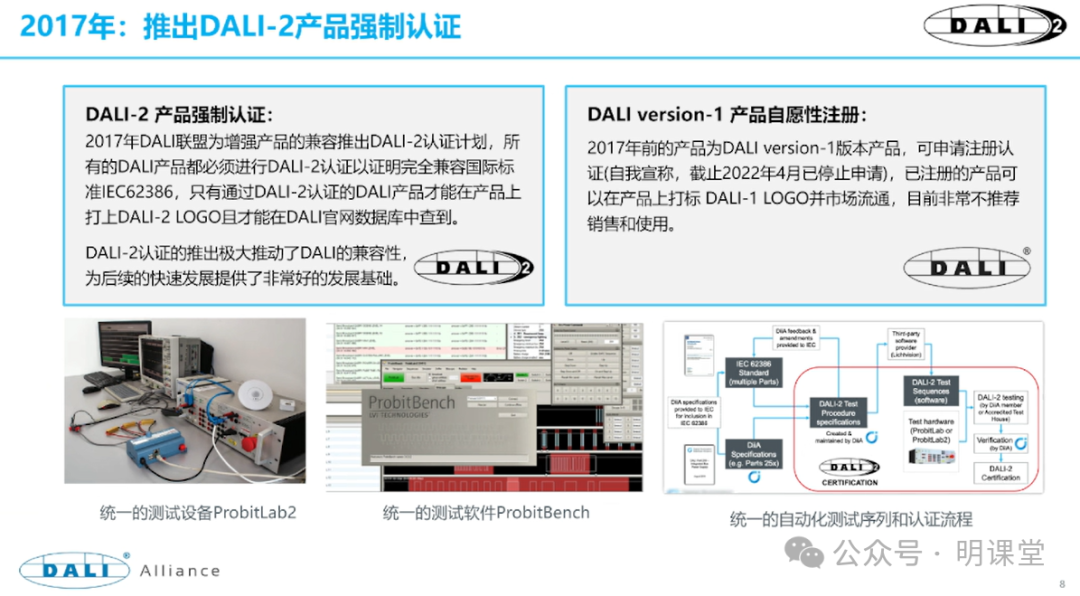
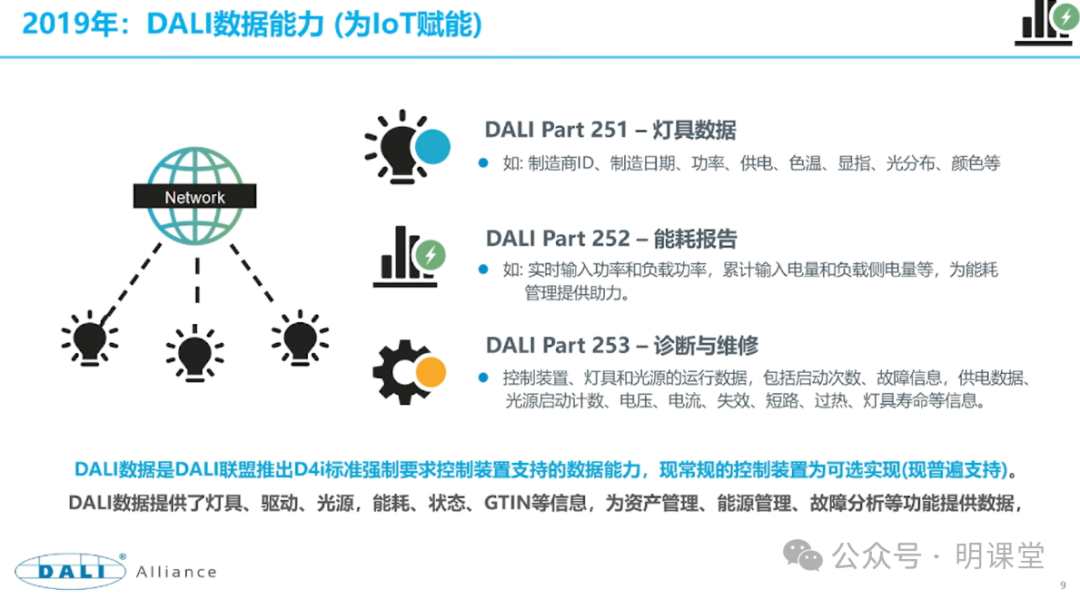
● 2019: Launch of Data Capability and In-Luminaire Intelligence (D4i), supporting luminaire information, status monitoring, and energy consumption statistics;
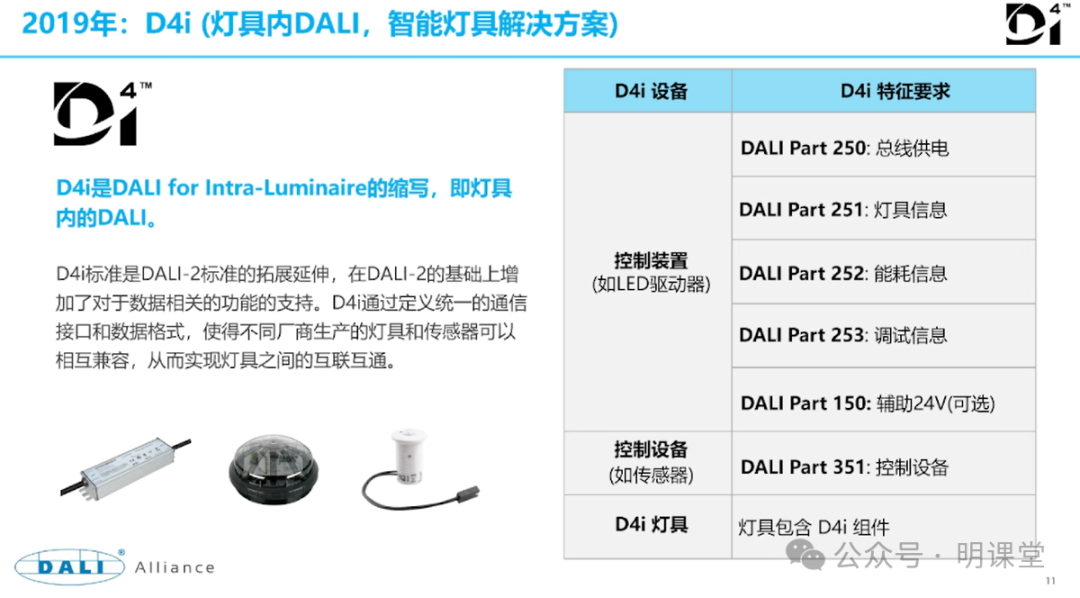
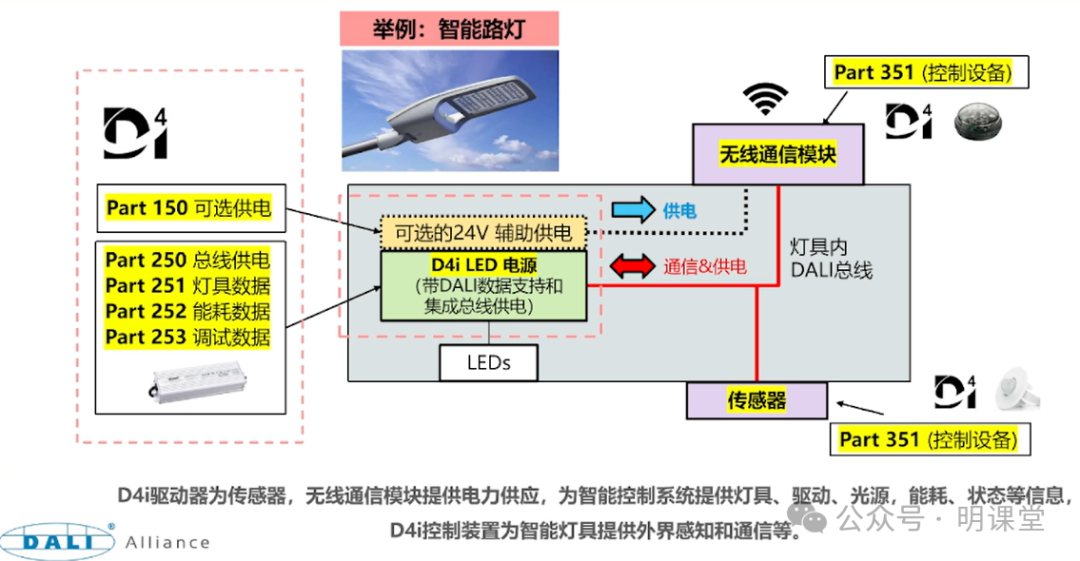
D4i (short for DALl for Intra-Luminaire): D4i standards represent an extension of DALI-2, adding support for data-related functions on top of the original framework.
D4i defines unified communication interfaces and data formats, enabling interoperability among luminaires and sensors from different manufacturers, thus achieving interconnectedness between devices.
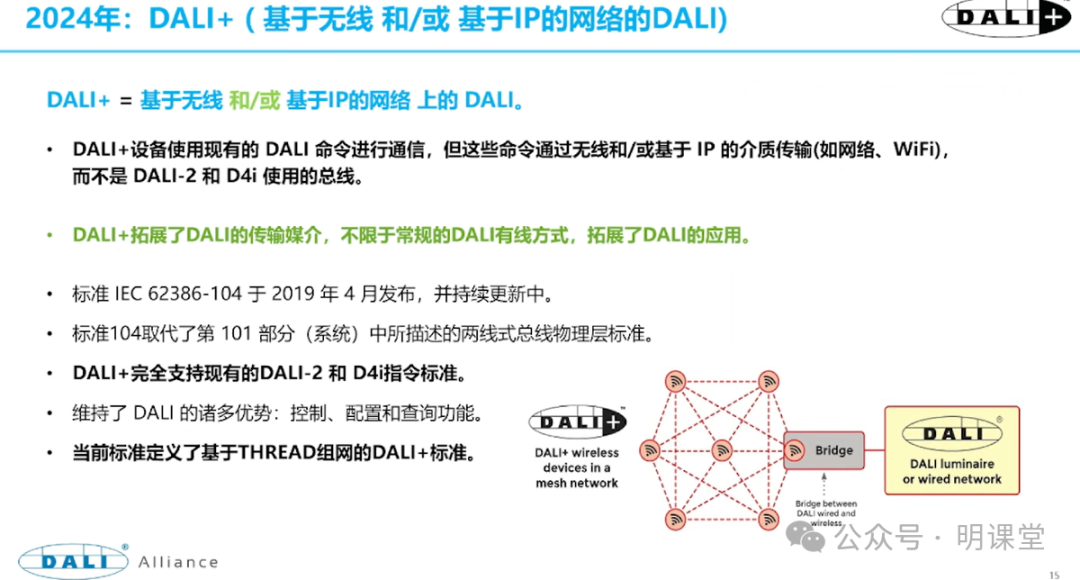
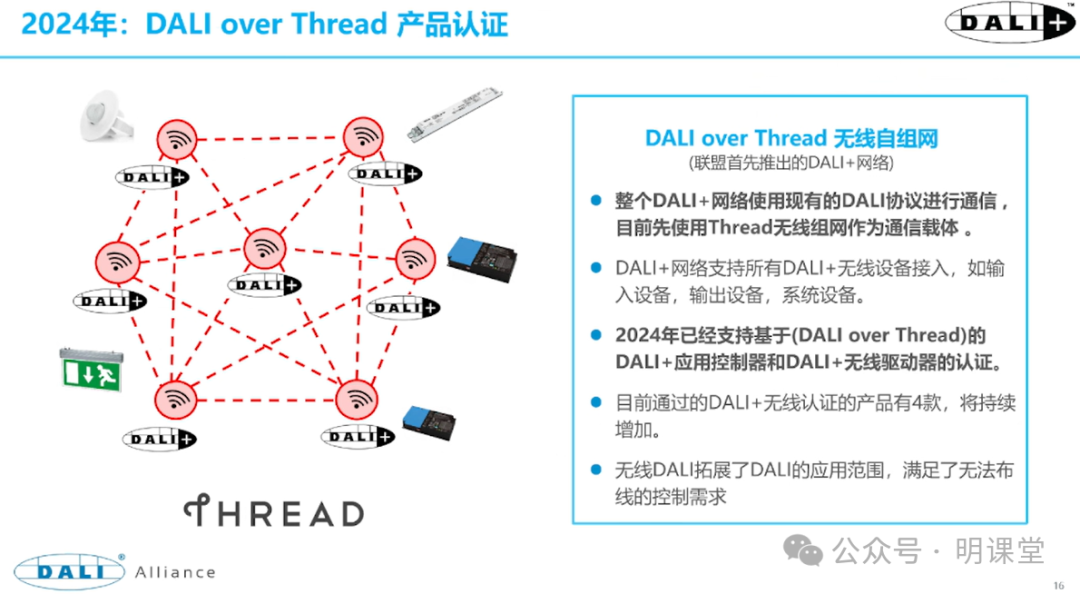
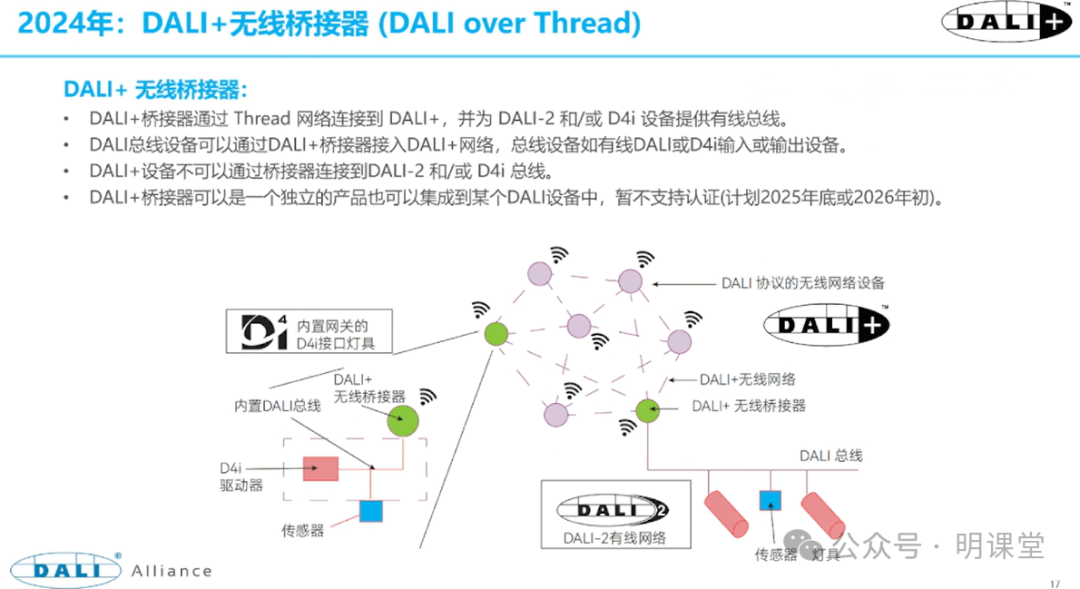
● 2024: The DALI Alliance launched DALI+ technology, breaking the traditional wired limitations of DALI connectivity. This allows DALI to transmit over wireless or IP-based networks, expanding transmission media and greatly broadening DALI's application scope.
2. 2025 Technological Breakthroughs
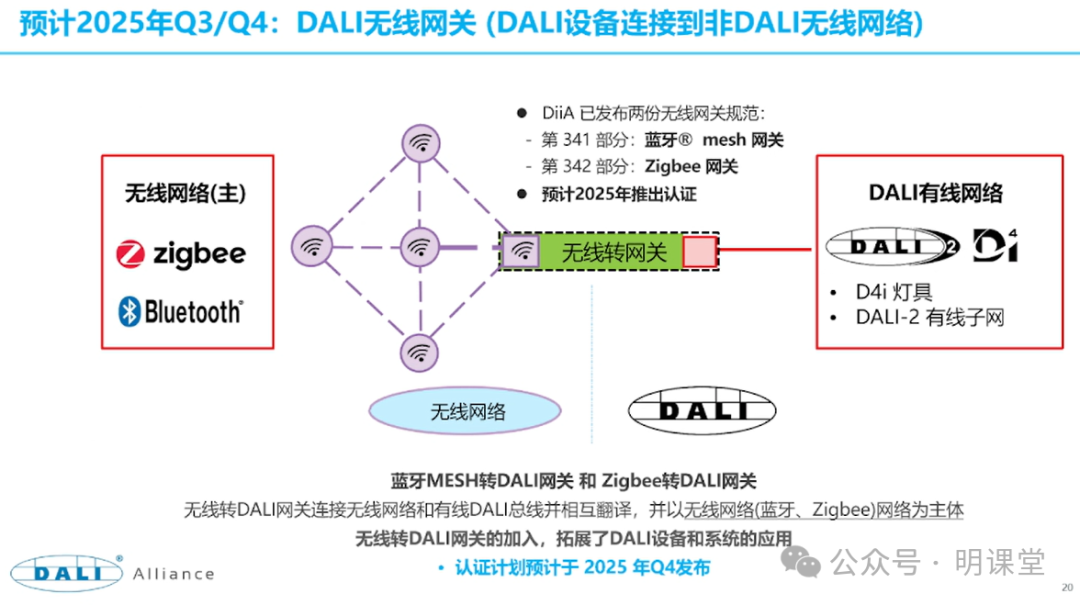
● Wireless Gateway Ecosystem Integration: Plans to introduce Bluetooth Mesh and Zigbee gateways to enable interconnection between DALI devices and smart home systems (Q3/Q4 2025):
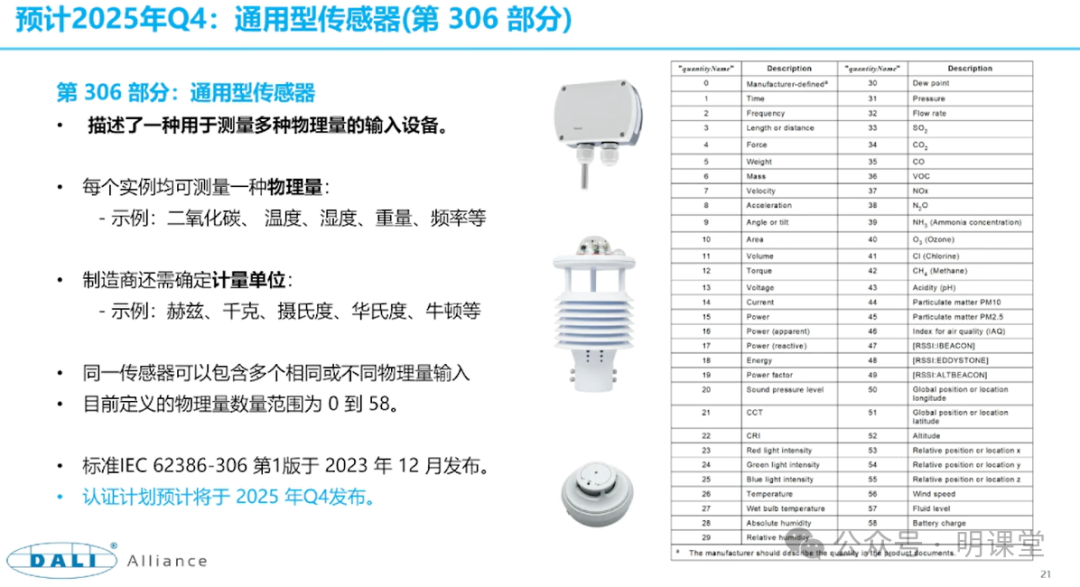
● Universal Sensor Standards: Addition of 59 categories of physical quantity monitoring, including temperature/humidity and PM2.5, expanding industrial and agricultural lighting scenarios (Q4 2025);
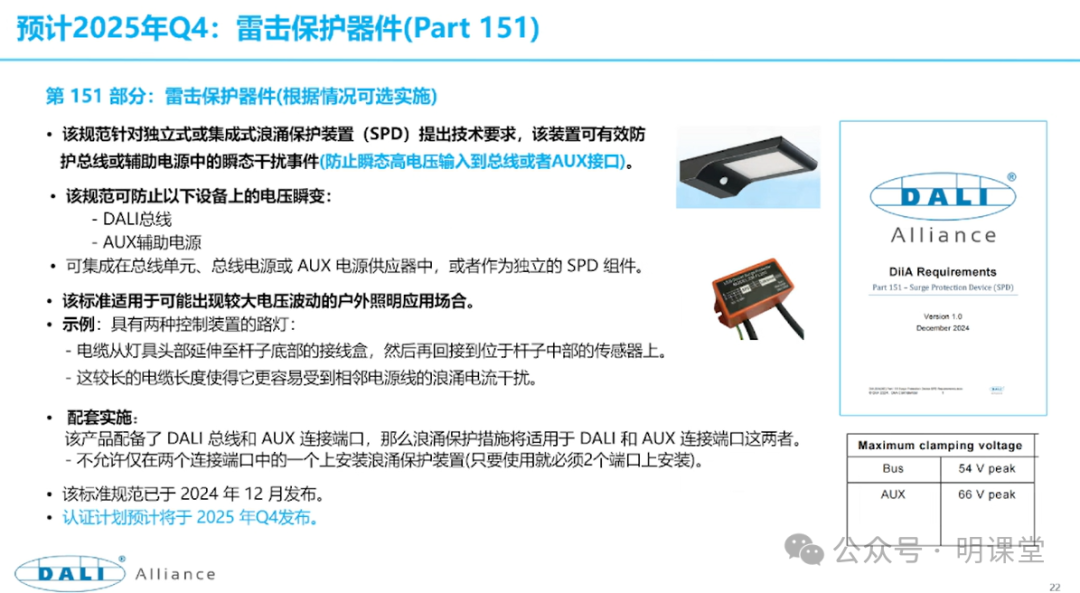
● Lightning Arrestor and Interface Pressure Resistance Requirements: To address potential high-voltage interference affecting DALI interfaces and AUX auxiliary power interfaces in certain environments, the DALI Alliance has established Lightning Arrestor Standards and Interface Pressure Resistance Standards.
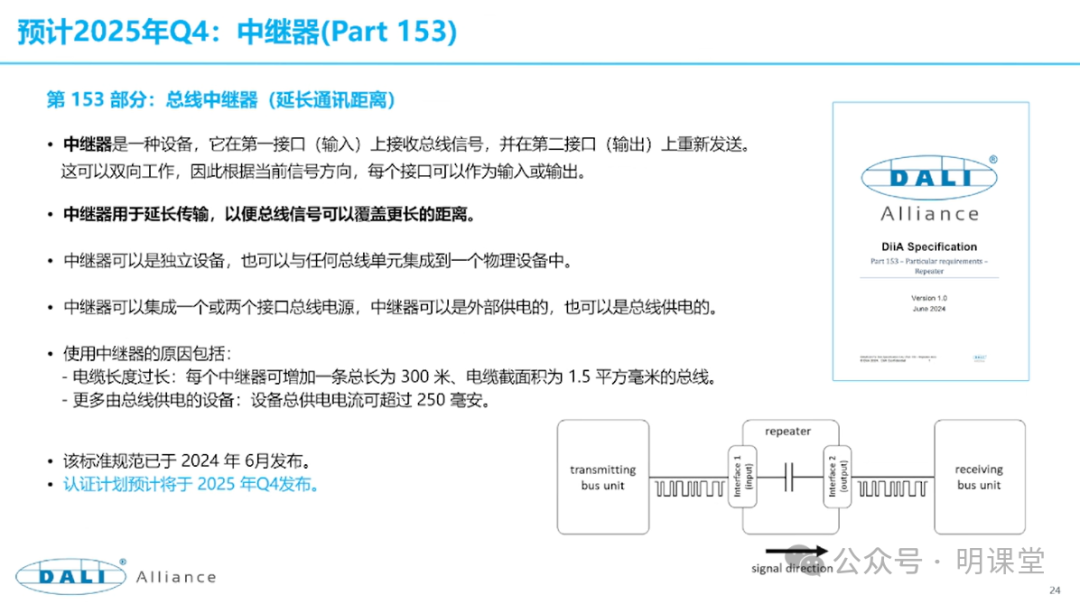
● Repeaters: Repeaters can extend DALI bus communication distances up to 600 meters, further expanding DALI applications.
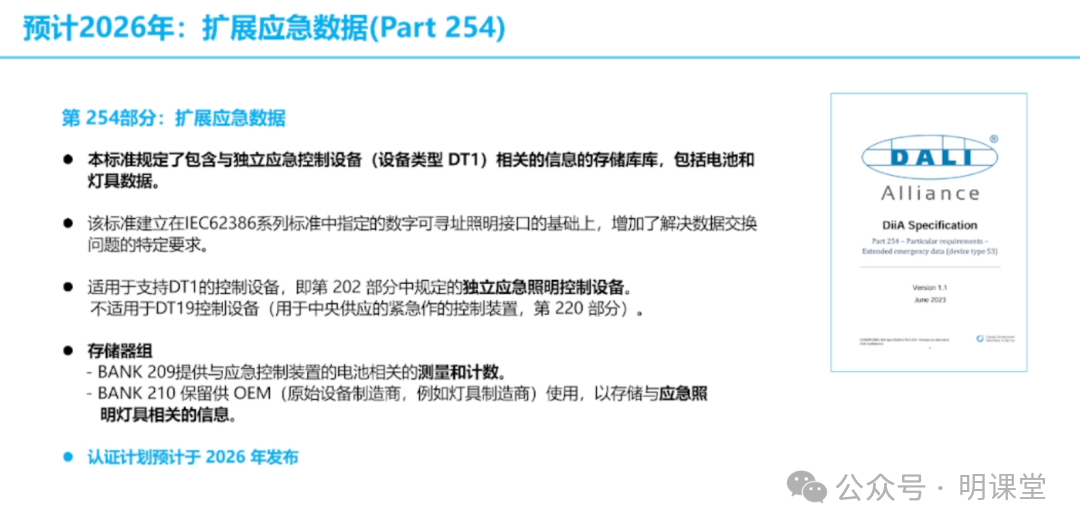
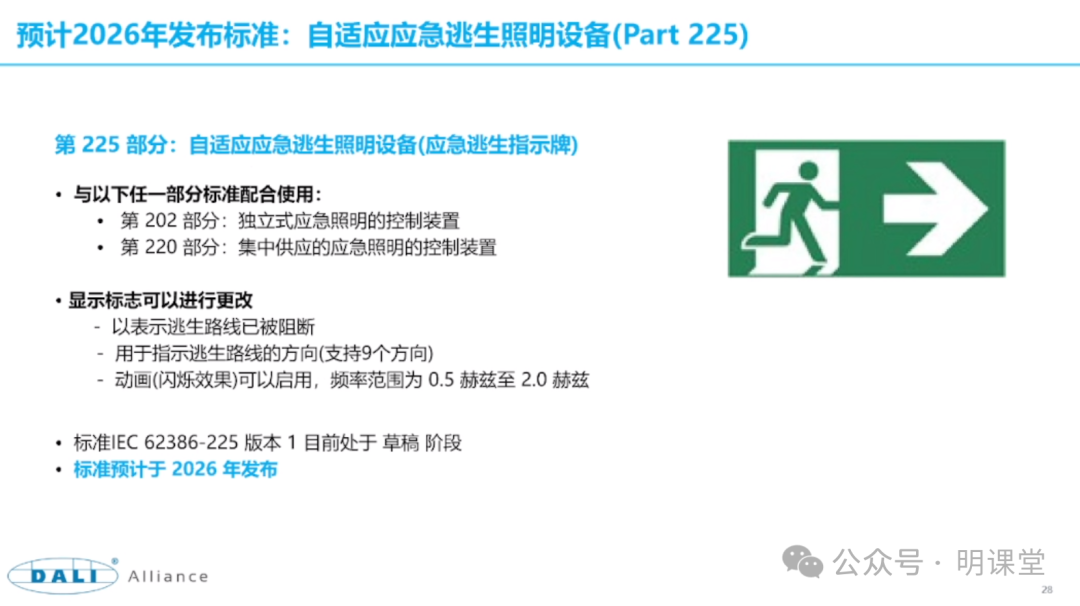
●Expanded Emergency Data Certification and Adaptive Emergency Escape Lighting Equipment Standards are scheduled for release in 2026.
● Remote Firmware Updates: The DALI Alliance has launched firmware update certification, supporting remote driver upgrades via DALI interfaces to fix vulnerabilities and optimize performance across all DALI device categories, including sensors and drivers.
3. Future Plans: Solar Energy and Matter Ecosystem Deployment
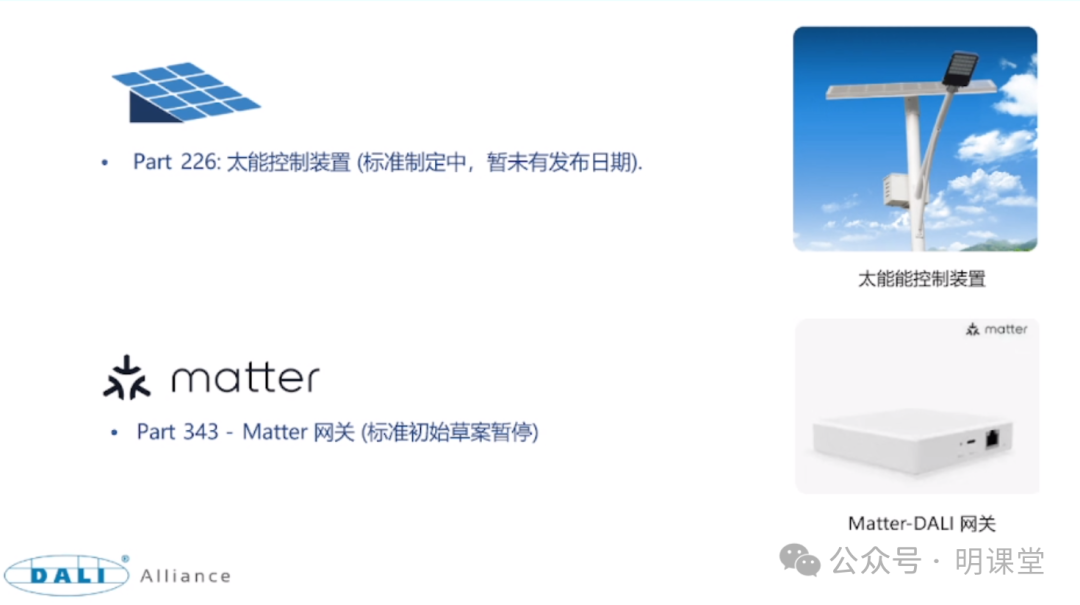
● Solar Control Devices: Developing solar-powered standards specifically for street lighting scenarios, expected to be released in 2026;
● Matter Ecosystem Gateways: Defining Part 341 standards to enable seamless integration between DALI devices and the Matter smart home ecosystem platform.
Finally, Teacher Li Jinbiao reiterated the key message:
DALI ── Born for Smart Lighting!
Interactive Q&A
Addressing Pain Points and Industry Questions Regarding DALI Implementation
Q1: What is the biggest challenge for DALI technology in industrial settings?
Dr. Huang Feng: The core pain point in industrial environments lies in the difficulty of luminaire maintenance. For example, under high-temperature and high-humidity conditions, replacing traditional luminaires requires production shutdowns. The DALI system leverages DALI data functions to monitor luminaire lifespan, voltage, current, and other parameters in real time, providing early fault warnings and significantly reducing maintenance costs.
Q2: Will the DALI protocol integrate cross-domain sensors and IoT platforms?
Dr. Huang Feng: The DALI protocol focuses on the lighting control layer and does not define IoT platform standards, but it supports third-party integration through open interfaces. For instance, building automation systems can access DALI data via gateways, currently achieving interoperability with protocols such as KNX and BACnet.
Q3: How can users avoid compatibility issues with DALI products?
Dr. Huang Feng: The key is to look for the DALI-2 certification mark. All certified products can be verified on the DALI Alliance official website. Special attention should be paid to the Device Type supported by each device (such as DT6 dimming or DT8 color temperature tuning) to prevent mixing devices using different protocol versions.
Q4: What resources do SMEs need to transition to DALI smart lighting?
Mr. Li Jinbiao: SMEs can quickly enter the market through "driver replacement" without modifying existing luminaire structures. Currently, dedicated DALI drivers are available for magnetic lights, tri-proof lights, and other specialized applications, offering various performance levels and price points. Luminaire manufacturers also do not need to pay additional certification fees. It is recommended to choose certified drivers from brands like Baike and Signify to reduce technical risks.
Q5: How do DALI+ and Bluetooth Mesh/Zigbee coordinate within smart homes?
Mr. Li Jinbiao: DALI+ targets professional lighting control, complementing and mutually promoting consumer-grade wireless protocols. DALI+ leans more toward commercial and industrial market applications, while Bluetooth Mesh and Zigbee focus more on residential market uses.
DALI/DALI+ devices can connect to Matter-enabled smart home ecosystems via Matter gateways (standardized by the DALI Alliance).
Alternatively, through Bluetooth Mesh and Zigbee gateways (which already have corresponding DALI standards), DALI/DALI+ products can join Bluetooth Mesh or Zigbee wireless ecosystems, thereby supporting smart home development.
Click here to watch the replay
Disclaimer
The content of this article was compiled by Ming Classroom based on guest presentations delivered by Dr. Huang Feng and Mr. Li Jinbiao at the [Old Hong on Lighting] salon on August 25.
The article is intended solely for personal study and information sharing, maintaining a neutral stance.
If any copyright infringement or related issues arise, please contact us promptly; we will address or remove the content as soon as possible. Thank you for your understanding.
China Light
The official website of the China Association of Lighting Industry and a full-media platform for the lighting sector. We provide authoritative and timely lighting information while striving to be a growth partner for businesses. From brand promotion and channel expansion to consulting, talent training and participation in standards development, we provide comprehensive professional services to help businesses improve quality and efficiency and jointly advance the high-quality development of the lighting industry.
Business Contacts
仇纯 (Ms.): 158 6155 3579
顾君 (Mr.): 137 7157 5253