
The COP31 “China Corner” side event focuses on China’s achievements and experiences in advancing carbon peaking and carbon neutrality.
On the morning of November 10, local time in Turkey, the side event “China’s Path to Carbon Peak and Carbon Neutrality” was successfully held at the “China Corner” during the 31st Conference of the Parties (COP31) to the United Nations Framework Convention on Climate Change.
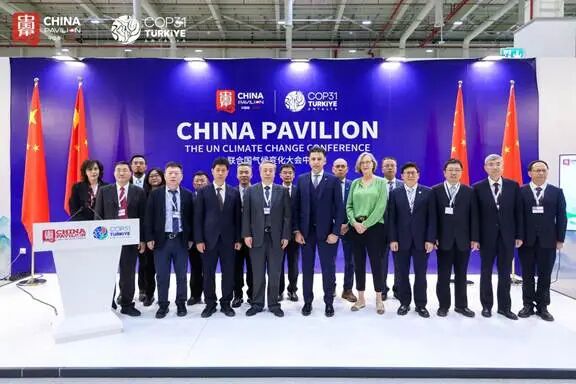
This side event was hosted by the National Center for Energy Conservation and Carbon Reduction under the National Development and Reform Commission. Guests attending and delivering remarks included Wang Shancheng, Director-General of the Department of Resource Conservation and Environmental Protection of the NDRC; Xia Yingxian, Director-General of the Department of Climate Change of the Ministry of Ecology and Environment; and Mohamed Taamour, Director of Implementation Coordination at the UNFCCC Secretariat. Officials from relevant departments and units of the Ministry of Ecology and Environment and the National Energy Administration, along with experts from the National Climate Change Expert Committee, also attended. The event specially invited representatives from the United Nations Environment Programme, the United Nations Institute for Training and Research, the International Energy Agency, the German Energy Agency, Indonesia’s State Electricity Company, and other organizations to participate and exchange views. Over one hundred representatives from domestic and international institutions, social organizations, and enterprises attended.
[Chinese and Foreign Guests Discuss China’s Achievements in Green and Low-Carbon Development]
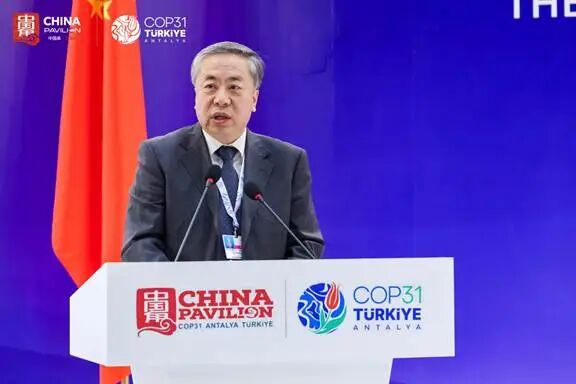
The photo shows Wang Shancheng, Director-General of the Department of Resource Conservation and Environmental Protection of the NDRC.
Wang Shancheng stated that China adheres to Xi Jinping Thought on Socialist Economy with Chinese Characteristics for a New Era and Xi Jinping Thought on Ecological Civilization, planning economic and social development from the perspective of harmonious coexistence between humanity and nature. China pursues goal-driven strategies, actively leveraging the strategic guidance of the “carbon peak and carbon neutrality” goals, refining and breaking down targets across key industries and sectors, and steadily advancing adjustments and optimizations in industrial structure, energy structure, and transportation structure. With planning as a safeguard, China has established a dedicated chapter on “Proactively and Steadily Advancing and Achieving Carbon Peak” in the Outline of the 15th Five-Year Plan for National Economic and Social Development, issued the “Action Plan for Carbon Peaking during the 15th Five-Year Plan,” and comprehensively deployed key tasks for the five-year period. Furthermore, China enforces strict implementation through a dual-control system for total carbon emissions and emission intensity, promulgated the “Comprehensive Evaluation and Assessment Measures for Carbon Peaking and Carbon Neutrality,” and steadily implements policies and mechanisms such as local carbon assessments, sectoral carbon controls, corporate carbon management, project carbon evaluations, and product carbon footprint tracking, thereby solidly advancing carbon peaking initiatives. China’s green transition not only supports its own high-quality development but also provides strong momentum for global climate governance and accelerated energy transformation, while simultaneously charting a new path for developing countries to achieve sustainable development.
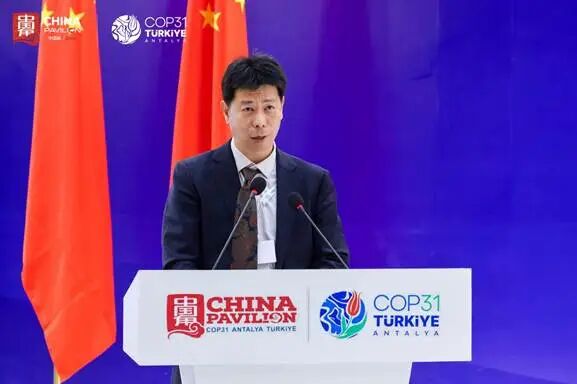
The photo shows Xia Yingxian, Director-General of the Department of Climate Change of the Ministry of Ecology and Environment.
Xia Yingxian pointed out that since proposing the carbon peak and carbon neutrality goals in 2020, China has steadily advanced its “dual carbon” efforts through concrete actions, gradually forging a distinctive Chinese path to addressing climate change. Historic breakthroughs have been achieved in energy transformation: China’s share of non-fossil fuel consumption rose from 16.0% in 2020 to 21.7% in 2025, and this year, installed photovoltaic capacity historically surpassed coal-fired power to become the largest source of electricity. The green and low-carbon transformation of industry is deepening: China has built the world’s largest and most complete clean energy Industry / Supply chain. The regulatory framework for carbon emissions management continues to improve: the Ecological and Environmental Code has come into effect, the world’s largest carbon emissions trading market has been established, and voluntary emission reduction trading and product carbon footprint management systems are being rapidly refined. China will actively implement President Xi Jinping’s four major global initiatives, further deepen green technology and industrial cooperation with all parties, and ensure that green development benefits regions worldwide.
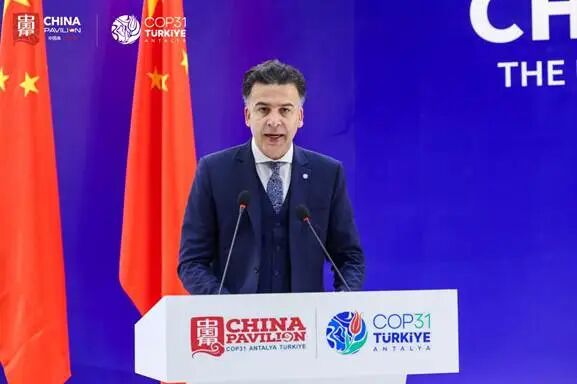
The photo shows Mohamed Taamour, Director of Implementation Coordination at the UNFCCC Secretariat.
Mohamed Taamour highly commended China’s remarkable achievements in clean energy transition, noting that these tangible results have effectively reduced the cost of clean technologies, benefiting not only China but also countries around the globe. China is steadily progressing toward its 2030 targets and has proposed a 2035 Nationally Determined Contribution covering the entire economy and encompassing all greenhouse gases. China has set a strong example in promoting green and low-carbon development, vividly demonstrating the practical effectiveness of translating national ambitions into local action. He expressed hope that industrial transformation would be incorporated into the global climate agenda, emphasizing the significant value of sharing China’s market mechanisms and policy experiences.
[China’s Green and Low-Carbon Transition Injects New Momentum into Global Climate Governance]
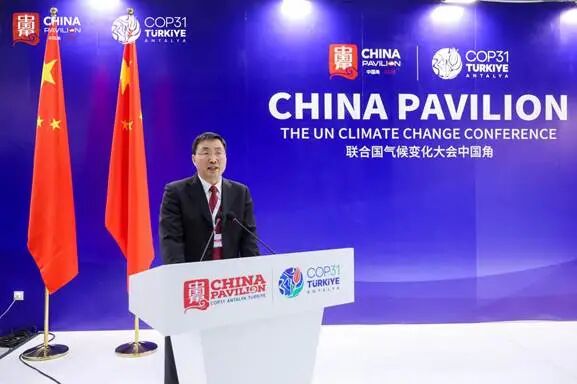
The photo shows Liu Qiong, Director of the National Center for Energy Conservation and Carbon Reduction.
Liu Qiong introduced specific progress and achievements in China’s energy conservation and carbon reduction efforts, as well as priorities for the next phase. Since 2012, China has supported rapid economic growth with slower increases in energy consumption, significantly reducing energy intensity and achieving notable results in energy saving and carbon reduction. Historic breakthroughs have been made in energy transformation, with renewable energy experiencing leapfrog development, continuous improvements in energy efficiency across key industries, accelerated green transformations in buildings, transportation, and other sectors, and green consumption becoming a new social trend. China has issued the “Action Plan for Carbon Peaking during the 15th Five-Year Plan,” clearly defining objectives and tasks for achieving carbon peaking on schedule, and setting specific targets for green and low-carbon development in key areas such as power, industry, construction, and transportation.
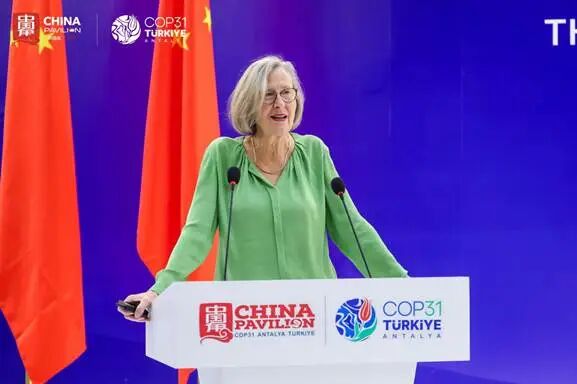
The photo shows Christina Haferkamp, Executive Director of the German Energy Agency.
Christina Haferkamp stated that urban energy transformation is a crucial driver of global low-carbon transition. China and Germany continue to deepen urban green cooperation, conducting heating planning and climate protection collaborations in Liquan County, Shaanxi Province, and the Guangdong-Hong Kong-Macao Greater Bay Area. These practices inject new momentum into global urban green development and provide replicable cooperative models for cities worldwide exploring low-carbon pathways.
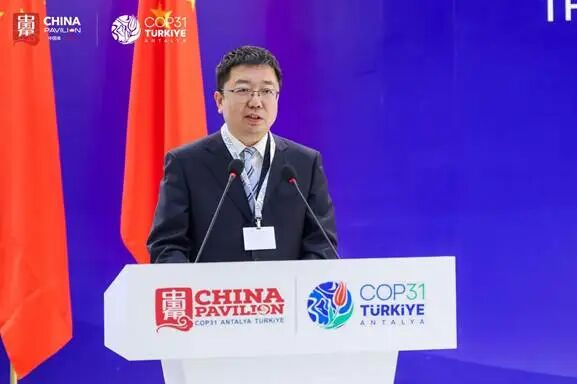
The photo shows Hu Jun, Director of the Research Center for Xi Jinping Thought on Ecological Civilization.
Hu Jun emphasized that Xi Jinping Thought on Ecological Civilization serves as the fundamental principle and action guide for ecological civilization construction in the new era. Guided by this thought, China resolutely rejects the outdated approach of “pollute first, govern later,” firmly establishes and practices the philosophy that lucid waters and lush mountains are invaluable assets, insists on protecting during development and developing through protection, integrates green development into every field and stage of modernization, and synergistically promotes carbon reduction, pollution control, greening, and growth.
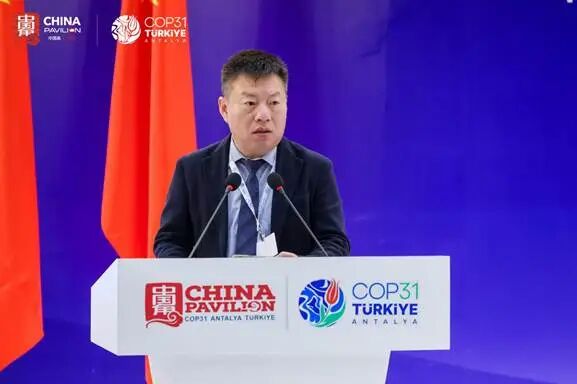
The photo shows Lei Hongpeng, Deputy Director-General of the Climate Division of the United Nations Environment Programme.
Lei Hongpeng noted that global energy transformation faces numerous challenges, including ensuring energy supply and meeting rapidly growing electricity demand. China’s successful practices in renewable energy, low-carbon transportation, and clean technologies have demonstrated to the world that accelerating green and low-carbon transformation can simultaneously achieve multiple objectives, such as innovation-driven development, environmental protection, employment security, and high-quality growth. UNEP commends and supports China’s continued leadership role in promoting broader multilateral and bilateral cooperation.
[International Exchanges and Experience Sharing on Energy Conservation and Carbon Reduction Initiatives]
During the experience-sharing session, domestic and international guests exchanged practical experiences and outcomes related to local green transformations, energy conservation and carbon reduction in key industries, and power system transformation.
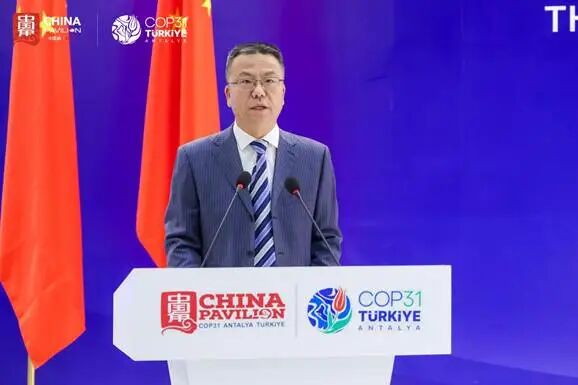
The photo shows Zhang Wangcai, Director of the Beijing Center for Energy Conservation and Environmental Protection.
Zhang Wangcai shared Beijing’s experience in accelerating its development as an international benchmark city for the green economy. Leveraging five flagship projects—technological innovation, industrial cultivation, livable city development, cultural enrichment, and collaborative construction—Beijing is expediting the establishment of a new high-quality development paradigm featuring “dual benchmarks leading, dual engines driving” for both the green and digital economies. Beijing is eager to share its green transformation achievements with global partners and contribute Beijing wisdom to global sustainable development.
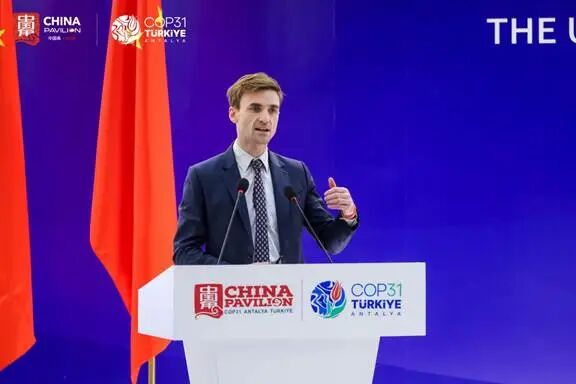
The photo shows Thomas Spencer, Senior Research Fellow at the International Energy Agency.
Thomas Spencer stated that over the past decade, global electrification rates have risen from approximately 19% to 23%, while China has approached 30%, surpassing the global average. As power systems become more complex and fluctuations on both supply and demand sides intensify, maintaining safe system operations becomes increasingly challenging. He looks forward to China continuing to play a leading and supportive role in green power transformation, providing more Chinese solutions to ensure global power system safety, stabilize critical mineral supply chains, and accelerate global electrification.
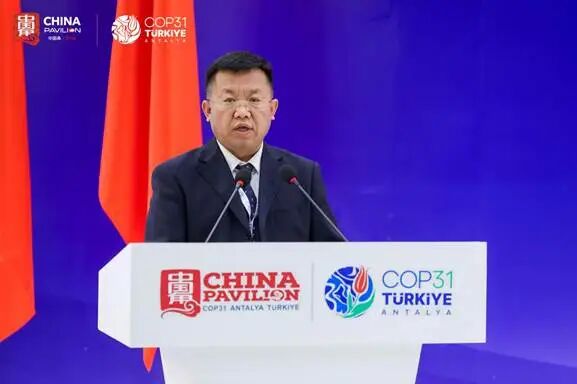
The photo shows Jia Xiaojun, Director of the Carbon Reduction Division of the Ningxia Development and Reform Commission.
Jia Xiaojun shared experiences in building a comprehensive new energy demonstration zone. Ningxia remains committed to moving toward green development and embracing innovation, exploring new models such as “electricity-computing synergy” and “electricity-hydrogen synergy,” promoting diversified integration of clean energy sources, fostering a complete Industry / Supply chain for clean energy equipment manufacturing, and achieving new breakthroughs in clean energy development and utilization.
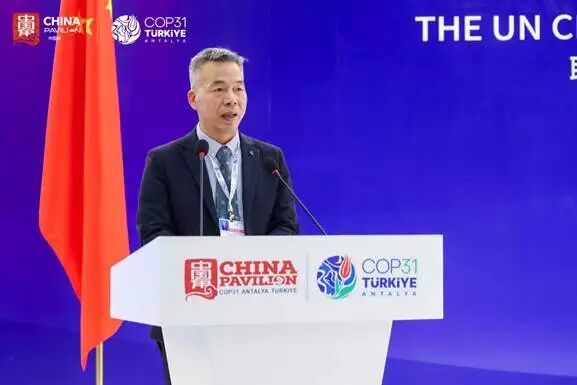
The photo shows Zhang Yongjie, Executive Director of the China Iron and Steel Association.
Zhang Yongjie shared progress on the three-year initiative to establish steel industry benchmarks for energy efficiency. The Chinese steel industry is implementing extreme energy efficiency projects, using a “three lists, two standards, one data system” approach to cultivate benchmarks. Over three years, cumulative energy savings exceed 24 million tons of standard coal, and CO2 emissions have been reduced by 60 million tons. In the future, the Chinese steel industry will launch an energy-carbon efficiency improvement project to achieve dual benchmarking and dual enhancement of energy and carbon efficiency, promoting higher-quality, higher-level development of the steel sector, and expressing willingness to share China’s energy conservation and carbon reduction strategies with international peers.
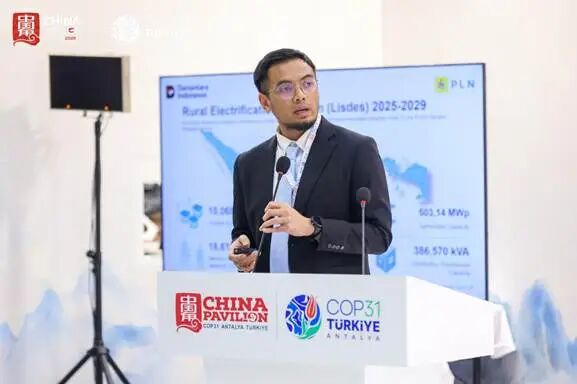
The photo shows Heramat Fauzan, Executive Vice President for New and Renewable Energy at Indonesia’s State Electricity Company.
Heramat Fauzan stated that Indonesia is accelerating efforts to achieve its target of 100 gigawatts of renewable energy capacity, including photovoltaics, with projections indicating that 76% of new generating capacity added over the next decade will come from renewables. Indonesia looks forward to deepening experience exchanges and mutual learning with Chinese enterprises to help expedite Indonesia’s clean energy transition.
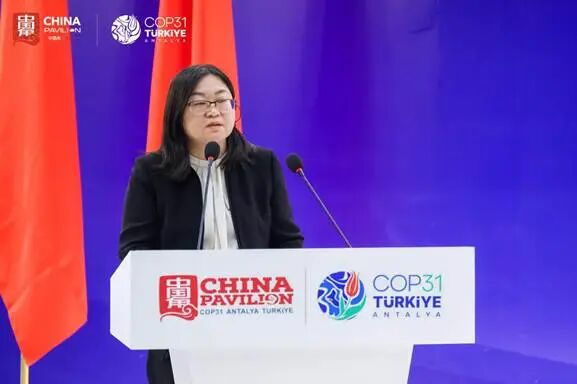
The photo shows Zhang Xiaoxuan, Deputy Director of the Corporate Strategy Research Institute at the State Grid Energy Research Institute.
Zhang Xiaoxuan introduced China’s practical experience in using electrification to drive green and low-carbon transformation. China is accelerating its electrification process, with the electrification rate projected to reach 29.5% by 2025, placing it among the global leaders. State Grid Corporation of China has achieved positive results in areas such as electric power substitution, green electricity trading, and ultra-high-voltage clean energy allocation. Moving forward, the company plans to adopt an even more proactive stance in deepening international exchanges and collaborations, exploring electrification pathways tailored to different national contexts, and jointly advancing global energy transformation.
Source: National Platform for Promoting Energy Conservation and Carbon Reduction
China Light
The official website of the China Association of Lighting Industry and a full-media platform for the lighting sector. We provide authoritative and timely lighting information while striving to be a growth partner for businesses. From brand promotion and channel expansion to consulting, talent training and participation in standards development, we provide comprehensive professional services to help businesses improve quality and efficiency and jointly advance the high-quality development of the lighting industry.
Business Contacts
仇纯 (Ms.): 158 6155 3579
顾君 (Mr.): 137 7157 5253