
Another Opportunity for the Lighting Industry: A Specialized Interpretive Report on the National “15th Five-Year Plan” Work Plan for Energy Conservation and Carbon Reduction in Public Institutions
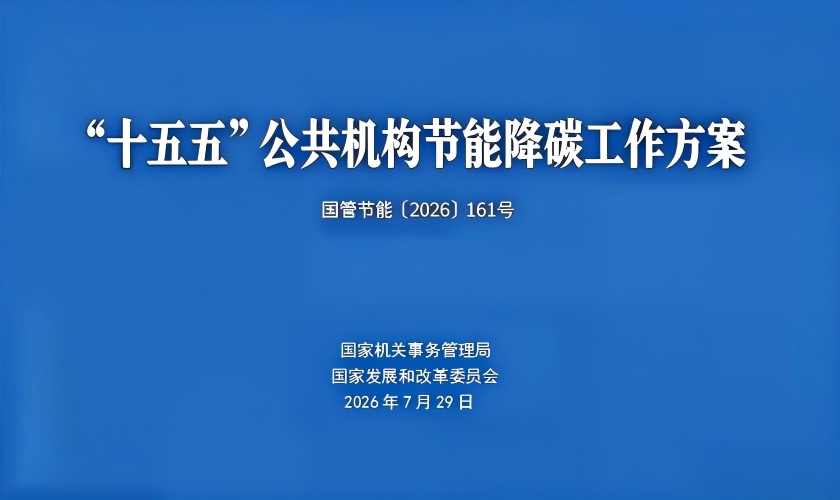
Following urban renewal initiatives that have unlocked substantial opportunities for the lighting industry through existing‑stock upgrades, the State Administration of Government Offices and the National Development and Reform Commission recently jointly issued the “Work Plan for Energy Conservation and Carbon Reduction in Public Institutions during the 15th Five-Year Plan Period.” This move has once again opened up a significant market for energy‑saving and carbon‑reduction retrofits in public‑institution lighting, presenting another major policy-driven opportunity for the sector.
The “Work Plan” sets clear targets: using 2025 as the baseline, by 2030 public institutions will achieve an 8.5% reduction in carbon emissions per unit of floor area and a 5% decrease in energy consumption per unit of floor area. As a core area where lighting accounts for a high share of energy use, delivers rapid results upon retrofitting, and offers considerable market potential, the lighting system has been designated as a key focus for upgrading existing equipment, implementing smart‑technology upgrades, and integrating renewable energy sources. With their vast scale and diverse application scenarios, public institutions nationwide represent a massive, untapped market worth hundreds of billions of yuan for lighting‑industry upgrades, while simultaneously driving the sector to transition from traditional luminaire manufacturing toward becoming comprehensive green and intelligent service providers. Drawing on official statistics, this article clarifies the total number of public institutions and current lighting‑related energy consumption, outlines industry responsibilities and market opportunities, and proposes practical strategies across industrial, technological, product, and operational dimensions.
I. Basic Overview of Public Institutions and Core Responsibilities of the Lighting Industry
(1)
National Composition and Scale of Public Institutions
According to statistics from the State Administration of Government Offices, as of 2023, there were approximately 1.578 million public institutions nationwide, consuming roughly 170 million tons of standard coal equivalent in total energy. These institutions serve as leading examples for energy conservation and carbon reduction across society. Their specific composition is as follows:
◆ Approximately 363,000 state organs, accounting for 23%, including Party committees, people’s congresses, governments, CPPCC bodies, public security, judicial, and procuratorial agencies, as well as democratic parties and mass organizations;
◆ About 882,000 public institutions, representing 56%, including 382,000 educational facilities, 148,000 medical and health institutions, and roughly 19% comprising research institutes, cultural and sports venues, libraries, and other public service organizations;
◆ Around 332,000 group organizations, making up 21%, such as industry associations and publicly funded non‑profit groups.
By usage scenario, office buildings of Party and government agencies, primary and secondary schools, universities, public hospitals, government administrative parks, municipal road lighting, and cultural and sports venues constitute the primary areas for lighting upgrades, covering indoor office lighting, underground parking garages, outdoor streetlights, and campus landscape illumination across all categories.
(2)
Current Energy Consumption in the Lighting Sector and Retrofit Potential
In public‑institution buildings, lighting systems account for 25%–35% of total electricity consumption, while municipal road lighting makes up over 60% of outdoor energy use. However, significant gaps remain in existing‑stock retrofits: among county‑level and above public buildings nationwide, 63% still lack efficient LED upgrades; specifically, only 51.2% of educational facilities and 47.8% of medical institutions have completed such upgrades. Many older high‑pressure sodium lamps, conventional fluorescent lights, and low‑efficiency standard LEDs continue to be used, with overall luminous efficacy generally below 150 lm/W. Smart control penetration stands at less than 42%, and issues like unnecessary lighting and continuous standby losses are widespread.
Based on projected retrofit scales, during the 15th Five-Year Plan period, the national market for public‑institution lighting retrofits could exceed RMB 500 billion, with approximately RMB 220 billion allocated to luminaire replacement and around RMB 280 billion dedicated to smart control systems and energy‑management services. Individual projects can achieve energy savings of 30%–70%; replacing high‑pressure sodium lamps with high‑efficiency LED streetlights can yield combined energy savings exceeding 70%, while sensor‑activated underground garage lighting may save more than 65%. Such measures are critical enablers for meeting public‑institution carbon‑reduction targets.
(3)
Statutory Responsibilities of the Lighting Industry
First, the industry bears responsibility for phasing out inefficient legacy lighting products. It must fully cease production of high‑energy‑consumption lighting items, ensuring that all newly supplied luminaires meet the national Level‑1 energy efficiency standard. This guarantees that lighting replacements in Party and government offices, schools, hospitals, and other facilities comply with advanced energy‑efficiency requirements, supporting the relevant authorities in completing energy‑conservation verification and acceptance procedures.
Second, the industry is tasked with implementing smart‑lighting technologies. To align with public‑institution energy‑management platform data‑integration needs, it should provide integrated solutions featuring time‑of‑day dimming, human‑presence sensing, itemized energy‑consumption metering, and remote management capabilities, thereby enabling fine‑grained control over lighting energy use.
Third, the industry must operate market‑oriented energy‑saving services. By embracing contract‑based energy management and energy‑cost‑custody models encouraged by policy, it can establish end‑to‑end service chains encompassing investment, construction, operation, maintenance, and carbon‑accounting, ensuring long‑term stable performance of retrofit projects and contributing to the development of resource‑efficient government entities.
Fourth, the industry is responsible for building a green supply chain. This includes promoting product carbon‑footprint calculations and green certifications, cooperating with public institutions to implement green procurement policies, and establishing mechanisms for tracking product quality throughout its entire lifecycle.
II. Structural Growth Opportunities for the Lighting Industry
(1)
Concentrated Demand for Existing‑Stock Retrofits Drives Growth in the Public‑Sector Market
Unlike the fiercely competitive residential lighting market, public‑institution procurement features stable payment cycles and robust policy support. Central and local governments allocate special budgets for energy‑saving retrofits, and local government‑affairs bureaus incorporate lighting upgrades into annual energy‑conservation assessment tasks. With 19,000 central government agencies and 570,000 local ones already connected to the national public‑institution energy‑monitoring platform, pressure is mounting across regions to accelerate the replacement of inefficient lighting. During the 15th Five-Year Plan period, the annual market size for public‑institution lighting retrofits is expected to exceed RMB 100 billion, providing a crucial growth engine for lighting companies seeking to break free from low‑price competition.
(2)
Widespread Adoption of Energy‑Cost‑Custody Models Spurs Profitability Transformation
Policy explicitly designates energy‑cost custody as the preferred approach for public‑institution energy conservation, dismantling the traditional one‑off sales model. Companies can now secure steady cash flow through upfront retrofit investments, sharing energy‑saving revenues, and offering long‑term operation and maintenance contracts spanning 8–15 years. By 2025, the national EMC market in the lighting sector is projected to reach RMB 26.1 billion, with service revenue accounting for over 35% of total income. Large-scale municipal road and park‑wide custody contracts are steadily increasing, with average contract values rising above RMB 18 million. Long‑term partnerships with high‑quality public and corporate clients significantly enhance companies’ risk resilience.
(3)
Simultaneous Advancements in Efficiency and Intelligence Drive Technological Upgrades
Public institutions are shifting their lighting needs from basic illumination to “high‑efficiency, energy‑saving, eye‑friendly, intelligently managed, and low‑carbon or zero‑carbon” solutions. High‑efficiency LEDs, smart drivers, photovoltaic‑storage integrated lighting, and eye‑care lighting are now in strong demand. Policies mandate that at least 80% of key energy‑using devices meet advanced energy‑efficiency standards, prompting the industry to phase out low‑end packaging and low‑efficiency lamp production. Leading enterprises leverage their technological advantages to increase market concentration, with the industry’s CR5 likely to rise steadily from its current level of 28.6%.
(4)
Green Procurement Policies Build Barriers to Entry for Low‑Carbon Brands
Public institutions prioritize purchasing green products, incorporating energy‑saving lighting into government procurement catalogs. Local governments offer R&D subsidies and green credit support to environmentally friendly lighting firms. Companies holding energy‑efficiency certifications, green product certifications, and carbon‑footprint calculation capabilities gain preferential access to bundled regional retrofit projects, creating distinctive competitive advantages.
III. Practical Strategies for Lighting Companies
(1)
Industry Level: Optimize Production Capacity and Deepen Specialization in the Public‑Sector Segment
First, resolutely phase out outdated production capacity by shutting down conventional fluorescent‑lamp and low‑efficiency sodium‑lamp lines, focusing instead on three core product categories: high‑efficiency LEDs, specialized municipal lighting, and smart lighting. Tailor standardized, public‑sector‑specific product lines to five key application scenarios—Party and government offices, schools, hospitals, underground parking garages, and municipal roads—to avoid homogeneous competition from generic products.
Second, establish a dedicated public‑sector service system by setting up a Public Institution Division, assigning dedicated personnel to liaise with local government‑affairs, urban‑management, and finance departments, mapping regional annual retrofit plans, and proactively stockpiling project resources. Develop tiered retrofit schemes tailored to varying regional budgetary constraints and assessment requirements.
Third, build a collaborative, decarbonization‑focused supply chain: upstream, select low‑power chips and eco‑friendly material suppliers to establish a green supply chain; downstream, form bidding consortia with energy‑saving service firms and smart‑city operators to address funding and operational‑qualification shortfalls, collectively taking on large‑scale, region‑wide custody projects.
(2)
Technology Level: Tackle Core Technologies and Adapt to Smart‑Energy‑Management Requirements
First, continuously improve base energy efficiency by raising the luminous efficacy of public‑sector‑specific LEDs to over 200 lm/W, optimizing heat dissipation and drive technology to reduce light depreciation, ensuring a service life of 5–8 years, and meeting the demands of long‑term public‑institution operations while minimizing replacement frequency and aligning with long‑term carbon‑emission accounting requirements.
Second, integrate smart‑control data interfaces, developing dimming control systems compatible with the national public‑institution energy‑monitoring platform to enable remote switching, time‑of‑day zoning, fault alerts, and automatic energy‑data uploads. Refine human‑presence and microwave‑sensing algorithms to achieve “lights on when people arrive, off when they leave” in corridors and parking garages, thus minimizing unnecessary energy consumption.
Third, deploy photovoltaic‑storage integrated low‑carbon technologies, developing solar‑complementary streetlights and rooftop PV plus indoor lighting systems to leverage renewable energy sources and further reduce external power purchases, thereby cutting carbon emissions. Enhance carbon‑accounting capabilities to issue energy‑saving and carbon‑reduction assessment reports for retrofit projects, satisfying government acceptance and evaluation criteria.
(3)
Product Level: Scenario‑Specific Customization and Comprehensive Compliance‑Certification Layout
First, tailor products precisely to specific scenarios: develop smart‑dimming panel lights and low‑glare downlights for office settings; create full‑spectrum, eye‑care LEDs for school environments to meet teaching‑lighting health standards; design high‑power, high‑efficiency streetlights for municipal roads; and customize radar‑sensing tubes for underground parking garages, adjusting power ratios based on usage duration to balance energy savings with optimal lighting experience.
Second, comprehensively complete compliance qualifications by obtaining national Level‑1 energy‑efficiency certification, green product certification, and government procurement registration, strictly adhering to the public‑institution energy‑equipment procurement catalog to prevent non‑standard products from entering the public‑sector market. Establish a lifetime quality‑responsibility mechanism to ensure high pass rates in project acceptance inspections.
Third, adopt modular structural designs to simplify luminaire disassembly and maintenance processes, addressing the reality of limited professional expertise among public‑institution maintenance staff and reducing subsequent operational‑service costs.
(4)
Operational Management Level: Innovate Business Models and Strengthen Financial Risk Control and Localized Operations
First, aggressively expand contract‑based energy management and energy‑cost‑custody businesses, establishing robust project‑investment estimation and risk‑assessment frameworks, rationally setting 8–15‑year cooperation periods, and accurately calculating electricity‑saving returns and maintenance costs. Leverage bank green credit and energy‑saving special funds to alleviate upfront capital pressures, allowing small and micro enterprises to participate via subcontracting arrangements to mitigate large‑investment risks.
Second, build a nationwide localized operations network, setting up service stations in every province and city to provide routine inspections, fault repairs, and system upgrades, fulfilling custody service commitments and leveraging high‑quality operations to cultivate positive reputations among public and corporate clients, securing project renewals and second‑stage retrofit orders.
Third, advance the company’s own green transformation by constructing green factories to lower production‑side carbon emissions and building low‑carbon enterprise brands that align with public‑institution supplier green‑entry requirements. Establish a project‑ledger management system to meticulously record retrofit data and energy‑monitoring records, cooperating with government‑affairs departments to complete energy‑conservation audits and assessments.
Fourth, focus on the core strengths of the lighting business, avoiding blind diversification. By leveraging the full‑chain service capabilities of lighting systems as a core competitive advantage, differentiate oneself from general energy‑service providers, and deepen specialization in the lighting segment to build professional competitiveness.
Conclusion
The “Work Plan for Energy Conservation and Carbon Reduction in Public Institutions during the 15th Five-Year Plan Period” brings both structural growth opportunities and higher expectations for green, intelligent transformation to the lighting industry. The planned retrofit of nearly 1.58 million public‑institution lighting systems represents not only a vital lever for implementing the nation’s dual‑carbon strategy but also a critical window of opportunity for the lighting sector to break free from low‑end price wars and pursue high‑quality development. Lighting companies must abandon the traditional, extensive sales model, shoulder their industry-wide responsibility for public‑institution energy conservation and carbon reduction, and, with technological innovation at their core, scenario‑specific products as their main tool, and market‑oriented services as their breakthrough, deeply engage in the public‑sector niche. In doing so, they can help achieve national energy‑conservation and carbon‑reduction goals while simultaneously propelling the industry toward low‑carbon, intelligent, and service‑oriented evolution, realizing a win‑win outcome between policy implementation and industrial advancement.
The above article was sourced from the Jiangsu Provincial Lighting Society, authored by Qian Zongming.

Qian Zongming, Director of the Digital and Night‑Tourism Economy Research Center at the Jiangsu Provincial Innovation Economy Research Base, Secretary-General of the Jiangsu Provincial Lighting Society, and expert on night‑tourism economy under the Jiangsu Provincial Department of Culture and Tourism, has long been engaged in MBA teaching as well as theoretical research on lighting economics and night‑tourism economies.