
Decoding Individual Photoreceptor Variability: Dr. Hou Dandan of Fudan University Discusses Quantitative Research and Applications in Precision Circadian Lighting
On July 16, the “Guzhen Lighting Expo: Bright Minds Online” event, in collaboration with the “Fudan Light” series of salons, specially invited Dr. Hou Dandan, a postdoctoral researcher at the Institute of Human Phenome, Fudan University, to present on the topic “Mechanism Analysis and Application Research of Light-Regulated Circadian Rhythm Individual Differences”. The salon was hosted by Mr. Hong Bing, Secretary-General of the Fudan University Alumni Association’s Lighting Alumni Chapter and Editor-in-Chief of China Light All-Media.

Dr. Hou Dandan has extensively worked in the fields of photobiology, lighting ergonomics, and color science. She serves as a member of multiple technical committees under the International Commission on Illumination (CIE), participates in numerous national key R&D programs and major projects, and has led or contributed to the formulation of several national and group standards for circadian lighting. She holds more than ten domestic and international patents.
This presentation was structured around four main sections: building a quantitative model for light-regulated human circadian rhythms; establishing cohorts based on China’s typical photoclimate zones; examining the influence of environmental and genetic factors on light-regulated circadian rhythms; and exploring applications of precise light interventions in clinical settings and general illumination.
From “Third-Type Photoreceptor Cells” to Quantitative Models: Making the Non-Visual Effects of Light Visible
Dr. Hou began by reviewing landmark discoveries in photobiology. In 2002, Professor Berson at Brown University discovered a third type of photoreceptor cell—ipRGCs (intrinsically photosensitive Retinal Ganglion Cells) in the human retina, overturning the long-held textbook understanding that only cone and rod cells exist. This discovery explained why blind individuals can still perceive changes in ambient brightness and know when to sleep or wake, while also opening the door to research on non-visual effects of light.
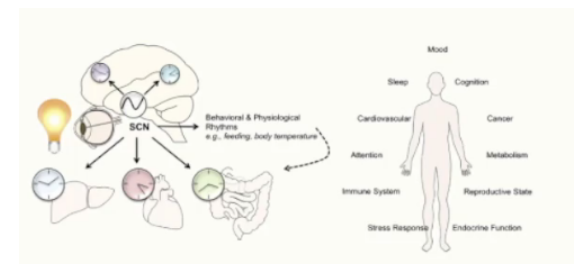
Non-Imaging Vision (Photobiological Effects)—A Non-Visual Pathway
Light not only enables us to “see” the world but profoundly influences our biological clock—regulating sleep–wake cycles, liver metabolism, cardiac function, and intestinal digestion, all of which align closely with the traditional Chinese medicine concept of “Zi-Wu Flow.”
At the quantitative level, two mainstream models are currently recognized worldwide:
One is the CS Model developed by Professor Rea’s team at the U.S. LRC, which uses nighttime melatonin suppression rate as its output indicator;
The other is the α-opic Equivalent Illuminance Model proposed by Lucas’s team, which has been standardized and promoted by the CIE.
Dr. Hou pointed out that in 2024, the CIE issued a position statement emphasizing: “Proper light at proper time”—the effects of light depend not only on spectrum and intensity but also on the timing of exposure. The same beam of light may be beneficial in the morning but potentially risky at night.
Based on this, Dr. Hou and Professor Lin Yandan’s team conducted systematic experiments focusing on temporal dimensions, using oral capsules to track objective indicators such as core body temperature. They found:
1. The timing of light exposure determines both the direction (forward or backward) and magnitude of circadian rhythm shifts, acting like a “steering wheel.”
2. Duration of light exposure is a critical factor influencing the direction of phase shifts and their amplitude, though the effect is not linear—it accumulates based on the efficacy of photobiological responses.
3. The level of circadian stimulation significantly affects the amplitude; stronger light exerts greater driving force on the rhythm.
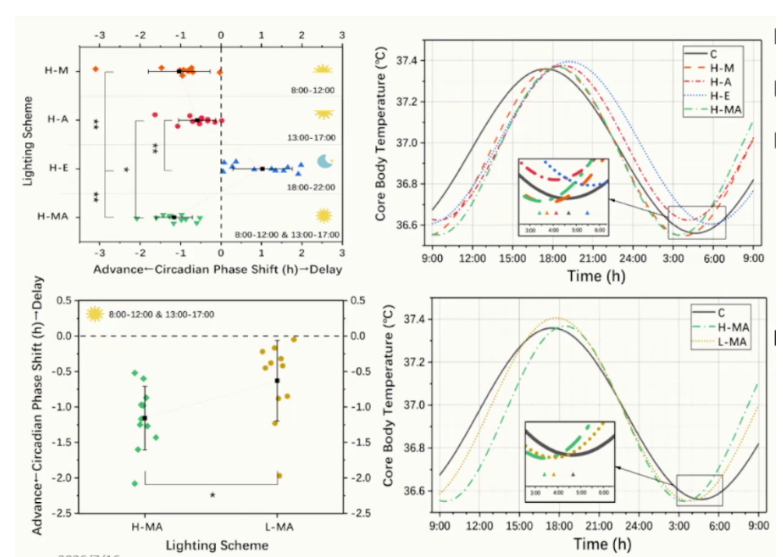
Results from an experiment studying the cumulative effects of daily photobiological stimuli
The team developed the DCLA (Durational Circadian Lighting Accumulation) model, a predictive model for light-induced phase shifts in human circadian rhythms. With an accuracy exceeding 95% based on their own data, and still reaching 93% after incorporating three external European datasets, this model has been integrated into the national standard GB/T 46119-2025 “Dose of Non-Visual Biological Effects of Light on the Human Eye”, officially implemented in March 2026, thus closing the loop from basic research to industrial application.
Individual Differences: A Stunning 50-Fold Gap
Dr. Hou emphasized that behind the statistically sound average values obtained from model fitting lies an issue of individual variation that cannot be ignored.
“How much do different individuals respond differently to the same light stimulus?”
Research data reveals that achieving a 50% inhibition rate of nighttime melatonin requires only 6 lux for the most sensitive individuals, whereas the least sensitive need as much as 350 lux—a difference of over 50-fold. Some people experience circadian rhythm shifts of 2–3 hours upon exposure, while others show almost no change at all.
“If we fail to address individual differences, healthy lighting might work for 50% of people but prove ineffective for the other 50%—it would be akin to flipping a coin.”
Factors influencing individual light sensitivity include:
◇Age: Children exhibit up to 88% melatonin suppression, while adults typically reach only about 40%; by age 60, retinal cone density drops to roughly 60% of what it was at age 10.
◇Nearsightedness: Affects sleep latency and duration.
◇Iris Color: Lighter irises allow more light transmission, resulting in higher melatonin suppression rates.
◇Exposure History: Individuals who have lived for extended periods in bright environments tend to be “morning types,” while those in dimly lit areas lean toward “night owls.”
◇Genetic Background: Multiple genetic loci—including the OPN4 gene regulating melanopsin, dopaminergic pathways, and glutamatergic receptor pathways—impact light sensitivity.
Five Photoclimate Zone Cohorts: China’s Unique Research Advantage
To unravel the myriad ways individuals respond to light, the team leveraged China’s unique geographical advantages, constructing five distinct photoclimate zone cohorts based on the country’s typical light climate characteristics. By establishing cohort groups across locations at the same latitude, they explored the two core dimensions influencing human light sensitivity.
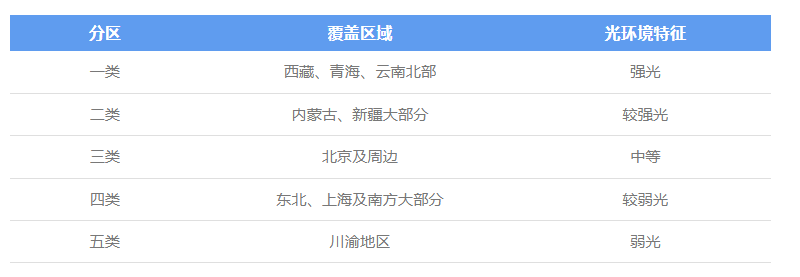
This represents a globally unique natural experimental platform, with preliminary results proving encouraging:
●Lhasa Cohort: Exhibits higher total daily melatonin production, greater oscillation amplitude in circadian rhythms, and stronger pupil constriction—indicating heightened light sensitivity.
●Chongqing Cohort: Shows lower overall melatonin levels and weaker physiological rhythmic activity throughout the day.
Even among individuals sharing identical genetic backgrounds, significant differences emerge in sleep duration and sleep phases depending on their photoclimate zone—environment exerts a powerful modifying effect on genetics.
“Going back to Lhasa” is more than just a song.
Research indicates that Lhasa’s intense natural illumination (reaching up to 100,000 lux) elevates serotonin (“happiness hormone”) levels, thereby improving dopamine and melatonin balance, leading to daytime cheerfulness and restful nights. “The saying ‘go back to Lhasa if you’re unhappy’ actually has a scientific basis.”
Precise Light Intervention: Exploring Real-World Applications from Clinical Settings to General Illumination
In clinical practice, Dr. Hou’s team has already carried out several pilot projects.
◆Adjunctive Treatment for Depression: In collaboration with Shanghai Mental Health Center, they added light-assisted intervention to patients with moderate to severe depression, without discontinuing medication, observing rapid responses within two weeks. Patients with high light sensitivity showed markedly better outcomes than those with low sensitivity, suggesting future light therapy should prioritize stratification before treatment.
◆Rehabilitation for Post-Stroke Cognitive Impairment: At Shanghai Third Rehabilitation Hospital, the team first categorized patients by light sensitivity before applying light stimulation, significantly boosting efficiency.
◆General Illumination Scenarios: Dr. Hou envisioned a future where personalized light prescriptions could be generated—using smartphone location data to identify users’ habitual residence (photoclimate zone), combined with age, gender, sleep type, and simple questionnaires (such as assessing sensitivity to light during nighttime awakenings or degree of alertness upon morning exposure)—to determine light sensitivity without requiring genetic sequencing for everyone. These insights could then be fed into intelligent lighting control systems to produce tailored light formulas.
“From a hardware cost perspective, existing smart lighting products already offer adjustable color temperature, luminance, CS values, EDI values, etc.; what’s truly lacking isn’t the hardware but the underlying logic—different regions, ages, and light sensitivities call for distinct light curves.”
Interactive Q&A Session
During the Q&A segment, Dr. Hou Dandan provided detailed answers to audience concerns:
Q: Given the significant variations in how different individuals regulate their circadian rhythms in response to light, does this mean future lighting products will need customized designs for specific populations? And is this cost‑effective?
A: From a purely hardware standpoint, there’s not much difference compared to today. After years of development, smart lighting products already feature adjustable color temperature, luminance, CS values, EDI values, and more. What truly needs changing isn’t the product itself but the control logic behind it—different regions and populations require distinct light curves. Functionally, costs haven’t risen noticeably.
As for diagnostic expenses, genetic sequencing isn’t necessary for everyone. By asking a few simple questions—such as habitual residence, age, and sensitivity to light—combined with smartphone location data to identify photoclimate zones, 90% of cases can determine light sensitivity types. We’re currently developing such questionnaire tools.
Q: What practical significance does the national standard GB/T 46119-2025 “Dose of Non-Visual Biological Effects of Light on the Human Eye” hold for consumers and manufacturers?
A: This standard primarily addresses two issues: First, it establishes metrics for quantifying non-visual effects of light, outlining three major indicator systems—the α-opic equivalent illuminance system, the circadian stimulation value CS model system, and the DCLA-CPS system tailored to Chinese populations; Second, it specifies recommended dose levels for these indicators in typical application scenarios.
Most valuable is that the standard’s appendix provides correction coefficients for different photoclimate zones—for example, Lhasa and Chongqing receive enhancement and attenuation coefficients, rather than a one-size-fits-all approach nationwide. Given China’s vast territory and pronounced regional disparities, the standard should adapt to the unique life characteristics of each area.
Q: What concrete examples of precise light intervention have been implemented clinically? For instance, in treating sleep disorders, adjusting circadian rhythms for shift workers, or providing adjunctive care for depression?
A: Currently, trials have mainly focused on depression and post-stroke cognitive rehabilitation. In the case of depression, in collaboration with Shanghai Mental Health Center, adding light-assisted intervention to moderate to severe patients resulted in rapid responses within two weeks, with better outcomes observed among those with higher light sensitivity.
For post-stroke cognitive impairment patients at Shanghai Third Rehabilitation Hospital, we first classified them by light sensitivity before administering light stimulation, increasing effectiveness by approximately 20% compared to previous reports. We’re gradually validating this approach across various conditions, step by step.
Q: Based on cohort studies of China’s typical photoclimate zones, given the substantial differences in natural light environments across regions, should school lighting designs adopt region-specific circadian lighting schemes?
A: Excellent question. We hope that, at the implementation level, whether it’s residential lighting, classroom lighting, or hospital lighting, differentiated standards can be established for different geographic areas. The standard for doses of non-visual biological effects has already introduced initial correction coefficients. As for classroom lighting, beyond non-visual aspects, visual functions and color discrimination also vary significantly by region; the industry will progressively refine partitioned, scenario-based design guidelines for classroom circadian lighting. We’ll report these findings in due course.
END
Note: This article is compiled from the recording of Dr. Hou Dandan’s July 16, 2026, presentation titled “Mechanism Analysis and Application Research of Light-Regulated Circadian Rhythm Individual Differences” delivered at Ming Classroom, and published by Ming Classroom.
China Light
The official website of the China Association of Lighting Industry and a full-media platform for the lighting sector. We provide authoritative and timely lighting information while striving to be a growth partner for businesses. From brand promotion and channel expansion to consulting, talent training and participation in standards development, we provide comprehensive professional services to help businesses improve quality and efficiency and jointly advance the high-quality development of the lighting industry.
Business Contacts
仇纯 (Ms.): 158 6155 3579
顾君 (Mr.): 137 7157 5253