
Insights from the Scottish Premiership’s Expansion: How Can Stadium Lighting Ignite a City’s Nighttime Economy?
Following the electrifying finale of the Jiangsu Provincial Urban Football League (JSL) on November 1, Ming Classroom and Zhuosheng Lighting jointly hosted an in-depth discussion on the “cross-industry rebirth” of sports venues.
Mr. Cheng Tianhui, Senior Lighting Application Architect at Zhuosheng Lighting, took “Insights from JSL’s Breakthrough: The Cultural-Tourism Cross-Industry Transformation of Sports Venues” as his theme. Drawing on benchmark cases and technical practices from home and abroad, he revealed how lighting systems have become the core link connecting sporting events with cultural-tourism experiences, injecting new vitality into urban night-time economies.
JSL’s “Traffic Code”: A New Logic for Cultural-Tourism Crossover in Sports Venues
Teacher Cheng Tianhui began by summarizing the phenomenal cross-border impact of “JSL” with a set of figures:
13 cities involved, 516 players competing, 85 hot matchups,
spanning 176 days of competition that collectively attracted over 2.43 million in-person spectators,
with the final match drawing more than 62,000 fans—nearly nine times the attendance of the first round.
Meanwhile, the event’s popularity successfully radiated into the cultural-tourism sector—data from the Jiangsu Smart Culture-Tourism Platform shows that by Matchday 15, all A-level scenic spots across the province had received a cumulative 23.9726 million visitors, up 17.71% year-on-year, with out-of-town visitors increasing by 23.53%. UnionPay statistics further indicate that out-of-town cultural-tourism spending rose by 26.48%. This multiplier effect—“one match ticket spurring consumption across the board”—provides vivid evidence of sports venues’ cross-industry transformation.
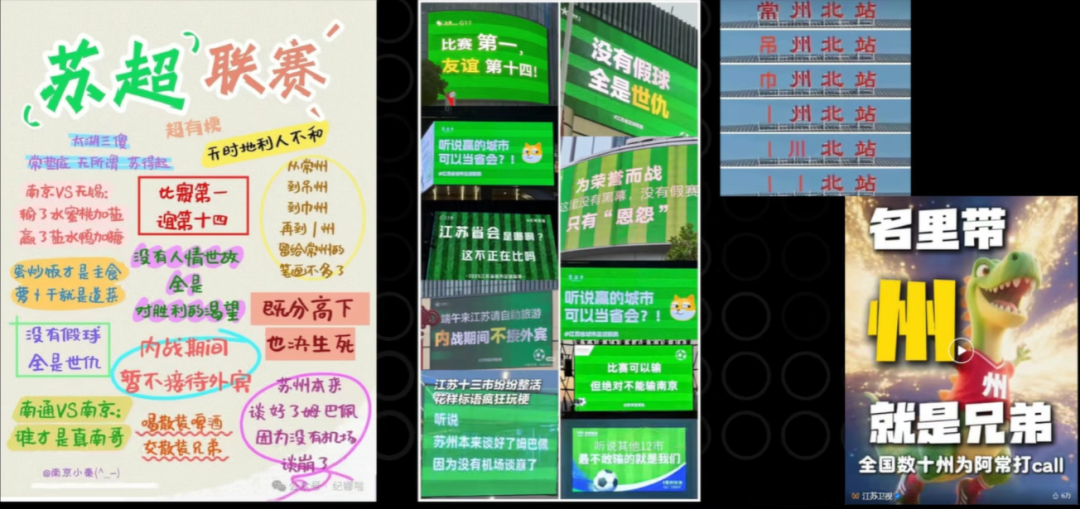
During the tournament, local cultural-tourism authorities leveraged a model of “regional cultural memes + official meme-based interactions” to turn sporting events into全民-participatory social celebrations, such as:
◇ “Game First, Friendship Second”: Regional identity sparks viral spread
◇ “Changzhou Stroke Count Meme”: One video sets a city ablaze
◇ “No Match-Fixing, Just Eternal Rivalries”: A sense of rivalry amplifies emotional resonance
“At their core, these memes transform sports venues from ‘competition arenas’ into ‘stages for urban cultural dialogue,’” noted Cheng Tianhui. Through meme creation, JSL has achieved “emotional value leading the way.”
The essence of “meme economics” lies in using memes to grab attention, retaining people through experience, and ultimately realizing value through consumption.
“Behind every match ticket lies interconnected consumption across the catering, accommodation, and cultural-creative industries,” Cheng Tianhui further emphasized. Reconstructing the value of sports venues requires breaking free from ‘event dependency’, achieving scenario-based upgrades via infrastructure like lighting so that venues remain highly attractive even outside game hours—for example, dynamic light shows at JSL venues paired with synchronized light-and-shadow activations in surrounding commercial districts have successfully converted spectators into key nighttime spenders.
From “Single Competition Arena” to “Urban Living Room”: The Evolutionary Path of Venue Functions
As consumer demands evolve, sports venues are transcending traditional boundaries to transform into “comprehensive cultural and sports hubs.” Cheng Tianhui cited domestic and international benchmarks:
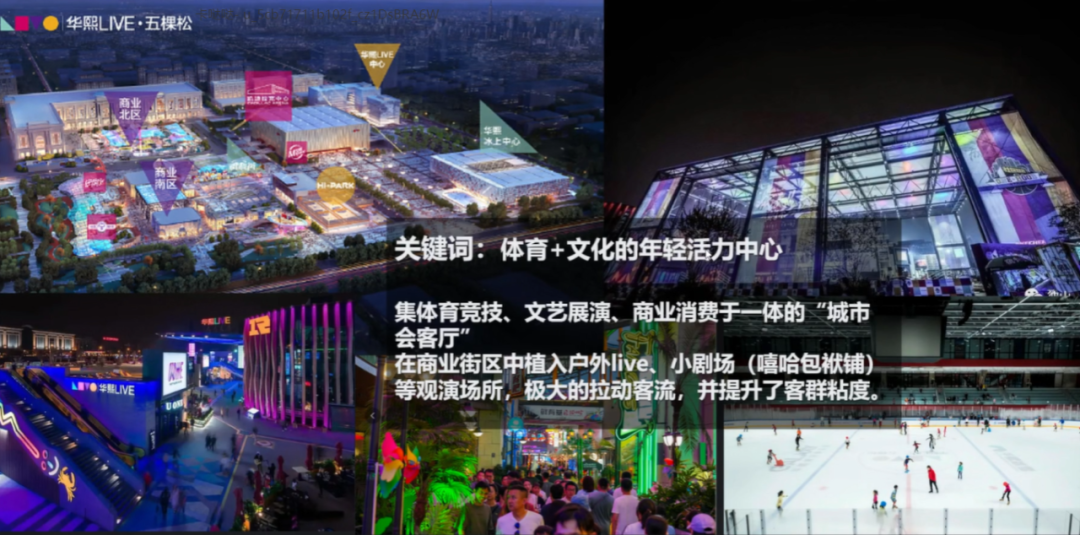
● Beijing Huaxi LIVE Wukesong
Originally the main basketball venue for the 2008 Olympics. Through functional expansion, it transitioned from a “single-event arena” to a “comprehensive cultural, sports, and commercial complex.”
Upgrade directions:
◇ Introducing diversified formats: Building upon the existing venue, expanding commercial streets, immersive theaters, and art exhibition spaces to create an integrated ecosystem of “sports + commerce + arts”;
◇ Activating non-event periods: Hosting regular events like street basketball tournaments, light-and-shadow art exhibitions, and esports carnivals to extend visitor dwell time (average daily footfall increased to 40,000, up 300% from pre-renovation levels);
◇ Scenario-based lighting upgrades: Deploying dynamic lighting systems to switch between “events/performance/civic activities” modes—for instance, transforming court lights into immersive stage effects that pulse to music, enhancing nighttime appeal.
● Shenzhen Universiade Center
Originally the main venue for the 2011 Summer World University Games, hosting track-and-field, swimming, and other events. Driven by urban renewal initiatives, Shenzhen—a vibrant innovation hub where young people comprise over 80% of the population—has transformed this large-scale sports facility into a “youth vitality center,” catering to emerging consumer needs such as esports, music festivals, and trendy exhibitions.
Upgrade directions:
◇Cross-industry format integration: Hosting concerts, esports events (such as the League of Legends World Championship), drone shows, and more, staging over 150 events annually and boosting venue utilization to 85%;
◇Smart transformation: Implementing intelligent lighting control systems to synchronize facade lighting with event themes (e.g., displaying game character light shows during esports matches), turning the venue into a landmark for Shenzhen’s night-time culture-tourism scene;
◇Extended community services: Opening select training areas as public fitness spaces, balancing operational revenue through a mix of “low-cost public access + premium paid events,” serving over 500,000 citizens annually for fitness purposes.
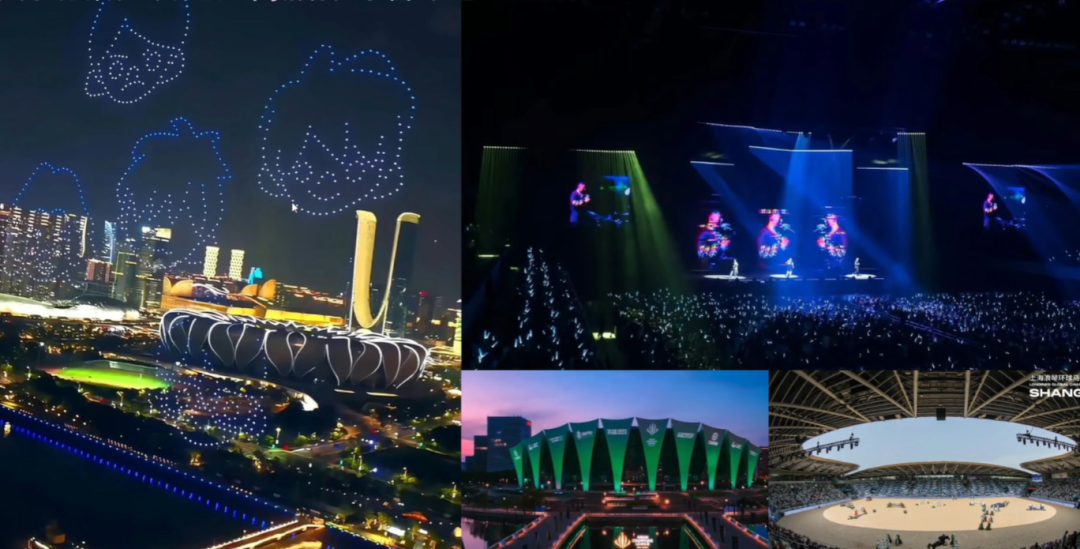
He argued that de-eventization of venues should take lighting as its core leverage: Professional venue lighting ensures compliance with competition standards, while facade lighting and atmospheric lighting shape the city’s nocturnal IP. Only when combined can they achieve the dual value of “serving events by day, igniting the economy by night.”
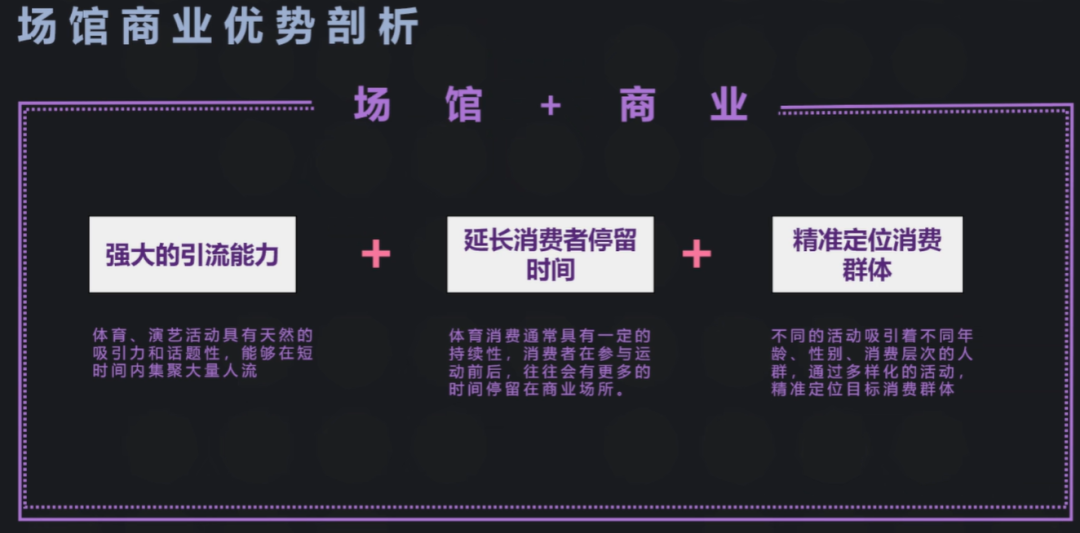
Lighting Does More Than Just “Illuminate”: Interactive Experiences Unlock New Venue Potential
Cheng Tianhui stressed that professional sports venue lighting must balance “competition standards” with “experience enhancement,” featuring specific characteristics:
● Extreme Professionalism
◇ Meeting international broadcast parameters: Vertical illuminance, Color temperature, Glare control. For example, Zhuosheng’s specialized luminaires supplied to Russian ice hockey arenas are certified by the International Ice Hockey Federation (IIHF).
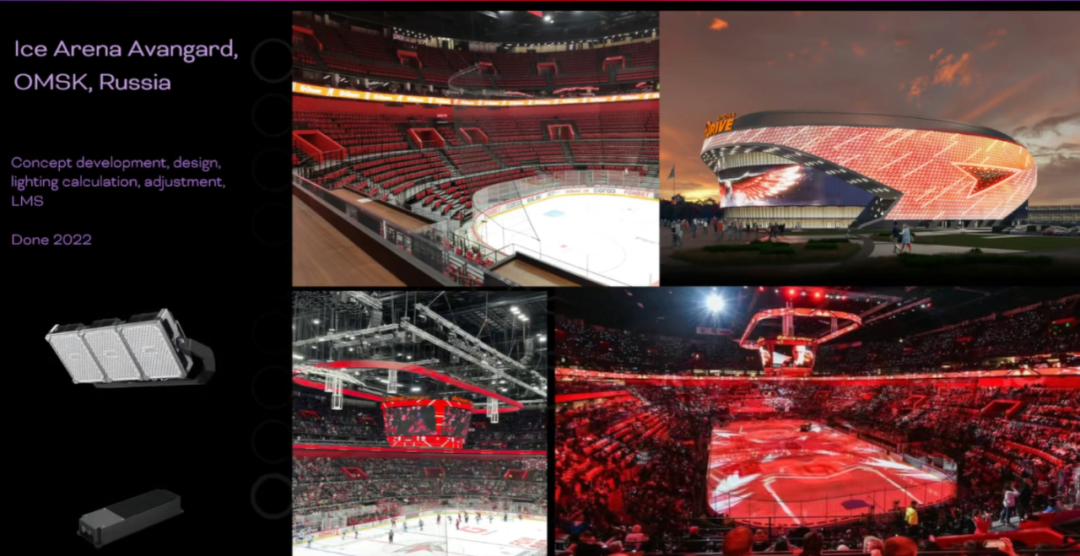
◇ Hierarchical control technology: Independent control of field lighting, spectator seating lighting, and facade lighting—for instance, during a soccer match, the field lighting maintains professional illuminance at goal-scoring moments while the stands flash in sync to boost atmosphere.
● Dynamic Scenario Adaptation
◇ Rapid mode switching: Using smart control systems to complete transitions between “event mode → concert mode → civic activity mode” within 30 minutes—for example, Wukesong’s lighting can drop from 1500 lux for competitions to 200 lux for casual settings.
◇ Innovative interactive experiences: Integrating sound and motion sensors to trigger linked lighting responses—for instance, during the JSL final, “audience cheers triggered pulsed light effects,” heightening on-site immersion.
“The ultimate goal of sports venue lighting is to transform spectators from ‘bystanders’ into ‘participants.’” Cheng Tianhui pointed out that traditional venue lighting focuses on “functionality,” whereas cultural-tourism crossover demands designs infused with “interactivity” and “emotional resonance.”
Examples include:
●Dynamic light synchronization: Utilizing TCP/IP smart control systems to enable real-time responses between field lighting and audience cheers or musical rhythms—for example, the pulsing light effects at goal-scoring moments during the JSL final greatly enhanced on-site immersion;
●City landmark creation: Taking Shanghai’s 80,000-seat stadium as an example, its ETFE membrane roof combined with custom point sources can simulate starry skies, event logos, and other dynamic patterns, becoming a highlight of the city’s nighttime skyline.
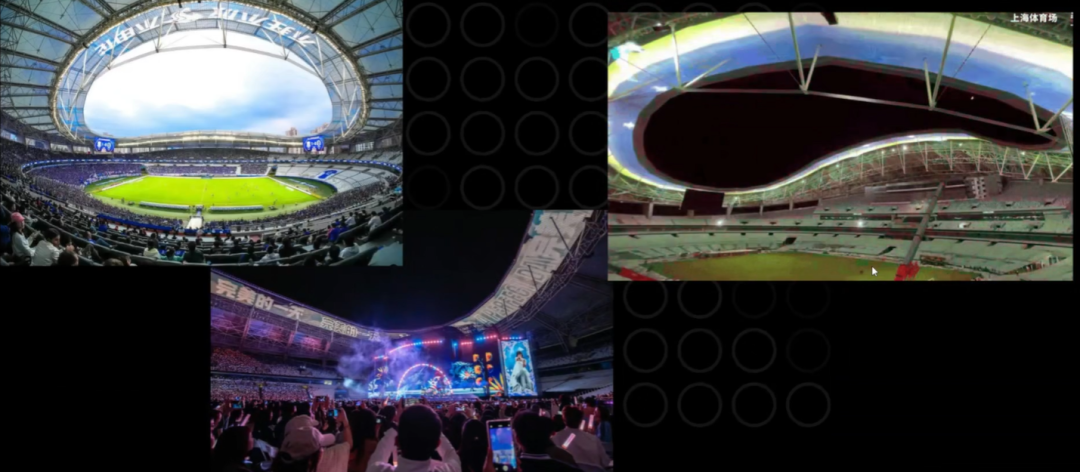
In addition, Cheng Tianhui specifically mentioned the application of “ergonomics” in lighting design: Through glare control, color temperature adjustment, and related technologies, venues can meet the professional requirements of HDTV broadcasting while preventing visual fatigue among spectators and improving viewing comfort.
Lighting Does More Than Just “Illuminate”: Interactive Experiences Unlock New Venue Potential
Through an in-depth analysis of two benchmark cases, Cheng Tianhui outlined future trends in sports venue lighting:
1. Hong Kong Kai Tak Sports Park (Completion: 2025)
Core technologies:
Facade “Court Expression System”: Employing Zhuosheng Traxon Allergro Dot RGBW point sources (custom flat-emitting surfaces), coupled with an AI-powered sound analysis system that converts audience cheers into dynamic light patterns—for example, “red wave motifs appear on the facade during goal celebrations.”
Smart control platform: Based on the TCP/IP e:cue system, compatible with multi-source data including audio and weather, enabling real-time linkage between “in-venue emotions → out-venue lighting.”
Commercial value:
Becoming Hong Kong’s largest sports venue (50,000 seats), hosting numerous large-scale concerts and international events. Expected to drive over HK$1 billion in peripheral consumption in the first year.
2. Xi’an Olympic Sports Center (Main venue for the 2021 National Games)
Core technologies:
“Pomegranate Flower” Media Facade: Combining 460,000 RGBW point sources (300mm spacing) with 1,340 Floodlights to simulate blooming petals; illuminated at night, it becomes a “Silk Road cultural landmark.”
Layered lighting design: The fifth facade on the roof uses point sources spaced 900mm apart to meet aerial photography requirements; facade lighting is synchronized with drone performances, creating a cultural-tourism experience blending “light & shadow + technology.”
Commercial value:
Hosting over 150 events annually after the National Games, providing fitness services to 500,000 residents, and seeing operating revenue grow by 280% compared to pre-Games levels.
Regarding technological implementation, he emphasized the importance of “modularity” and “compatibility”: Zhuosheng Lighting’s Traxon series supports rapid scenario switching, while the e:cue smart control system can integrate multi-source data including audio and weather, offering venues full-cycle solutions ranging from top-tier events to community activities.
Summary
Through a combination of “professional lighting + smart control + scenario innovation”, Zhuosheng helps venues make the leap from “public facilities” to “commercial assets”:
◇ On the technical level: Modular luminaires (such as the Traxon series) reduce renovation time by 70%, meeting cost-effective needs of small and medium-sized venues;
◇ On the operational level: Dynamic lighting designs extend audience dwell time (Wukesong averages 3.5 hours per visitor), driving a shift from “one-time viewing” to “repeated consumption”;
◇ On the urban level: Light-and-shadow landmarks (such as the “Pearl of the Orient” light show at Kai Tak Stadium) boost urban night-time economic vitality, becoming the core link connecting sports IPs with cultural-tourism spending.
Interactive Q&A
Technological Implementation and Trend Insights
Q
How can small and medium-sized sports venues balance lighting professionalism with cost control?
A
Small and medium-sized venues can adopt a hybrid approach of “professional lighting for core areas + standardized solutions for non-core zones.” For example, Zhuosheng’s lightweight smart control modules cost only 60% of traditional systems yet deliver basic dimming and scenario switching, suitable for campus fields, community gyms, and similar settings.
Q
Will cultural-tourism lighting compromise professionalism for sporting events?
A
The two are not mutually exclusive. Through “hierarchical control technology,” field lighting strictly adheres to international competition standards (e.g., vertical illuminance ≥1000 lux), while seating and facade lighting can layer dynamic effects—for example, during a soccer match, when a player scores, the field lighting maintains professional illuminance while the stands flash in sync, neither affecting broadcasts nor diminishing atmosphere.
Q
What are the future technological breakthroughs in sports venue lighting?
A
“Multimodal interaction” and “sustainable design” will dominate. On one hand, lighting systems will integrate with AR/VR technologies to deliver blended virtual-real viewing experiences; on the other, solar power and smart energy-saving algorithms will reduce venue operating costs—for example, Zhuosheng’s Pursos series achieves luminous efficacy ≥180lm/W, saving over 40% energy compared to conventional products.
Conclusion
Lighting Turns Venues into the City’s “Third Space”
“The ultimate form of sports venues is a ‘third space’ that never closes, operating 24/7,” Cheng Tianhui emphasized at the end of his presentation. He added that innovations in lighting technology represent more than hardware upgrades—they signify a shift in scenario thinking: By harnessing the narrative power of light and shadow, venues can carry multiple values—sporting passion, cultural expression, and social interaction—ultimately becoming a “new engine” for activating urban night-time economies.
As technology iterates and concepts evolve, future sports venues may no longer be confined by the “boundaries of steel and concrete,” but instead use light as their brush to write more possibilities for cross-industry integration against the backdrop of the urban night sky.
Note: This article is compiled from the recording of Teacher Cheng Tianhui’s November 5, 2025 presentation at Ming Classroom, titled “Insights from JSL’s Breakthrough: The Cultural-Tourism Cross-Industry Transformation of Sports Venues,” authorized by Zhuosheng Lighting and published by Ming Classroom.
China Light
The official website of the China Association of Lighting Industry and a full-media platform for the lighting sector. We provide authoritative and timely lighting information while striving to be a growth partner for businesses. From brand promotion and channel expansion to consulting, talent training and participation in standards development, we provide comprehensive professional services to help businesses improve quality and efficiency and jointly advance the high-quality development of the lighting industry.
Business Contacts
仇纯 (Ms.): 158 6155 3579
顾君 (Mr.): 137 7157 5253