
The next round of competition in the outdoor LED market is focused on striking a balance between high luminous efficacy and low blue light.
As city nights grow increasingly illuminated by LED light sources, a previously overlooked issue is coming to the forefront: high‑color‑temperature, high‑blue‑light outdoor lighting is quietly disrupting human sleep rhythms and interfering with the habitats of nocturnal creatures.
From the UK’s municipal authorities phasing out 4000K cool white LEDs across the board, to Brazil revising its NBR 5101 public‑lighting standard to mandatorily incorporate ecological light‑pollution assessments; from the EU and the U.S. tightening restrictions on high‑color‑temperature light sources in ecologically sensitive areas, to the International Commission on Illumination (CIE) issuing a dedicated position statement in 2025 explicitly highlighting the health and ecological risks of high‑blue‑light nighttime illumination—“low blue light” is rapidly evolving from an indoor eye‑care consumer concept into a globally recognized compliance benchmark for outdoor lighting.
However, the industry has long grappled with a persistent challenge: lower color temperatures and reduced blue light often come at the expense of luminous efficacy. How can we protect nocturnal ecosystems without sacrificing lighting’s most critical efficiency metrics? Manlux Technologies Inc., based in Silicon Valley, USA (hereinafter “Manlux”), offers its own answer, achieving breakthroughs on two fronts—high luminous efficacy plus low blue light—to redefine the technological ceiling for outdoor illumination.
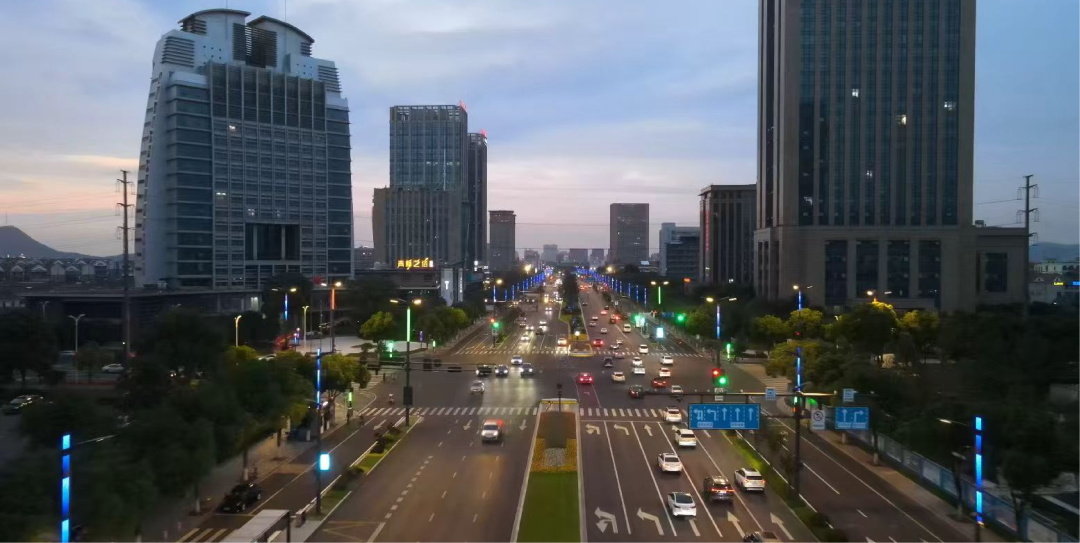
Eco‑Friendly:
Low Blue Light ≠ Low Color Temperature ≠ Sacrificed Luminous Efficacy
01
A common misconception exists in the market: many “warm white” products merely reduce color temperature to 2700K, yet the harmful peak of blue light remains, masked only by a “warmer hue” that provides psychological reassurance to users. At a recent “China Light Network · Bright Classroom” salon, Manlux Executive Vice President Qiu Bangyang emphasized that true low blue light hinges on the key metric of “blue‑light ratio.”
Manlux’s Eco‑Amber series leverages patented U.S. technology to simultaneously deliver low blue light and high luminous efficacy on the 5050PLUS package platform—breaking the traditional belief that “low blue light necessarily means compromised efficiency” and marking a significant advancement within the industry.
For example, at an ultra‑warm 1800K color temperature, its blue‑light ratio can be kept below 1%, while maintaining a luminous efficacy of 165–175 lm/W, making it a genuinely eco‑friendly light source. This achievement results from multidimensional synergies among chip design, proprietary mounting brackets, phosphor formulation, and multi‑stage packaging processes. Even more crucially, the Eco‑Amber’s 5050PLUS pads are compatible with standard industry solutions; its 2W driver delivers luminous efficacy comparable to 1W drivers from competitors, reducing LED bead usage by 30% and cutting costs by approximately 25%.
The significance of this “high efficacy + low blue light” combination lies in demonstrating that low‑blue‑light outdoor lighting now possesses a viable technical pathway for large‑scale industrialization. The Eco‑Amber series covers the full spectrum of 1800K–2700K color temperatures and Ra indices ranging from 70 to 90—meaning lamp manufacturers can use the same series of LED beads across diverse applications such as municipal roads, sea turtle conservation zones, cultural‑tourism night‑walks, and campus pathways, eliminating the need to develop separate molds for each specific scenario.
The value of Eco‑Amber has already been validated across multiple settings: in nature reserves, its 2200K specification, paired with precise optical distribution, tightly controls spill‑over and upward light emissions, safeguarding nocturnal wildlife habitats; meanwhile, on cultural‑tourism pedestrian streets, its 2700K warm glow enhances ambiance while delivering ≥215 lm/W overall luminous efficacy, reducing energy consumption and maintenance costs without compromising nighttime scenery quality—offering a win‑win solution for urban governance.
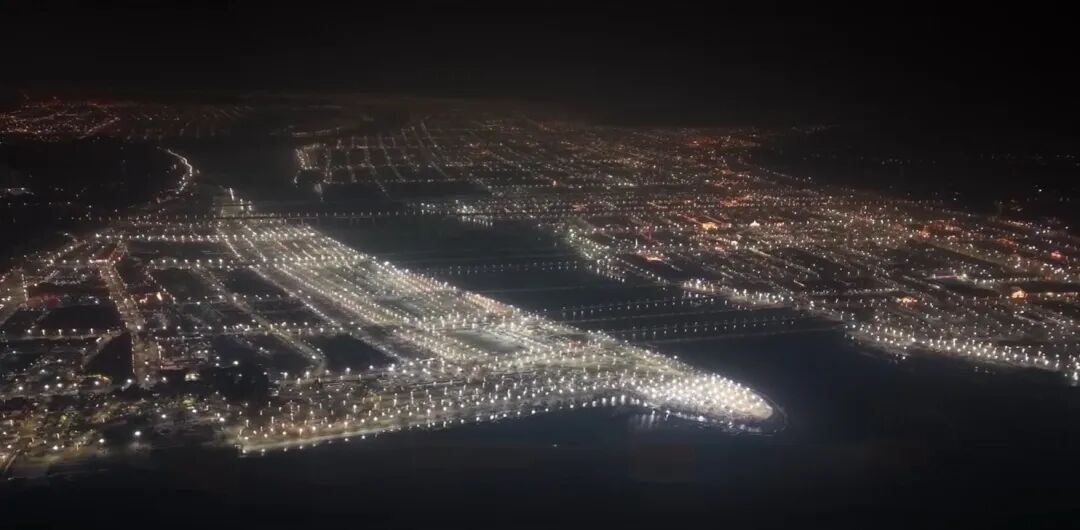
Luminous Efficiency Frontier:
A Technological Breakthrough at 270 lm/W
02
If low blue light serves as a differentiating advantage, then high luminous efficacy is Manlux’s cornerstone. Positioned as a “High Efficacy Leader,” the company’s entire product lineup boasts industry‑leading luminous efficacies.
In 2026, Manlux will successively launch two major new products:
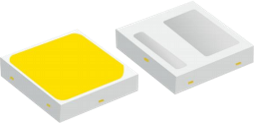
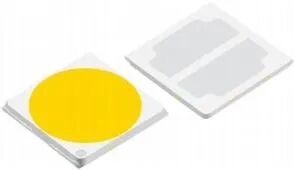
XPH3030‑245B, designed for the standard 3030 package, replaces the 5050 solution, delivering over 246 lm/W per 1W driver and suitable for streetlights, tunnel lights, and floodlights;
5050PLUS‑260G, which achieves up to 276 lm/W under 1W drive conditions and still maintains 266 lm/W at 2W—representing a 10% performance improvement over comparable products.
Earlier at the Frankfurt Lighting Fair, the company showcased LED beads reaching a peak efficacy of 274 lm/W, sparking widespread industry discussion.
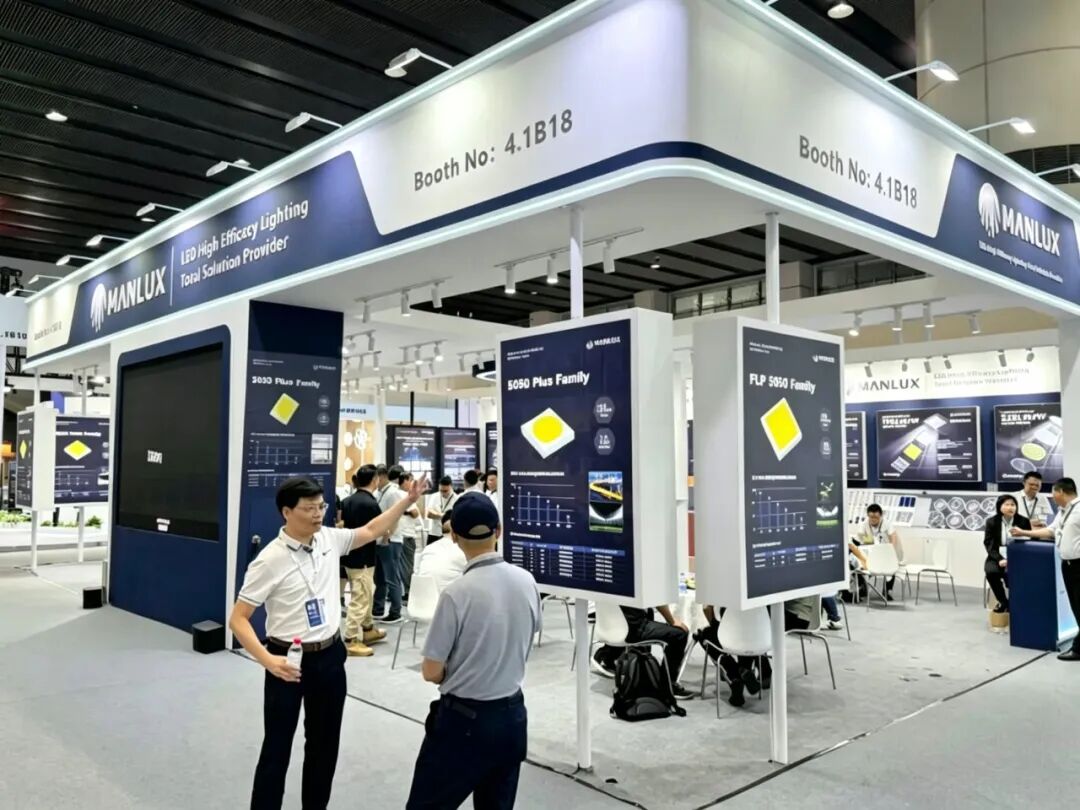
At the 2026 Guangzhou International Lighting Exhibition, Dr. Wen Jianhua remarked during a dialogue with Hong Bing, Editor-in-Chief of China Light All Media: “The higher the luminous efficacy, the greater the difficulty of improvement. Every stage—from chips and packaging to heat dissipation and LED bead size—poses its own bottleneck.” Manlux’s solution is a light‑extraction technology currently under patent application in both China and the U.S.—it “pulls out” light otherwise lost during multi‑chip arrangements, while systematically coordinating chips, packaging, and thermal management to unlock even higher luminous efficacies.
From LED Beads to Comprehensive Solutions:
A Silicon Valley Company’s Globalization Path
03
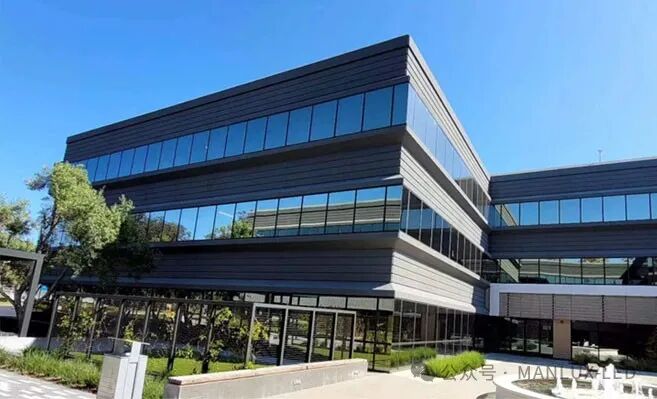
Headquartered in the United States and deeply embedded in Silicon Valley’s semiconductor ecosystem, Manlux brings together a seasoned executive team formerly employed by leading lighting giants, backed by profound industry expertise—laying the groundwork for the company’s global expansion strategy. With offices spanning the U.S., Brazil, Poland, India, Turkey, the U.K., Italy, and China, Dr. Wen Jianhua noted: “In key markets, we maintain technical teams and engage directly with government agencies to align specifications, while also gathering feedback from end‑users.” This strategic footprint enables rapid adaptation to diverse regional demands—for instance, the U.K. prefers 1700K–2200K, Brazilian ecological zones require a blue‑light ratio below 1%, and European cultural‑tourism sectors prioritize balancing ambiance with health considerations.
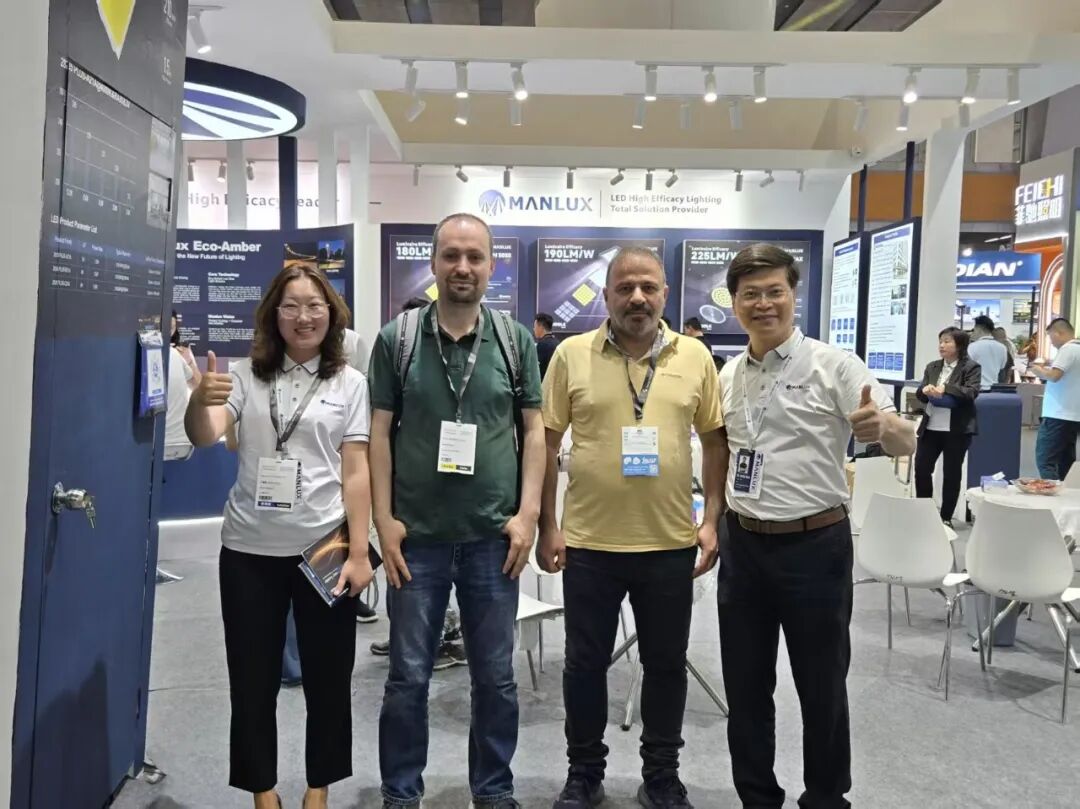
More importantly, Manlux is transitioning from a mere LED bead supplier to a full‑service lighting solutions provider. As Dr. Wen Jianhua clarified: “We don’t just supply LED beads—we integrate PCBA and optical design to deliver complete, scenario‑specific solutions.” This shift aligns with broader industry trends: China’s Lighting Appliance Association advocates moving “from product sales toward comprehensive solutions and long‑term operational services”; at this year’s Guangzhou International Lighting Exhibition, many lighting companies likewise adopted scenario‑based presentations, embracing holistic solutions rooted in contextual thinking.
The global lighting market has evolved from single‑metric evaluations to people‑centric, holistic value assessments. Dr. Wen Jianhua’s vision for the future is clear: “High luminous efficacy forms the foundation, healthy lighting drives differentiation, and smart lighting fuels growth—integrating all three is the way forward.” Manlux’s mission, “To offer the Lux for Man, the Light for Human” (mastering lighting technology to illuminate humanity), perfectly echoes this direction, embodying a deeper reflection on the essence of light: light should not only illuminate but also be human‑friendly and ecologically responsible, offering humanity a better beam of light. As the industry shifts from pursuing sheer luminous efficacy toward healthier, ecologically conscious lighting, Manlux has chosen a path that is both more challenging and far more rewarding.
China Light
The official website of the China Association of Lighting Industry and a full-media platform for the lighting sector. We provide authoritative and timely lighting information while striving to be a growth partner for businesses. From brand promotion and channel expansion to consulting, talent training and participation in standards development, we provide comprehensive professional services to help businesses improve quality and efficiency and jointly advance the high-quality development of the lighting industry.
Business Contacts
仇纯 (Ms.): 158 6155 3579
顾君 (Mr.): 137 7157 5253