
It’s tough! A 42-year-old, well-established design institute has collapsed—what lessons can the lighting industry draw from this?
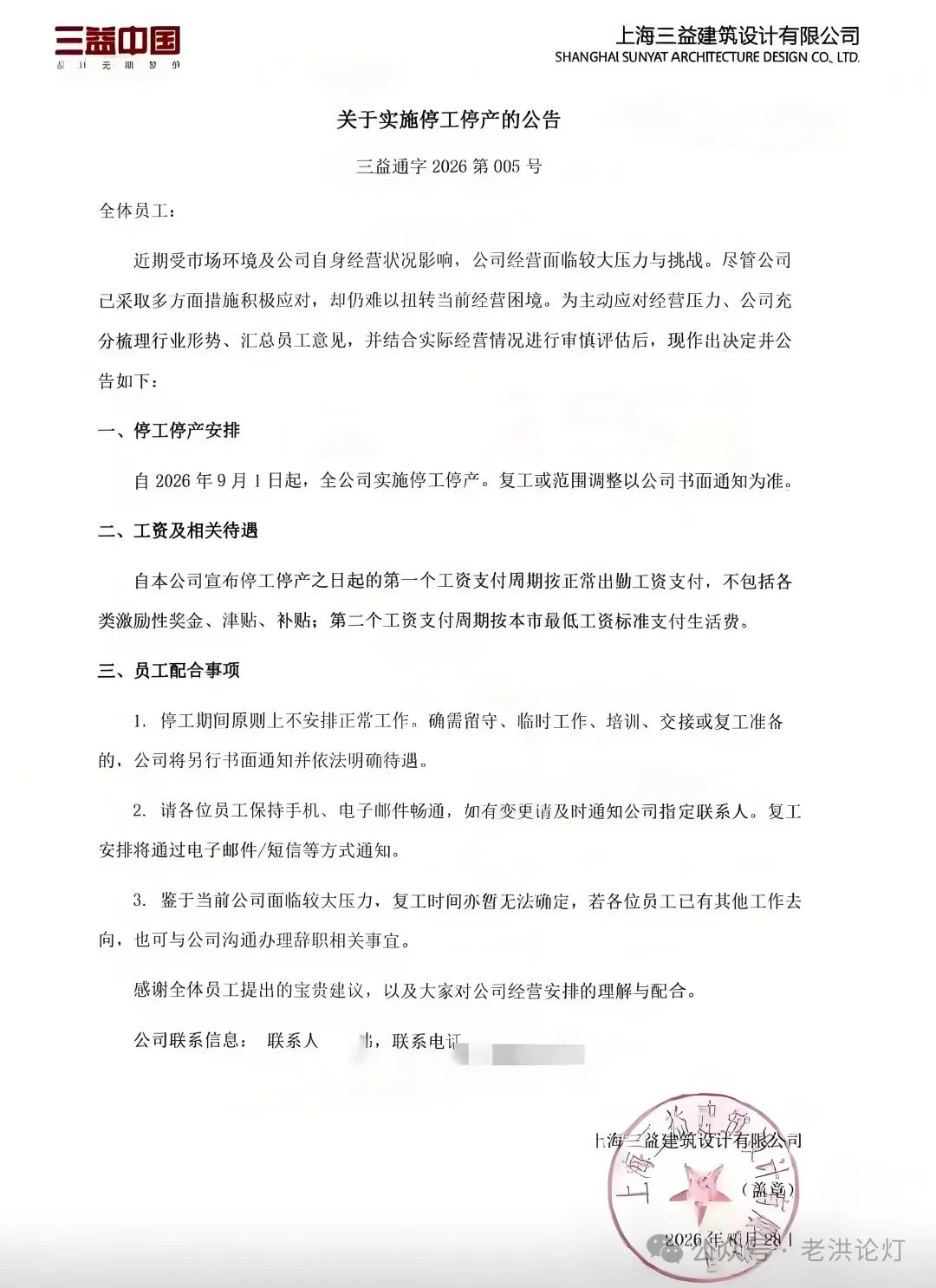
Recently, Shanghai Sanyi Architectural Design Institute, a well-established firm with 42 years of history, issued an announcement stating that it will suspend all operations. Effective September 1, 2026, the company will cease all work entirely, with the resumption date yet to be determined. During the suspension, employees will receive their regular wages for the first pay period; starting from the second period, they will be paid only the minimum wage as living allowances.
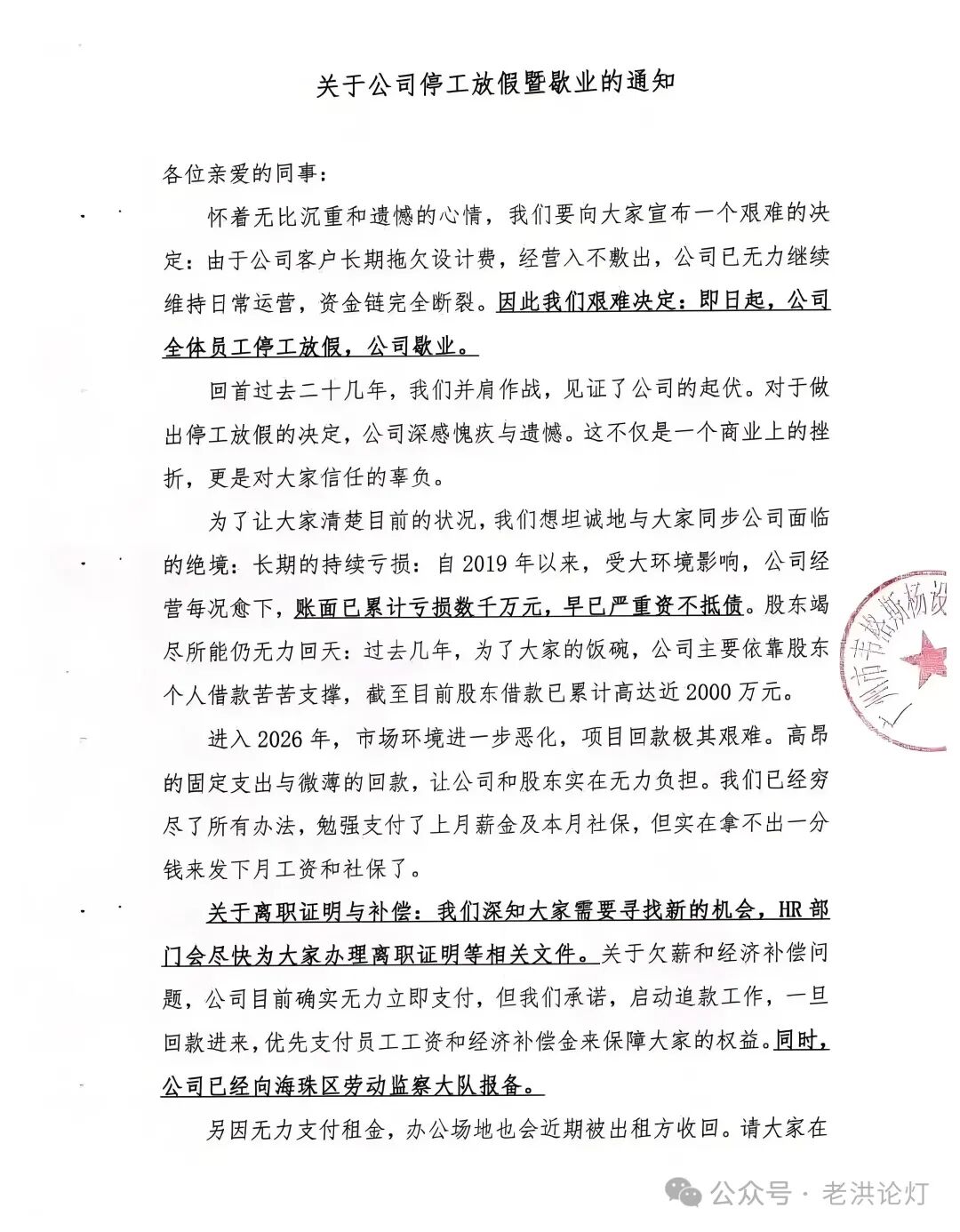
Not surprisingly, in May this year, Weges Yang Design Company—founded in 1997 and holding Grade-A qualifications in architectural decoration engineering design—also announced a temporary shutdown and holiday. The company openly admitted that long-standing client arrears have left its finances in the red, its cash flow completely severed, making it unable to pay next month’s salaries or social security contributions. Furthermore, the office space is set to be reclaimed by the landlord.
So far this year, numerous architectural design firms have suspended operations, with 18 already declared bankrupt and over 180 voluntarily deregistered. Industry insiders point out that the real estate sector has reached its peak in new construction, while the design industry suffers from severe overcapacity. The traditional business model, which relied on project scale for survival, can no longer sustain itself amid a sharp decline in new projects.
According to Lao Hong of China Light Network, the mass closures of architectural design firms send a powerful signal to the lighting industry. The lighting sector is deeply intertwined with architectural design and likewise tied to real estate cycles. As the era of incremental construction draws to a close, demand for conventional engineering lighting is bound to shrink. Lighting companies still dependent on real estate projects face the same fate as design firms: dwindling orders, sluggish payments, and strained cash flows—each link in the supply chain potentially collapsing. The time for action is now—or very soon. Only early adjustments can help businesses avoid being swept away during this industry reshuffle.
Beyond this, Lao Hong believes that market demand has not vanished; rather, its structure has shifted. Emerging needs such as existing‑building renovations, smart city initiatives, cultural‑tourism night‑time experiences, and energy‑efficiency upgrades are gaining momentum. The closure of architectural design firms represents a reckoning with outdated business models and serves as a wake-up call for the lighting industry: only by proactively pivoting—from relying on incremental growth to serving existing stock, and from selling products to delivering services—can companies carve out viable niches in the evolving market landscape.
Article sourced from Lao Hong on Lighting