
30 years of technological expertise! Cheng Tianhui provides an in-depth analysis of the past, present, and future of Smart lighting / Intelligent lighting.
In 2025, marking the thirtieth anniversary of Zhuosheng Lighting’s founding, its East China headquarters recently relocated to a new site, embarking on a new phase of development. As a pioneer in the field of intelligent dynamic lighting, Zhuosheng Lighting consistently integrates German technological heritage with Chinese innovative vitality, redefining the industry’s technical boundaries.
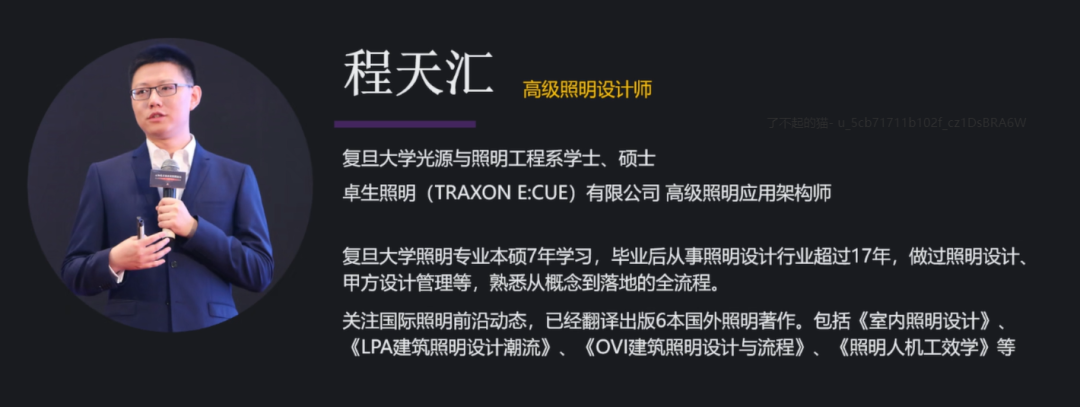
On October 23, Mr. Cheng Tianhui, Senior Lighting Application Architect at Zhuosheng Lighting, delivered an online seminar titled “The Past, Present, and Future of Smart Lighting Technology.” He systematically traced the evolution of smart lighting technology and, drawing on the company’s landmark projects over three decades, revealed practical pathways for technological innovation and real-world application to industry peers.
Technological Mainline: From “Switch Control” to “Pixel Control”—Smart Lighting’s Repeated Leaps
Using “expansion of control dimensions” as the central thread, Teacher Cheng Tianhui connected Zhuosheng Lighting’s technological journey, systematically outlining the iterative history of smart lighting technology:
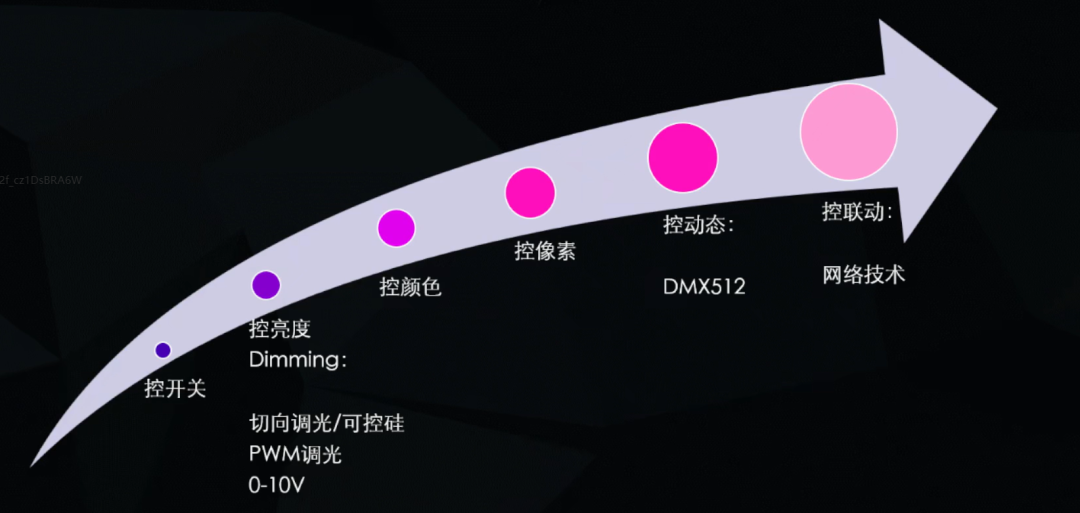
1. Switch Control: The Starting Point of Functional Lighting
Core Control Object: The on/off state of luminaires.
Description: In the initial stage of lighting control, lights are turned on or off by opening or closing circuits. Simple relay-based logic supports one-to-one and one-to-many switching, relying on basic circuitry.
2. Brightness Control: Precision Breakthroughs from Analog to Digital
Core Control Object: Adjustment of light intensity.
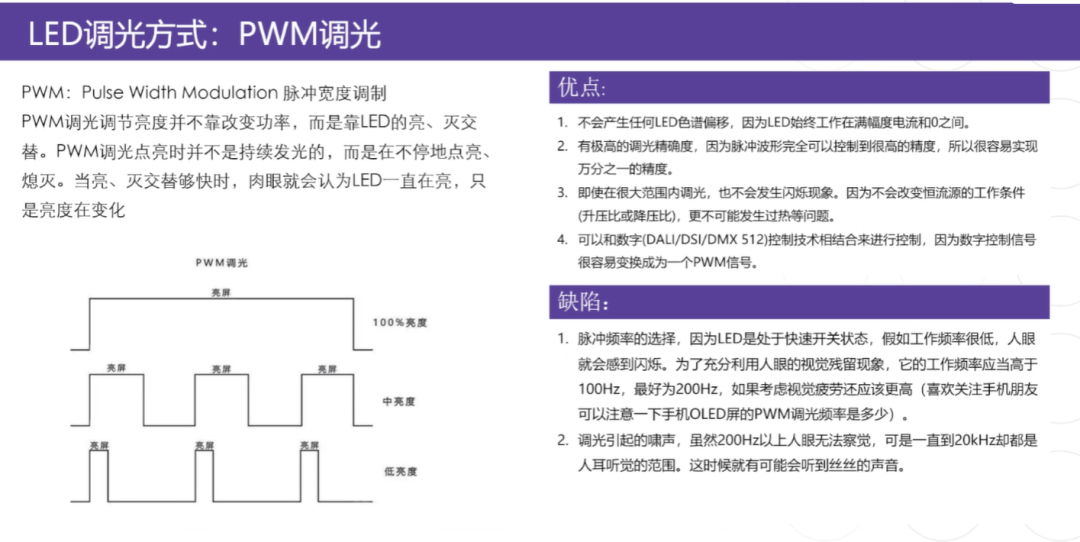
Description: Transitioning from analog dimming in traditional light sources (e.g., using rheostats or SCR phase-cutting) to digital dimming in the LED era (PWM pulse-width modulation), this advancement addressed high energy consumption and low precision issues of conventional methods, enabling precise brightness control from 0% to 100%.
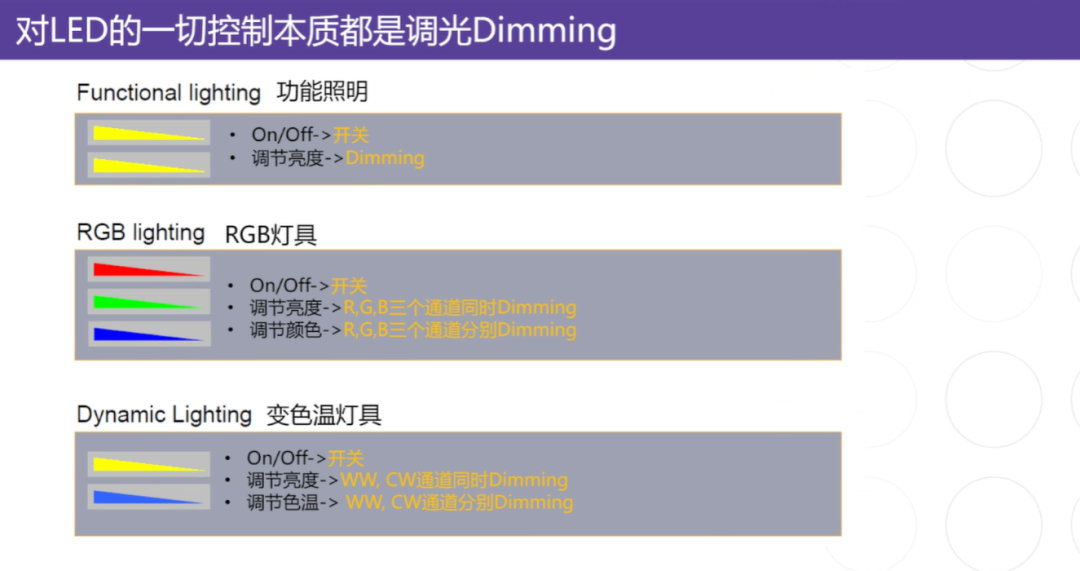
3. Color Control: A Design Revolution for Dynamic Light Environments
Core Control Object: Proportional adjustment of red, green, and blue chip intensities.
Description: By modulating the combined brightness of red, green, and blue (RGB) chips, dynamic transitions from single color temperatures to full-spectrum colors are achieved—essentially refined dimming control over multi-color light sources.
4. Pixel Control: Activating Scene Creativity Through Individual Point Control
Core Control Object: The switch, brightness, and color of individual lighting nodes (pixels).
Description: Leveraging digital control technologies (such as the DMX512 protocol), independent control is achieved for each pixel point in architectural facades, landscapes, and other scenes, supporting dot-matrix effects like scrolling text and graphic animations (e.g., the 2004 Galleria Department Store media facade project in Seoul).
In 2003, e:cue released Scroll Text Wizard software, the world’s first software capable of achieving scrolling text effects through pixel matrices.
In 2004, the Galleria Department Store project in Seoul, South Korea became the world’s first media facade project.
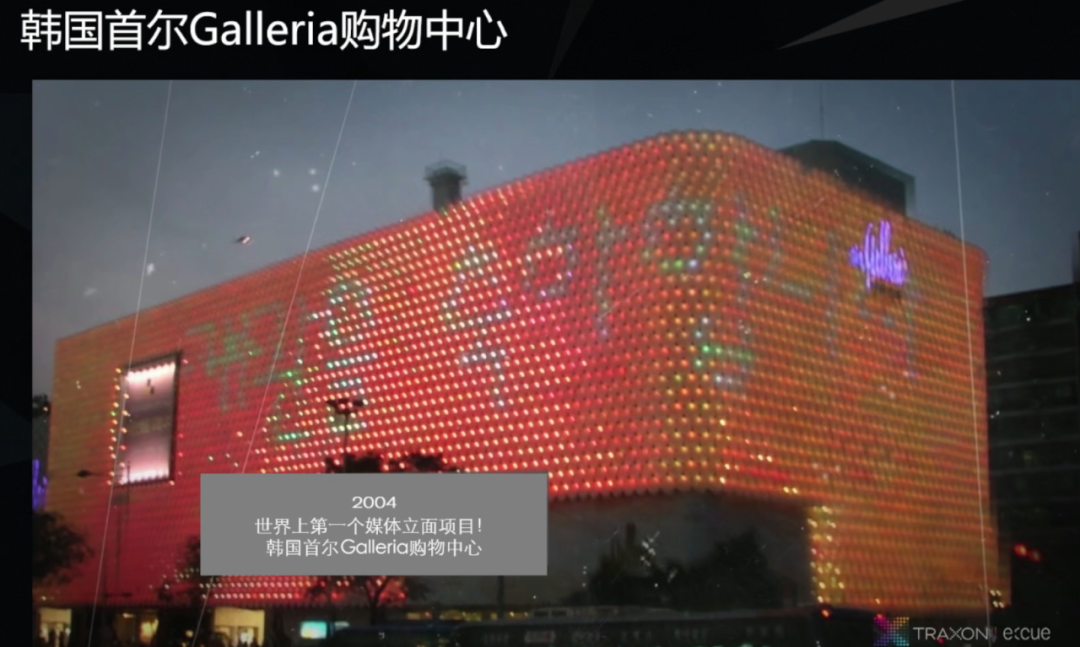
5. Dynamic Control: Smooth Animations and Scene Coordination
Core Control Object: Collaborative dynamic effects across multiple pixels (e.g., flowing, gradient, synchronized changes).
Description: Utilizing DMX control technology, refresh rates and grayscale levels are enhanced to deliver smooth dynamic visuals, supporting expressions of “flowing sensation” on building exteriors.
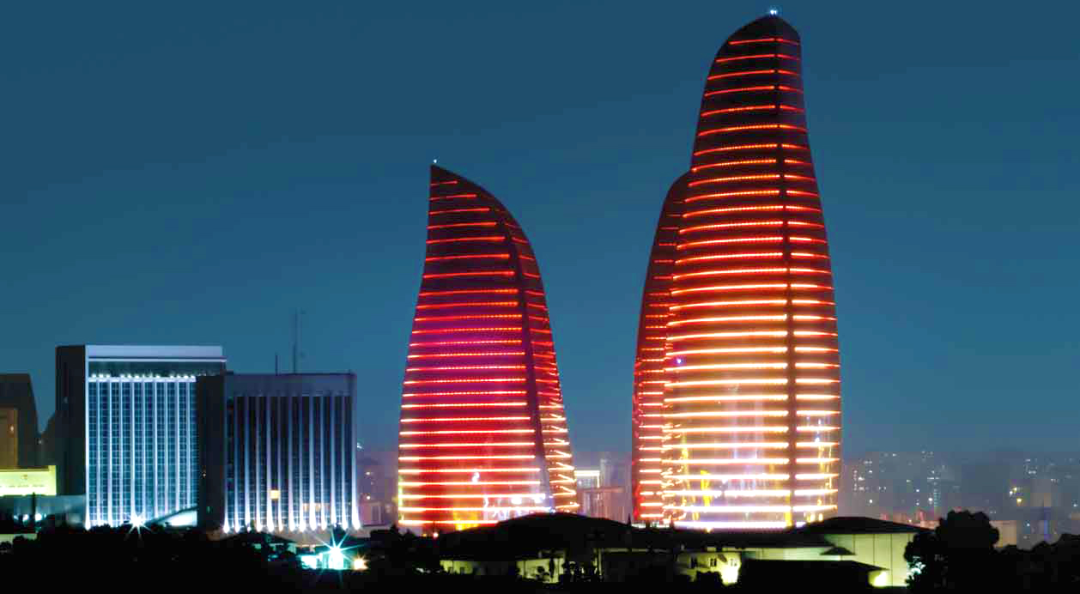
In 2012, the Baku Flame Towers project in Azerbaijan employed 256-level grayscale control and a 30-frame-per-second refresh rate to simulate the delicate dynamics of flowing flames on the building façade, setting a benchmark for urban landmark lighting.
About DMX Control Technology
DMX (Digital Multiplex) is a digital communication protocol originating from the US Theater Technology Association. Initially designed for stage lighting control, it has since been widely adopted in architectural dynamic lighting. At its core, it transmits control signals via two twisted-pair wires, using a 12-volt voltage difference to represent binary data “0” and “1,” enabling precise control over luminaire parameters such as switching, brightness, and color.
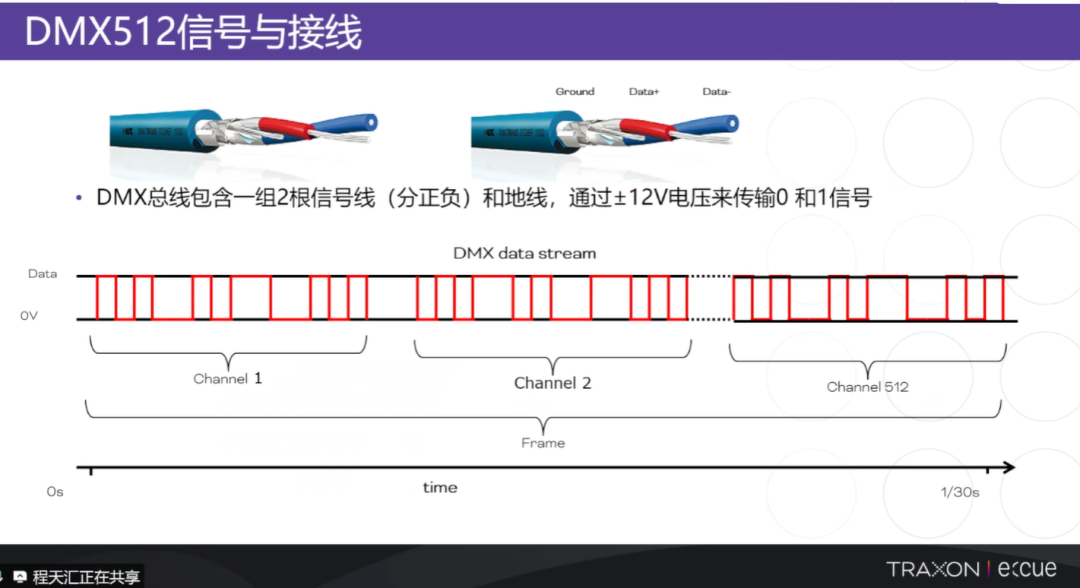
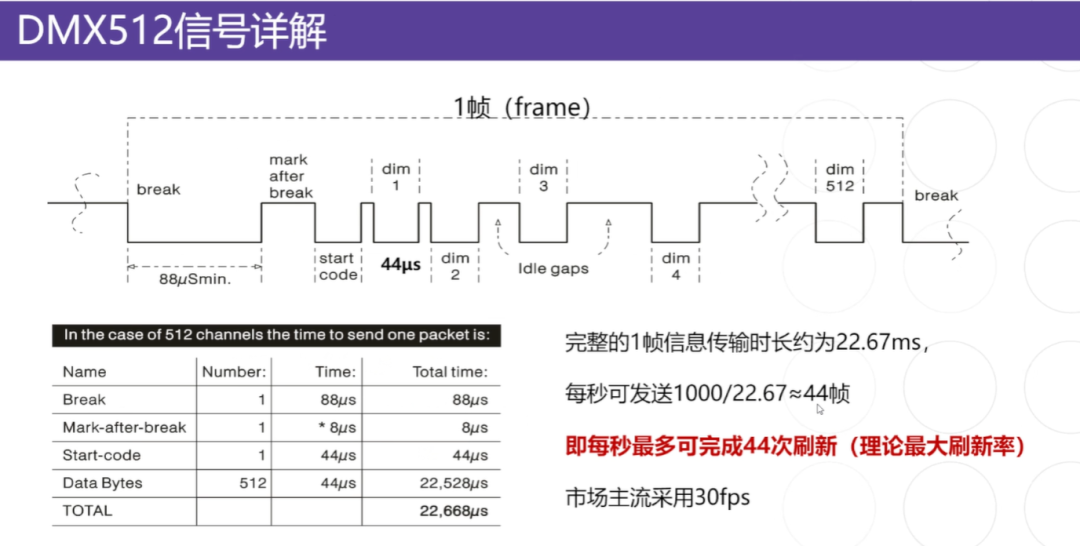
As a core digital communication protocol in the field of dynamic lighting, its defining characteristics lie in its high-efficiency, precise multi-parameter control capabilities and stable, reliable transmission performance.
This protocol transmits data via differential signaling over two twisted pairs; a single line supports 512 control channels, each capable of 256-level grayscale adjustment, meeting the nuanced requirements for brightness and color regulation. With a default refresh rate of 30 frames per second (upgradeable to 60 fps), it ensures smooth dynamic effects with strong anti-interference capability. Transmission distances can reach up to 300 meters per segment, extendable further with repeaters. Additionally, the DMX protocol boasts excellent compatibility, seamlessly integrating with Ethernet, DVI, and other technologies to provide standardized digital interfaces for coordinated control across diverse scenarios and large-scale lighting systems—making it a critical technological foundation for advancing from individual point control to system-level coordination.
6. Interconnected Control: Cross-Spatial and Cross-System Coordination
Core Control Objects: Coordinated lighting across multiple buildings and systems, along with external data interaction.
Description: Relying on network technologies such as Ethernet and 5G, distance limitations are overcome to achieve cross-building and city-wide lighting coordination, while also connecting to smart city platforms to support collaboration with audio, HVAC, and other systems.
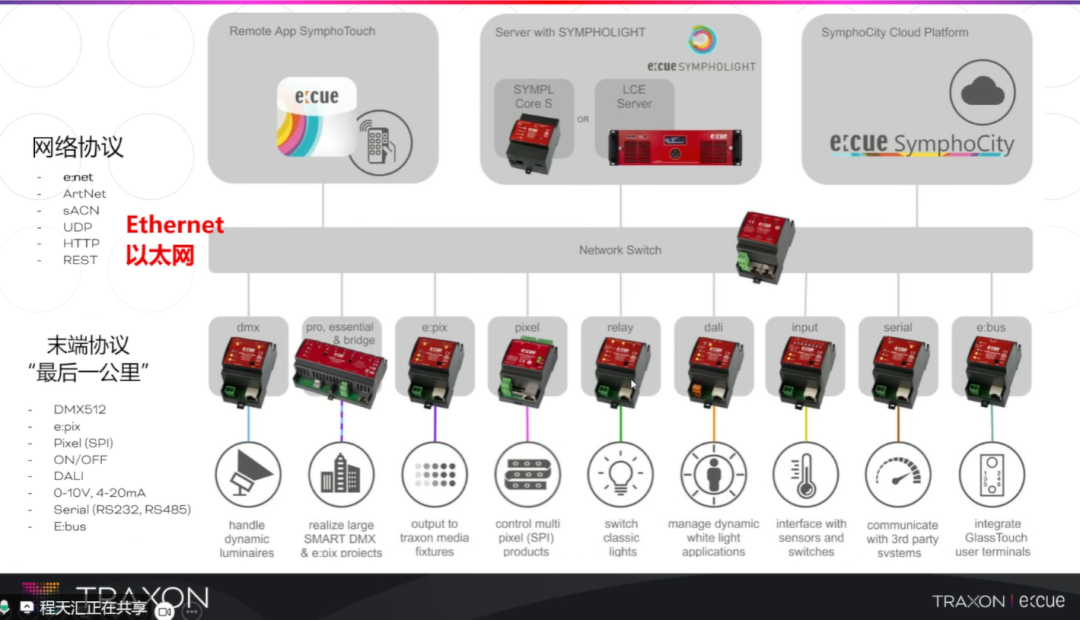
In the Qingdao Haitian Center project, 3 million pixels and 12 million RGBW channels were integrated to achieve zero-delay synchronization across multiple buildings, transforming the city night scene into a “dynamic artistic canvas.”
Core Competence: Multi-Protocol Integration + Digital Interconnection, Building the “Technical Chassis” for Smart Lighting
1. Decoding the “Control Protocol Code” of Smart Lighting
Teacher Cheng Tianhui emphasized that the core competitiveness of smart lighting lies in protocol compatibility. Current mainstream industry protocols each have distinct focuses:
◇DMX512: Stage lighting standard, supporting high-refresh-rate dynamic effects;
◇DALI: Dominant protocol for indoor lighting, emphasizing precise single-luminaire control and energy management;
◇KNX: Smart home and building automation protocol, excelling in cross-system coordination.
Zhuosheng Lighting leverages its network integration capabilities to “translate” different protocols into a unified language, achieving “one system compatible with all protocols” and providing customers with end-to-end solutions—from luminaires to control systems.
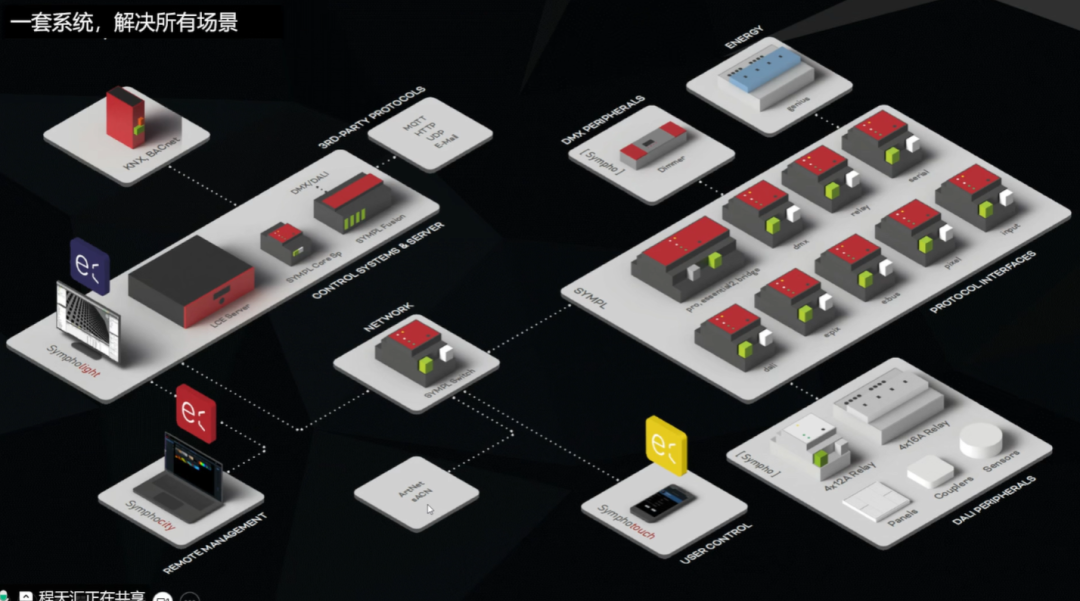
2. Lighting Nodes: The “Nerve Endings” Connecting Digital Twins and Smart Cities
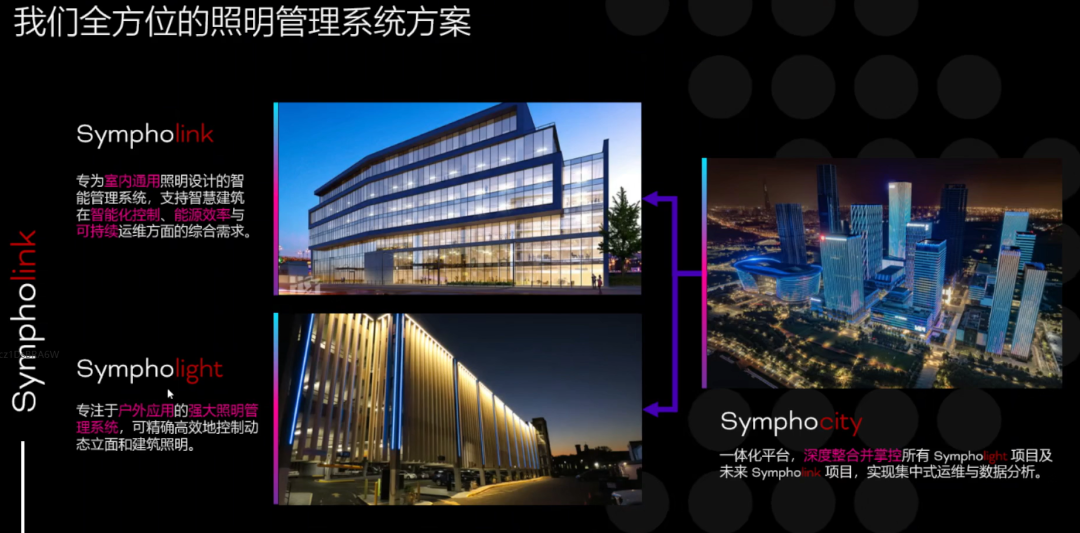
Teacher Cheng Tianhui proposed that lighting equipment is evolving from “light output tools” into “digital nodes”. Zhuosheng Lighting centers on these “lighting nodes” to explore deep integration between architecture and urban digitization:
● Empowering Digital Twin Buildings: Collecting energy consumption, ambient light, and other data through lighting nodes to map physical building conditions in real time and optimize operational efficiency;
● Supporting Smart City Development: As the most widely distributed “electrical contact points” in cities, lighting devices can leverage 5G and Ethernet technologies to perform functions such as pedestrian flow monitoring and environmental sensing, becoming integral components of smart city underlying networks.
Interactive Q&A
Four Core Questions Decoding the Future Direction of Smart Lighting
Q
What are Zhuosheng Lighting’s core technological advantages over the past thirty years?
A
Cheng Tianhui: “Building a chassis based on network technology and integrating multi-protocol control capabilities.” We do not limit ourselves to single products but offer end-to-end solutions encompassing “luminaires + control + services,” capable of addressing both complex outdoor dynamic lighting scenarios and the nuanced demands of indoor healthy lighting.
Q
What is the key technology behind multi-protocol integration?
A
Cheng Tianhui: The core lies in “compatibility design”, rather than inventing a universal protocol. Like a “translator,” we enable DMX, DALI, KNX, and other protocols to function independently on a unified platform—using DMX for dynamic effects, DALI for energy management, and KNX for cross-system coordination—to ultimately achieve synergistic value where “1+1>2.”
Q
How exactly do lighting nodes empower smart cities?
A
Cheng Tianhui: Lighting devices naturally possess the advantages of “distributed deployment” and being “online 24/7”. For example, integrating sensors into smart streetlights allows real-time collection of traffic volume and air quality data; linking streetlights to traffic signal systems enables “adaptive dimming based on vehicle flow,” achieving both energy savings and improved travel safety.
Q
Where will the technological opportunities for smart lighting lie in the next five years?
A
Cheng Tianhui: “The deep fusion of AI with human-centered needs.” Future lighting will no longer be “passively responsive” but will understand user behavior through machine learning—for instance, office lighting automatically adjusting color temperature and brightness according to employees’ work states to create personalized healthy lighting environments for thousands of individuals. This represents a “smarter form of expression.”
Conclusion
From the underlying logic of technological evolution to practical implementations in smart cities, Teacher Cheng Tianhui’s presentation not only outlined the developmental trajectory of smart lighting but also showcased Zhuosheng Lighting’s pioneering spirit in driving industry progress through technological innovation.
Looking ahead, as lighting nodes deeply integrate with digital twins and AI technologies, smart lighting will truly become a “bridge connecting the physical world with digital space.”
Note: This article is compiled from the recording of Teacher Cheng Tianhui’s October 23, 2025, lecture at Ming Classroom titled “The Past, Present, and Future of Smart Lighting Technology,” authorized by Zhuosheng Lighting and published by Ming Classroom.
Click here for the course replay
China Light
The official website of the China Association of Lighting Industry and a full-media platform for the lighting sector. We provide authoritative and timely lighting information while striving to be a growth partner for businesses. From brand promotion and channel expansion to consulting, talent training and participation in standards development, we provide comprehensive professional services to help businesses improve quality and efficiency and jointly advance the high-quality development of the lighting industry.
Business Contacts
仇纯 (Ms.): 158 6155 3579
顾君 (Mr.): 137 7157 5253