
Lighting Environment and Lighting Design Special Committee Updates — How can full‑chain hardware for light and space coexist with AI?
On October 14, 2026, the “Si·Jian Chang—Light and Space National Roadshow Private Session,” hosted by First Design and co-organized with four major brands—Cree LED, LEDiL Lide Optics, WAC LIGHTING Huage, and Tridonic RuiGao—was held at Westlake University in Hangzhou.
Zhu Weikai, Director of the Light Environment and Lighting Design Professional Committee of the Zhejiang Provincial Illuminating Engineering Society and Dean of the Light Environment Design Institute at Zhejiang Provincial Architectural Design Research Institute Co., Ltd., along with Zhou Peng, Technical Director of the Light Environment Design Institute, attended the event. Together with 27 participants—including senior local designers from Zhejiang, industry experts, and a Tencent AI team—they engaged in a pragmatic, problem-oriented discussion centered on the symbiotic relationship between the hardware chain of “chip–lens–luminaire–control” and AI.
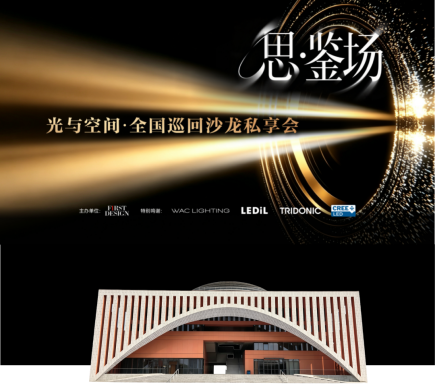
Figure 1: Main visual for the “Si·Jian Chang—Light and Space” National Roadshow Private Session (Hangzhou Station)
I. Solve Problems First, Then Discuss the Big Picture
The format of this salon preceded its content: prior to the event, designers were given questionnaires to collect real-world project challenges; during the session, there was no one-way presentation—instead, designers directly posed questions, pressed for clarification, and even challenged the brands, while companies provided on-site explanations of their technologies and real-world case studies.
The organizers concluded that the lighting industry has long been stuck in a pattern of prioritizing parameters over practical implementation, output over compatibility. With the hardware chain of chips, lenses, luminaires, and control systems now relatively well established, new variables have emerged—what changes will AI bring to light design, selection, and operation?
In the opening segment, Shen Wei, Deputy Director of the Zhejiang Urban Construction Planning and Design Institute, laid the professional groundwork for the discussion, while Kong Jisong, CEO of First Design, served as moderator. The meeting did not shy away from the industry’s current realities but instead took as its starting point the question: “Under mounting market pressures, should we focus on refining the hardware foundation or first learn to harness this new tool—AI?” Participants agreed that these two approaches are not mutually exclusive.

Figure 2: Shen Wei, Deputy Director of the Zhejiang Urban Construction Planning and Design Institute, delivers the opening remarks
II. Four Links, Four Responses
Source, optics, luminaire, and system—four companies each presented solutions tailored to their respective stages of the process.
Optics (LEDiL) addressed “light as a resource.” Over 80% of the global population lives under skies plagued by light pollution, and more than one-third cannot see the Milky Way; when light becomes excessive, safety and comfort are simultaneously compromised. Therefore, light must be precisely controlled. LEDiL proposed focusing not only on lm/W but also on in-used lm/W (effective luminous efficacy), highlighting its SPECTRE lens system, which removes harmful blue light without reducing luminous efficacy.
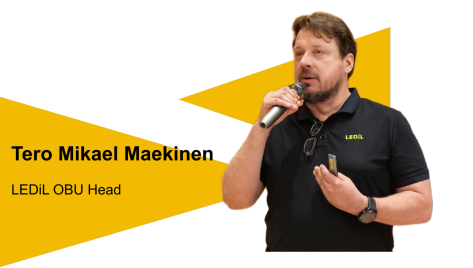
Figure 3: Tero Mikael Maekinen, Head of OBU at LEDiL, introduces the SPECTRE lens system
Luminaires (WAC LIGHTING) focused on materials. Many outdoor project tenders simply specify “die-cast aluminum,” overlooking critical differences among material systems—heat dissipation, corrosion resistance, structural strength, forming difficulty, and life-cycle costs all require simultaneous consideration. Starting in 2026, WAC announced that its entire range of outdoor luminaires—including existing product lines—would adopt corrosion-resistant die-cast aluminum, advising designers to explicitly indicate material corrosion resistance grades and suitable environmental conditions in coastal projects exposed to high salt mist.
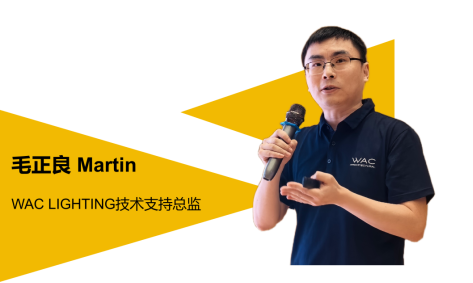
Figure 4: Mao Zhengliang, Technical Support Director at WAC LIGHTING, discusses luminaire material systems
System (Tridonic) addressed long-term operations. Most evaluations focus solely on the momentary lighting effect, while the real challenge for public‑building projects lies after handover. DALI is a digital lighting bus designed for sustained operation: bidirectional communication, software grouping, logarithmic dimming curves, and the ability to support up to 64 devices within a 300‑meter radius. DALI‑2 certification and D4i standards ensure cross‑brand interoperability and data collection, providing a foundational data platform for AI‑driven intelligent analysis.
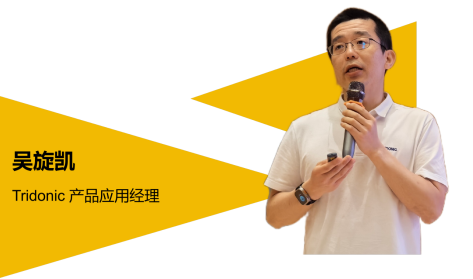
Figure 5: Wu Xuankai, Product Application Manager at Tridonic, introduces the DALI digital lighting bus
Light source (Cree LED) focused on the core. On‑site assessments often emphasize color rendering and color temperature, yet the chip is the true determinant of long-term performance—when a light source continuously degrades or shifts in color, the original design intent is completely undermined after a few years. The Pro9 series maintains high luminous efficacy even under Ra90+ conditions, while the X21 package size is only one-third that of traditional 3535.
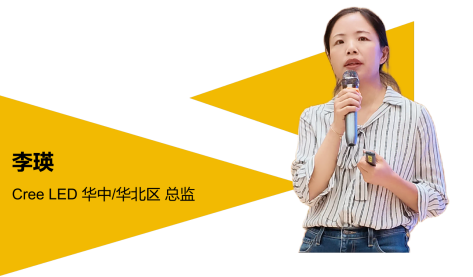
Figure 6: Li Ying, Director of Central and North China at Cree LED, presents the evolution of light source technology
III. How Far Can AI Go—and Where Should It Stop?
The Tencent team outlined relatively clear boundaries: AI excels at standardization and repetitive tasks—accumulating project knowledge bases, retrieving historical experience, generating proposal texts and technical specifications, and standardizing drawings and extracting parameters—but aesthetic considerations of light and shadow, on‑site trade-offs, multi‑party communication, and judgments about project implementation still rely on human expertise. AI cannot directly produce IES photometric files or three-dimensional light environment models.
Organizational Competitiveness = Talent × AI Capability ÷ Internal Friction
A formula for corporate competitiveness was proposed during the session

Figure 7: Fan Zhe, Head of Tencent Cloud’s Intelligent Hardware Industry Ecosystem, shares insights into AI’s role and limitations within the lighting workflow
IV. Sixty Minutes: From “Confrontation” to “Alignment”
With all four companies on stage, the microphone was handed to the designers. Five rounds of follow-up questions ensued: Can the next generation of LED chips bridge the luminous efficacy gap of warm white light? After DIALux simulations reach 97%, where does the remaining deviation originate? How can rust in coastal salt‑mist projects be prevented at the tender stage? What are the root causes of DALI’s “difficult debugging and incompatibility,” and will the bus be replaced once AI becomes widespread? Finally, what are AI’s actual limits within the lighting design workflow?
After several rounds of debate, several conclusions were repeatedly confirmed:
· Chips, optics, luminaires, and drivers must be synchronized; breakthroughs in any single link cannot be directly applied to projects.
· Simulations serve only as references—actual measured data, combined with material and temperature condition verification, are essential for controlling deviations in real‑world applications.
· For coastal projects, durability hinges on locking material specifications in the tender documents and ensuring all components match the specified corrosion‑resistance grade.
· DALI is the underlying hardware communication platform, while AI represents upper‑level applications; the two do not substitute for one another.
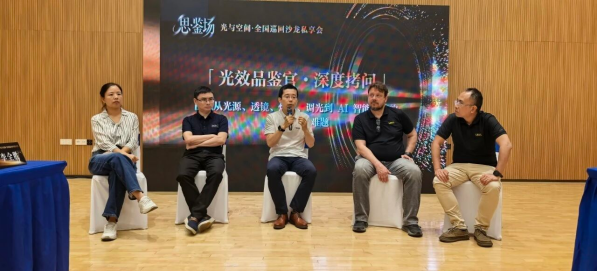
Figure 8: During the dialogue session, all four companies shared the stage, with the microphone passed to the designers
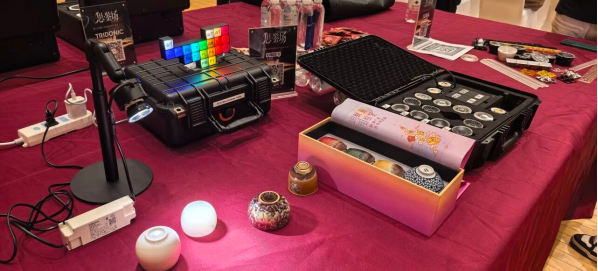
Figure 9: A display of light source, lens, and luminaire samples set up outside the venue
V. Conclusion: An Industry-Wide Consciousness Driven by Quality
At the conclusion of the event, Zhu Weikai, Director of the Light Environment and Lighting Design Professional Committee of the Zhejiang Provincial Illuminating Engineering Society and Dean of the Light Environment Design Institute at Zhejiang Provincial Architectural Design Research Institute Co., Ltd., delivered closing remarks. He noted that this exchange revealed not only advancements at the product level but also a growing industry-wide awareness and reflection guided by quality and adherence to standards.
As demonstrated throughout the event, the most immediate value of this gathering lay in achieving genuine “linguistic alignment” between design and manufacturing—four companies jointly showcased how an entire industry chain collaborates and explored how AI can be integrated into the full lifecycle of light.

Figure 10: Director Zhu Weikai summarizes the conference
Final Thoughts
One city settles, another is reborn. From light sources to systems, from hardware to AI, this salon did not offer definitive answers but sharpened the questions. For the industry, standards represent the baseline, while quality points the way forward; ultimately, technological advances must still rest on human judgment.
China Light
The official website of the China Association of Lighting Industry and a full-media platform for the lighting sector. We provide authoritative and timely lighting information while striving to be a growth partner for businesses. From brand promotion and channel expansion to consulting, talent training and participation in standards development, we provide comprehensive professional services to help businesses improve quality and efficiency and jointly advance the high-quality development of the lighting industry.
Business Contacts
仇纯 (Ms.): 158 6155 3579
顾君 (Mr.): 137 7157 5253