
Save this! In-depth analysis of the "Healthy Lighting Design Specification for Wellness Spaces," illuminating seniors' happy golden years.
On the evening of January 29, 2026, the promotional salon for the "Healthy Lighting Design Specification for Wellness Spaces," co-hosted by the Beijing Lighting Electrical Appliances Association and China Light Network · Ming Classroom, concluded successfully. The event was jointly hosted by Hu Xiuying, Secretary-General of the Beijing Lighting Electrical Appliances Association, and Hong Bing, Secretary-General of the Fudan University Alumni Lighting Club and Executive Vice President of the Beijing Lighting Electrical Appliances Association, and was livestreamed via the Ming Classroom "Fudan Light" channel (specially supported by Zhejiang Qicheng Electric Appliance) and the "Capital Light" program.
Hosts: Hong Bing (left), Hu Xiuying (right)
Mr. Qin Liguo, Vice President of the Chaoyang District Elderly Service Industry Association of Beijing and Honorary President of the Beijing Health Industry Association, was invited to deliver a speech.
Speaker: Qin Liguo
In his address, President Qin Liguo noted that as the wellness service system continues to improve, more and more seniors are entering professional wellness spaces, where their specific needs for lighting environments have long been an industry gap. He emphasized that scientific lighting design can significantly reduce the risk of falls among seniors, enhance their ability to perform daily activities, and promote mental well-being. The "Healthy Lighting Design Specification for Wellness Spaces" achieves personalized lighting solutions through customizable designs such as dimmable systems and circadian-rhythm-supporting luminaires. Additionally, he called for leveraging standards to facilitate precise connections between lighting companies and wellness institutions, and stated that he would coordinate elderly care facilities to support offline promotion and implementation of the standard.
Subsequently, Mr. Yang Chunlong, Deputy Secretary-General of the Beijing Lighting Electrical Appliances Association, served as the core speaker. Drawing on his experience throughout the standard's development and practical application, he provided online attendees with an in-depth, content-rich interpretation.

Speaker: Yang Chunlong
The key takeaways from the salon have been compiled for you—come check them out now~~~
I. Core of the Standard:
Five Guarantees Covering All Scenarios of Wellness Needs
Teacher Yang Chunlong began by explaining that the "Healthy Lighting Design Specification for Wellness Spaces" (T/BALI 005—2025) was officially released on December 23, 2025, on the "National Group Standards Information Platform." Led by the Beijing Lighting Electrical Appliances Association, it was jointly developed with 15 organizations and 25 cross-disciplinary experts. At its core, the standard provides five major guarantees for seniors, covering all scenarios including institutional care and home-based elderly care.
1. Safety Guarantee: Addressing the high risk of falls among seniors, the specification explicitly avoids harsh shadows and excessive brightness contrasts. Nighttime lighting must balance Luminance with sleep-friendliness, meeting the need for clear visibility during nighttime trips while not disrupting melatonin secretion.
2. Enhanced Visual Efficiency: Considering the declining vision of seniors, illumination standards for reading and writing scenes have been raised to more than twice the national standard levels—for example, reading scenes reach 500 lx, and writing scenes even up to 750 lx—effectively reducing eye strain.
3. Comfortable Environment Creation: Emphasizing diffused light designs to prevent glare, dynamic adjustments of Color temperature and brightness make the space more suitable for seniors' extended stays, eliminating feelings of darkness or oppression.
4. Promotion of Healthy Social Interaction: For social areas like activity halls and exercise zones in wellness spaces, higher illumination standards are established to create a warm and welcoming atmosphere, encouraging interaction and communication among seniors.
5. Sustainable Development: Balancing energy conservation with value-added services, the standard encourages low-energy products and supports services such as circadian rhythm monitoring and customized light prescriptions, achieving a win-win outcome for both social and environmental benefits.
II. Key Indicators:
m-EDI as the Core: Detailed Requirements for Indoor Lighting Design
In this interpretation, Teacher Yang Chunlong focused on breaking down the innovative indicators and practical requirements within the standard, with Physiological Equivalent Illuminance (m-EDI) emerging as a central highlight.

m-EDI Definition
m-EDI Indicator is directly linked to human melatonin secretion and closely related to light spectrum and Luminance. The standard clarifies that warm-colored light has lower m-EDI stimulation and is more suitable for nighttime use, while cool-colored light has higher m-EDI values and can be used for daytime wake-up purposes.
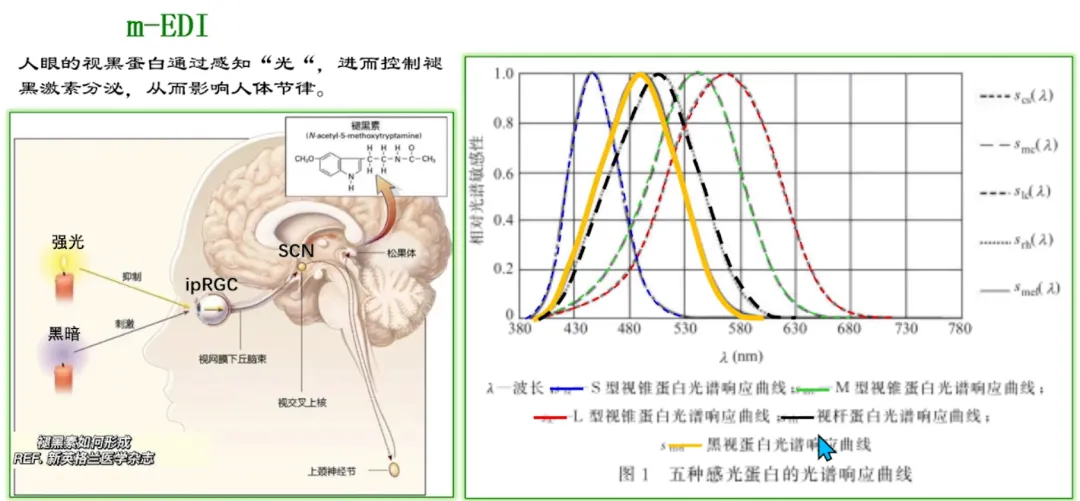
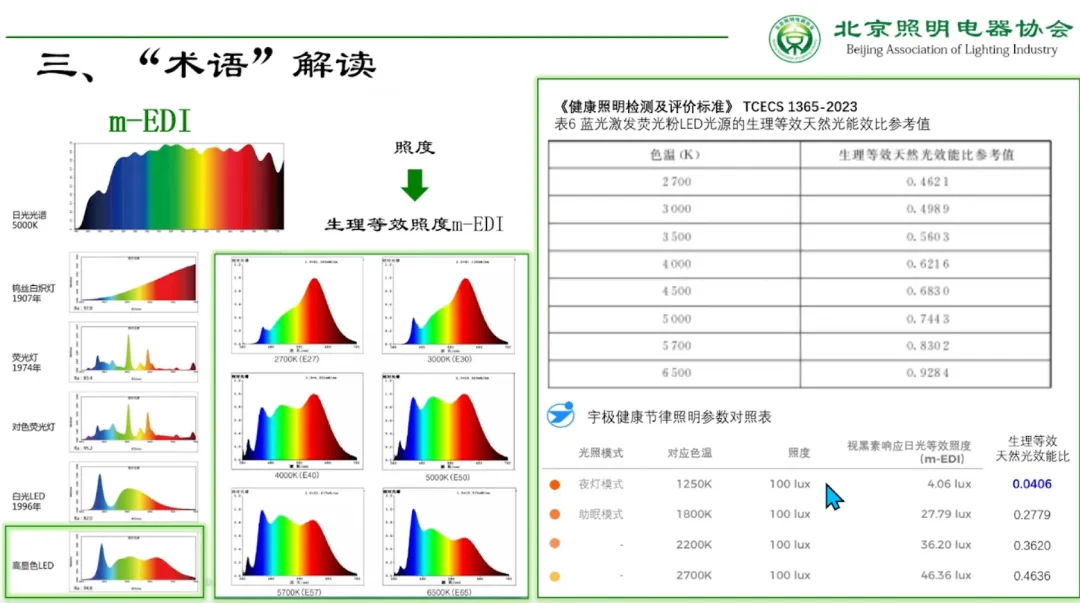
This indicator has achieved a closed-loop system of "designable, implementable, and measurable." Designers can calculate using spectral data and professional software simulations, manufacturers can achieve it with existing LED technology, and testing can be conducted with specialized instruments.
Subsequently, Teacher Yang Chunlong elaborated on the specific requirements for indoor lighting design, covering key dimensions such as spatial adaptation, glare control, and intelligent adjustment:
1. Illuminance and Color Control: The contrast ratio of illuminance and color between adjacent spaces must be strictly controlled within 5 times to avoid discomfort during visual transitions and ensure seniors' safe movement;
2. Mandatory Requirements for Key Areas: Bedrooms, bathrooms, and connecting corridors must be equipped with nighttime lighting, which must adhere to three principles—"low brightness, low m-EDI, and no glare"—to avoid disrupting sleep;
3. Light Source Selection Guidelines: Diffuse light sources should be prioritized, and anti-glare designs should minimize direct light exposure to the eyes, reducing visual fatigue for seniors;
4. Intelligent Control Logic: The lighting system must incorporate temporal concepts to enable dynamic day-night adjustments—increasing illuminance and m-EDI values during the day to aid wakefulness, and lowering Color temperature and brightness at night to support sleep;
5. Adaptation to Special Scenarios: Functional spaces such as reading areas and nursing stations require separate dimmable modules to meet personalized usage needs; public activity areas must balance group activities with individual rest, providing partitioned lighting control functions.
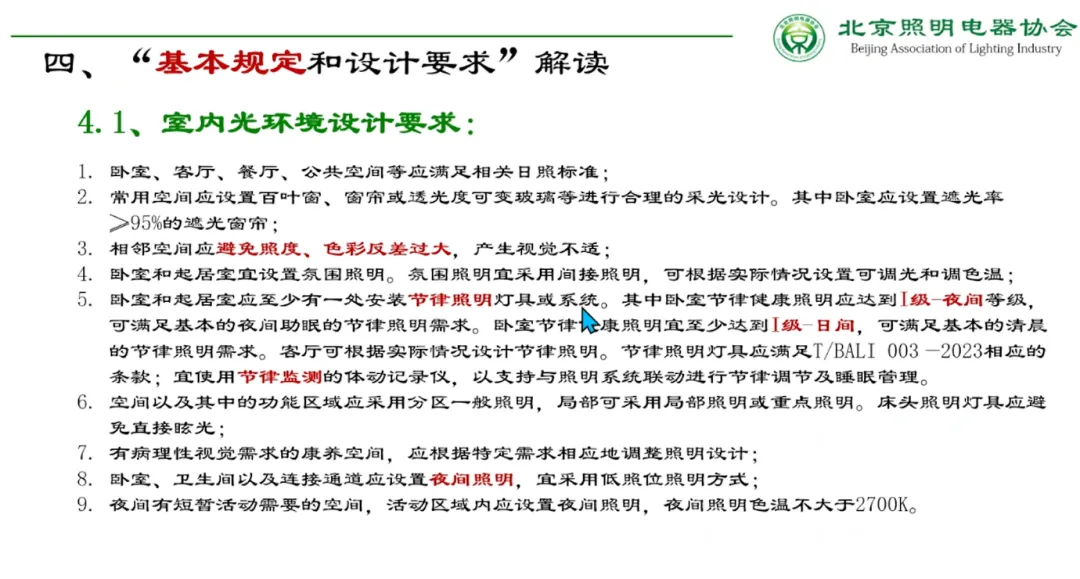
Indoor Lighting Design Requirements
III. Graded Circadian Lighting:
Three-Tier Luminaire System Adapts to Different Wellness Needs
After clarifying the requirements for indoor lighting design, Teacher Yang Chunlong further broke down the grading standards and application scenarios for circadian lighting:
The standard divides wellness-space-specific luminaires (or systems) into three tiers (the tiers do not imply hierarchy, only functional and operational differences), precisely matching the needs of different time periods and populations:
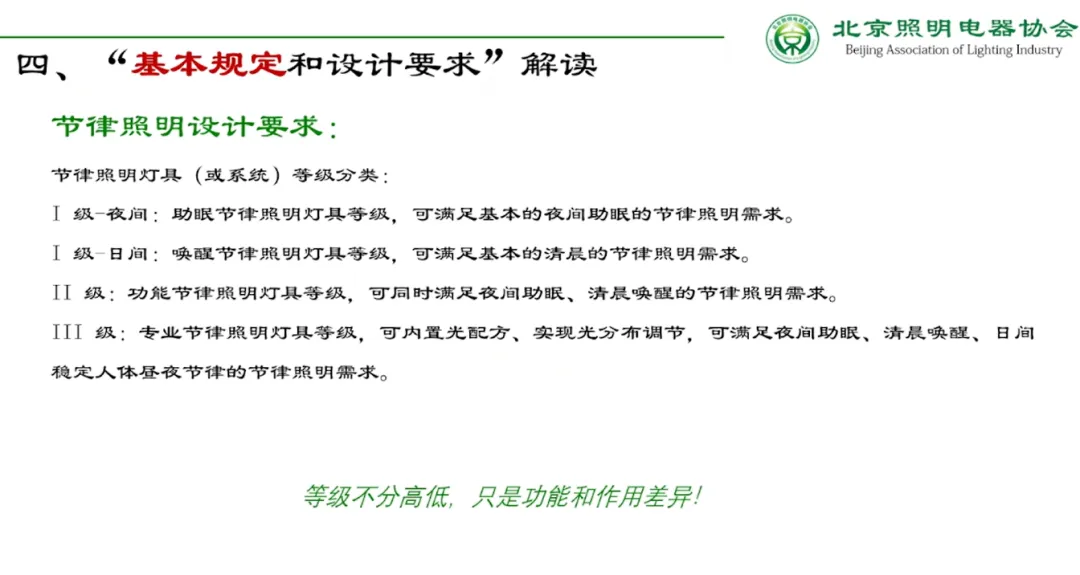
Circadian Lighting Luminaire Tier Classification
1. Tier 1 Nighttime Circadian Lamp (Sleep Aid Type): Features low m-EDI values and warm Color temperature, suitable for bedrooms, lounges, and other nighttime stay spaces. Its core function is to reduce melatonin suppression and assist with falling asleep;
2. Tier 1 Daytime Circadian Lamp (Wake-Up Type): Has higher m-EDI values and cooler Color temperature, suitable for living rooms, activity halls, and other daytime activity spaces, helping to boost alertness;
3. Tier 2 Functional Circadian Lamp: Balances dual day-night needs, supporting bidirectional adjustment of Color temperature and m-EDI. Modes can be switched according to usage scenarios, suitable for multi-purpose halls, nursing stations, etc.;
4. Tier 3 Circadian Lamp: Adds dynamic daytime adjustment functionality, automatically optimizing light parameters based on sunlight changes. Suitable for special senior groups with circadian rhythm disorders or sleep disturbances.
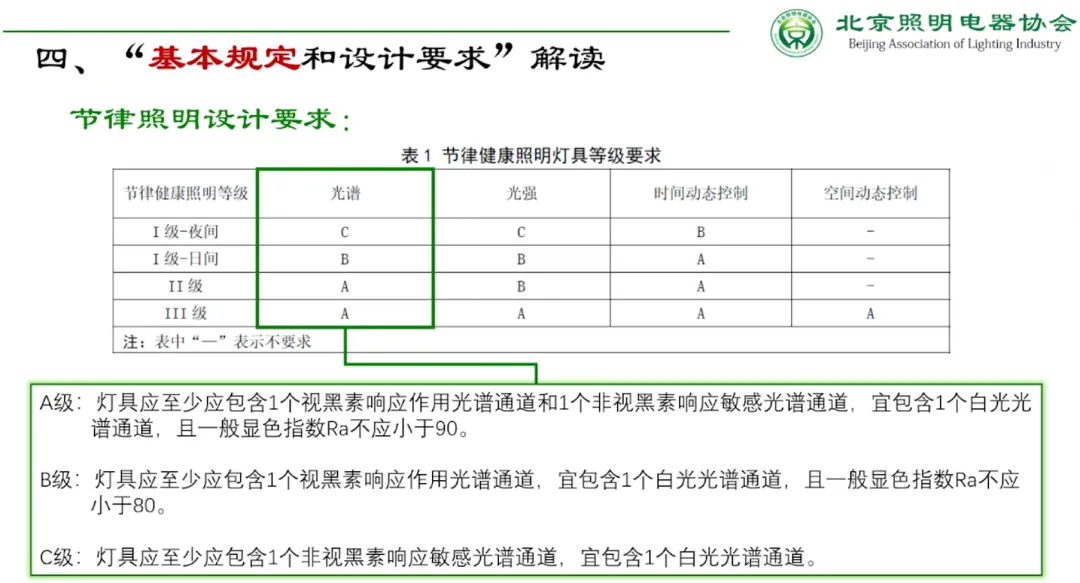
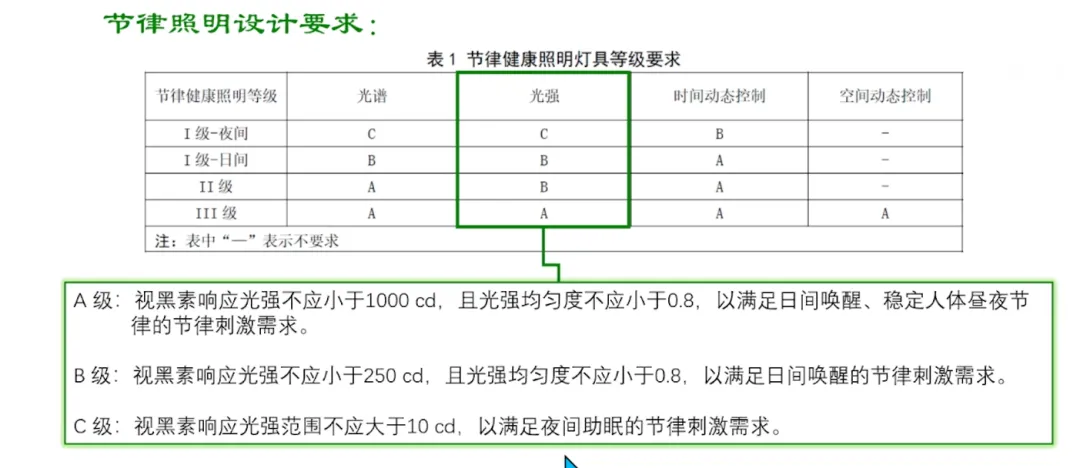
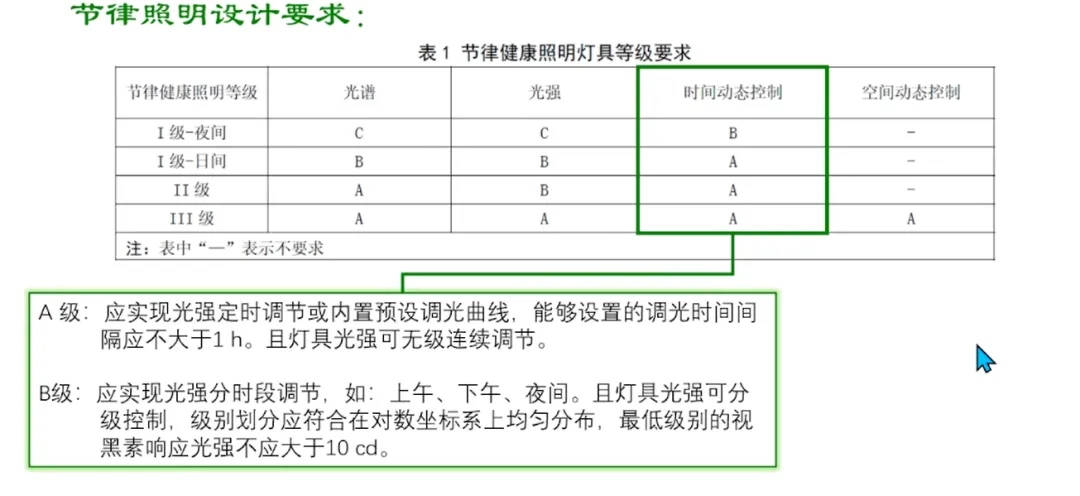
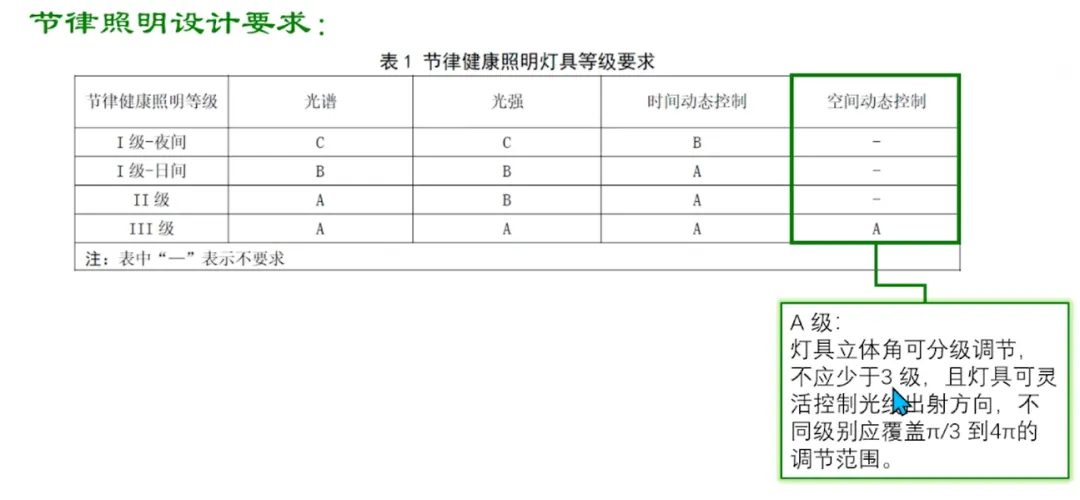
Regarding application guidelines, the standard clearly requires: bedrooms must have at least one Tier 1 nighttime circadian lamp, installed away from direct headlight exposure; living rooms and dining rooms can combine daytime circadian lamps with functional circadian lamps; public areas in wellness institutions must be paired with circadian monitoring devices to adjust lighting parameters in real-time and prevent improper luminaire use.
IV. Circadian Monitoring:
Essential Support for Optimizing Lighting Environments
Following the explanation of luminaire tiering, Teacher Yang Chunlong supplemented the requirements and practical value of Circadian Monitoring, emphasizing its role as the core support for achieving personalized lighting environments:
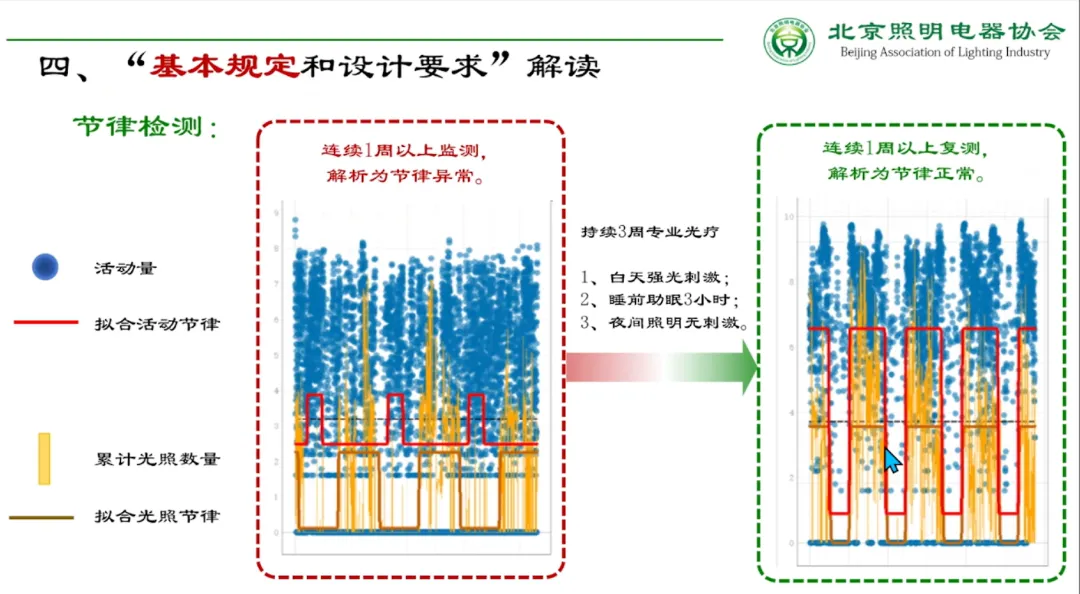
1. Core Purpose of Monitoring: Circadian monitoring allows precise tracking of each senior's melatonin secretion patterns, sleep quality, and daytime alertness, providing data support for customized light prescriptions and avoiding one-size-fits-all lighting designs;
2. Implementation Scenarios: Wellness institutions must establish baseline circadian profiles for resident seniors, completing initial assessments upon admission; home-based elderly care settings can provide portable monitoring devices for regular self-checks;
3. Integration with Lighting Systems: Monitoring data must be intelligently linked with lighting systems. For example, for seniors with sleep disorders, the dynamic adjustment curves of Tier 3 circadian lamps can be automatically modified based on test results to optimize daytime wake-up and nighttime sleep assistance effects;
4. Equipment Requirements: The standard encourages the use of easy-to-operate, non-invasive monitoring devices, such as wrist-worn circadian monitors and sleep quality sensors, to lower the barrier to entry for seniors. It also explicitly states that monitoring data must ensure privacy and be used solely for lighting environment optimization.
Interactive Q&A
During the salon's interactive session, audience questions focused on practical application scenarios, and Teacher Yang Chunlong responded point-by-point based on the standard and real-world practice, while President Qin Liguo added insights from an industry perspective.
1. How should lighting be designed when a single space accommodates seniors, middle-aged adults, and children?
Teacher Yang Chunlong suggested:
Seniors and Children: Maintain consistent circadian rhythms. After 9 PM, uniformly dim the lights and adopt warm Color temperatures—this helps children maintain normal melatonin secretion (avoiding early maturation risks) while aligning with seniors' sleep habits;
Middle-Aged Adults: Set up independent workspaces whenever possible, using professional lighting with adjustable brightness and Color temperature to reduce damage from strong light and blue light to their own vision, while avoiding disturbance to seniors and children's rest.
2. What are the priorities and challenges in implementing the standard in small-to-medium-sized wellness institutions or renovated older facilities?
Teacher Yang Chunlong stated that the standard fully considers the feasibility of implementation across different scenarios:
Priorities: Focus first on addressing core needs such as nighttime lighting and corridor safety lighting, adopting localized renovation approaches—such as replacing dimmable Downlights or adding motion-sensor night lights;
Challenges: Balancing cost and effectiveness. Low-cost mobile products—such as bedside sleep lamps or floor-standing circadian lamps—can be chosen for budget-friendly renovations without large-scale wiring;
Key Point: Design is the root cause. Professional designers must integrate standard requirements into renovation plans to avoid ad-hoc construction.
Mr. Qin Liguo, Vice President of the Chaoyang District Elderly Service Industry Association of Beijing, added: "Age-friendly renovations should not focus solely on hardware facilities; the health value of lighting has yet to be fully recognized. Moving forward, we will coordinate elderly care facilities and invite experts to visit communities, allowing more seniors to experience the benefits of scientific lighting."
Conclusion
Deputy Secretary-General Yang Chunlong emphasized that successful implementation of the standard requires collaboration among designers, contractors, manufacturers, and wellness institutions. The Beijing Lighting Electrical Appliances Association will form product and service teams, build precise matchmaking platforms, and collaborate with associations in sleep medicine, elderly services, and other fields to carry out multi-scenario promotions.
In the future, the association will also collect feedback on standard implementation, organize expert seminars for evaluation on a regular basis, initiate revisions when appropriate, and, when conditions are ripe, push for its upgrade to a National standard.
As the standard is gradually implemented, healthy lighting will become one of the core competitive advantages of wellness services, injecting new momentum into the high-quality development of the silver economy.
Although this salon has concluded, the journey to promote healthy lighting has just begun. Letting scientific light illuminate every wellness space and enabling seniors to enjoy their golden years in safe, comfortable, and healthy lighting environments—that is the original aspiration and mission of this standard.
END
Note: This article is compiled from recordings of Teacher Yang Chunlong's interpretation and promotional salon on the "Healthy Lighting Design Specification for Wellness Spaces" held on January 29, 2026, on Ming Classroom, and published by Ming Classroom.
China Light
The official website of the China Association of Lighting Industry and a full-media platform for the lighting sector. We provide authoritative and timely lighting information while striving to be a growth partner for businesses. From brand promotion and channel expansion to consulting, talent training and participation in standards development, we provide comprehensive professional services to help businesses improve quality and efficiency and jointly advance the high-quality development of the lighting industry.
Business Contacts
仇纯 (Ms.): 158 6155 3579
顾君 (Mr.): 137 7157 5253