
New trends in whole-home smart lighting! In-depth analysis of the Casambi Bluetooth solution
Recently, the Mingren Online Salon at the Guzhen Lighting Expo invited Mr. Liu Rui, founder of Shanghai RaynewTech Co., Ltd. (RaynewTech), to present on the topic “Casambi Makes Whole-House Smart Lighting Easy to Achieve.” He comprehensively dissected the complete logic behind implementing high-end Bluetooth-based whole-house smart lighting, covering brand origins, underlying Bluetooth technology, Casambi’s product advantages, a full ecosystem of software and hardware support, and the practical application of multi-system interconnectivity.
Decoding Casambi’s Technical Core After Over a Decade in the Industry
Mr. Liu Rui boasts more than ten years of deep experience in the lighting industry, having held positions at global leading lighting brands such as FLOS, OSRAM, Philips, and Raynew. He is highly proficient in LED light sources, LED drivers, LED phosphors, LED thermal and optical engineering, intelligent lighting control solutions, and the implementation of high-end luminaires. Currently, he serves as an officially authorized distributor for Finland’s Casambi, China’s Rayrun, China’s Siqi, and Italy’s DALCNET, holding extensive supply-chain resources for end-to-end smart control systems and accumulating numerous real-world case studies in high-end project development and luminaire OEM services.
At the outset of his presentation, Mr. Liu introduced both RaynewTech and Casambi. RaynewTech, headquartered in Shanghai and Hong Kong, focuses on providing intelligent control system integration, technical consulting, and high-end OEM services to lighting engineering firms and luminaire brands, leveraging its professional expertise and supply-chain capabilities. The company adheres to the business principle of not selling finished luminaires, not directly undertaking end-user projects, and not independently developing components, concentrating instead on empowering the industry.
Casambi, founded in Finland in 2011, was co-founded by Timo Pakkala and Elena Lehtimaki, both formerly from Nokia’s Bluetooth division. As the inventor of Bluetooth technology, Nokia nurtured several unicorn companies after transitioning from the mobile phone business, with Casambi being one of the most renowned.
Today, Casambi positions itself as a software company, with its Finnish headquarters employing over 60 software engineers. Casambi is committed to fostering the ecosystem of “Casambi Ready” luminaires and control devices, serving as a global leader in low-power Bluetooth–based wireless lighting control solutions.
The core of Casambi’s business model lies in a one-time hardware purchase coupled with lifetime free software access. Users can download the Casambi App free of charge from the Apple or Android app stores and register online; all software services remain entirely free.
With its simple operating logic and robust functionality, Casambi has become the preferred smart solution for high-end lighting brands worldwide.
Why Low-Power Bluetooth Has Become the Preferred Choice for Lighting Control
Low-power Bluetooth stands out as the top choice for wireless lighting control systems due to three key advantages:
No internet connection required; local standalone operation without a gateway.
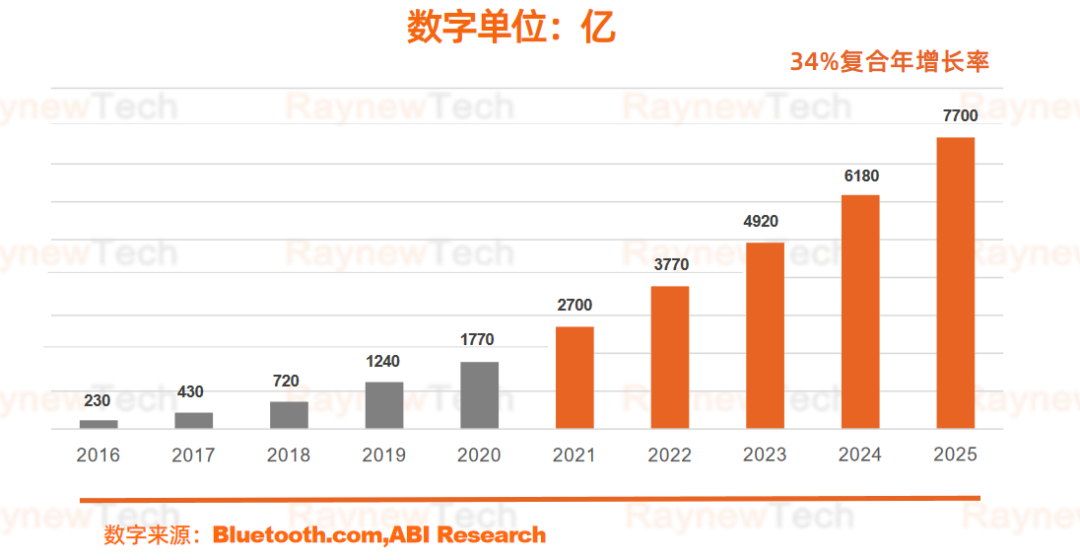
Its low-power characteristics make it ideal for battery-powered devices. Since the iPhone 4S in 2011, all modern smart devices have come standard with Bluetooth. According to ABI Research data, by 2025, the global number of Bluetooth nodes will exceed 770 billion.
Bluetooth Mesh: Contributions from Two Giants
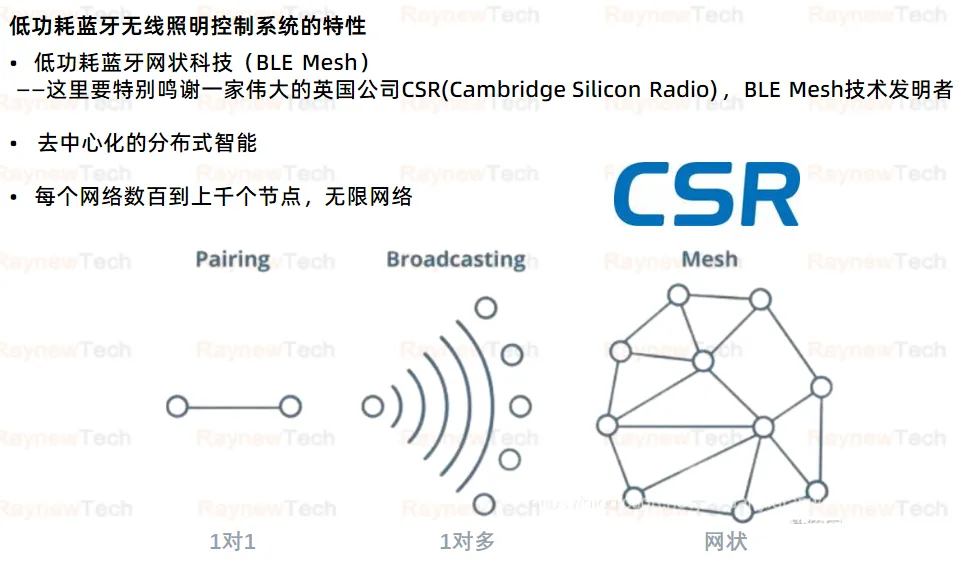
Mr. Liu specifically highlighted two remarkable companies. The first is Nokia, the inventor of Bluetooth technology. The second is the UK-based CSR (Cambridge Silicon Radio), which in February and April 2014 developed Bluetooth Mesh technology—breaking the previous limitation that “one smartphone could only control a single bulb”—enabling multi-to-multi network communication. In October 2014, CSR was acquired by U.S.-based Qualcomm.
Decentralization: No Single Point of Failure
Low-power Bluetooth self-organizing networks adopt a decentralized architecture, eliminating centralized routers or hubs and thus avoiding single points of failure. By comparison:
◇WiFi systems: If the WiFi router fails, all devices on the network lose control.
◇Zigbee systems: Also susceptible to single-point router failures.
◇DALI wired systems: If the DALI bus power fails, all luminaires switch to emergency lighting mode, unable to dim or turn off.
◇Bluetooth Mesh systems: If any single luminaire malfunctions, the others continue operating autonomously based on their stored smart information, unaffected.
Five-Tier Network Permission Settings
Casambi’s Bluetooth network offers human-centered five-tier permission management:
1. Super Administrator: The network creator, with full control and the ability to delegate permissions to others.
2. Network Manager: Can perform debugging and configuration but cannot re-share permissions.
3. End User: Only able to operate; no programming changes allowed—ideal for handover to property owners.
4. Fully Public: Accessible without a password—suitable for open-plan office spaces.
5. Private and Non-Sharing: Network information remains stored solely on the creating device—perfect for high-end private residences.
Bluetooth wireless technology finds applications across diverse settings, including homes, offices, retail spaces, restaurants, healthcare facilities, historic buildings, museums, outdoor areas, and industrial environments. Radar sensors paired with Bluetooth self-organizing networks are also typical in parking lots.
Adaptation to High-End Applications:
Core Advantages of Casambi in Whole-House Smart Lighting
Stability
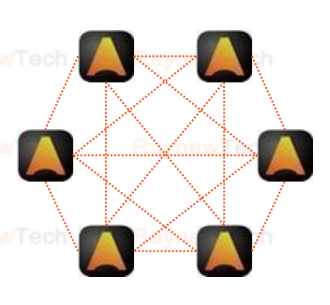
Based on Bluetooth self-organizing networking technology, Casambi features self-configuration, self-storage, self-repair, self-identification, and self-gateway capabilities. Its network is capped at 250 nodes to prevent congestion. When any node loses power, a 0.5-second capacitor discharge triggers the Bluetooth module to send an offline notification to the network, enhancing communication efficiency. It also supports dual-band 2.4 GHz switching, similar to military communication channel‑hopping mechanisms, ensuring smooth connectivity.
In terms of transmission range, indoor coverage reaches 30 meters, while outdoor visibility extends up to 50 meters (line-of-sight). A long-range option of 200 meters is also available.
Simple and Intuitive Operation
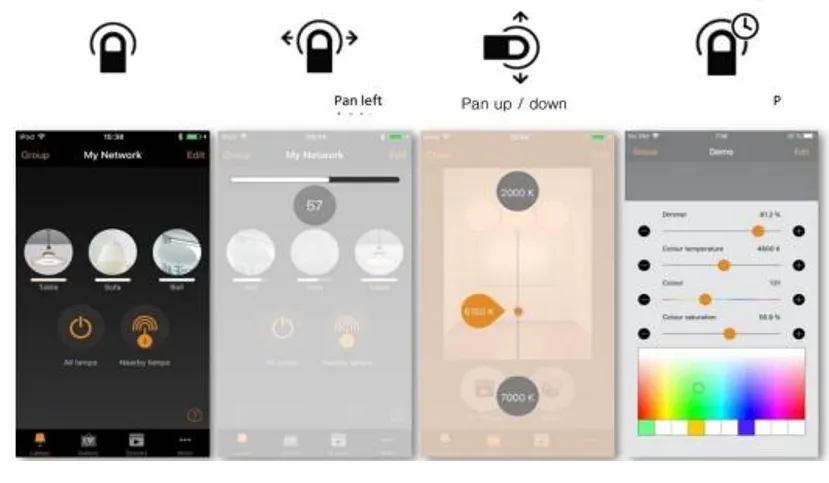
The Casambi App (Lighting OS) features an extremely minimalist and intuitive interface, resembling a smartphone home screen and compatible with both iOS and Android. It supports cloud‑based remote access, with information security protected by Swiss banking‑grade encryption algorithms (AES, AES-CMAC, ECDH).
A Rich Ecosystem Platform
Casambi maintains an exceptionally rich hardware ecosystem, partnering with numerous world‑class brands, including Occhio, FLOS, iGuzzini, ERCO, Vibia, JUNG, GIRA, Basalte, and other top luminaire and panel manufacturers. All ecosystem products achieve 100% compatibility and seamless debugging and control through a single Casambi App.
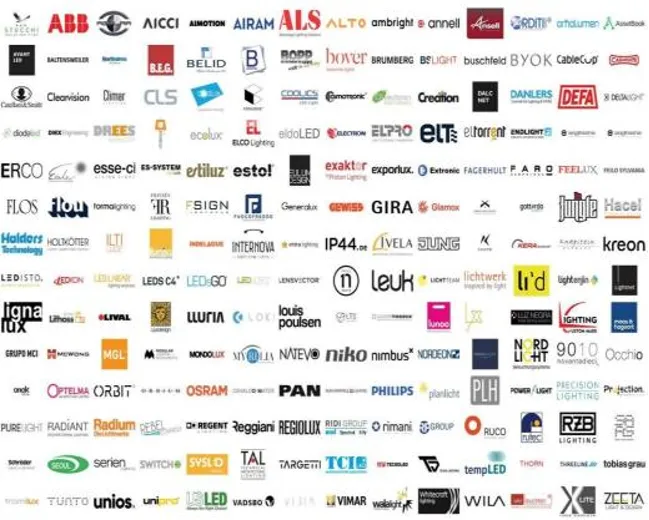
A Comprehensive Ecosystem Platform
◇Construction-Friendly: No complex wiring or distribution boxes required.
◇Debugging-Friendly: No specialized hardware/software or senior engineers needed—the App handles network setup, lighting adjustments, scene animation design, control logic editing, and cloud backup calls.
◇Communication-Friendly: Owners can submit requests via the App, and repeated requirement changes feel as easy as playing a game.
Full Breakdown of Bluetooth Ecosystem Technology
Industry Standard Interconnectivity
Casambi’s Bluetooth system enables bidirectional interoperability with multiple industry standards:
◇Interoperability with DALI: The Bluetooth module can output DALI signals to control DALI drivers and relays; conversely, DALI master controllers can also use gateways to manage Bluetooth devices.
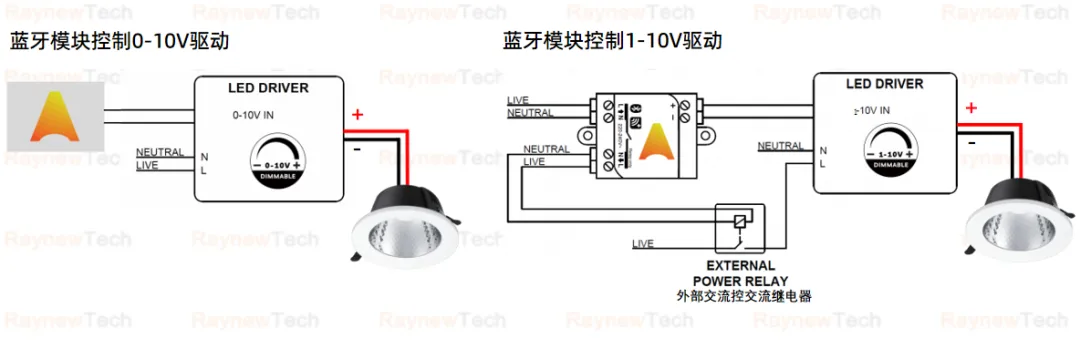
◇Control of 0/1–10V Drivers: The Bluetooth module outputs 0–10V or 1–10V signals; additional AC relays can be used to achieve complete shutdown under the 1–10V scheme.
◇Control of Thyristor Drivers: The Bluetooth module outputs switching signals, enabling dimming via strong current and zero‑line connections.
◇Interoperability with KNX Systems: Bidirectional control is achieved through KNX gateways.
◇Output of 485 Signals: Capable of controlling music amplifiers and curtain motors.
◇Bridge via Matter Protocol: Integration with Apple Home, Google Home, Amazon Alexa, and other smart home platforms.
◇Interoperability with DMX512 Systems: Supports both Bluetooth‑controlled DMX and DMX‑controlled Bluetooth modes.
Bluetooth Driver Solutions
The easiest way to upgrade luminaires into Bluetooth‑enabled smart fixtures is to use a Bluetooth constant‑current driver directly connected to the lamp cap; for light strips, smart control can be achieved via a Bluetooth constant‑voltage driver.
Curtain Systems
Bluetooth can control both opening/closing curtains and roller blinds, supporting various types such as honeycomb shades, Shangri-La blinds, sheer curtains, and Venetian blinds.
Music Control Systems
Bluetooth devices output 485 signals to music amplifiers, allowing users to invoke playback via the Casambi App and synchronize lighting with music.
Temperature Control Systems
Bluetooth thermostats enable coordinated control of central air conditioning temperature, modes, fan speeds, and switch operations.
Panel and Remote Controls
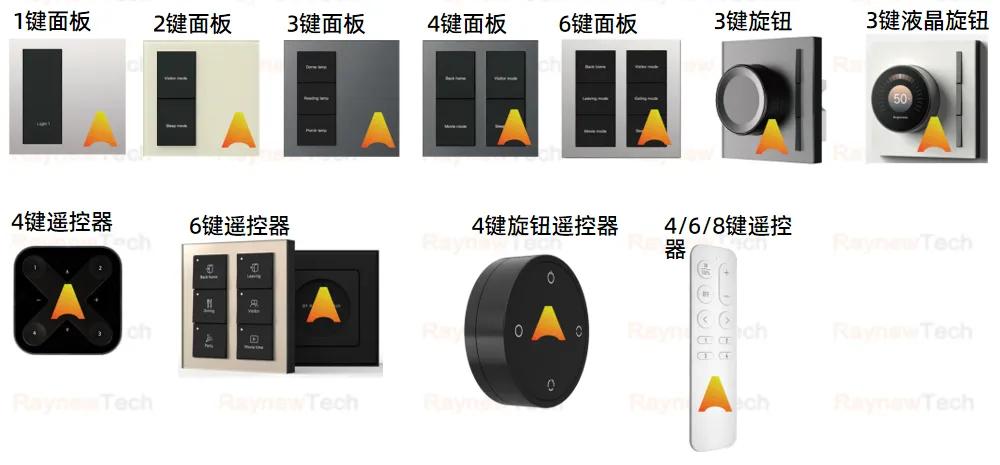
Offering a variety of panel options—from single-button to six-button models—as well as combinations like three buttons plus knobs, or three buttons plus knobs with LCD displays. Remote controls include four-button, six-button, and four-button knob variants, some of which can be magnetically attached or carried conveniently. Mr. Liu particularly emphasized that the aesthetic design of panels and remotes is a critical factor determining whether they can be installed on homeowners’ walls.
Sensors
Providing 24 GHz microwave human presence sensors and infrared presence sensors, capable of precisely detecting subtle movements associated with human vital signs, while integrating light‑sensing functions to automatically adjust lighting brightness according to ambient illumination.
A Gathering of Renowned Luminaire Brands
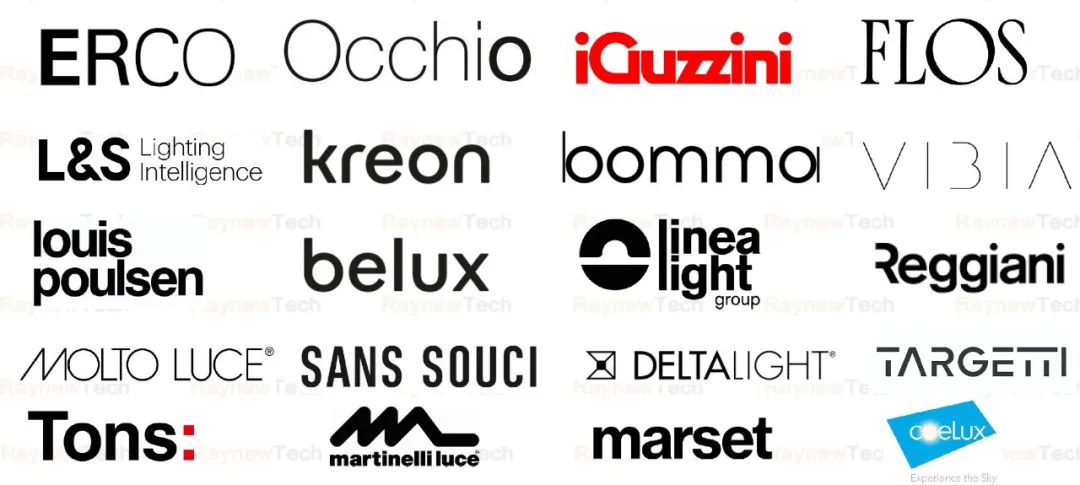
Many high-end luminaire brands worldwide have already adopted Casambi’s wireless solutions, including Occhio, FLOS, iGuzzini, ERCO, Vibia, Louis Poulsen, Belux, Linea Light, Reggiani, MOLTO LUCE, DELTA LIGHT, Targetti, and others.
Interactive Q&A Session
During the salon’s interactive segment, Mr. Liu addressed several common questions raised by the audience:
Q1: Compared with WiFi, Zigbee, and other smart lighting protocols, what advantages does Casambi’s Bluetooth solution offer in high-end whole-house projects regarding stability, construction costs, and post‑installation maintenance?
A: As the quintessential Bluetooth wireless solution, Casambi features a decentralized self‑organizing network (Bluetooth Mesh), where each node acts as a gateway and storage unit, eliminating single points of failure. This provides greater network stability than the star‑shaped topology of WiFi and Zigbee routers.
Regarding construction, Casambi only needs to ensure signal coverage within the mesh network, unlike WiFi/Zigbee, which require routers to cover every corner of the space.
For post‑installation maintenance, if a Casambi device breaks down, it can be replaced on-site with a new unit, featuring a one‑click replacement function that seamlessly migrates all original network information to the new device. Meanwhile, Casambi’s rich ecosystem makes it easy to find replacement solutions.
Q2: With the growing trend of “no main light” in home décor, how does the Casambi system adapt to various luminaire types—magnetic lights, downlights, linear lights—and enable fine‑tuned dimming and color adjustment?
A: There are three approaches:
First, directly using Casambi constant‑current drivers or modules—downlights and linear lights choose Casambi constant‑current drivers, while magnetic lights embed Casambi chips inside their lamp caps to control constant‑current drivers.
Second, if existing luminaires already feature DALI, 0–10V, thyristor, or other standard dimming interfaces, simply installing Casambi control modules that output corresponding signals allows the system to integrate them.
Third, during the luminaire R&D phase, collaborate directly with Casambi to embed Casambi chips into the lamp head’s drive circuitry, enabling subsequent power supply to be controlled by the system.
Q3: Different brands of luminaires and smart accessories often struggle to interconnect. How does RaynewTech leverage the Casambi ecosystem to solve cross-brand device compatibility issues?
A: If luminaires use international standard communication protocols like DALI, 0–10V, or thyristor, look for corresponding Casambi controllers to achieve compatibility. For smart accessories accepting DMX, 485, dry contacts, or Matter signals, they too can be made compatible. If a device is entirely proprietary and does not open any communication interfaces, start from its internal network and use internal control logic to achieve interoperability.
Q4: For villas, boutique guesthouses, and commercial shops, what mature case studies demonstrate Casambi’s successful integration of curtain, music, and temperature control systems?
A: RaynewTech has implemented projects in Hangzhou, Hong Kong, Xi’an, and other locations—multi‑story villas incorporating lighting, curtains, sensors, and temperature control solutions; a French‑style mountain guesthouse project in Moganshan, Zhejiang; lighting and music control for DR diamond ring stores in Shenzhen and Hangzhou; lighting control for Moooi’s flagship store in Shanghai; and curtain systems and lighting schemes for a world‑renowned brand’s Shanghai office. Additionally, there is a special case—a temple in Zhejiang housing relics, where traditional building regulations prohibit wiring or nail installation, making wireless solutions the optimal choice.
Q5: For luminaire manufacturers seeking to integrate Casambi protocols into their own smart products, what steps are required from driver selection to product certification? What OEM support services can RaynewTech provide?
A: For luminaire manufacturers, hardware selection is merely one item on the BOM list; China’s robust supply chain and abundant engineering resources can easily resolve technical challenges. The key issue lies in whether the manufacturer decides to invest—essentially a business decision rather than a technical one. Mr. Liu advises luminaire makers: “Early planning and early action bring competitive advantage; waiting passively leaves you behind”—while competitors quietly reap profits, they won’t reveal how lucrative the smart lighting market truly is.
Conclusion
Anything That Can Go Wireless Will Ultimately Go Wireless
This salon provided a comprehensive overview of Casambi’s Bluetooth wireless lighting control system—its technical core and market implementation path. From inheriting Nokia’s Bluetooth legacy to breakthroughs in Bluetooth Mesh’s decentralized architecture, and culminating in a rich ecosystem of software and hardware support, Casambi offers a stable, simple, and ecologically sound wireless solution for high-end whole-house smart lighting.
As Mr. Liu aptly put it, the future of lighting control is wireless—“anything that can go wireless will ultimately go wireless.”
END
Note: This article is compiled from the recording of Mr. Liu Rui’s June 12, 2026, presentation titled “Casambi Makes Whole-House Smart Lighting Easy to Achieve,” organized and published by Ming Classroom.
China Light
The official website of the China Association of Lighting Industry and a full-media platform for the lighting sector. We provide authoritative and timely lighting information while striving to be a growth partner for businesses. From brand promotion and channel expansion to consulting, talent training and participation in standards development, we provide comprehensive professional services to help businesses improve quality and efficiency and jointly advance the high-quality development of the lighting industry.
Business Contacts
仇纯 (Ms.): 158 6155 3579
顾君 (Mr.): 137 7157 5253