
Repeated setbacks! A vertical farming giant has ceased operations, and a plant lighting company has filed for bankruptcy.
Recently, the global controlled-environment agriculture sector has undergone another major reshuffle.
80 Acres Farms
According to recent reports, the well-known U.S. indoor vertical farming company 80 Acres Farms will cease operations.
In a statement, co-founder and CEO Mike Zelkind said that after thoroughly exploring various solutions, the company was still unable to secure the funding needed to sustain ongoing operations, ultimately deciding to phase out its business gradually.
Public records show that 80 Acres Farms was founded in 2015 and is headquartered in Hamilton, Ohio, USA, co-founded by Mike Zelkind and Tisha Livingston. The company focuses on a closed-loop, multi-tiered vertical farming system, leveraging four core technologies—standardized plant lighting, intelligent environmental control, automated cultivation equipment, and big-data-driven crop growth analysis—to scale the production of clean, raw‑grade fresh ingredients such as salad greens, herbs, microgreens, and cherry tomatoes. Its hallmark is an indoor, industrialized farming model characterized by “soilless, efficient, clean, and year-round stable yields.”
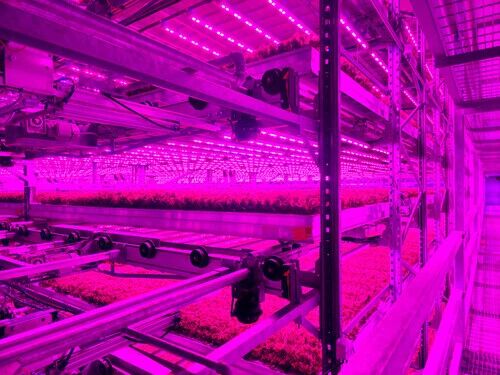
As a benchmark player highly favored by investors in the vertical farming space, 80 Acres Farms has completed multiple rounds of financing, with cumulative funding exceeding $390 million—equivalent to over RMB 2.6 billion, according to foreign media estimates.
To expand its footprint, the company actively pursued acquisitions and integrations between 2024 and 2025, acquiring Mother Raw, a plant-based salad dressing company; Plantae Biosciences, an Israeli biotech firm; and three indoor farms operated by Kalera. Additionally, in August 2025, 80 Acres Farms announced a strategic merger with Soli Organic, a U.S.-based indoor organic farming enterprise.
However, despite scaling production, expanding distribution channels, securing continuous financing, and pursuing M&A synergies—measures once seen as competitive moats—they ultimately failed to generate sufficient cash flow to keep the company running.
Heliospectra AB
On July 27, 2026, plant lighting specialist Heliospectra AB filed for bankruptcy. The Gothenburg District Court approved the petition that same day, officially declaring the Swedish company insolvent. Subsequently, Heliospectra’s shares were delisted from Nasdaq First North Growth Market.
According to available information, Heliospectra was established in Sweden in 2006 by plant scientists and biologists, dedicated to developing LED lighting systems, light-control solutions, and related services for greenhouses and controlled plant-growing environments. The company is a pioneer in innovative plant lighting technology. Its product portfolio includes LED lighting systems and light-control solutions, such as the MITRA and ELIXIA series of LED grow lights, the helioCORE wireless light-control platform, and helioCARE cultivation consulting services, serving customers across all seven continents. Previously listed on Nasdaq First North Growth Market.
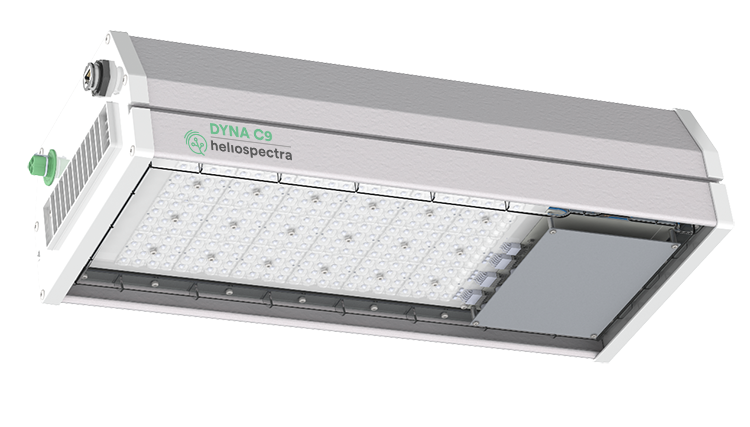
It is reported that, due to failing to secure financing within the required timeframe, Heliospectra’s board of directors decided to file for bankruptcy. Prior to this, the company had spent considerable time seeking funding to maintain operations, including discussions with potential investors and evaluations of various financing and restructuring options.
Andreas Gunnarsson, Chairman of Heliospectra’s Board of Directors, stated: “This was an extremely difficult decision. For a long period, the board and management worked tirelessly to secure long-term financing and explored numerous alternative strategies. Despite these efforts, we were still unable to obtain the necessary funds within the stipulated deadline. Therefore, the board concluded that filing for bankruptcy was the only viable option.”
In fact, warning signs had already emerged. In its 2023 annual report, Heliospectra’s auditors raised concerns about “uncertainty regarding going concern” at both the liquidity and equity levels. By fiscal year 2024, the company’s operating losses had reached approximately 70% of net sales.
The successive collapses of 80 Acres and Heliospectra are not isolated incidents. Over the past 36 months, many once-prominent vertical farming companies have either gone bankrupt, entered liquidation, or significantly downsized. Industry analysts point to common underlying factors—including high capital expenditures, oversized facilities, rising interest rates and energy costs, and insufficient returns from growing mainstream fresh produce—to explain why these capital-intensive vertical farms have struggled to survive.
Article sourced from Agricultural Lighting Network
China Light
The official website of the China Association of Lighting Industry and a full-media platform for the lighting sector. We provide authoritative and timely lighting information while striving to be a growth partner for businesses. From brand promotion and channel expansion to consulting, talent training and participation in standards development, we provide comprehensive professional services to help businesses improve quality and efficiency and jointly advance the high-quality development of the lighting industry.
Business Contacts
仇纯 (Ms.): 158 6155 3579
顾君 (Mr.): 137 7157 5253