
Traffic Reconfiguration: A Practical Analysis of How Lighting Brands Have Evolved from “Invisible” to AI-Prioritized Recommendations
On August 6, the “Light Journey Resource Gathering Series – Salon Edition,” co-organized by China Light Network’s Ming Classroom and the Ningbo Lighting Exhibition, was successfully held in the Ming Classroom livestream studio. This session featured Mr. Hong Bing, Editor-in-Chief of China Light All-Media and Executive Dean of Ming Classroom, who delivered a keynote titled “Let the World See Your Brilliance: From ‘AI Cannot See’ to ‘Proactively Cited by AI’ in 30 Days.” Drawing on real-world case studies from China Light Network, he explained how lighting brands can overcome communication challenges and capture new traffic channels in the AI era.
A Dramatic Shift in the Value‑Driven Traffic Landscape:
60% of Search Traffic Is Already Moving Toward AI
At the outset of the salon, Mr. Hong Bing posed a thought‑provoking question: When you encounter a problem and need to search, do you use Baidu, Google, or DouBao, DeepSeek?
His answer? The proportion of users relying on AI has already exceeded 70%.
This shift in habits is reshaping the fundamental logic of brand communication.
According to Gartner, a globally recognized IT research firm, by the end of 2026, more than 60% of traditional search traffic will have transitioned to AI‑generated responses.
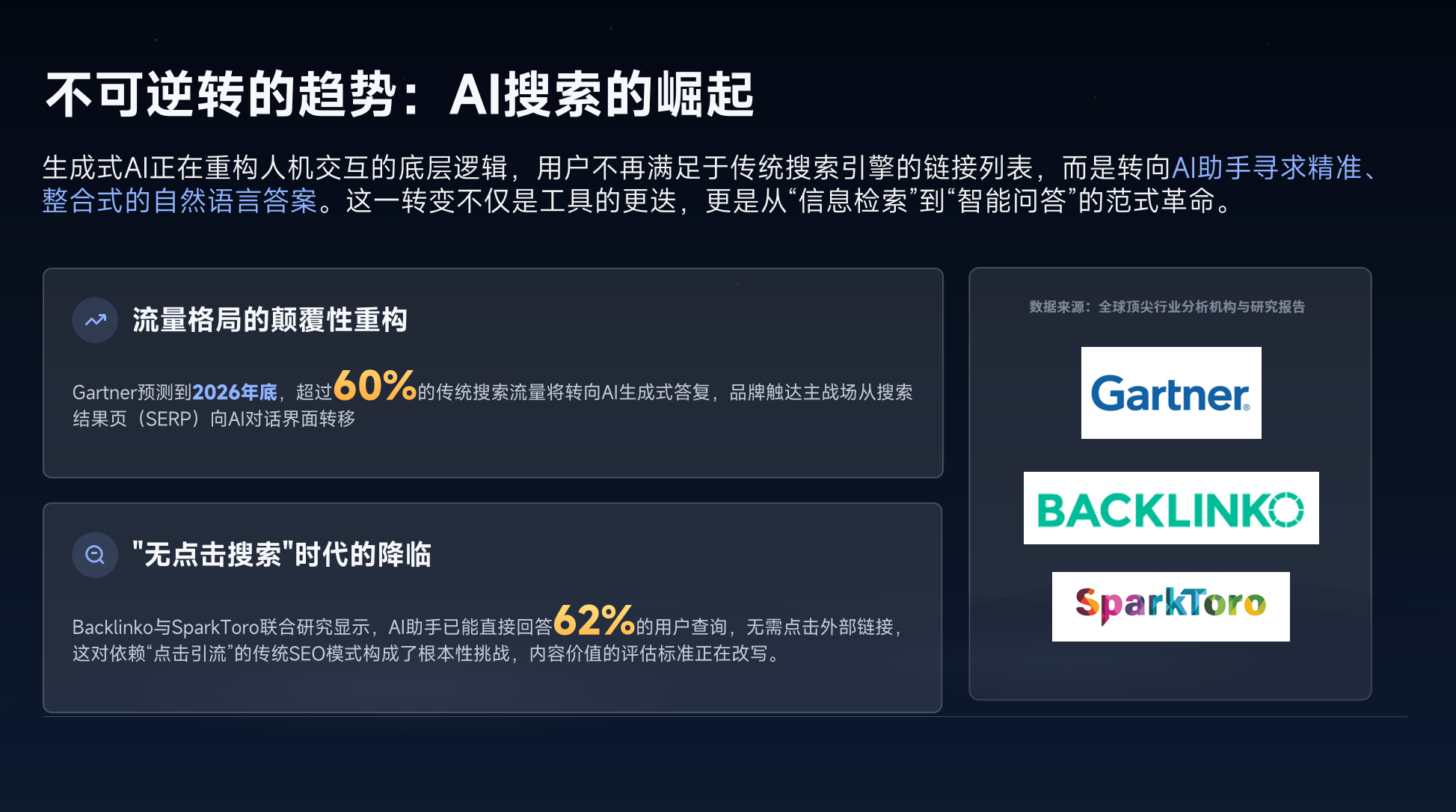
The primary battleground for brand reach is shifting from search results pages to AI dialogue interfaces. Users no longer settle for lists of links from search engines; instead, they directly ask AI questions, receive precise, integrated answers, and can even follow up with further queries for deeper insights.
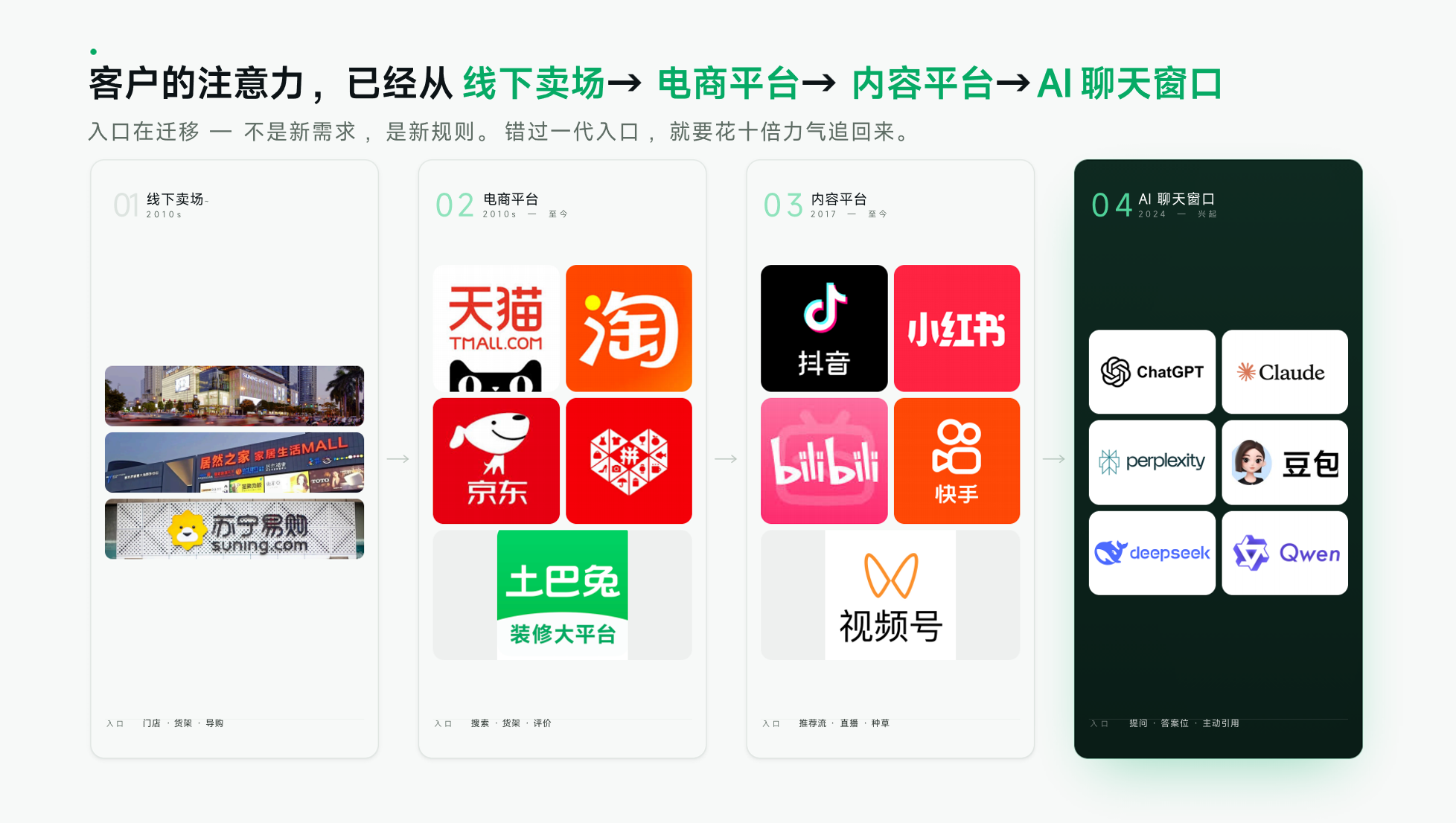
This isn’t merely an evolution of tools—it’s a paradigm shift from information searching to intelligent Q&A.
The harsh reality is that AI‑driven Q&A operates as a zero‑sum game. Traditional search engines allow users to scroll through dozens of brand links across ten pages, whereas AI typically presents only three to five brand names per query—no second page, no “load more.” Brands that fail to secure these coveted positions risk becoming invisible in the AI era.
The Website Makes a Comeback:
From “Digital Business Card” to “AI Cognitive Hub”
Why Do Lighting Companies Invest Heavily in Short Videos and Official Accounts, Yet Still Remain Invisible to AI?
Mr. Hong Bing offered a key insight: AI relies on large language models, which process text far more efficiently than images or videos. Short videos consume vast amounts of tokens yet remain difficult for AI to interpret effectively, while fragmented, multi‑platform content often leads to vague or even contradictory brand perceptions.
In contrast, the official website—serving as the most authoritative and centralized repository of brand information—is evolving from a once‑neglected “digital business card” into a central source of brand information understood by AI.
“A brand’s presence and credibility in the AI ecosystem depend on how much AI‑understandable information it has left online,” said Mr. Hong Bing.
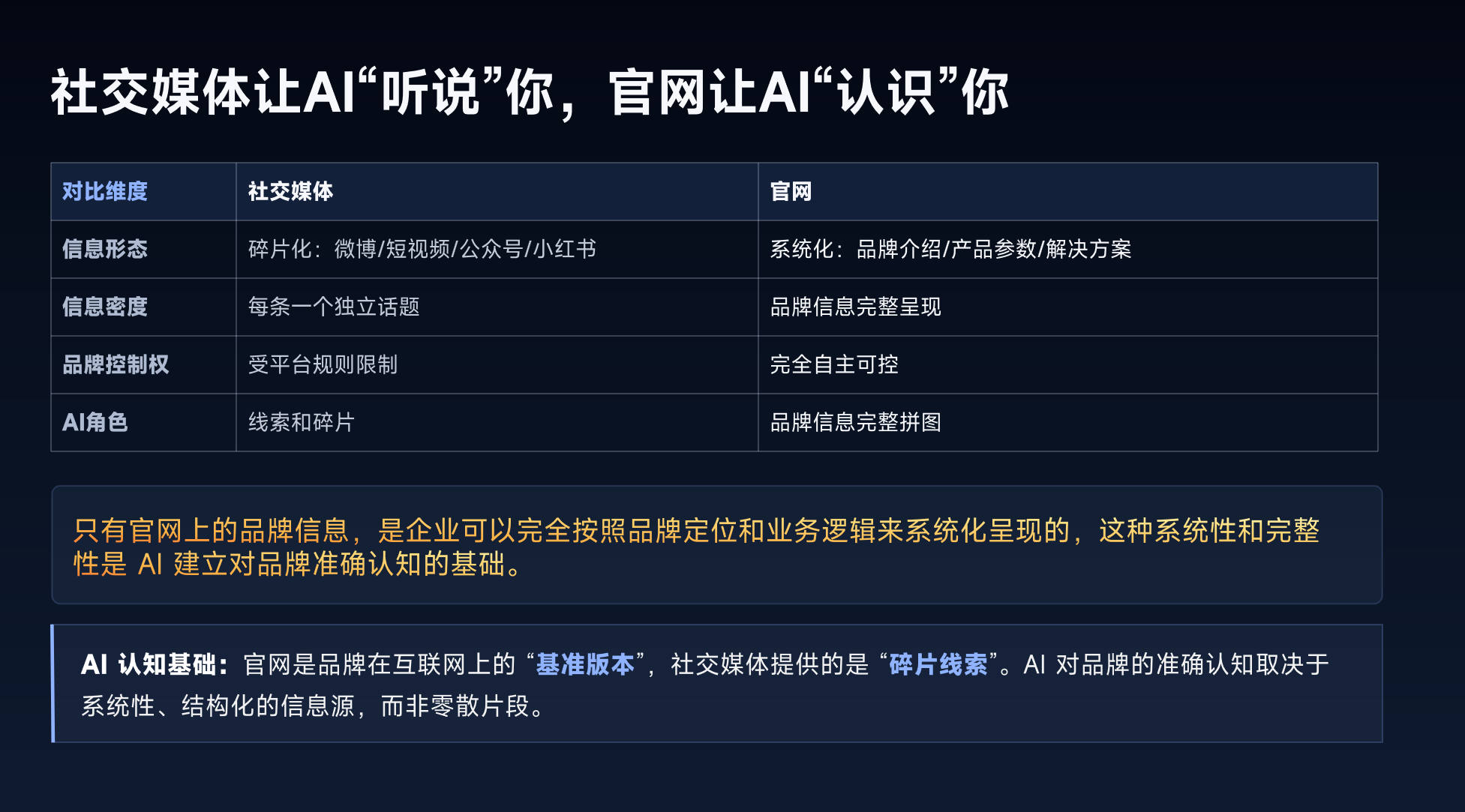
Social Media Lets AI “Hear” You, While the Website Enables AI “Know” You.
However, many lighting companies’ websites are outdated and poorly maintained—hesitant to renew domain registrations, neglecting regular content updates, and stuck with architectures dating back over a decade. Mr. Hong Bing pointed out three critical shortcomings of such sites:
1. AI Can’t Understand It: Outdated code structures contain redundant elements, preventing AI from parsing structured data.
2. AI Can’t See It: Backend systems block access by AI crawlers.
3. No Content to Reference: Long‑term lack of updates leaves essential materials like product specifications and project case studies missing.
30 Days of Real‑World Transformation:
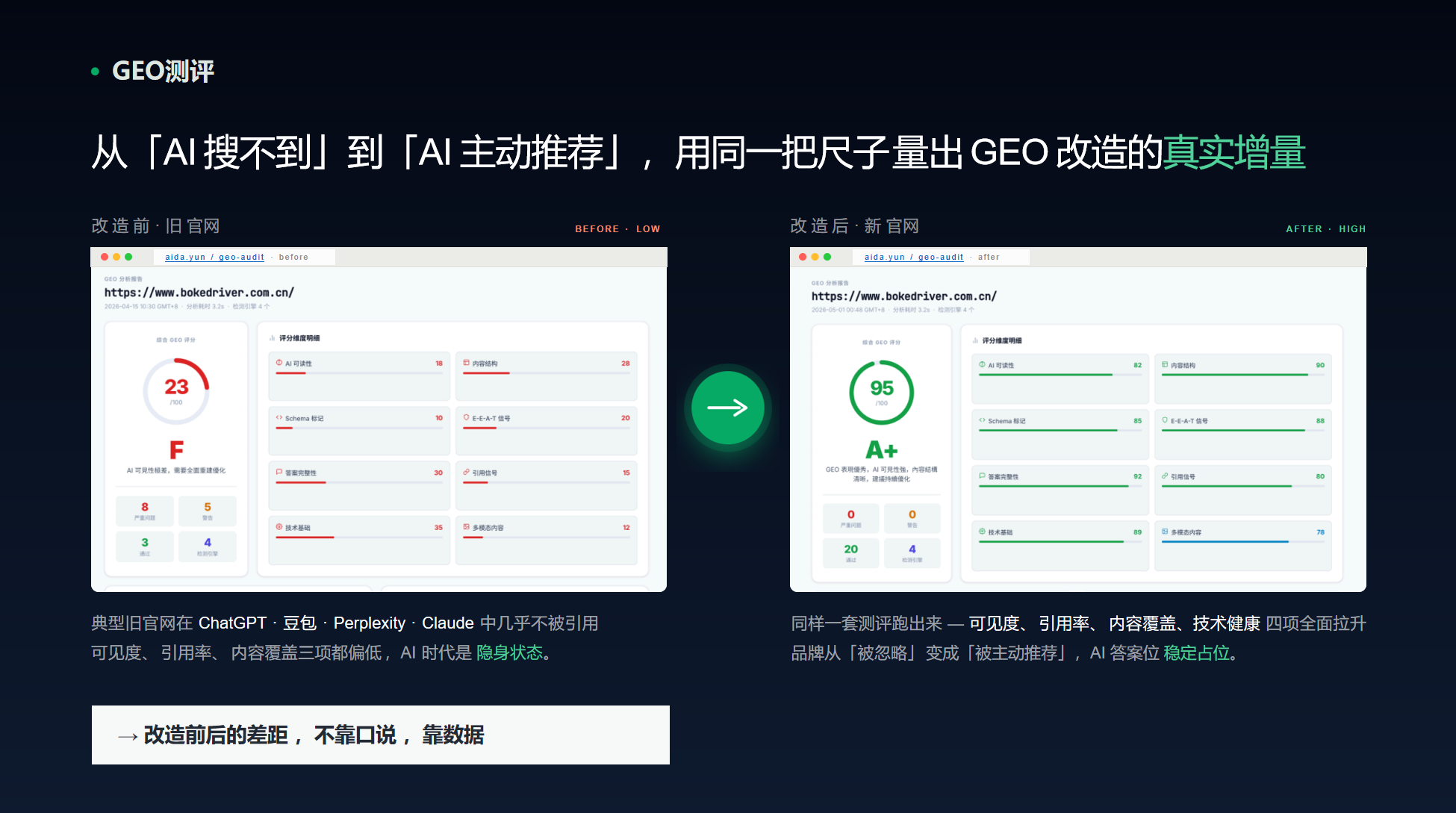
China Light Network’s GEO Score Climbs from 20 to 96
Using China Light Network’s own transformation journey as an example, Mr. Hong Bing demonstrated a complete, replicable roadmap.
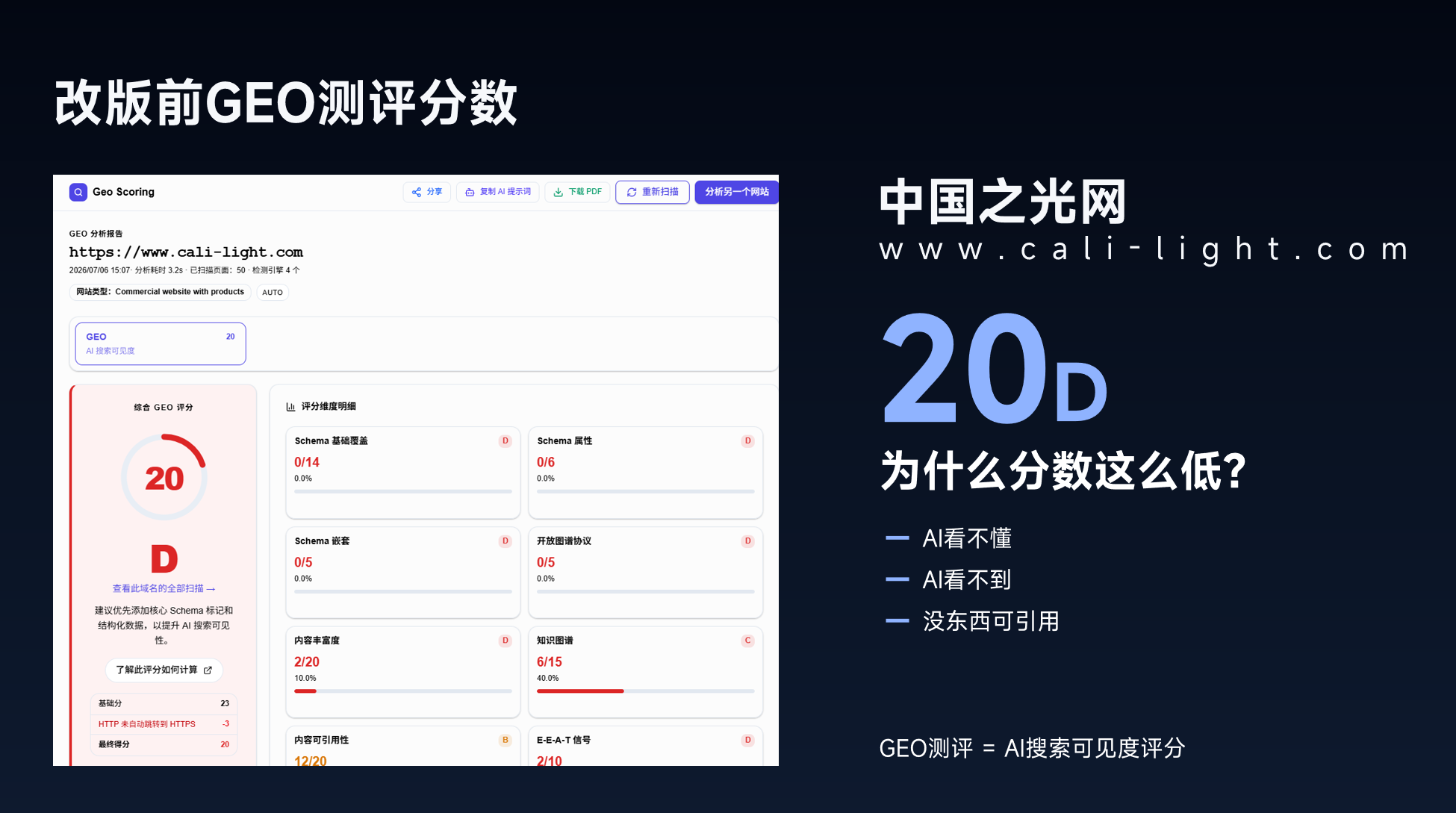
Before the overhaul, this industry portal—operating for 17 years—scored just 20 points on the GEO (Generative Search Engine Optimization) scale—a relatively high score compared to peers, as many corporate websites barely reached 10 points.
After 30 days of systematic restructuring, within just over ten days of going live, the GEO score soared to 96 points, with significant improvements across key dimensions such as AI visibility, content richness, and authority.
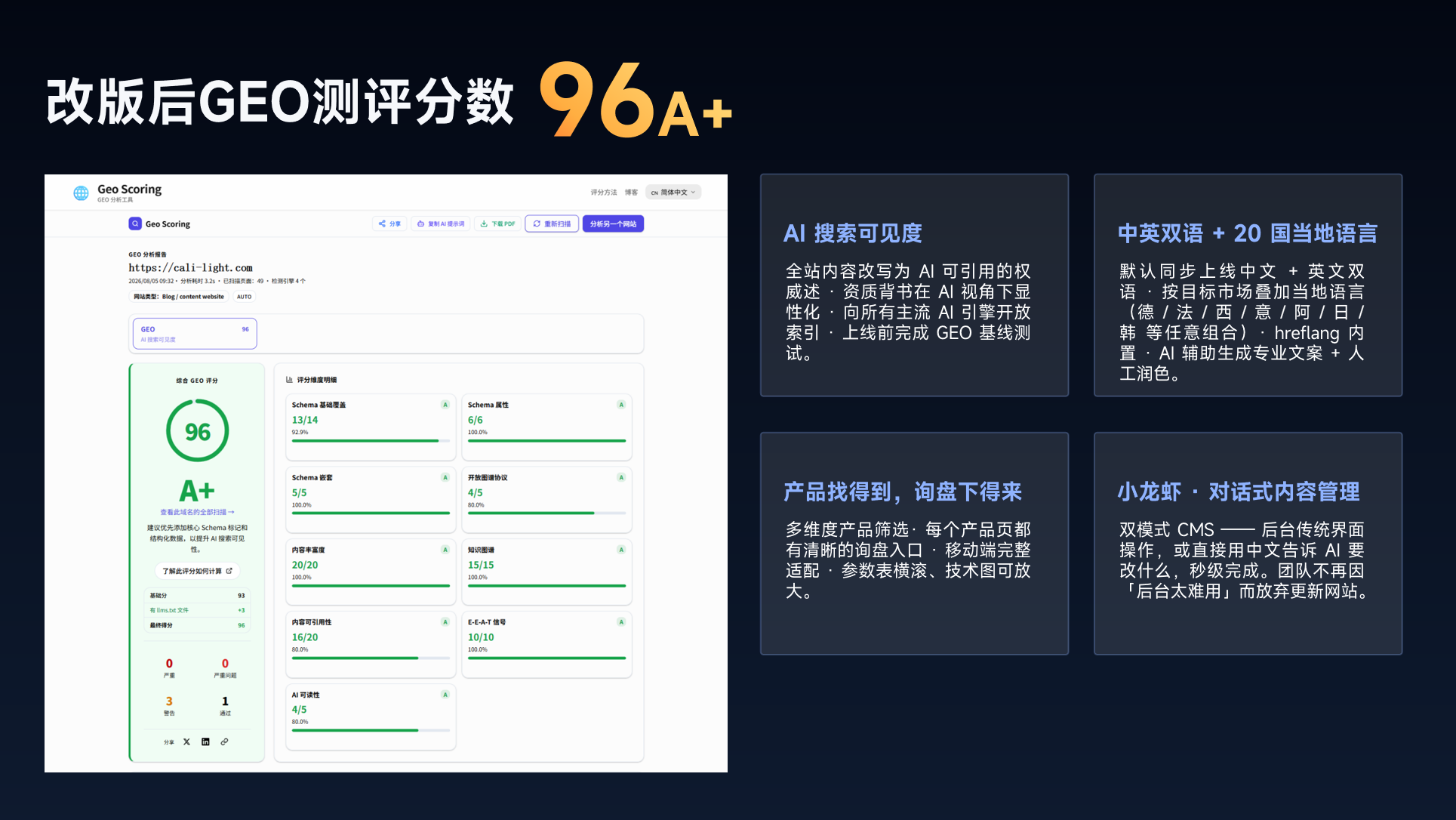
Post‑restructuring backend analytics reveal that active page visits reached 4.068 million, spanning 20 platforms, with 59% of traffic originating from AI engines (including DouBao, OpenAI, ByteDance, etc.) and the remaining 41% from traditional search engines.
The Four AI Assistants Behind the Restructuring
China Light Network introduced four AI agents, dramatically reducing the workload previously handled by 3–4 marketing professionals:
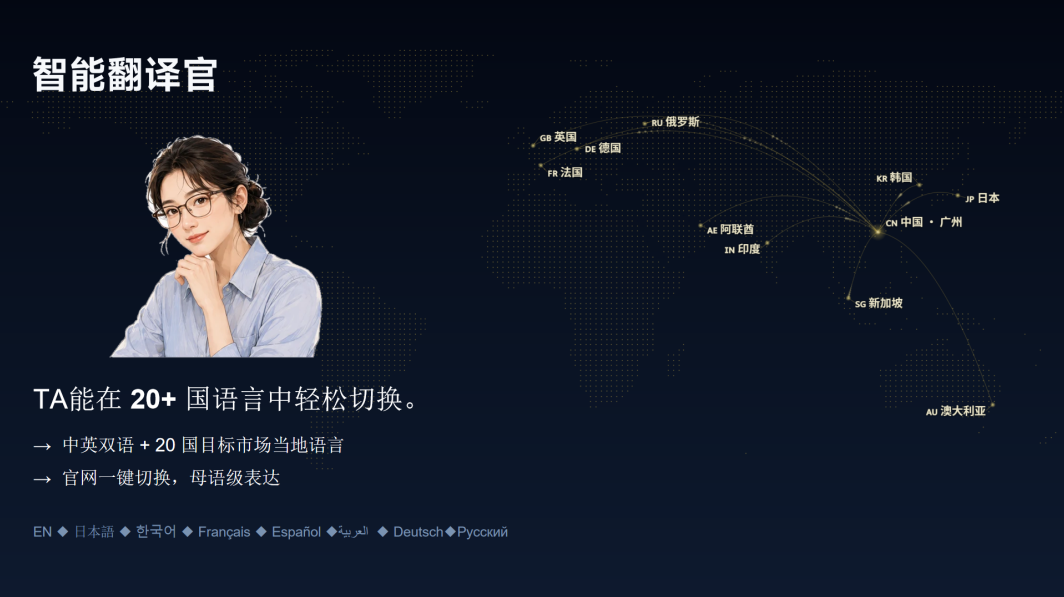
1. Intelligent Translator: Equipped with a specialized terminology database covering thousands of lighting industry terms, it generates precise translations in over 20 languages with a single click, eliminating machine‑translation errors.
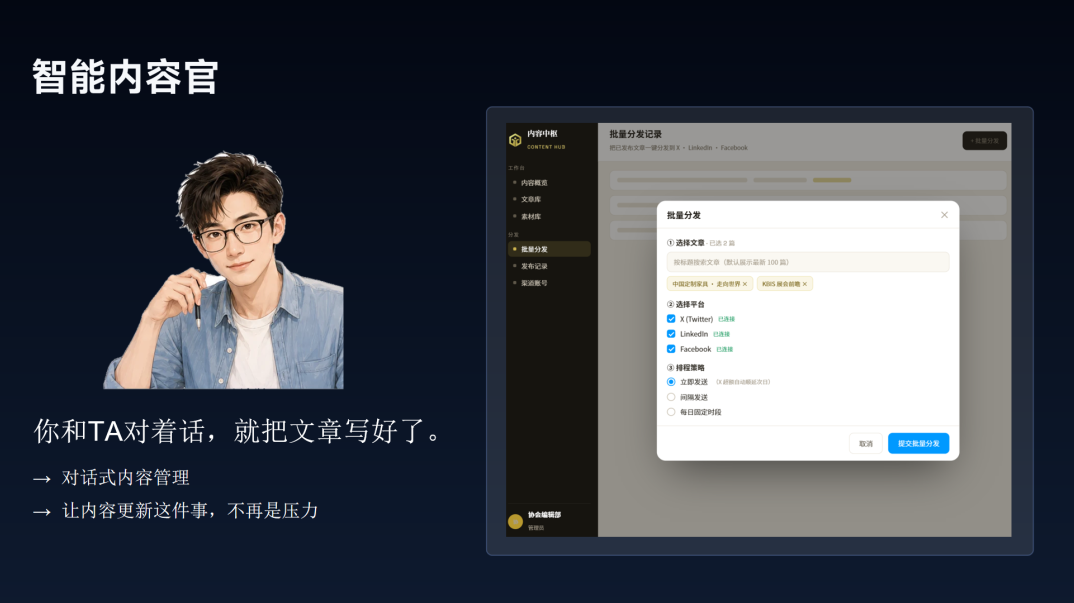
2. Intelligent Content Officer: Uses conversational backend tools to draft articles and automatically distributes them across overseas social media platforms (LinkedIn, Facebook, Twitter, etc.).
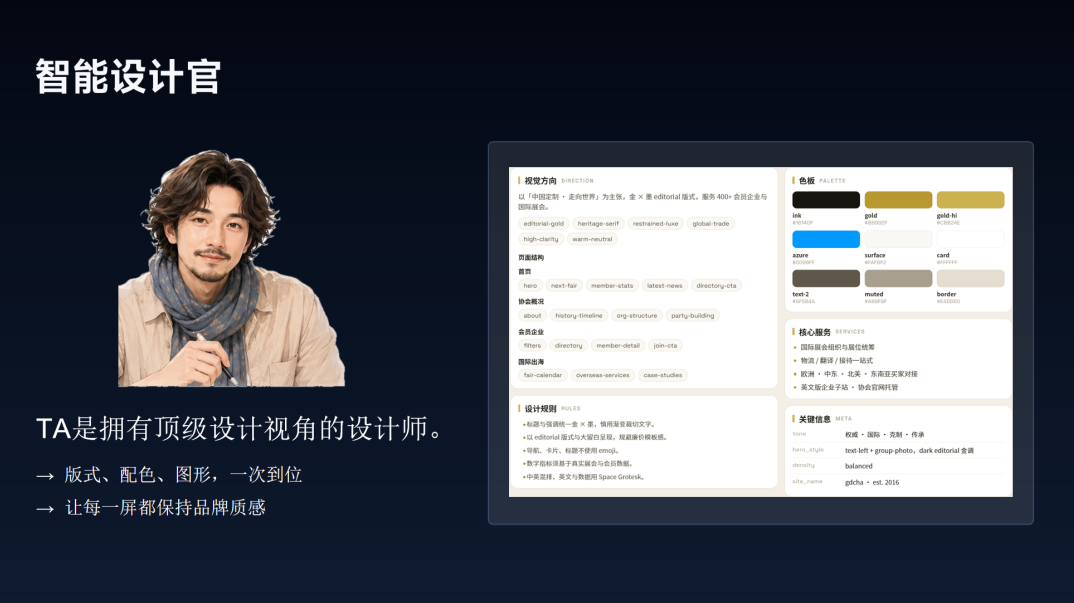
3. Intelligent Design Officer: From color schemes to graphic layouts, it creates high‑quality visual designs from a top‑tier designer’s perspective.
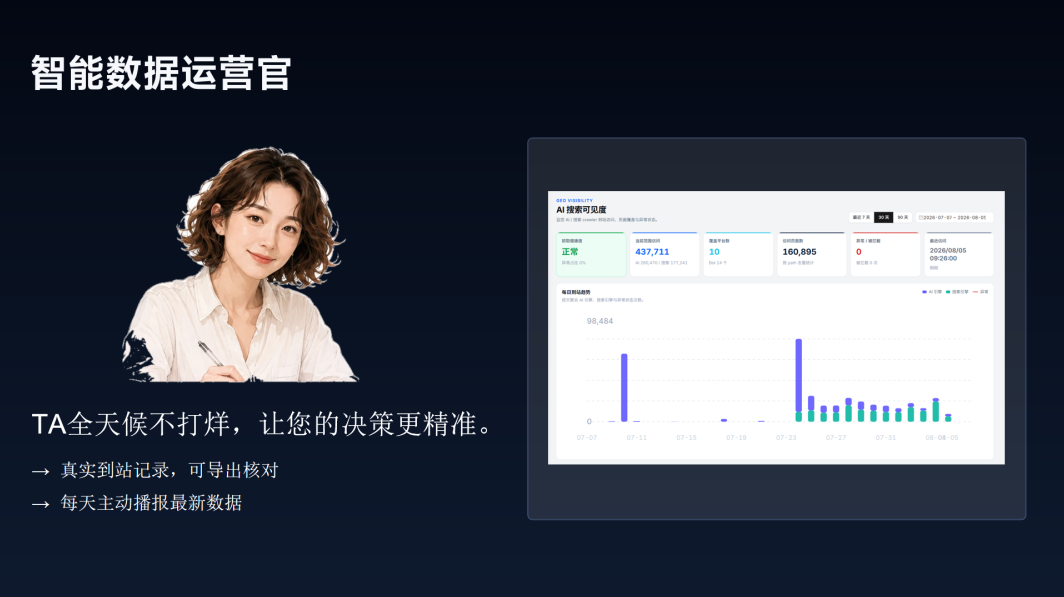
4. Intelligent Data Operations Officer: Operates 24/7, providing real‑time updates on website traffic and AI crawler activity, with automated alerts for anomalies.
Key Concepts: SEO vs. GEO
Mr. Hong Bing took special care to clarify these two often‑confused concepts:
◆Traditional SEO (Search Engine Optimization): Focuses on optimizing keywords and backlinks for search engines, aiming to rank higher in search result pages and drive user clicks to your website.
◆GEO (Generative Search Engine Optimization): Designed specifically for AI‑driven Q&A, ensuring your brand appears directly in AI-generated answers.
With both old and new traffic channels operating in parallel today, lighting companies should prioritize building robust GEO‑optimized websites while simultaneously maintaining solid SEO foundations, capturing all available traffic streams.
AiDaYun: Let AI Proactively Recommend Your Brand
Building on China Light Network’s practical experience, China Light All‑Media partnered with technology provider Beansmile to jointly develop an AI‑powered website‑building solution tailored for the lighting industry—AiDaYun.
Compared to traditional website builders, AiDaYun achieves a leap forward in technological advancement:
Comparison Dimensions
Traditional Website Builder
AiDaYun AI‑Powered Website Builder
Delivery Time
2–3 months
4 weeks
Multilingual Support
Each language requires additional fees, resulting in high maintenance costs
One‑click switching among 20+ languages, backed by a professional terminology database ensuring precision
Content Updates
Requires skilled technicians, with charges for each modification
AI‑driven conversational generation, with one‑click publishing via backend
GEO Optimization
Requires hiring third‑party specialists
Built-in from day one, with continuous monitoring and optimization
Labor Costs
Needs a 3–4 person marketing team
Only half a person plus four AI assistants
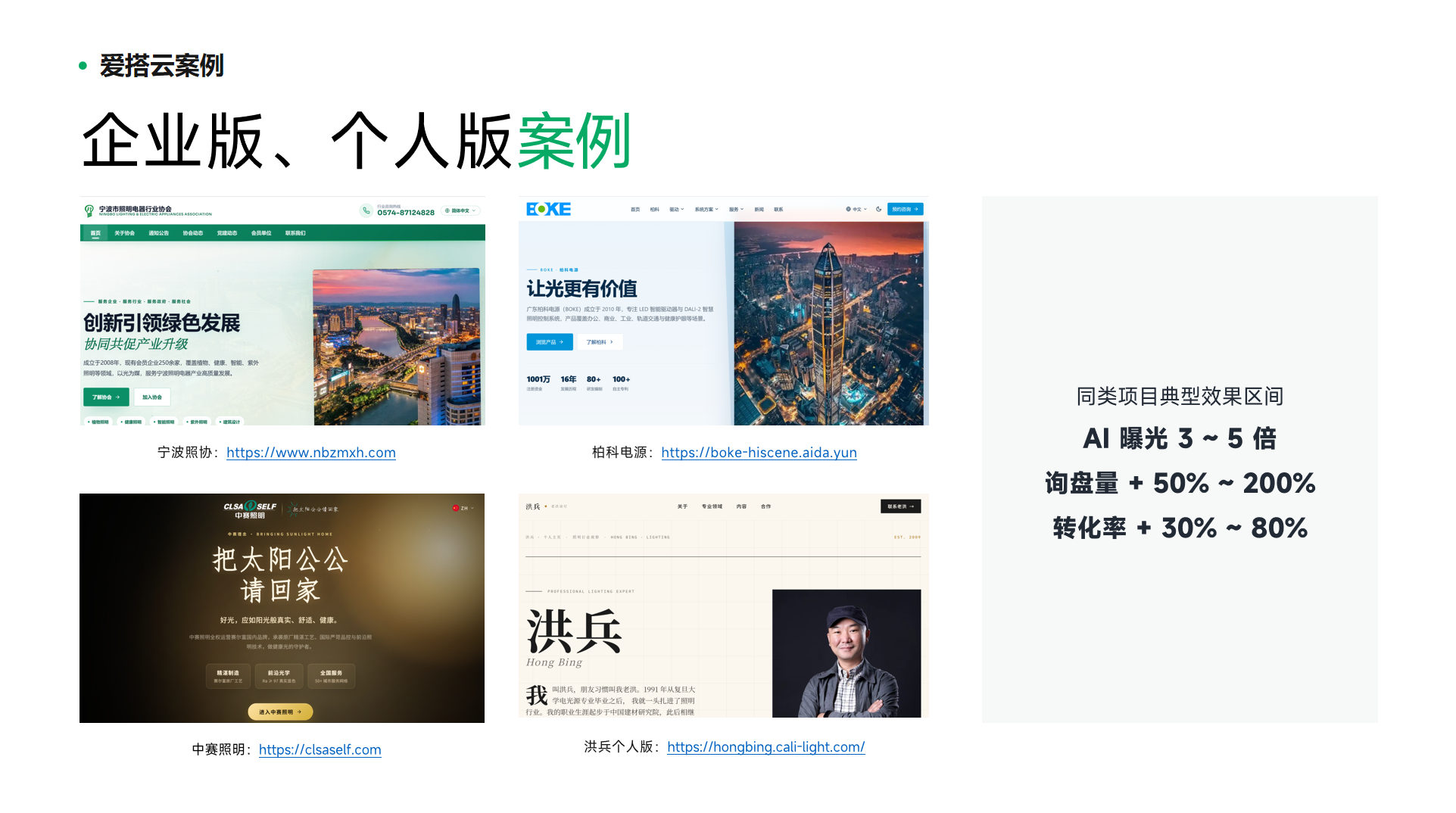
Currently, companies such as Boco Power, ZhongSai Lighting, and the personal IP “Lao Hong Talks Lamps” have completed their upgrades, achieving 3–5 times higher AI exposure and simultaneous growth in inquiries and conversion rates.
Breaking Free from Isolation:
Building a Brand Ecosystem for the AI Era
Mr. Hong Bing emphasized that isolated optimizations fall short; enterprises must construct a three‑pronged brand ecosystem to establish sustainable competitive advantages:
1. Brand Infrastructure: Develop AI‑friendly websites as central repositories of brand information.
2. Continuous Content Creation: Focus on core market segments, targeting long‑tail vertical keywords, and consistently producing expert‑level written content to avoid diluting brand positioning with irrelevant material.
3. Layered Authority Endorsements: Participate in national and industry standards development, win prestigious awards, and secure coverage from authoritative media outlets—AI algorithms integrate these signals to boost brand weight.
AI Has Memory and Inertia: The Earlier a Brand Enters the AI Model, the Harder It Is for Later Entrants to Replace It. This is the true advantage of our times.
Interactive Q&A
Q
Since AI responses display only a handful of brands, how can budget‑constrained lighting companies cost‑effectively secure prime spots in AI‑generated answers?
A
Mr. Hong Bing stressed the importance of “early action combined with focused deep cultivation.” First, transform your website into an AI‑friendly structure—the cornerstone of AI‑driven information retrieval. Simultaneously ramp up written content production—text is far more AI‑friendly and significantly cheaper to produce than short videos. With limited budgets, avoid broadening competition across the entire “lighting” category; instead, focus on a single vertical keyword and master it thoroughly. For instance, if specializing in explosion‑proof lighting, concentrate exclusively on that niche, continuously strengthening your content matrix to generate highly targeted, high‑conversion traffic.
Q
My website hasn’t been updated in years, and I’ve only been posting short videos—how can I address the issue of AI failing to retrieve complete brand information?
A
“This isn’t about patchwork repairs—it’s about rebuilding the foundation from scratch.” Using a construction analogy, Mr. Hong Bing explained that brick‑and‑mortar structures built in the 1970s and ’80s simply cannot support modern demands. In the AI era, website infrastructure must be as sturdy as reinforced concrete. Enterprises need to preserve existing content while reconstructing their websites using new infrastructure. Leveraging AI‑powered website builders, tasks that once required 2–3 marketing personnel can now be accomplished with just half a staff member and four AI assistants—at a lower overall cost.
Q
My content spans multiple platforms, leading to conflicting brand information in AI‑generated searches—how can I standardize these discrepancies?
A
“Content integration must be consistent,” Mr. Hong Bing emphasized. Companies should distill their brand’s core values and ensure that all website, social media, and video content revolves around this central theme, reinforcing it continuously. Avoid filming unrelated scenes just to grab attention—AI will become confused.
By repeatedly highlighting the same professional direction through diverse examples, authoritative certifications, and real‑world case studies, AI will prioritize recommending your brand when users conduct searches.
Q
How can I cost‑effectively produce multilingual content adapted to overseas AI search engines?
A
“We still rely on AI—and a well‑curated terminology database.” Mr. Hong Bing shared his practical experience: In the past, China Light Network spent heavily on English‑language versions but struggled to sustain ongoing updates. Now, with AI and specialized term banks, companies simply need to build a comprehensive terminology library for the lighting industry—covering dozens of terms related to illuminance, color temperature, healthy lighting, and more. AI agents can then swiftly translate these terms into accurate multilingual articles. China Light Network is currently updating its industry term bank, enabling businesses to obtain high‑quality multilingual content all in one place.
Final Thoughts
Start taking action today—after six months, what you build won’t just be traffic; it will be an insurmountable barrier.
Companies that missed out on the short‑video boom may still catch up in the AI era—but this time, the window of opportunity could be even shorter.
Article sourced from Ming Classroom