
August 2026 Lighting Industry News Roundup
In August, policy support anchored the industry’s transformation path, while standards and quality oversight advanced in tandem to drive quality improvements. Industrial development and regional initiatives resonated in concert, as companies leveraged capital strategies and technological breakthroughs to seize new opportunities.
I. Multiple Policies Empower Industry Growth
(1) Joint Issuance of the “15th Five-Year Plan” Work Plan for Energy Conservation and Carbon Reduction in Public Institutions
The State Administration of Government Affairs and the National Development and Reform Commission jointly issued the “15th Five-Year Plan” Work Plan for Energy Conservation and Carbon Reduction in Public Institutions (Guo Guan Jie Neng [2026] No. 161). The plan lays out measures across multiple fronts, including achieving peak carbon emissions in public institutions, promoting efficient resource utilization, and accelerating the adoption of green production and lifestyle practices. It sets targets: based on 2025 levels of carbon emissions and energy/resource consumption, by 2030, public institutions will reduce carbon emissions per unit building area by 8.5%, energy consumption per unit building area by 5%, and per capita water usage by 3%. The plan emphasizes intensifying energy-saving and carbon-reduction upgrades, continuously retrofitting existing buildings with improved envelope systems, heating, air conditioning, lighting, elevators, power distribution, and computing facilities, and encouraging the deployment of energy management systems to enhance operational efficiency of key energy-consuming equipment.
(2) Joint Release of the “15th Five-Year Plan” for the Development of Safety and Emergency Equipment by the Ministry of Industry and Information Technology and the Ministry of Emergency Management
The Ministry of Industry and Information Technology and the Ministry of Emergency Management jointly released the “15th Five-Year Plan” for the Development of Safety and Emergency Equipment (MIIT Lian Gui [2026] No. 186). The plan explicitly supports the widespread application of drone-based relay lighting systems, enabling lighting drones to play a greater role in emergency search-and-rescue operations under extreme conditions such as geological disasters. Additionally, it promotes the integration of emerging technologies—including artificial intelligence, embodied intelligence, brain-computer interfaces, satellite remote sensing, advanced materials, and new energy sources—with safety and emergency equipment, driving industrial innovation and upgrading.
(3) Publication of the Guidance Catalogue for Building Carbon Emission Measurement Capabilities
The State Administration for Market Regulation, the National Development and Reform Commission, and the Ministry of Ecology and Environment jointly released the 2026 edition of the “Guidance Catalogue for Building Carbon Emission Measurement Capabilities.” This updated catalogue systematically optimizes the national carbon emission measurement framework, expanding the scope of applicable technologies and refining relevant standards and specifications. The catalogue aims to provide a unified technical basis for calculating and verifying carbon emission data, enhancing accuracy, consistency, and traceability, thereby further supporting the implementation of China’s dual-carbon goals.
II. Standards and Quality Become Industry Priorities
(1) Industry Conferences Boost Awareness of Standards and Quality
From August 5 to 7, the Second China Lighting Appliance Industry Standards and Quality Conference, hosted by the China Lighting Appliance Association, convened in Lanzhou, Gansu Province. With the theme “Standards Lay Foundations, Innovation Drives Progress, Quality Empowers Growth,” the conference addressed the overarching challenges of the inaugural year of the 15th Five-Year Plan, positioning standards and quality as twin engines propelling the industry through cyclical transitions and toward a qualitative leap forward. Discussions covered the latest domestic standards, certification systems, quality supervision and evaluation, cutting-edge trends, and international compliance issues. Side events included experience-sharing sessions among leading enterprises and concurrent technical workshops and review meetings on national standards.
(2) Stringent Oversight: 3C Certification Returns to the Forefront
In August, the Certification Supervision Department of the State Administration for Market Regulation announced results from its 2025 random inspections of CCC certification validity. Among 2,483 batches inspected across 39 product categories, 764 certificates were revoked, and non-compliant products faced severe penalties, including a six-month suspension of their ability to apply for re-certification. Among the 303 products flagged as seriously non-compliant (“red-light” list), lighting products accounted for 29 entries, underscoring the urgent need for businesses to strengthen compliance systems.
The lighting industry and related clusters have responded enthusiastically to government initiatives aimed at improving quality and curbing cutthroat competition. A three-tiered collaborative model—led by government coordination, supported by industry associations, and implemented by enterprises—has been mobilized to safeguard quality standards. Since August, the leadership team of Guzhen Town has conducted targeted inspections across major retail outlets, emphasizing both source-control measures and strict enforcement. They also held task-force meetings to clarify responsibilities among all stakeholders, using precise legal education to reinforce the principle of putting quality first. Meanwhile, the Zhongshan Lighting Appliance Industry Association spearheaded the establishment of the Guzhen Lighting Fixture Product Quality Service Center, integrating testing, certification, and standardization into a comprehensive service chain. Over a dozen specialized 3C certification training sessions have been organized, reaching more than a thousand enterprise personnel. Enterprises and merchants alike have significantly heightened their sense of responsibility; leading firms proactively shared key certification requirements, while retailers actively participated in training and carried out thorough self-inspections and rectifications, consciously rejecting “three-no” products.
(3) Significant Advances in Several Lighting Standards
In August, the China Lighting Appliance Association released two group standards: “Classification of Low-Pressure Mercury Lamps in Domestic and International Mercury-Related Policies and Regulations” (T/CALI 0101-2026) and “LED Luminaires Simulating Sky Light” (T/CALI 0403-2026). In addition, three national standards—the “Lighting Appliance Standard for Evaluating Solar Spectrum,” the “Design Requirements for Ordinary Classroom Lighting in Primary and Secondary Schools,” and the “Hospital Building Lighting Guidelines”—have passed technical committee reviews and are poised for official approval. Industry-wide surveys are underway to assess the implementation status of mandatory standards.
III. Industry Growth and Regional Activities
(1) Downward Pressure on Industry Growth
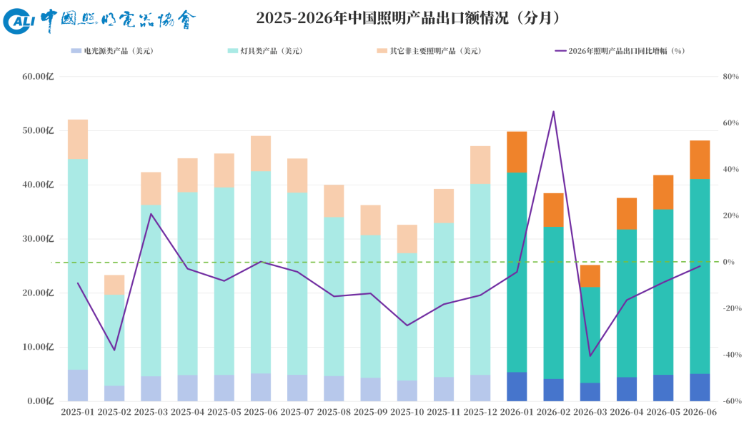
The China Lighting Appliance Association published an analysis of the industry’s economic performance for the first six months of 2026. Overall, the pace of economic activity slowed compared to the same period last year, contrasting sharply with the robust growth seen across broader industrial sectors. According to estimates, the cumulative growth rate of industrial value added among large-scale lighting enterprises fell short of the previous year’s level, lagging behind the national average for industrial enterprises above designated size. Month-by-month, although the decline in industrial value-added growth persisted, the rate of deceleration continued to narrow, indicating that despite an overall slowdown, corporate production enthusiasm is gradually rebounding. Revenue growth among large-scale enterprises remained below the national industrial average, with some listed companies reporting declines of 1%–10%; profit margins also dipped below last year’s levels, and losses increased year over year.
(2) July Exports Show Signs of Recovery Amid Overall Pressure
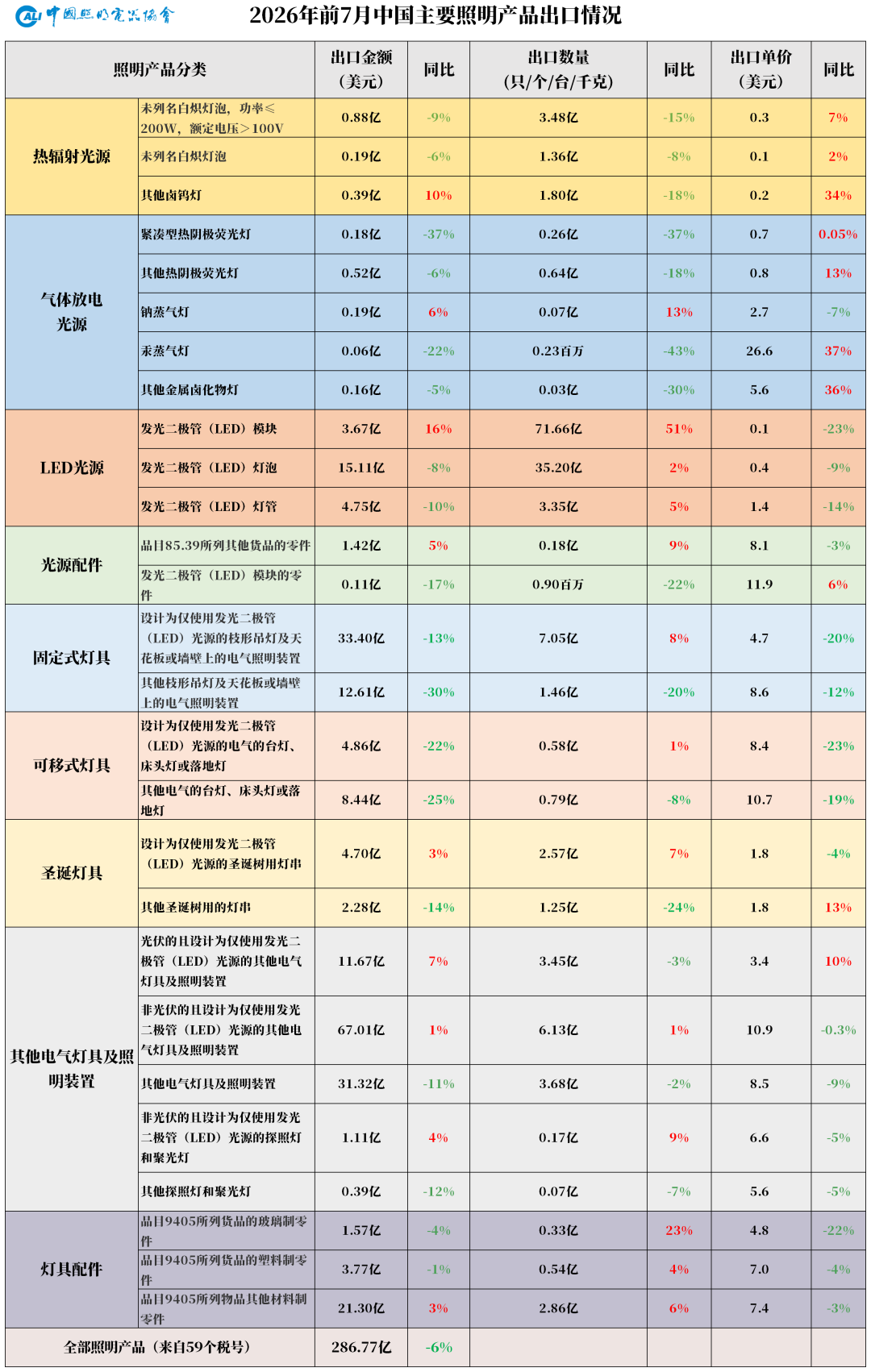
Customs data reveal that China’s lighting exports exhibited regional disparities during the first seven months of 2026. Among the top ten markets, total export value reached approximately US$13.3 billion, down 8% year-on-year, with the share of these markets falling to 46%. U.S. exports totaled about US$5.3 billion, declining by 13% and losing 1.5 percentage points in market share; European exports stood at roughly US$7.7 billion, essentially unchanged, with market share rising to 27%, though lighting exports decreased by around 4%. Emerging markets performed strongly, particularly Africa, where exports surged by 7% to US$2.2 billion, increasing the region’s share to 8%; Nigeria and South Africa maintained growth rates above 4%. Overall, traditional markets remain sluggish while emerging markets gain momentum, prompting ongoing adjustments to the export landscape.
(3) Jiangsu Provincial Lighting Appliance Association Annual Meeting Held in Nanjing
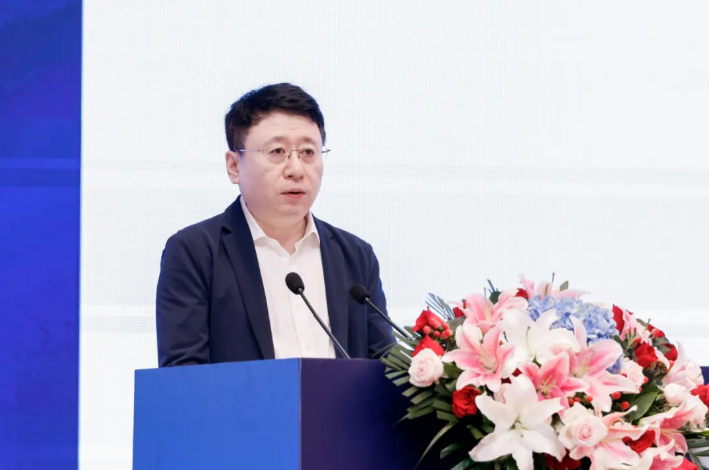
On August 28, the 2026 Jiangsu Provincial Lighting Appliance Association Annual Meeting convened in Nanjing. Wang Xuhua, Vice Chairman of the China Lighting Appliance Association, attended and delivered remarks, commending Jiangsu’s achievements in standard-setting, digital transformation, and international exchanges. He highlighted how Jiangsu’s lighting industry, backed by a complete supply chain, maintains an annual output value of approximately RMB 140 billion, pioneering innovative solutions such as smart streetlight integration and green renovations. He also called for accelerating the cultivation of new productivity forces, strengthening standards and quality, balancing internal and external circulation, and strictly adhering to compliance guidelines to propel the industry toward quality- and brand-driven competition. Furthermore, he pledged that the China Lighting Appliance Association would continue partnering with Jiangsu to build service platforms and jointly promote high-quality industry development.
(4) Gaoyou Municipal Political Consultative Conference Holds Smart Lighting Industry Symposium
The Gaoyou Municipal Political Consultative Conference convened a symposium on the smart lighting industry. The Municipal Bureau of Industry and Information Technology presented an overview of local smart lighting development, while the Municipal Data Bureau delivered a special briefing on the assetization of smart lighting industry data. Heads of 20 smart lighting enterprises exchanged views on operational challenges and difficulties. Participants also visited Longteng Intelligent Lighting Factory. Li Shenhong, Chairman of the Municipal Political Consultative Conference, urged attendees to maintain confidence, break free from constraints, proactively expand overseas, grow collectively, and attract investment with precision. Vice Mayor Wang Handong stated that the municipal government would support enterprises in becoming champions within niche segments, leveraging digital empowerment to lead transformative change, and opening up global markets.
(5) August Lighting Festival Sparks Consumption Across Guzhen Town
In August, Guzhen launched its annual Lighting Festival, igniting sustained enthusiasm for lighting fixtures and accessories. This surge in demand energized ancillary services—transportation, hotel accommodations, business banquets, logistics, and freight—creating a vibrant scene of “booming core industries, thriving complementary sectors.” Major retail outlets introduced new products, including smart lighting and lamp-free designs, drawing shoppers to place orders, check into hotels, and engage in business networking at restaurants, forming a closed-loop chain of “exhibition–accommodation–dining–transportation.” This influx of orders transformed the core lighting business into a catalyst for broader consumption, vividly illustrating Guzhen’s robust industrial vitality and thriving commerce.
(6) The 17th Asian Lighting Conference Held in Nagoya, Japan
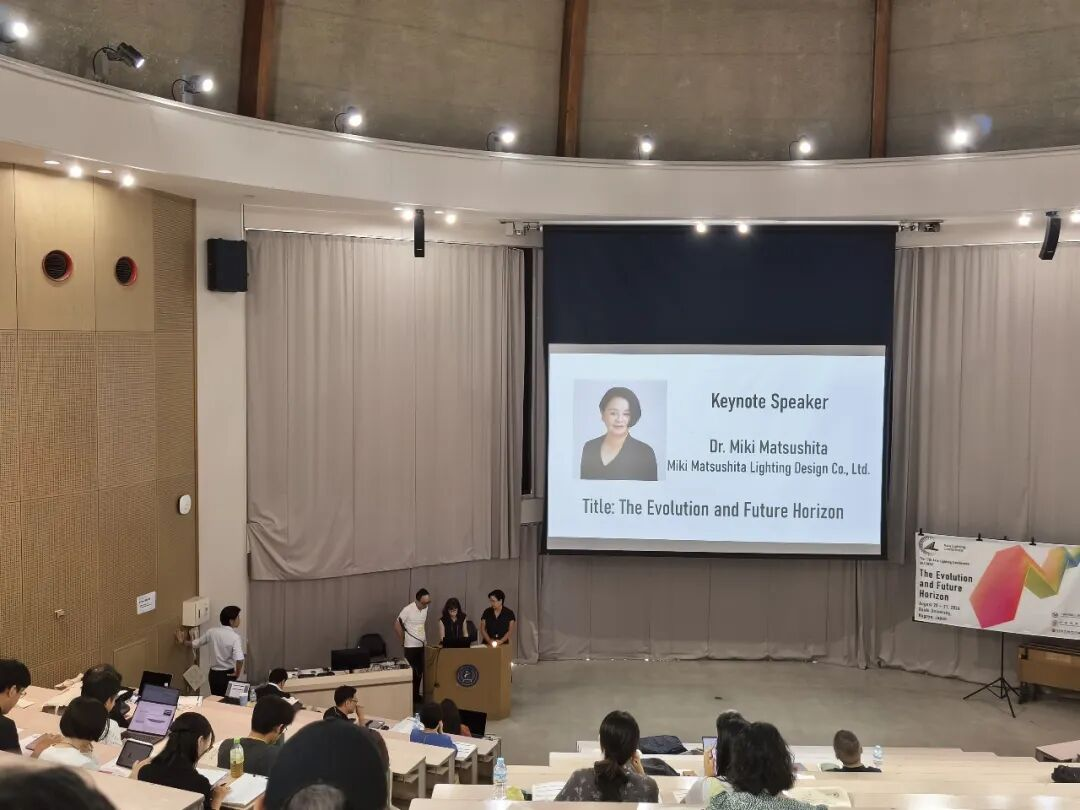
The 17th Asian Lighting Conference took place in Nagoya, Japan, on August 20–21. Over two days, experts and representatives from China, Japan, South Korea, and other countries gathered to discuss topics such as smart lighting, digital illumination, and light pollution. More than 130 scholars and industry leaders participated, delivering keynote speeches and invited presentations on cutting-edge issues like the evolution of lighting technology and future trends, the integration of urban night economies with light art, the impact of melanopsin on brightness perception, and emotional responses to automotive ambient lighting. During the “Next-Generation Lighting Technologies” session, speakers explored color resolution capabilities of white-light sources, boundary expansions between lighting design and environmental studies, and optical characteristics of intelligent farm plant lighting based on dimming combinations. In the “Urban Lighting” session, discussions delved into the rise of daytime light pollution, HDR imaging–based methods for detecting light pollution, and post-disaster urban lighting designs.
IV. Corporate Updates
(1) First-Half 2026 Financial Results Released for Lighting Companies
Financial reports for the first half of 2026 have been unveiled, with upstream segments emerging as clear winners. Among disclosed results, chip manufacturers, driver IC producers, key material suppliers, and passive component makers demonstrated exceptional performance, posting strong earnings growth. For instance, Fuman Micro (300671) reported a year-over-year net profit surge of 353.41%, topping the list; Fenghua High-Tech (000636) posted a 74.01% increase in net profit, showcasing robust profitability; Jucan Optoelectronics (300708) recorded a 35.6% rise, while San’an Optoelectronics (600703) grew by 22.5%, and Aiwa Group (603989) expanded by 17.21%. Many companies achieved double-digit, steady growth. This collective stellar performance underscores both the pull effect of recovering downstream demand and the fact that upstream firms—equipped with core technological barriers and scale advantages—are benefiting first from the industry’s recovery cycle, signaling a generally favorable outlook.
(2) Several Lighting Companies Undertake M&A and Integration Initiatives
In August, lighting enterprises engaged in frequent capital maneuvers, technological innovations, and market expansion efforts. Numerous publicly listed LED lighting firms disclosed acquisition plans and progress, with many venturing into cross-industry deals spanning solid-state storage, power semiconductors, new energy storage, and precision manufacturing.
For example, Debang Lighting acquired a 67.48% stake in Zhejiang Jiali Industrial Co., Ltd. (Lishui) through cash buyouts and new share subscriptions, marking a strategic move into the automotive optoelectronics sector and opening up a second growth trajectory. Jiali’s board of directors completed a reshuffle in mid-August, welcoming Debang executives into its core management team.
Mingjia Hui announced on August 6 its intention to acquire up to 26.19% of shares in the nationally recognized “Little Giant” enterprise Zhiyu Technology Co., Ltd., crossing into the industrial-grade solid-state storage segment. Meanwhile, Mulinsen, having secured control of Puri Optoelectronics earlier this year, continues deepening vertical integration across the entire LED supply chain, reinforcing core competitiveness through coordinated efforts spanning “chips–packaging–applications.” Puri Optoelectronics also confirmed its focus on third-generation semiconductor power devices and other emerging areas, accelerating the creation of a second growth curve. Tostada, meanwhile, announced on August 24 its plan to acquire a 49% stake in Laili Optoelectronics, further expanding its footprint in the optoelectronics field. Collectively, lighting companies are advancing industrial transformation through a combination of horizontal cross-industry alliances and vertical extensions along the capital pathway.
(3) Several LED Power Supply Companies Announce Price Hikes
In August 2026, price hike notices flooded the LED industry, affecting every link in the supply chain—from chips and packaging to driver power supplies, PCBs, displays, and finished luminaires. Leyard announced a moderate price increase effective September 10 across its product lines, citing rising costs of core components. Notably, however, Leyard recently had its military procurement eligibility suspended by the Army Procurement Network due to allegations of bid-rigging—a second such penalty this year.
Aike Shares raised prices on LED landscape lighting and street lamps by 10%–30% starting September 1, driven by soaring aluminum, copper, and core electronic component costs. Likewise, Laifude Power simultaneously increased prices across its full range of LED lighting driver products by 10%–18%, attributing the hikes to doubled costs of PCB substrates, IC chips, surface-mount resistors and capacitors, compounded by rising metal raw material prices and extended delivery cycles—pressures exceeding the company’s capacity to absorb. This wave of price increases, transmitted from upstream raw materials to the entire supply chain, reflects the severe cost pressures currently facing the lighting industry.
(4) Leishi Lighting Signs New Strategic Partnership Agreement
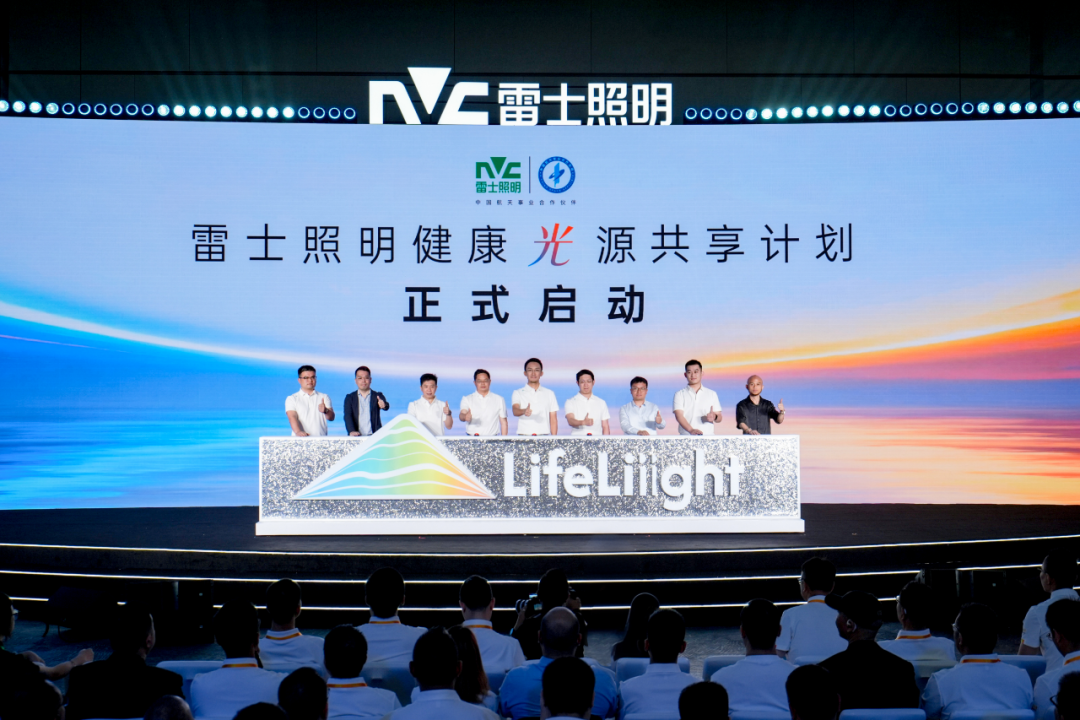
Leading domestic lighting brand Leishi Lighting officially signed a strategic partnership agreement with StarNet Tianhe, a globally renowned provider of ICT+AIoT smart space solutions. Together, they will focus on two major domains—smart homes and smart commercial spaces—integrating healthy, high-quality lighting with AI and IoT capabilities to advance smart spaces from point-device interconnectivity toward integrated delivery, shifting from “connecting spaces” to “understanding people,” and crafting proactive, personalized smart living experiences. This collaboration also marks a continuation of Leishi Lighting’s Healthy Light Source Sharing Initiative within smart space applications. StarNet Tianhe provides family-level cognitive, perceptual, and system platform solutions, while Leishi Lighting contributes foundational technology for healthy, high-quality lighting. By combining their strengths and centering on human experience, they aim to transcend boundaries between devices, systems, and scenarios, ensuring customers no longer receive fragmented, isolated products but instead a cohesive, adaptable smart space solution replicable across different environments. Light itself ceases to be merely a passive switcher, evolving into an essential medium for understanding, responding to, and caring for people within their surroundings.
(5) Signify Partners with Sports Investment Platform NXTPLAY for Strategic Cross-Industry Integration
Signify, a global leader in lighting solutions, has entered into a strategic partnership with NXTPLAY, a sports investment platform, becoming its official lighting innovation partner. The collaboration covers smart venue upgrades, leveraging Philips Hue products to synchronize lighting with live sports broadcasts for immersive home-viewing experiences, and providing intelligent lighting support for athlete performance and recovery. Additionally, ams OSRAM has signed a trademark licensing agreement with USHIO Industry & Entertainment, allowing select professional lighting and entertainment products to continue bearing the OSRAM brand in the market, ensuring business continuity and customer support.
(6) ams OSRAM Strengthens Intellectual Property Protection Measures
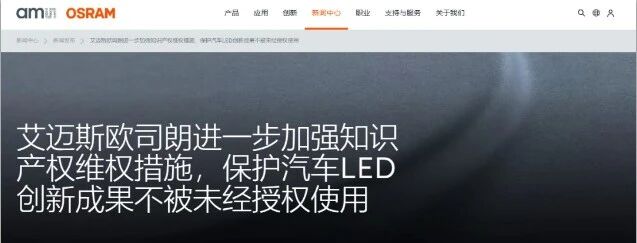
ams OSRAM has further reinforced its intellectual property protection measures, filing two patent infringement lawsuits in Germany against an electronics component distributor selling automotive LED products manufactured by Shenzhen Ruifeng Optoelectronics Co., Ltd. ams OSRAM contends that certain automotive LED products derived from Ruifeng’s ceramic packaging series and EMC encapsulation series infringe upon several of its patented technologies. The six patents involved cover critical innovations enabling high efficiency, reliability, and compact light sources required for automotive applications, while delivering high brightness and superior light quality.
(7) Retek Technology Receives Patent Certificate
Retek Technology received a European patent certificate from the European Patent and Trademark Office on August 14, titled “Smart Luminaires and Their Signal Adaptive Recognition Method, Computer-Readable Storage Medium.” This patented technology effectively enhances smart luminaires’ automatic recognition and adaptation capabilities for various communication protocol signals, streamlining installation and debugging processes, and bolstering system compatibility and stability. It represents a significant achievement in Retek Technology’s ongoing exploration of intelligent control technologies. Securing this European patent not only highlights the company’s R&D prowess in fundamental smart lighting technologies but also builds a robust intellectual property protection barrier, helping consolidate its competitive edge in smart power and control systems.
(8) New Developments in Peru’s International Market Regulations
Peru has submitted a draft technical regulation on minimum energy efficiency standards for lighting products to the World Trade Organization (WTO) (G/TBT/N/PER/180). The draft applies to LED lights, fluorescent lamps, and other major products, aiming to set energy efficiency thresholds to reduce carbon emissions. Currently undergoing review, the regulation is expected to take effect 12 months after official publication.
Source: China Lighting Appliance Association
China Light
The official website of the China Association of Lighting Industry and a full-media platform for the lighting sector. We provide authoritative and timely lighting information while striving to be a growth partner for businesses. From brand promotion and channel expansion to consulting, talent training and participation in standards development, we provide comprehensive professional services to help businesses improve quality and efficiency and jointly advance the high-quality development of the lighting industry.
Business Contacts
仇纯 (Ms.): 158 6155 3579
顾君 (Mr.): 137 7157 5253