
Manlux Dialogue: In the era of global low-blue-light compliance, how can outdoor lighting manufacturers get ahead of the curve?
Recently, the “Guzhen Lighting Fair: Bright Minds Online” column hosted an in-depth salon focusing on cutting-edge trends in outdoor lighting. With the theme “Smart Connectivity, Healthy Illumination—Low Blue Light Leading a New Future for Outdoor Lighting,” the event featured Mr. Qiu Bangyang, Executive Vice President of Manlux, as the keynote speaker. He delivered a compelling presentation and engaged in interactive discussions, exploring global trends, core technologies, practical applications, and value propositions related to low blue light technology in the outdoor lighting sector.
Low blue light,
a pressing issue that outdoor lighting cannot ignore
In today’s rapidly evolving global lighting industry, outdoor lighting is undergoing a profound transformation—from simply “being visible” to “promoting health.” As blue light pollution increasingly harms natural ecosystems, low‑blue‑light sources have become an essential requirement under the global consensus on ecological protection. From safeguarding starry skies in night parks to protecting sea turtles along Brazil’s coasts, and ensuring better sleep quality for urban residents, low‑blue‑light outdoor lighting has emerged as a key trend shaping the industry.
This edition of “Bright Minds Online” was held against this backdrop. Our guest speaker, Mr. Qiu Bangyang, has long been deeply involved in the outdoor LED lighting sector and brings extensive experience in outdoor illumination.
The aim of this salon was to provide industry peers with an in-depth analysis of the most critical growth areas in contemporary outdoor lighting.
Manlux, headquartered in Silicon Valley, USA, is a global leader in high‑performance LED lighting solutions. The company specializes in the research, development, and design of efficient optoelectronic products, boasting a strong technological foundation in high‑performance outdoor lighting. Manlux positions itself as both a “creator of high luminous efficacy” and a “pioneer of low‑blue‑light healthy illumination,” with a vision to become a world‑leading provider of healthy lighting solutions.
Global trends shifting from “eliminating high blue light” to “complying with low blue light standards”
Mr. Qiu pointed out that the criteria for evaluating outdoor lighting are undergoing a fundamental shift. In the past, industry assessments were relatively simplistic, focusing solely on basic lighting performance and energy consumption. Today, however, global markets are moving away from single‑dimensional metrics toward holistic, human‑centric evaluations. Whether a luminaire is truly effective now depends not only on its luminous efficacy and brightness but also on whether the light source is healthy, environmentally friendly, and compatible with smart control systems.
Policies in multiple countries accelerating compliance with low blue light standards:
1. United Kingdom: Municipal roads nationwide have fully phased out 4000K cool white LEDs, mandating the use of amber‑tinted low‑blue‑light sources ranging from 1700K to 2200K.
2. Brazil: The NBR standard has been revised to include mandatory glare‑reduction and eco‑friendly light pollution controls in public lighting regulations.
3. European Union and United States: Ecological reserves have significantly restricted the use of high‑blue‑light, high‑biological‑hazard light sources.
4. International Commission on Illumination (CIE): In 2025, the CIE will issue a special position statement clarifying that high‑blue‑light nighttime lighting disrupts human circadian rhythms and interferes with biological reproduction, providing a theoretical basis for national legislation.
Low blue light isn’t just relevant for smartphones or indoor desk lamps—nighttime outdoor lighting can severely suppress melatonin secretion, leading to long-term sleep disturbances. Children’s retinas are even more sensitive, and high‑blue‑light illumination in school environments can exacerbate vision problems.
Consequently, upscale residential communities, campus walkways, and cultural tourism night tours are all accelerating their transition to warm‑tone, low‑blue‑light lighting schemes.
Clarifying a common misconception: Low blue light ≠ low color temperature
Addressing widespread misunderstandings in the market, Mr. Qiu made a clear distinction: low blue light is not merely about lower color temperatures. Many so‑called “warm white” products reduce color temperature to around 2700K, yet still maintain a relatively high blue light spectrum—this does not constitute true low blue light illumination. Such approaches merely create a warm visual impression, offering users a psychological “warmth cue.”
True low blue light requires assessing the blue light ratio, a key metric that measures the proportion of harmful blue wavelengths to ensure reduced risk.
Core technology: Eco-Amber, a low blue light outdoor lighting solution
Manlux’s Eco-Amber series was the technical highlight of this salon. Leveraging U.S. patent technology (Patent No.: 12607324), the series achieves both low blue light and high luminous efficacy on the 5050PLUS packaging platform.
Key performance indicators:
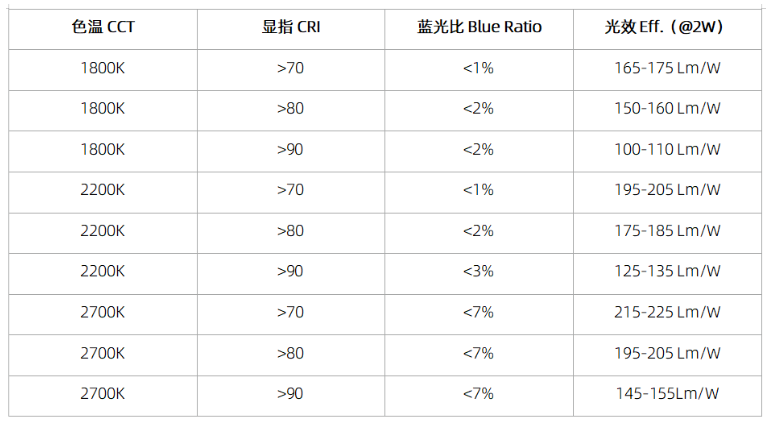
At an ultra‑warm color temperature of 1800K, the blue light ratio is kept below 1%, while luminous efficacy remains at 165–175 lm/W; at 2200K, efficacy even surpasses 200 lm/W, fully meeting the RG0 requirements of complete luminaire designs.
This remarkable achievement is not the result of a single breakthrough, but rather the outcome of multi‑dimensional collaborative optimization: working closely with chip manufacturers to develop specialized chip solutions tailored to optimal current levels, independently designing patented brackets to enhance efficiency and reflectivity, creating custom phosphor formulations, and employing advanced multi‑stage packaging techniques. By maintaining the blue light ratio below 1%, Eco-Amber fully complies with dark‑sky protection standards and ecological restrictions in coastal Brazilian cities, making it a genuine “eco‑friendly light source”.
New product launches: XPH3030 APEX‑245B and 5050PLUS‑260G
During the salon, Mr. Qiu also unveiled two major new products introduced by Manlux this year:
XPH3030 APEX‑245B:
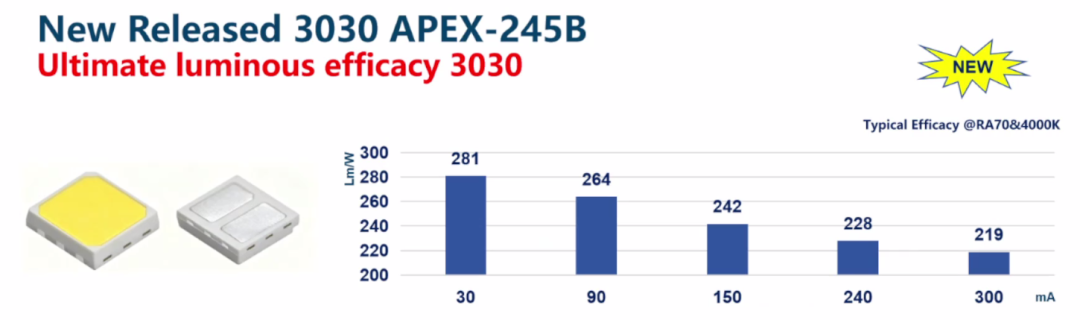
Utilizing the standard 3030 universal package structure, this model can replace conventional 5050 solutions. Under 1W drive, luminous efficacy exceeds 240 lm/W—currently among the highest globally—making it ideal for streetlights, tunnel lights, and various floodlight applications.
5050PLUS‑260G:
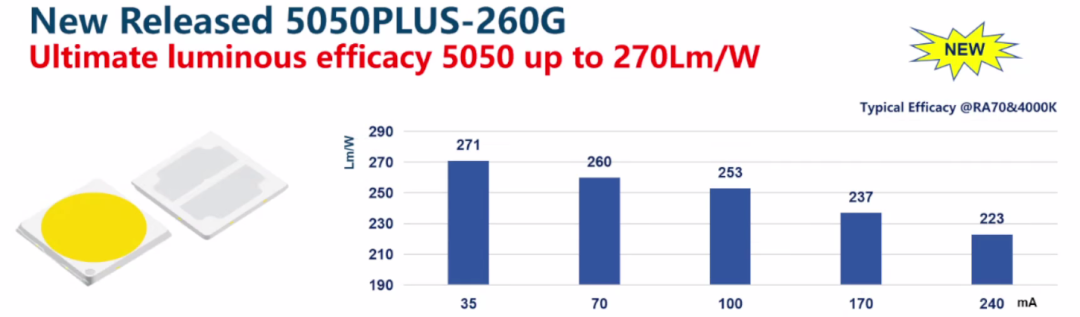
Under 2W drive, luminous efficacy reaches 260 lm/W (tested up to 270 lm/W under 1W conditions), 10% higher than comparable 1W products in the industry. With doubled power and a 12% increase in luminous efficacy, this dual‑core design incorporates patented heat‑dissipation technology, reducing the number of LED beads by 30% and helping customers cut costs by 25%. Its maximum output can support up to 7W, making it the optimal choice for long‑term outdoor applications requiring low thermal resistance and minimal color shift over time.
Application scenarios: From ecological conservation to municipal cultural projects
Eco-Amber covers mainstream outdoor lighting scenarios worldwide:
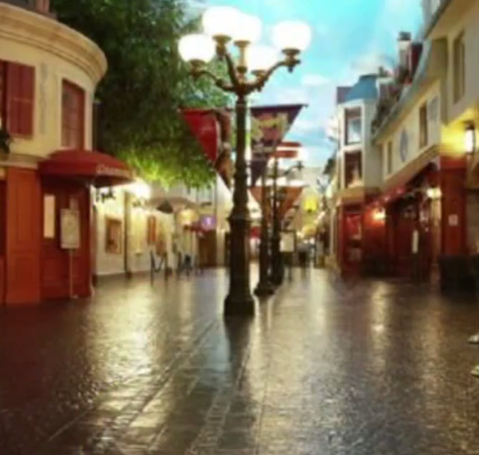
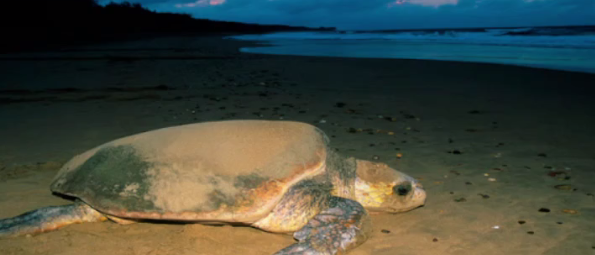
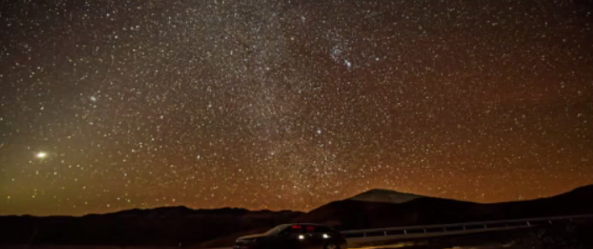
Real-world applications
1. Municipal and public infrastructure projects
◇ Road and streetlight upgrades: From UK municipal projects to Brazil’s urban lighting modernization, low‑blue‑light 1700K sources represent the best alternative to traditional cool white lighting.
◇ Parks, scenic areas, and dark‑sky cities: Directly supporting ecological protection and light pollution reduction in night parks, nature reserves, and wetland parks.
◇ Schools and community neighborhoods: Enhancing nighttime walking safety while minimizing health impacts on residents and children.
2. Ecologically sensitive areas
◇ Coastal zone protection: Perfectly suited for sea turtle nesting sanctuaries along Brazil’s coast, meeting strict color temperature limits below 3000K while providing safe, compliant, and minimally disruptive nighttime illumination to safeguard fragile marine ecosystems.
◇ Wildlife conservation: For national parks, migratory bird habitats, bat sanctuaries, and other ecologically sensitive zones, narrow‑spectrum low blue light designs can greatly reduce artificial light interference with natural environments, effectively preventing disruptions to nocturnal animals’ behavior and reproductive cycles, thus fostering harmonious coexistence between humans, light, and nature.
3. Cultural tourism and commercial outdoor projects
◇ Nighttime cultural tours: Balancing ambiance and ecology—low blue light warm yellow hues can create more natural, immersive nighttime experiences while respecting environmental protection.
◇ Real estate and hotels: Offering differentiated health‑focused selling points—highlighting “low light pollution, healthy illumination”—to meet the demands of high‑net‑worth clientele.
4. Sleep‑oriented lighting and nighttime duty scenarios
◇ Creating deep sleep experiences: Low blue light does not suppress melatonin, minimizes nighttime light disturbance, and aligns with human sleep rhythms—ideal for night lights and bedroom illumination, as well as premium spa and sleep‑therapy suites.
◇ Crafting healing and tranquil lighting environments: Medical settings require unobtrusive nighttime illumination—low brightness, minimal visual stimulation—to ensure patients rest peacefully without disruption. Specialized rhythmic lighting tailored for medical staff and emergency responders, with intelligently adapted color tones.
6. Industrial and transportation sectors
◇ Special‑purpose work environment lighting: In railways, ports, and mining operations, low blue light sources offer superior penetration in foggy conditions, reducing glare and visual fatigue while enhancing operational safety.
◇ Improving nighttime work and driving safety: Effectively mitigating glare-induced visual distractions for drivers and frontline workers, lowering visual fatigue and boosting overall operational security.
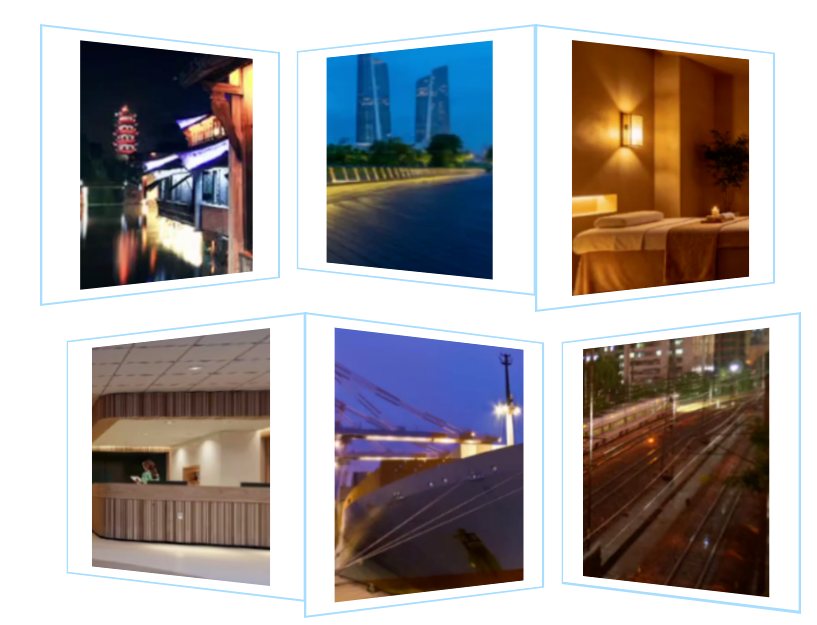
Notably, the same Eco-Amber LED bead can seamlessly adapt to both outdoor scenarios—streetlights, tunnel lights, stadium floodlights, high‑mast lights—and indoor applications—courtyard lamps, landscape lights, pathway lights, cultural‑tourism fixtures—truly achieving “one chip, multiple uses,” dramatically reducing R&D and supply chain costs for customers.
Value proposition: A triple win for ecology, health, and commerce
At the conclusion of his presentation, Mr. Qiu outlined Manlux’s value proposition. The company’s vision is “To offer the Lux for Man, the Light for Human” (mastering lighting technology to illuminate humanity).
On the ecological front, the Eco-Amber series significantly reduces nighttime light pollution, safeguarding urban ecological development.
On the health front, it lowers the impact of outdoor blue light on residents’ sleep and adolescents’ vision, creating human‑centered nighttime lighting environments.
On the commercial front, Eco-Amber provides customers with differentiated product competitiveness and brand‑marketing opportunities, while simplifying selection processes through comprehensive solution packages.
◇ For luminaire manufacturers: Standardized universal solutions eliminate costly mold‑making expenses, while one‑chip‑multiple‑uses streamlines supply chains; differentiated low blue light products enhance bidding advantages in overseas municipal and cultural projects.
◇ For engineers and city administrators: High‑efficiency light sources reduce long‑term electricity consumption, comply with updated global lighting regulations, and lower project compliance thresholds.
◇ For the entire industry: Proactively positioning oneself in the low blue light arena captures the benefits of national lighting standard updates and secures leadership in next‑generation outdoor lighting technologies.
Interactive Q&A session
During the salon’s interactive segment, Mr. Qiu addressed audience questions:
Q1: Regarding the implementation of policies phasing out cool white lighting across different countries
Host: Among the UK, Brazil, and Europe, which country initiated these phaseouts first? How long have they been implemented, and what results have been observed?
A: Eco-Amber began rolling out last year, gradually incorporated into several local government tender projects. Brazil led the way, introducing such initiatives two years ago. Last year, Brazil revised its public lighting specifications, prompting local governments to legislate accordingly. The UK has shown stronger momentum in municipal projects, particularly those involving cultural tourism, while European nations place greater emphasis on protecting residents from light‑related health risks. India currently focuses mainly on cultural tourism projects, where golden‑tinted lighting proves especially effective.
Q2: Patent and technical support behind Eco-Amber’s luminous efficacy
What patents and technical innovations enable Eco-Amber to maintain industry‑leading luminous efficacy while keeping blue light levels low?
A: This is the result of multi‑dimensional integrated optimization. At the chip level, we collaborated with chip manufacturers to develop specialized chips precisely tuned to optimal current levels, maximizing blue light excitation efficiency and overall system performance. At the bracket and adhesive level, we employed self‑developed patented brackets to optimize light coupling and reflectivity. Additionally, we created custom phosphor formulations and designed unique multi‑stage packaging processes.
Through these comprehensive measures, Eco-Amber manages to strike a balance between low blue light and high luminous efficacy without sacrificing too much brightness.
Q3: Challenges faced by manufacturers integrating Eco-Amber
Do outdoor luminaire manufacturers need to redesign molds when adopting Eco-Amber? What technical support can Manlux provide regarding driver selection and whole‑luminaire adaptation?
A: The 5050PLUS series features solder pads compatible with existing industry standards, so manufacturers don’t need to make major mold modifications. We considered pre‑existing luminaire designs during initial development—boards, lenses, and other components were already configured—ensuring compatibility with customers’ current layouts.
Moreover, under 2W drive, Eco-Amber delivers luminous efficacy comparable to others’ 1W outputs, allowing customers to reduce their LED bead usage. Furthermore, Manlux offers a full range of options—from 70 to 90, from 1800K to 2700K—all featuring low blue light ratios, enabling customers to tailor their luminaire designs to meet diverse bidding requirements.
Q4: Domestic examples of ecological protection implementation
Today we’ve discussed many overseas cases—sea turtle protection in Brazil, night parks, etc.—but are there any domestic ecological protection projects already underway?
A: Domestically, some of our light sources have already been exported via local luminaire manufacturers. Mainly, municipal road projects—especially in East China—have adopted warm‑white streetlights. Several cultural tourism projects are also progressing. However, domestic ecological protection efforts are still in their early stages, with overseas interest far outweighing domestic attention. Currently, domestic focus remains on specialized lighting and cultural tourism projects, though the concept of ecological protection is gradually gaining traction.
Q5: The original intention and future outlook behind the triple win of ecology, health, and commerce
When developing Eco-Amber and other low blue light products, what was your original intention? And what are your prospects for the future?
A: Although we are a profit‑driven enterprise, our ultimate goal is to align with sustainable ecological principles. LEDs themselves are green light sources; to conserve energy and reduce carbon emissions, luminous efficacy is essential. Yet beyond efficacy, we must also consider what kind of light best meets biological needs.
We hope to achieve balance on the ecological front—without harming nocturnal organisms or disrupting human physiological regulation; on the health front—without compromising residents’ sleep or vision; and on the commercial front—by inspiring end‑users and municipal projects to recognize the value of low blue light, thereby generating commercial momentum. Only when ecology, health, and commerce converge can this initiative sustain long‑term progress.
Conclusion
Mastering lighting technology to illuminate humanity
This salon clearly demonstrated that low blue light outdoor lighting is no longer a compromise—it has become a genuine new direction that balances ecological protection, visual health, and energy efficiency. Manlux’s Eco-Amber series, with its exceptional performance—below 1% blue light ratio at 1800K and luminous efficacy reaching 165–175 lm/W—proves that low blue light technology now possesses a solid industrial foundation capable of large‑scale deployment.
As Mr. Qiu emphasized in his presentation: Manlux’s goal extends beyond launching a single product—it seeks to co‑create a new ecosystem of low blue light healthy illumination with industry partners. We look forward to collaborating with luminaire manufacturers, engineers, design firms, and government agencies to advance the formulation and implementation of low blue light lighting standards, making Eco-Amber’s low blue light technology the default choice for outdoor lighting. In doing so, every beam of light will not only illuminate our cities but also protect nocturnal ecological balance and safeguard the visual health of every resident.
END
Note: This article is compiled based on the audio recording of Mr. Qiu Bangyang’s July 8, 2026, lecture titled “Smart Connectivity, Healthy Illumination—Low Blue Light Leading a New Future for Outdoor Lighting,” organized and published by Ming Classroom.
China Light
The official website of the China Association of Lighting Industry and a full-media platform for the lighting sector. We provide authoritative and timely lighting information while striving to be a growth partner for businesses. From brand promotion and channel expansion to consulting, talent training and participation in standards development, we provide comprehensive professional services to help businesses improve quality and efficiency and jointly advance the high-quality development of the lighting industry.
Business Contacts
仇纯 (Ms.): 158 6155 3579
顾君 (Mr.): 137 7157 5253