
How can Automotive lighting balance safety and comfort? Professor Yao Qi of Fudan University provides a detailed explanation of the core technologies for quantitative assessment.
Automotive lighting has shifted from the basic need to “illuminate the road surface” to a comprehensive pursuit of safety, health, and comfort . How can we balance luminance, contrast, and glare control through quantitative methods?
The “Spectrum+” research group led by Professor Yao Qi of Fudan University, starting from visual optics and applied spectroscopy, provides a systematic solution for the scientific evaluation of automotive lighting.
Professor Yao Qi: The Quantitative Logic of Automotive Lighting—
From Light Dose to Visualization Technology
1. Spectrum+ Research Group: Decoding the “Code” of the Light Environment
Beyond Lighting: Going beyond conventional traditional lighting. Covering more interdisciplinary fields such as light health, photobiology, and photomedicine.
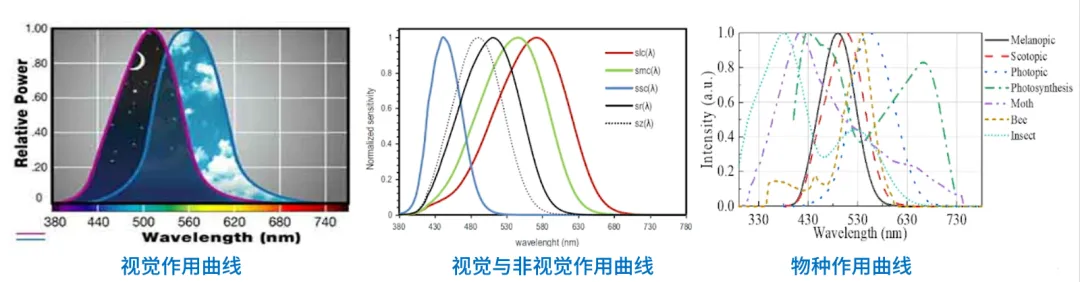
Core Viewpoint: Light is like “medicine”—only the right dose is effective.
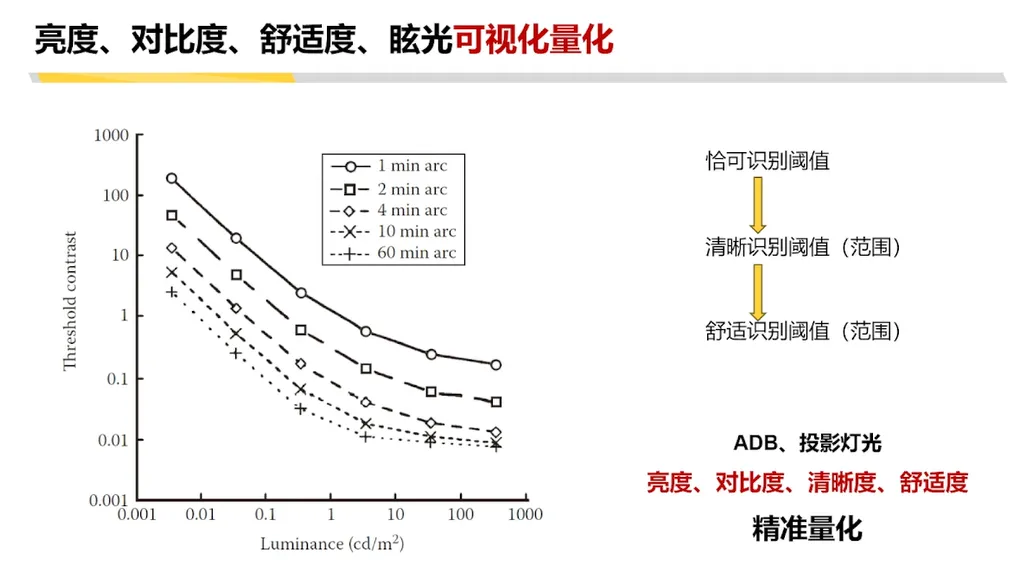
●Visualization Technology = CT/Ultrasound of the Light Environment: Using imaging luminance meters to transform invisible parameters of the light environment, such as luminance and contrast, into visual data—just like a hospital checkup, first “diagnose” then “prescribe”.
●Spectral Control = Precise “Medication”: Adjusting the spectrum and distribution of light according to different scenario needs (such as driver alertness or passenger sleep aid), avoiding discomfort caused by indiscriminate dimming.
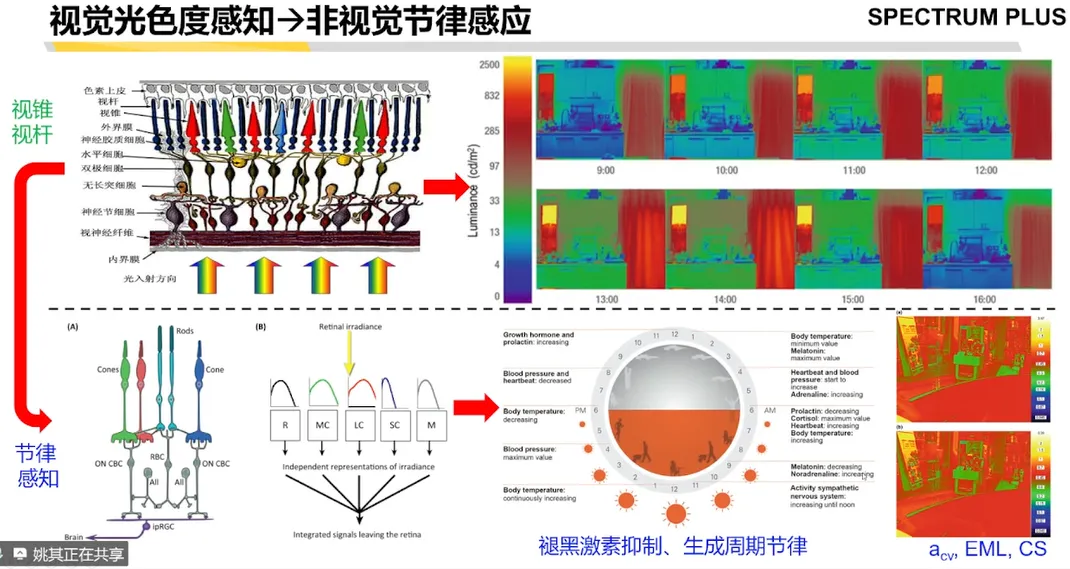
2. The Core Paradox of Automotive Lighting: Bright ≠ Good—Balance Is Key
Professor Yao revealed the truth with a set of comparative images:
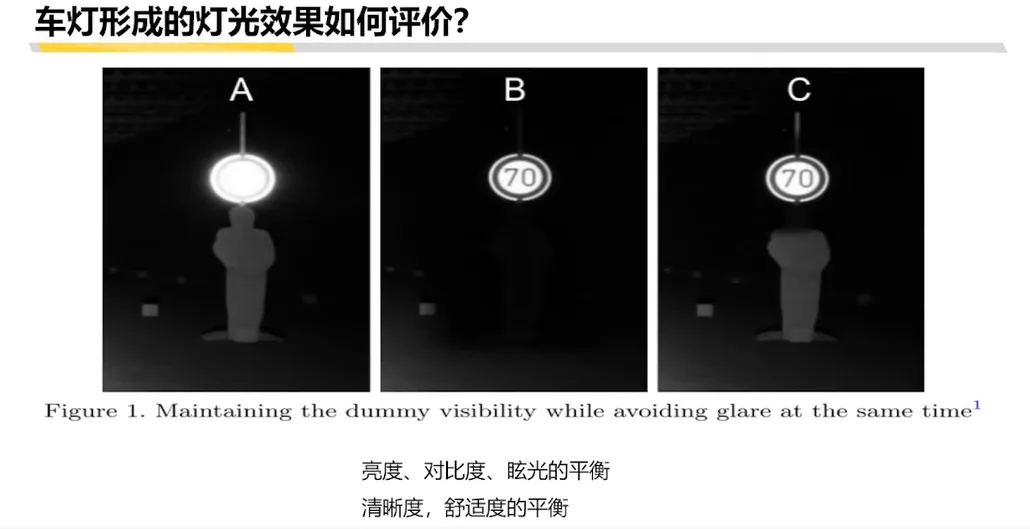
→Figure A: The light is too bright, making road signs completely illegible;
→Figure B: Signs are clear, but pedestrian silhouettes are blurry;
→Figure C: Luminance and contrast are balanced—clear visibility without glare.
Misconceptions About Fog Penetration: Many people believe yellow light penetrates better, but this is not the case—all lights have similar penetration; yellow light performs well because it offers higher luminous efficacy, providing clearer visual experience at the same energy consumption.
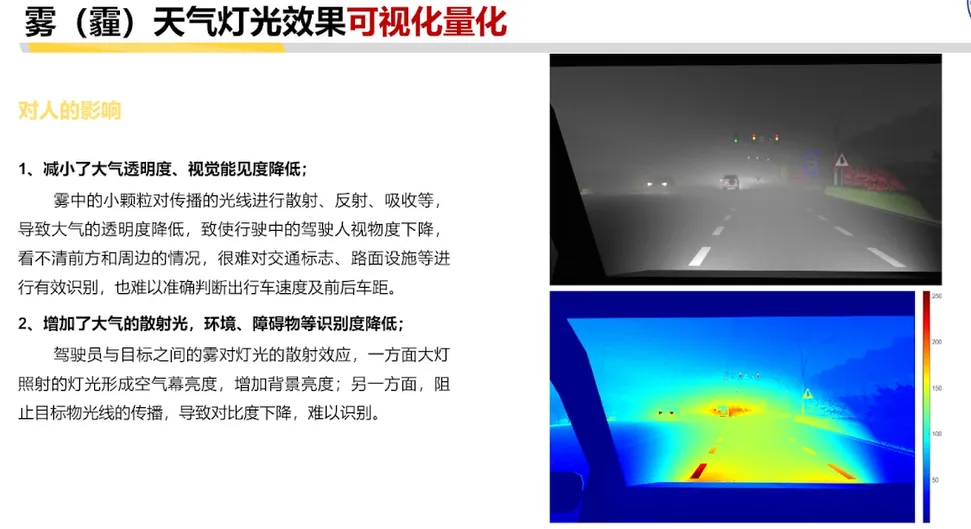
3. Key Technological Tools: Lightweight Application of Imaging Luminance Meters
◇Mobile Imaging Luminance Meter: Accuracy reaches 80%-95%, enabling rapid analysis of luminance, contrast, and other parameters of the light environment, addressing the pain points of traditional professional equipment being “expensive, heavy, and complex”;
◇Visualization Characterization Technology: Converting light environment parameters into visual data (similar to medical CT/Ultrasound), achieving “precise diagnosis” of the light environment;
◇Pixel-Level Projection Control: Using intelligent algorithms to adjust light direction, preventing oncoming glare and enhancing driving safety.
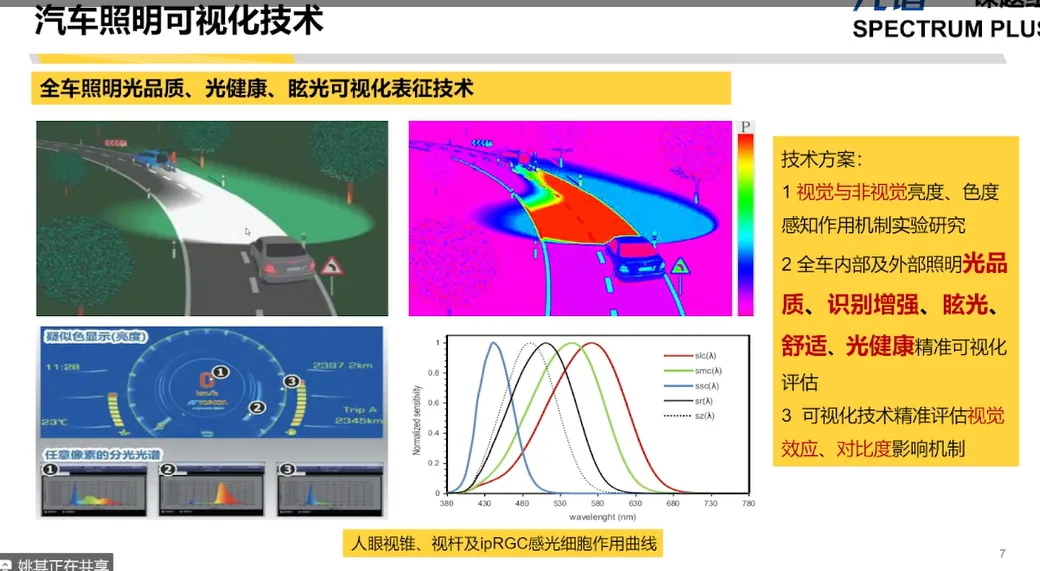
4. Exterior Lighting Application Scenarios
◇Glare Control: Using pixel-level projection technology to turn off lights in areas facing oncoming vehicles, controlling contrast (generally not exceeding 100:1);
◇Adaptation to Adverse Weather: Light penetration is independent of color, but yellow light performs better in fog due to its higher luminous efficacy;
◇Dynamic Lighting Adaptation: For dynamic scenarios such as ADB (Adaptive Driving Beam) and projected light carpets, real-time luminance feedback and adjustment can be achieved.
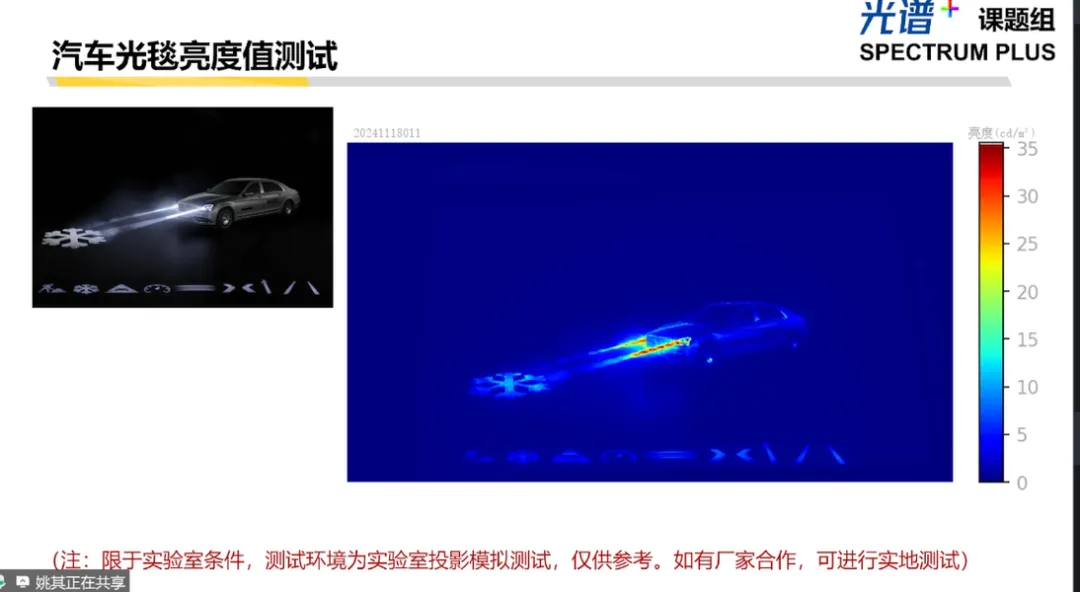
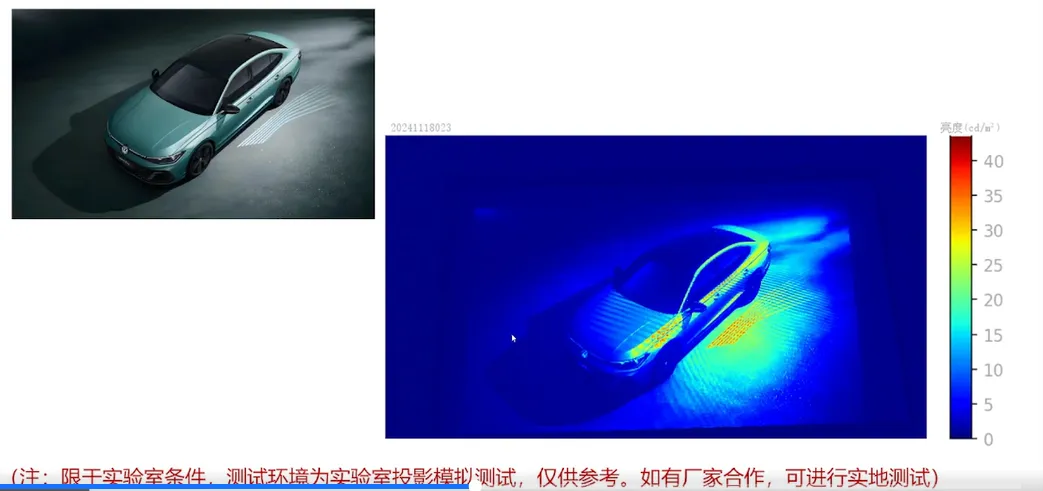
Automotive Light Carpet Brightness Test
5. Enhancing In-Cabin Lighting Quality
◇Light Environment Design for the Third Space: In-cabin luminance should be comparable to road lighting levels (no more than 10 cd/㎡ at night), avoiding cross-level disparities (such as excessive brightness differences between reading lights and ambient lights);
◇Meeting Differentiated Needs: The driver’s area requires “alertness light” (specific wavelengths stimulating the pupil), while the passenger area can be adapted to “sleep aid light” (low saturation, low brightness);
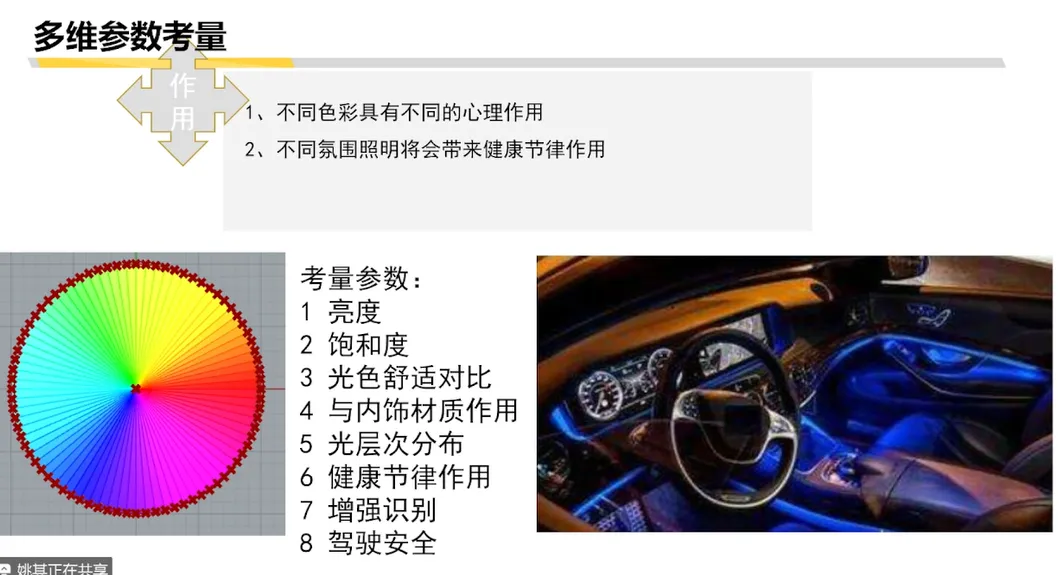
◇Core Principle: Maintain consistent luminance levels to avoid cross-level disparities among displays, ambient lights, and reading lights.
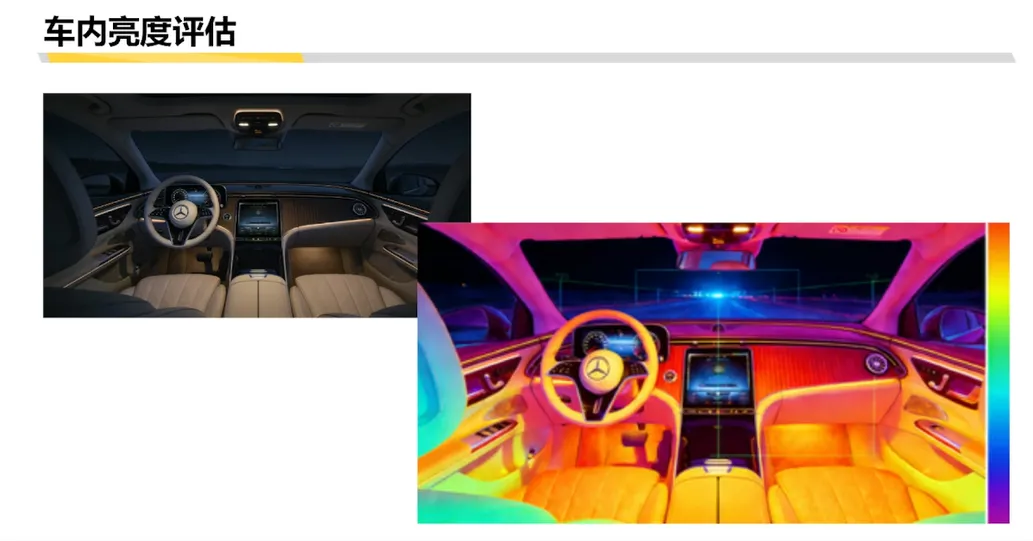
In-Cabin Brightness Assessment
Teacher Yang Chunlong: Technology Implementation from an Industry Perspective—Standardization and Testing Closed Loop
As a senior lighting designer, Teacher Yang Chunlong supplemented key aspects of technology implementation from an industrial practice perspective:
1. Digitalization of Testing: Making Brightness Assessment More Accessible
◇Traditional brightness testing relies on specialized equipment and personnel, resulting in high costs and low efficiency;
◇Imaging luminance meters enable “direct correspondence between human vision and data,” allowing precise analysis of luminance contrast within the field of view and lowering the testing threshold.
2. Standardized Closed Loop: The Core Guarantee for Healthy Lighting
◇Road Lighting: Existing brightness standards require integration with visualization technology to achieve a design-testing closed loop;
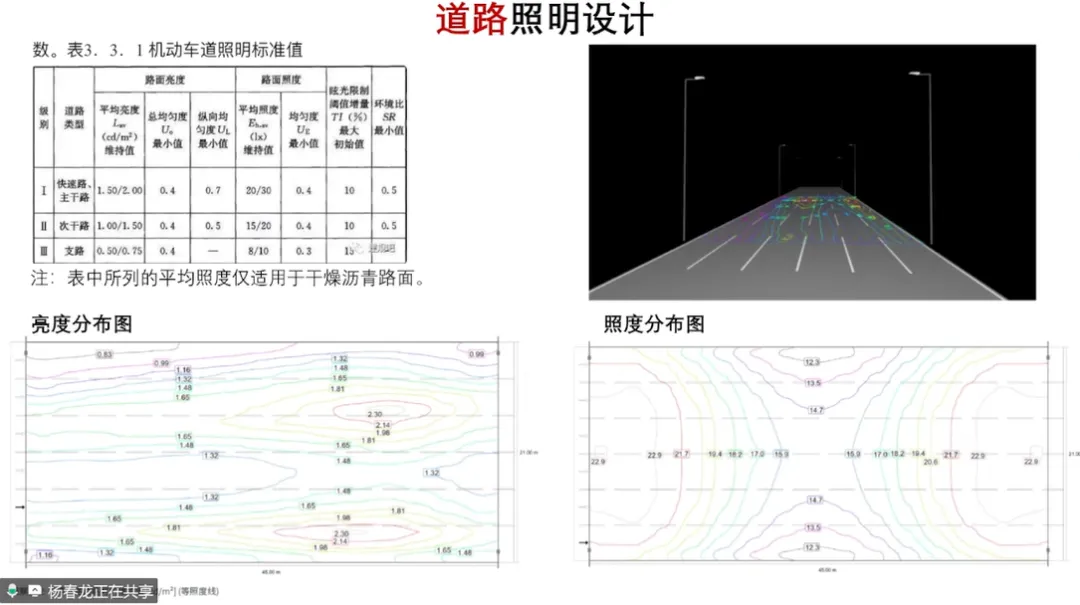
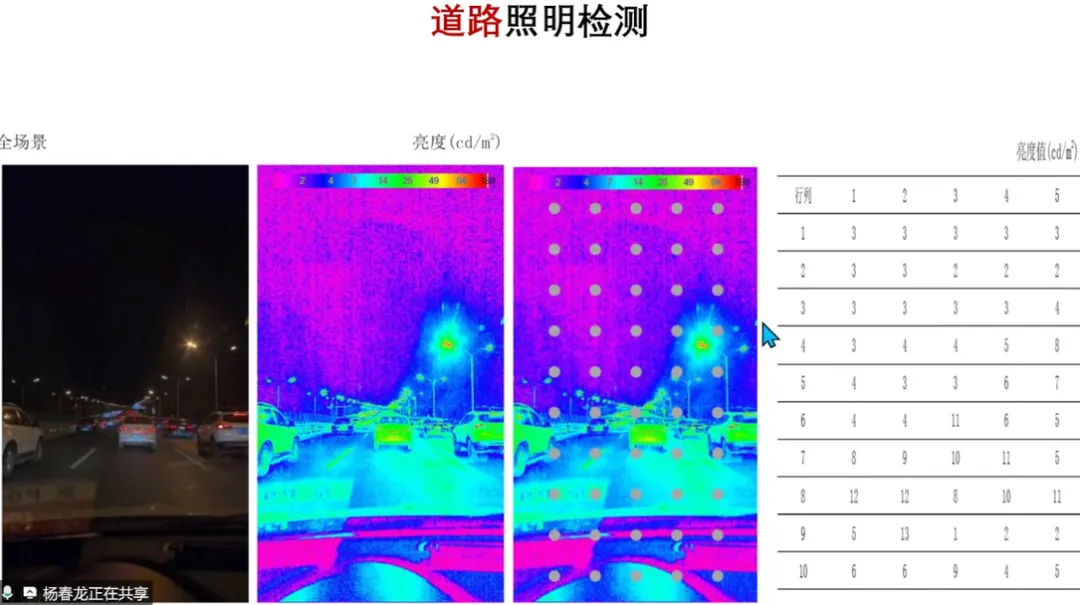
◇Indoor/In-Cabin Lighting: Previous brightness testing was cumbersome. Relevant standards mainly focused on illuminance requirements, with few specifications for luminance, as scene differences (such as dark vs. light walls) made definition difficult—making luminance design indeed challenging. However, software can assist designers in luminance distribution. With Professor Yao’s tools, future indoor lighting standards can quantitatively assess luminance.
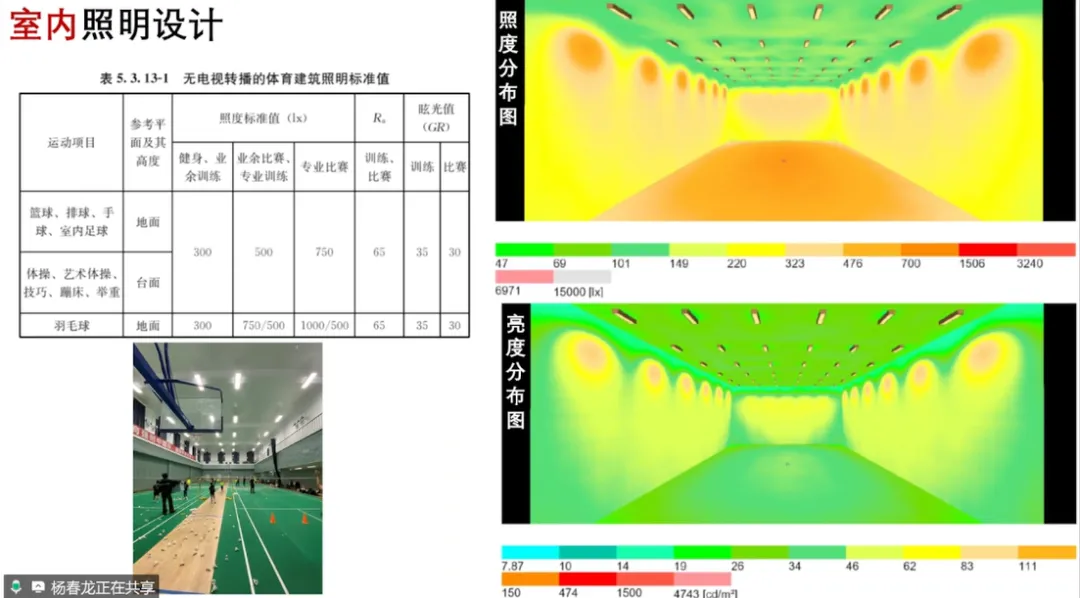
◇Recommendation: Incorporate luminance into more industry standards and promote quality improvement through widespread use of testing tools.
Interactive Q&A
During the interactive Q&A session, both teachers addressed audience concerns one by one, offering valuable insights:
1. Headlights Too Bright and Blinding—How to Solve?
Yao Qi: Fundamentally, this is a high-contrast issue caused by manufacturers “competing on brightness.” Solutions include:
◇Pixel-Level Projection Technology: Intelligently turning off lights in areas facing oncoming vehicles;
◇Controlling Contrast: Glare thresholds are generally 100:1; exceeding this ratio easily causes discomfort.
2. Can Mobile Imaging Luminance Meter Accuracy Meet Automotive Lighting Standards?
Yao Qi:
◇Accuracy of 80%-95%: Sufficient for designers’ quick assessments and owner self-tests;
◇Limitations: Professional testing (such as factory acceptance by automakers) requires high-precision equipment; real-time feedback for dynamic scenarios (such as ADB) needs further optimization;
◇Applicable Scenarios: In-cabin/outdoor lighting assessment, landscape lighting testing, home light environment self-testing, etc.
3. How to Quantify Comfort and Health in In-Cabin Ambient Lighting?
Yao Qi:
◇Basic Principle: Maintain consistent luminance levels to avoid cross-level disparities (such as excessive brightness differences between reading lights and ambient lights);
◇Differentiated Design: The driver’s area requires “alertness light,” while the passenger area can be adapted to “sleep aid light”;
◇Practice by Leading Automakers: Mercedes-Benz EQS achieves a comfortable light environment by controlling luminance levels.
Yang Chunlong:
◇Healthy lighting is a systems engineering endeavor requiring consideration of time (day/night), location (driver’s seat/rear seats), and occupants (driver/passengers); luminance testing is key to closing the loop.
4. Have Evaluation Priorities Changed for Dynamic Lighting (ADB/Projected Lights)?
Yao Qi:
◇Core Principles Remain Unchanged: Balancing luminance, contrast, and comfort;
◇Adapting to Dynamic Scenarios: Imaging luminance meters enable real-time feedback, paired with pixel-level control for precise “targeted” adjustments.
Conclusion
The future of automotive lighting is no longer about “the brighter, the better,” but rather achieving synergy among safety, health, and comfort through quantitative evaluation technologies.
Professor Yao Qi’s technical analysis and Teacher Yang Chunlong’s practical industry experience provide the sector with a complete reference—from theory to practice.
END
Note: This article is compiled from recordings of Teachers Yao Qi and Yang Chunlong’s December 30, 2025 presentation on “Quantitative Evaluation of Automotive Lighting Effects Based on Environmental Characteristics” at Ming Classroom, published by Ming Classroom.
China Light
The official website of the China Association of Lighting Industry and a full-media platform for the lighting sector. We provide authoritative and timely lighting information while striving to be a growth partner for businesses. From brand promotion and channel expansion to consulting, talent training and participation in standards development, we provide comprehensive professional services to help businesses improve quality and efficiency and jointly advance the high-quality development of the lighting industry.
Business Contacts
仇纯 (Ms.): 158 6155 3579
顾君 (Mr.): 137 7157 5253