
From mythical beasts of the Classic of Mountains and Seas to Digital Life Street! This lighting salon unveiled the 3D printing “code of all things growing.”
On June 18, an in-depth dialogue on “AI+3D Printing” and Cultural Tourism Lighting unfolded in the Guzhen Light Expo Mingren Online livestream room.
Li Chungge, Deputy Chief Engineer of Yongdian Lighting, drawing on 21 years of outdoor lighting R&D experience, delivered a highly informative presentation that unveiled the mystery of how 3D printing technology is moving from the “laboratory” to the “cultural tourism site”—it turns out that 3D printing can not only “print” luminaires but also “print” culture, “print” scenes, and even “print” the potential for all things to grow.
Why are lighting companies embracing 3D printing?
“Traditional landscape lighting aims for ‘invisible by day, stunning by night,’ but cultural tourism lighting requires ‘stories by day, warmth by night’.“ With these words, Mr. Li highlighted the industry’s pain point: due to regional cultural differences, cultural tourism projects demand大量 personalized custom luminaires, yet traditional mold-making is costly and time-consuming, often causing creative ideas to fail before they can be realized.
The lie precisely in its ability to “eliminate the need for molds and accommodate small batches”—a perfect solution to the urgent needs of cultural tourism lighting. However, Mr. Li admitted that although 3D printing technology has existed for over 20 years, it has struggled to achieve large-scale application. What are the core bottlenecks? Four major challenges—materials, equipment, talent, and supply chain fragmentation—have deterred many companies.
Breaking Through Material Barriers: The “Hardcore Confidence” of 3D Printing
“Without good materials, 3D printing is just castles in the air.” Mr. Li highlighted Yongdian’s independently developed “MMLA Polymer Alloy Filament”—a material that can be called a “versatile all-rounder” for 3D printing:
Strong weather resistance: It remains unchanged after 5–10 years of outdoor use, easily handling Middle Eastern heat, Russian cold, and high-salinity coastal environments;
Safe and flame-retardant: It meets vertical burning V-0 grade and has passed UL certification, alleviating safety concerns in outdoor lighting;
Environmentally friendly and recyclable: Certified under EU RoHS, printing waste can be recycled and reused, even molded into material trays;
High compatibility: Compatible with FDM printing, injection molding, extrusion, and other processes, allowing for effortless post-processing coloring and bonding.
More importantly, this material boasts a “Chinese core”—from granulation formulas to filament-drawing processes, the entire chain is independently developed, completely breaking free from supply-chain constraints. “We’ve been in the lighting business for over 20 years, and the weather resistance of our outdoor materials has already been validated in projects like the Beijing Olympics and the Dubai Expo. Now we’re simply ‘adapting’ it into a version suitable for 3D printing,” Mr. Li said casually, revealing years of accumulated technological expertise.
AI + 3D Printing: From Concept to Physical Object with One Click
“In the past, creating a 3D model required hiring a professional modeler and spending a week; now, just input a text description, and AI generates the model ready for printing.” The “Shanhaijing Mythical Creatures 3D Printing” case demonstrated live by Mr. Li left viewers exclaiming “magical”—from the flat depictions of “Chaos” and “Zhulong” in ancient texts, to AI-generated three-dimensional models, and finally to a 1.2-meter-tall physical finished product, the entire process can be completed in “less than half a month.”
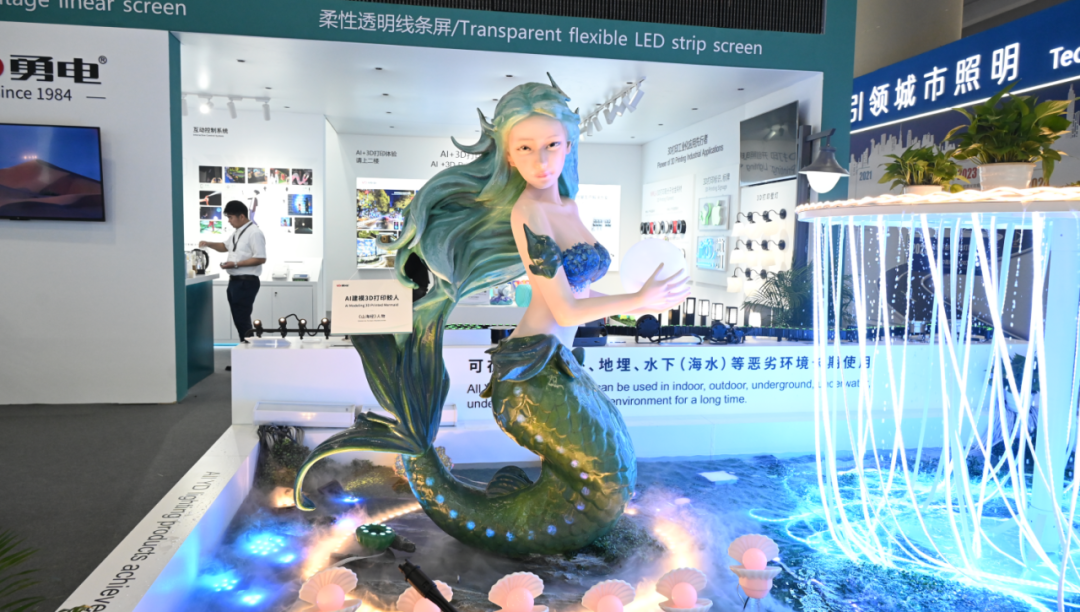
AI Modeling 3D Printed Mermaid
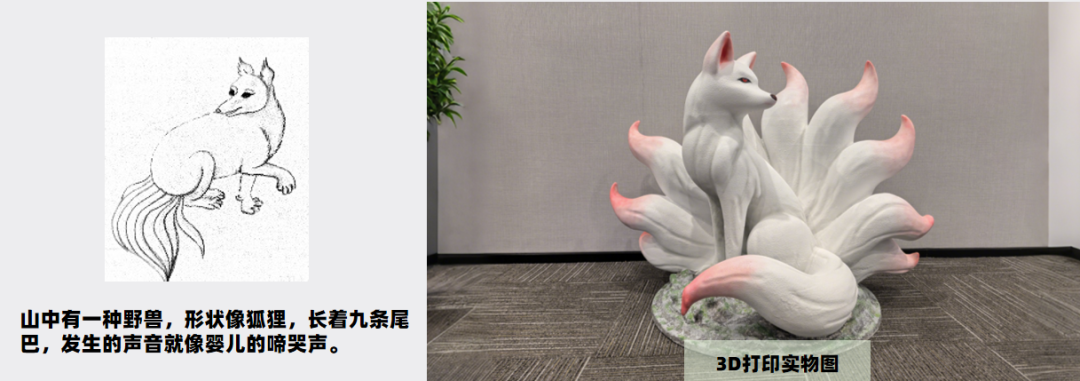
3D Printing of the Nine-Tailed Fox
It turns out that Yongdian not only develops its own materials and equipment but has also built a “MMLA 3D Printing Sharing Platform”: Users input text or images, and AI automatically generates 3D models; the platform offers a vast library of free models, allowing even those without modeling experience to “download and print with one click.” “In the future, 3D printing could become as common as home printers—you need a personalized luminaire? Just enter your requirements, and you can ‘print’ it at home,” Mr. Li envisioned, making “mass creativity manufacturing” no longer science fiction.
Real-World Cases: How Does 3D Printing Light Up New Cultural Tourism Scenarios?
No matter how impressive the theory, nothing beats seeing it in action. Mr. Li used a series of vivid cases to showcase 3D printing’s “full range of skills” in cultural tourism lighting:
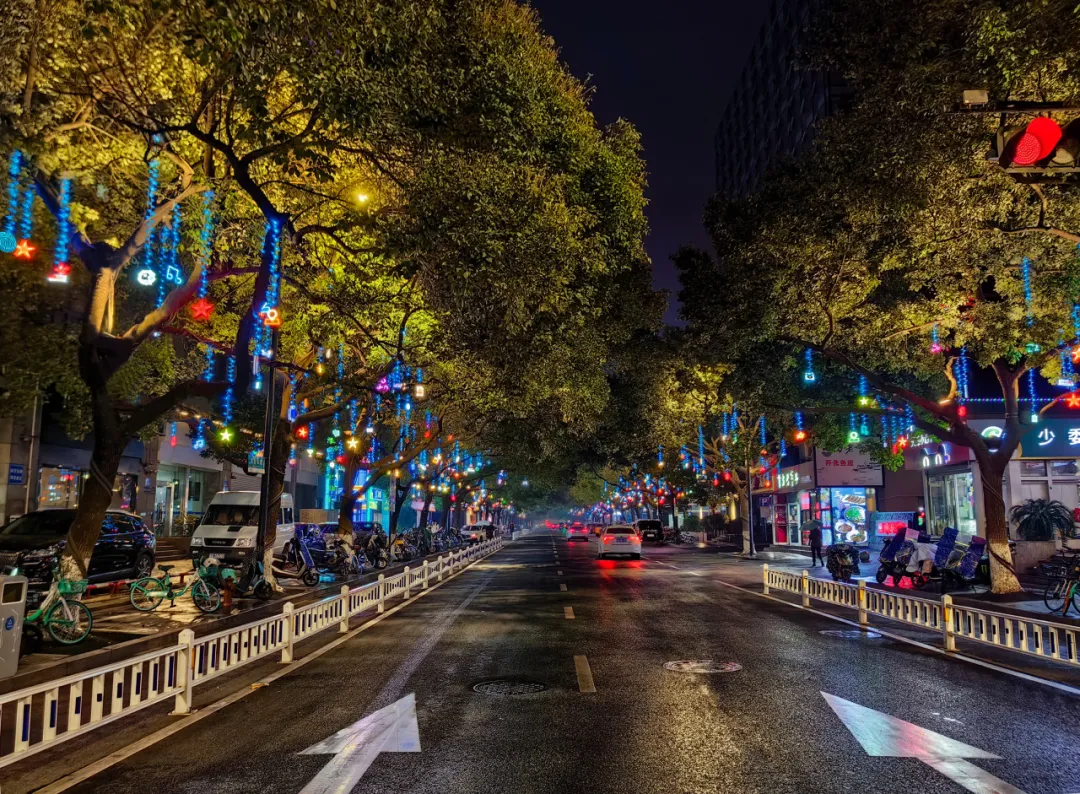
Hangzhou Digital Life Street: In half a month, AI generated 3D models with “digital cultural themes,” printing fluorescent street installations that serve as artistic decorations by day and transform into a “digital galaxy” at night.
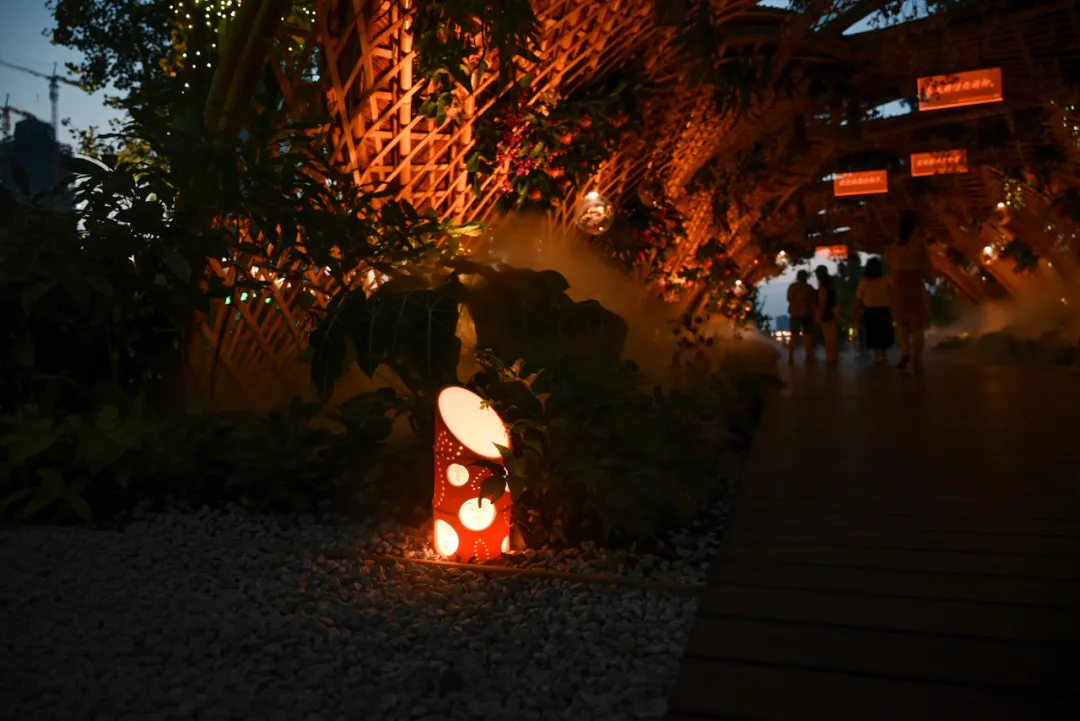
Asian Games Flower Exhibition Garden: 3D-printed “Bamboo Lamps” and “Wish Lanterns” blend Asian Games elements with natural landscapes, seamlessly adapting to underwater and underground settings;
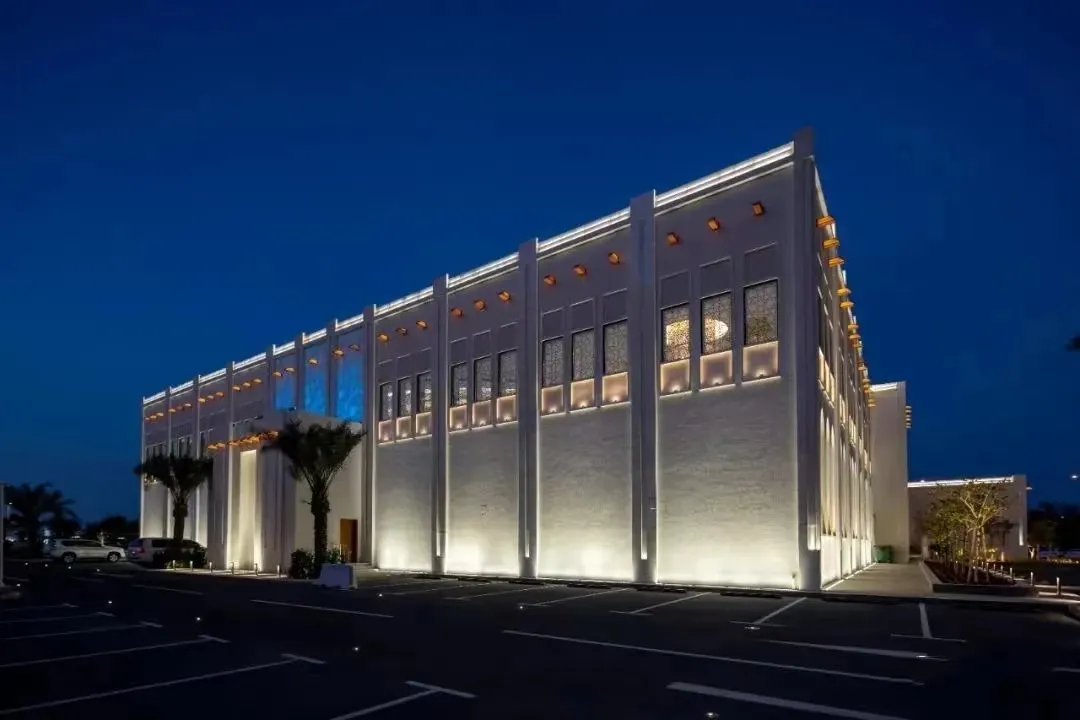
Qatar Mosque: 3D-printed wood-effect lamps recreate traditional architectural textures by day and emit warm light by night, operating stably in temperatures as high as 40°C;
Wuhan World City Plaza: 3D printing applied to building structures. A 1-meter-long triangular 3D-printed structure replaces metal barriers, resisting temperature changes and deformation while also being “self-lit.”
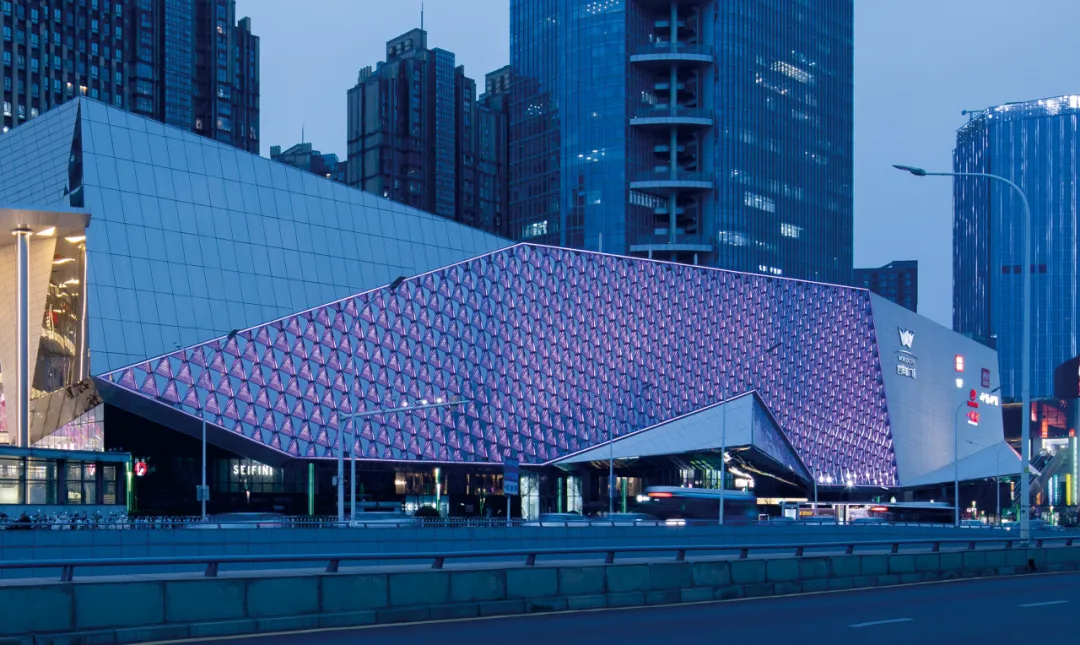
“These cases prove that 3D printing not only solves the problem of expensive customization but also makes cultural tourism scenes ‘one-of-a-kind’—each scenic spot can have its own cultural symbols instead of generic ‘internet-famous styles.’” Mr. Li said.
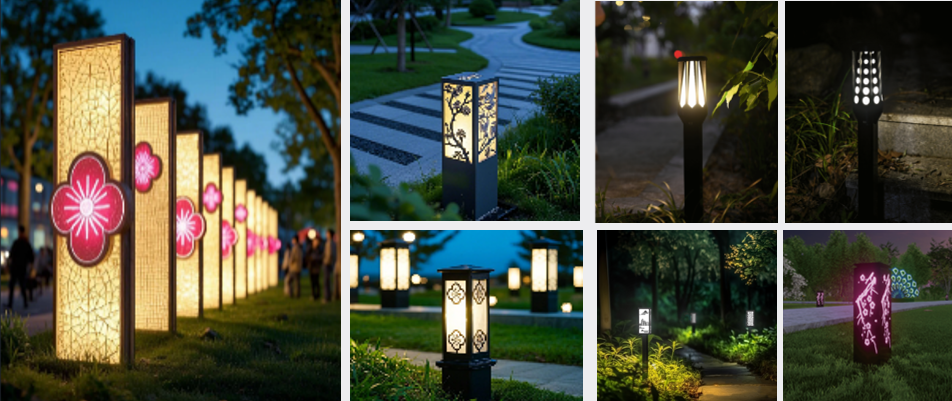
3D Printed Lawn Lamp Series
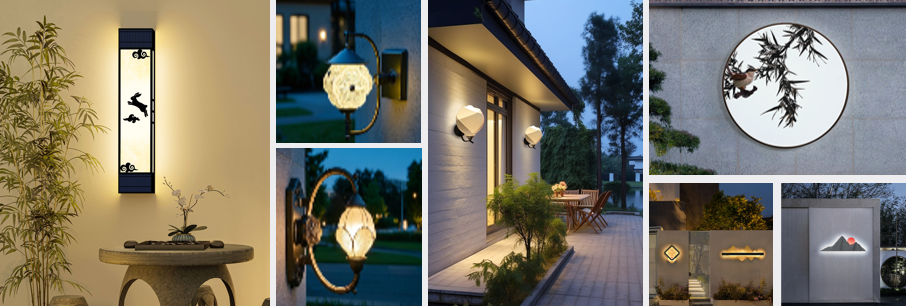
3D Printed Creative Wall Lamp Series
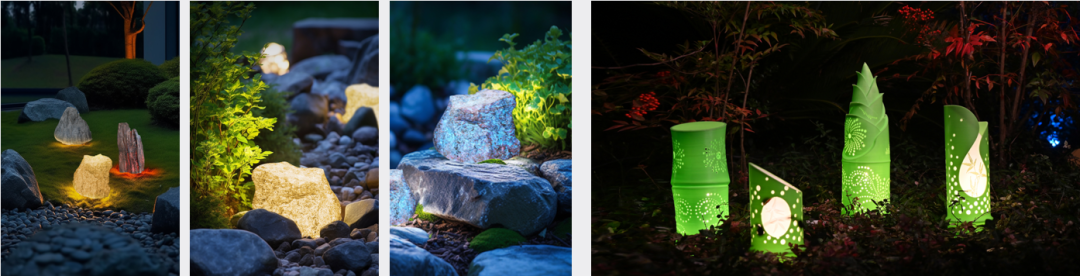
3D Printed Bionic Lamp Series
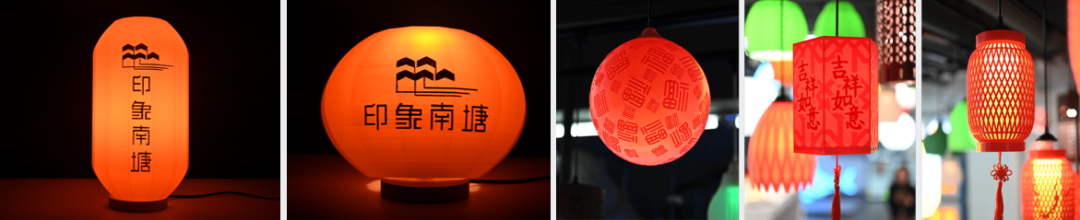
3D Printed Custom-Themed Lantern Series
The Future Is Here: The “Growth of All Things” Enabled by 3D Printing
Looking ahead to the industry’s future, Mr. Li offered two key words: “Sharing” and “Integration.”
Sharing: In the future, “3D Printing Centers” may emerge—similar to “community parcel lockers,” where users place orders online and print nearby, addressing the pain point of low equipment efficiency;
Integration: 3D printing will be deeply integrated with AI, VR, and smart controls, upgrading from “printing objects” to “printing scenes.” “For example, design a virtual cultural tourism space via VR, let AI generate 3D models, print them directly on-site, and then use smart control systems to achieve ‘lights on when people arrive, lights off when people leave’—this is the future of cultural tourism lighting.”
In Conclusion
From “difficult mold-making” to “everything printable,” from “laboratory technology” to “new infrastructure for cultural tourism,” this salon was not only a “technical popularization” of 3D printing but also a reflection on “how innovation defines the industry.” As Mr. Li put it: “The essence of 3D printing is to remove boundaries for ‘creativity’—and what we must do is provide the industry with tools to ‘break through boundaries.’”
Click here for the course replay
(Text/Ming Classroom Photos/Yongdian Lighting)
China Light
The official website of the China Association of Lighting Industry and a full-media platform for the lighting sector. We provide authoritative and timely lighting information while striving to be a growth partner for businesses. From brand promotion and channel expansion to consulting, talent training and participation in standards development, we provide comprehensive professional services to help businesses improve quality and efficiency and jointly advance the high-quality development of the lighting industry.
Business Contacts
仇纯 (Ms.): 158 6155 3579
顾君 (Mr.): 137 7157 5253