
From “Three Nos” to “Three Haves”: Dr. Yao Hua teaches you how to create a healthy lighting environment that ensures both physical and mental well-being.
Today, as smart technology becomes deeply integrated into daily life, light has long transcended its basic illumination function to become a key factor influencing mood, circadian rhythms, and spatial interaction. However, issues such as glare, flicker, and disorderly lighting still subtly disrupt our concentration, sleep, and mental well-being. Recently, Dr. Yao Hua, founder of Ziguang Technology, delivered a special presentation on the “Mingren Online” segment of the Guzhen Lighting Fair, starting from the core essence of ecological light and extending to practical applications in smart scene lighting. He systematically articulated the core concept of “Three Nos and Three Haves,” unlocking the secrets to creating healthy lighting environments.
From Ecological Light to Smart Scene Lighting: The Philosophical Foundations and Practical Pathways for Healthy Lighting Environments
Drawing on his many years of experience in the field of lighting environments, Dr. Yao Hua was the first to propose the threefold connotations of “Ecological Light”: First, safeguarding human physical and mental health through healthy lighting; second, practicing energy conservation and emission reduction throughout the entire lifecycle of lighting projects, reducing energy dependence, and mitigating negative environmental impacts; third, building a collaborative and win-win industrial ecosystem that provides integrated solutions fusing green practices with digitalization.
Ecological light focuses on the harmonious coexistence of light with the human body, space, and natural laws, with its core principle being to make light “respond to needs and blend into the environment.” This systematic thinking laid a solid logical foundation for the subsequent proposal of the “Three Nos and Three Haves” concept.
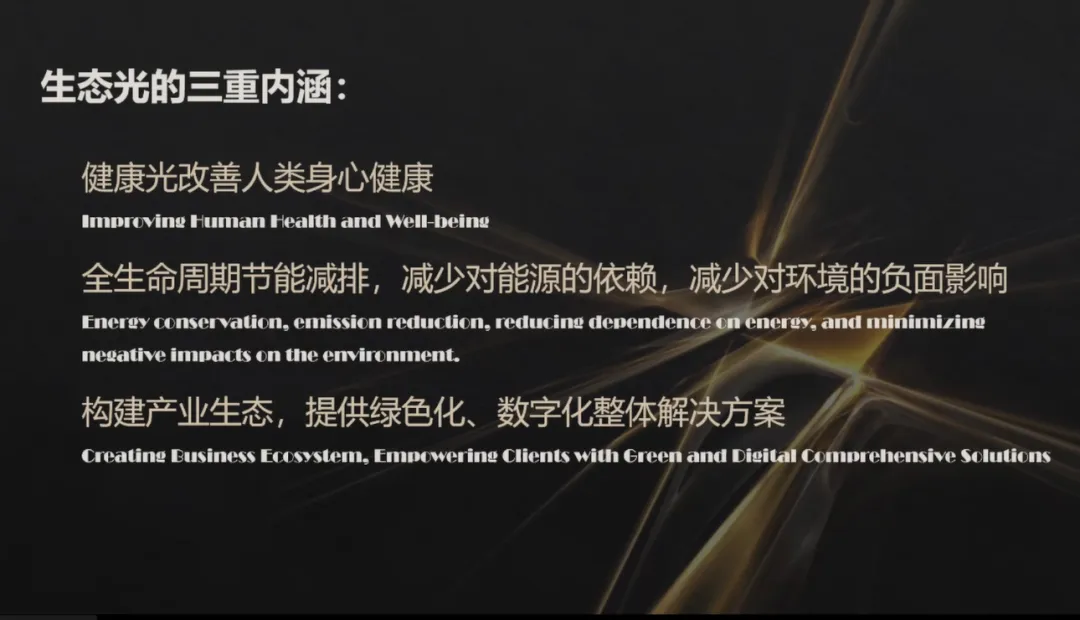
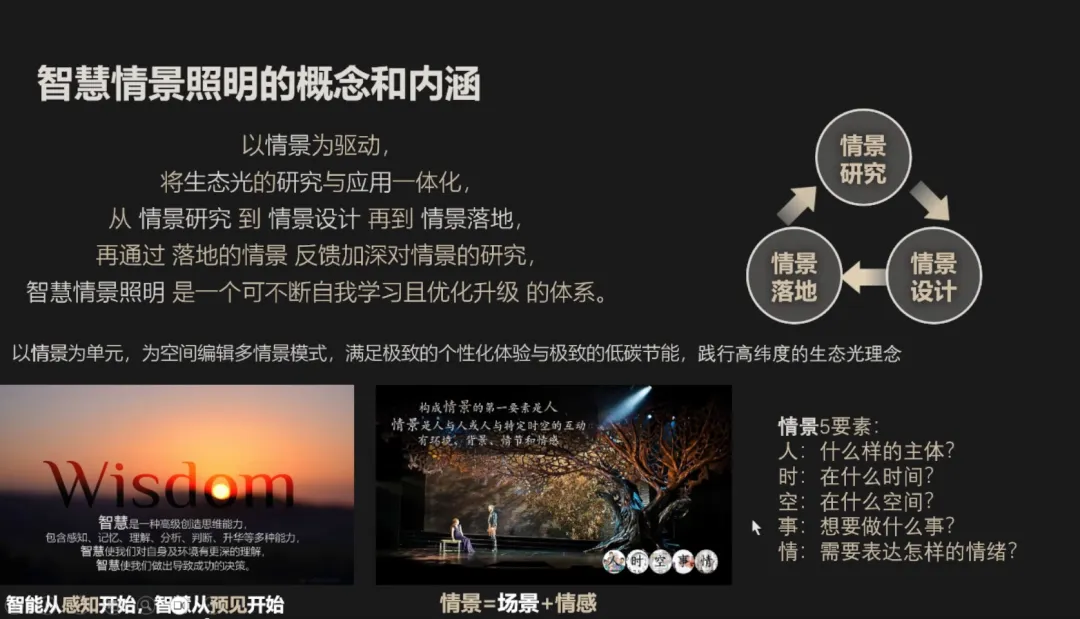
Building upon the concept of ecological light, Dr. Yao Hua further explained the practical value of smart scene lighting. Unlike traditional lighting’s “single switch, fixed brightness” model, smart scene lighting places “people” at its core, using technological means to dynamically adapt the lighting environment—automatically adjusting brightness, color temperature, and distribution direction according to different scenarios (such as work, rest, or socializing), diverse user groups (including the elderly, children, and those with special needs), and varying times of day, transforming light from “passive response” to “proactive service.”
For example, in home settings, a smart scene lighting system can simulate sunrise light in the morning, gradually increasing brightness to gently wake the body; at night, it automatically lowers color temperature and brightness to create a sleep-friendly atmosphere, truly achieving “light adapts to people, scenes move with light.” At the heart of all these practices lies the guiding principle of the “Three Nos and Three Haves” framework.
“Three Nos and Three Haves”: The Core Logic Behind Healthy Lighting Environments
Based on his extensive hands-on experience in smart scene lighting, Dr. Yao Hua proposed that “Three Nos and Three Haves” constitute the core framework for constructing healthy lighting environments—upholding safety standards while imbuing lighting spaces with vitality and humanistic care.
★“Three Nos”: Safeguarding the Baseline of Healthy Light
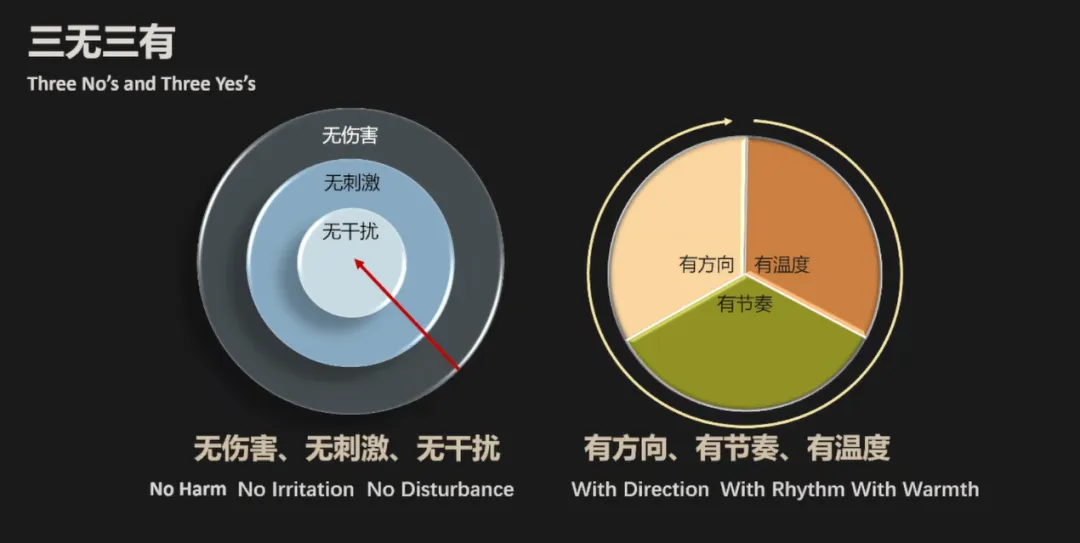
“No harm, no irritation, no interference” form the fundamental guarantee of healthy lighting environments. These three elements progress hierarchically, covering everything from physiological safety to psychological comfort, comprehensively avoiding the adverse effects of light.
• No harm: Focuses on biological and physical safety, preventing direct damage caused by blue light, UV radiation, flicker, etc. Qualified products from reputable sources typically meet this baseline requirement.
• No irritation: Pursues sensory comfort, demanding a natural spectrum and smooth color temperature transitions, avoiding sudden bright flashes or rapid color changes that cause sensory overload, keeping eyes and nerves relaxed.
• No interference: Represents the highest aspiration for peace of mind, requiring light to be “invisible,” aligning with human behavioral rhythms, and avoiding abrupt switching or mode changes that disrupt focus and tranquility, thus achieving harmony between behavior and flow of consciousness.
★“Three Haves”: The Source of Vitality in Lighting Environments
“Direction, rhythm, and warmth” constitute the lifeblood of light, mutually supporting one another and elevating light from a mere “visible tool” to a “perceived companion.”
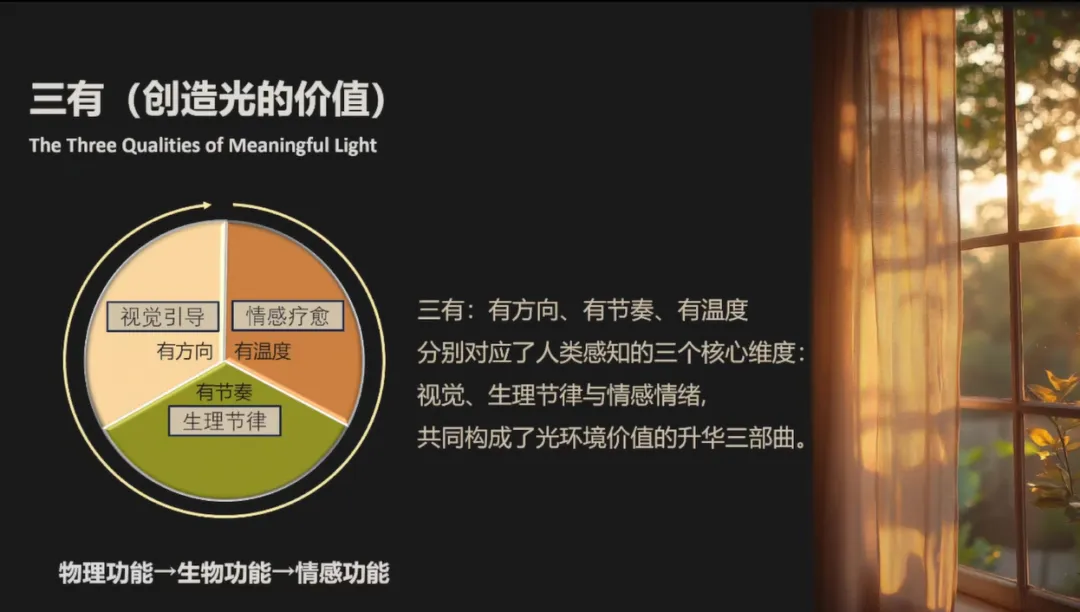
• Direction: Through precise brightness distribution, focused illumination, and shadow control, guiding visual attention, defining spatial functions and circulation paths, ensuring environmental information is perceived clearly and efficiently, thereby realizing light’s spatial storytelling capabilities.
• Rhythm: Aligning with the natural cycles of sunrise and sunset, adjusting light intensity and spectrum to synchronize with the human biological clock, protecting physiological health and enhancing inner order. This concept has already been implemented in intensive care units and other settings through multi-scenario modes.
• Warmth: As a vessel for emotions, light conveys humanistic care through color temperature, texture, and play of light and shadow, soothing anxiety, fostering a sense of belonging, shaping the emotional tone of spaces, and evoking emotional resonance.
Dr. Yao Hua emphasized, “The ‘Three Nos’ are the people-centered cornerstone, while the ‘Three Haves’ represent the elevation of light’s value. Only by first securing the ‘Three Nos’ baseline and then pursuing the ‘Three Haves’ can we truly achieve lighting environments that bring both physical and mental peace.”
Scenario-Driven: Making Light “Understand” Your Needs
Demonstrating real-world outcomes of the “Three Nos and Three Haves” philosophy in educational and religious contexts, Dr. Yao Hua cited examples such as the classroom renovation at Jiaxing Nanhu International Experimental Primary School and the lighting optimization project at Guangzhou Baihuagu Temple.
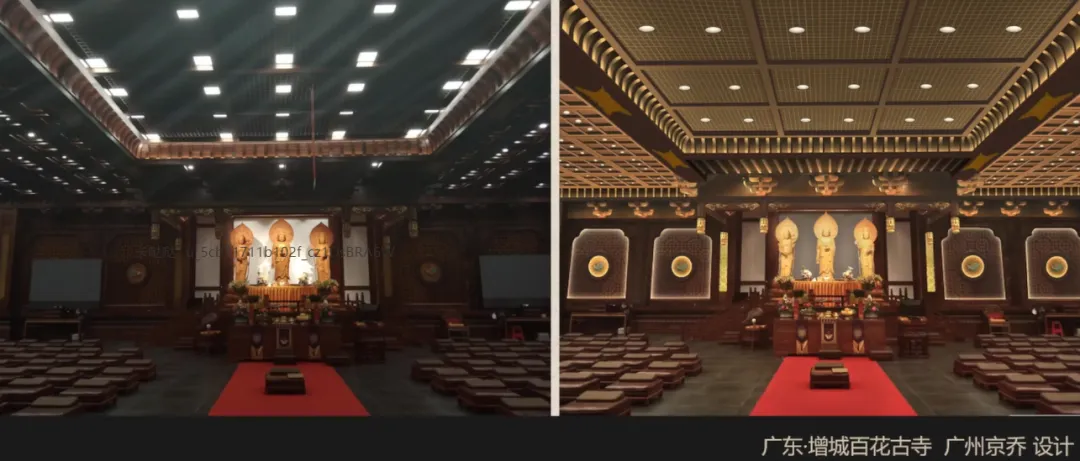
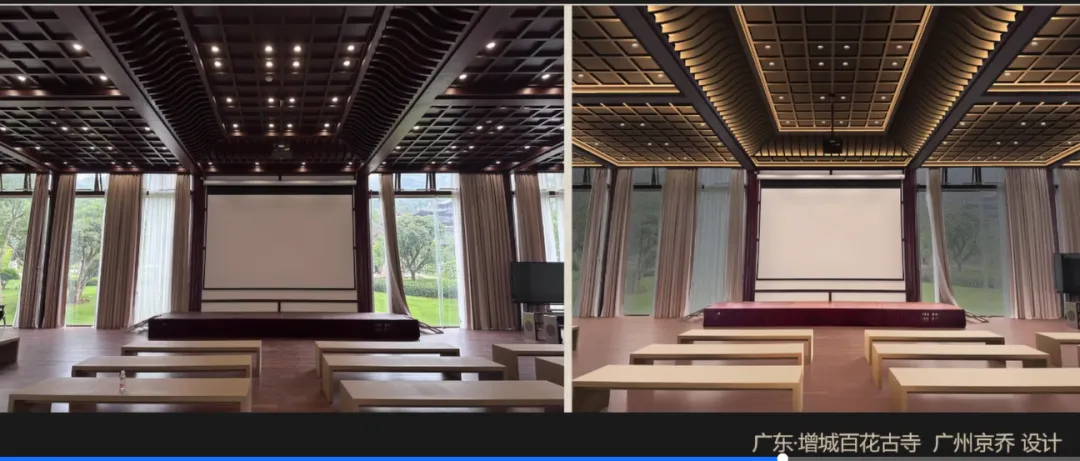
Guangzhou Baihuagu Temple Renovation Project
· Educational Scenarios: During classroom lighting upgrades, deep anti-glare designs and multi-scenario modes (for lessons, projections, and self-study) ensure light illuminates only necessary areas, minimizing light pollution.
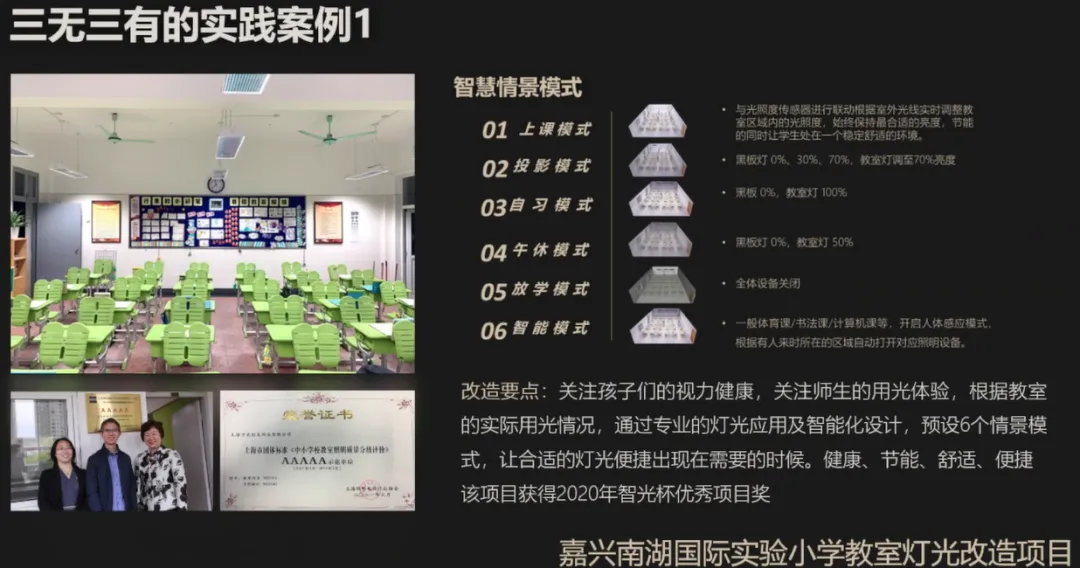
Jiaxing Nanhu International Experimental Primary School Classroom Lighting Upgrade Project
· Medical Scenarios: In intensive care units, dimmable and color-adjustable luminaires paired with “ecological windows” simulate natural light cycles, alleviating feelings of oppression among patients and medical staff.

Pre-set Scenario Modes in the Intensive Care Unit of Shanghai First People’s Hospital
· Office Scenarios: Dynamically adjusting indoor-outdoor light balance avoids discomfort caused by static lighting and enhances work focus.
Interactive Q&A
During the post-presentation Q&A session, Dr. Yao Hua addressed practical concerns raised by attendees, offering valuable insights:
1. In office settings, how does “rhythmic light” relate to circadian regulation?
Answer: Although many offices have windows, mismatches between static indoor lighting and changing outdoor natural light can easily cause discomfort. “Rhythmic light” can adapt to circadian rhythms in two ways: first, by following outdoor light patterns—lower color temperatures in the morning and evening, higher at noon; second, by adjusting based on work scenario needs—for example, slightly increasing light intensity and color temperature during morning work hours to help maintain focus and efficiency, balancing visual function with rhythmic demands.
2. In educational and medical settings, how should conflicts between the “Three Nos” baseline and “Three Haves” needs be prioritized?
Answer: The “Three Nos” and “Three Haves” do not represent an absolute sequence but rather an organic whole. If conflicts arise, prioritize ensuring “no harm, no irritation,” as these issues directly affect most people’s physiological comfort and functional needs. Optimization efforts toward “direction, rhythm, warmth” can sometimes indirectly resolve “no interference” concerns—for instance, precise light direction design can reduce glare-related disruptions.
3. Are there any feedback reports confirming improvements after implementing “Three Nos and Three Haves”?
Answer: While large-scale clinical data is still pending, numerous implemented projects have received positive feedback. For example, in windowless intensive care units, lighting designs simulating natural light cycles have helped healthcare workers report reduced feelings of oppression, significantly increased tolerable overtime hours, and enabled them to perceive the passage of time through subtle light changes. In educational settings, classrooms renovated under the “Three Nos and Three Haves” framework have seen a marked reduction in student visual fatigue.
4. How can “Three Nos and Three Haves” be combined with AI and sensors for dynamic management?
Answer: This represents an important future development direction. AI and sensors can collect and analyze data to standardize adaptation across most common scenarios, while reserving 20% for personalized adjustments. However, current challenges include addressing technical maturity issues to prevent sensor misfires or imprecise AI solutions that could introduce additional disturbances. Future prospects include automatically adjusting light rhythms based on human circadian data.
5. How can ordinary consumers determine whether their home lighting environment meets the “Three Nos” baseline?
Answer: The primary criterion is personal experience: Does your vision feel strained or watery? Do you feel fatigued after prolonged exposure? These indicate “no harm, no irritation.” Can you maintain focus and remain mentally calm without being distracted by light changes? This suggests “no interference.” Additionally, here are some tips for home lighting design: When choosing reading lights for children, prioritize their subjective comfort rather than blindly pursuing “the brighter, the better”; during whole-house customization, design light strips inside bookshelves and cabinets according to actual usage scenarios to avoid spill light causing disruption.
Note: This article is compiled from the recording of Dr. Yao Hua’s November 24, 2025, Ming Class presentation titled “Three Nos and Three Haves: Building Healthy Lighting Environments That Bring Physical and Mental Peace,” published by Ming Class.
China Light
The official website of the China Association of Lighting Industry and a full-media platform for the lighting sector. We provide authoritative and timely lighting information while striving to be a growth partner for businesses. From brand promotion and channel expansion to consulting, talent training and participation in standards development, we provide comprehensive professional services to help businesses improve quality and efficiency and jointly advance the high-quality development of the lighting industry.
Business Contacts
仇纯 (Ms.): 158 6155 3579
顾君 (Mr.): 137 7157 5253