
Key Focus Areas for Future Lighting Standardization | Two Departments Issue the "Implementation Plan for Enhancing and Leading the Optimization and Upgrading of the Light Industry through Standards"
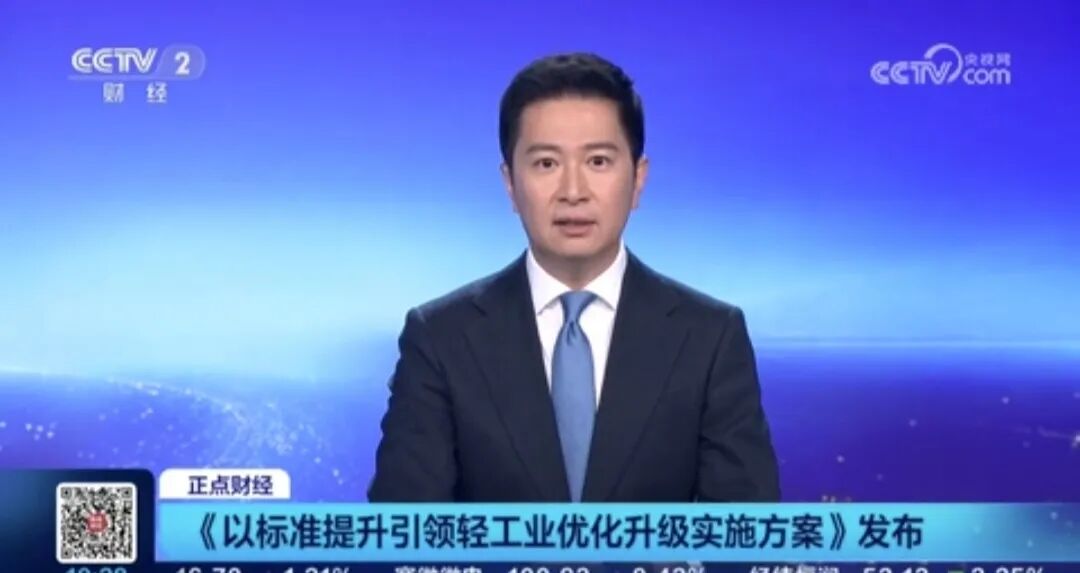
Recently, the Ministry of Industry and Information Technology, together with the State Administration for Market Regulation, jointly issued the "Implementation Plan for Leading Light Industry Optimization and Upgrading through Standard Enhancement" (hereinafter referred to as the "Implementation Plan"). The Implementation Plan proposes accelerating the comprehensive transformation of the lighting appliance industry toward intelligence, green practices, and integration by upgrading standards.
The Implementation Plan sets out phased development goals: By 2027, the standardization mechanism for light industry will be further improved, with approximately 200 product and method standards formulated or revised, around 100 standard implementation assessments and reviews conducted, about 30 foreign-language versions of light industry standards translated, and the proportion of international light industry standards led by China in formulation or revision increased to approximately 8%; By 2030, a globally leading light industry standards system will be basically established, with more effective standard supply that strongly supports and leads high-quality development of China's light industry. Aligned with these goals, the Implementation Plan systematically deploys six major actions—optimizing the system to improve quality, laying foundations with mandatory national standards, promoting digital and intelligent transformation standards, guiding with green and low-carbon standards, adapting standards for the elderly and children, and elevating international standardization levels—and breaks them down into 12 specific tasks and 4 projects. This strengthens categorized guidance for standardization work across key sub-sectors of the light industry, encouraging each sector to enhance the effective supply of advanced, applicable standards, thereby solidifying and enhancing China's position and competitiveness in the global industrial division of labor.
Under the Optimizing System to Improve Quality Action, the Standard Quality Upgrade Project is proposed: It calls for, in the lighting appliance industry, promoting the application of national standards on product quality grading for lighting products, including performance and reliability evaluation of various light sources, control devices, and luminaires; researching and formulating basic technical standards and product standards for special-purpose optical radiation such as health promotion and circadian rhythm regulation, as well as method standards for light quality assessment and healthy lighting environment design. Promoting quality grading standards provides buyers and consumers with a comparable benchmark, squeezing the market space for low-quality, low-price products. Companies should proactively review the performance indicators of their core products to prepare for participation in the grading. Meanwhile, developing standards for healthy lighting, circadian rhythm regulation, and light quality assessment steers the industry's technological competition toward higher value-added areas focused on human factors, health, and lighting environment quality.
Under the Mandatory National Standards Foundation Action, the Mandatory National Standards Foundation Project is proposed: It requires, in the lighting appliance industry, implementing mandatory national standards for luminaires and power rail systems for luminaires, control devices and components for lighting products, and light sources; researching and formulating mandatory national standards for new types of lighting products such as smart lighting. Enforcing existing mandatory standards for luminaires, control devices, and light sources, coupled with strengthened quality supervision and spot checks, will accelerate the elimination of non-compliant production capacity. Including smart lighting in the plan to develop mandatory national standards lays a reliable and secure foundation for the large-scale adoption of smart lighting.
Under the Promoting Digital and Intelligent Transformation Standards Action, the Task to Build a Digital and Intelligent Transformation Standards System is proposed: "Strengthen coordination of standards system planning in home sectors with strong digital and intelligent foundations, such as home appliances, furniture, and lighting; comprehensively compile guidelines for building smart home industry standards systems; accelerate cultivation of an integrated ecosystem for smart home industry standards." The Implementation Plan focuses on coordinating standards systems in the home sector, so companies should pay attention to the rollout pace of interoperability standards.
Under the Green and Low-Carbon Standards Leadership Action, the Task to Accelerate Green and Low-Carbon Standards Supply is proposed: "Steadily advance the formulation of carbon footprint accounting rule standards for key products such as home appliances, papermaking, leather, daily-use glass, ceramics, lighting, and plastic products; encourage pilot programs using group standards." Additionally, the Green and Low-Carbon Standards Leadership Project is proposed: It requires, in the lighting appliance industry, promoting the application of national standards on efficient and energy-saving LED lighting and green product evaluation; researching and formulating standards on carbon footprint accounting rules, green design, and green life-cycle evaluation of products. Product carbon footprint data will gradually become a prerequisite for entering key markets, while eco-design standards compel companies to consider disassemblability, recyclability, and energy efficiency optimization during the product definition phase.
Under the "Elderly and Children" Standards Adaptation Action, two tasks are proposed—Improving the Elderly Products Industry Standards System and Accelerating Efforts to Address Gaps in Infant and Child Products Standards—which will also cover lighting scenarios such as nighttime use, circadian rhythms, and eye protection during reading and writing. Under the Elevating International Standardization Levels Action, two tasks are proposed—Enhancing International Discourse Power of Standards and Strengthening International Standardization Cooperation—encouraging standardization bodies and research institutes in the light industry to actively participate in activities of international standards organizations such as ISO and IEC, driving iterative updates and mutual recognition of standards in key areas.
The Implementation Plan also makes supporting arrangements from three aspects: work coordination, organizational development, and talent cultivation. Specifically, it clarifies that industry associations and standardization technical committees must improve regulations and enhance professional capabilities to provide enterprises with value-added standardization services.
To promote high-quality industrial development and build platforms for exchange and cooperation in standards and quality, at a critical juncture in the transformation and upgrading of the lighting industry, the China Lighting Fixture Association founded the "China Lighting Appliance Industry Standards and Quality Conference" in 2025. Centered on standard management, quality improvement, certification systems, and international development, the conference brings together government regulators, authoritative certification bodies, leading enterprises, and experts and scholars for a distinguished lineup, proposing measures and recommendations for high-quality industry development and establishing a platform to advance standardization and quality improvements in the lighting sector(Further Reading:The Second China Lighting Appliance Industry Standards and Quality Conference Held in Lanzhou). At the same time, the China Lighting Fixture Association actively practices dual-track standard supply, establishing a Standardization Working Committee to undertake group standard drafting. Based on industry development trends and hot topics, it carries out corresponding group standard application and implementation efforts.

(Image Source: MIIT WeChat Official Account "Eight Questions + One Image: Understanding the Implementation Plan for Leading Light Industry Optimization and Upgrading through Standard Enhancement")
Article Source: China Lighting Fixture Association
China Light
The official website of the China Association of Lighting Industry and a full-media platform for the lighting sector. We provide authoritative and timely lighting information while striving to be a growth partner for businesses. From brand promotion and channel expansion to consulting, talent training and participation in standards development, we provide comprehensive professional services to help businesses improve quality and efficiency and jointly advance the high-quality development of the lighting industry.
Business Contacts
仇纯 (Ms.): 158 6155 3579
顾君 (Mr.): 137 7157 5253