
SASAC Issues Major Document! Green and Low-Carbon Supply Chain Becomes a 'Hard Indicator' for Central Enterprises
In early 2026, the State-owned Assets Supervision and Administration Commission of the State Council officially issued the "Guidelines for Building Green Low-Carbon Supply Chains in Central Enterprises (Trial Version)". This landmark document explicitly incorporates the construction status of green low-carbon supply chains into the performance assessment of central enterprises, meaning that central enterprises must integrate the concept of green development into the entire process of procurement, production, logistics, and recycling. For the lighting industry, this is both a challenge and an opportunity.
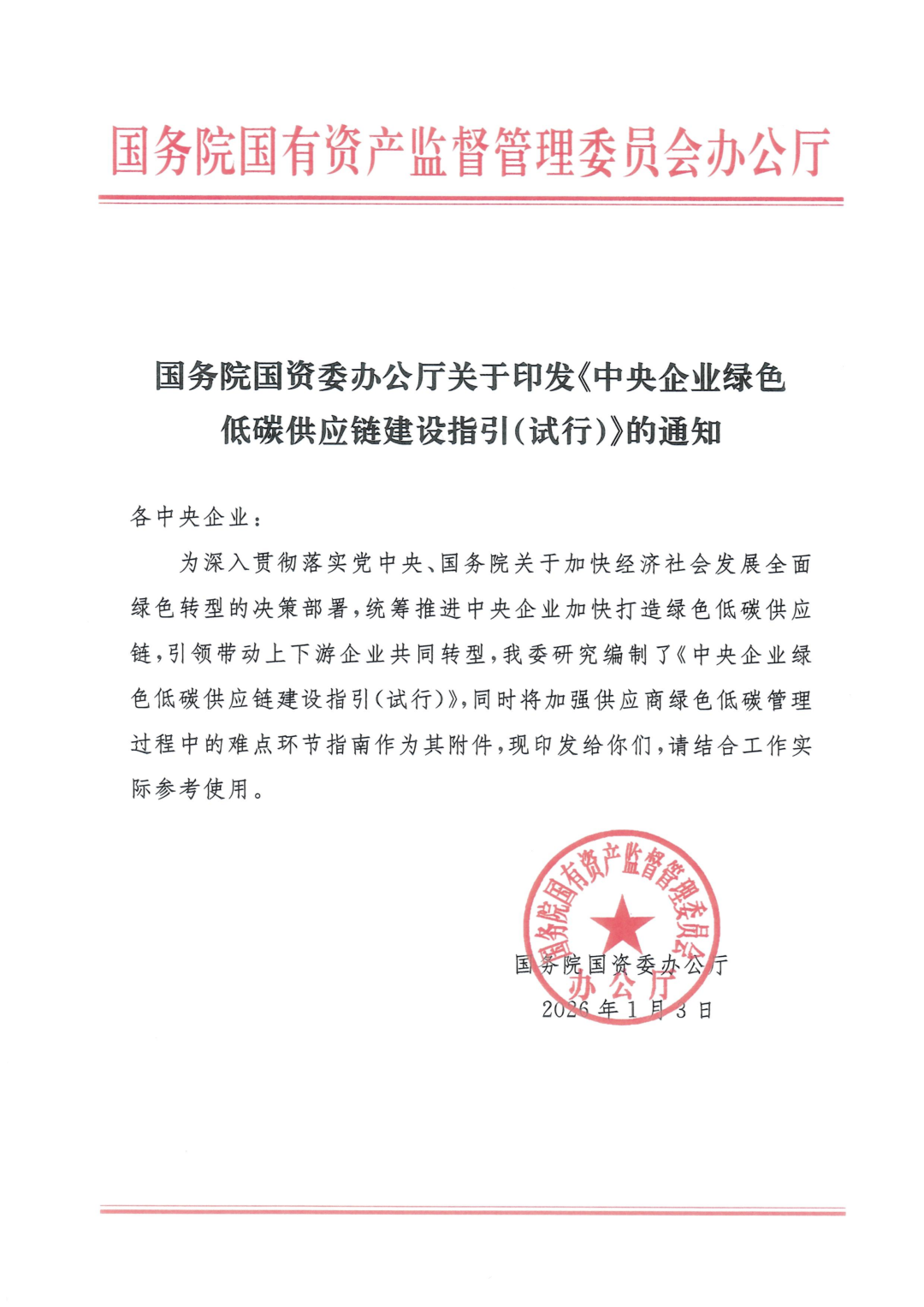
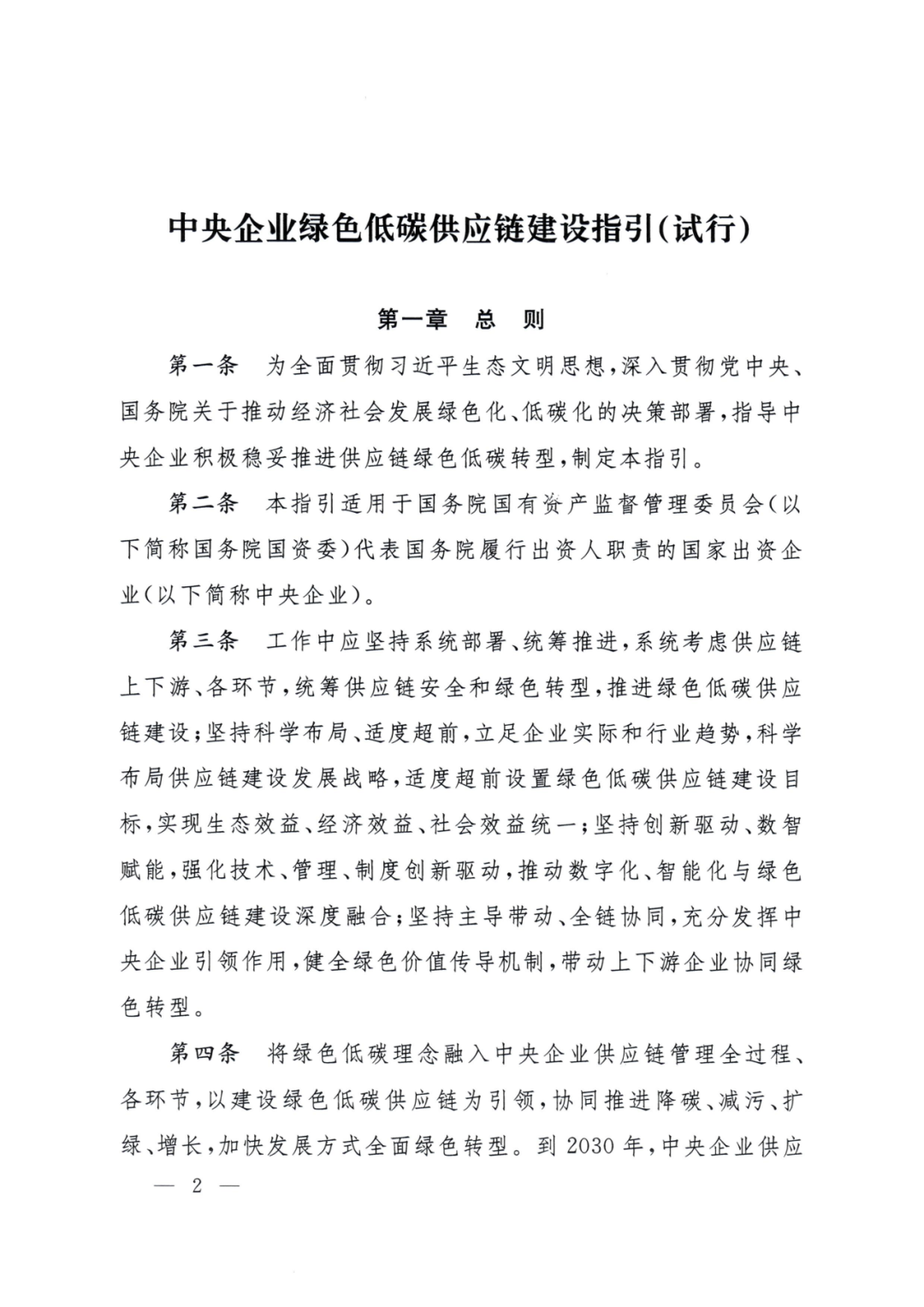
▲Screenshot of the SASAC notification document (partial) (Source: Internet)
I. Green and low-carbon development becomes a "hard indicator" for central state-owned enterprises
The "Guidelines" clearly stipulate that central enterprises must adhere to the principles of systematic deployment, moderate forward-looking planning, innovation-driven development, and full-chain collaboration, integrating green and low-carbon concepts throughout the entire supply chain management process and all its links. This approach aims to jointly advance carbon reduction, pollution control, ecological expansion, and economic growth, accelerating a comprehensive green transformation of development models.
The document sets two phased strategic goals: by 2030, central enterprises' supply chains will achieve significant progress in green and low-carbon transformation, a green and low-carbon supply chain management system will be gradually established, the role of driving upstream and downstream enterprises to transform together will become significantly stronger, energy and resource consumption and greenhouse gas emissions across the entire chain will continue to decline, a number of leading green and low-carbon supply chain enterprises will emerge, and carbon peaking targets will be met on schedule; by 2035, the green and low-carbon management level of central enterprise supply chains will be comprehensively improved, a green and low-carbon circular industrial system will be basically established, and enterprise development will fully enter a green and low-carbon track.
II. Green and low-carbon options in the procurement catalog are no longer optional
文件明确规定,央企的采购目录里,绿色低碳是硬门槛,不是可选项。绿色采购不再只是“鼓励”,而是要求将绿色理念贯穿采购全过程,并逐步形成制度化的采购清单。
Specific measures include: prioritizing the procurement of energy-saving, water-saving, material-saving, low-carbon circular, and recyclable raw materials, products, and services; increasing the proportion of recycled materials and remanufactured products in procurement; gradually formulating and publishing "green low-carbon product and service evaluation indicators" and procurement lists to ensure green procurement is evidence-based and assessable.
Furthermore, the document requires integrating low-carbon and green attributes into product and service quality characteristics, prioritizing the selection of low-carbon green materials and reduction-oriented design, and increasing the proportion of recycled materials. Emphasis should be placed on designing for standardization, modularity, ease of disassembly, and recyclability to enhance product durability, maintainability, and remanufacturability, thereby systematically improving the low-carbon and green performance throughout the full lifecycle of products and services.
III. Supplier Graded Management: Incentives and Elimination Simultaneously
The "Guidelines" require establishing and improving a dynamic management mechanism for the green, low-carbon classification and grading of suppliers, formulating and publicly disclosing screening and certification criteria, managing and evaluating suppliers' performance in environmental protection, energy and resource conservation, carbon emission reduction, etc., and encouraging the establishment of a green supplier database.
Regarding incentive and constraint mechanisms, the document proposes incentives for suppliers performing excellently in green and low-carbon development, such as priority cooperation, price discounts, increased allocation, and shortened payment terms; for those with serious deficiencies or long-term lack of improvement, measures include gradually reducing allocation, suspending procurement, and ultimately terminating cooperation.
This means that for lighting enterprises to secure a place in the central state-owned enterprise procurement market, green and low-carbon capabilities will become the decisive factor.
IV. Responsibility Penetration: SOE Procurement Powers Force Green Transformation Across the Entire Chain
Document requirements, central enterprise green low-carbon management standards, and carbon emission data statistics requirements must penetrate level-by-level to upstream multi-tier suppliers; suppliers must also carry out green low-carbon management for their upstream entities, forming a chain of responsibility transmission.
同时,鼓励央企之间协同采购、协同制造、协同物流,避免对供应商重复评审。鼓励采信第三方绿色认证结果,包括绿色产品认证、碳足迹核查、绿电消费认证、绿色工厂、零碳园区等评定。
在物流环节,文件要求发展绿色低碳仓储,因地制宜应用智能照明、屋顶分布式光伏等技术,提升仓储的绿色低碳运营水平。推动运输绿色低碳转型,推广应用新能源运输工具,积极采用公铁水多式联运,降低物流运输碳排放。
Regarding resource recycling and utilization, the document requires implementing the extended producer responsibility system, extending the responsibility for saving resources and protecting the environment from the production stage to the entire product lifecycle, prioritizing cascading use and disassembly remanufacturing, and strengthening the recycling and utilization of regenerated resources such as electronic products.
The "Guidelines for Building a Green and Low-Carbon Supply Chain for Central Enterprises (Trial)" issued this time by the SASAC marks green and low-carbon transition shifting from "advocacy" to "hard constraints," and from "optional" to "mandatory." For lighting enterprises, this is both a "threshold" for entering the central enterprise procurement market and a "springboard" for enhancing product competitiveness and achieving high-quality development.
Source: China Lighting & Electrical Appliances Magazine