
Unilumin adjusts prices for all product lines! Foshan Lighting and LEDVANCE raise prices!
2025年底至2026年初,沉寂已久的LED行业迎来了近三年来最集中的一次涨价浪潮。据不完全统计,截至2026年3月,已有近60家LED企业发布调价通知,涨幅从3%到25%不等,覆盖芯片、封装、电源、光源、灯具、IC及显示屏等全产业链环节。
In the wave of price hikes, the actions of leading enterprises are most indicative. They are not only bearers of cost pressures but also reconfigurers of the industry value system.
I. Price adjustments by leading enterprises: From local trials to comprehensive action
Unilumin
as a leading enterprise in the LED lighting and display field, Unilumin's price adjustment rhythm is highly representative. On March 26, Unilumin issued the "Notice on Product Price Adjustment", announcing will make moderate adjustments to the prices of all product lines starting from March 26 , and clearly stated that "orders confirmed before March 26 will still be executed at the original price".
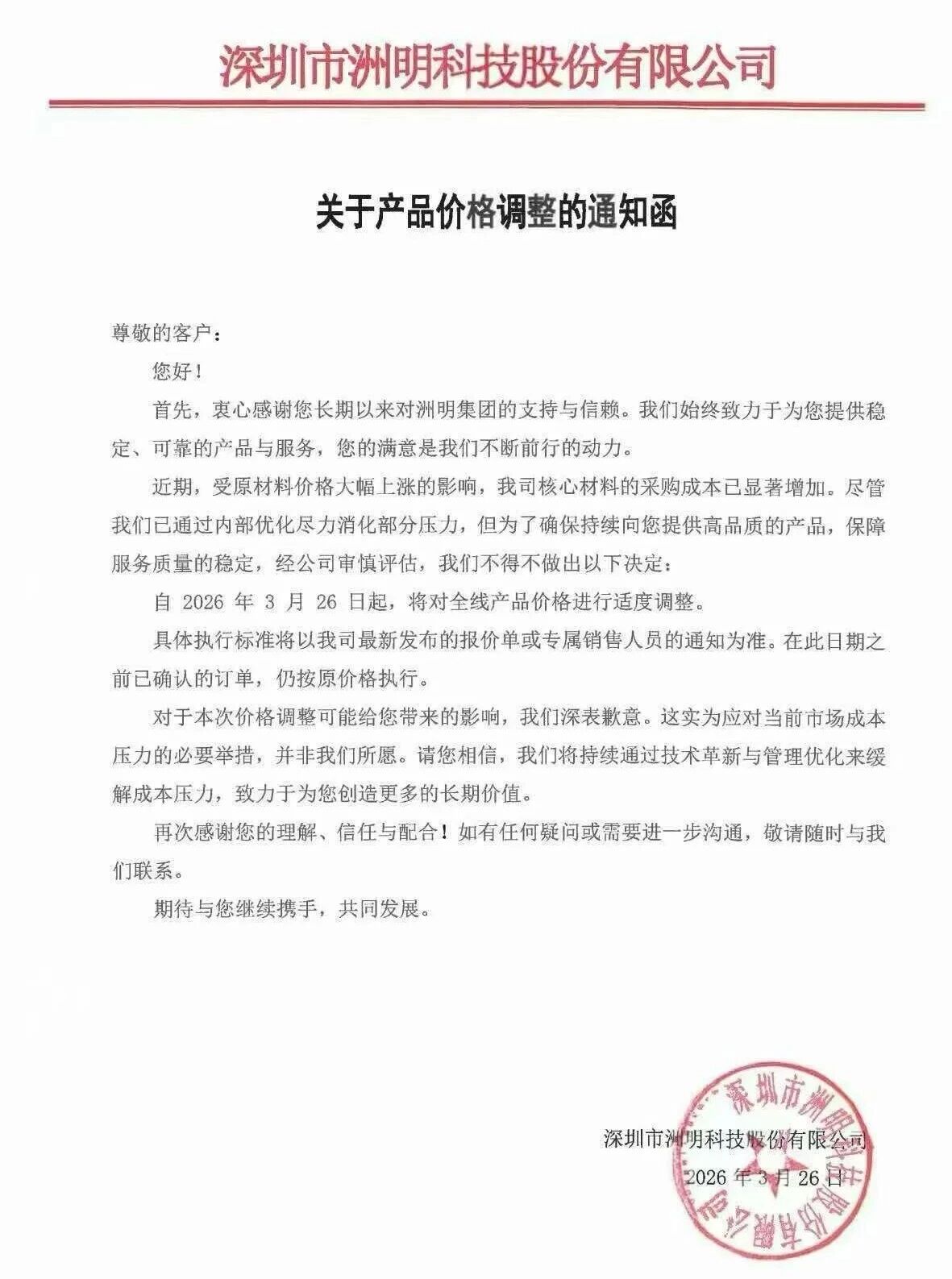
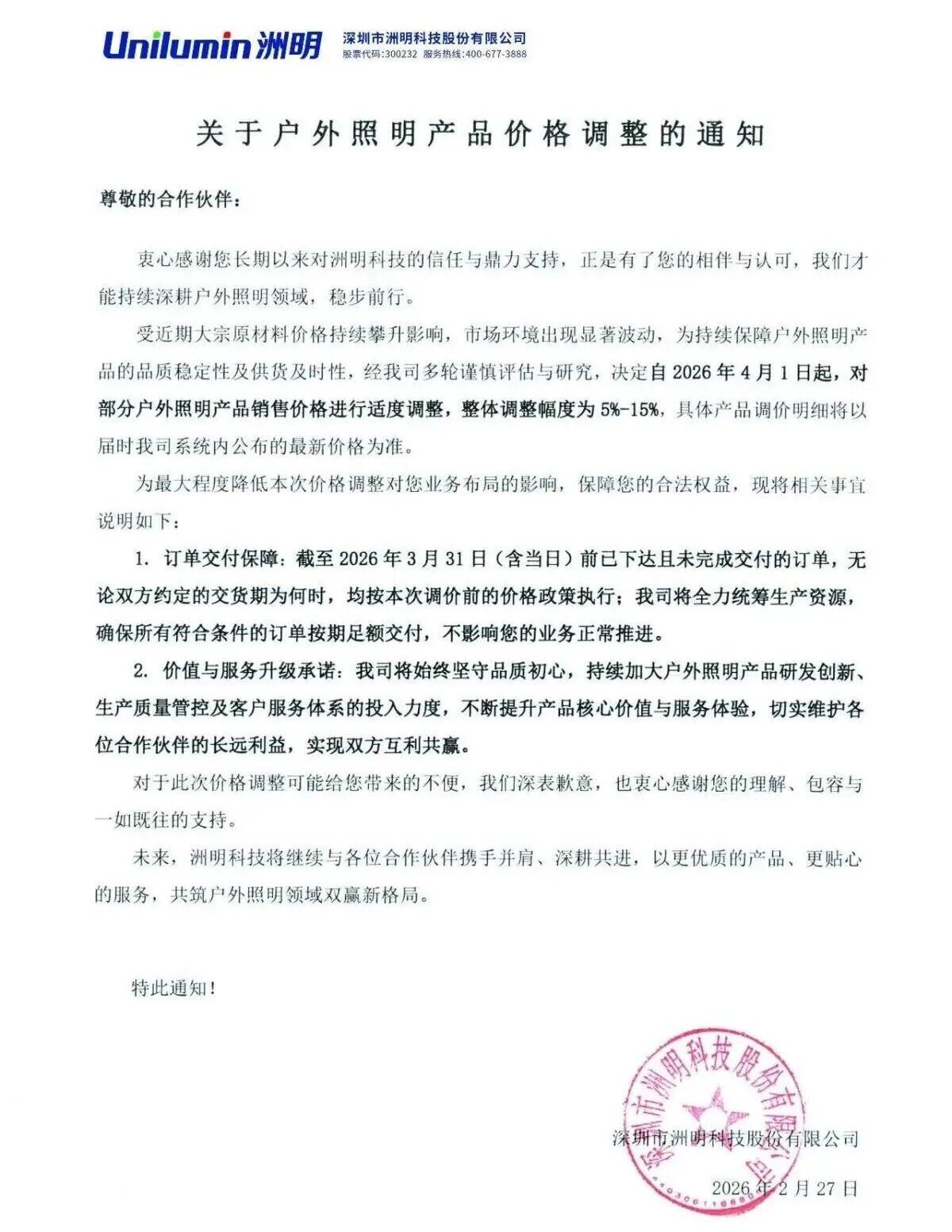
Unilumin emphasized in the notice letter that the price increase is a prudent decision made by the company to ensure product quality, supply stability, and service capability. In just one month, the scope expanded from "some outdoor lighting products" to "the entire product line", . This move not only reflects the urgency of cost pressures but also demonstrates Unilumin's decisiveness in quickly responding to market changes.
Foshan Lighting
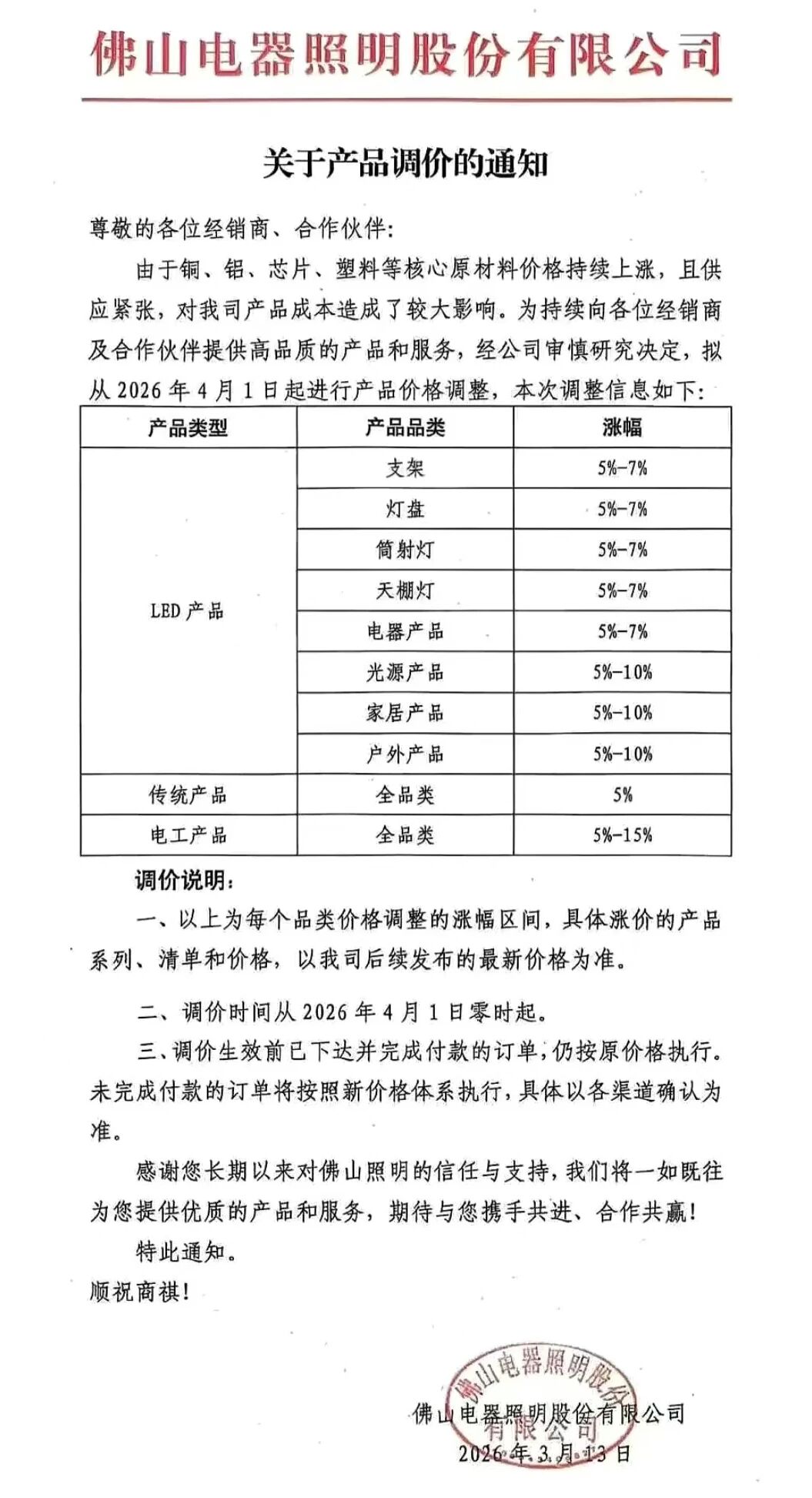
As a traditional leader in China's lighting industry, Foshan Lighting has a wide range of price adjustments. The company announced that starting April 1, 2026, it will implement comprehensive price adjustments for LED products, traditional products, and electrical products .
LED products: Spotlights, light panels, downlights and other categories increased by 5%-7%; light sources, home lighting, and outdoor products increased by 5%-10%. Traditional Products: All categories uniformly increased by 5%. Electrical Products: Full category increase of 5%-15%.
Behind the price adjustment is the pressure of performance. According to the 2025 earnings forecast released by Foshan Lighting, the company expects a significant decline in performance from January to December 2025, with net profit attributable to shareholders of the listed company ranging from 180 million to 223 million yuan, representing a year-on-year (YoY) decrease of 59.66% to 50.02%.
In recent years, Foshan Lighting has actively expanded into emerging fields such as smart lighting and automotive lighting through the acquisition of Sanan Optoelectronics , Liaowang Automotive Lights, and other enterprises. This price adjustment is not only a defensive measure against rising costs but also a proactive move to optimize product structure and restore profitability .
LEDVANCE
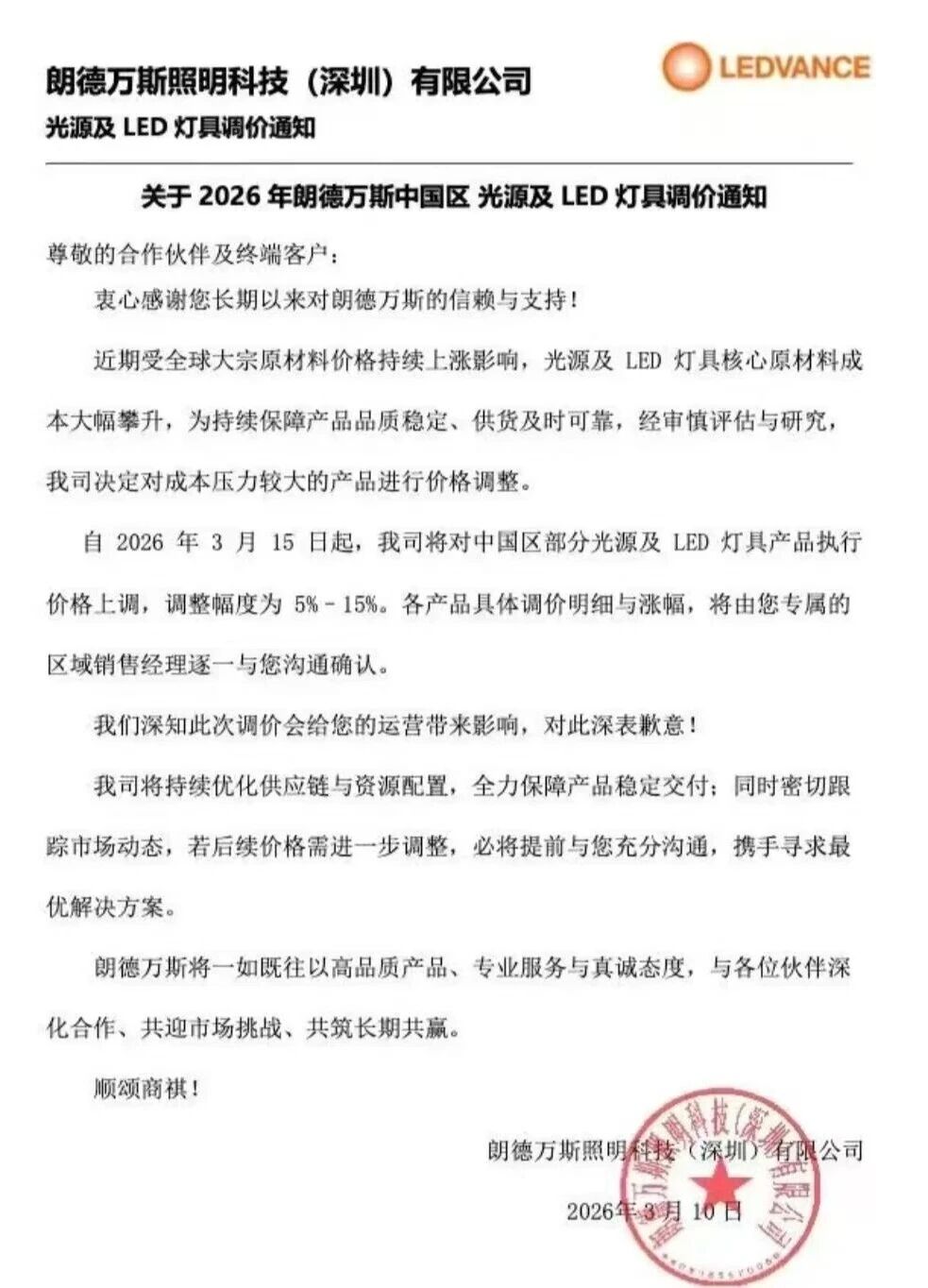
LEDVANCE's price adjustment action came slightly earlier. Starting from March 15, prices for certain light sources and LED luminaires in the China region were increased by 5%-15%. Unlike Foshan Lighting's public detailed list, LEDVANCE chose to communicate and confirm specific price adjustments and increases with each customer individually through regional sales managers, reflecting its flexibility at the execution level and aiming to better maintain (Sales) channel relationships.
As a century-old international brand, LEDVANCE's global layout grants it stronger cost pass-through influence. It can implement differentiated price adjustments based on the cost structure and competitive conditions of different markets; this "flexible strategy" becomes key to coping with regional market fluctuations.
II. Dual Drivers of the Price Hike Wave
If the price adjustment actions of enterprises are merely the surface manifestation, then the driving forces behind them are the dual resonance of 'high cost pressure' and 'value restoration'.
Since 2025, the sharp surge in international commodity prices has become the direct trigger. Previously, Sanan Optoelectronics disclosed in its price adjustment statement that international gold prices have risen cumulatively by over 70%, silver prices by over 170%, and copper prices by over 36%. These precious metals and commodities constitute the main cost components of core parts such as LED Packaging, PCB boards, and wiring, thereby causing the average product price decline to far exceed the raw material price increase, rendering the original pricing system unsustainable.

However, rising costs are merely the trigger; the deeper cause lies in the industry's long-term "involution".
Over the past four years, the LED industry has been mired in a "price war," with average prices of mainstream products falling cumulatively by 30%-40%, causing a significant decline in industry gross margins and severely compressing corporate profit margins. Industry insiders have stated plainly: "Current industry profits are at historic lows; even without cost increases, itself faces a need for bottom correction. ""
Moderately raising prices to restore profits and escape low-price disorderly competition has become an industry consensus. This is not merely a cost pass-through, but a self-redemption of the industry ecosystem.
III. Game and Differentiation: How to Implement the Price Increase Notice?
The issuance of the price increase notice is only the first step; the real challenge lies in implementation. This wave of price hikes acts as a 'stress test', accelerating industry differentiation and reshuffling.
"Although the price increase notices have taken effect one after another, implementation is not easy," a senior executive of an LED packaging enterprise revealed. Due to the wide range of choices for downstream customers, companies generally worry about losing market share by being the first to implement new prices, so they can only communicate and confirm with each customer individually.
This "gradual" implementation reflects the game between upstream and downstream of the Industry / Supply chain — enterprises need to balance cost pressure and market share, while customers hope to delay the impact of price hikes.
The terminal market also experiences a "time lag". According to visits by relevant media, multiple luminaire market dealers stated: "We still have previous inventory; prices have not changed temporarily. Once the inventory is largely cleared, we estimate that price adjustments will gradually occur over the next one or two quarters." This time lag provides the market with a certain buffer period, but it also means that the full transmission of price increase pressure will take some time.
Matthew Effectintensifies
IV. The Opportunity for Transformation: From Product Thinking to Value Reconstruction
This wave of price hikes from 2025 to 2026 may be writing a new story about breaking through, restructuring, and rebirth.
Editor's Note
LED照明行业的涨价潮,既是成本压力下的被动应对,更是产业升级的主动选择。它像一面镜子,照见企业核心竞争力的差异,也加速着行业分化。
Although the true inflection point has not yet arrived, the direction of transformation toward high-value areas is already clear—this is not merely a temporary measure to cope with the crisis, but a strategic choice for the future.