
A study by Yale University in the United States indicates that nighttime lighting may increase the risk of hormone-related cancers
Lyu L. Light at night and cancer incidence: a GIS-based study in the US[D]. Yale University, 2024.
In 2024, the Yale School of Public Health in the United States published a study titled "Nighttime Light Exposure and Cancer Incidence: A GIS-Based Study in the United States." The study conducted a correlation analysis using satellite nighttime lighting data and cancer incidence data , finding a positive correlation between nighttime light exposure and hormone-related cancers (such as female breast cancer and prostate cancer). These findings are highly consistent with the statement in the CIE PS 003:2025 "Position Statement on Obtrusive Light and Light Pollution" that "nighttime light exposure can disrupt human circadian rhythms and pose health risks."
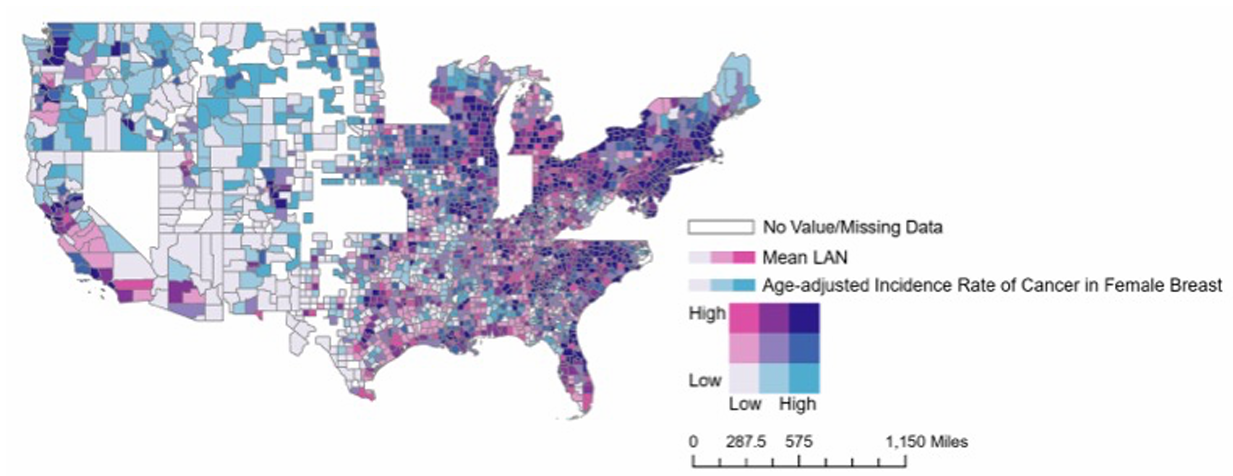
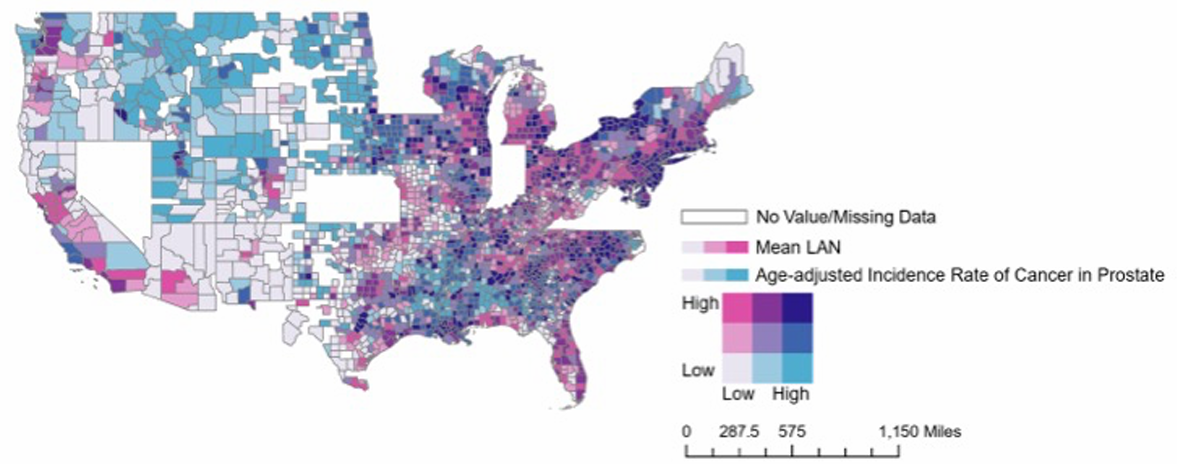
A study using linear mixed-effects regression models to analyze the association between nighttime light (LAN) data from 1996–2000 and cancer incidence rates from 2016–2020 found that LAN was positively correlated with overall cancer incidence and hormone-related cancers (correlation coefficient of 0.42 for female breast cancer, adjusted p = 3.99E-13; correlation coefficient of 0.5 for prostate cancer, adjusted p = 1.61E-06), and negatively correlated with certain digestive system cancers (colorectal cancer, esophageal cancer) and urogenital system cancers. The associations were most significant at the highest levels of LAN exposure, providing clues for subsequent epidemiological and experimental studies.
I. What is nighttime lighting? Why does it matter?
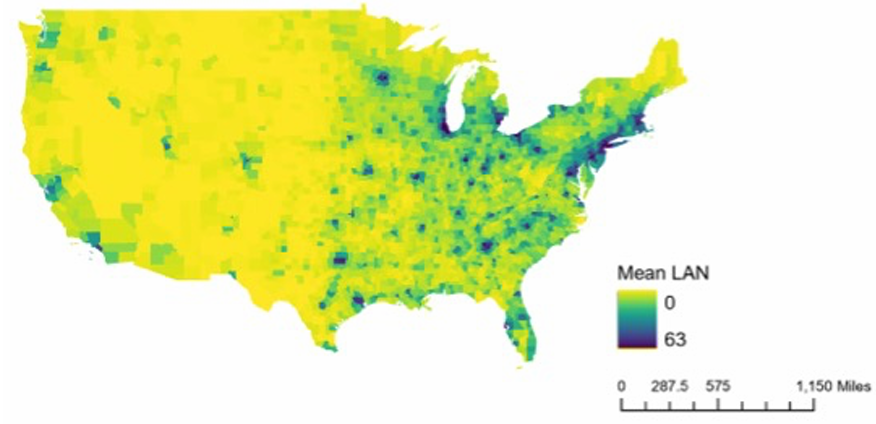
II. Data Sources and Processing
Data Type Source Key Parameters Processing Method Cancer Data CDCCancer Statistics Database 26 types of cancer, age-adjusted incidence rate (per 10 persons), covering 44 states Exclude states with non-compliant data / counties, apply log transformation standardization LANData DMSPSatellite Imagery (Version 4) 1996-2000 years, DN value ( 0-63 , higher value means stronger light) Inter-satellite calibration (formula: DN adjusted =C0+C1×DN+C2×DN²), calculating the 5-year average Confounding factors 2016-2020 years ACS survey Insurance coverage rate, poverty rate, percentage of white population, education level, population density, etc. incorporated into multivariate model adjustment
III. Nighttime Lighting and Cancer: What Are the Shocking Discoveries?
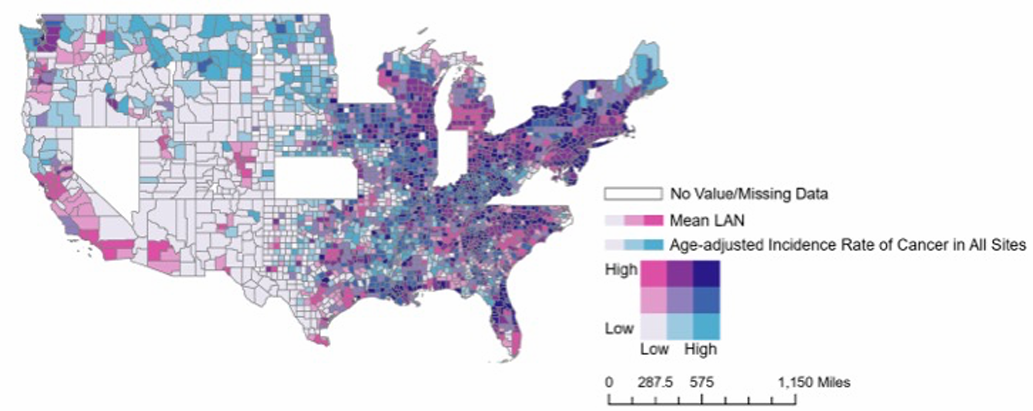
Increased risk of hormone-related cancers : For example, female breast cancer and prostate cancer are significantly positively correlated with LAN. This may be due to light disrupting hormonal balance. The figure below shows the relationship between LAN and breast cancer; incidence rates are higher in high-light areas (such as the Northeast).
Some cancer risks are actually reduced : Surprisingly, LAN is negatively correlated with digestive system cancers such as colorectal cancer and esophageal cancer. This means that in areas with strong lighting, the incidence of these cancers is lower. The reasons may be complex; for instance, regions with higher urbanization often have better medical conditions, but the specific mechanisms require further research. The figure below illustrates the negative correlation pattern between LAN and colorectal cancer.
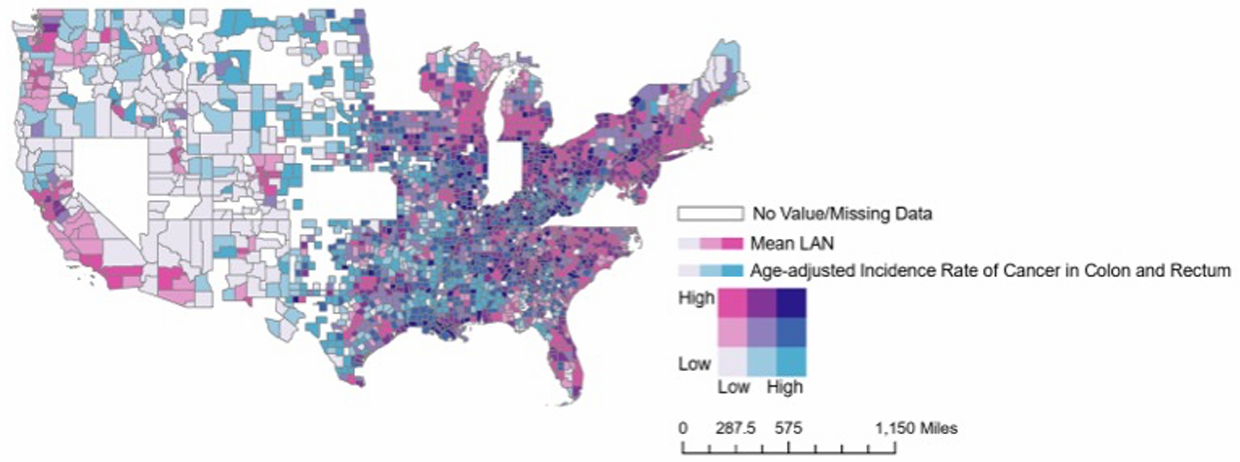
Non-Hodgkin lymphoma is also affected: LAN also shows a slight positive association with this lymphoma, suggesting that light exposure may act through the immune system.
IV. Why can nighttime lighting cause cancer? The scientific mechanism is simply explained as
The core mechanism lies in melatonin. When it is dark at night, our brain secretes melatonin, which not only aids sleep but also inhibits tumor growth. However, LAN acts like "fake daylight," deceiving the body into reducing melatonin production, thereby giving cancer cells an opportunity to thrive. Animal experiments have also confirmed that continuous light exposure accelerates tumor development. This is akin to sleeping with the lights on, preventing the body from receiving adequate repair.
V. What are the limitations of this study? What should we do?
China Light
The official website of the China Association of Lighting Industry and a full-media platform for the lighting sector. We provide authoritative and timely lighting information while striving to be a growth partner for businesses. From brand promotion and channel expansion to consulting, talent training and participation in standards development, we provide comprehensive professional services to help businesses improve quality and efficiency and jointly advance the high-quality development of the lighting industry.
Business Contacts
仇纯 (Ms.): 158 6155 3579
顾君 (Mr.): 137 7157 5253