Major Moves! Signify Expands Factories, New CEO's First Visit to China
Lighting industry giants are playing a global chess game, with digitalization and sustainability becoming the key to breaking through.
Recently, global lighting leader Signify has made significant moves, attracting industry attention. Behind these actions lies Signify's strategic layout in facing market challenges.
New CEO's First Visit to China Deepening the "In China, for Global" strategy In October 2025, Signify Global CEO As Tempelman made his first visit to China after taking office. This industry leader, who previously served as CEO of the sustainable energy company Eneco, prioritized China in his itinerary, highlighting the importance of the Chinese market in Signify's global layout.
From left to right: Signify Global Chief Innovation Officer Olivia Qiu, Signify Global CEO As Tempelman, Shanghai Vice Mayor Chen Jie, and Shanghai Municipal Government Deputy Secretary-General Zhang Ying (Image source: Signify) 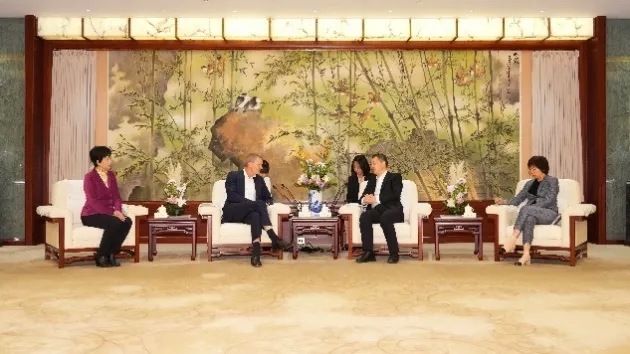
As Tempelman officially took office in September 2025. During this visit, he not only reaffirmed Signify's development philosophy from "In China, for China" to "In China, for Global," but also finalized multiple cooperation directions through government-enterprise matchmaking, industry exchanges, and on-site factory visits.
In terms of government-enterprise cooperation, As Tempelman specially visited Shanghai Vice Mayor Chen Jie to thank the Shanghai municipal and district governments for their support of Signify's development in Shanghai. He highlighted the company's latest breakthroughs in AI and smart connected lighting Solution, as well as practical suggestions for aiding the city's low-carbon transition.
During his stay in China, in addition to government talks, Theo Bouwman arranged a series of activities, ranging from in-depth dialogues with the China Association of Lighting Industry (CALI), to visiting Signify's China R&D Center and the Kaiyao production base in Haining, to observe firsthand the source of technological innovation and the entire "smart manufacturing" process of lighting products. He also conducted on-site inspections of landmark lighting projects such as the Shanghai Bund and Shanghai Stadium, experiencing the innovative practices of intelligent connected lighting systems in China. Every step closely revolved around the two major themes of "sustainability" and "digitalization."
Not long ago, Signify made a significant move in the Chinese market—the official launch of its new brand LITEMETA. Focusing on smart home and daily life lighting, LITEMETA aims to meet the increasingly diverse lighting needs of Chinese consumers through a rich product portfolio. Signify stated that LITEMETA will deeply integrate Signify's global innovation resources with localized operational advantages, continuously optimizing the product mix in lighting and 3C electronics categories to create light environment solutions better tailored to the daily needs of Chinese households.
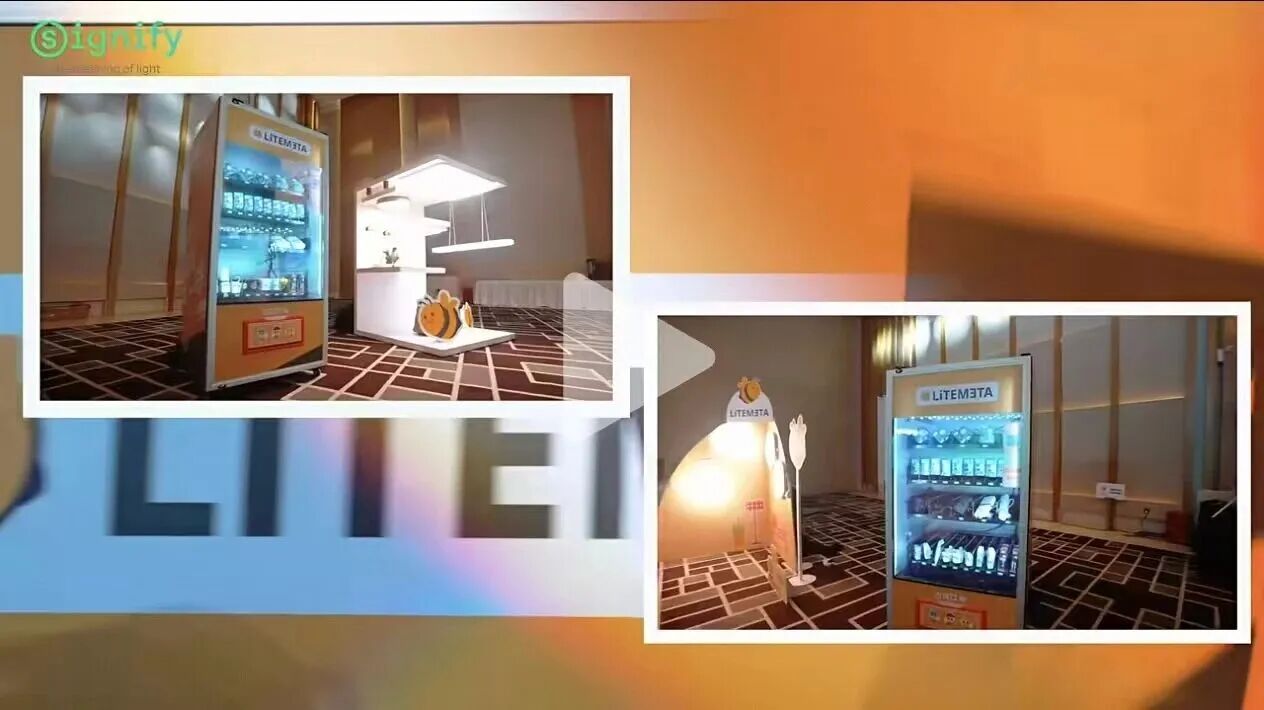
(Screenshot from Signify video)
During his visits, Theo Bouwman particularly emphasized "customer first" and "local needs, global adaptation." China Light Network believes that this is the key to whether foreign enterprises can go far in the Chinese market—not only understanding Chinese rules but also Chinese users; not only innovating but also making innovation "grounded."
Diversified Market Layout Expansion of Signify's 3D Printing Factory in Europe
Recent reports from foreign media indicate that Signify is strategically expanding its factory in Piła, Poland. By integrating large-scale industrial 3D printing technology, it aims to transform the facility into a key manufacturing hub serving the European market.
Signify views 3D printing technology as a "game changer" for the manufacturing industry. Bart Maeyens, Director of 3D Printing at the company, emphasizes that this technology enables on-demand production: "We produce exactly what customers need," thereby effectively reducing overproduction and inventory waste, while shortening production cycles and building a more localized supply chain. This model is particularly crucial for customized lighting demands, significantly enhancing the delivery capability of custom luminaires under its "Signify myCreation" brand.
It is reported that this expansion project will be carried out in phases: the first batch of 3D printing production lines is scheduled to become operational in December 2025, with other product lines to follow in early 2026, and full-capacity production is expected by mid-2026. Once fully operational, the 3D-printed lighting products from the Piła factory will supply the global market.
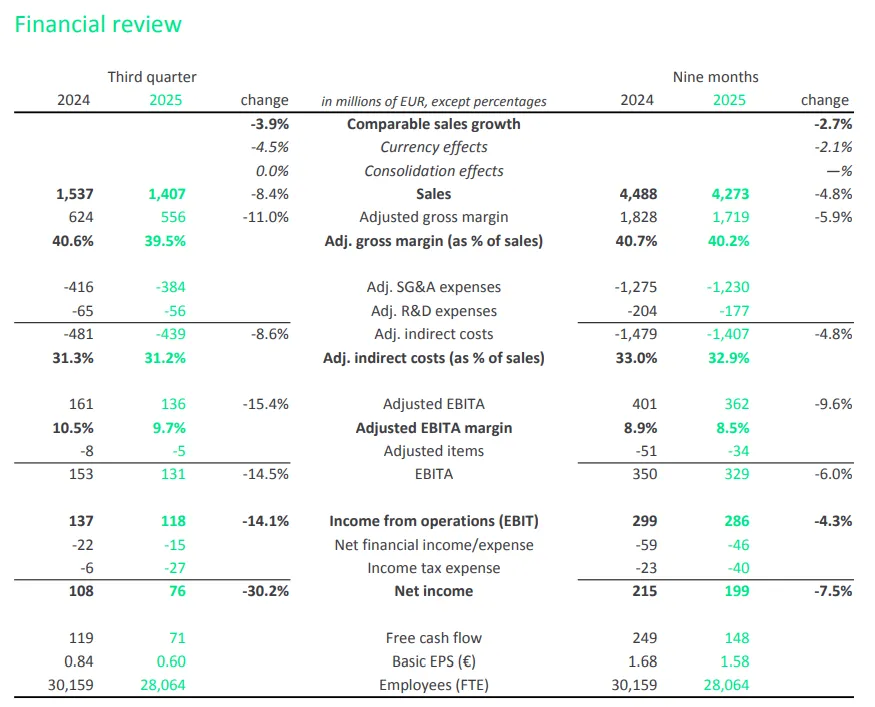
值得一提的是,昕诺飞最新公布的2025年第三季度业绩显示,公司正面临一定的市场挑战。第三季度销售额为14.07亿欧元,名义销售额下降8.4%;净利润为7600万欧元。 Teng Boming commented: "The current market situation is severe, with weak demand in the European market and significant price pressure. The recovery in the US market is also slower than expected. However, our strategic focus on connected lighting and specialty products is driving continuous growth." Facing market challenges, Signify is seeking breakthroughs, such as "technological innovation + localized operations," and the three major development directions showcased at the recent CIIE: "Lighting and Artificial Intelligence," "Lighting and Health & Well-being," and "Lighting and Sustainability." With the gradual implementation of the new CEO's strategy and concerted efforts in multiple markets including China and Europe, Signify is attempting to开辟 new growth paths in a severe market environment.