
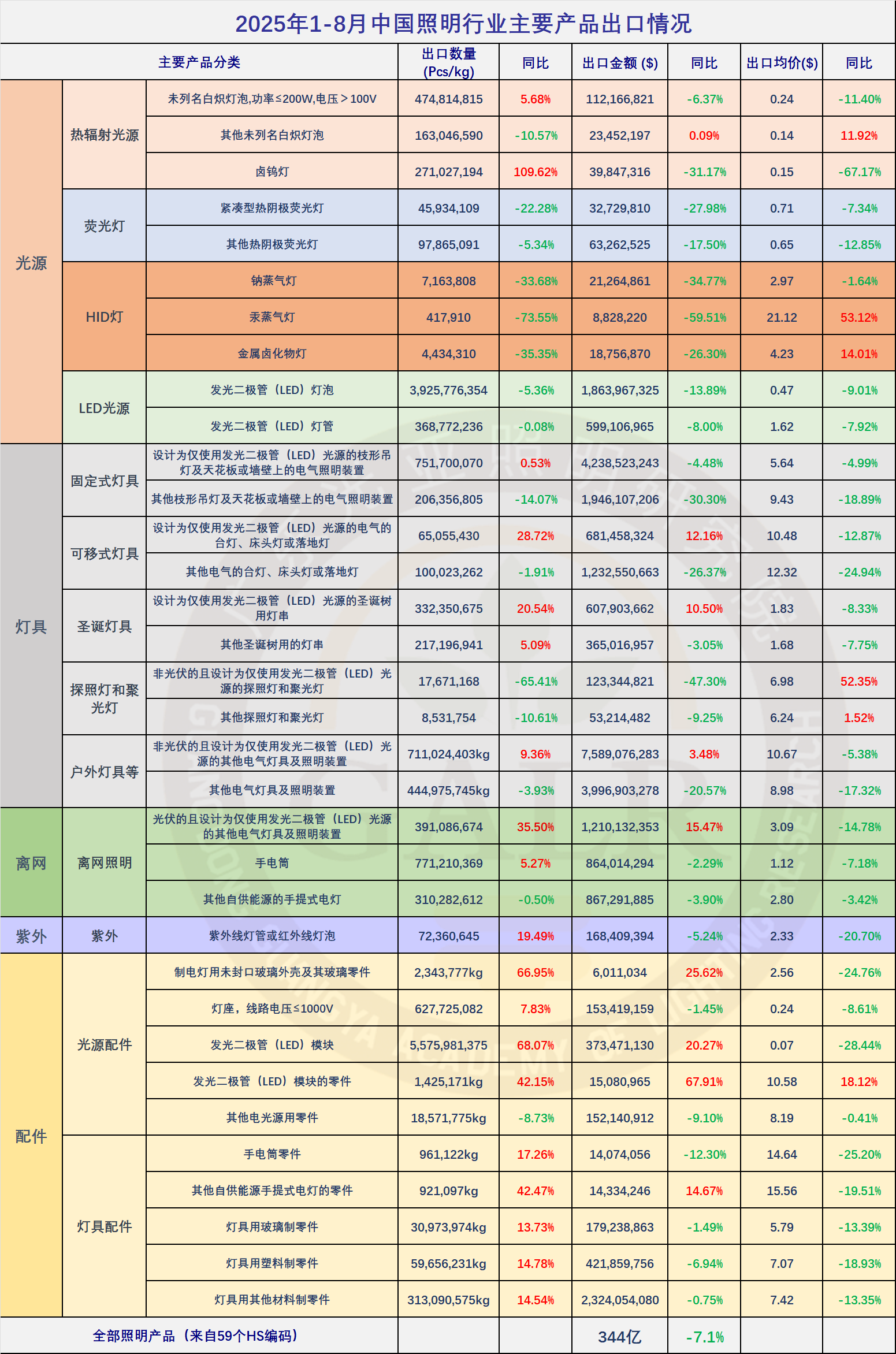
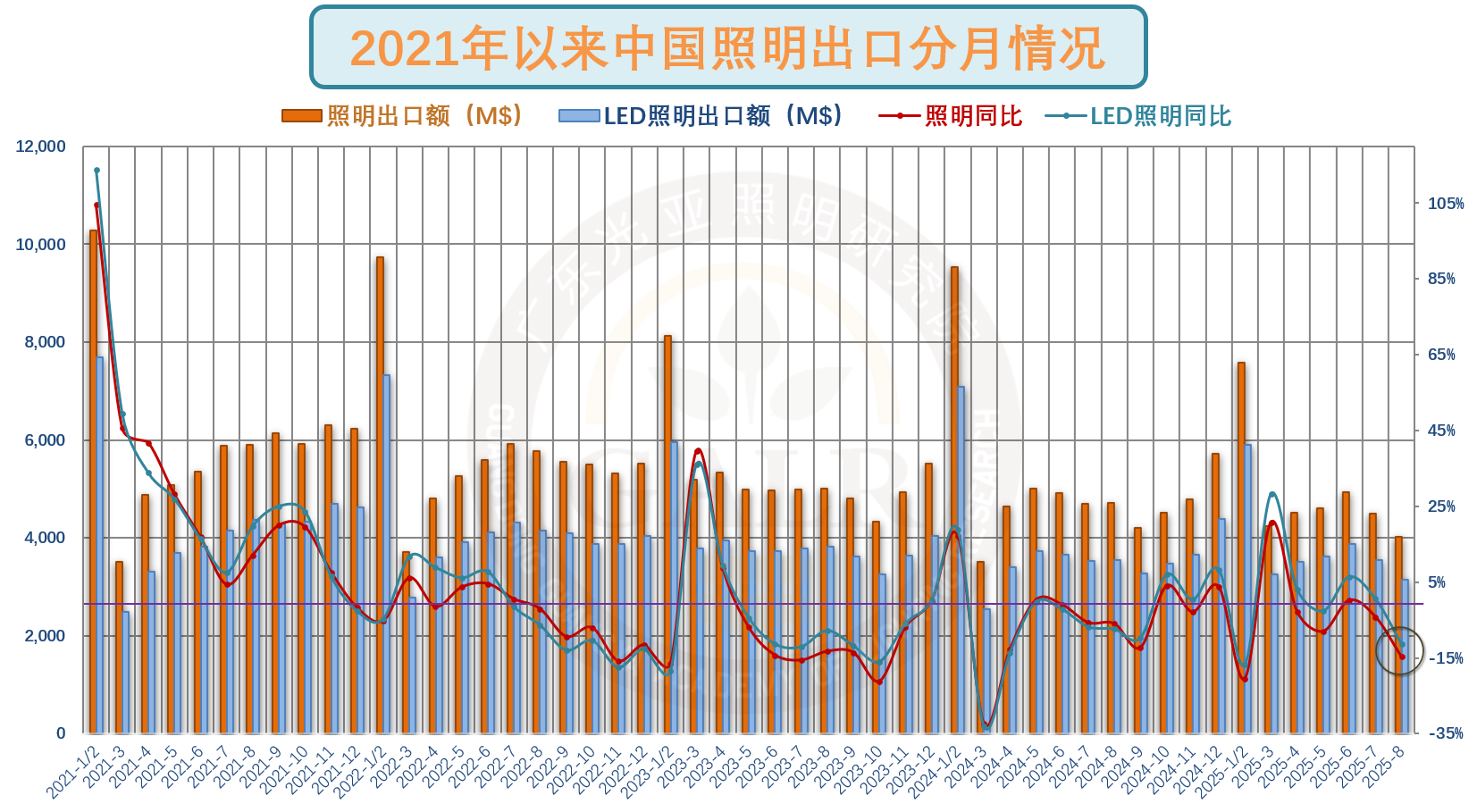
Lighting exports slump again in August: Sharp 29.6% drop to the US; when will tariff pressures ease?
According to data from the General Administration of Customs,in August 2025, China's total value of goods trade imports and exportsreached 3.87 trillionyuan, a year-on-year increase of3.5%, slowing by3.2 percentage pointscompared to the previous month;among them, exportswere 2.30 trillion yuan, a year-on-year increase of4.8%, alsoslowing by3.2 percentage points.In U.S. dollars, the total value of imports and exportswas then541.3 billion U.S. dollars, a year-on-year increase of3.1%,slowing by2.8 percentage pointscompared to July; among them, exports were321.8 billion U.S. dollars, a year-on-year increase of4.4%, also slowing by2.8 percentage pointscompared to July.
Dampened by factors such as a widening decline in trade with the US, a shift from growth to decline in trade with Latin America, a slowdown in the growth rate of trade with Africa, and a significant weakening of exports of labor-intensive goods, overall performance fell short of expectations, with the growth rate reaching its lowest level in six months.
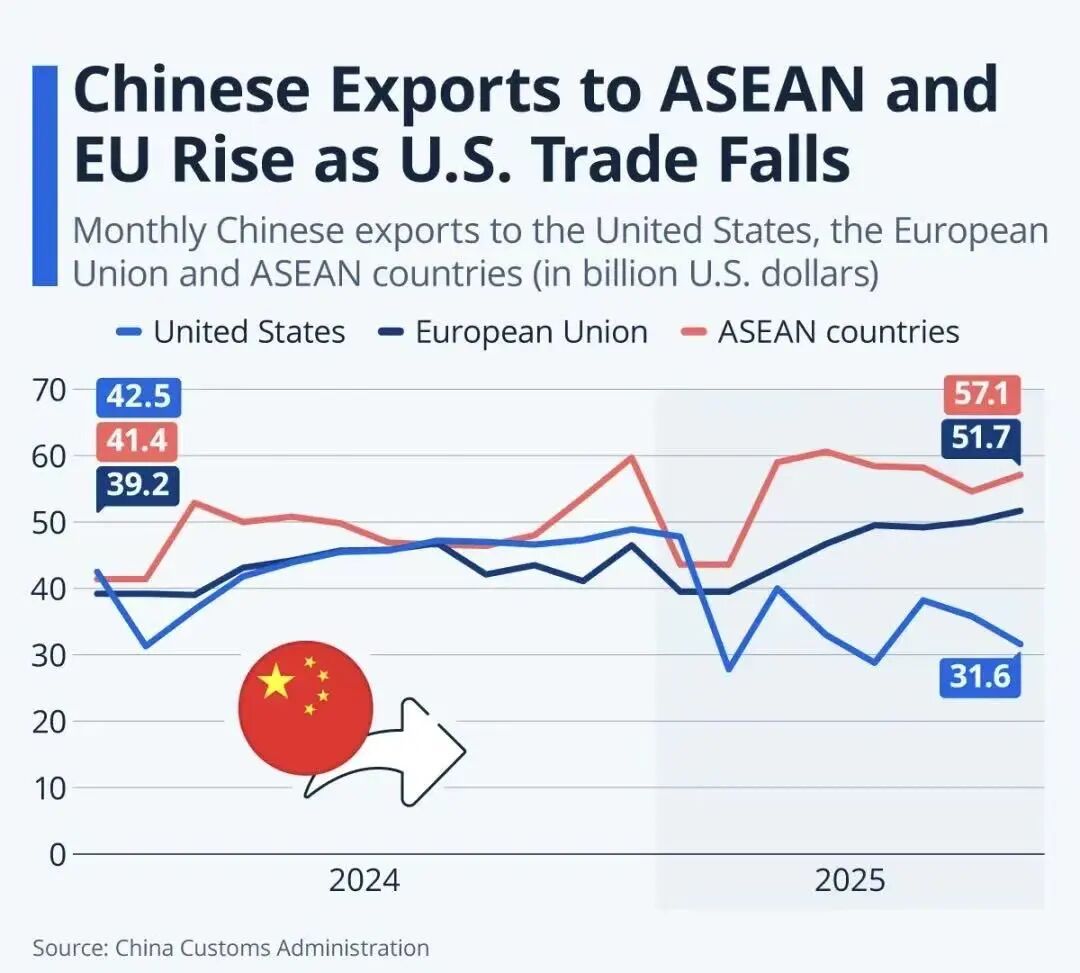
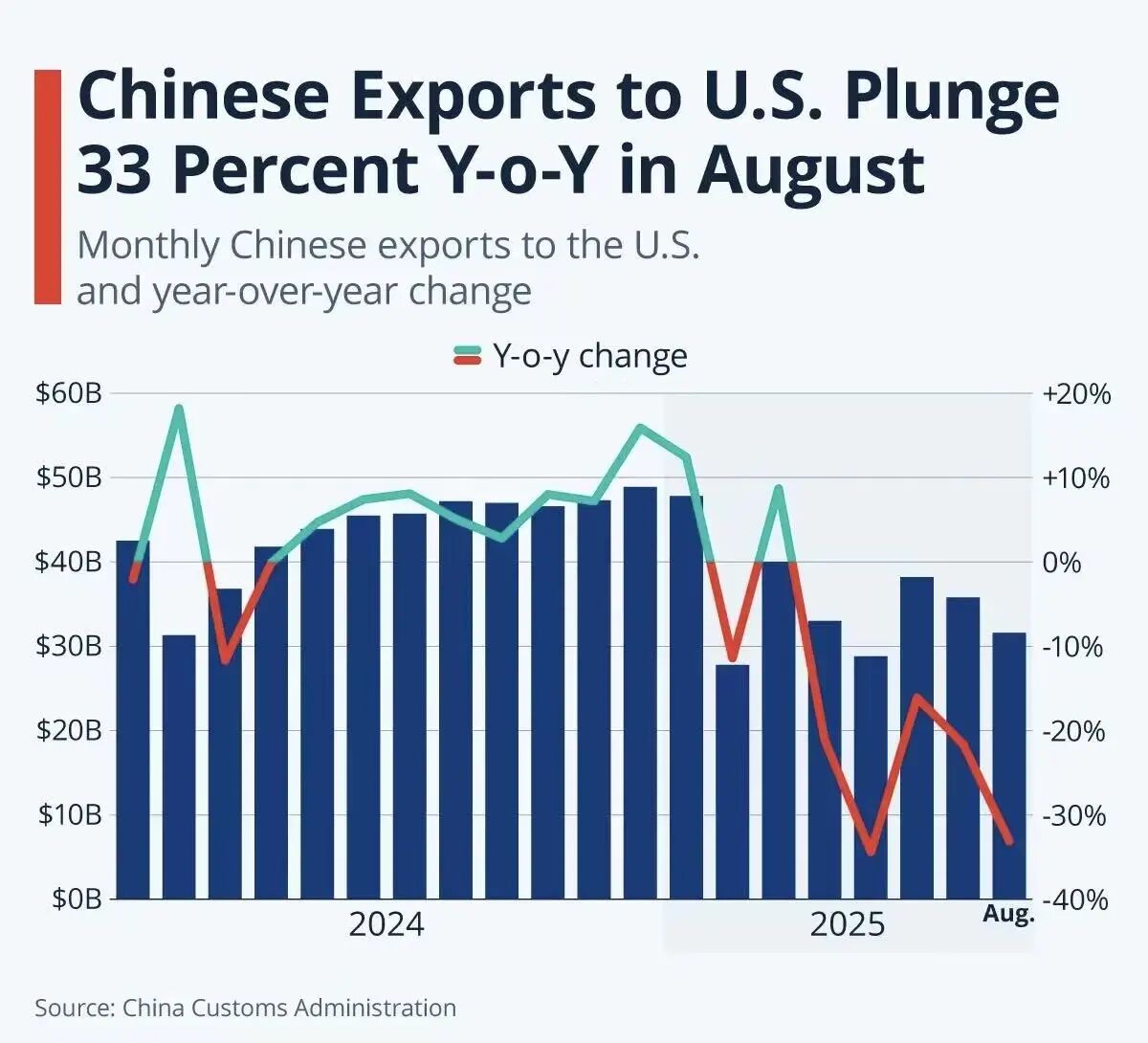
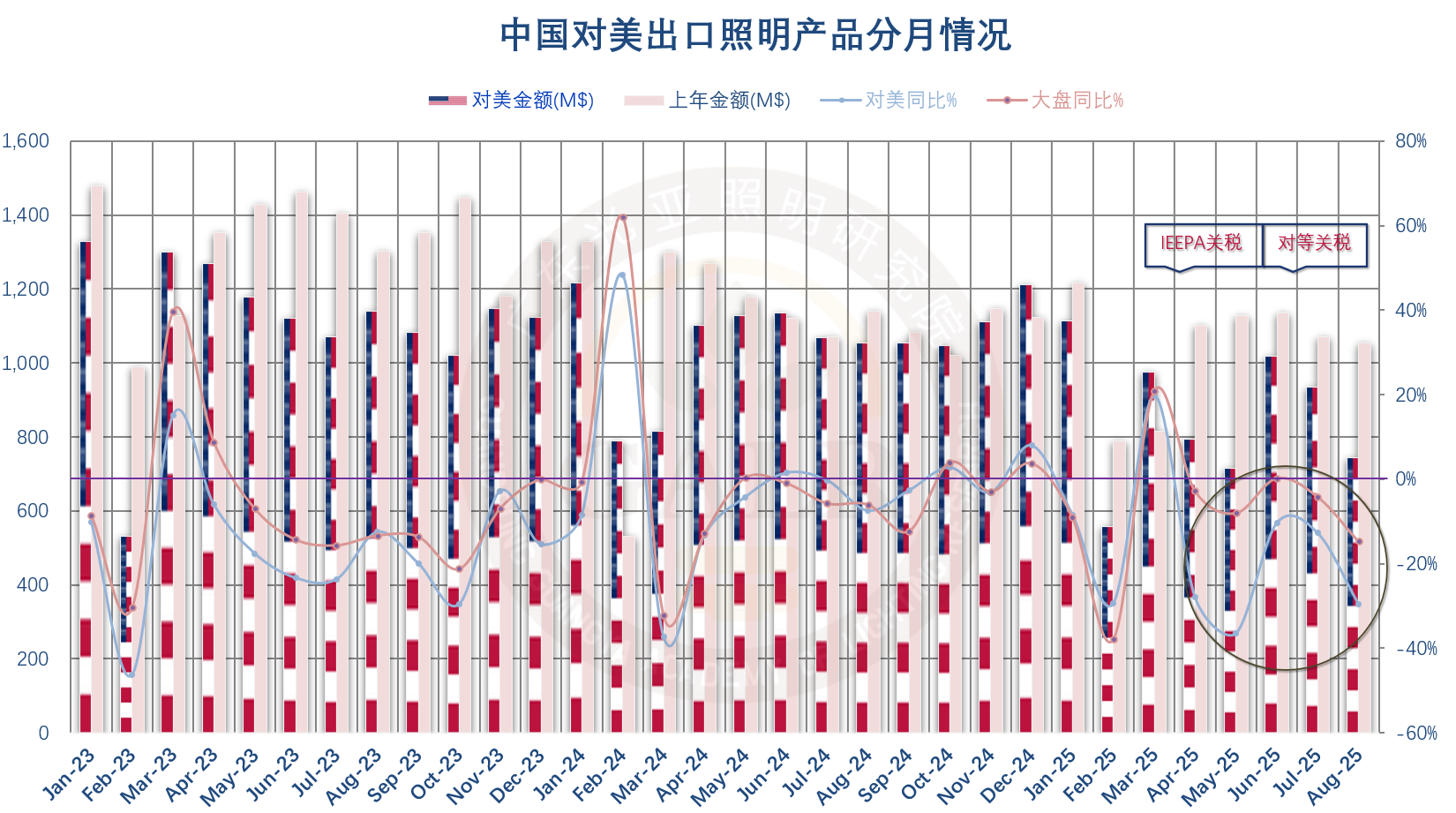
By country and region, China's exports to the US in August continued to fall sharply, down 33.1% year-on-year, compared to a previous value of -21.7% last month; the decline widened by 11.4 percentage points. It has now recorded five consecutive months of double-digit negative growth and remains the largest drag on exports, with the drag on the overall figure rising to 5.1 percentage points.
(Click to view full size)
Currently, China's export growth to Southeast Asia and Europe has offset the impact of declining exports to the US
From January to August 2025 , China's total value of goods trade imports and exports reached 29.57 trillion yuan , a year-on-year increase of 3.5% . Among them, exports amounted to 17.61 trillion yuan , a year-on-year increase of 6.9% , slowing down by 0.4 percentage points compared to the previous month; imports totaled 11.96 trillion yuan , a year-on-year decrease of 1.2% .
Jan-Aug, the regions with the highest share of China's exports were the EU and ASEAN, accounting for cumulative shares of 17.7%(Year-on-year (YoY) growth of 9.7%) and 15.1%(Year-on-year (YoY) growth of 4.3%), respectively; followed by the US and Latin America at 11.5% (Year-on-year (YoY) decline of 14.4%) and 8.0%.
Notably, the cumulative share of exports to Africa over the first eight months has reached 5.7%, making it one of the current structural highlights of exports. Exports to Vietnam over the first eight months saw a Year-on-year (YoY) growth of 31.0%, representing the second structural highlight of exports, with China's supply chain being the main upstream source for its industrial sector.
同期,我国对共建“一带一路”市场合计进出口15.30万亿元,同比增长5.4%,占比提升至53.6%。同期,我国出口机电产品10.60万亿元,同比增长9.2%,占出口总值超60%。
The performance of export volumes for most commodities was stronger, showing that the characteristic of 'trading price for volume' remains significant. Global recessionary pressures and repeated US tariff policies will continue to be the main challenges for exports this year.
(Click to view larger image)
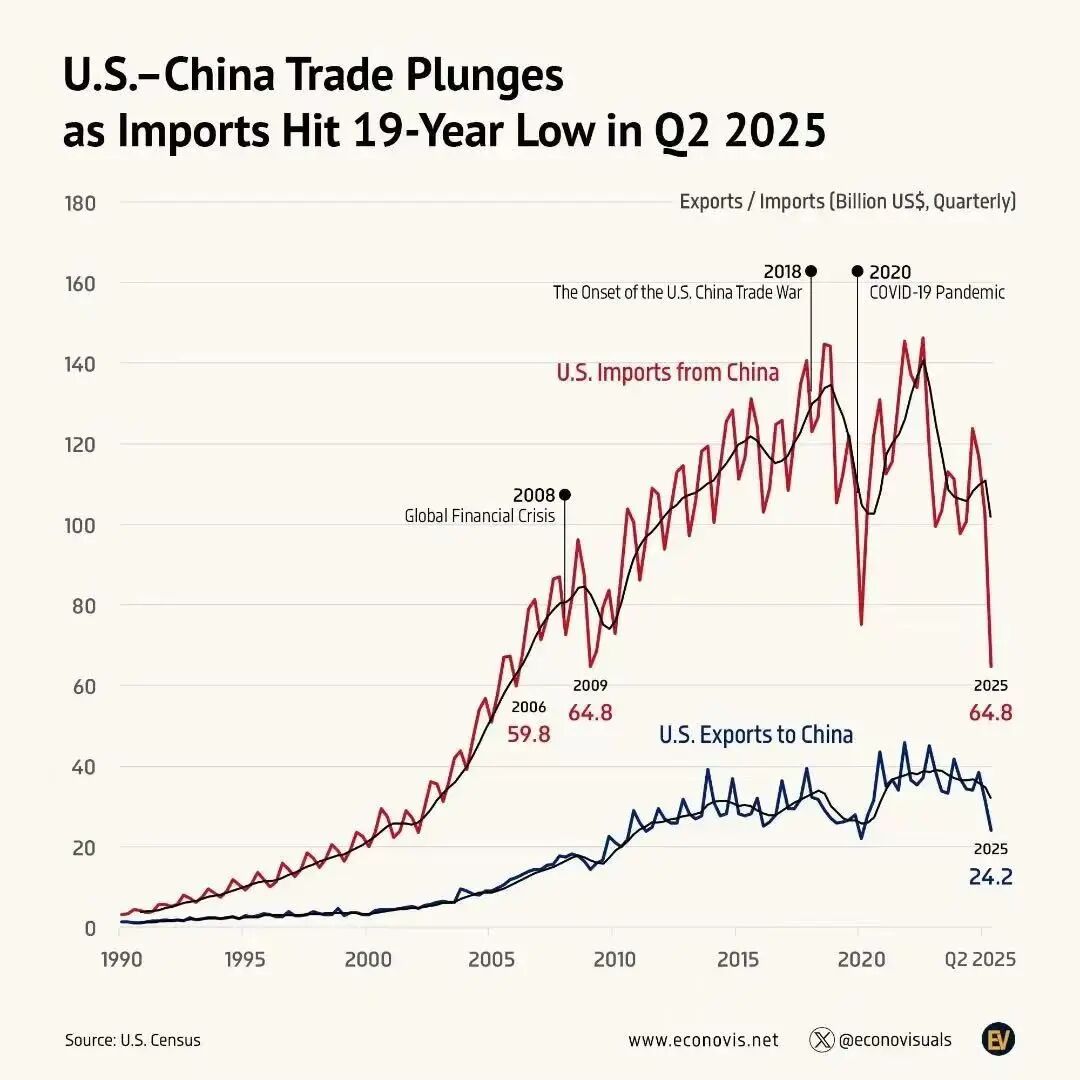
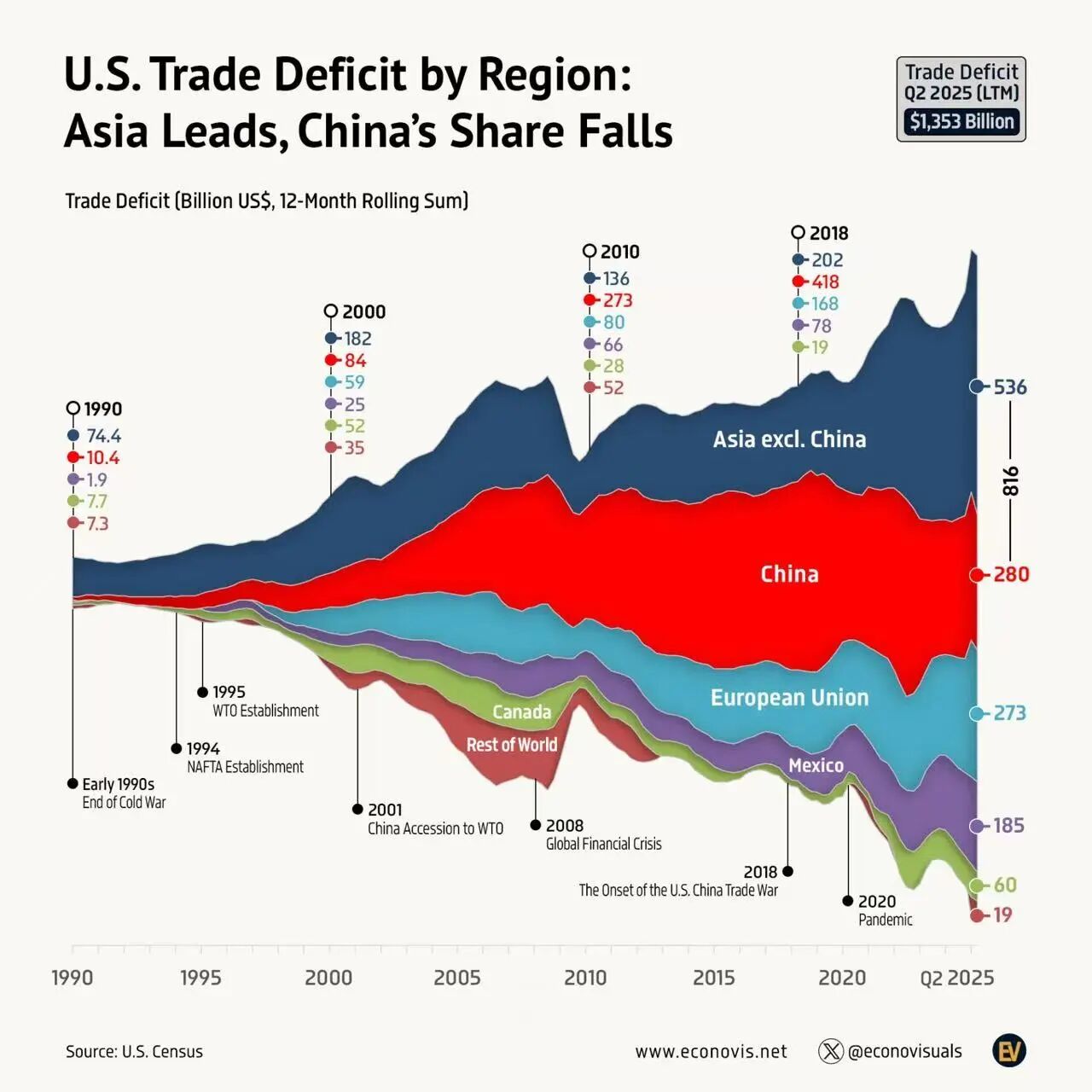
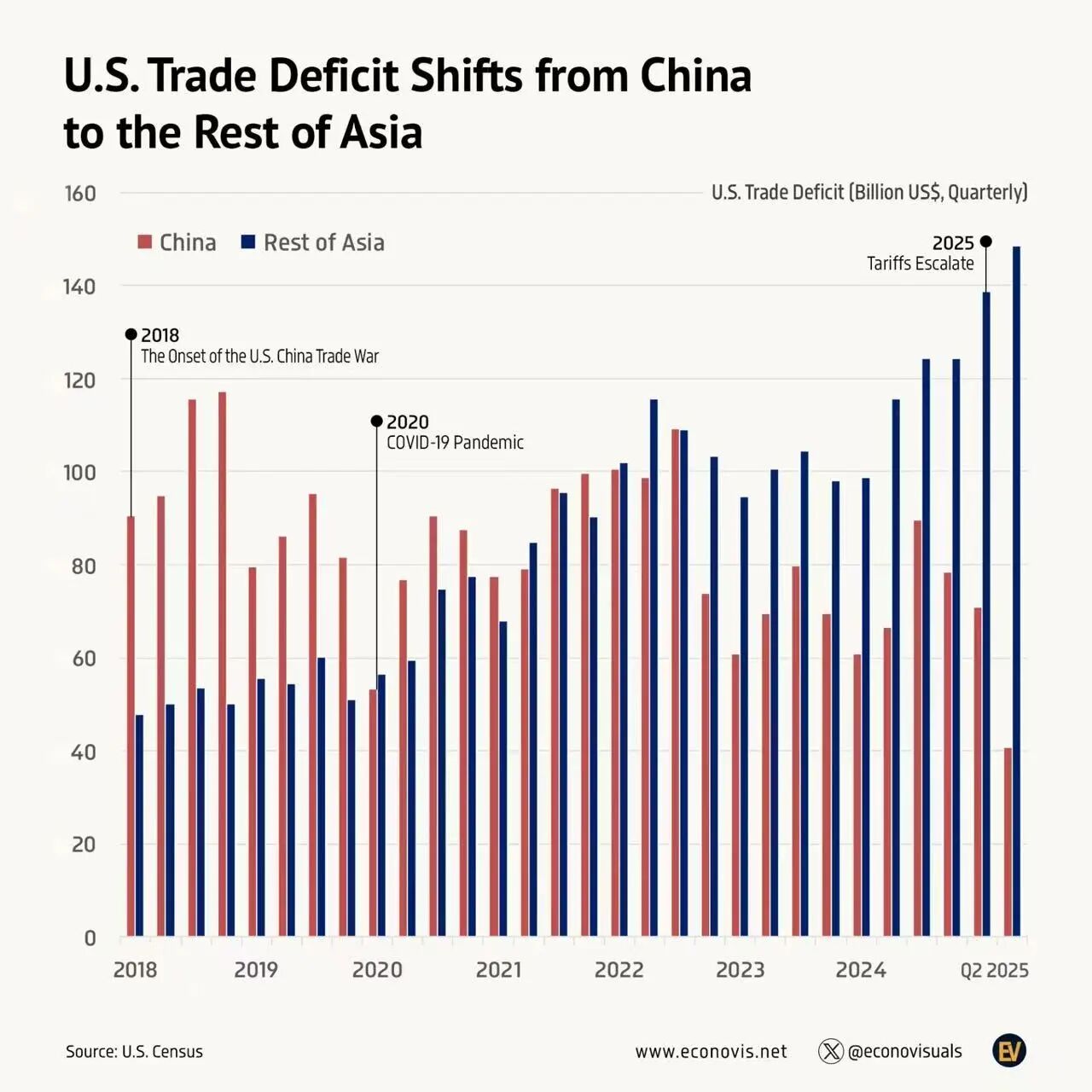
(Click to view larger image) (Click to view larger image) (Click to view larger image) (Click to view larger image) In the second quarter of 2025, U.S. imports from China reached a new low since 2006. (Click to view larger image) (Click to view larger image) In recent years, the US trade deficit with China has gradually decreased, and the corresponding surplus has shifted to other Asian countries, particularly Southeast Asia. Following Geneva, London, and Stockholm, on September 14, the new round of China-US bilateral trade talks in Madrid艰难ly commenced, discussing issues such as tariff barriers, export controls, and technology blockades. The author tentatively believes that, according to US Treasury Secretary Bessent's "color bucket" theory (Real-time comparison of average tariff rates on Chinese lighting product exports to the US with other economies (2025-8-1)), regarding reciprocal tariffs, the best rate China can obtain is likely not lower than 25%. Efforts should focus on securing a 20% IEEPA tariff exemption , while the 301 tariffs from 2018 have already been largely adapted to by both supply and demand sides in China and the US. In summary, it can be anticipated that the China-US game will still go through a complex and tortuous process, with foreign trade uncertainty and fragmentation risks remaining strong. After the first half of the year saw a rush to export and re-export, which prematurely consumed demand, the impact of external environmental fluctuations such as tariffs, exchange rates, and inflation on China's will mainly manifest in the second half of the year, especially in the fourth quarter. In the later period, the growth rate of lighting exports will continue to be dragged down by multiple factors including tariffs, exchange rates, and prices. 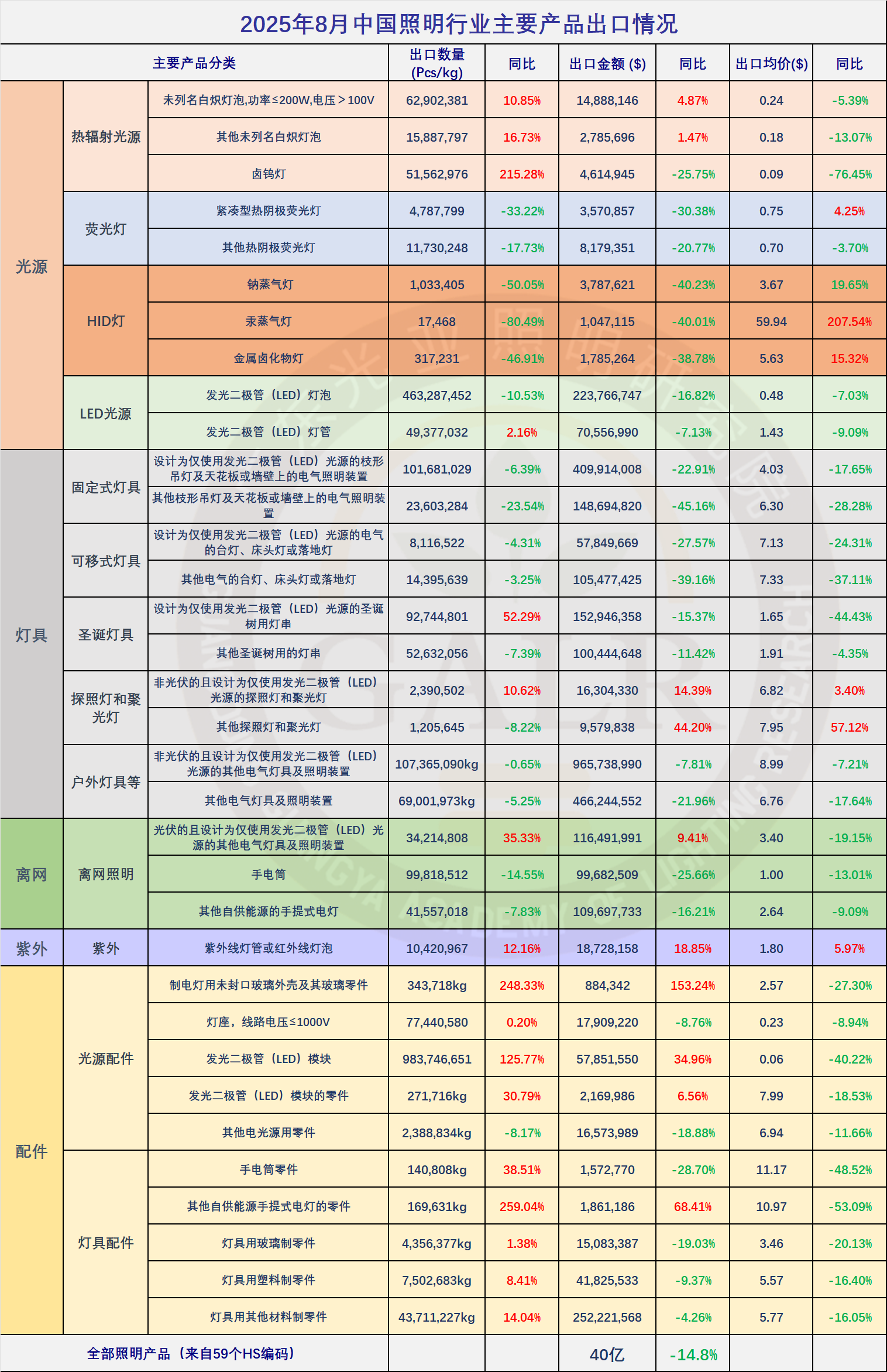
The above article originates from the Guangya Lighting Research Institute, authored by Wen Qidong.
China Light
The official website of the China Association of Lighting Industry and a full-media platform for the lighting sector. We provide authoritative and timely lighting information while striving to be a growth partner for businesses. From brand promotion and channel expansion to consulting, talent training and participation in standards development, we provide comprehensive professional services to help businesses improve quality and efficiency and jointly advance the high-quality development of the lighting industry.
Business Contacts
仇纯 (Ms.): 158 6155 3579
顾君 (Mr.): 137 7157 5253