10% failure rate in luminaire spot checks: Well-known lighting company counterfeited, harmonic current becomes the "invisible killer"
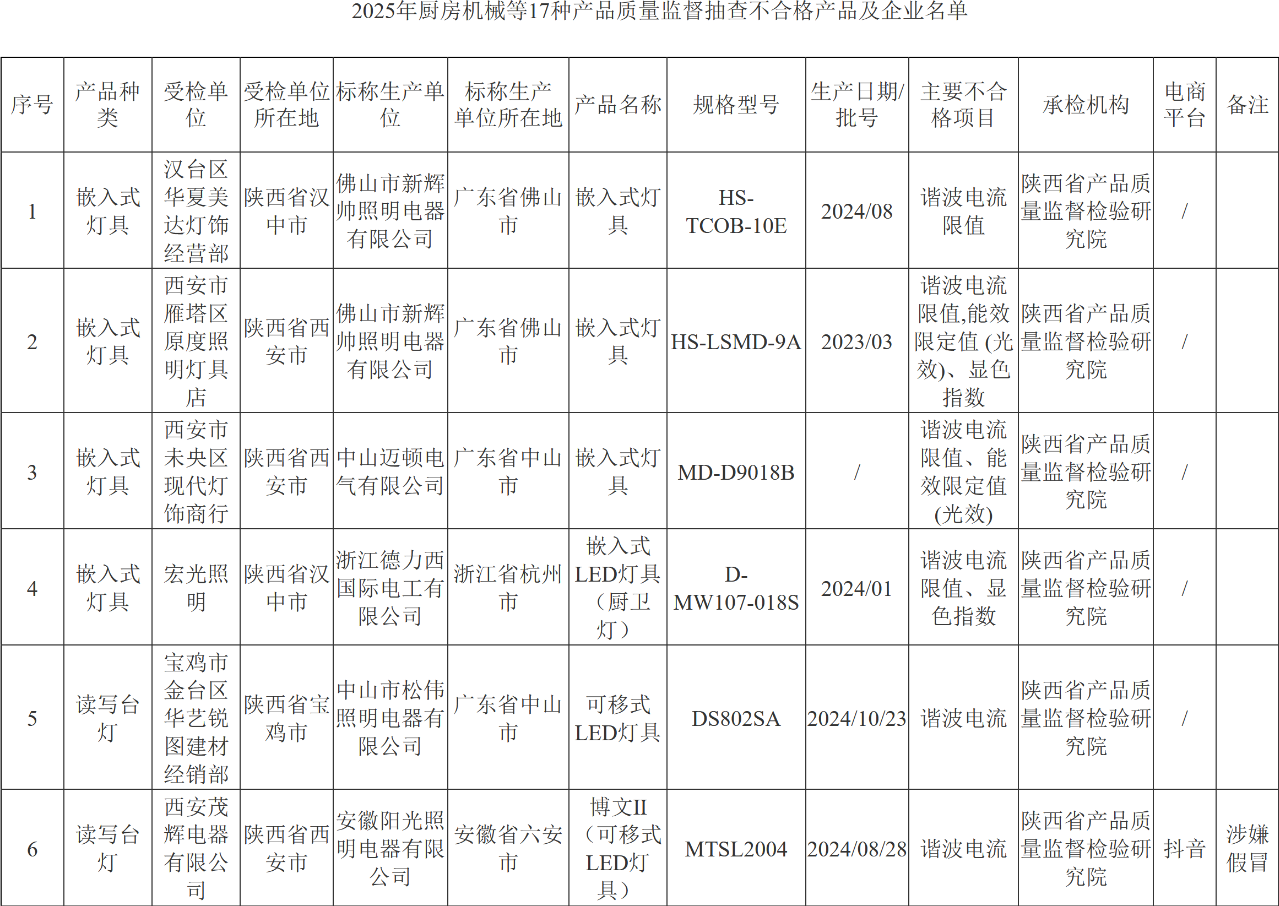
Recently, the Shaanxi Provincial Administration for Market Regulation released a quality supervision spot check report covering 17 categories of products, including kitchen machinery, reading and writing desk lamps, and recessed luminaires, sounding the alarm once again on lighting product safety.
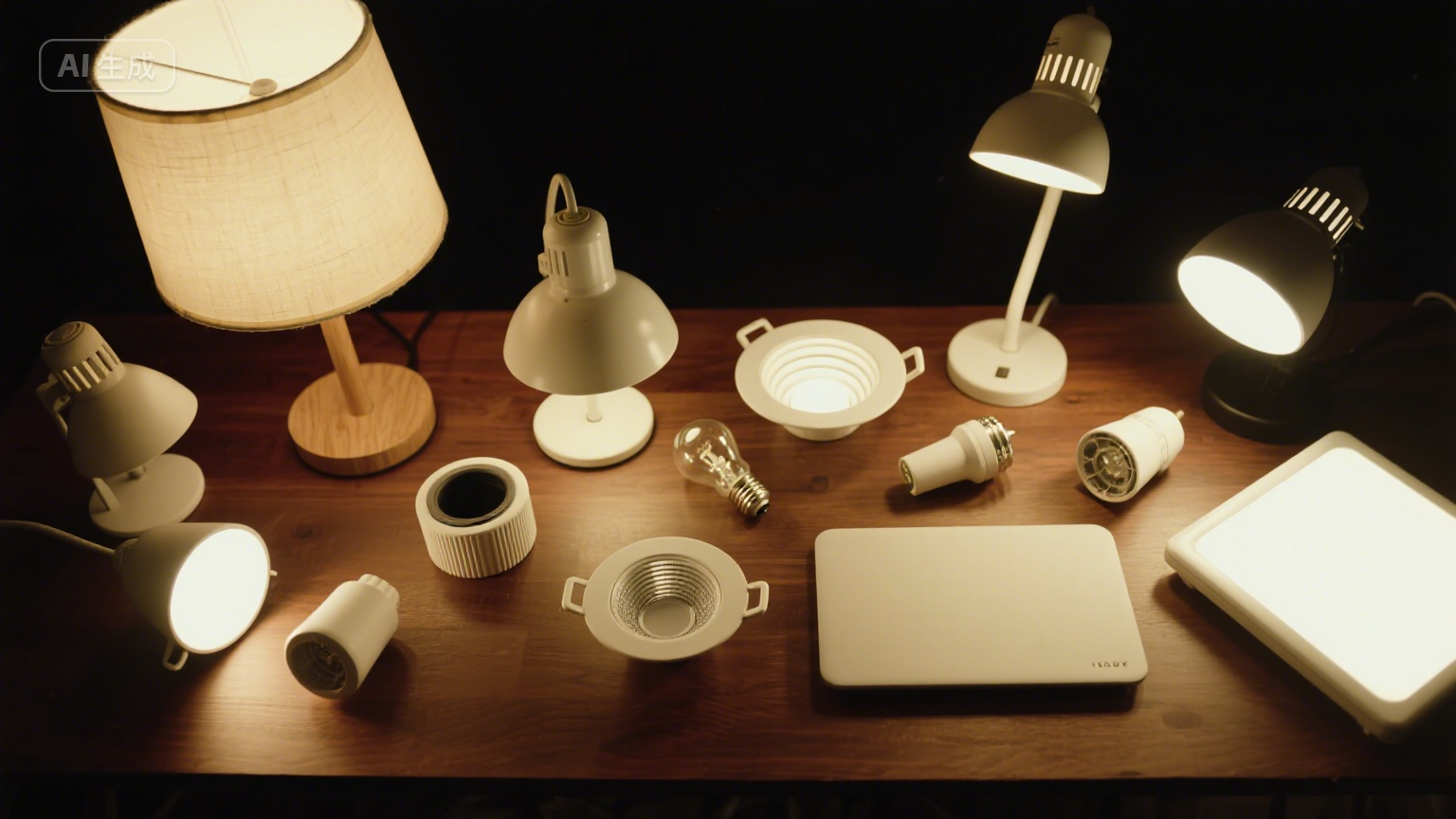
This spot check tested19enterprises selling30batches of reading and writing desk lamps and21enterprises selling30batches of recessed luminaire products. Ultimately,6 batches of luminaire products were found non-compliant, with a 10% failure rate. Among them, 2 batches of reading and writing desk lamps,issues pointed toharmonic currentnon-compliance;4 batches of recessed luminaires,non-compliant items included harmonic current limits, energy efficiency limit values (luminous efficacy), andcolor rendering index.
Notably,a reading and writing desk lamp sold on the Douyin platform is suspected of counterfeiting the Yangguang Lighting brand.
This local report, by revealing deep-seated information such as non-compliant items, product origins, and sales channels, accurately reflects the systemic challenges currently facing the lighting industry in terms of fierce competition, channel transformation, and quality control.
The three non-compliant indicators—harmonic current, energy efficiency, and color rendering index (CRI)—are closely related to the core performance and manufacturing costs of lighting products. Against the backdrop of long-term price wars and overcapacity, companies often choose to cut costs in the easiest areas to survive fierce market competition. Core components such as power drivers, LED chips, and packaging are high-risk areas for cutting corners—seen as a direct consequence of the "bad money drives out good" effect within the industry .
Excessive harmonic current in lighting products is the most prominent issue exposed in this spot check. The LED driver / power supply is the main source of harmonics. Switching devices in the LED driver / power supply generate non-linear currents, which distort the grid voltage waveform and create harmonics. When harmonic current exceeds the limits required by National standard (mandatory / recommended), it will trigger a series of chain reactions affecting the power grid and other electrical equipment. First, harmonic current pollutes the power grid, causing voltage fluctuations, reducing power supply efficiency, and even leading to local magnetic saturation and overheating, threatening the safety of the power system. Second, it affects other sensitive electronic devices connected to it, causing interference within communication equipment, and may even cause circuit breakers to trip or fuses to blow, leading to electrical overheating. Therefore, controlling harmonic current within standard limits is not only a compliance requirement for product quality, but also a fundamental guarantee concerning public safety of the power grid and consumer usage safety.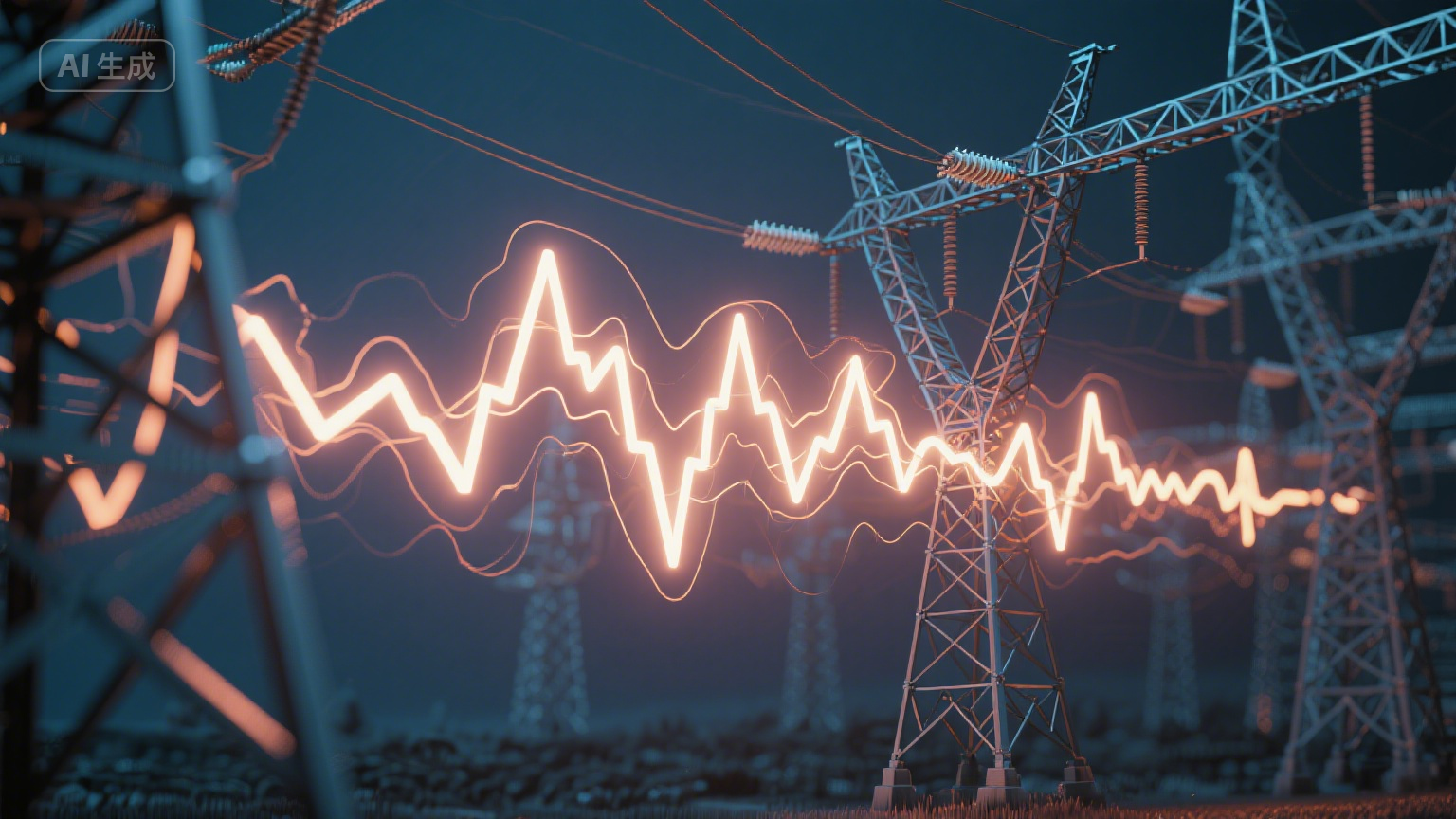
The new national standard for harmonics, GB17625.1-2022 "Electromagnetic compatibility - Limits - Limits for harmonic current emissions (equipment input current ≤16 A per phase)", has been officially implemented since July 1, 2024. However, based on the production dates of non-compliant luminaires, 3 products were manufactured after July 1, 2024. It is evident that some small and medium-sized enterprises are still taking chances and exploiting loopholes, failing to follow the new national standard and adopting low-cost solutions, resulting in non-compliant products.
Minimum energy efficiency value (luminous efficacy): Luminous efficacy is a core indicator for measuring the energy-saving performance of lighting products. The national standard "Minimum energy efficiency values and energy efficiency classes for LED products for indoor lighting" (GB 30255-2019) sets clear limits for energy efficiency. Non-compliant products usually mean their luminous efficacy is below the mandatory national standard requirements, which not only wastes electricity and increases users' electricity bills, but also contradicts the national policy of vigorously promoting energy conservation and emission reduction. Color rendering index (CRI): The color rendering index is a key indicator for measuring how accurately a light source reproduces the colors of objects. For the reading and writing desk lamps in this spot check, the color rendering index is particularly important because it directly affects the visual health of users during close-up eye use. Long-term reading or working under light with a substandard color rendering index can easily lead to visual fatigue and even affect accurate color discrimination, posing greater harm especially to children's reading and writing environments.
In the results of this spot check, the distribution of production locations for manufacturers of non-compliant products shows a certain regional concentration, with 4 batches from Guangdong, and another 2 batches from Zhejiang and Anhui. This distribution is not a coincidence; it reflects the unique challenges and quality differentiation faced by China's lighting industry clusters in their development process.
Guzhen, Zhongshan, Guangdong, as the absolute core of the global lighting industry, is known as the "Capital of Decorative Lighting in China" . The region has more than 30,000 decorative lighting and supporting enterprises, forming a huge industrial cluster with an output value exceeding RMB 100 billion. Its products are exported to more than 130 countries and regions worldwide, accounting for about 50% of the international market for similar products.
However, this "scale advantage" also brings a "scale paradox": while the huge industrial base provides a mature supply chain and cost advantages, it also results in a massive production volume of low-end, low-priced products due to fierce internal homogeneous competition.
In August this year, a spot check report on online fixed general-purpose luminaires in Zhejiang Province showed a non-compliance rate as high as 46%, with manufacturers from Guangdong accounting for 81%. Excessive harmonic current was listed as the primary risk.
The high proportion of non-compliant products from Guangdong in this spot check does not mean that the quality of the entire industrial cluster is worrying, but rather reflects the uneven levels of enterprises in the region.Under long-term pressure from price wars, some small and medium-sized enterprises may take risks on technical indicators to reduce costs and seize the market.
This phenomenon of quality differentiation, although affecting only a few enterprises, will have a negative impact on the reputation of the entire industrial cluster once exposed.
It is worth mentioning that, in the face of external challenges, leading enterprises in Guangdong are actively seeking change by adopting the "cross-border e-commerce + industrial cluster" model to "go global together" and undergoing digital upgrades to seek new development paths .
The inspection report clearly states that one non-compliant reading and writing desk lamp was sold on the Douyin platform, and it is suspected of being a counterfeit product of the Yangguang Lighting brand. This finding is not an isolated case; it reveals the "weak links" and "trust gap" faced by emerging e-commerce channels, particularly the live streaming sales model, in terms of product quality supervision.
In recent years, with the rapid development of e-commerce functions on short-video platforms, lighting products have become a popular sales category, but they have also become a "hard-hit area" for counterfeit and shoddy products.
Counterfeit products typically suffer from poor performance, lack quality testing, and have no official after-sales or warranty services, posing significant safety hazards.
The live-streaming e-commerce model, with its characteristics of "speed" and "traffic first," provides opportunities for counterfeit and shoddy products.Supply chain audits under this model are often insufficiently deep; merchants and streamers, in pursuit of high sales volumes, may attract consumers through data falsification, low-price dumping, and other methods..
In a shopping environment without physical contact, it is difficult for consumers to distinguish authenticity with the naked eye. Once problems arise with the product, consumers often face difficulties such as inadequate after-sales service protection and challenges in defending their rights.This not only harms the legitimate rights and interests of consumers but also seriously erodes the trust foundation on which the live-streaming e-commerce model relies.
In response to the spot-check results, the Shaanxi Provincial Administration for Market Regulation has ordered the relevant enterprises to stop selling non-compliant products, initiate recalls and rectifications, and will pursue legal liability in accordance with the law.
Although this spot-check report from the Shaanxi Provincial Administration for Market Regulation is merely a local incident, the industry quality issues it reveals carry nationwide warning significance.
It clearly tells practitioners that in the wave of technological innovation and (Sales) channel transformation, any laxity in product quality may lead to serious consequences. It reminds practitioners that quality and safety are the bottom line, and only by advancing safety and innovation together can we truly light up the future of the industry.
Only by adhering to the quality bottom line, shifting from a “price war” to a “value war”, bidding farewell to the logic of “low price = survival”, can we win the respect of the market and the trust of consumers, ultimately achieving the long-term healthy development of China’s lighting Industry.
Lighting not only illuminates spaces, but also enhances quality of life; quality is the lifeline of lighting products.