
The Truth After the Tide of Export Rush Under US Tax Pressure in July: Is the Second Half More Difficult?
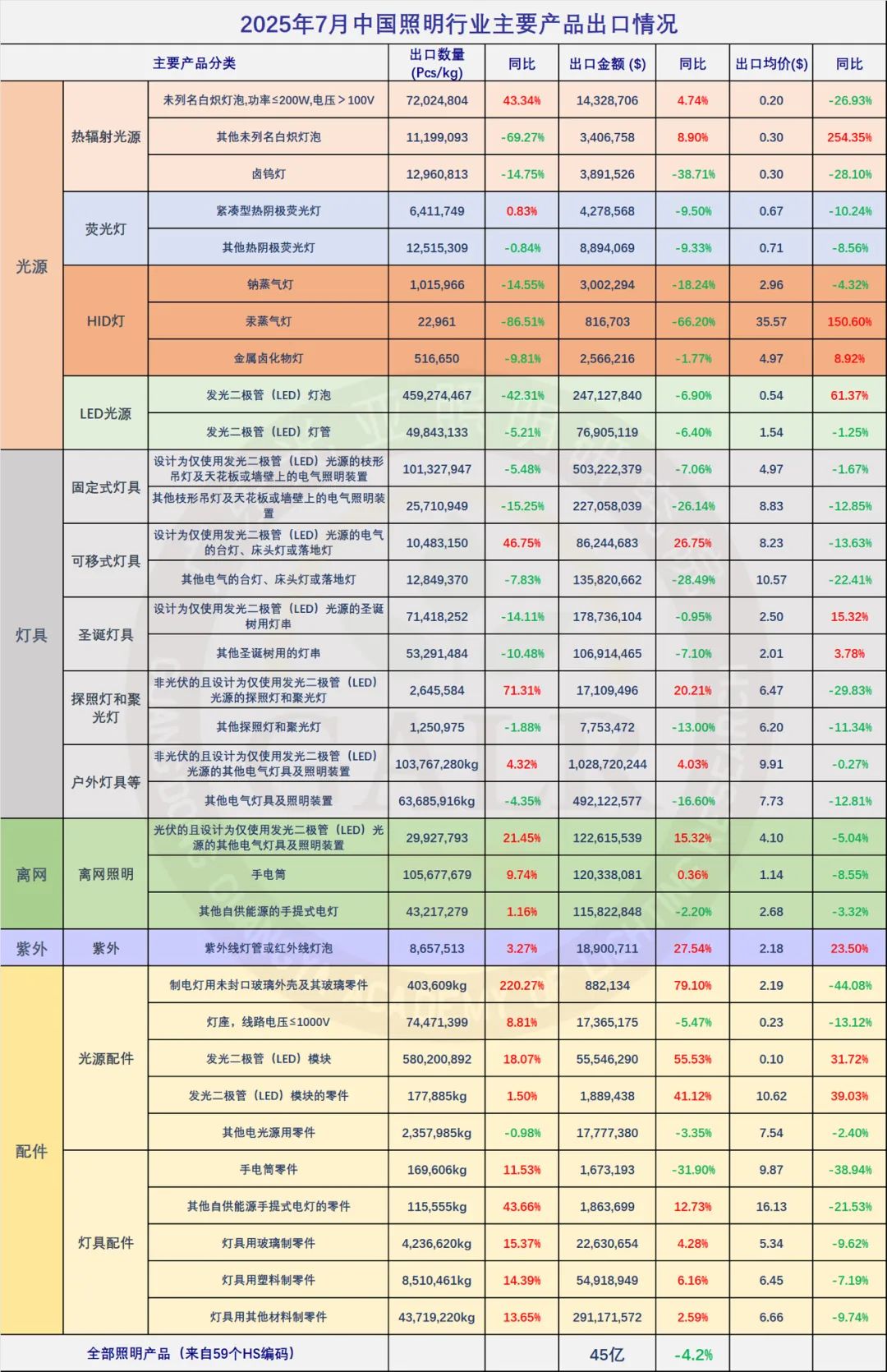
According to data from the General Administration of Customs,in July 2025, China's total value of goods trade imports and exportswas 3.91 trillionyuan, up 6.7% year-on-year;among them, exportswere 2.31 trillion yuan, up 8.0% year-on-year8.0%.Calculated in US dollars, the total value of imports and exportswas then545.3 billion USD, up 5.9% year-on-year5.9%,an increase of 4.8 percentage points compared to June4.8 percentage points; among them, exports were321.8 billion USD, up 7.2% year-on-year7.2%, an increase of 1.4 percentage points compared to June1.4 percentage points. Due to the lower base growth rate of the same period last year, and the continuation of export rush andtransshipment tradefurther, and external demand in non-US markets still has resilience,overallbetter than expected.
(Click to view larger image)
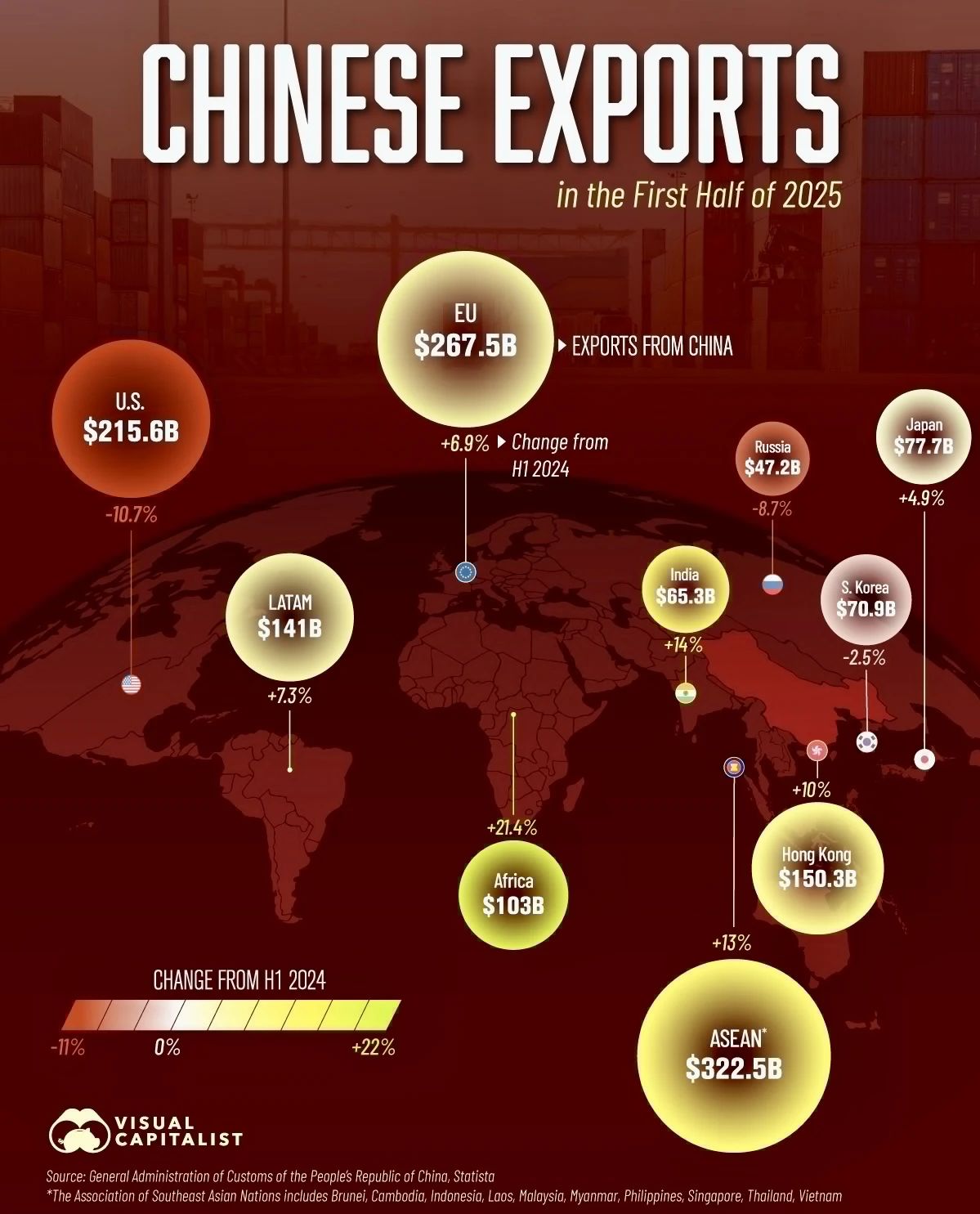
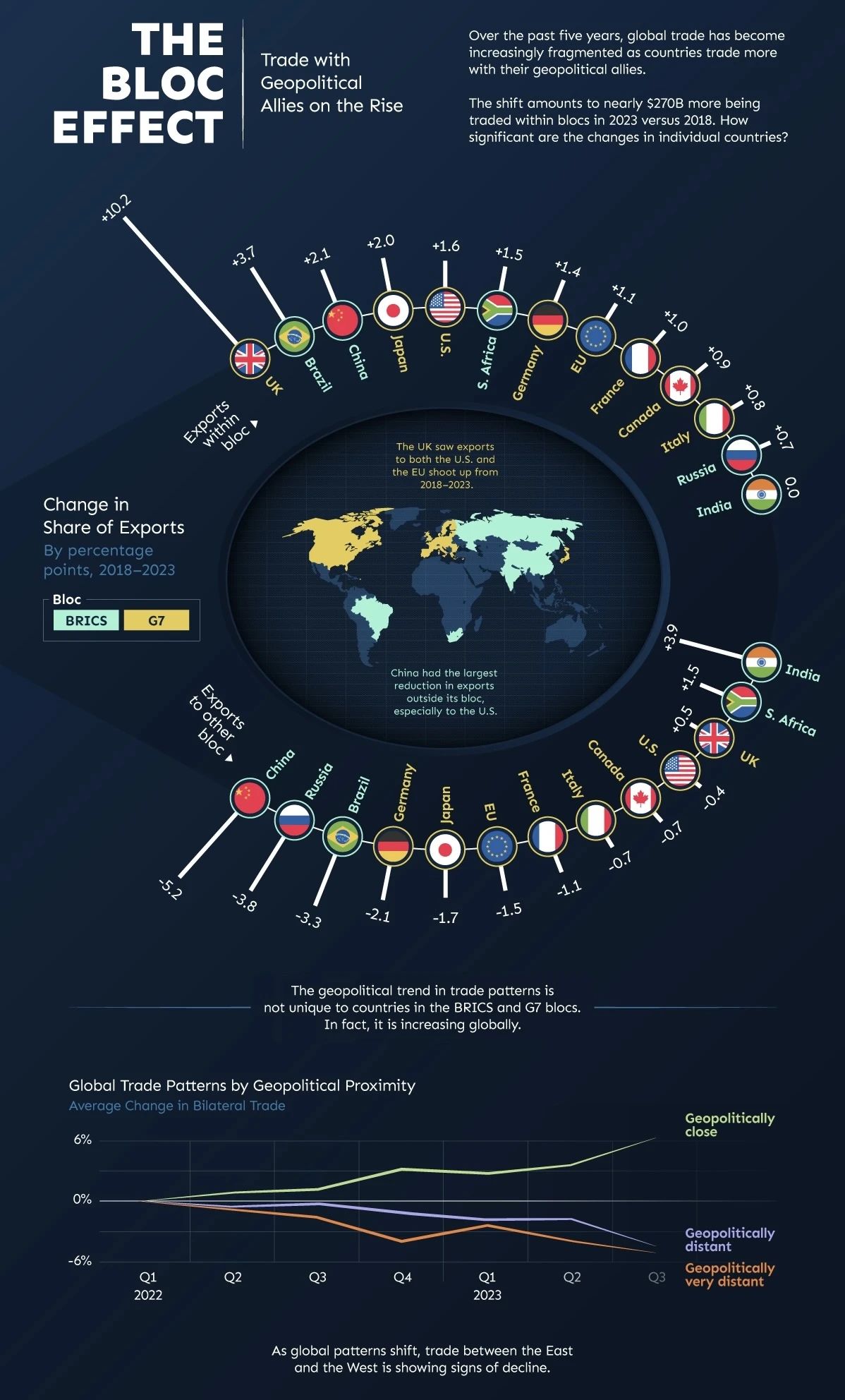
Currently, the growth in China's exports to non-US markets has offset the impact of the decline in exports to the US
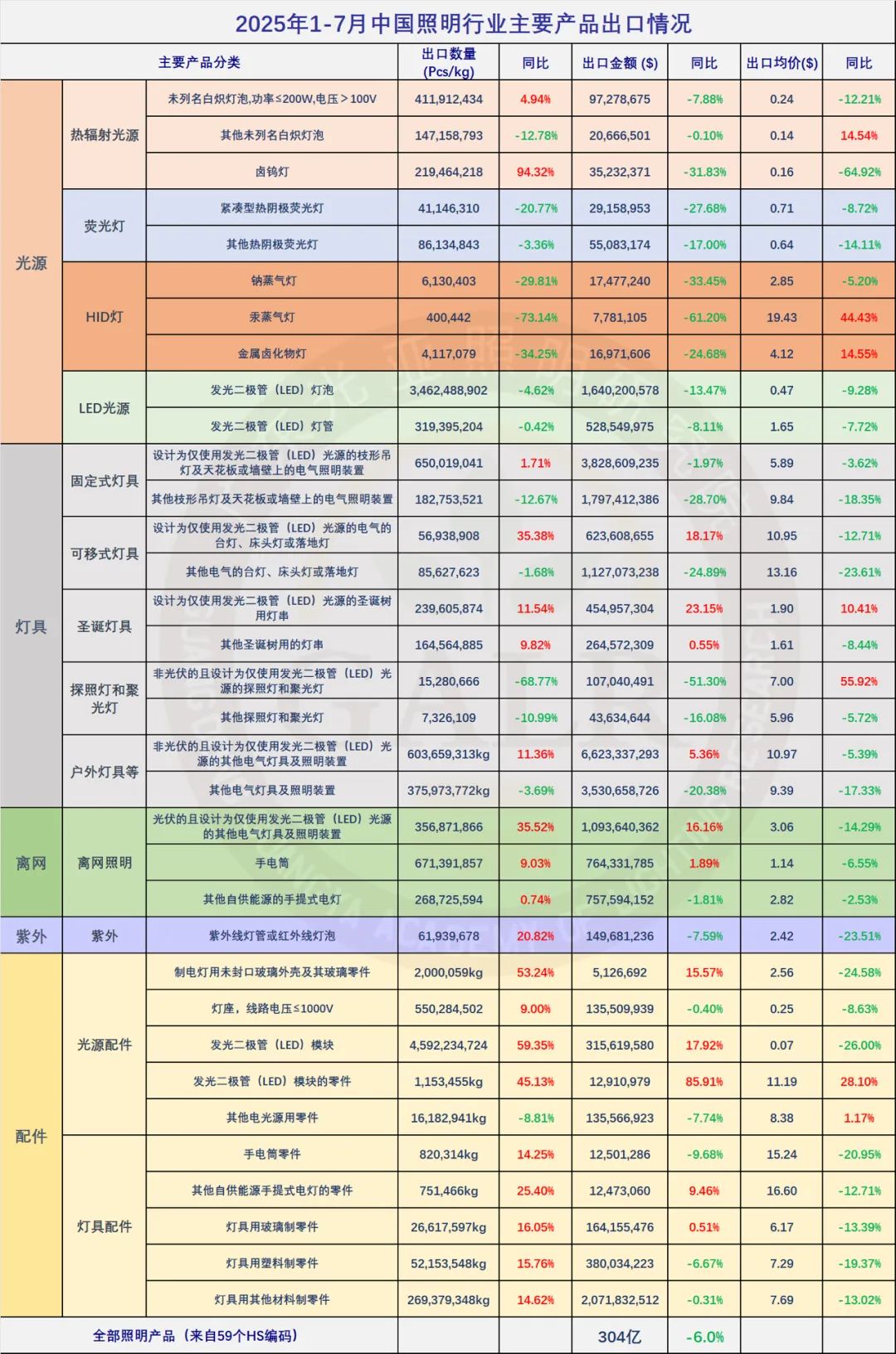
From January to July 2025 , China's total value of goods trade imports and exports reached 25.70 trillion yuan , a year-on-year increase of 3.5% . Among them, exports amounted to 15.31 trillion yuan , a year-on-year increase of 7.3% ; imports totaled 10.39 trillion yuan , a year-on-year decrease of 1.6% .
1-7月,我国与第一大贸易伙伴东盟贸易总值为4.29万亿元,同比增长9.4%,占我国外贸总值的16.7%。我国与第二大贸易伙伴欧盟贸易总值为3.35万亿元,同比增长3.9%,占比13.0%。我国与第三大贸易伙伴美国贸易总值为2.42万亿元,同比下降11.1%,占比降至9.4%。同期,我国对共建“一带一路”市场合计进出口13.29万亿元,同比增长5.5%,占比提升至51.7%。同期,我国出口机电产品9.18万亿元,同比增长9.3%,占我出口总值的60%。
(Click to view large image)
(Click to view full size)
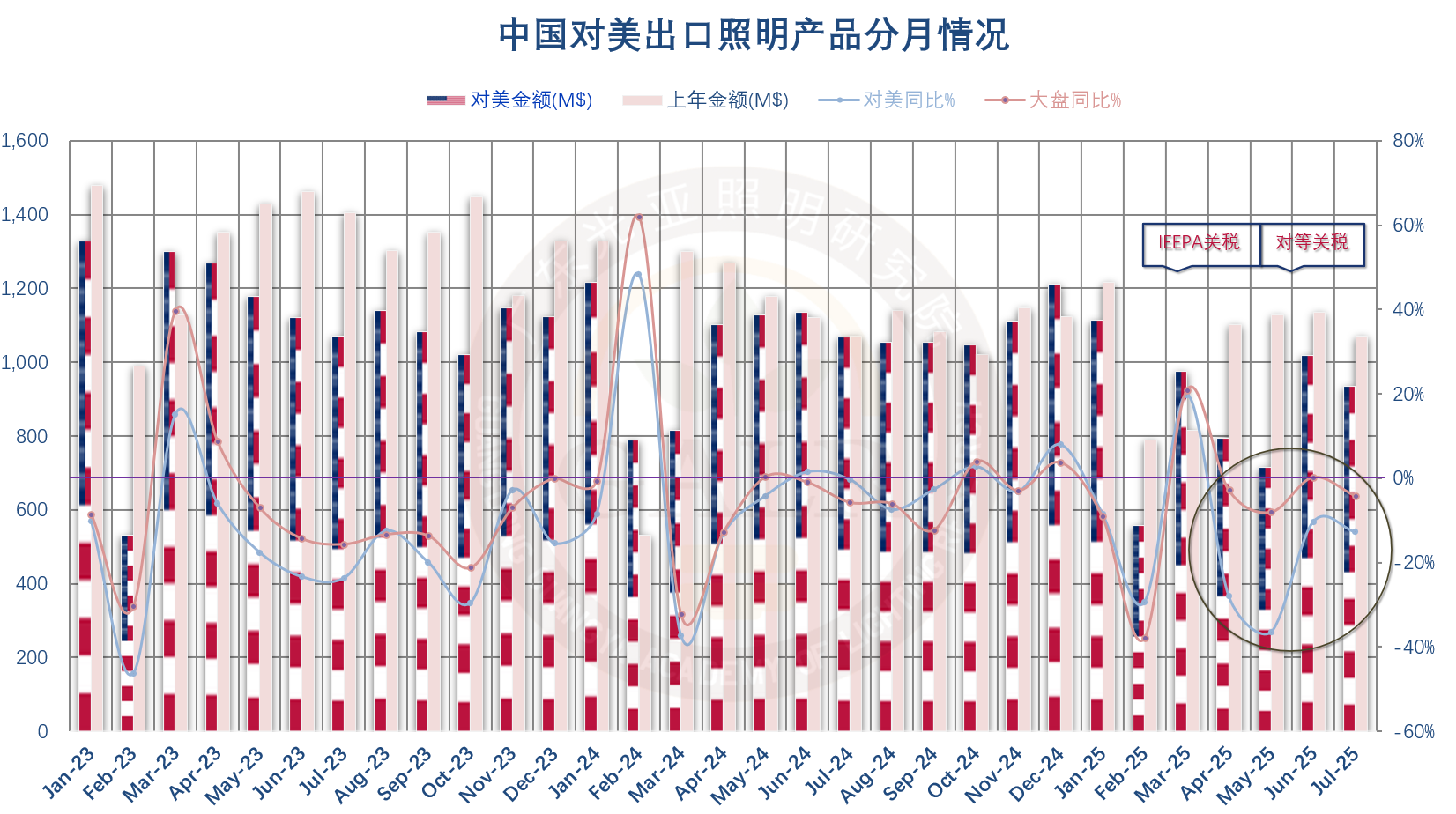
(Click to view full size)
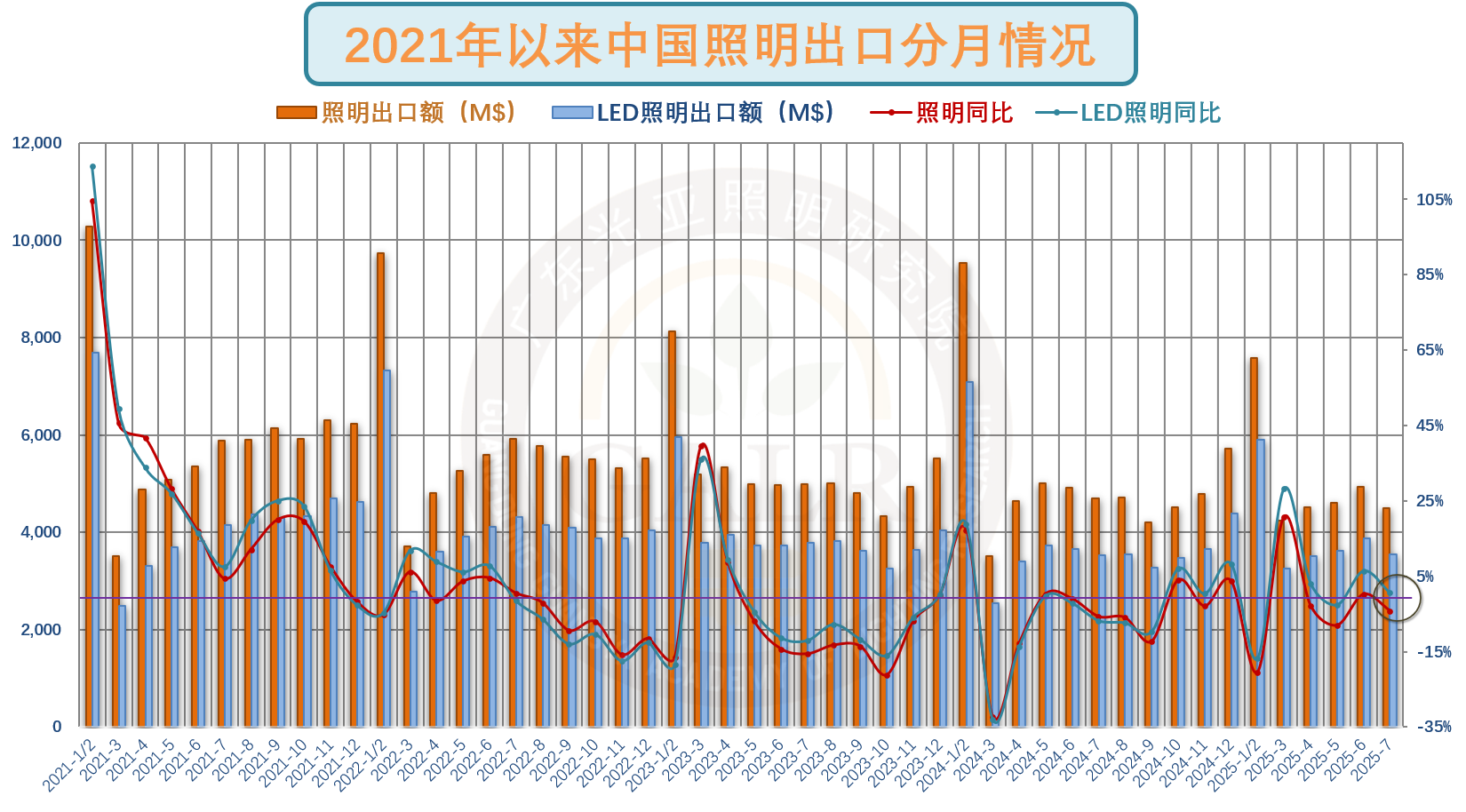
(Click to view larger image)
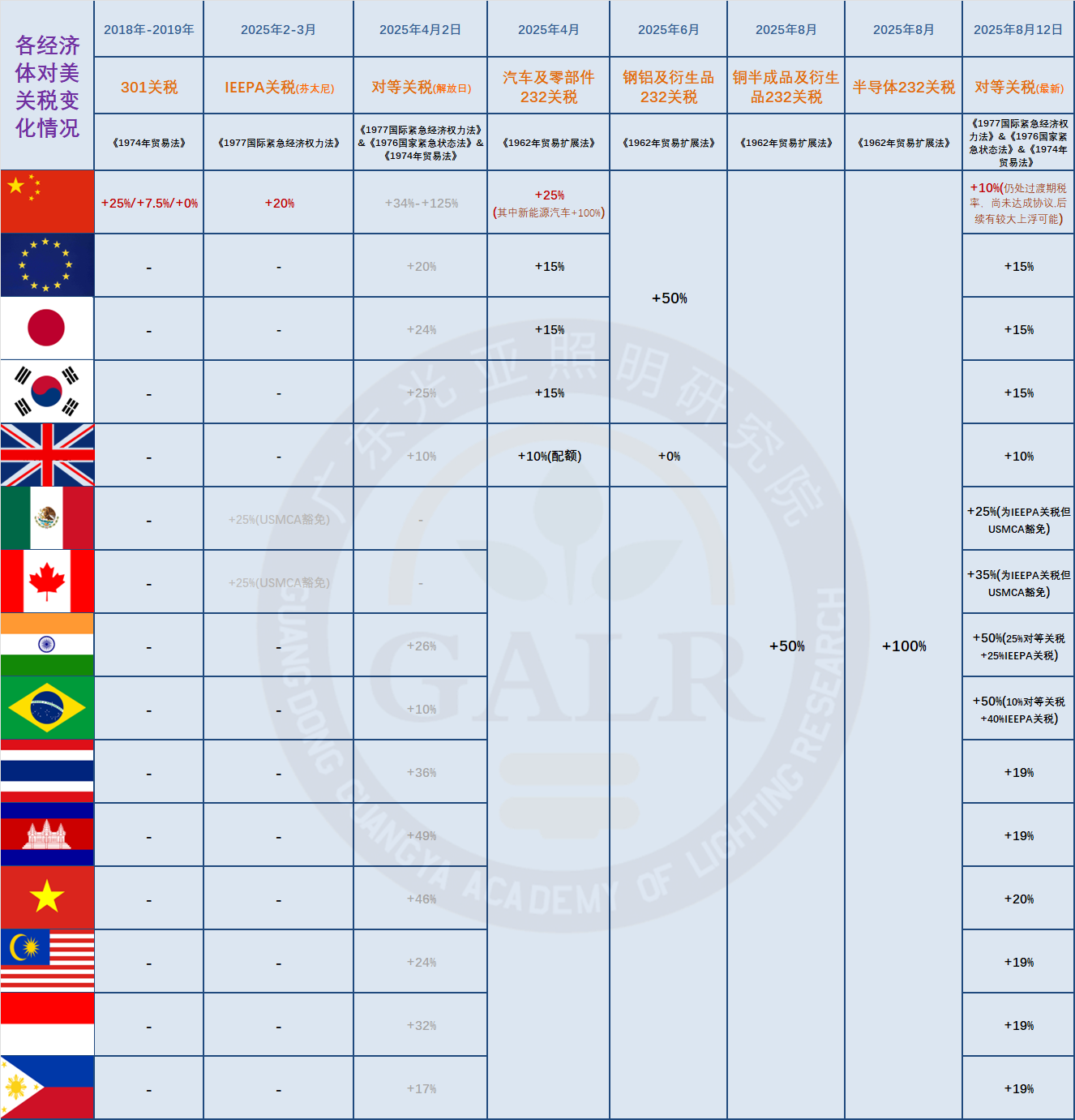
(Click to view larger image)
The United States currently has a wide variety of tariff types, including Section 301 tariffs targeting so-called unfair trade, Section 232 tariffs targeting specific industries, IEEPA tariffs targeting specific countries, and universal reciprocal tariffs.
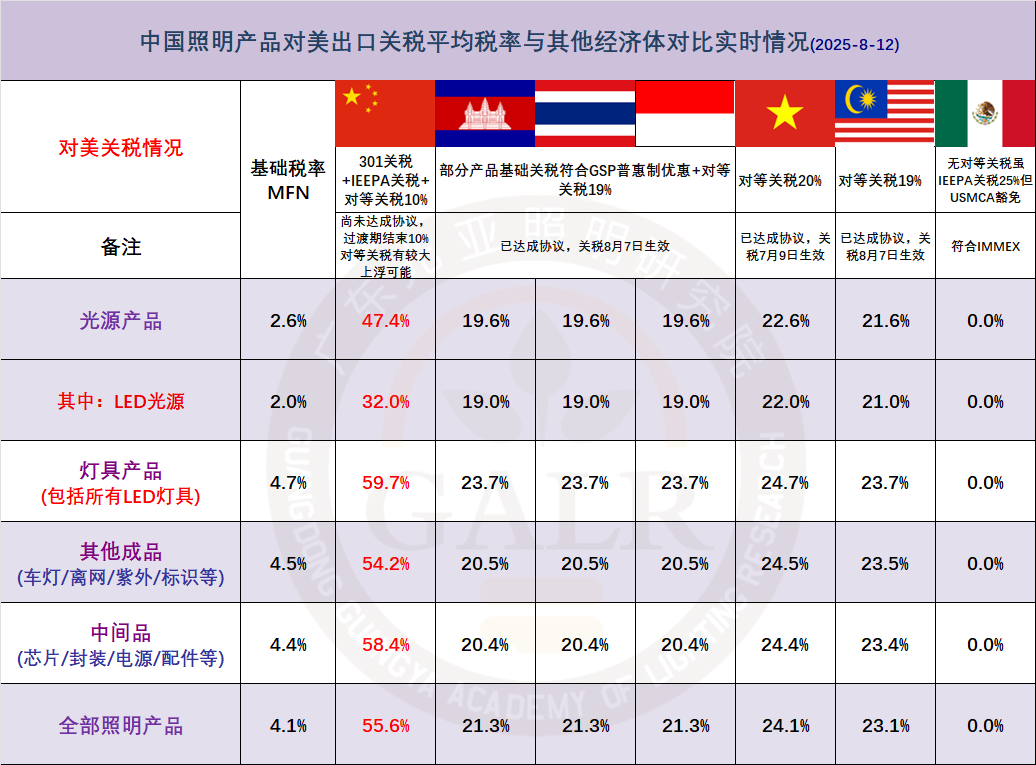
(Click to view larger image)
Even calculating at the current transitional period's 10% reciprocal tariff, combined with the previously uncancelled 301 tariffs and two rounds of IEEPA-specific tariffs, China's lighting products face current US rates that remain abnormally high compared to other economies.
The August 12 Sino-US Stockholm Joint Statement extended the tariff transition period by another 90 days, providing breathing room for many enterprises exporting to the US, but future prospects should not be overly optimistic.
The core divergence in the Sino-US tariff game remains unchanged:
First, the Trump administration adhered to the 'America First' philosophy, promoting global Industry / Supply chain restructuring, reducing trade deficits, increasing tariff revenue, pressuring manufacturing to return, thereby the goal of reshaping the global economic order has remained unchanged;
Secondly, the US has suppressed China in many fields such as technology and trade; based on , China has strongly retaliated to safeguard its right to development. This irreconcilable confrontation continues; thirdly, global tariff barriers have evolved into a long-term trend.
Therefore, the Sino-US economic and trade consultations will go through a complex and tortuous process. The uncertainty and fragmentation risks in the foreign trade environment remain strong. After the rush for export and transshipment in the first half of the year prematurely exhausted demand, the impact of external environmental fluctuations on China's [[Export]] will mainly appear in the second half of the year. In the later stage, the growth rate of lighting exports will continue to be dragged down by both tariff factors and price factors.
The above article comes from the Guangya Lighting Research Institute, author Wen Qidong.