
Can't Hide It Anymore! 5 Key Keywords for Lighting Exports in the First Half of 2025, Revealing the Truth About Industry Trends Under Tariff Impacts
Since the beginning of this year, the overseas trade market of the lighting industry has continued to face pressure, especially in the second quarter, where downward pressure has further increased due to frequent disruptions from US tariff policies. This article provides a brief introduction to the export situation of the lighting industry from January to June 2025. A more detailed analysis will be published in the 2025 issue of "China Lighting", the journal of the China Association of Lighting Industry (CALI).
Keyword One Scale
Export scale has shrunk, development pace has adjusted, but certain resilience remains.
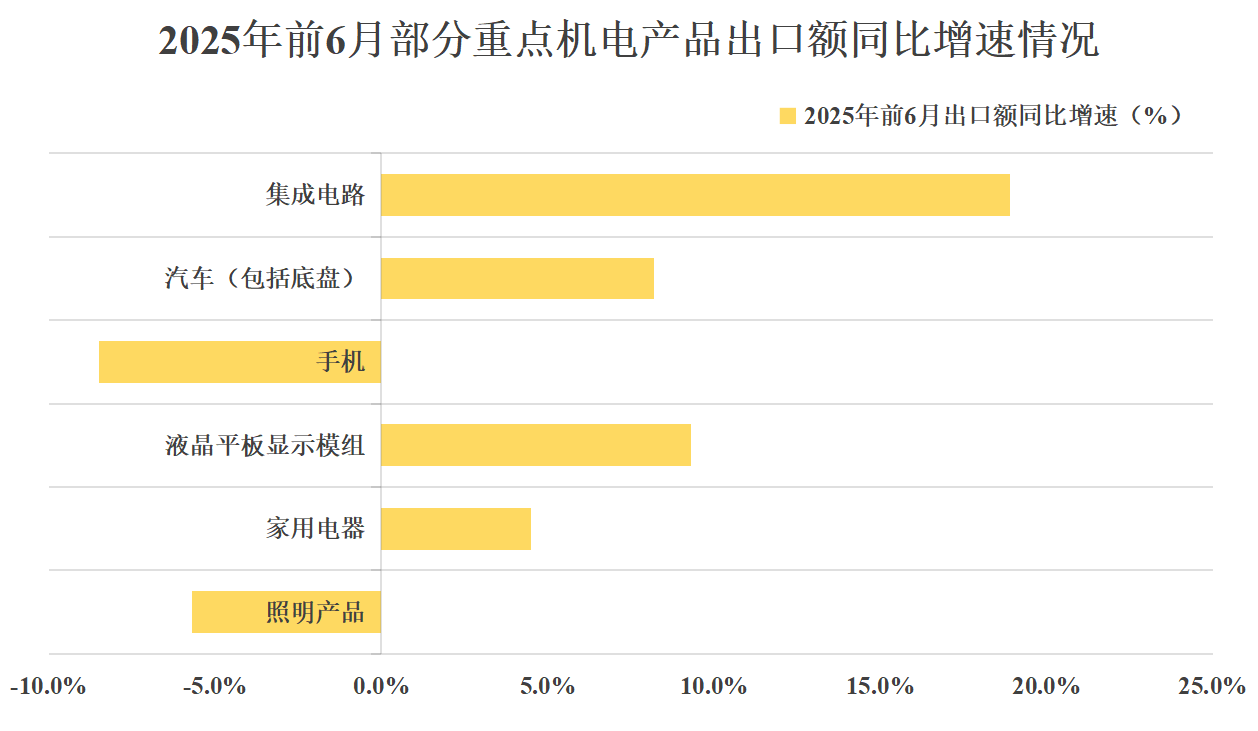
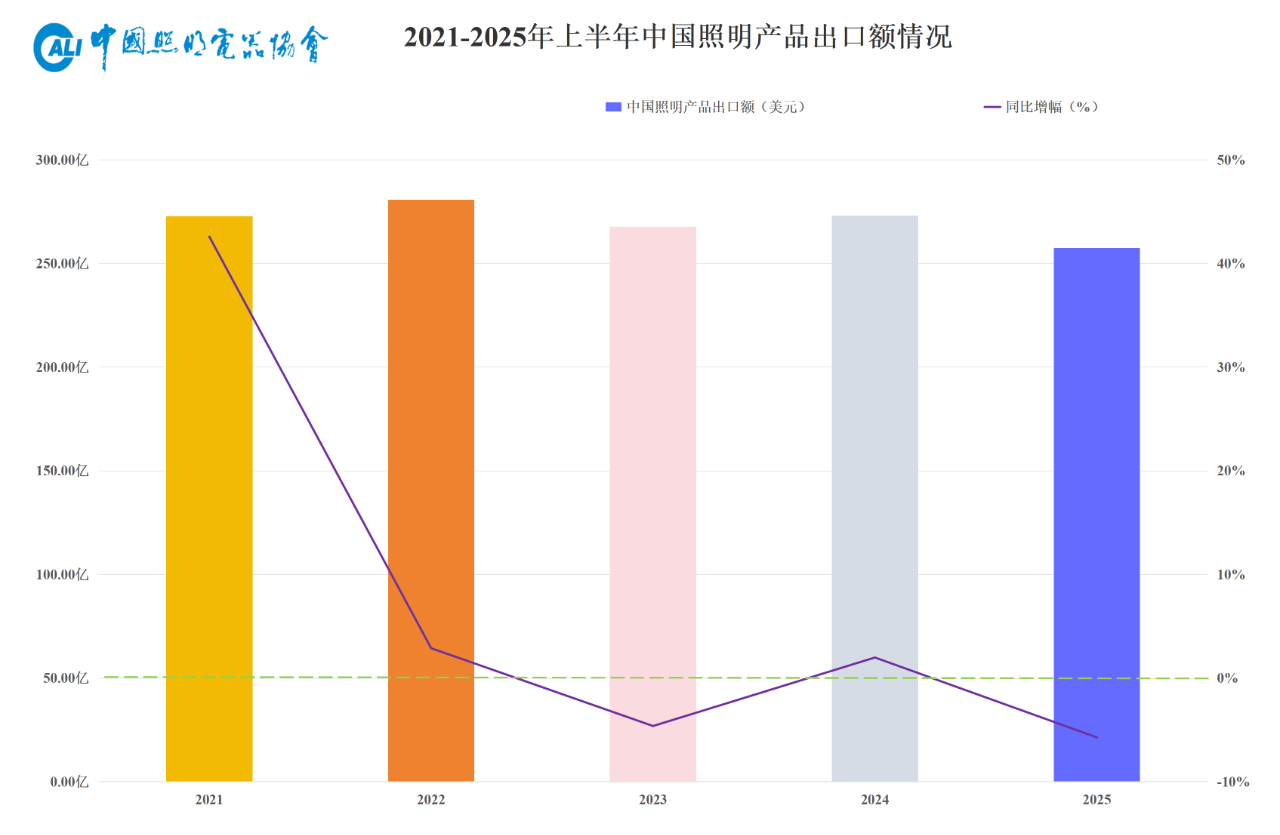
In the first half of 2025, the lighting industry's export performance was generally weak. Customs data shows that the cumulative total export value of lighting products from January to June was approximately USD 25.8 billion, a year-on-year (YoY) decrease of about 6%. The growth rate of cumulative exports of lighting products in the first six months of this year was negative; among the 12 key export categories of mechanical and electrical products, it was only slightly better than mobile phones. Both the overall export scale and the year-on-year (YoY) growth rate in the first half of this year hit new lows in the past five years.
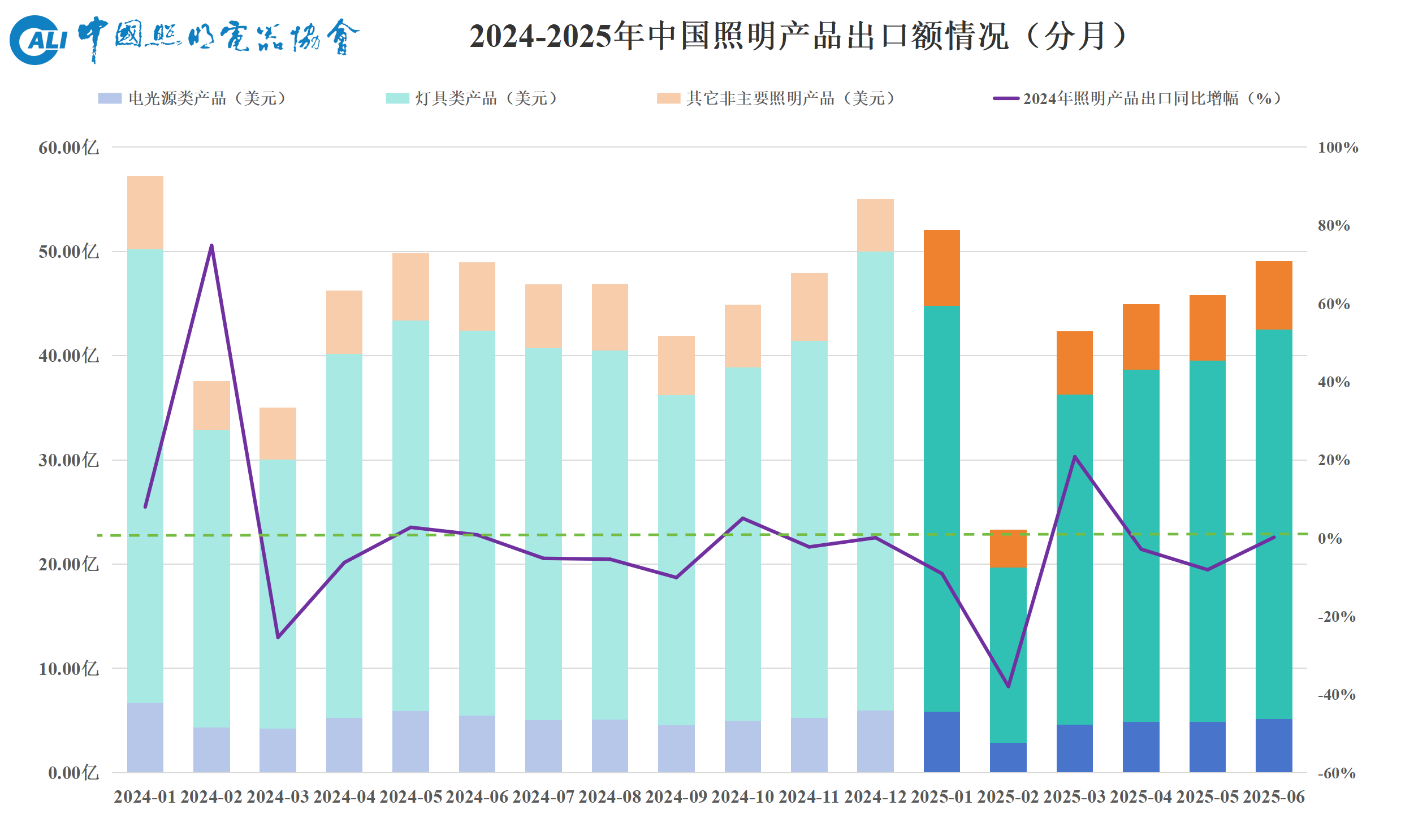
Looking at monthly data, the exports of lighting products in the first six months generally showed an irregular "W"-shaped trend: except for slight rebounds in March and June, other months were in a downward range. In particular, in June, the export value was about USD 1 billion, a year-on-year (YoY) decrease of 10%, but a month-on-month increase of 42%, ending the two-month consecutive decline since April. This change is largely related to the signal of suspension released by the China-US tariff negotiations, with US importers stocking up in advance, driving a short-term rise in shipment volume.
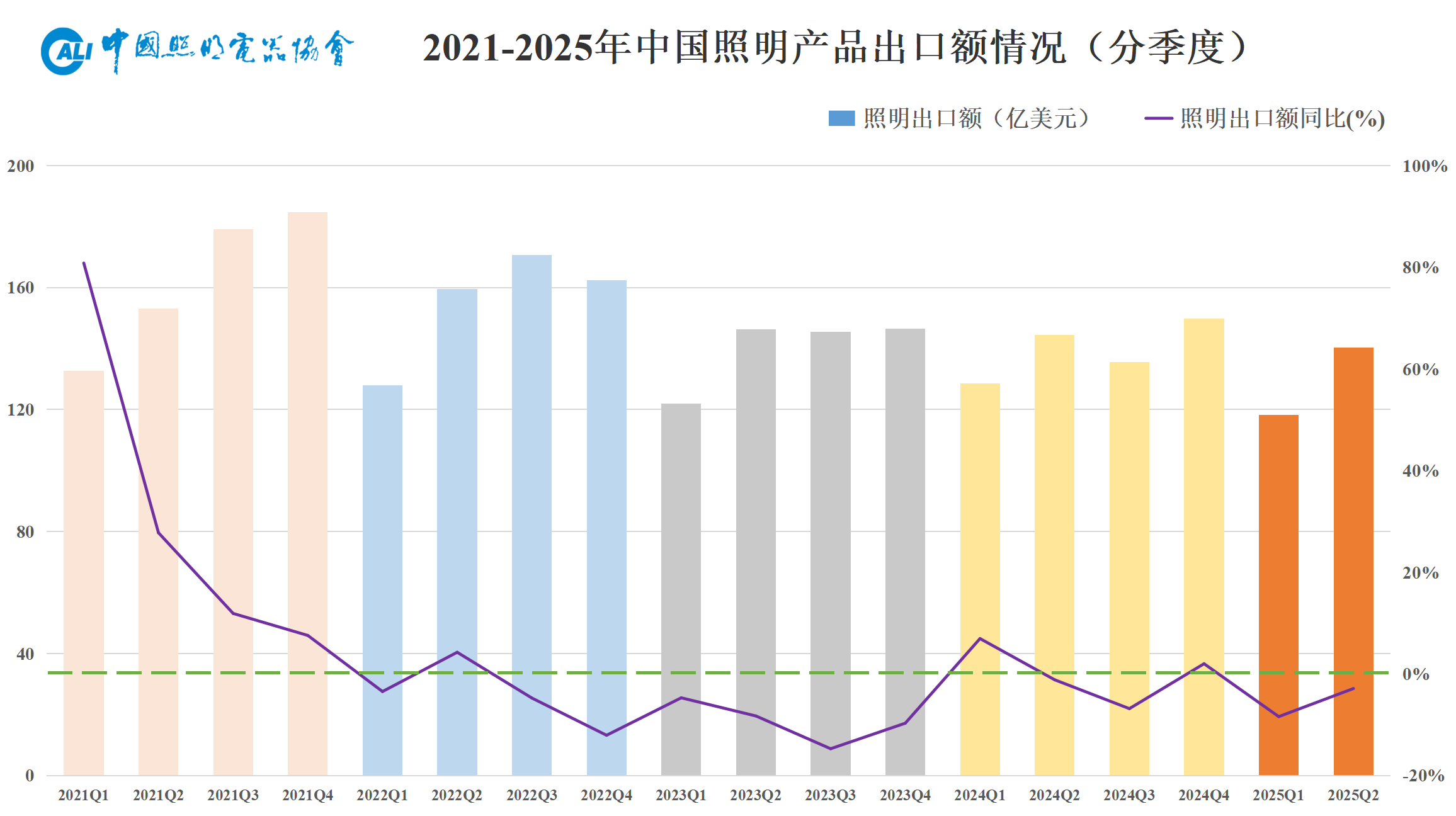
The reasons for the current changes in the industry's foreign trade trend are, on the one hand, the cyclical adjustment of the global lighting market caused by changes in the impact of product technological innovation on market demand, and on the other hand, the short-term impact caused by the superposition of various factors such as policy fluctuations in European and American markets, changes in international freight rates, and customer inventory cycles. Excluding the abnormal disturbances in the export market caused by the epidemic over the past five years, the current overall export scale is about 23% higher than that of the same period in 2019. From the overall trend, the current export scale of the lighting industry is not a "cliff-like" decline, but closer to a rational correction in the development cycle, which is a phased adjustment after experiencing a high base. As of now, the overall foreign trade resilience of the industry remains.
Keyword Two Product
The structure of product exports shows a clear trend towards optimization and novelty .
Luminaire products: Decorative lighting and photovoltaic outdoor products buck the trend
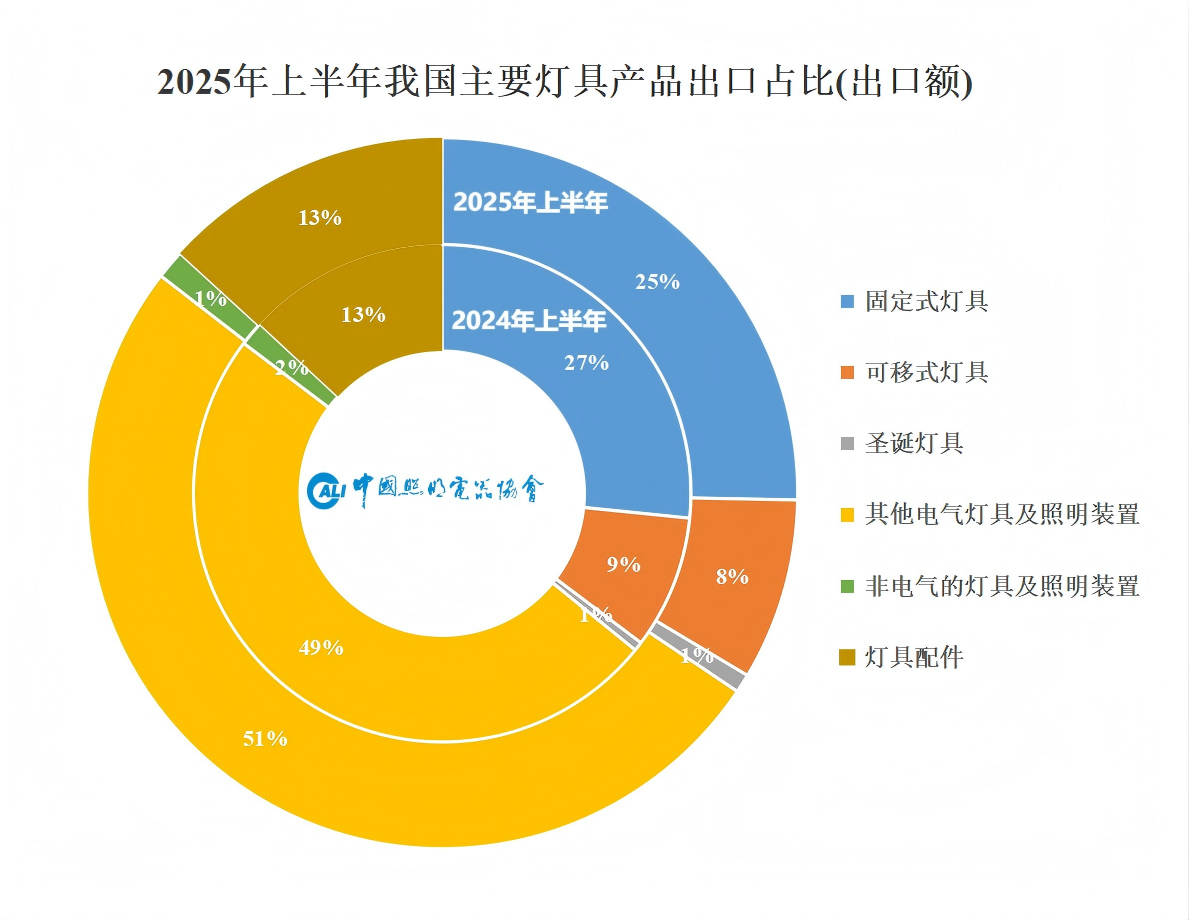
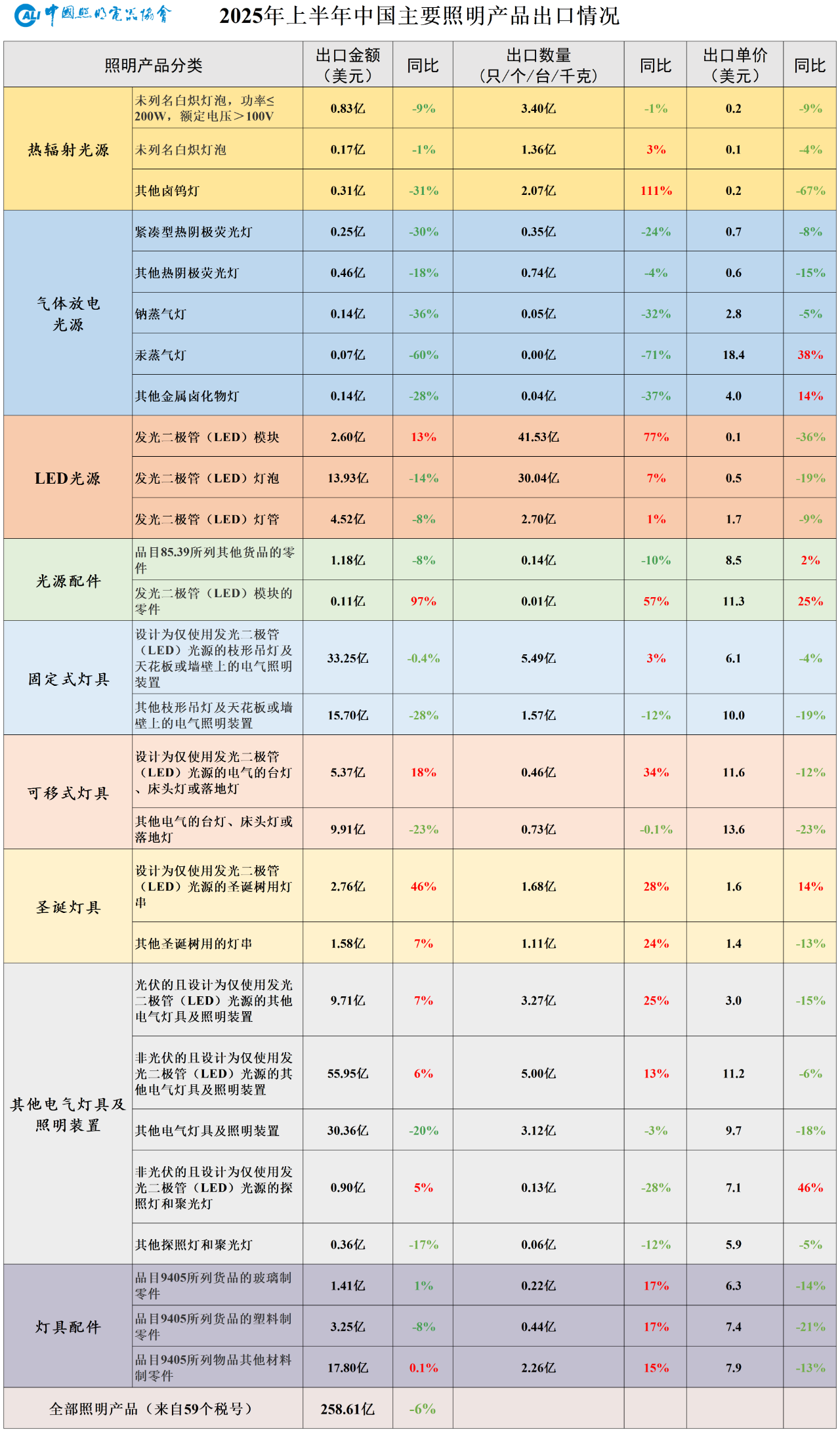
In the first half of 2025, China's total export value of luminaire products was approximately USD 19.4 billion, a Year-on-year (YoY) decrease of 6%. Luminaire exports accounted for 75% of the total export share, providing certain driving force for the relative stability of the overall export situation. Within luminaire exports, there was significant differentiation among categories, with some niche segments maintaining growth, acting as a stabilizer amidst current foreign trade uncertainties. Notably, LED decorative lighting products performed brilliantly; for instance, the export value of household lighting categories using only LED, such as table lamps, bedside lamps, and floor lamps, increased by 18%, with export volume rising by 34%. Growth in these products was mainly concentrated in exports to the EU and Middle East markets. Festive light strings also showed dual growth in export value and volume, at 29% and 26% respectively, benefiting from the recovery of overseas festival procurement cycles, with significant growth in markets such as the US, Mexico, and the Netherlands. Photovoltaic outdoor lighting products continued to see substantial volume growth, becoming a rare "structural growth point" among luminaire products. According to customs data, the export volume of photovoltaic lighting luminaires in the first half of 2025 increased by about 25% Year-on-year (YoY), with sustained high demand in multiple African, Latin American, and Southeast Asian countries. The growth of these products reflects the realistic overseas demand for low-carbon, off-grid lighting solutions, providing a demonstration for Chinese lighting enterprises to expand into new energy-integrated products. In addition, during surveys in Guangdong in the first half of the year, the China Lighting Association learned that some enterprises have gradually moved out of the homogeneous red ocean by laying out "high value-added" products such as smart lighting; in terms of (Sales) channel, overseas engineering projects and cross-border B2B orders showed obvious signs of recovery, offsetting the impact of the decline in European and American e-commerce channels.
Electric light source products: LED module volume and value both increase, continuing upward trend; traditional electric light sources remain in downward trend
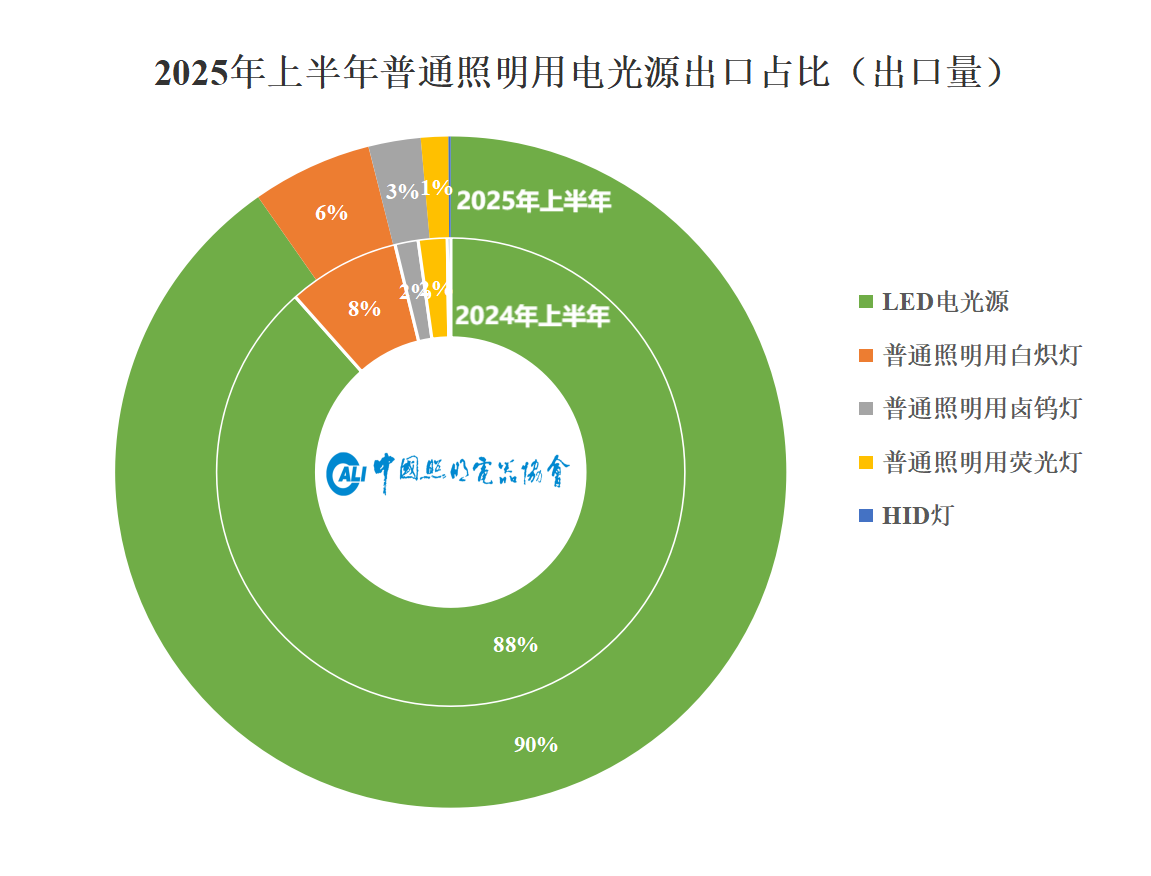
In the first half of 2025, the export of electric light source products continued the trend of "rising volume but falling prices": total export volume was approximately 12.6 billion units, a Year-on-year (YoY) increase of 6%, but the export value was approximately USD 2.8 billion, a Year-on-year (YoY) decrease of 11%. Among them, LED electric light source products (LED bulbs, LED tubes, LED modules) had an export volume of approximately 7.4 billion units, a Year-on-year (YoY) increase of about 37%, accounting for 90% of the export volume of electric light sources for general lighting, an increase of 2 percentage points compared to the same period last year, remaining the absolute main force of light source exports. Within LED electric light source products, LED modules performed particularly outstandingly, becoming the key engine driving the growth of the entire light source export volume. In the first half of 2025, the export volume of LED modules was approximately 4.2 billion units, a Year-on-year (YoY) increase of up to 77%, making it the fastest-growing category among all lighting sub-products. In terms of export markets, exports to five countries including Pakistan, Egypt, Vietnam, India, and Saudi Arabia accounted for 59% of the total volume. Among them, the export volume to Pakistan was close to 900 million units, a Year-on-year (YoY) increase of up to 707%, showing characteristics of explosive growth. However, the export value of LED modules was approximately USD 260 million, a Year-on-year (YoY) increase of 13%, with its growth rate far lower than that of export volume, indicating fierce price competition and the "cost-performance oriented" characteristic of overseas markets. The import value of LED modules from some South and Southeast Asian countries such as Indonesia and Thailand maintained growth, but the export value to the US in the first half of the year was only about USD 30 million, a Year-on-year (YoY) decrease of 25%.
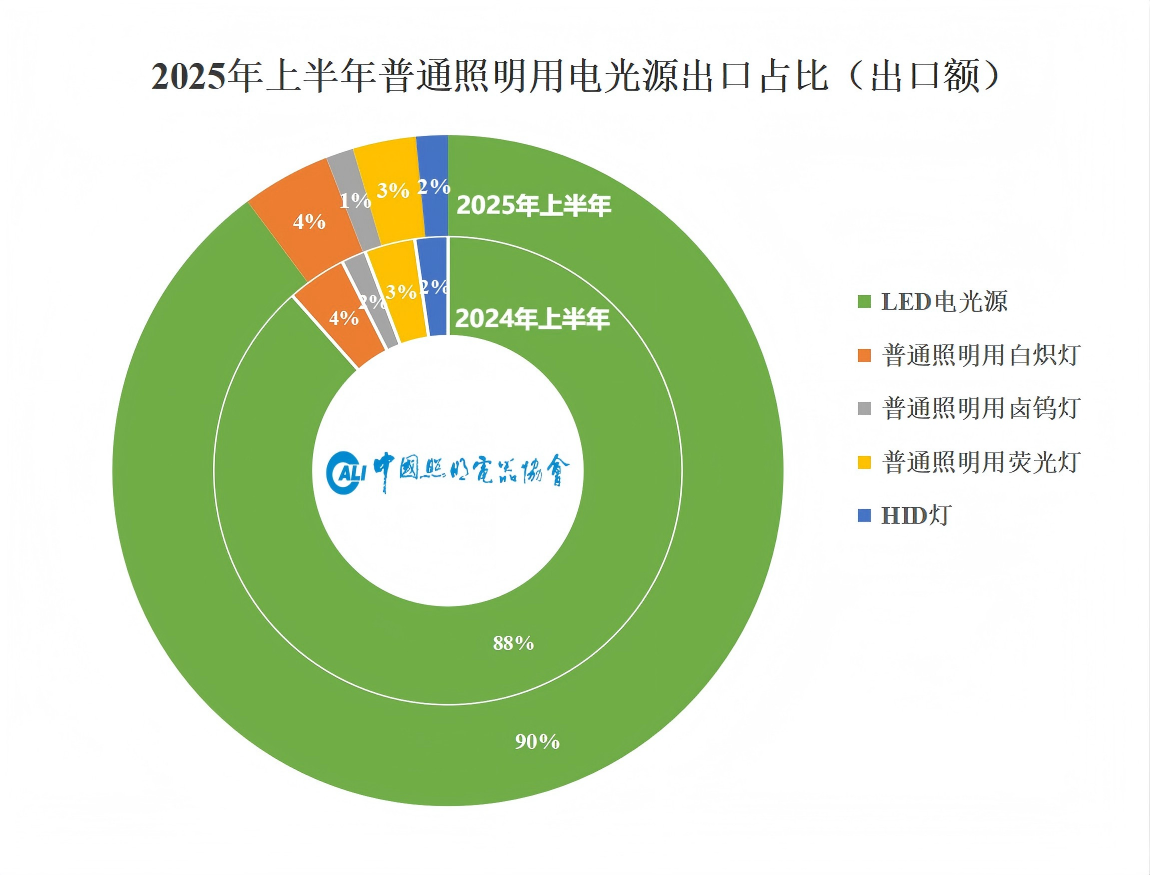
Regarding traditional electric light sources, although some categories experienced a short-term rebound, the overall trend is downward. The export volume of traditional electric light sources was approximately 800 million units, a Year-on-year (YoY) increase of 13%, among which tungsten halogen lamps grew the fastest, with exports of about 200 million units, a Year-on-year (YoY) increase of 111%. Exports to five countries including Cambodia, Vietnam, the US, France, and Brazil accounted for 78% of the total volume of this category, with the largest quantity exported to Cambodia, reaching 70 million units, a Year-on-year (YoY) increase of nearly 10 times, reaching 976%. However, in terms of export value, traditional electric light source products such as incandescent lamps, fluorescent lamps, tungsten halogen lamps, and HID generally remained in a downward trend, with an export value of approximately USD 700 million, a Year-on-year (YoY) decrease of 14%. This also indicates that the rebound of traditional electric light sources is more of a "restocking" or "low-end substitution" nature, and under the pressure of "dual carbon" policies and the popularity of LED, it is difficult to reverse their long-term shrinking trend.
Keyword Three Destination
Emerging markets are actively driving overall performance, while the US and European markets show uneven trends.
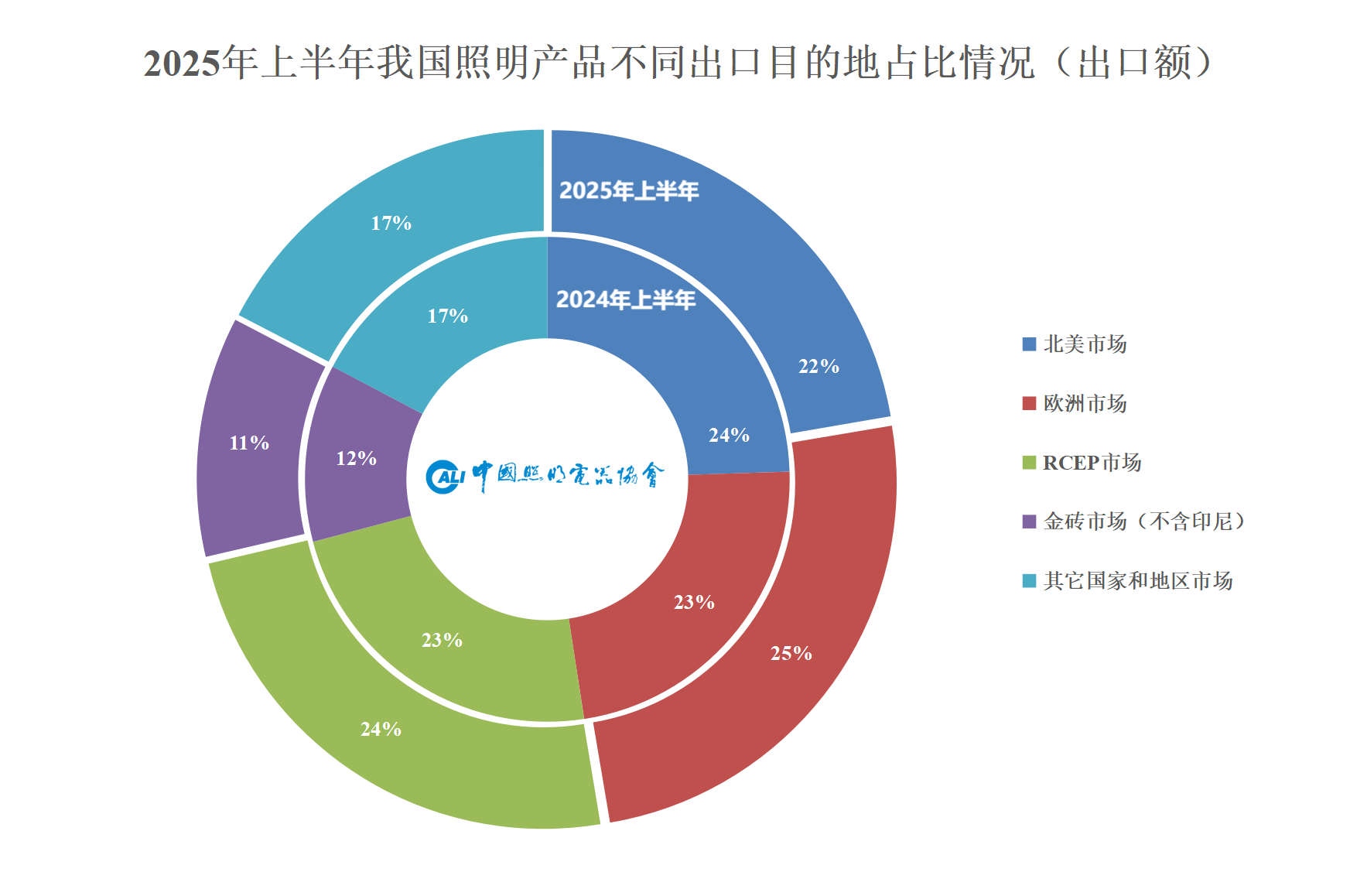
In the first half of 2025, China's Export volume to the North American market was approximately USD 5.8 billion, a Year-on-year (YoY) decrease of 14%. Export volume to the European market was approximately USD 6.5 billion, a Year-on-year (YoY) increase of 2%. China's Export volume of lighting products to countries along the "Belt and Road" was approximately USD 12.7 billion, a Year-on-year (YoY) decrease of about 2%. The structure of destinations for Chinese lighting product Exports has undergone some noteworthy new changes. Among the top ten Export destination countries, there is strong growth from emerging markets as well as divergent performance in traditional markets, overall showing a trend characteristic of "peripheral markets advancing towards central markets".
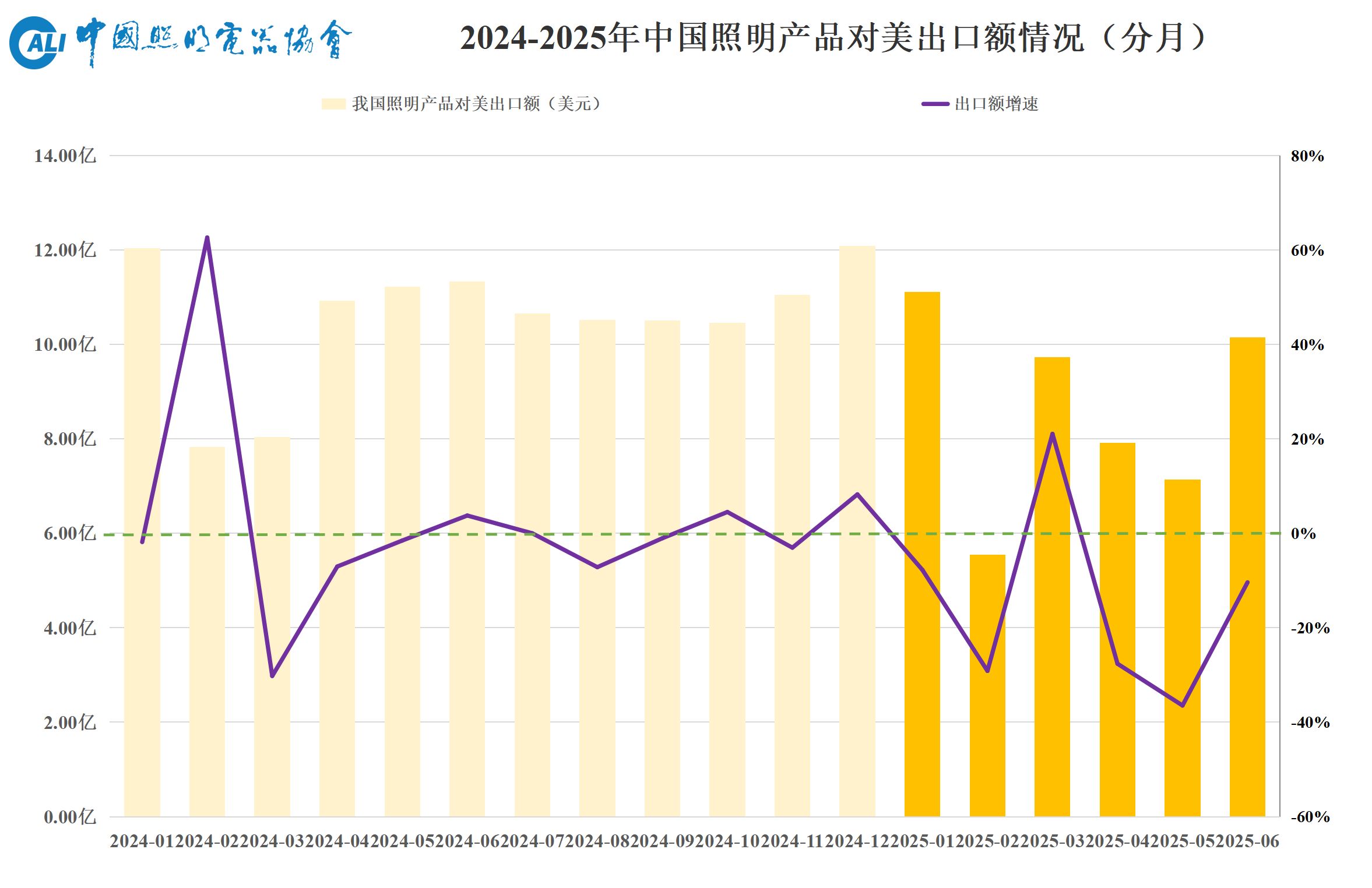
In terms of market size, the United States remains the largest Export destination for Chinese lighting products, but its market position has declined somewhat from its peak. From January to June 2025, Export volume to the US was USD 5.2 billion, a Year-on-year (YoY) decrease of 16%, and its share of total Exports dropped from 24% last year to 22%. On one hand, high US dollar interest rates have put pressure on end-user consumption; on the other hand, the US has imposed additional tariffs and promoted supply chain localization, creating certain substitution pressure on Chinese products. In April this year, the US imposed additional tariffs on China again, leading to multi-dimensional changes in the operating conditions of domestic lighting enterprises. According to surveys conducted by the China Lighting Association among key industry enterprises: at the order execution and shipment level, enterprises generally face pressure from order adjustments. Orders for some enterprises were cancelled or production and shipments were suspended, completed orders remained stranded in warehouses, and delivery dates for unfinished orders were delayed; other enterprises only shipped small batches for urgently needed customer products, with regular orders completely suspended. Meanwhile, order transfer has become a significant trend: some orders were transferred to Thailand for production, while unassembled products shifted to Vietnam, with more and more enterprises accelerating the transfer of production bases to Southeast Asia. Regarding price and tariff burden, pressure to reduce prices has become concentrated. Many enterprises faced customer requests for price reductions, with some already reducing prices by 2% when tariffs rose to 45% earlier this year. Other enterprises reached an impasse with customers over price reduction demands; for some products imported into the US and then resold to retail stores, the relevant tariffs were fully borne by customers, and new tariffs on small-batch urgent products were also mostly borne by customers. Overall, the imposition of tariffs has directly impacted enterprises' production layouts, order fulfillment, and cost negotiations, with shifting production to Southeast Asia becoming the primary choice for most enterprises to cope with the shock, while some enterprises have not yet formed clear response strategies.
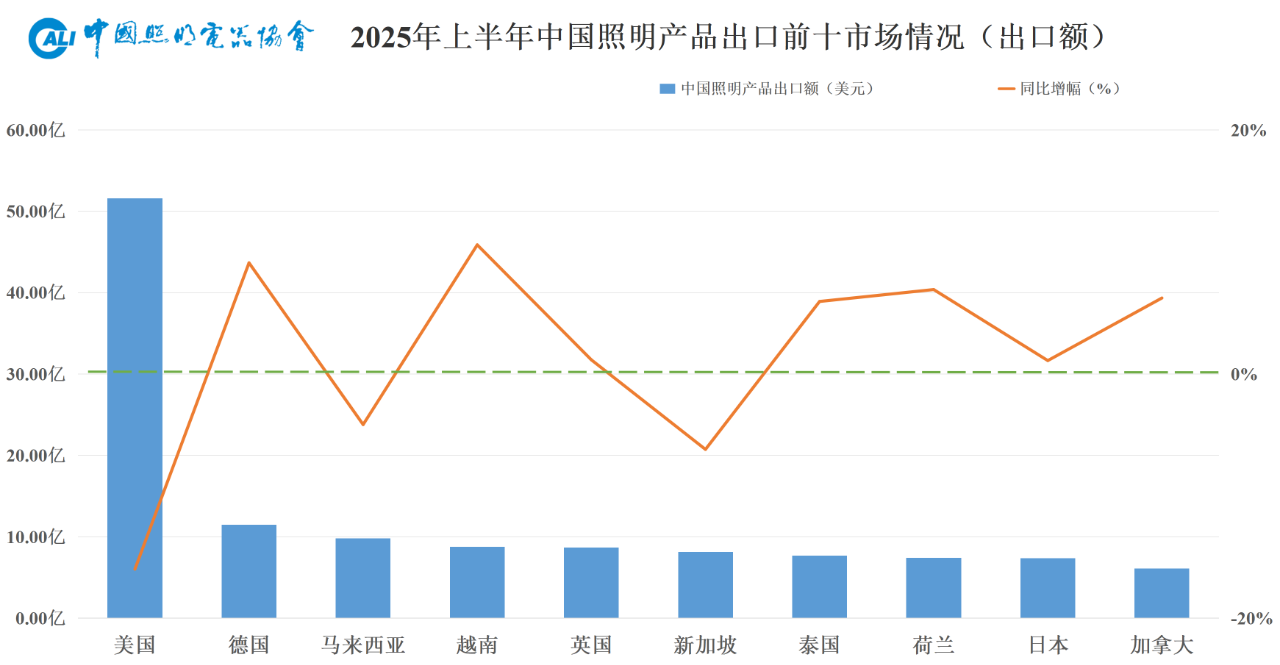
In contrast, the EU, ASEAN, and Africa have maintained positive contributions to China's overall lighting Export performance. Export volume to the EU was approximately USD 4.9 billion, a Year-on-year (YoY) increase of 4%; accounting for 19% of total Exports, up 2 percentage points from the same period last year. Among them, Germany is the largest market in the EU, with Export volume of approximately USD 1.2 billion in the first 6 months, a Year-on-year (YoY) increase of 9%, accounting for about 23% of the EU market, up 1 percentage point from the same period in 2024. Benefiting from the EU's policy orientation towards Green lighting and Smart lighting, some niche products such as LED intelligent control systems and solar garden lights still show steady growth, presenting new opportunities. Export volume to ASEAN was approximately USD 4.6 billion, a Year-on-year (YoY) increase of about 2%; accounting for 17% of total Exports, up 1 percentage point from the same period last year. Export volume to Africa was approximately USD 1.7 billion, a Year-on-year (YoY) increase of about 4%; accounting for 7% of total Exports, up 1 percentage point from the same period last year. Emerging markets are gradually shifting from peripheral consumers to key buyers, providing a realistic growth pivot for Chinese lighting Exports against the backdrop of stabilizing markets in Europe and America.
Keyword Four Price
LED modules (HS code: 85395100) and photovoltaic LED lighting fixtures (HS code: 94054100), as newly added subcategories, exhibit distinct market characteristics and are representative. In terms of export unit prices, these two product categories show significant differences across countries and regions, reflecting the diversity of downstream application scenarios, procurement needs, and market positioning.
LED Modules: Huge Differences in Export Unit Prices.
As one of the core components of lighting products, LED modules saw an export volume of over 4.1 billion units and an export value of approximately USD 300 million in the first half of 2025. While the overall export volume is large, the distribution of unit prices is extremely polarized. Specifically, Japan is the country with the highest unit price for China's LED module exports, reaching USD 6.99 per unit. Although the export volume was only 1.299 million units, the value reached USD 9.077 million, indicating strong demand for high-end customized and technology-intensive products in the Japanese market. Meanwhile, export unit prices to countries such as the Netherlands (USD 2.80/unit), Canada (USD 2.35/unit), and the United States (USD 1.54/unit) are also high, reflecting the developed markets' higher requirements for product performance, stability, and brand.
In contrast, markets such as Pakistan, India, and Vietnam, which rank high in export volume, exhibit a "high volume, low price" characteristic. Taking Pakistan as an example, its import volume in the first half of 2025 reached 885 million units, accounting for one-fifth of the total, but the export value was only USD 3.376 million, with an average unit price of just USD 0.0038 per unit. Similar cases include Egypt (USD 0.011/unit), India (USD 0.06/unit), and Vietnam (USD 0.035/unit). These markets feature fierce price competition, low product added value, and limited profit margins. Mid-tier markets such as Germany (USD 0.96/unit) and Mexico (USD 1.79/unit) show certain potential for product upgrades. By strengthening local Certification and customized services, there is hope to move towards higher value segments.
Photovoltaic LED lighting devices: High value-added orders are becoming mainstream.
As a representative product integrating new energy and lighting functions, photovoltaic LED lighting devices reached a total export volume of 300 million units in the first half of 2025, with an export value of 800 million USD, demonstrating strong market appeal and growth potential. In terms of unit price distribution, the export gap is also significant. Singapore ranks first with an average unit price of 24.69 USD/unit; although the export volume was only 820,000 units, the value exceeded 20 million USD, reflecting its demand for high-end intelligent and integrated lighting products. Such products are mostly applied in high value-added scenarios such as smart cities, landscape lighting, and emergency energy storage. Next, countries like Thailand (10.90 USD/unit), Saudi Arabia (6.40 USD/unit), Mexico (6.31 USD/unit), and Vietnam (5.06 USD/unit) all show relatively high unit price levels. These markets are transitioning from traditional lighting to "photovoltaic + lighting + control" systems, with procurement trends shifting towards mid-to-high end. As the largest export destination, the United States imported 53.17 million units in the first half of 2025, with a value of 178 million USD and a unit price of 3.35 USD/unit, reflecting the characteristic of "rising volume and price". Canada, Germany, the Netherlands, Japan, and other countries also exhibit similar mid-to-high-end characteristics, placing high demands on product performance, brands, and certification systems. In contrast, although the export volume to India was the largest (over 51 million units), the average unit price was only 0.11 USD/unit, still remaining at a low value-added stage. Similar situations exist in countries like Pakistan (1.46 USD/unit), where main demand focuses on low-cost products such as emergency lights and simple garden lights.
From the perspective of the overall export structure, Chinese LED modules and photovoltaic lighting products have achieved extensive coverage of major global markets. However, the phenomenon of price stratification is significant, and the problem of "emphasizing quantity over value" has not been fundamentally alleviated. Some low-price markets have long relied on bulk orders, which, while maintaining export scale, compress corporate profits and affect brand development. Although high-price markets have smaller volumes, they grow faster and have stronger stickiness, making them worthy of focused investment. Meanwhile, with the advancement of global "dual carbon" goals, the system integration capabilities and intelligent control capabilities of photovoltaic lighting and LED modules will become the core of a new round of competition. Promoting the shift of exports from "quantity-oriented" to "value-oriented" is the inevitable path for China's lighting industry to move towards high-quality development.
Keyword Five Quality
Export product quality issues still need attention, with string light products being a major area of notifications.
In the first half of 2025, Chinese exported lighting products still faced numerous quality notifications and recall cases in certain overseas markets. According to incomplete statistics, approximately 80 overseas notification incidents involving Chinese exported lighting products occurred in the first half of this year, mainly in markets such as Europe, the Americas, and Canada. Among these, string lights had a significantly higher number of notifications than other categories, accounting for over 70%, making them a high-risk area for quality issues.
From the content of the notifications, the main reasons for product recalls focus on electrical safety hazards and structural design defects. Issues such as insufficient wire cross-section, poor insulation, and inadequate cable fixation are most prominent, easily leading to risks such as exposed live parts and product overheating, posing significant hazards of electric shock, fire, and even burns. Countries such as Italy, Lithuania, and Spain have issued mandatory notifications for string light products multiple times, generally pointing out insufficient conductor cross-sections, which may lead to overheating and fire, with serious cases being banned from sale or even refused import. In addition to electrical safety issues, some products were also notified for non-compliance with environmental protection regulations, mainly involving excessive lead content in solder, or high levels of phthalates (DEHP) or short-chain chlorinated paraffins in plastic components, violating relevant EU directives such as RoHS or REACH. Such notifications are common in markets like Sweden and Germany, where environmental compliance has become an important threshold affecting the Export of lighting products.
It is worth noting that some new application products such as LED strips, garden lights, portable lights, and sleep lights have also faced recalls or bans in the North American market due to improper structural design, battery management failures, and risks of accidental ingestion by children. This market has increasingly stringent requirements for product usage scenarios and personal safety. Overall, compliance risks for Chinese lighting products in the global market persist, with quality issues concentrated in mid-to-low-end products represented by string lights. Exporting enterprises should continuously strengthen their quality management systems, improve product safety, durability, and environmental compliance levels, effectively reduce the risk of overseas notifications, and enhance their reputation in the international market.
Judging from the current foreign trade environment, China's lighting industry Export is expected to continue its overall stable development trend in the second half of 2025. Although external demand has not shown significant recovery, the correction of the US dollar index and the relative stability of the RMB exchange rate help stabilize Export prices and foreign exchange settlement income, providing certain support to overall Export in the short term. At the same time, falling inflation expectations and improved consumer confidence in major global economies are conducive to driving compensatory purchases of medium and low-voltage consumer goods, which is expected to benefit China's cost-effective LED lighting products.
However, the foreign trade situation in the second half of the year still faces multiple uncertainties. On one hand, the end of the "paying for Export declarations" policy will bring compliance pressure to some small and micro Export enterprises relying on agency models, which may affect Export activity in the short term; on the other hand, the continued decline in container shipping prices reflects weak market supply and demand, indicating that terminal demand has not fully recovered. In addition, some emerging markets such as Turkey have strengthened reviews of cross-border e-commerce goods, and the Export channel is shifting from loose entry to strict regulation, posing higher requirements for lighting enterprises relying on e-commerce (Sales) channels to go global.
In the face of a complex and challenging industry landscape, the China Association of Lighting Industry (CALI) will continue to serve as a bridge and link, helping the industry overcome difficulties and build a new development pattern where domestic and international dual circulation mutually reinforce each other.
In supporting enterprises to expand their foreign trade markets, the Association fully integrates resources and organizes companies to participate in a series of internationally renowned exhibitions with broad global influence, such as Light + Building and the Russian Lighting Exhibition. By participating in such exhibitions, enterprises can accurately grasp the latest trends and demand dynamics in the international market, expand international sales channels, and enhance their brand's international visibility and market competitiveness.
In terms of activating the development potential of the domestic trade market, the first China Lighting Industry Standard Quality Conference, which concluded last week, explored practical measures to promote high-quality industry development by enhancing the role of standard quality (Further reading: The First China Lighting Industry Standard Quality Conference Held in Changzhou).
The China Lighting Industry Conference, scheduled for the fourth quarter of this year, will also focus on deploying key tasks and development directions for the lighting industry during the "15th Five-Year Plan" period. The Association is committed to building various platforms for industry exchange and cooperation, discussing hot and difficult issues in industry development with domestic peers, sharing cutting-edge technologies and innovative concepts, promoting communication and cooperation between upstream and downstream enterprises in the supply chain, facilitating the widespread application of lighting products in various fields domestically and internationally, and injecting new momentum into industry development.