
Exhibition Insights — Lighting Professionals' Exhibition Anxiety: People Have Arrived, But the Direction Hasn't
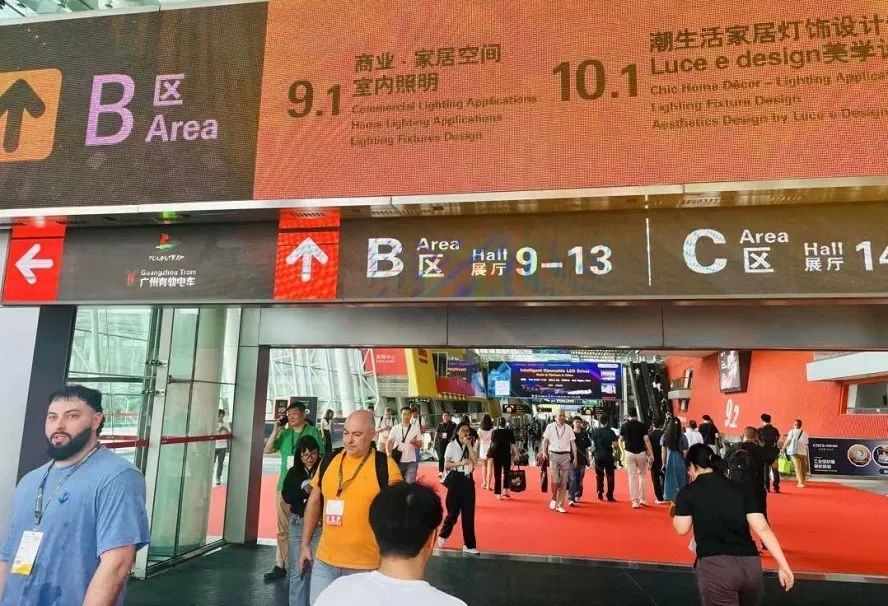
This year's GILE (Guangzhou International Lighting Exhibition) was held as scheduled, but it is no longer the 'barometer of the lighting industry'. The exhibition hall presents a real temperature difference:hot weather, cold industry.
On-site observations reveal:
Major brands are still absent, mainly composed of small brands and enterprises in niche sectors;
The number of exhibitors is significantly lower than in previous years , booth sizes and product volumes have generally contracted, and exhibition areas show obvious vacancies;
On the second day, visitor traffic was relatively concentrated, but overall heat and activity still could not compare with last year's Guangzhou Exhibition peak;
Despite consecutive high temperatures in Guangzhou causing inconvenience to transportation and itineraries, attendees still chose to be present; this reflects the industry's continued focus on trend developments and product changes ;
However, many visitors stayed only briefly at booths and lacked in-depth communication, creating a gap between information reception and conversion.
All of this indicates:
The exhibition is not hot, but visitors are still willing to come; companies are moving slowly, but all are trying to find direction.
This is not an exhibition where trends explode, but rather a 'collective halftime' for the industry—
an echo space used to observe each other, examine oneself, and re-evaluate the direction.
Moreover, it was clearly felt on site: most booths focus mainly on Export, with some even displaying signs saying 'No Chinese visitors allowed' ; this also means that the main force of this exhibition remains continuity in showcasing to overseas (Sales) channels and existing customers , rather than fully targeting new domestic markets or new demands.
The illusion of 'emotional lighting': looks good, but hard to explain clearly
On-site at the exhibition hall, many exhibitors promoted concepts such as 'emotional lighting', 'healing light environments', and 'spatial temperature', which sound very poetic, attempting to attract designers and visitors in a more 'emotional' way.
These booths certainly put a lot of thought into their design: the lighting is soft, the color tones are unified, and the display boards are written with genuine care, even making people stop to look longer. But the problems are also obvious:
Terms like 'emotion', 'healing', and 'warmth' mostly remain on the level of slogans; there is no clear explanation of how these luminaires relate to such concepts or what experience they can deliver ;
The luminaires basically still use traditional display methods; although product parameters are provided, there is a lack of usage demonstrations and application explanations , making it difficult for the audience to understand which scenarios this luminaire is suitable for or what kind of luminous efficacy it can bring;
Many booths simply treat 'soft light', 'adjustable color', and 'atmosphere' as selling points, but fail to clarify: What problem does this luminaire solve? Is it to help people relax? Improve focus? Or support health?
Overall, these types of booths are 'visually appealing but lacking in explanation'.
Talking only about concepts, without logic; full of emotion, yet lacking a manual.
When the audience stands in front of the booth and sees the phrase "Healing Light Scene," they think: "Hmm? So if I install this light at home, will I be happier?" Yet no one can explain it clearly.
"Emotional Lighting" could have been a very fun proposition, but if it is merely packaging language without the support of lighting logic, then it is just a self-indulgent "self-hype" , rather than a reason for the audience to pay.
Exhibits are hot, but the track is cold: products are identical, systems are missing.
In 2025, the lighting industry is undergoing a shift from "involution" to "collective waiting."
Overseas orders are slowing down, domestic demand is weak, and the continued impact of high tariffs and geopolitical trade friction makes many enterprises hesitant to transform boldly; they can only choose to maintain their original product forms, with 'stable shipments' as the primary goal.
This conservative strategy was also fully reflected at the exhibition: products were densely displayed, while systems were scarce; there was ample emphasis on volume, but insufficient scenario capabilities.
Outdoor Lighting: Volume Does Not Equal Solution
In the outdoor lighting exhibition area, product density remains very high, especially the concentrated display of street lights and floodlights is extremely significant:
Street light products generally adopt similar appearance structures and key parameters (such as high luminous efficacy, IP66, modular replaceability), but express very little regarding application elements such as road grade, photometric type, and reflectivity differences; In sports lighting, over ten companies exhibited high-power floodlights, but most still focus on foreign trade and OEM manufacturing, with similar appearances; many displayed designs imitating Masco. Product showcases focused mainly on luminaire performance and light distribution forms, lacking expression of overall solutions regarding competition standards, control systems, and supporting services.
Indoor lighting: Smart-led, missing circadian rhythm
The indoor lighting exhibition area presents another trend: smart lighting is fully dominant, while non-smart booths are almost marginalized.
Most brands focus on displaying "smart control systems" and "scenario-based grouping," paired with supporting hardware such as control platforms, sensors, and communication protocols;
Traditional luminaires lacking smart attributes attract fewer visitors, with short dwell times and minimal on-site discussion;
The "large street lights" that were highly sought after last year are almost absent at this exhibition, with a clear drop in popularity;
健康照明、节律照明等近年热门话题,仍未形成体系化展示,仅个别智能系统厂商在控制界面中做出简单演示,未能成为展会亮点或技术趋势的主轴;
不少以出口为主的展位仍不接待国人,甚至不允许国人参观。
这反映出两个趋势:
Indoor lighting markets have entered a stage where "non-smart means no participation";
Currently, most "smart lighting" still remains at the control logic level; truly advanced functions involving rhythm management, spatial perception, and data feedback are still absent.
Exhibitions bring opportunities, but they cannot prepare everything for you.
In the past, lighting exhibitions were the "main battlefield" for enterprises to build brand awareness and capture customers.
Nowadays, relying solely on attending exhibitions is no longer enough to "turn the tables".
Even if the booth design is beautiful, visitors may only take photos without communicating;
Even if the luminaire parameters look good, customers care more about whether there is a real Solution;
Even with high traffic, without follow-up capability, it is hard to convert into long-term trust.
The current market values whether you have "real skills":
Is your product a complete system that can be applied across different projects?
Can you clearly explain "how to use the lights", not just say "we have this light"?
Do you have a team that can implement the solution, install the lights and provide follow-up service?
What you say is understood by customers, they trust you and are willing to follow you.
In the end, Trade shows allow people to see you, but whether they stay as customers depends on whether you are truly prepared.
Don't ask if the exhibition can set the global tone; first ask if you have a 'plan'.
今年的照明展,只能算是照常办了,但是不是成功的,大家应该心里都清楚:
灯具是越来越多,可真正的新品和应用解决方案方案却不多,倒退了;
展板上的花活越来越多,用户真正关心的是灯怎么用、值不值很少提及;
智能控制满展馆都是,可真能跑通铺开的没几个;
The sound of Export is loud, but most companies' strategies are still "taking it one step at a time".
This exhibition is like a mirror, reflecting the current state of every brand:
Is it "still talking about concepts", or "really getting things done";
Is it "waiting for customers to come", or "already polishing the solution";
Is it "relying on design to attract attention", or "winning the market with systems".
In the end, no matter how lively the exhibition is, it is just the beginning.
Whether you can go far depends on whether you have direction, rhythm, and real preparation.
The above article is from Mr. Bottle Light, author Shao Wentao
China Light
The official website of the China Association of Lighting Industry and a full-media platform for the lighting sector. We provide authoritative and timely lighting information while striving to be a growth partner for businesses. From brand promotion and channel expansion to consulting, talent training and participation in standards development, we provide comprehensive professional services to help businesses improve quality and efficiency and jointly advance the high-quality development of the lighting industry.
Business Contacts
仇纯 (Ms.): 158 6155 3579
顾君 (Mr.): 137 7157 5253