
Annual Review | Eight Key Words Outline the Lighting Industry in 2024
The Lighting Industry in 2024
Editor’s Note:
Recently, the China Association of Lighting Industry(中国照明电器协会) conducted the annual selection of hot words for the lighting industry in 2024. Through public voting, we have selected the following keywords to outline the development profile of the lighting industry in 2024 and, to some extent, indicate the future direction of the industry.
New Quality Productive Forces
In 2024, "accelerating the development of new quality productive forces" was included in the Government Work Report for the first time, becoming a key focus for various industries in the near future. At the 19th "China Road Lighting Forum" and the 3rd "Yangtze River Delta Integrated Lighting Industry Ecosystem Development Forum" held at the beginning of the year, He Ye, Vice President of the China National Light Industry Council and Chairman of the China Association of Lighting Industry (CALI), stated that "we must promote the industry's development towards high-end, intelligent, and green directions by developing new quality productive forces." The 2024 China Lighting Industry Conference held in October, themed "Developing New Quality Productive Forces to Build a New Industry Ecosystem," invited representative enterprises from upstream and downstream of the supply chain to engage in in-depth exchanges and discussions on policies, technologies, products, markets, brands, and services closely related to the development of new quality productive forces in the lighting industry. Over the past year, industry enterprises have actively cultivated new quality productive forces through technological, managerial, and business model innovations. Tospo Lighting collaborated with emerging automotive brands to expand its automotive business segment and gain new market share; Foshan Lighting endowed its "time-honored brand" with the new meaning of "future technology lighting" and proposed the "Technology Foshan Lighting" development strategy; Unilumin Group planned an industrial layout of "walking with light displays," and Ledis's case of "smart lighting building nighttime city brand image" was selected as a typical case in the Ministry of Industry and Information Technology's "Digital Three Products" application scenarios; Xuyu Optoelectronics and Xiamen Tongshi Da were listed in the Science and Technology Progress Award of the China National Light Industry Council for their achievements in key technologies for smart agriculture; 12 lighting-related patents were shortlisted for the "25th China Patent Award," mainly involving mid-to-upstream patents such as light-emitting device manufacturing processes and power supply technologies. In addition, enterprises actively implemented lean production management, optimized supply chain processes, achieved cost reduction and efficiency improvement, and practiced high-quality development through intelligent transformation and digitalization.
Going Global
The overseas market has always been an important component of the sustained development of China's lighting industry. China's foreign trade in lighting products has basically maintained an annual export volume of around USD 55 billion, accounting for more than 60% of the industry's total sales. Since 2024, markets along the "Belt and Road" have become a new growth point for lighting exports. In the first 11 months, China's exports of lighting products to countries along the "Belt and Road" reached approximately USD 22.4 billion, a year-on-year increase of 2%, accounting for 45% of China's total lighting product exports. Facing potential risks brought by changes in the global political and economic landscape, lighting companies have risen to the challenge, deeply participating in a new round of adjustments in the international market, increasing efforts to explore overseas markets and channels, accelerating the transition from product exports to brand, design, manufacturing, and service exports, and firmly moving from "going out" to a deeper level of "going in." Key enterprises such as OPPLE, Yangming Lighting, Tospo Lighting, MLS / MLS Co., Ltd., Star Auto Lights, Inventronics, and Huayi Lighting have tapped into the potential of overseas development by acquiring well-known overseas companies, cultivating international brands, establishing overseas R&D centers, investing in overseas factories, and participating in overseas project construction. High-quality supply chain enterprises such as Everfine, Huapu Yongming, Hangzhou Yongdian, Dongling Power, Songsheng Shares, Hengkun Optoelectronics, Zhuoyue Huayu, and Nanjing Likong have enhanced their competitiveness in the global supply chain system by actively participating in overseas exhibitions. More processing and manufacturing enterprises have strengthened their ability to resist risks from overseas trade orders by setting up factories in Southeast Asia, South America, and other regions.
Intense Competition
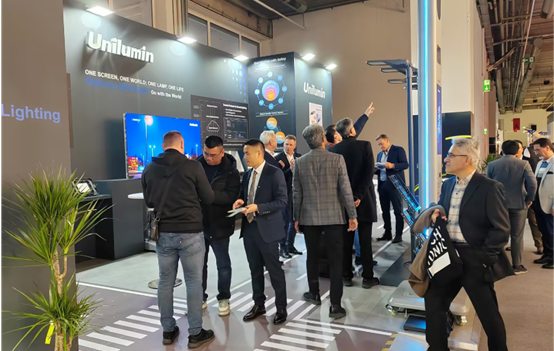
It truly reflects the fierce competition in the lighting industry, with companies trapped in a vicious cycle of low-price competition. In the Lighting Industry Sentiment Index released by the China National Light Industry Council, the profit sentiment index entered the "overcooling zone" in August. Although the downward trend began to slow down in October, "losses" have become a prominent phenomenon in 2024. According to incomplete statistics, the number of loss-making enterprises above designated size in China exceeded 1,000 in the first 10 months, with the loss amount increasing by over 10% year-on-year (YoY), and profits declining by nearly 5%. More than half of the listed companies saw a decline in net profit in the first three quarters. Facing this dilemma, industry companies are actively reflecting. At the 10th Executive Director Meeting of the 9th Council of the China Lighting Association, participating representatives discussed and believed that "price wars" are tantamount to self-destruction, but "competing on technology" should be advocated. Companies should build unique technological advantages and focus on differentiated development. "Competing on technology" has spurred "micro-innovations": at domestic and international lighting exhibitions in 2024, we saw "micro-innovation" products such as indoor luminaires that improve acoustic environments, wireless-powered underwater lighting products for easy maintenance, 25mm small-aperture downlights, and 5mm ultra-narrow magnetic tracks receiving widespread attention from customers and the industry; luminaires adopting China's proprietary offline voice control technology exploded in the Japanese disaster prevention market; Cidon Lighting released new commercial lighting products, effectively solving the pain points of dimming needs in large-space multi-functional application scenarios through innovative technologies such as internal electrical transmission architecture, digital optical zoom systems for electronic control, and automatic light tracking control systems. Its innovative perspective and problem-solving capabilities demonstrate the company's deep accumulation in focusing on professional application scenarios for a long time.
"Two New"
"Two New" refers to large-scale equipment renewal and consumer goods trade-in. In March, the State Council issued the "Action Plan for Promoting Large-Scale Equipment Renewal and Consumer Goods Trade-In," clearly stating that "promoting large-scale equipment renewal and consumer goods trade-in is an important measure to accelerate the construction of a new development pattern and promote high-quality development," and made specific arrangements for implementing four major actions: equipment renewal, consumer goods trade-in, recycling and circular utilization, and standard improvement. The National Development and Reform Commission, together with the Ministry of Industry and Information Technology, the Ministry of Finance and other departments, issued the "Energy Efficiency Advanced Level, Energy Saving Level and Access Level for Key Energy-Using Product Equipment (2024 Edition)," specifying energy efficiency level indicators for four lighting appliance products including LED panel lights, LED downlights, and LED luminaires for road and tunnel lighting, as well as related product promotion policies, playing an important role in guiding green consumption of lighting in production and living areas. In July, the National Development and Reform Commission and the Ministry of Finance jointly issued "Several Measures to Strengthen Support for Large-Scale Equipment Renewal and Consumer Goods Trade-In," arranging about 300 billion yuan of ultra-long-term special treasury bond funds to continuously promote the implementation and effectiveness of the "Two New" policy. In the 11th batch of the "Guide for Upgraded and Innovative Consumer Goods" of the light industry, six lighting products from six companies including NVC / NVC Lighting, Tospo Lighting, and Panasonic were selected, providing product guarantees for promoting lighting consumption. Currently, pilot schemes for lighting product trade-ins have been launched in Jiangsu, Shanghai, Guangdong and other places. Data on the national economy for November released by the National Bureau of Statistics shows that national fixed asset investment grew steadily; total retail sales of consumer goods reached 4,376.3 billion yuan, a year-on-year (YoY) increase of 3.0%; month-on-month growth was 0.16%, among which retail sales of building and decoration materials increased by 2.9%. The December work conference of the Ministry of Housing and Urban-Rural Development clearly proposed to "vigorously implement urban renewal" in 2025. According to incomplete statistics, the total length of urban roads in China is nearly 600,000 kilometers, the urban lighting market capacity is about 200 billion yuan, and the road lighting market capacity is about 80 billion yuan. The vigorous implementation of urban renewal work will bring greater development potential for landscape and road lighting.
Light Health
随着光生物效应等照明基础理论研究的进展,人工照明对人的视觉健康和情绪影响等方面的技术应用也在陆续获得突破。这深刻影响了LED芯片研发、光谱调制、产品设计研发与制造这一整条产业链的技术革新,以及教育领域、医疗康养领域以及特殊作业场合照明等多个细分领域的市场发展。越来越多的照明设计师开始注重通过色彩、光影、智能化控制等手段营造与场景适配的情绪氛围并获得情绪价值,这也开启了照明体验的情感化时代。2024年,GB/T 44441-2024《LED照明产品视觉健康舒适度测试》发布,国家标准《光的人眼非视觉生物效应作用剂量》通过评审,这一系列围绕光健康相关的标准化研究成果,为健康照明的评价和定量应用提供了标准依据,“光健康”也由此实现了定量评价和算法设计。4月,央视报道了基于照明技术的健康人因疗愈舱项目在南极科考基地的应用。该项目由郝洛西教授带领团队,联合欧普照明、上海亚明、企一照明等多家企业和科研院所共同承担,完成了一次对健康照明理论科学且有效的应用探索,引起社会各界的广泛关注。由江风益院士主导的具有我国自主知识产权的金黄光技术牵手深圳向日葵智能科技,共同打造无蓝光的健康睡眠灯产品,主动发现并服务特定人群的消费需求,创造新的消费市场。雷士照明推出“伴生适然光技术”,欧普照明推出应用SDL智慧光谱技术的系列产品,这些围绕光健康的产品推出引领了照明市场的新风向。
Full Spectrum
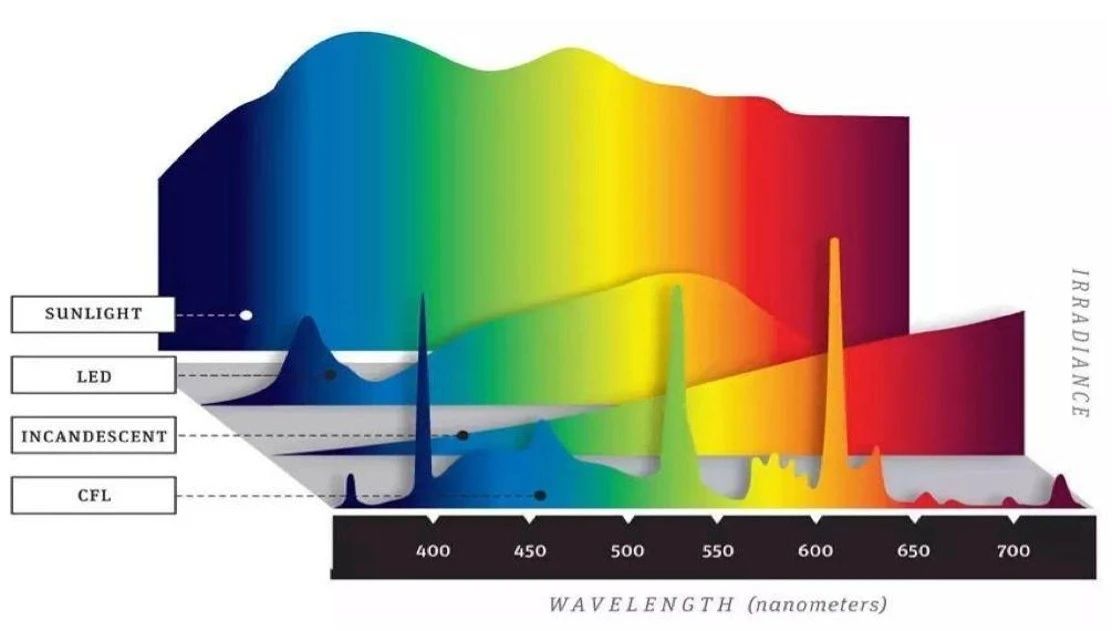
Concepts such as "light recipes" and "spectrum modulation" continued to gain popularity this year. They are not only relevant to healthy lighting but also represent the forefront of technological innovation, finding applications in niche sectors such as plant growth, automotive, color customization, and special-purpose lighting. Spectral technology implementations by companies like ams OSRAM, Xuyu Optoelectronics, Jinhuangguang, MLS / MLS Co., Ltd., and Zhuosheng Lighting are maturing, with their value increasingly recognized by users. As the origin of innovation in the lighting industry, every breakthrough in spectrum technology expands the boundaries of lighting applications and injects new vitality into industry development. Although the concept of "full spectrum" has entered the lighting market and triggered a new wave of market growth, scientific evaluation of the relationship between "full spectrum" and healthy light, along with related standardization efforts, is still in its early stages, making it a new hotspot in technological innovation and standardization. In 2024, a series of related national standards (mandatory / recommended), including "Specification for Evaluation of Sun-like Spectrum", "Standard Test Method for Evaluating Spectral Quality of Daylight Simulators for Visual Assessment and Color Measurement", and "Evaluation Method for Color Rendering Quality of White Light Sources", were proposed or initiated, providing further technical support for the scientific assessment of spectra.
AI
As the core of next-generation information technology, AI (Artificial Intelligence) has demonstrated immense application potential and value in supply chain optimization, intelligent manufacturing, and other areas, becoming a key driver for meeting consumer demands and leading industrial innovation. The lighting industry is also actively applying AI technology to accelerate its further integration with the sector. In 2024, training on AIGC combined with lighting design sparked a热潮 (wave of enthusiasm) in the industry. The China Association of Lighting Industry and multiple professional committees and local associations organized several "AIGC Lighting Design Workshops" through online and offline methods, helping lighting designers update their knowledge structure regarding the combination of AI technology and lighting design, while also expanding new directions for combining AIGC with luminaire design. Furthermore, Mini/Micro LED products and LED+AI innovative applications such as virtual production and digital humans continue to develop in the field of cultural tourism and landscape lighting. At major urban nightscape lighting events in 2024, such as the Shanghai International Light Festival, Guangzhou International Light Festival, and Beijing Chaoyang International Light Festival, "AI + Light and Shadow Art" has become an important technical means for various regions to create unique, eye-catching "new landmarks of the night-time economy."
Green and Low-Carbon
High efficiency and energy saving have driven the rapid development of the lighting industry over the past two decades, with green and low-carbon practices becoming key points for the next round of growth. With global attention on low-carbon sustainable development and the widespread dissemination of ESG (Environmental, Social, and Governance) concepts, the lighting industry is placing increasing emphasis on product technology and corporate responsibility and actions in carbon reduction. In 2024, Huapu Yongming released a modular LED street light architecture featuring distributed energy storage and remote communication control components, exploring another technical path to carbon neutrality for road lighting products beyond "energy saving"; MLS Co., Ltd. actively promoted the application of recycled materials in light bulb manufacturing, effectively reducing plastic waste generation, lowering energy consumption and carbon emissions; domestic and international enterprises represented by Signify, Aldo, and NVC Lighting have all made carbon management and ESG concepts important aspects of their corporate operations. National standards such as "Methodology for Carbon Footprint Accounting of Lighting Products" and "General Technical Specifications for Solar Photovoltaic Lighting Devices" have entered the final stage of standard development, while China Lighting Association group standards such as "Product Carbon Footprint - Product Category Rules - Luminaire", "Product Carbon Footprint - Product Category Rules - Light Source", and "Product Carbon Footprint - Product Category Rules - Light Source Control Device" are also under development. These efforts will provide clear accounting rules and methods for the full lifecycle carbon emissions of lighting products, offering the industry scientific and standardized carbon footprint management tools.
Conclusion:
Looking back at 2024, industry enterprises faced the dilemma of a sluggish market and intensified competition, yet they dared to think and actively broke through, seizing new development opportunities with innovative concepts; looking ahead to 2025, which has already set sail, the lighting industry will continue to steadily advance along the paths of intelligence, greening, high-end development, and integration, maintaining its competitive advantage in the global lighting industry. The China Lighting Association will further promote industry technical exchanges, improve standard formulation, and strengthen services and support for industry enterprises in innovating technologies, enhancing quality, and developing markets, working hand in hand with industry enterprises to create a new situation of high-quality development in the lighting industry.