
Lightning Protection and Grounding of Light Poles
The following article is sourced from Binghua Talks Electrical , authored by Binghua Talks Electrical
As shown in Figure 1, light poles can be located far from buildings or relatively close to them. The latter can be considered together with the building's lightning protection system, which will not be discussed here. This article mainly discusses the former; since the light poles are distant from buildings, a TT grounding system can be adopted.
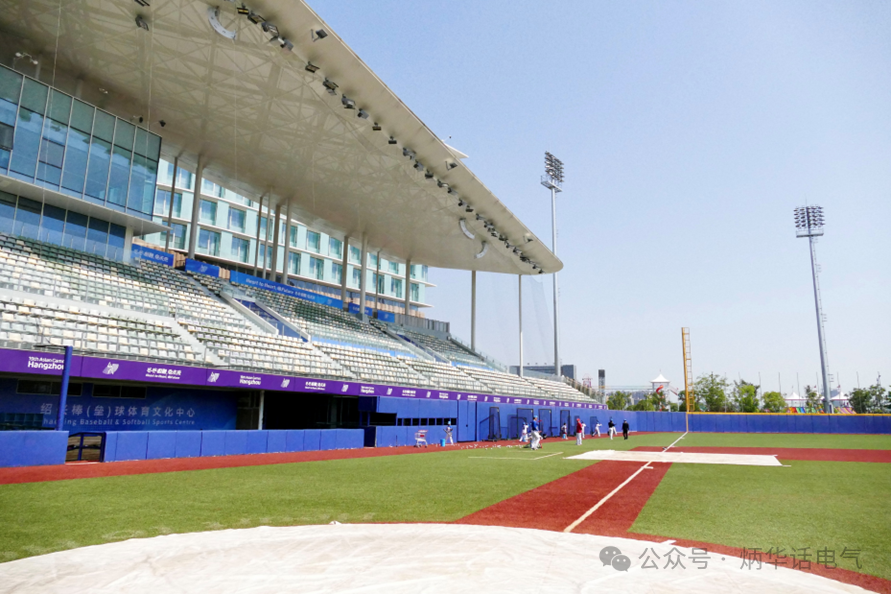
Figure 1 Example of a Light Pole
01 Lightning protection
Light poles for outdoor stadium lighting should use lightning rods as air terminals.Since the site is an open area, the light poles are naturally prominent structures.The luminaires and accessories on the light poles must be within the protection zone of the lightning rod, which is relatively easy to achieve.The lightning rod must be fixed to the light pole; extra care is required during installation, as higher poles sway more significantly.When the metal light pole meets lightning protection requirements, its metal structure can serve as both the air terminal and down conductor. Mainly, the material, specifications, and electrical continuity must comply with the requirements of the "Code for Design Protection of Structures Against Lightning" GB 50057-2010.
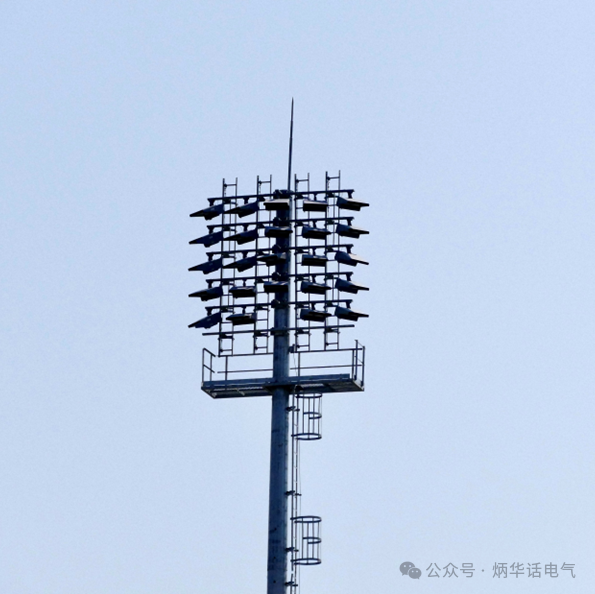
Figure 2 Example of a lightning rod
02 SPD settings
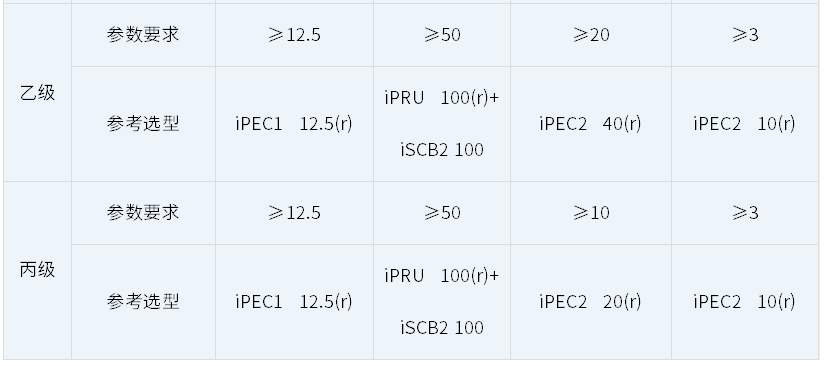
Light poles, luminaires and their distribution boxes (cabinets), control systems, etc. are all located in the LPZ0A zone, requiring the installation of surge protective devices (SPD). The following uses Schneider Wanhao's SPD as an example for explanation. Considering that the power supply is drawn from the stadium building, the system requires SPD installation, with recommendations as shown in Table 1. Class I tested SPDs must also be installed in terminal distribution boxes.
Table 1 Recommended values and selection parameters for impulse discharge current and nominal discharge current of power supply SPDs
03 Grounding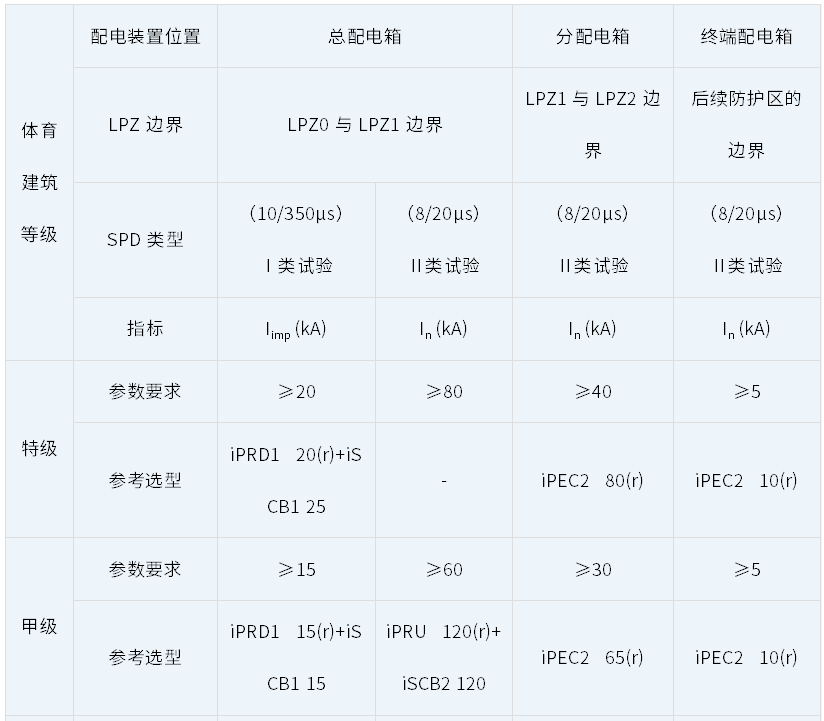
Light pole grounding is not only for lightning protection grounding, but also includes TT system load-side grounding, protective grounding, etc. The grounding resistance value should be the smaller one, generally not less than 30Ω.
According to Article 12.4.4 of the "Code for Electrical Design of Sports Buildings" JGJ 354-2014, light poles at outdoor competition venues shall be grounded in groups or individually. When the light poles are close to buildings, the grounding electrodes of the light poles shall be reliably connected to the lightning protection grounding electrodes of the buildings.
Outdoor lighting metal light poles, metal enclosures of distribution boxes and control boxes, etc., shall be reliably grounded. This grounding is protective grounding for safety purposes.
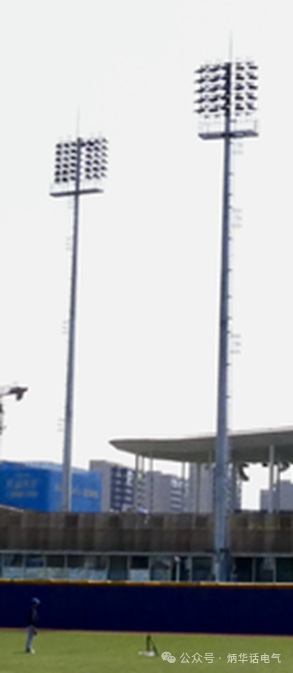
Figure 3 Example of Light Pole