2022 Overview of China's Smart Lighting Industry
Development Background
Smart lighting, also known as smart public lighting management platform or Smart streetlight / Smart pole, utilizes advanced, efficient, and reliable power line carrier communication technology and wireless GPRS/CDMA communication technology to achieve remote centralized control and management of Street light. It features automatic brightness adjustment based on traffic flow, remote lighting control, active fault alarms, luminaire cable anti-theft, and remote meter reading. It can significantly save electrical resources, improve the level of public lighting management, and reduce maintenance costs.
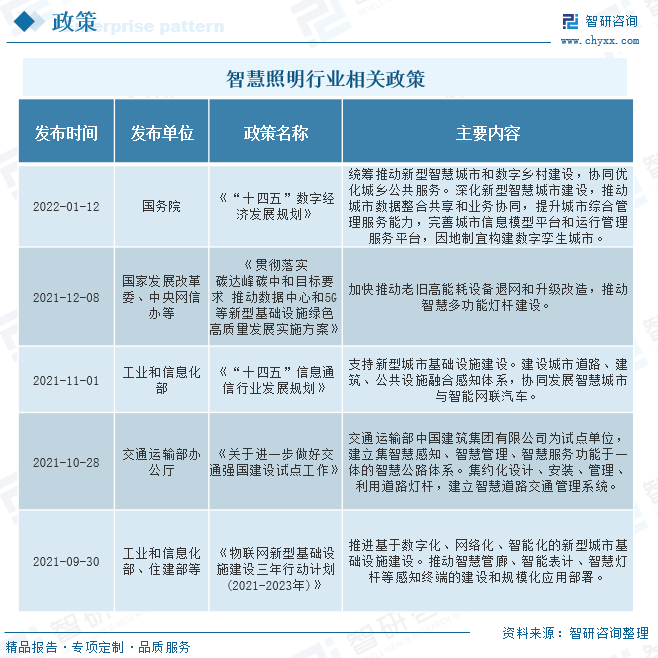
In September 2021, the Ministry of Industry and Information Technology, the Ministry of Housing and Urban-Rural Development, and other departments jointly released the "Three-Year Action Plan for the Construction of New IoT Infrastructure (2021-2023)," mentioning the promotion of new urban infrastructure construction based on digitalization, networking, and intelligence. It promotes the construction and large-scale application deployment of sensing terminals such as smart utility tunnels, smart meters, and smart street lights. In October 2021, the General Office of the Ministry of Transport, in the "Notice on Further Doing a Good Job in the Pilot Work of Building a Transportation Powerhouse," mentioned establishing a smart highway system integrating smart sensing, smart management, and smart services, with China State Construction Engineering Corporation as the pilot unit under the Ministry of Transport. It involves intensive design, installation, management, and utilization of road street lights to establish a smart road traffic management system. In November 2021, the Ministry of Industry and Information Technology, in the "14th Five-Year Plan for the Development of the Information and Communications Industry," mentioned supporting the construction of new urban infrastructure and building an integrated sensing system for urban roads, buildings, and public facilities. In December 2021, the National Development and Reform Commission, in the "Implementation Plan for Promoting Green and High-Quality Development of New Infrastructure Such as Data Centers and 5G by Implementing the Requirements of Carbon Peak and Carbon Neutrality Goals," mentioned accelerating the retirement and upgrading of old high-energy-consuming equipment and promoting the construction of smart multi-functional street lights. In January 2022, the State Council, in the "14th Five-Year Plan for Digital Economy Development," mentioned promoting the construction of smart cities and digital villages, promoting urban data integration, sharing, and business collaboration, and enhancing comprehensive urban management and service capabilities.
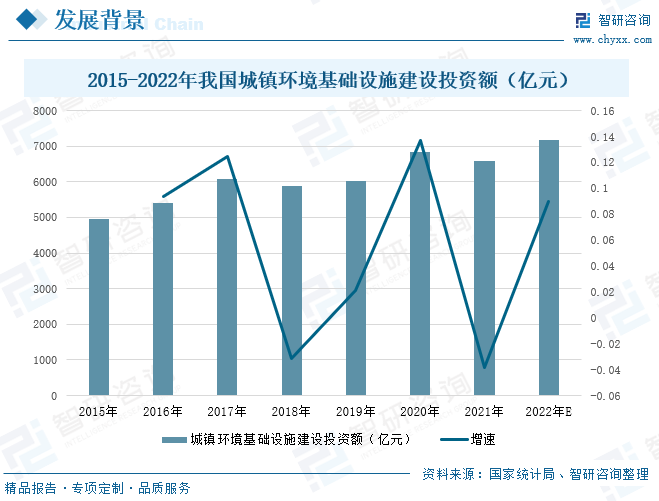
From 2015 to 2021, with the acceleration of urbanization, investment in urban environmental infrastructure construction in China has generally been on an upward trend. Investment in road construction has gradually increased, which will drive the development of China's urban lighting industry. In 2021, investment in urban environmental infrastructure construction reached RMB 657.828 billion, a Year-on-year (YoY) decrease of 3.86%. With the introduction of relevant policies in China, localities have clarified their intention to increase investment, address shortcomings, and strengthen weak areas. Investment in urban environmental infrastructure construction is expected to see explosive growth. It is projected that investment in urban environmental infrastructure construction in China will reach RMB 716.715 billion in 2022, with the growth rate turning from negative to positive, reaching 8.95%.
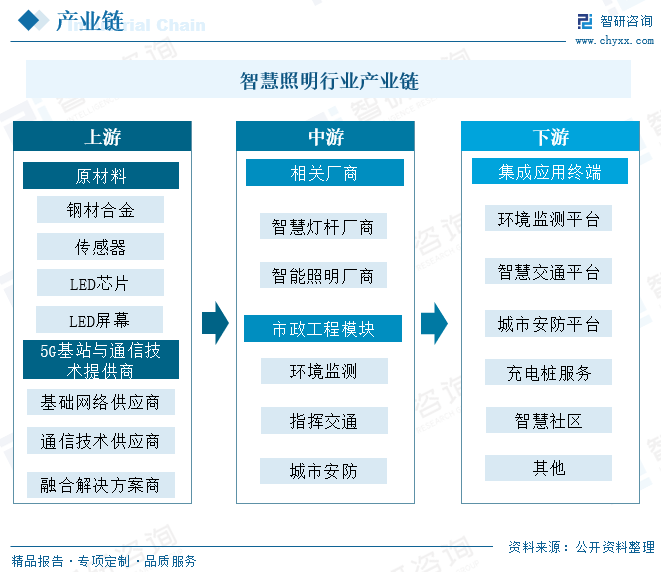
The upstream segment of the smart lighting industry chain mainly includes raw materials, 5G base stations, and communication technology providers, including steel alloys, sensors, LED chips, and LED screens; the midstream segment mainly includes related manufacturers and municipal engineering modules for data processing and usage; the downstream segment can be divided by function into environmental monitoring platforms, smart transportation platforms, urban security platforms, charging pile services, smart communities, etc.
Related Report: "Report on the Market Operation Status and Future Development Potential of China's Smart Lighting Industry from 2023 to 2029" released by Zhiyan Consulting
Smart lighting belongs to the smart lighting industry, and its market share is gradually increasing. With the continuous advancement of 5G construction and the deepening application of the Internet of Things, the pace of national smart city construction has significantly accelerated, urban operational efficiency has greatly improved, and the scale of the smart lighting industry continues to grow. In terms of application areas, it is mainly divided into industrial and commercial lighting, home lighting, outdoor lighting, and public lighting. Among them, industrial and commercial lighting accounts for the highest proportion at 57.21%, followed by home lighting and outdoor lighting, with proportions of 21.36% and 12.16% respectively.
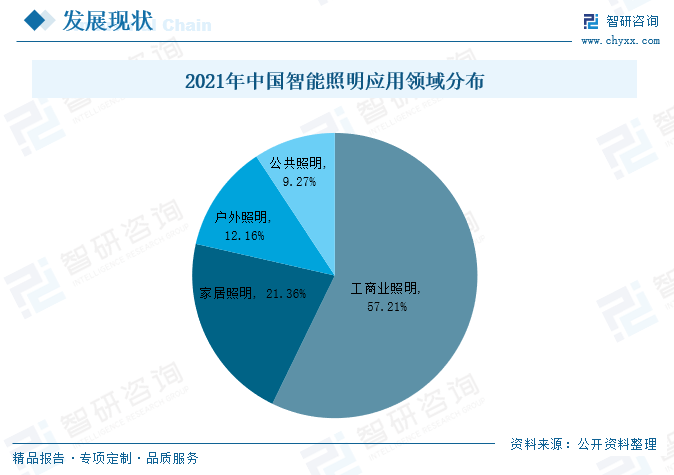
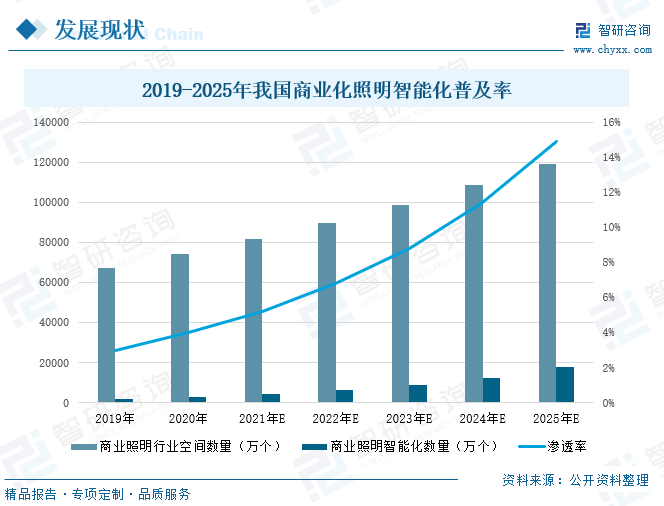
Based on the above, smart lighting applications account for the highest proportion in industrial and commercial sectors. In terms of penetration rate, in 2020, the number of commercial lighting spaces in China was 740.7 million, of which only 29.63 million were intelligent, resulting in a smart lighting penetration rate of 4% in commercial lighting. With the vigorous development of smart cities in the future, the penetration rate of smart lighting in commercial applications will continue to rise, with the smart lighting penetration rate in commercial lighting expected to reach 14.9% by 2025.
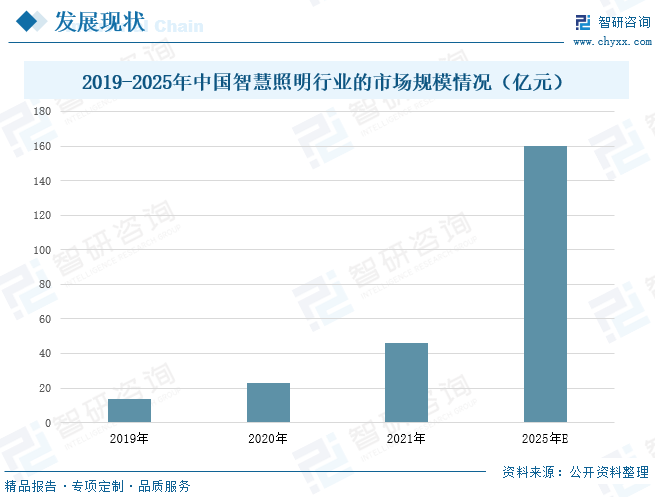
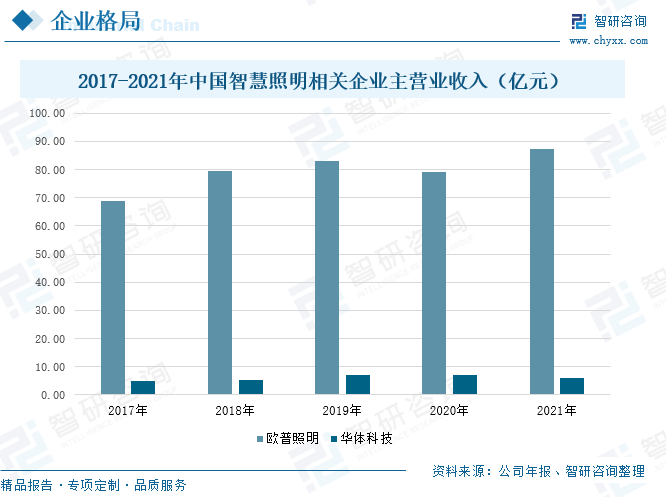
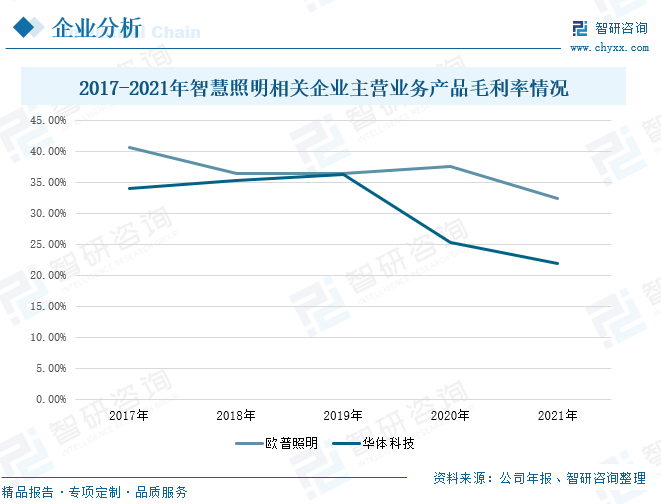
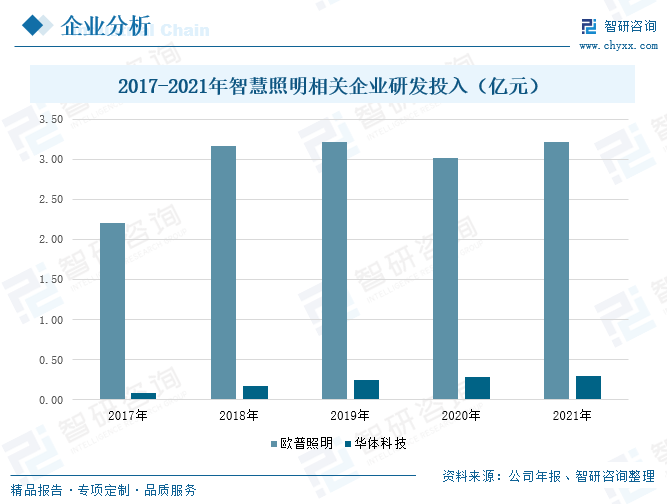
In terms of market size, China's smart lighting market experienced growth between 2019 and 2020. Data shows that the market size increased from RMB 1.35 billion in 2019 to RMB 2.31 billion in 2020. By 2021, it reached RMB 4.62 billion, doubling the 2020 figure. It is projected that China's smart lighting industry will maintain its growth trajectory, with the market size expected to reach RMB 16 billion by 2025. OPPLE Lighting is positioned as a green, energy-saving smart lighting enterprise, primarily engaged in the R&D, production, and sales of residential luminaires, commercial luminaires, light sources, and control products. It is gradually transforming into a comprehensive provider of lighting system solutions. The company adopts a sales model dominated by distribution, supplemented by direct sales, expanding its sales reach through channel penetration, delivering value-added services via integrated solutions, connecting online and offline channels through diversified channels, and enhancing brand influence through overseas expansion, thereby driving an increase in corporate revenue. In 2020, affected by the pandemic, the company's main business revenue gradually declined to RMB 7.903 billion, a decrease of RMB 476 million compared to 2019. In 2021, as the economy gradually recovered, the company's main business revenue rose to RMB 8.735 billion, an increase of 10.53% compared to 2020. Huati Technology is a system solution provider whose main businesses are new smart city scenarios and cultural lighting. It focuses on the investment, construction, operation, and R&D and manufacturing of smart streetlights, and is committed to becoming a builder and service provider for new-type smart cities. Smart streetlighting products are its core business products, adopting a make-to-order sales model. From 2017 to 2019, the company's core business products showed an upward trend. In 2020, the revenue from its core business products reached RMB 696 million, representing a year-on-year (YoY) decrease of 1.45% compared with 2019. In 2021, the company's core business revenue reached RMB 580 million, representing a year-on-year (YoY) decrease of 16.63%. In terms of gross profit margin, OPPLE Lighting showed a trend of first declining, then rising, and then declining again from 2017 to 2021. In 2021, the company's gross profit margin for its main business reached 32.43%, a decrease of 1.66 percentage points compared to 2020. Huati Technology's gross profit margin showed a trend of first rising and then declining between 2017 and 2021. In 2021, the company's gross profit margin for its main business dropped to 21.97%, a Year-on-year (YoY) decrease of 3.40 percentage points compared to 2020. After years of development and accumulation, OPPLE Lighting's R&D center has formed strong core competitiveness in optics, electronics, materials, and mechanical design. Based on different scenarios and user groups, it has successively launched multiple patented spectra. In terms of corporate R&D expenditure, the overall trend remained upward from 2017 to 2021. Except for 2020, when the impact of the COVID-19 pandemic caused the company's R&D expenses to drop to 302 million yuan, the R&D investment gradually increased in 2021, reaching 321 million yuan, a year-on-year (YoY) increase of 6.4%. Huati Technology is one of the few companies that possesses comprehensive R&D and technical capabilities, including multi-functional pole development, software development, hardware development, and system integration. It has strong technical advantages and capabilities in the smart streetlight field. In terms of R&D expenses, the company's R&D spending has maintained a stable upward trend. In 2021, the company's R&D expenses reached 29 million yuan, an increase of 1.32% compared to 2020. Analysis of Development Trends for Key Enterprises 1. Continuous optimization of smart city industry policies is driving the rapid development of the smart lighting industry The essence of a smart city lies in the deep integration of informatization and urbanization, representing a higher stage of urban digital development. With the widespread application of next-generation information technologies such as the Internet of Things (IoT), big data, cloud computing, and artificial intelligence, smart cities have become an inevitable trend. Frequent policy releases have sparked a wave of smart city construction across the country. Smart lighting is a crucial component of smart city development. As the nation promotes smart city initiatives, the smart lighting industry will benefit from favorable policies. For instance, in March 2022, the National Development and Reform Commission issued the "Key Tasks for New-Type Urbanization and Urban-Rural Integrated Development in 2022," explicitly calling for accelerated development of new-type cities, enhancing smart capabilities, and advancing IoT applications and intelligent upgrades of municipal public facilities and buildings. In the future, with the accelerating pace of urbanization, state investment in infrastructure such as road lighting will continue to increase, and related policies will be continuously optimized, offering broad growth prospects for the smart lighting industry. 2. Continuous technological advancement: multifunctional street lights are the future trend With the continuous in-depth development of smart cities and the smart industry, traditional street light poles with single functions have lost their competitiveness in the face of various intelligent terminals and can no longer meet current development needs. Based on this, multifunctional street lights will be vigorously developed. They can not only use urban space reasonably and orderly and beautify the road environment, but also integrate street light poles, traffic facility poles, road name signs, and directional signs along the roads, greatly reducing government costs and improving efficiency. With the further maturity of artificial intelligence technology and the development of 5G technology, fields such as data mining and automatic programming will be realized in more application areas, which will further boost the accelerated development of the smart lighting industry. The number of multifunctional street lights will continue to increase, making it an important direction for future development. ●The above data and information can be referenced from the "Report on Market Operation Trends and Future Development Potential of China's Smart Lighting Industry (2023-2029)" published by Zhiyan Consulting (www.chyxx.com). Source: Zhiyan Consulting