
Analysis of the Development of Photovoltaic Lighting Products in 2022
Achieving carbon peak and carbon neutrality is crucial for global sustainable development and building a community with a shared future for mankind. Currently, over a hundred countries worldwide have committed to achieving carbon neutrality by the mid-21st century. With the global implementation of "dual carbon" policies, products utilizing various clean energy sources such as solar and wind power have become new favorites in the global market.
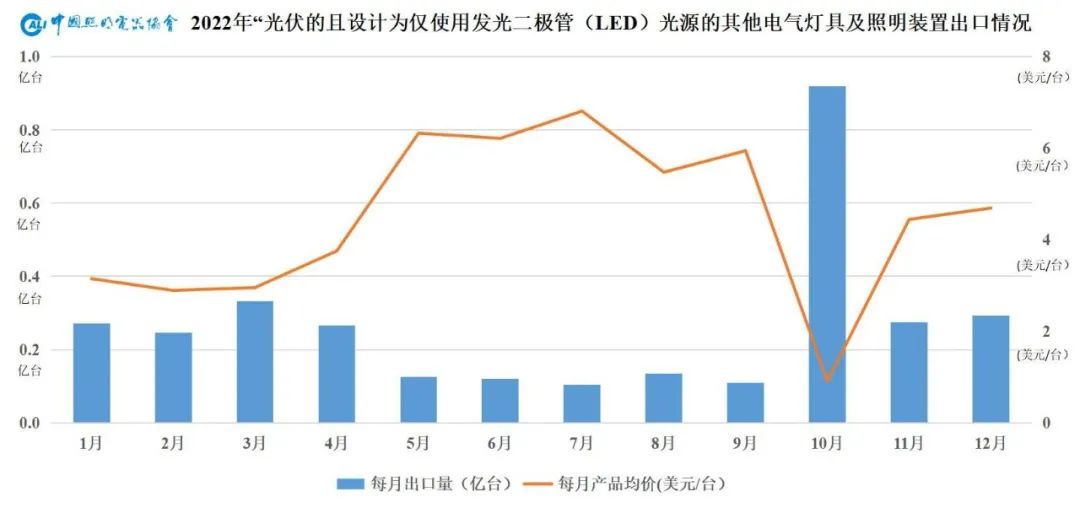
In 2022, the General Administration of Customs released a new edition of the Harmonized Commodity Description and Coding System, adding a separate tariff subheading for "Other electrical luminaires and lighting fittings, photovoltaic and designed to use only light-emitting diode (LED) light sources," highlighting the development potential and future market importance of such products. In 2022, China's export volume of "other electrical luminaires and lighting fittings, photovoltaic and designed to use only light-emitting diode (LED) light sources" reached 320 million units, with an export value of USD 1.06 billion, accounting for approximately 1.7% of China's total lighting exports and 2.3% of the total export value of luminaire products.
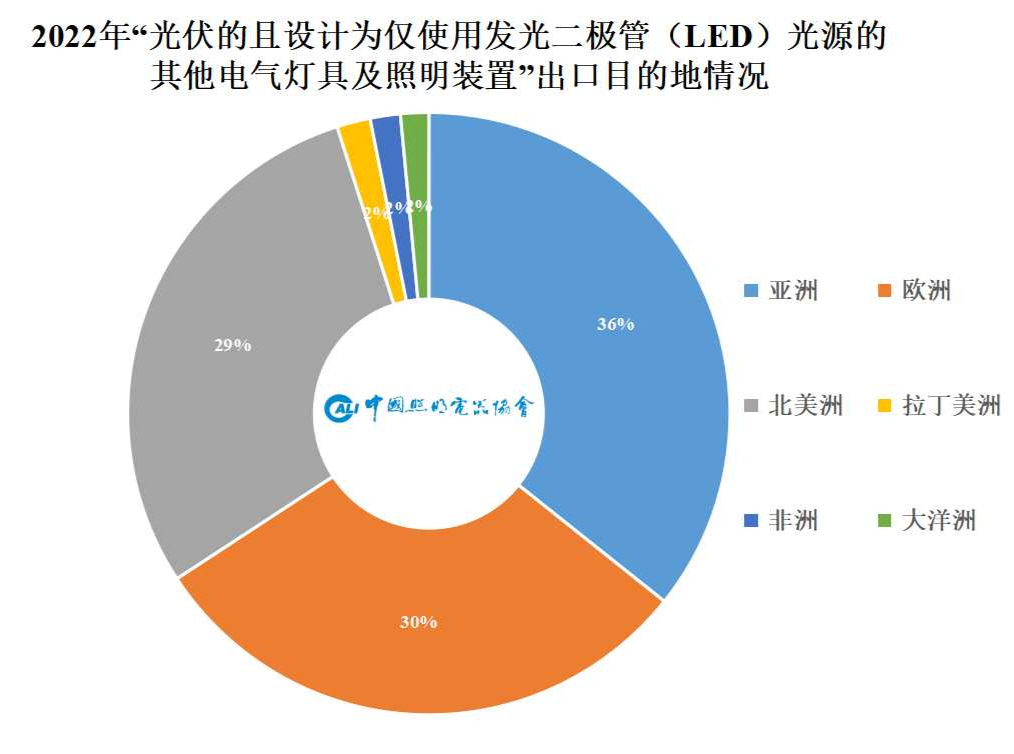
In terms of export destinations, this product category sees significant export volumes to Asia, Europe, and North America, with these three regions accounting for 95% of the total Export volume; the top ten countries by Export volume are the United States, Malaysia, the United Kingdom, the Netherlands, Germany, the Philippines, France, Canada, Poland, and Japan, with exports to these ten countries representing 80% of the total Export volume for this product category.Among them, developed countries occupy seven spots in the top ten,accounting for 55% of the product's Export volume.With the implementation of dual-carbon policies, demand for solar-powered LED lighting products in developed countries is gradually increasing, making the Export market prospects in these regions promising.
According to the Global Off-Grid Solar Association, over 700 million people worldwide still live in areas with no or limited electricity access, lacking clean, modern, and reliable power energy services. Nearly half of them reside in Sub-Saharan Africa, where energy scarcity restricts economic development and further hinders local populations from accessing basic living and production services. There is significant market potential in these countries and regions for lighting products powered by solar energy. Currently, solar lighting products used in these areas are mostly Solar Energy Kits (SEK). The figure below shows solar energy usage in some underdeveloped regions, indicating that a large portion of the population in these countries relies on solar kits as their primary energy supply facility.
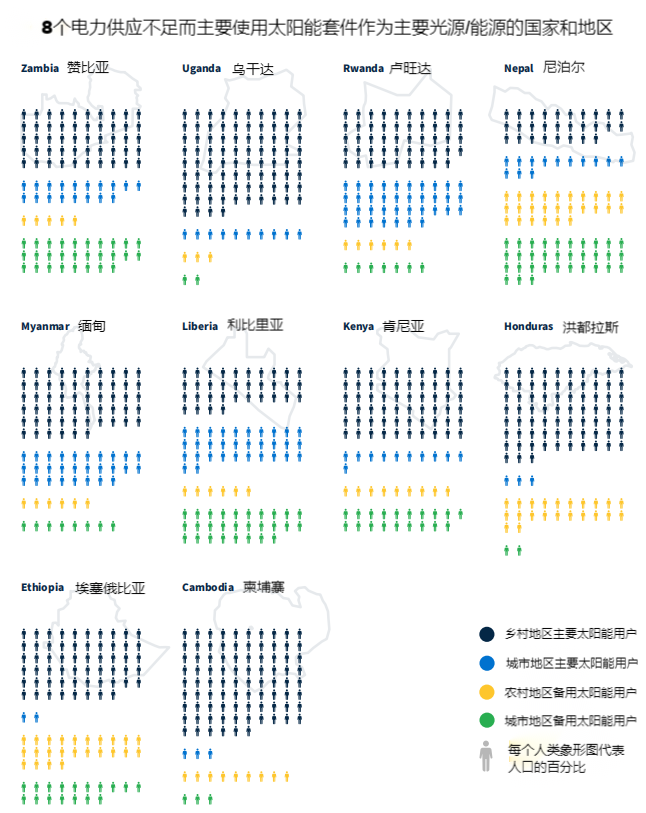
(Source: Off-Grid Solar Market Trends Report 2022)
Solar lighting products are selling strongly in countries such as Malawi, Mozambique, and Madagascar. According to data published by relevant international organizations, the replacement of traditional local kerosene lamps with solar lighting products in a certain area has already helped reduce local carbon dioxide emissions by 190 million tons, equivalent to shutting down 51 coal-fired power plants for one year. For less developed countries, purchasing more solar-powered LED lighting products not only helps the local impoverished population access lighting services but also represents the first step toward economic development. Demand for Chinese LED solar products in these markets will continue to grow.
Currently, China's photovoltaic lighting-related products have been exported to 200 countries and regions worldwide. Domestic lighting companies such as Ocean King, Jiawei, Changfang, Langheng, Dongang, Jiuliang, Langte, and Xiaosong hold a significant market share in niche segments like photovoltaics and off-grid lighting.
Export data reflects, from one perspective, the huge market potential of solar photovoltaic products. On the one hand, developed countries are actively promoting carbon neutrality goals . With changes in the energy structure, besides solar lighting products, the market demand in developed countries for various household appliances compatible with photovoltaic power systems is also increasing. In the field of outdoor lighting, the market for solar photovoltaic street lights will continue to grow.
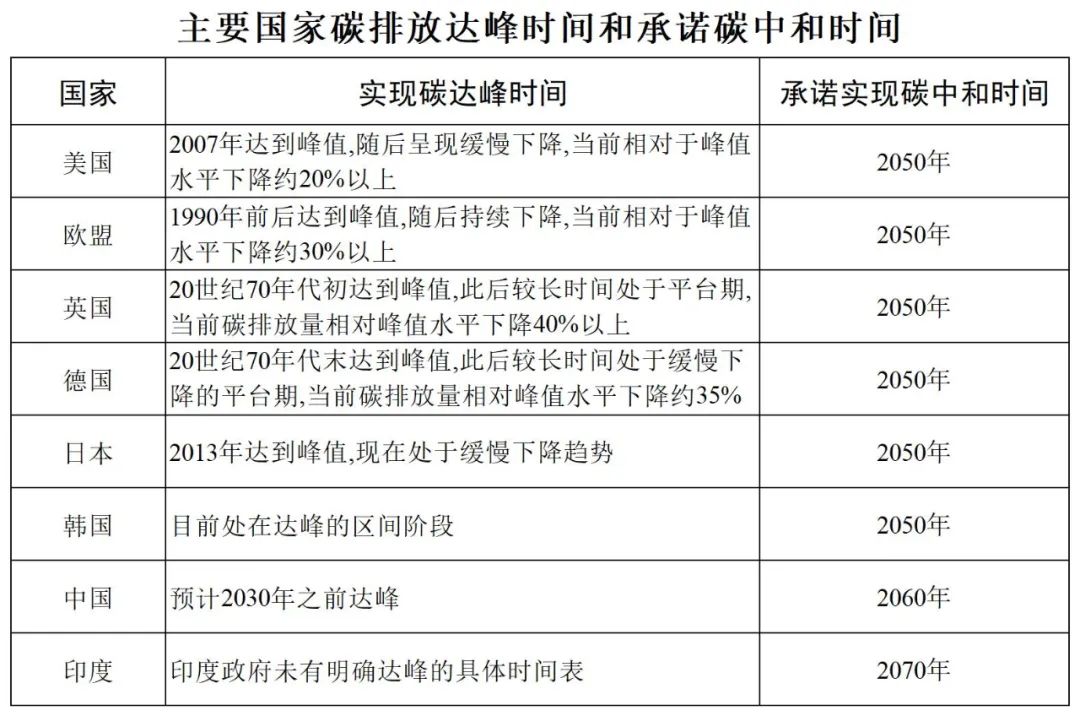
Chart source: "China Sustainable Development Evaluation Report (2022)"
On the other hand, in underdeveloped countries with power shortages and limited electricity supply, the demand for solar PV lighting products is even more pronounced. For example, Chad in Africa is one of the countries with the lowest electrification rates globally, standing at only 6.4% in 2020. Its off-grid solar market is still in the early stages of development. Most people still rely on kerosene lamps and expensive diesel generators for lighting. The first step in economic development is to meet the most basic lighting needs, so the growth potential for solar PV lighting products in underdeveloped regions is self-evident.
In addition to overseas markets, with the implementation of China's dual carbon policies and the specific target requirements proposed in the "Action Plan for Carbon Peaking Before 2030," changes in the energy structure will promote market demand growth for LED solar lighting products. Meanwhile, the advancement of urbanization and the launch of new infrastructure projects will also increase the usage of LED solar lighting products.
From the perspective of global energy consumption structure, coal, oil, and natural gas remain the dominant traditional energy sources, accounting for over 80% of global energy consumption. The Asia-Pacific region is heavily reliant on coal; in 2022, coal accounted for more than 50% of China's energy supply. There is significant potential for the development of renewable energy sources such as hydropower, nuclear energy, and solar energy. As energy costs continue to rise and air pollution worsens, the adoption of clean energy sources like solar and wind power is imperative. LED lighting products utilizing photovoltaic technology offer advantages such as being environmentally friendly, energy saving, safe, having a long service life, and easy maintenance. With the formulation and implementation of low-carbon environmental protection policies worldwide, the market prospects for photovoltaic lighting are broad.
In accordance with the work deployment of "practicing green and low-carbon strategies and promoting sustainable industry development" proposed by He Ye, Chairman of the China Association of Lighting Industry (CALI), at the Second Expanded Council Meeting of the Ninth Session, CALI will combine industry realities to carry out related product standard formulation, technological appraisal, green product recommendation, and industry evaluation. It will also organize events such as the "2022-2023 China (Shenzhen) Lighting Industry Supply Chain Technological Innovation Exhibition" (CLITI Exhibition), continuously guiding the lighting industry towards steady, long-term, and high-quality development. We welcome key manufacturing enterprises, testing and certification institutions, research institutes, and other entities in the lighting industry supply chain to join us in carrying out industry green and low-carbon enhancement activities, actively improving the efficiency of clean energy use in products, reducing carbon emissions, and serving the global need for low-carbon development with higher-quality and more diverse lighting products and technical services.
The above article is sourced from the China Association of Lighting Industry (CALI), authored by CALI