
Digital Review: China Lighting Domestic Sales 2022
The following article originates from Yuguang Tongchen, authored by Wen Qidong
Author / Wen Qidong
It is estimated that in 2022, the number of lamps used for road lighting in Chinese cities will be 34.4 million , representing a year-on-year (YoY) increase of 6% . Over the more than 70 years since the founding of New China, our country has achieved remarkable accomplishments in social and economic development, which have also driven the growth of towns of all sizes; with urbanization rates climbing year by year. In this new development period, the state has proposed the rural revitalization strategy. Against the backdrop of deepening new urbanization and dual development of rural revitalization, this undoubtedly brings favorable historical opportunities for road lighting.
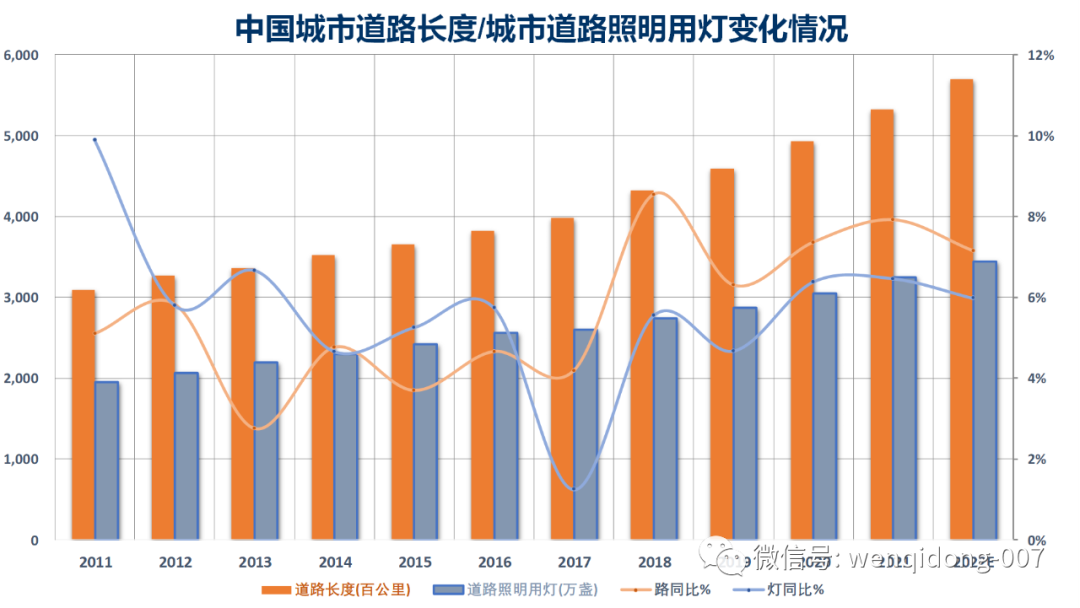
By 2022, the total length of urban roads in China had exceeded 570,000 km, with over 34.4 million street lighting lamps. The basic market demand is substantial, and growth has continued at a rate exceeding 6% in recent years. With the deepening of new urbanization construction, the demand for high-quality urban road lighting will continue to rise.
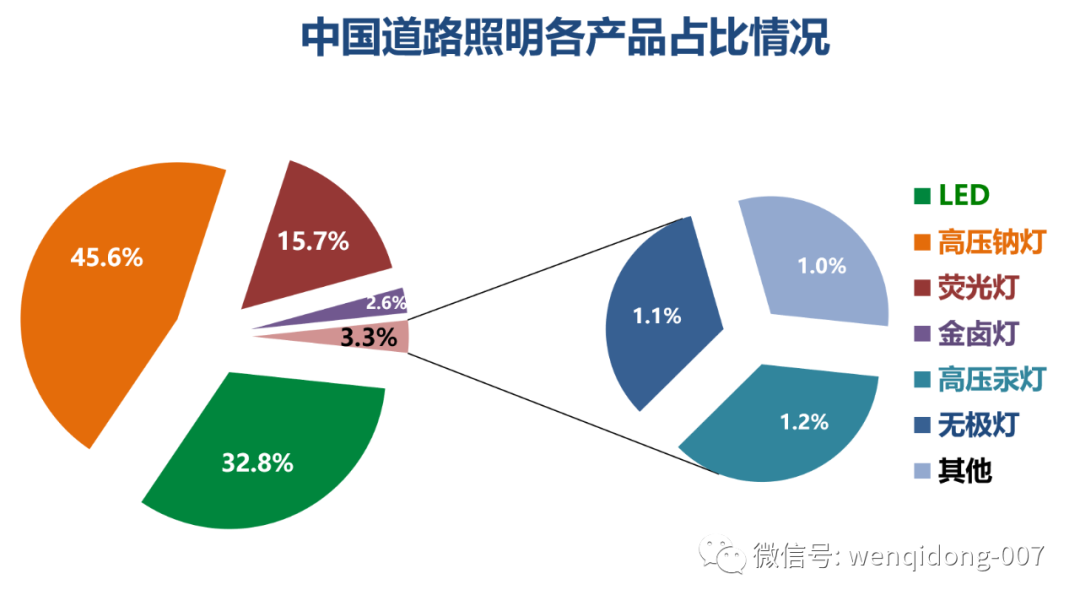
According to statistics from relevant departments, currently in China's road lighting applications, mainstream products remain high-pressure sodium lamps (HPS). After years of replacement with LED lighting products, their share still accounts for less than one-third. Globally, the penetration rate of LED streetlights is even lower, at around 15%. Therefore, whether focusing on China or looking globally, while LED's share in the incremental market is high, the vast existing market still holds significant replacement potential. Since 2020, "Two New and One Heavy" (i.e., new infrastructure construction, new urbanization development, and major engineering projects in transportation and water conservancy) has become the top priority in China's infrastructure investment sector. The rise of the smart streetlight industry aligns with the major trends of new infrastructure and smart city construction. "Multi-pole integration, one pole multiple uses" represents the integrated utilization of various urban resources and is based on the vision of future all-domain perception and the Internet of Things (IoT) for smart cities. Its construction benefits cost reduction and efficiency improvement in urban management and is an inevitable trend for high-quality future urban development.
In 2022, the domestic nightscape lighting engineering market size decreased year-on-year (YoY) by 60% to a scale of 35 billion yuan.
In 2021, the urban landscape lighting engineering industry, previously hit by both policy changes and the pandemic, began to recover. With the national pandemic situation largely contained, issues such as halted project construction and acceptance, as well as obstructed market expansion, were alleviated. Leading companies in the sector made numerous efforts in project selection, receivables collection, and business transformation. Performance indicators also rebounded compared to the most difficult period of 2020, when the industry faced dual shocks from policy and the pandemic.
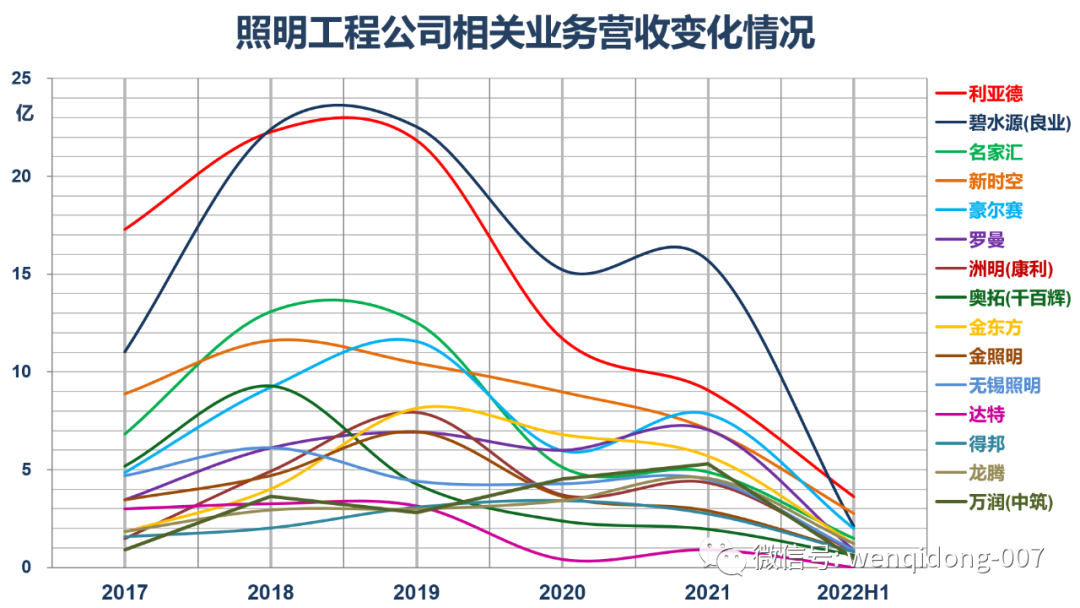
The start of 2022 was full of confidence, but the repeated nationwide epidemic starting in March not only brought more visible impacts on passenger flow, logistics, and cash flow, but also had a deeper impact by severely hitting both supply and demand, as well as expectations and confidence. Consequently, the urban landscape lighting engineering market has once again entered a downturn. The epidemic caused the suspension of cultural tourism projects, delays in construction work, stagnation in project acceptance, and obstacles in market expansion. Additionally, energy-saving pressures from bans on ultra-high buildings and dual controls on energy consumption have limited its development to varying degrees. Major engineering companies are also struggling to find a way forward in the fields of cultural tourism night tours and smart city construction, as the road ahead is long and arduous.
In the post-pandemic era, large-scale city-wide lighting projects will be harder to find, while cultural tourism night tours, commercial real estate, smart cities and other projects have taken their place as the mainstream. At the same time, project fragmentation and customization trends are becoming more significant. Under this trend, there is a higher requirement for manufacturers' capabilities in design, execution, service, supply chain integration, etc. Companies that perform better in these areas will be more competitive in the market. Looking ahead, first, policy targets excessive lighting and image projects; it does not ban urban landscape lighting. With China's comprehensive national power continuously growing, sustained economic and social development, deepening urbanization, and the still-vibrant demand of the broad masses for a better life, the market demand for urban landscape lighting remains substantial. The state's investment in "two new and one heavy" initiatives remains unchanged, and "small but refined" cultural tourism night tour projects are emerging like mushrooms after rain. As an important means to boost domestic consumption demand, landscape lighting will continue to play an important role in developing the city's nighttime economy, and this industry will still have good development prospects. What the industry needs to do is better combine lighting design technological means with interpreted cultural and artistic content, so that landscape lighting truly becomes a helpful tool for reflecting the spiritual core of the city, promoting urban culture, and boosting the urban economy.
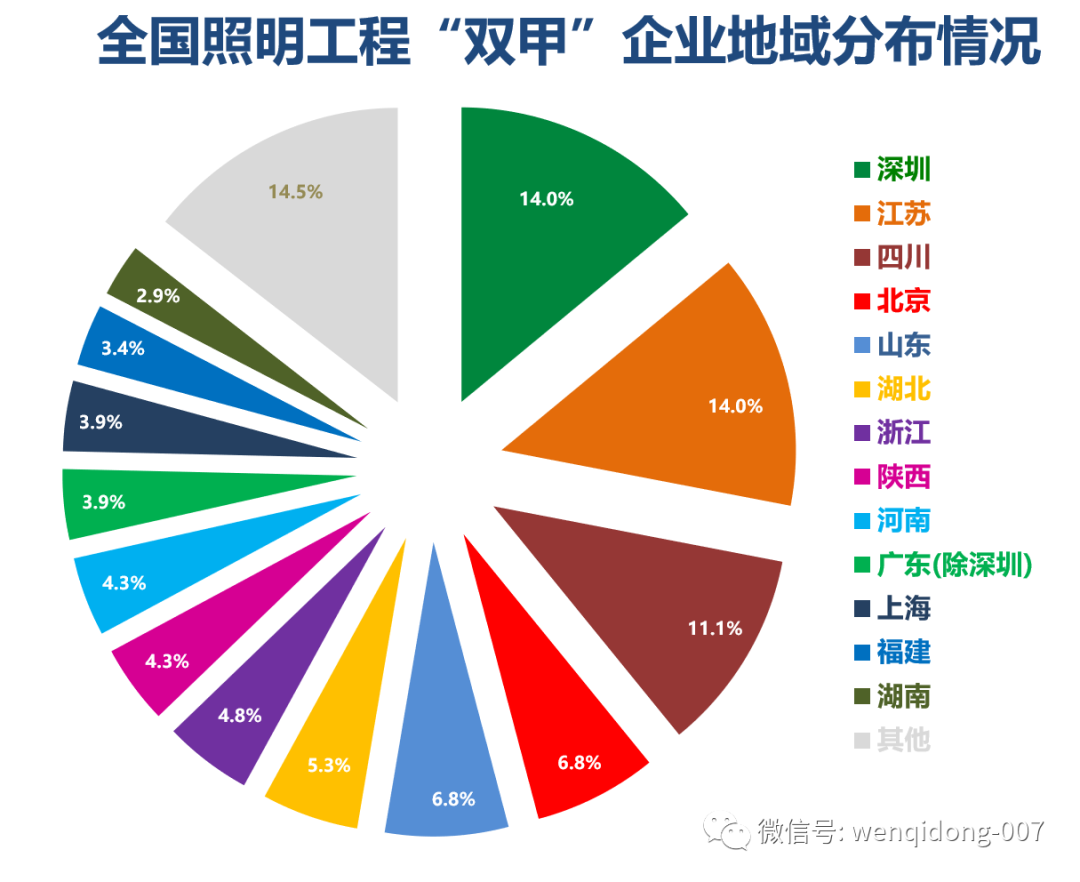
As of now, there are 209 lighting engineering enterprises nationwide that simultaneously hold both the 'Grade A Professional Contracting Qualification for Urban and Road Lighting' and the 'Special Grade A Qualification for Lighting Engineering Design'. They are distributed across 22 provinces, autonomous regions, and municipalities directly under the central government. Among them, Guangdong Province leads with 37 enterprises, far surpassing others, while Jiangsu and Sichuan rank second and third respectively. In the city rankings, Shenzhen, Chengdu, Beijing, Yangzhou, Wuhan, and other cities are at the forefront.
In recent years, the hottest field in domestic lighting sales has undoubtedly been outdoor non-multifunctional light poles. Deep UV for non-visual applications is a key technology, while in indoor settings, educational lighting remains the undisputed leader.
我国目前共有各类学校近54万所,拥有2.89亿在校生,近2000万教师,相当于为超3亿人服务。其中义务教育阶段的学校就有21万所,班数达375万个,校舍面积超过14亿平方米,1.56亿在校生,且中小学教室普遍存在缺乏整体设计、照度偏低、频闪严重、眩光污染、颜色失真等诸多问题,颇具改造潜力。另一方面,由于和保护青少年视力相关,因而教育照明领域已不仅仅是照明行业的事,也受到了全社会的关注。
The "Comprehensive Prevention and Control Plan for Myopia in Children and Adolescents" issued by eight ministries and commissions in 2019 was implemented to carry out the General Secretary's important instructions on students' myopia issues, and also delivered a strong boost to relevant lighting products as key educational equipment for improving visual environments at the policy level. Subsequently, both national and local levels have been successively issuing standards and regulations related to educational lighting, which play a positive role in guiding and standardizing market development. In a short time, a large number of manufacturers entering this market came not only from the lighting industry but also from the educational equipment sector.
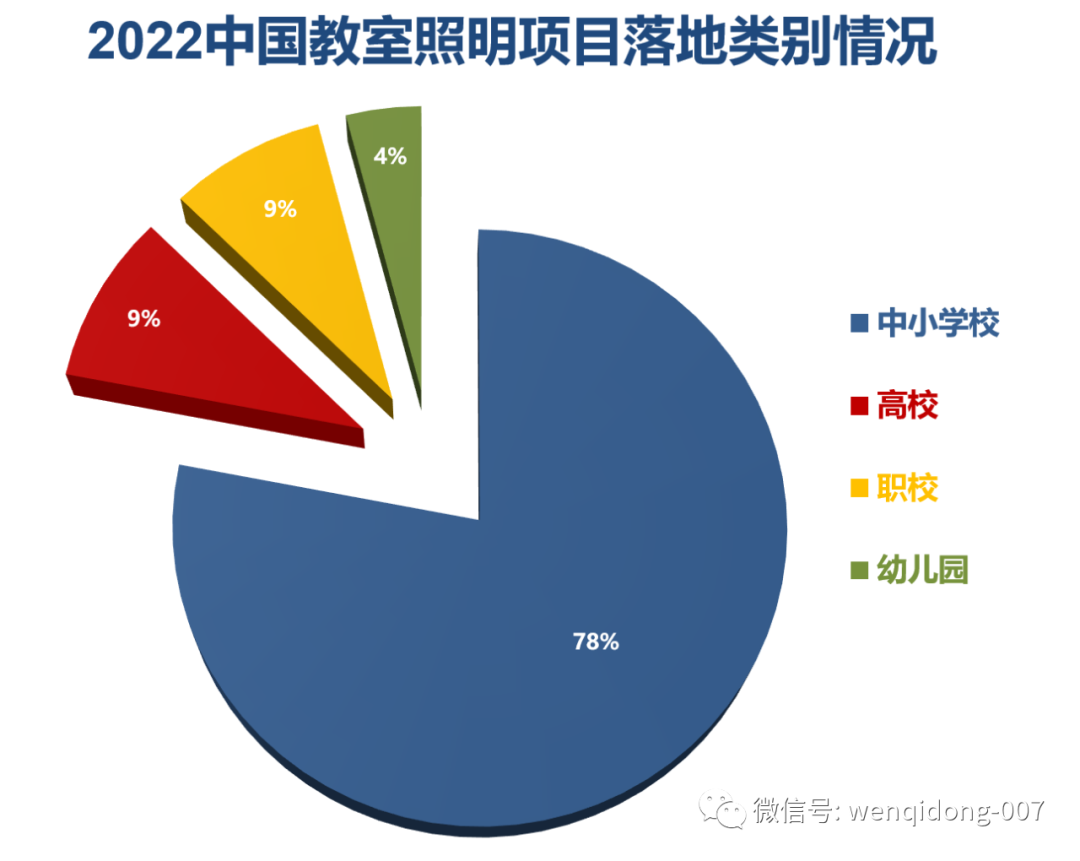
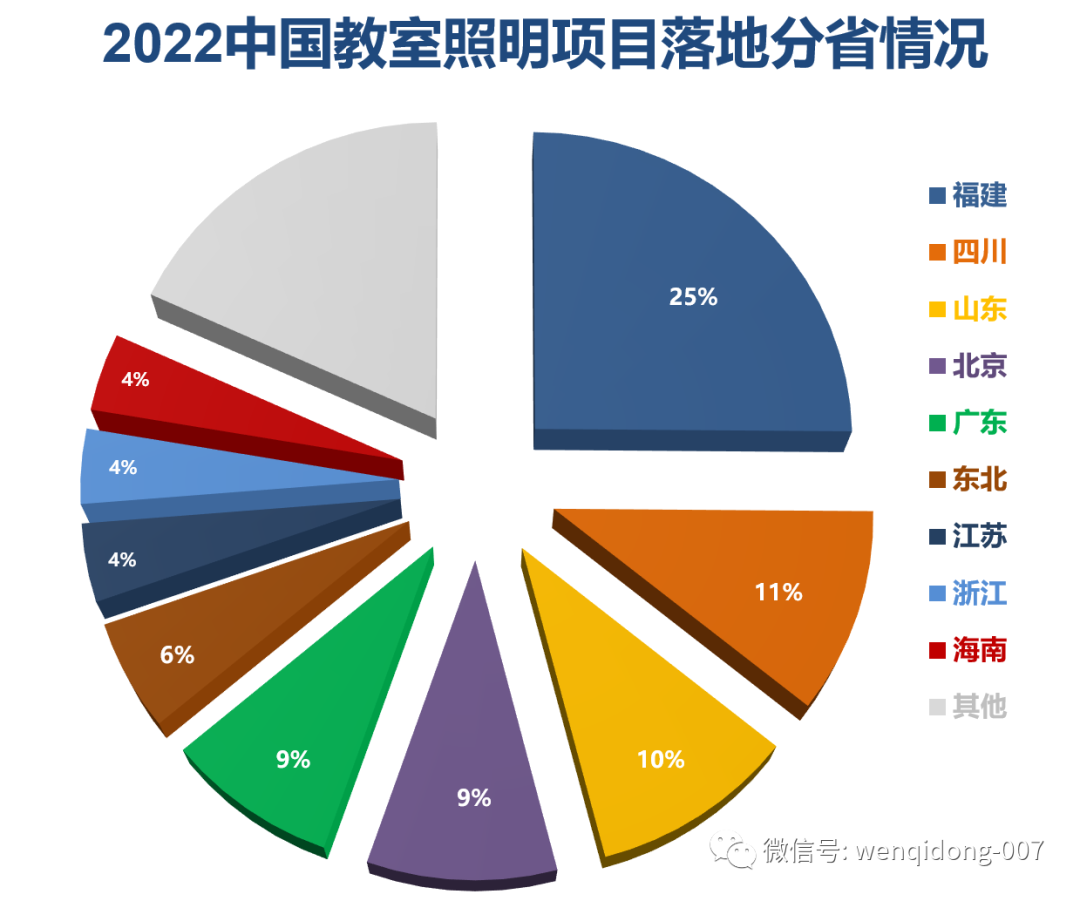
According to statistics, in 2022, over 800 classroom lighting projects were implemented nationwide, with a total value exceeding 3.6 billion yuan. By category, primary and secondary school-related light environment renovation/upgrading projects accounted for a dominant 78%. By province, the provinces with the most implemented projects include Fujian, Sichuan, Shandong, Beijing, Guangdong, etc., ranking at the top; the top five alone accounted for nearly two-thirds of the total number of projects. In terms of manufacturers, companies such as Ledsen, Jiennengtong, Sanxiong Aurora, OPPLE Lighting, Foshan Lighting, Kaiyao Lighting, and Zhongjiao Lighting performed notably well.
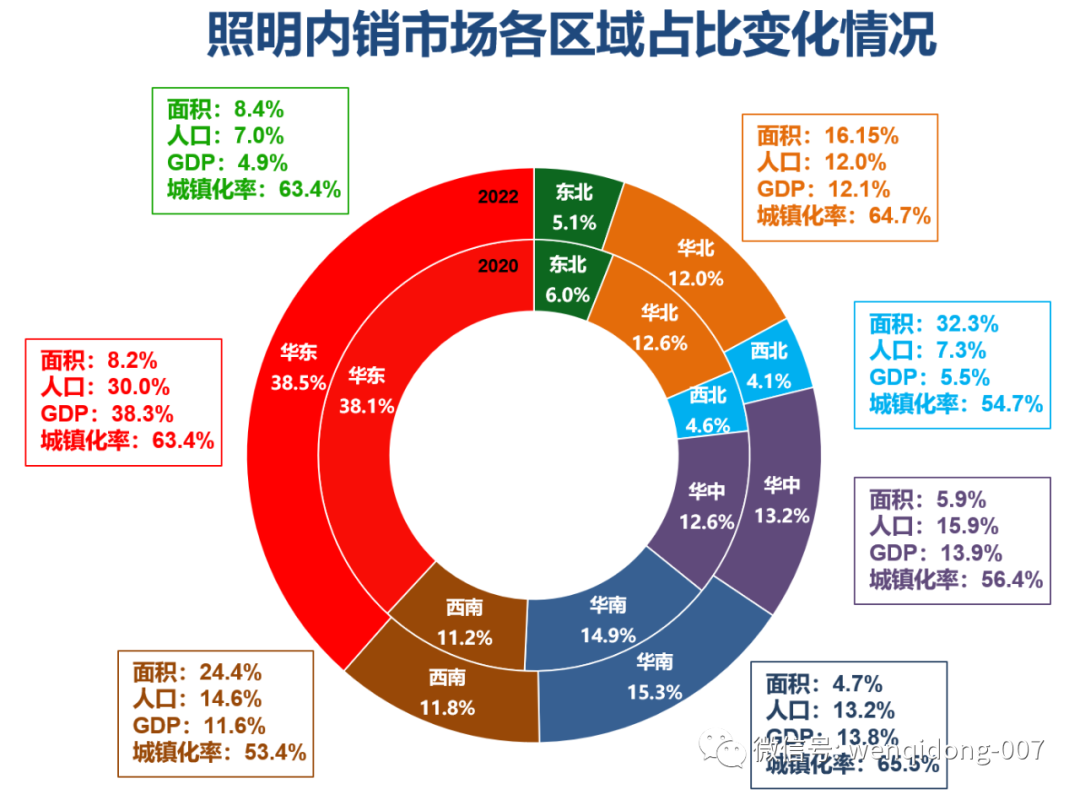
Regarding the domestic market, the divergence between northern and southern markets continues, with the northern market experiencing intensified contraction. In recent years, northern markets represented by North China, Northeast China, and Northwest China have been constrained by factors such as economic structure, population mobility, and urbanization potential, leading to slower lighting demand growth compared to other regions. Their share of the national market has shown a continuous shrinking trend; in 2022, it declined to 21.2%, a drop of exactly 3 percentage points from pre-pandemic levels. In the future, East China and South China, as the most economically active regions in China, will further consolidate their dominant position in demand markets, while Central China and Southwest China will also demonstrate strong development potential driven by the construction of the Central Plains Urban Agglomeration and the Yangtze River中游 Urban Agglomeration.
The 2022 curtain falls, never to return. Winter has arrived; the lights remain on;
2023 arrives with a roar, the road ahead is uncertain. After this arduous journey, we reach the other shore.
To be continued...