
Wen Qidong | Digital Review of China's Lighting Industry Capital in 2022
The following article originates from Yuguang Tongchen, authored by Wen Qidong
Author / Wen Qidong
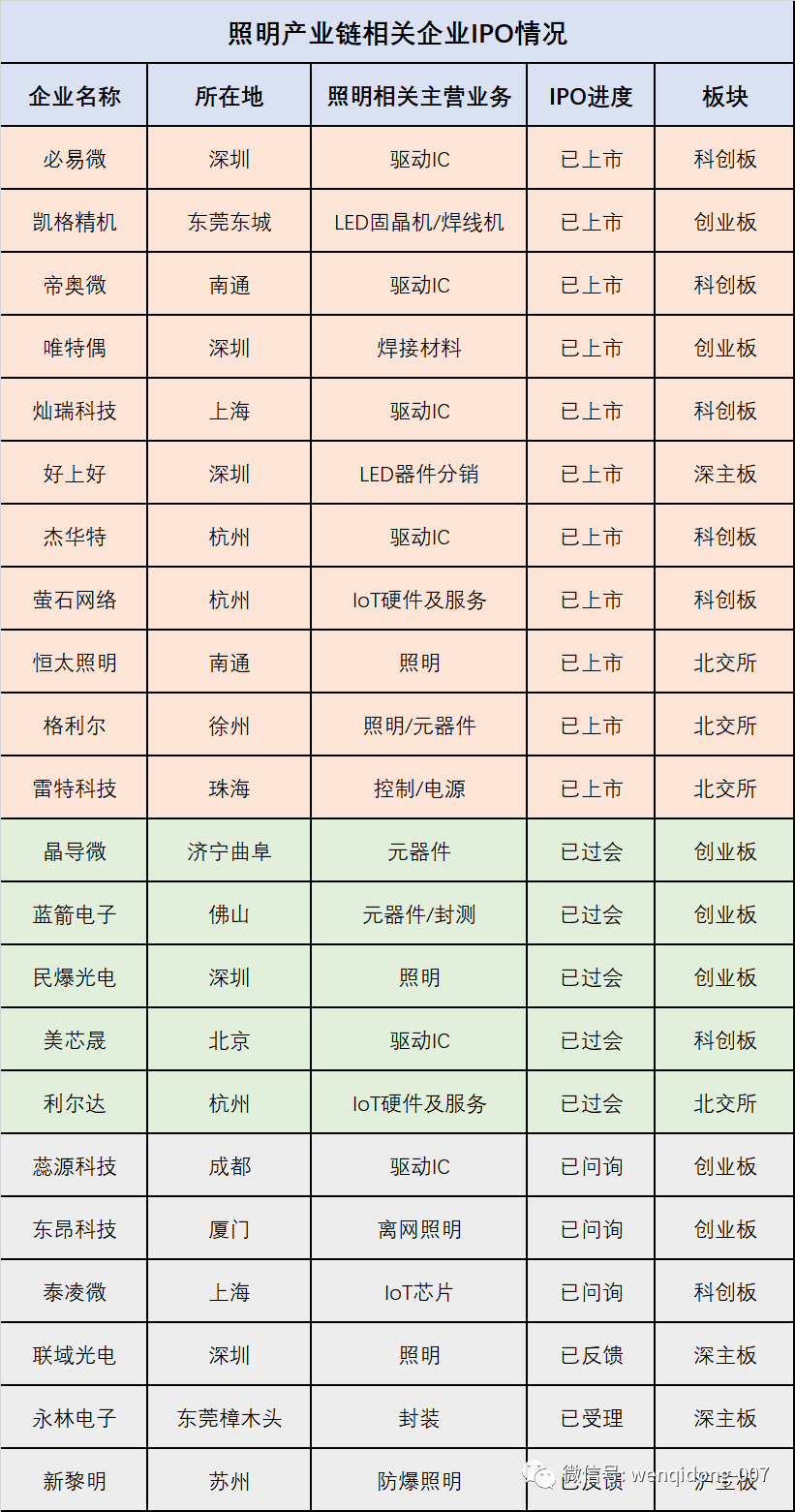
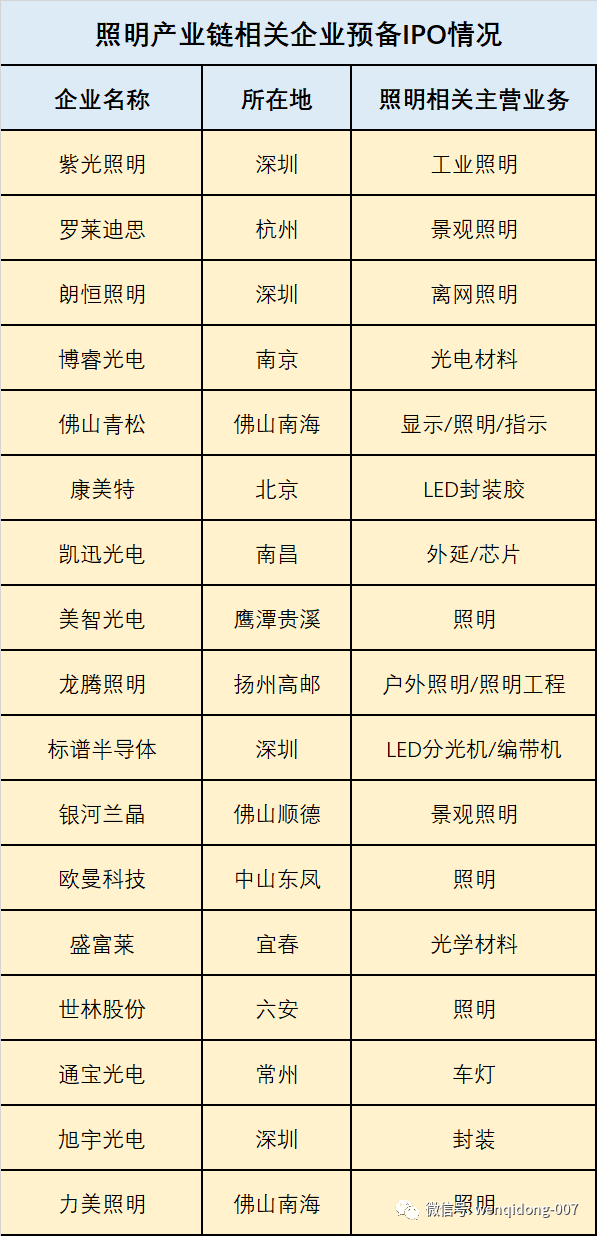
In 2022, a total of 11 lighting industry / supply chain companies successfully went public on the A-share market , just one less than the peak of 12 companies in 2017 . Their combined market capitalization exceeded 70 billion yuan , and they raised over 11 billion yuan . Additionally, 5 companies have already passed review and are awaiting registration, imminent; another 6 companies are currently queuing, ready for action, eagerly waiting; furthermore, more than 10 companies are in the coaching phase, working intensively and preparing to launch. Yet as there is success, there is also setback: since 2020, within three years, 30 companies have withdrawn or terminated their IPOs. They need to regroup and climb new heights.
It is foreseeable that more and more lighting enterprises will embrace capital. The equity investment in China's multi-level capital market, with the comprehensive registration system combined with the reform of the delisting system as its core, will return to its essence. Meanwhile, the establishment of the Beijing Stock Exchange, which serves the real economy, will play an important role in broadening financing channels for the vast number of 'specialized, refined, distinctive, and innovative' (SRDI) SMEs in the lighting industry. Enterprises with core competitiveness—those with advantages in R&D, innovations in value models, and breakthroughs in application scenarios—will be more favored by the capital market. Therefore, our enterprises must not only focus on their main products but also treat 'equity' as another key 'product' to manage.
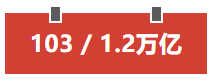
By the end of 2022, there were over 100 listed companies in the lighting industry / supply chain on the A-share market, reaching 103 , accounting for 2% of the total number of A-share listed companies; meanwhile, the combined market capitalization of these 100+ listed companies was approximately 1.2 trillion yuan, representing 1.5% of the total market capitalization of A-share listed companies. (As of November 22, 2022, the number of A-share listed companies in China reached 5,000, with 2,153 on the Shanghai Stock Exchange, 2,721 on the Shenzhen Stock Exchange, and 126 on the Beijing Stock Exchange, with a total market capitalization of approximately 80 trillion yuan)
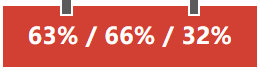
As of now, there are 182 listed companies related to the lighting industry / supply chain on A-shares and the New Third Board; it is estimated that among their 2022 performance results, revenue decline accounts for 63%, i.e., 115 companies; profit decline accounts for 120 companies, representing a high proportion of 66%; furthermore, 58 companies reported losses, accounting for 32%. Both revenue and profit declines, as well as the loss rate, have reached historical lows. Even the performance of listed companies, which represent quality in the industry, is so sluggish, indicating the difficulties faced by the entire industry throughout the year.
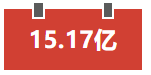
2022年2月,国内照明行业年度最重磅并购案——同属广晟集团旗下的佛山照明(000541)控股国星光电(002449)尘埃落定。佛山照明最终以高达15.17亿元的交易总对价获得国星光电1.32亿股股份。本次重组完成后,佛山照明及其全资子公司将合计持有国星光电1.33亿股股份,占其总股本的21.48%,从而佛山照明将成为国星光电的控股股东。
Following this restructuring, Foshan Lighting has become the sixth company in China, after Sanan Optoelectronics, MLS, Zhaochi Shares, former Dehaorunda, and Guoxing Optoelectronics prior to restructuring , to possess vertical integration capabilities across the entire LED lighting industry chain—covering upstream LED epitaxy chips, midstream LED packaging, and downstream LED lighting applications —further strengthening its supply chain advantages. After consolidating related businesses such as Nanning Liaowang, Guoxing Optoelectronics, Yancheng Dongshan Precision, and Fenghua Xindian, Foshan Lighting's core business scale will also expand further, taking solid steps toward the goal of " billion yuan" .

OSRAM gradually divested its lighting applications business
Following the sale of its two major lighting divisions, CLB and LLS, to MLS in 2017, and the subsequent divestiture of its luminaire company Siteco and Sylvania Lighting Solutions business in 2019, especially after the formal merger of Austrian sensor manufacturer ams with OSRAM in March 2021, the ams OSRAM Group has accelerated the divestment of original OSRAM's lighting application-related businesses.
In June 2021, ams OSRAM announced that it had signed a final agreement to sell its North American business for digital lighting systems (Digital Systems) to Acuity Brands, a leading North American luminaire manufacturer. This business primarily includes lighting control systems, electronic products, LED light engines, and drivers;
In October 2021, investment firm Skyview Capital announced that it had acquired the Digital Lumens and Encelium businesses from ams OSRAM. Digital Lumens and Encelium provide leading software and hardware for lighting control solutions, with Digital Lumens serving the industrial sector, while Encelium primarily serves the commercial sector.
In December 2021, ams OSRAM announced that it has reached a final agreement to sell its Fluence horticultural lighting system business and brand to the Dutch lighting giant Signify for 272 million USD;
In March 2022, ams OSRAM announced an agreement to sell its AMLS (Automotive Lighting Systems GmbH) business to French automotive parts supplier Plastic Omnium (Plastic Omnium) for 65 million euros;
In May 2022, ams OSRAM announced that it had reached an agreement to sell its Traxon Technologies business, including the dynamic lighting control business e:cue, to Hong Kong's Prosperity Group (Youchang Group);
In June 2022, ams OSRAM announced the sale of its Digital Systems business in Europe and Asia to LED driver power supply industry leader Inventronics (300582) for a consideration of 74.5 million euros;
In December 2022, ams OSRAM announced that it had reached a final agreement to sell its entertainment lighting business, Clay Paky, to German film camera equipment manufacturer ARRI.
至此,ams OSRAM已相继将LED驱动电源、智能控制、植物照明、汽车照明、建筑照明、娱乐照明等应用业务出售,并最终完成了合并之后的最后一项照明应用业务剥离,在其未来全力专注于光电、可视化和传感器等核心技术领域,出售非战略核心业务的战略实施上取得了重大进展。
According to the author's incomplete statistics, more than 100 companies among domestic lighting enterprises of a certain scale have already established production capacity overseas . The main directions include Vietnam, Cambodia, Malaysia, Thailand, Indonesia and other places in Southeast Asia, as well as further destinations such as India, Turkey and Mexico.
Amidst the unprecedented changes of a century, the relationship between China and the world is also evolving. Trade friction between China and the US, the global spread of the COVID-19 pandemic, and regional geopolitical conflicts have all shaken the foundations of globalization to varying degrees, showing a trend toward regionalization and blockification, while realistically driving the restructuring of the global Industry / Supply chain. Previously, the planning logic for the global Industry / Supply chain, which only considered efficiency, cost-performance ratio, and return on investment , will be revised; future layouts will prioritize Industry / Supply chain security, resilience, and redundancy . Overseas demand and investment will also differ from the previous "All in China" strategy; "China + 1" is a new strategy to disperse risk control costs under increasingly tense geopolitical situations in the future. Consequently, the loss of some lighting orders and Industry / Supply chain segments to other manufacturing countries will be inevitable. It can be said that the global division of labor has evolved from the early globalization "Offshore Outsourcing" model to a more security-oriented "Nearshore Outsourcing" stage, and even to the "Friend-shoring" stage where trade issues are politicized.
The necessity and urgency of overseas production capacity layout are beyond doubt; that is, a considerable number of export enterprises no longer need to debate "whether" to go out, but must face the question of " when, where, and in what form" to go out.
The curtain fell in 2022 and will not return. Winter has arrived, and the lights remain on;
2023 arrives with a roar, the road ahead is uncertain. After this arduous journey, we reach the other shore.
To be continued~