
With an investment of nearly 400 million yuan, Quanzhou launches the "Two Rivers and Two Banks" nightscape project
According to the Quanzhou Urban Management Bureau, the lighting upgrade project for the Donghai-Chengdong area in the central urban district of (Quanzhou) and both banks of the Luoyang River in Jinjiang, which is currently under accelerated construction, is expected to conduct trial lighting as early as before the Spring Festival next year, with the entire project anticipated to be fully illuminated by May 1 next year.
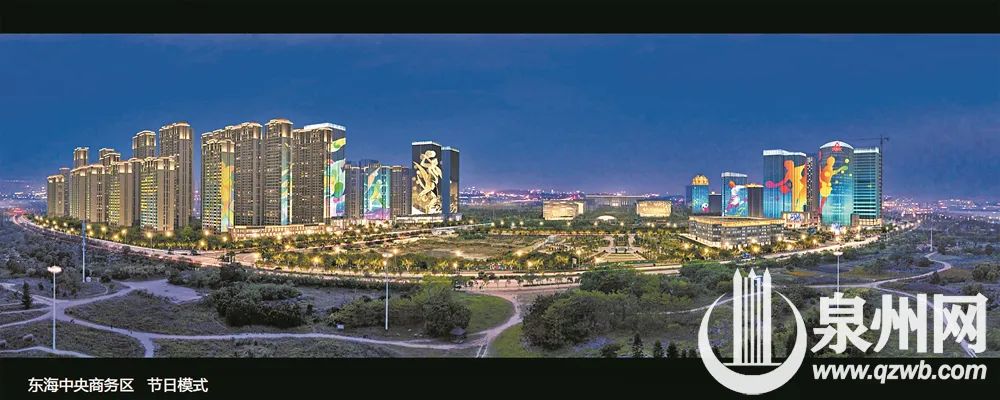
Rendering of the festival lighting mode for the Donghai Central Business District under the Quanzhou (Quanzhou) central urban area Donghai-Chengdong zone and Jinjiang Luoyang River banks lighting upgrade project (Image provided by Quanzhou Urban Management Bureau)
Recently, Quanzhou City launched the night lighting project for the "Two Banks of Jinjiang and Luoyang Rivers," officially firing the starting gun for the development of Quanzhou's night tourism economy. It is understood that the night lighting project for the "Two Banks of Jinjiang and Luoyang Rivers" is a key component of Quanzhou's three-year action plan for urban lighting improvement. It is also a major initiative by Quanzhou's central urban area to enhance urban construction and quality, aiming to recreate the scenes of the World Maritime Trade Center of Song and Yuan China.
According to reports, the nightscape project along the banks of the Jinjiang and Luoyang Rivers is part of the "View Quanzhou from the Water, Night Tour of the World Heritage City" initiative, leveraging the profound World Heritage culture. Starting from Houzhu Wharf, the project extends west to the Xinji Sluice Gate and east along the north bank to the Luoyang Bridge Head Sluice Gate, covering a total length of 18 kilometers with a total investment of 394 million yuan.
This project focuses on gateway and landmark nodes, bridges along the Jinjiang River and Luoyang River, buildings on both banks, and embankment elements. It highlights the city's unique geographical features and enriches the night tourism experience. Through animated control system programming, it showcases Quanzhou's profound historical and cultural heritage and its 22 World Heritage sites. Using light projection performances , lighting enhancements are applied to carriers such as buildings on both banks, embankment trees, and bridges including Jinjiang Bridge, Citong Bridge, Tian'an Bridge, and Shunji Bridge . Viewing points are created from various perspectives including vehicular, pedestrian, and boat traffic. Combined with supporting lighting facilities in parks, green spaces, and greenways , the lighting on both banks of the Jinjiang and Luoyang Rivers coordinates and echoes each other, dynamically rendering the prosperous characteristics of Quanzhou during the Song and Yuan dynasties.
(Quanzhou) The lighting enhancement project for the Donghai and Chengdong areas in the central urban district and both banks of the Luoyang River in Jinjiang will integrate Quanzhou elements such as "World Heritage Culture," "Intangible Cultural Heritage Art," and the "Quanzhou Spirit" through rich layers of light and shadow. It aims to create a urban lighting system centered on "Two Rivers and One Bay as the main line, gateway corridors as links, interconnected districts on both banks, and a harmonious blend of ancient and modern" , thereby expanding the influence and appeal of Quanzhou's Maritime Silk Road cultural heritage and World Heritage culture.
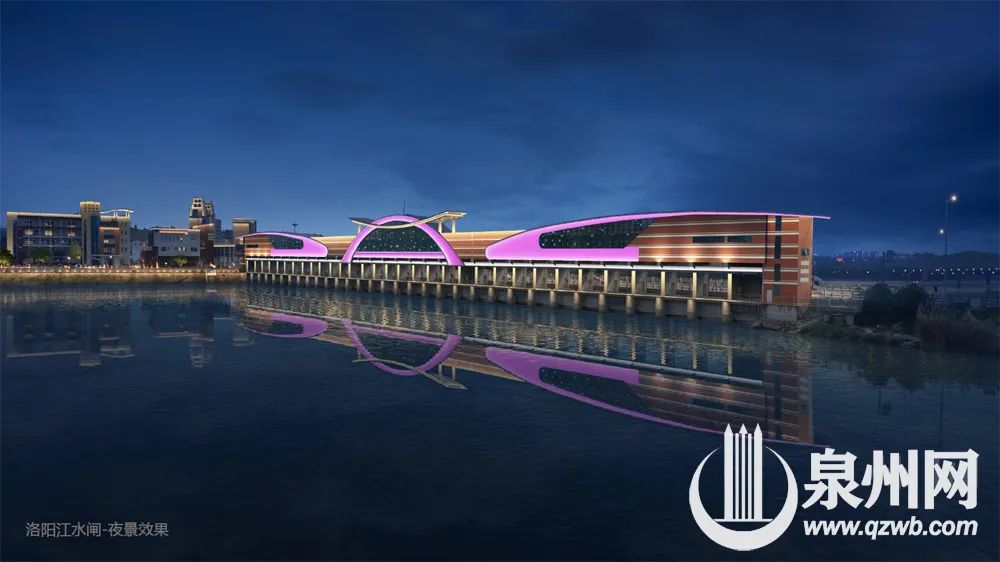
Lighting upgrade project for the Donghai East urban area in the city center and both banks of the Luoyang River in Jinjiang: Rendering of the festival mode for the Donghai Central Business District (Image provided by Quanzhou Urban Management Bureau)
As one of the projects under the dual-wheel drive strategy of "Strengthening the Industry, Revitalizing the City" and the special action campaign of "Enhancing Urban Construction and Improving Quality", the scope of this engineering lighting upgrade covers the "One Axis, Two Lines" in the Donghai area (Municipal Administrative Center Axis, Tonggang West Street–Donghai Avenue Line, Tonggang East Street Line), cross-river bridges along both banks of the Jinjiang and Luoyang Rivers, pedestrian overpasses, riverside parks, green embankments, headquarters zones, business districts, and major building facades.
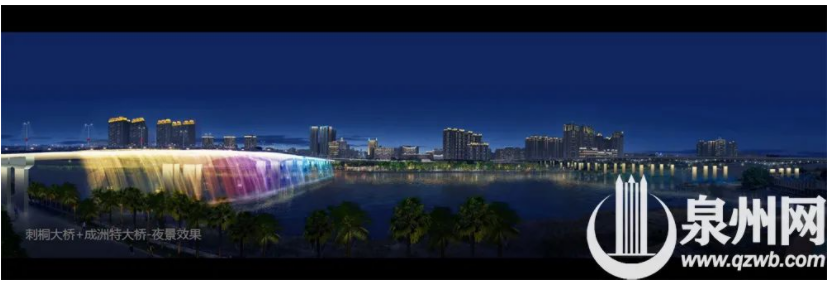
Lighting upgrade project for the Donghai Chengdong area in the central urban district and both banks of the Luoyang River in Jinjiang: Rendering of the festival mode for the Donghai Central Business District (Image provided by Quanzhou Urban Management Bureau)
In response to the current conditions of the area, the project emphasizes the spatial pattern of "mountains, city, and sea" from a distant view; highlights the architectural skylines of key building clusters along the "one axis, two lines" in the Donghai district and along the two rivers from a mid-range perspective; and enriches the nighttime landscape interest and interactivity of parks and squares along the route from the close-up perspective of citizens' evening strolls and leisure entertainment. For example, for the section from Jinji Sluice Gate to Sunjiang Bridge in Jinjiang, the tops and facade decorative structures of buildings along the route will be depicted in cyan-green, forming a flowing landscape painting through changes in light and shadow; for the section from Citong Bridge to Quanzhou Jinjiang Bridge, slowly flowing colored lights will be used to create connections, highlighting the city's fashion and vitality, and displaying dynamic scenes with clear hierarchy.
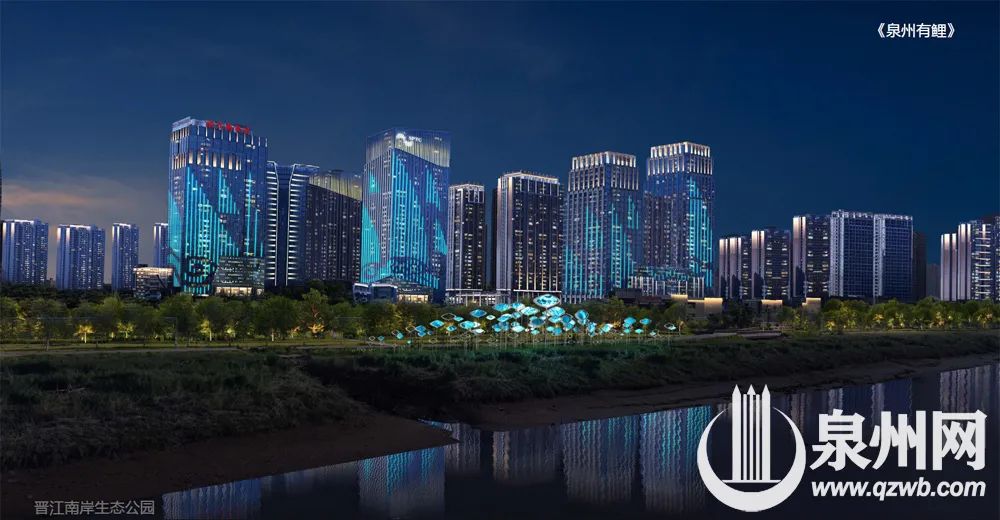
Lighting upgrade project for the Donghai Chengdong area in the central urban district and both banks of the Luoyang River in Jinjiang: Rendered image of the festival mode for the Donghai Central Business District (Image provided by Quanzhou Urban Management Bureau)
The project selects four key areas—Donghai Central Business District, Taihe Plaza, Jinjiang CBD, and Baixin—as important venues to showcase World Heritage culture, intangible cultural heritage arts, and the spirit of perseverance. For the Donghai Central Business District, the nighttime facades of various buildings will be enriched with lighting performances, creating an immersive viewing interface that faces the bay and sea, serving as a future reception hall. In the Taihe area, the Ferris wheel will serve as the core of the lighting performance, fully utilizing existing lighting equipment on surrounding public buildings to display Minnan folk culture that combines artistry,观赏ability, and a sense of the times. For the Jinjiang CBD and Baixin areas, vivid and engaging Quanzhou intangible cultural heritage elements such as puppet shows, Nanyin music, and the Wangchuan sending ceremony will be presented, providing citizens with a rich visual experience.
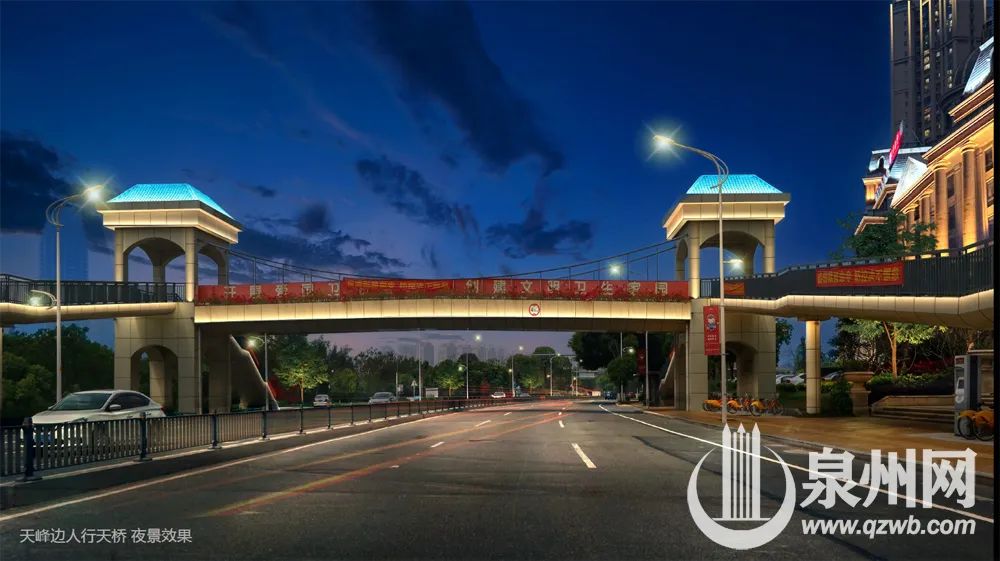
Lighting upgrade project for the Donghai Chengdong area in the central urban district and both banks of the Luoyang River in Jinjiang: Rendering of the festival mode for the Donghai Central Business District (Image provided by Quanzhou Urban Management Bureau)
It is reported that, in conjunction with the trial operation of Phase I of the "View Quanzhou from the Water, Night Tour of the World Heritage City" route, selected display sections along both banks of the Jinjiang and Luoyang Rivers (from Houzhu Bridge to Shunji New Bridge) will undergo preliminary lighting trials before the Spring Festival of 2023, with the entire project fully illuminated by May 1, 2023.
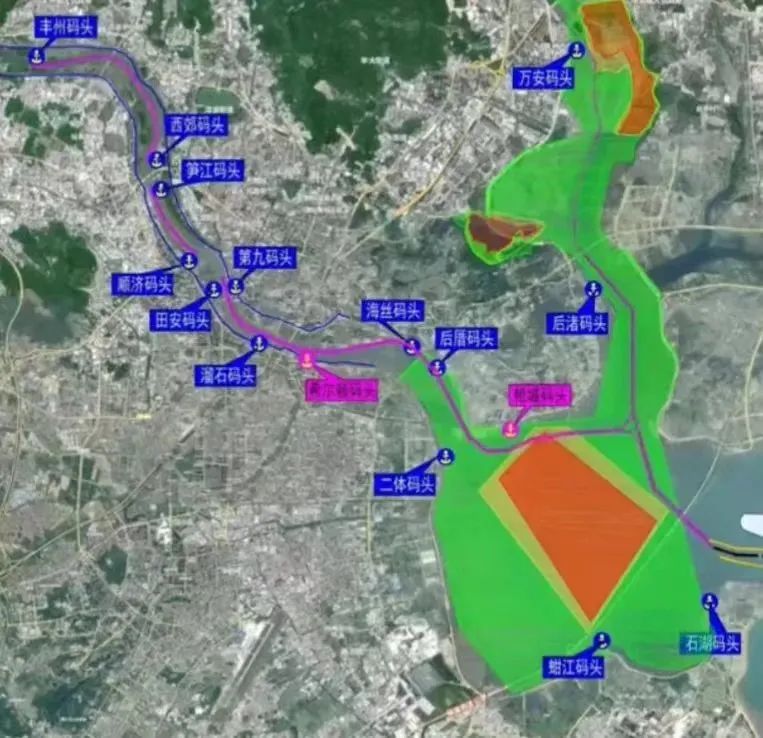
"Quanzhou from the Water, Night Tour of the World Heritage City" Route Planning Stations
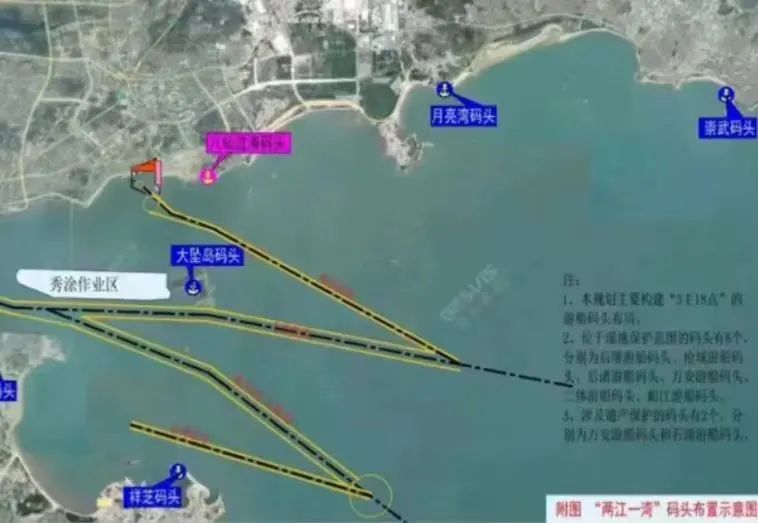
Schematic Diagram of the "Two-Three-One Bay" Terminal Layout
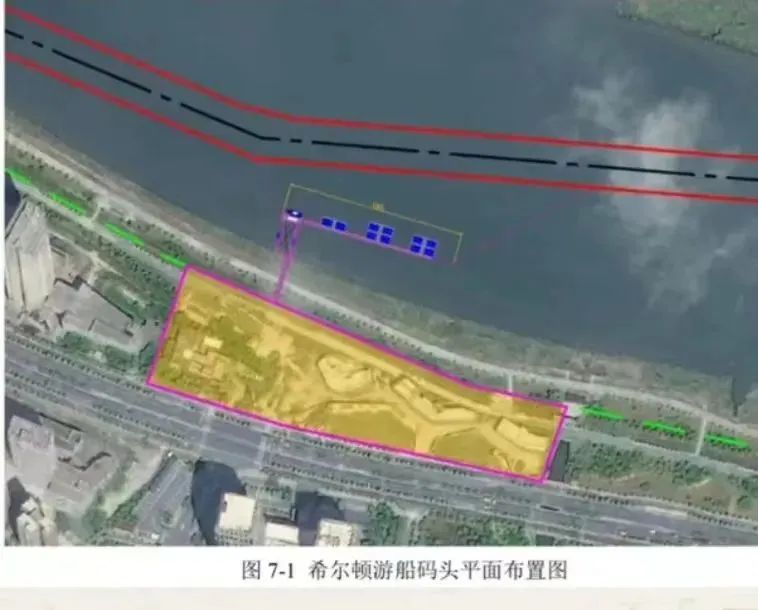
Hilton Cruise Terminal Floor Plan
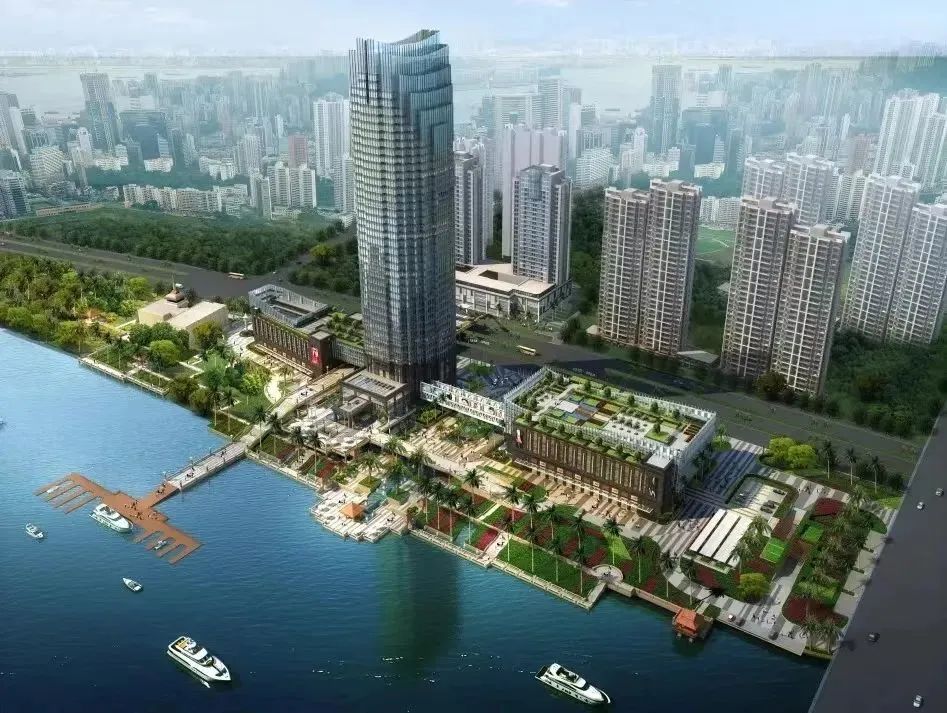
Rendering of the yacht docking point in Binjiang Business District
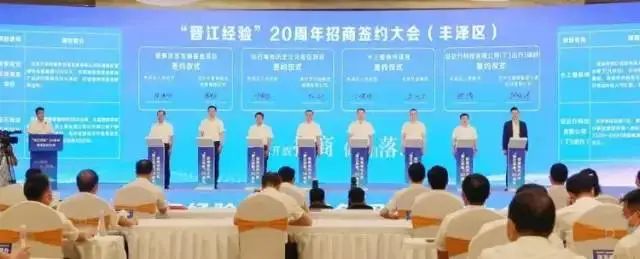
In August 2022, the main venue of the Investment Signing Conference for the 20th Anniversary of the "Jinjiang Experience" successfully concluded its signings. Among them, the "Water Tour of Quanzhou" project, with a total investment of RMB 3 billion, will use the waterways of Quanzhou Bay, Jinjiang River, and Luoyang River as links to connect Hai Silk Culture wharves such as Houzhu, Fisherman's Wharf, Wenxing, and Liushi, creating a distinctive water-based sightseeing tourism project. This will effectively drive the improvement of riverside landscapes, enhance the city skyline and ecological restoration, promote the quality improvement of the "Two Rivers and Four Banks" urban area, and stimulate prosperity in the areas along the route.
The "View Quanzhou from the Water, Night Tour of the World Heritage City" project starts at Houzhu Wharf, follows the Jinjiang River to below the Jinji Sluice Gate (Jiuri Mountain), and continues along the Luoyang River to the head of Luoyang Bridge. It includes maritime sightseeing areas such as the Quanzhou Bay Area, Chongwu, Shanxia, and Shihu.
The first phase covers two routes: Houzhu Wharf to Pier 9 as the route connecting the ancient city and the new district, and Houzhu Wharf to Shihu Wharf as the route for experiencing Maritime Silk Road trade;
Phase II extends to Jieguanting upstream of Jinjiang and Chongwu Ancient City in Quanzhou Bay;
Phase III extends to the Jinji Sluice and the entire Quanzhou Bay area.
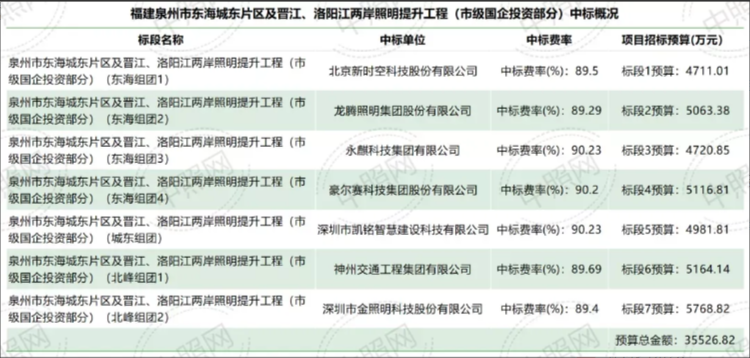
The "Quanzhou Tendering Consulting Center Co., Ltd. Regarding the Lighting Improvement Project for the Donghai Chengdong Area of Quanzhou City and Both Banks of the Jinjiang and Luoyang Rivers (Municipal State-Owned Enterprise Investment Portion)" is divided into 7 bid lots, with a total project budget of 355.2682 million yuan.
Source: Quanzhou Urban Management Bureau, Quanzhou Net