
Plant factories, trapped by costs?
Source | 35Dou (ID: vcearth)
Author | Hu Xiaofeng
In 2075, more than 50 years from now, the sun is about to perish, and the world is covered in ice and snow. Humanity has no choice but to launch the "Wandering Earth" project.
—This is the story from the sci-fi movie "The Wandering Earth," where humans living underground could only feed on earthworms, day after day, year after year.
If, at that time, there had been an agricultural production method capable of breaking free from the control of climate and environment, remaining steadfast whether in glaciers, deserts, amidst natural disasters like earthquakes and blizzards, or even facing the ultimate question of the sun's destruction, providing vegetables and fruits 24/7 without interruption, humanity would have been able to survive.
Currently, artificial light plant factories are exactly such an existence, becoming the most talked-about "hit" topic in the field of facility agriculture. A direct indication is that many companies have successively secured large financing rounds: US indoor farming company Gotham Greens recently announced $310 million in Series E funding; in January this year, Plenty raised $400 million in its Series E round; Bowery Farming raised $300 million in its Series C round in May 2021.
Ideals shine into reality, yet many challenges remain. Behind innovative lie high construction and operating costs, as well as potential environmental restoration costs.
When a modern black technology that can be called a global strategic need is right before our eyes, will cost be the reason for companies to retreat?
The answer is no. Today, the dreamers of these "ultimate agricultural forms" are still running tirelessly in their endless exploration of cost reduction, efficiency improvement, and scenario applications.
An ultimate agricultural form?
Looking at the development of world agriculture, from traditional open-field farming to greenhouses, and then to plant factories with higher technological content. The history of protected agriculture is a history of environmental control.
Bai Baosuo, founder of Future Smart Agriculture, analyzed for 35 Dou, "5,000 years of farming culture have been solving environmental problems, achieving industrialization of cultivation through environmental control to maximize output."
Currently, plant factories use computers and electronic sensors to uniformly and automatically control with high precision the temperature, humidity, light, carbon dioxide, and nutrient solution for crop growth, making crop growth within the facility less subject or not subject to natural conditions. This is the most effective cultivation method for regulating and controlling the crop growth environment.
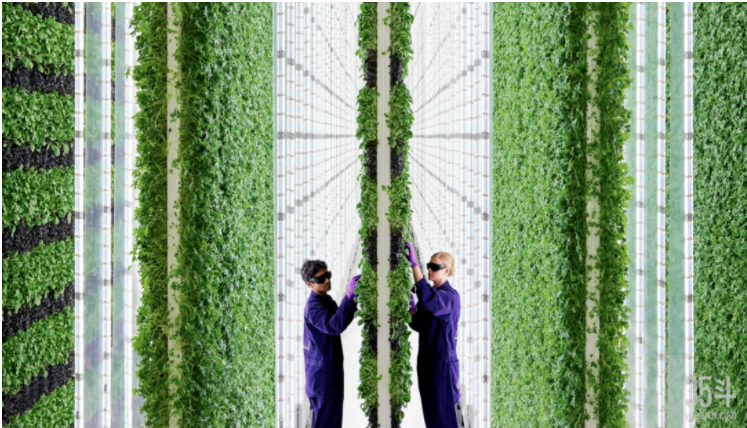
Plenty indoor plant factory, image source: Plenty official website
Currently, plant factories are mainly divided into sunlight plant factories and artificial light plant factories. The difference of two characters implies a significant difference in connotation.
The so-called sunlight plant factory, as the name suggests, is a modern plantation that mainly utilizes sunlight or short-term artificial supplemental lighting and nutrient solution cultivation technology for year-round plant production in a semi-enclosed greenhouse environment.
In contrast, an artificial light plant factory operates in a completely sealed and controllable environment, using artificial light sources and nutrient solution cultivation technology. It is hardly affected by external climatic conditions and enables year-round plant production.
In the industry's subconscious, plant factory refers to artificial light plant factory. According to Li Shaohua, researcher at the Institute of Botany, Chinese Academy of Sciences, plant factories must have the following three characteristics: First, growing crops in a building; greenhouses do not count. Second, artificial light sources; natural light does not count. Third, vertical agriculture with multi-layer cultivation, where the production environment and conditions are all artificially controlled.
Li Peng, Deputy General Manager of Sanan Optoelectronics, stated that artificial light plant factories and so-called sunlight plant factories are "two completely different processes," with one being highly industrialized and the other heavily dependent on the natural environment.
Firstly, natural light cultivation is horizontal, while artificial light plant factories adopt a vertical planting mode with high space utilization. According to data provided by Dr. Sun Chaohua, R&D Director of BOE Houji Technology (Beijing) Co., Ltd., "vertical planting can reach up to 10–14 layers; under the same footprint, the actual effective area can be increased by 4.2 times, and the production capacity per square meter is about 5 times that of natural light plant factories."
Secondly, in terms of planting efficiency, artificial light plant factories use LED light sources to provide all the light required for plant growth. Within the same time frame, plants receive the most sufficient light demand, resulting in growth speeds far faster than those of sunlight plant factories, glass greenhouses, etc.
Finally, artificial light plant factories are hardly affected by external environmental and climatic conditions, allowing for year-round production without interruption. With the advantages of growth speed and number of layers, plus differences in growth cycles, artificial light plant factories with the same footprint can achieve 10 times the output of greenhouses, or even higher.
If we borrow the forecast from the United Nations' World Population Trends Report, the global population will reach 9.8 billion by 2050. This also means that to keep pace with population growth, total global food production must more than double. However, over the past 50 years, the area of agricultural land has remained stable, and it is certain that this figure will not increase significantly for a long time to come.
In this context, the existence of plant factories holds greater strategic significance. As Sun Chaohua stated, "We need to accumulate cultivation technologies and methods that do not rely on natural environments; plant factories are precisely our reserve of future technology and cultivation experience."
Discussing costs without considering output is meaningless
Professor Dickson Despommier, the American scientist who first proposed the concept of vertical farming, once stated that China is one of the countries where vertical farming should be promoted most urgently, to solve the thorny issue of urban village redevelopment in urban planning, provide fresh agricultural and sideline products for urban residents, and improve the urban ecological environment.
Currently, China has become one of the fastest-growing countries in the global development of plant factories. Yang Qichang, Chairman of the National Smart Plant Factory Alliance and Chief Scientist of Intelligent Plant Factories at the Chinese Academy of Agricultural Sciences, revealed to the media that by the end of 2020, there were more than 220 plant factories of various scales in China.
However, it cannot be ignored that artificial light plant factories are still a niche market with low penetration rates. The reason is that, the difficulty in promoting plant factories lies not in technology, but in how to reduce construction and operating costs. "The numbers don't add up" is the direct perception of many practitioners regarding plant factories.
Plant factories require crop production in a closed environment, thus necessitating the construction of related engineering and supporting equipment, including the external envelope structure, air conditioning systems, artificial lighting devices, multi-layer cultivation racks, nutrient solution circulation and control systems, as well as computer regulation and control systems.
Analysis by Qianzhan Industry Research Institute reveals that constructing a plant factory under 1,000 square meters (including interior decoration, equipment, and facilities) costs between 15,000 and 20,000 yuan per square meter; for a plant factory of 5,000–10,000 square meters, the cost per square meter ranges from 8,000 to 10,000 yuan; for large-scale plant factories exceeding 10,000 square meters, the construction cost drops to 8,000 yuan per square meter.
The book "Plant Factory Systems and Practice" states that in artificial light plant factories, artificial lighting equipment accounts for the largest proportion of all equipment costs, especially in plant factories that fully adopt LED light sources, where LED costs often account for about half of the total equipment cost.
These are only the high upfront construction costs; subsequent maintenance and production operating costs are equally significant and should not be underestimated.
Currently, production operating costs mainly include electricity fees, costs for various materials (nutrient solutions, seeds, CO2 gas fertilizer), labor costs, material transportation fees, personnel management fees, etc.
According to Li Peng, electricity costs currently account for about 25% of the production and operating costs of plant factories. "An industrial building of 10,000 square meters with a height of four to five meters, converted into an artificial-light plant factory, consumes more than 13 million kWh of electricity per year." High energy consumption has been regarded as one of the main bottlenecks affecting the development of plant factories.
On the other hand, discussing costs without considering output is meaningless. Outsiders believe that the high construction and operating costs of plant factories are relative to the value of the crops grown in them.
Taking common lettuce as an example, Yang Qichang once calculated for a plant factory in Beijing that grows lettuce: producing 1 kilogram of lettuce requires 10 kWh of electricity, equivalent to 6 yuan. Combined with yield analysis, the production cost per kilogram of lettuce reaches 21.19 yuan. However, the market price for lettuce is generally between 4 and 6 yuan per jin (500g). Nevertheless, some premium supermarkets offer certain lettuce varieties at higher prices; for instance, at Hema Fresh, 200 grams of Romaine lettuce sells for 12.9 yuan, and 200 grams of red leaf lettuce for 7.9 yuan.
This also means that if costs are to be covered, a major development direction for plant factories is to produce high-quality vegetables and supply them to premium supermarkets.
Things are not necessarily as they appear on the surface; growing and selling vegetables is just the tip of the iceberg regarding the value of plant factories. In terms of usage, plant factory types include production-oriented, research-oriented, and display-oriented. Among these, the value of research-oriented and display-oriented types is far beyond what can be measured by business models.
Environmental protection and efficiency, you can't have your cake and eat it too
People are likely still shaken by the unprecedented heatwave in August, the worst in 61 years. No one in the entire Yangtze River basin escaped the scorching heat that began in late June. Prolonged high temperatures and drought caused severe disasters in multiple provinces and municipalities, including Sichuan, Chongqing, Hubei, Hunan, Jiangxi, and Anhui. Continuous mountain fires in districts and counties of Chongqing such as Jiangjin, Dazu, Tongliang, Banan, and Beibei resulted in huge losses.
Accompanying this was an extremely tight electricity supply. Out of necessity, multiple provinces and cities implemented measures such as power rationing for office buildings, suspension of mall operations, and factory shutdowns.
In China, 75% of electricity comes from coal-fired power generation. The coal production process causes pollution, so the environmental restoration costs associated with the electricity consumption of plant factories cannot be ignored. Additionally, given global energy shortages, is it more important to consume large amounts of scarce Earth resources or to build technical reserves to ensure supply under uncertain future conditions?
In response, Bai Baosuo, founder of Future Smart Agriculture, proposed a measurement method: Do not focus solely on plant factories; instead, comprehensively consider both open-field agriculture and plant factories, evaluating the total energy consumption from production site to table.
Wang Xiaoqing, founder of Shuimu Jiutian, shares this perspective. When he first entered the agriculture sector eight years ago, he found it difficult to determine which agricultural model was superior. Consequently, he established a verification standard that comprehensively evaluates quality, cost, yield, and sustainable development (with indicators including carbon footprint, water, fertilizer, and pesticides).
Dr. Sun Chaohua believes that the production method of plant factories itself is nearly pollution-free for the environment. She explains this from four dimensions:
Nutrient solution is recycled and supplied on demand, rarely involving discharge issues;
Substrates or sponges are biodegradable;
Irradiation in a sealed environment does not involve light pollution;
Structural components are made of aluminum alloy and stainless steel, with no risk of plastic degradation pollution.
Open-field agricultural production has no natural pollutants; its pollution mainly comes from the heavy use of fertilizers and pesticides during cultivation, which causes great damage to the soil environment. In particular, China's total fertilizer production and consumption have long ranked first in the world, accounting for about one-third of the global total. Therefore, some industry insiders believe that "non-point source and point source pollution caused by Chinese agriculture is higher than that of industry."
The water-saving capability of plant factories is particularly outstanding. According to the FAO report "The State of Food and Agriculture 2020", agricultural water use accounts for 70% of global water resource consumption. Plant factories can recycle water resources to avoid waste. Dr. Sun Chaohua once conducted relevant calculations: the water consumption for one head of lettuce during one growth cycle is 2L, while open-field cultivation requires 222L, meaning the water-saving rate of plant factories can reach 90%.
Take Singapore as an example. Surrounded by the sea on all sides, Singapore suffers from an extreme scarcity of freshwater resources, most of which need to be imported from neighboring Malaysia. However, relying on vertical farms within its building clusters, Singapore has become a "Garden City" with 50% green coverage, an agricultural powerhouse that produces 38,000 heads of vegetables every year per 5 square meters. This fully demonstrates that the water-saving capability of modern indoor planting methods is beyond imagination.
For vegetables produced by traditional agriculture, going from field to table inevitably involves losses due to long-distance transportation and pollution from truck exhaust. There are losses during transportation, cleaning, and processing, with "only about 30% to 60% of a pound of vegetables finally making it to the table", whereas plant factories have flexible site selection, allowing them to revitalize a large number of idle abandoned factories and underutilized energy at night during urbanization, achieving "local production and local sales". Bai Baosuo further proposed that vegetables produced in plant factories generate no kitchen waste; except for the root systems, everything is usable, with a utilization rate exceeding 95%.
Overall, plant factories mainly consume electrical energy, but they reduce energy consumption in aspects such as reducing transportation links and recycling water and fertilizers.
How to reduce energy consumption and lower costs?
Considering various factors comprehensively, the energy consumption issue of plant factories may be alleviated to some extent in a theoretical sense. Related research on plant factories is starting from reducing energy consumption and lowering costs to make them more acceptable to the market, which is also a key step in the development process of plant factories.
35 Doucombines viewpoints from various parties in the industry, and there are the following directions for solving the high energy consumption problem:
First, improve photoelectric conversion efficiency.By optimizing the design of light sources, spectrum, environment, etc., the utilization of light sources is optimized. Li Peng mentioned, “Simply put, how much electricity can be converted into light after being input; currently, it can reach 50–60%, whereas previously it was only around 10–20%.”
Second, utilize off-peak electricity. Electricity prices are related to consumption levels; industrial electricity is cheaper at night than during the day. Plant factories break the growth rhythm of crops and can use off-peak electricity at night to supplement and adjust light sources for crop growth. This not only reduces the electricity costs of plant factories but also plays a role in peak shaving and valley filling for the entire power energy application, improving energy utilization efficiency.
Third, some measures to save electricity are also necessary. Dr. Sun Chaohua analyzed that different crops require different light environments; it is not necessarily true that the longer the photoperiod, the better the growth quality or the faster the growth speed. Plant factories can find the optimal balance between light and plant growth, identifying the most efficient mode of electricity consumption.
Fourth, actively explore the use of clean energy. For example, the application of solar photovoltaic power generation systems, wind energy, hydropower, or biomass energy and other relatively Environmental protection power generation methods has become a hot topic in plant factory research.
For example, the Pinghu Agricultural Economic Development Zone cooperated with the State Grid Pinghu Power Supply Company. The power supply company customized a new integrated hydrogen-light-storage-charging energy system for Dongyu Fruit Industry, an enterprise in the park, to reduce carbon emissions and electricity costs for plant factories. It is understood that the project includes adding a hydrogen power generation system and building an energy storage station. The plant factory uses electricity generated by hydrogen or photovoltaics during the day and stored electricity from the energy storage station at night, achieving zero-emission electricity usage.
Regarding the high construction cost issue, ordinary civil materials and equipment should be selected as much as possible. In fact, the current construction cost has been significantly reduced compared to the past.
Li Peng stated, "The current cost may be only one-hundredth of what it used to be, with the materials for producing chips dropping to a few hundredths of their previous levels." Bai Baosuo also indicated that as equipment continues to improve, costs will decrease at an annual rate of 10%–20%.
It is important to note that in the operating costs of plant factories, labor costs are higher than electricity costs, generally accounting for 30%–40% of the total cost. Currently, many plant factories have reduced labor input through automated production methods.
At the recently concluded 29th China Yangling Agricultural High-Tech Fair, exhibitors from plant factories adopted a fully automated vertical agricultural production system. There was no manual labor on the entire planting production line; equipment such as robots, shuttle cars, and elevators received intelligent computing instructions from computers, replacing manual work in processes like sowing, transplanting, and management, truly achieving unmanned management.
In comparison, the labor cost input in traditional agriculture is not insignificant, and there are also problems such as low personnel work efficiency and high resource waste rates, making it difficult to improve production efficiency through intelligent means.
Zhan Zhuo, General Manager of Sanan Optoelectronics, stated in a media interview, "We optimistically believe that 2025 is very likely to be the inaugural year for plant factories. This includes two main factors: First, the luminous efficacy of LED technology is improving at a rate of 5%–8% per year; second, with the improvement of overall system technology in recent years, the cost of plant factories has decreased significantly. In contrast, traditional agriculture is seeing gradual increases in labor costs, land costs, transportation, and environmental costs. It is expected that the costs of these two agricultural production methods will nearly converge by 2025."
Cut time in half, increase profitability
Beyond cost reduction and energy saving, exploring application scenarios and business models for plant factories also holds significance for sustainable development.
In terms of crop categories, production-type plant factories are not limited to ordinary vegetables; instead, they target the high-end market, producing high-value-added cash crops and functional products.
Many plant factories have now developed indoor cultivation technologies and facility equipment for high-value-added crop varieties, including blueberries, fruit trees, sweet peppers, cucumbers, tomatoes, flowers, tea leaves, and special precious medicinal herbs. The cultivated crop categories have expanded from vegetables to Dendrobium, Anoectochilus roxburghii, edible flowers, fruit trees, tea leaves, etc.
Li Peng emphasized that a broader application scenario for plant factories is to utilize their industrialized production methods to improve cultivation uniformity, yield, and production efficiency, thereby achieving standardized production of cash crops such as Chinese medicinal herbs and seedlings.
On the one hand, plant factories can shorten the production time of traditional Chinese medicinal materials. "Production that takes ten to several months or even twenty to thirty months outdoors can be reduced by at least half in a plant factory." On the other hand, plant factories have a very significant effect on increasing the content of active ingredients in traditional Chinese medicinal materials. "Through environmental and technical control, the effective components in Chinese herbal medicines are increased, enabling targeted and precise production of Chinese herbal medicines."
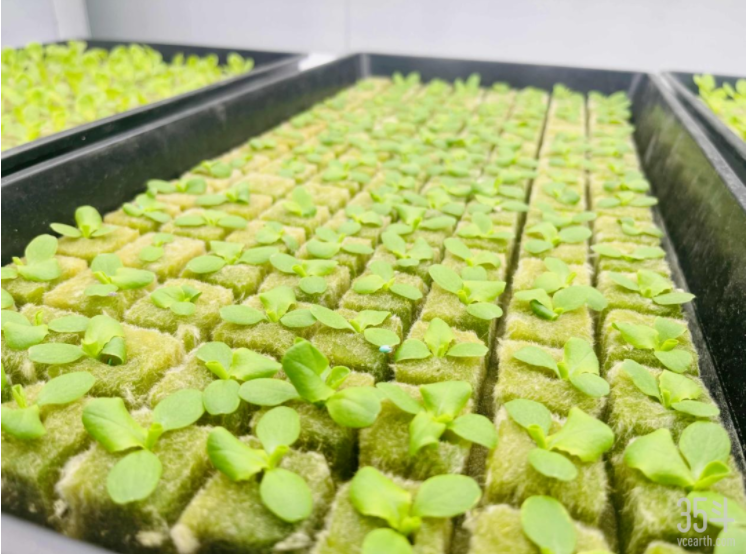
Seedling cultivation, image source: Guangming Mother Port
In the field of breeding, plant factories have great potential in shortening crop breeding cycles.The key reason for the bottleneck technology in breeding is the long cycle; cultivating a variety with excellent traits usually takes seven to eight years or even more than ten years. However, plant factories simulate the natural characteristics of different regions through intelligent equipment, enhancing the match and adaptability between seeds and the environment, which can shorten the cycle to two to three years.
The growth cycle of rice grown in plant factories will also be significantly shortened.For example, the innovative team of the Institute of Urban Agriculture of the Chinese Academy of Agricultural Sciences collaborated with Academician Qian Qian's team from the China National Rice Research Institute to achieve a major breakthrough in harvesting rice planted in plant factories in about 60 days, which is half the growth cycle of about 120 days for rice in open-field environments.
Many plant factory enterprises are also actively innovating in their business models, exploring more possibilities.
Future Smart Agriculture targets the closed-loop Industry of plant factories. In the early stage, it can handle plant factory planning and design, providing a complete set of equipment Solutions; after construction, it offers operational management of plant factories and consulting services for remote cultivation technology. It has even established a fresh produce division to help connect with sales platforms. Bai Baosuo stated that the company will also engage in large-scale production in the future and is currently in the site selection phase. The business model extended from Sanan Optoelectronics includes brand building, channel expansion, integration with new retail formats, and combination with cultural tourism.
So, are there profitable plant factories in the market, and how long does it take to recoup costs? Reports show that 25% of plant factories in Japan are profitable, and 32.9% break even. Li Peng believes that "for plant factories larger than 3,000 square meters, in a good market, it takes about 3 to 4 years to cover costs."
Existence is defined by its origin
Agriculture needs to move towards factory-style production, just like industry. In China, grain crops have already achieved partial mechanization and automation; the next step is to utilize plant factories to achieve factory-style, mechanized, automated, and even informatized production of vegetables.
Wang Xiaoqing, founder of Shuimu Jiutian, proposed: Agriculture, healthcare, and education are the three bottom lines of society; they cannot be evaluated purely commercially, but should comprehensively consider economic value, ecological value, and social value.
Of course, there are more urgent issues at hand: a sharp increase in population, a surging demand for food safety, rapidly diminishing arable land, and a continuous decline in the agricultural workforce... Humanity needs new ways to produce agricultural products, and plant factories are one effective solution.
"It exists for the very reason it was created." As Li Peng said, plant factories will become an important part of future agriculture.
Perhaps wandering Earth and interstellar migration are far from us, but against the backdrop of global food crises and overlapping pandemics, artificial light plant factories are not only a new urban supply guarantee solution, but also represent the production method of future agriculture. Their greater significance lies in being one of the important projects to save humanity from extinction.
Therefore, even today, when the sun is still bright and the sky is vast, we have already seen crazy dreamers design artificial light plant factories into life capsules capable withstanding natural disasters such as earthquakes, blizzards, and extreme drought.
It can produce anywhere, year-round without interruption.This also provides a new realm of imagination for solving the food problem for 9.8 billion people worldwide by 2050.