
Summary and analysis of the semi-annual performance of listed companies in the lighting industry supply chain for 2022: From 'K'-shaped divergence to 'U'-shaped recovery
Note: This semi-annual report review samples listed companies in the lighting industry / supply chain, including A-shares, H-shares, and the New Third Board, covering the semi-annual performance of a total of 173 companies.
I. Overall Situation
In the same period last year, the entire industry can be described as experiencing 'K'-shaped differentiation against the backdrop of uneven market recovery. This differentiation is evident in all aspects. In terms of the market, there is a split between domestic and export markets, a north-south divide within the domestic market, a divergence between developed and emerging economies in the export market, and a split between general and niche markets; in terms of enterprise operations, there is a divergence between supply and demand, between revenue and profit, between leading enterprises and small and medium-sized enterprises, and between upstream and downstream enterprises' profit margins.
Amid the continued impact of the COVID-19 pandemic on the global economy and society, and a increasingly tense and complex external landscape, 2022 has begun, bringing unprecedented challenges to the lighting industry. At the start of 2022, stakeholders across the industry were full of confidence, but the recurring nationwide outbreak that began in March not only caused various disruptions to passenger flow, logistics, and cash flow, but more profoundly dealt a severe blow to confidence in both production and consumption sectors. To some extent, the difficulties encountered in 2022 are greater than those at the beginning of 2020; while delivery issues were the primary concern in 2020, this year the lighting industry has faced unprecedented obstacles in supply, demand, and expectations. In contrast to last year's 'K-shaped' divergence, this year's market may show a 'U-shaped' recovery, meaning the subsequent recovery will be slower, with weaker intensity, and significant uncertainty remains regarding the outlook.
The recovery of global market demand was hampered by the continuous disruption from new virus variants and regional geopolitical conflicts; meanwhile, persistently high inflation exerted a suppressive effect on end-user demand. The surge in demand for products related to "pandemic prevention" and "stay-at-home economy," driven by the pandemic, has peaked and is now declining. Overseas customers placed "excessive advance orders" in the same period of 2021 based on predictions of the "chip shortage and material scarcity" trend, resulting in a large backlog of inventory that constrained new order procurement in 2022. Other manufacturing countries further accelerated their resumption of production and work, weakening the "transfer substitution" effect of Chinese manufacturing, among other factors. In the first half of 2022, the lighting industry's export overall presented a situation of "decreased volume but increased price." Although demand contraction led to a nearly 20% decline in export volume, export value reached $29 billion, with a year-on-year (YoY) decrease of only -0.25%. Price factors driven by inflation supported the stability of export value. For exporting enterprises, some favorable factors included favorable exchange rates in the first half of the year, as well as a slight decline in raw material and logistics costs which had been at high levels.
In the first half of 2022, the main issues facing the domestic sales market were: on the supply side, the lighting industry overall faced oversupply with structural overcapacity in production capacity; while bearing the rigid increase in upstream costs such as materials, logistics, labor, land, and energy, the recurring domestic epidemic had a significant adverse impact on the production capacity and supply chain connectivity of relevant enterprises. On the demand side, the real estate sector was sluggish, local fiscal contraction severely dragged down investment; the ongoing epidemic continued to hit household incomes and employment, leading to a slow recovery in consumer (B2C) demand; on the engineering (B2B) side, projects were delayed or halted due to pandemic restrictions, and their role in driving investment has not yet been fully realized. Affected by this, the domestic sales performance of the lighting industry in the first half of 2022 was relatively sluggish, declining Year-on-year (YoY) by 7.50%.
II. Lighting Application Sector
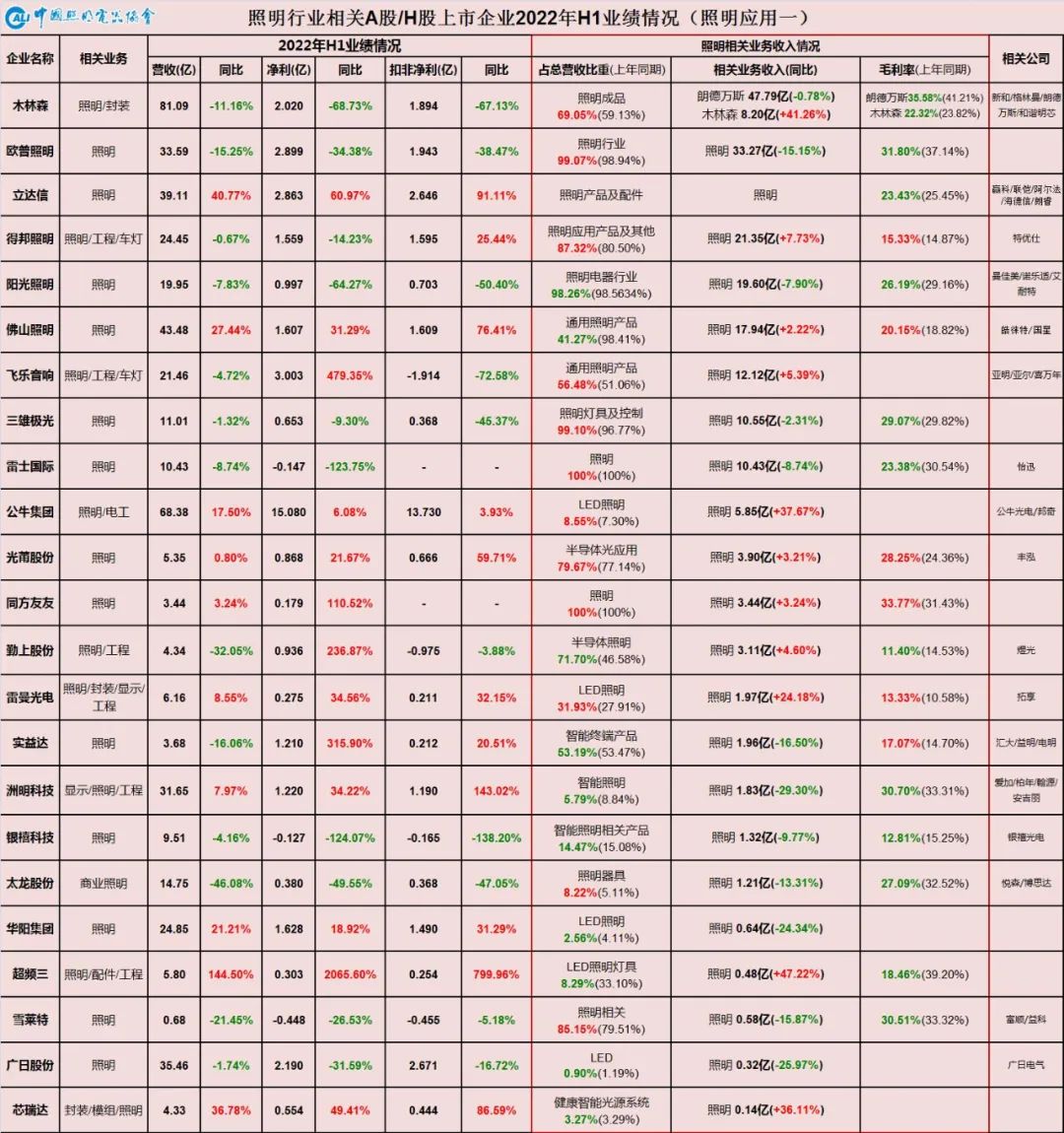
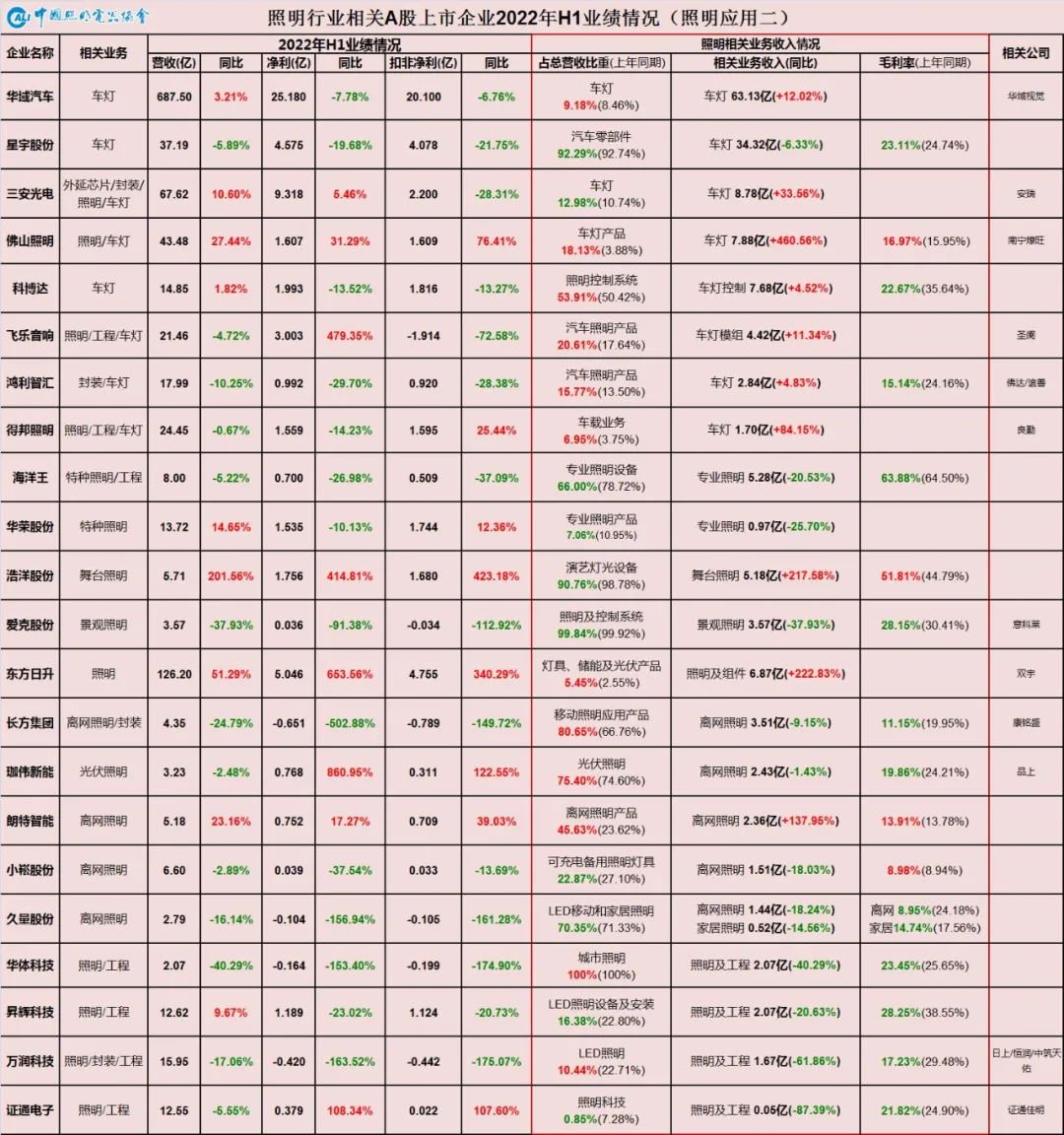
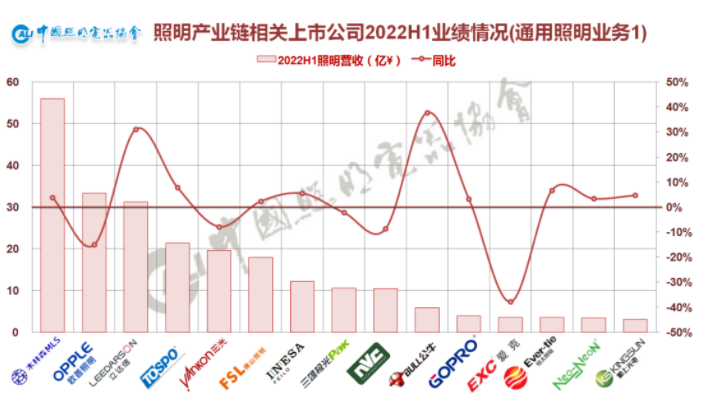
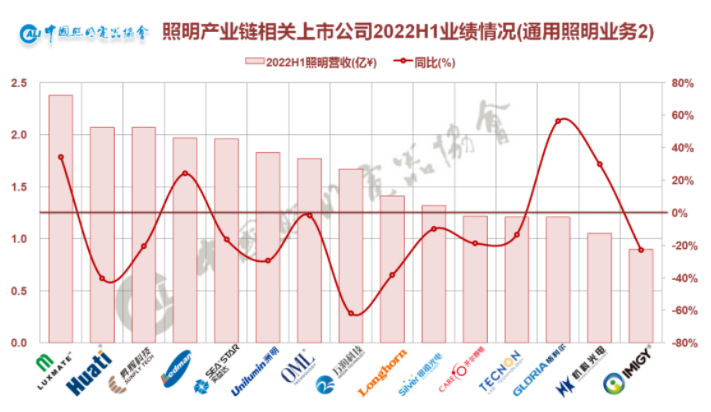
Looking at the lighting business (excluding automotive lights), performance trends in domestic and international sales largely align. Among 37 companies, revenue declined year-on-year for 22 firms, accounting for nearly 60%, while gross margin fell for 27 companies, representing a high of 73%. Eight companies reported losses, exceeding 20%. Profitability is becoming increasingly difficult, while losses are becoming easier to incur. Notably, Hao Yang Shares, a leader in stage and performance lighting, achieved revenue growth exceeding 200% and profit growth over 400%. This surge in performance far surpassed pre-pandemic levels, reflecting that by the first half of 2022, most countries had entered a normalized phase of COVID-19 control, and restrictions on large-scale performance gatherings were further relaxed, leading to a clear recovery in the performance equipment market.
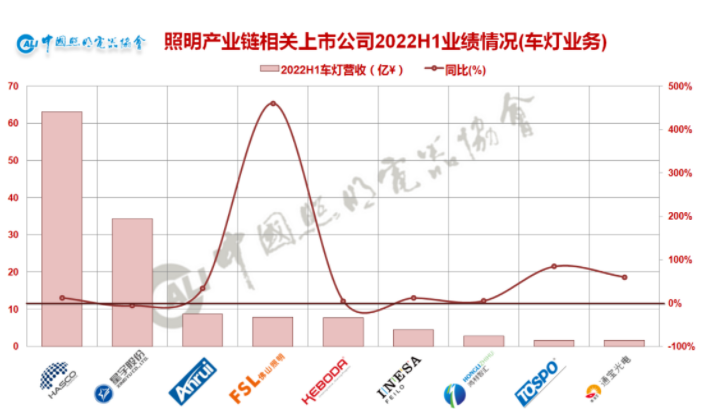
The automotive lighting market has recently been a hot topic in the industry due to its high market returns, considerable development potential, and relatively rational price competition. This segment also performed relatively well in the first half of the year; 8 out of 9 companies saw their revenue grow year-on-year (YoY). With the boost from the new energy vehicle trend, the automotive lighting sub-market, which requires significant thresholds in technology, patents, certification, and market access, represents a good direction for some lighting enterprises with corresponding foundational strength to pursue differentiated development. Its intelligent, interconnected, digital, and personalized evolution is also an inevitable trend.
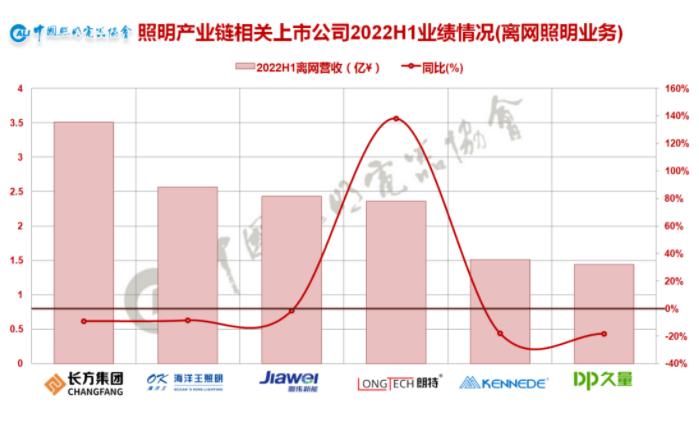
Regarding off-grid lighting business, revenues of most enterprises have declined. Another prominent issue is that even leading companies in the off-grid lighting sector have long been trapped by low gross margins.
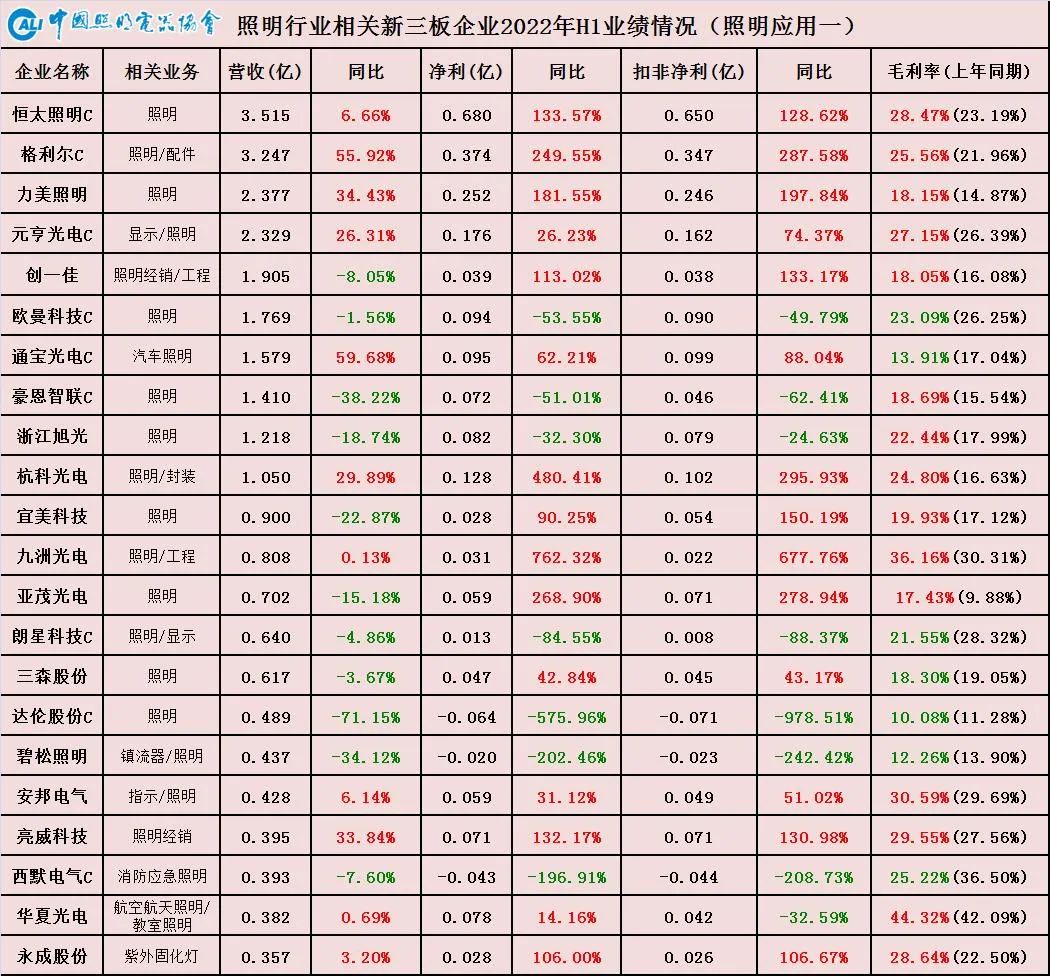
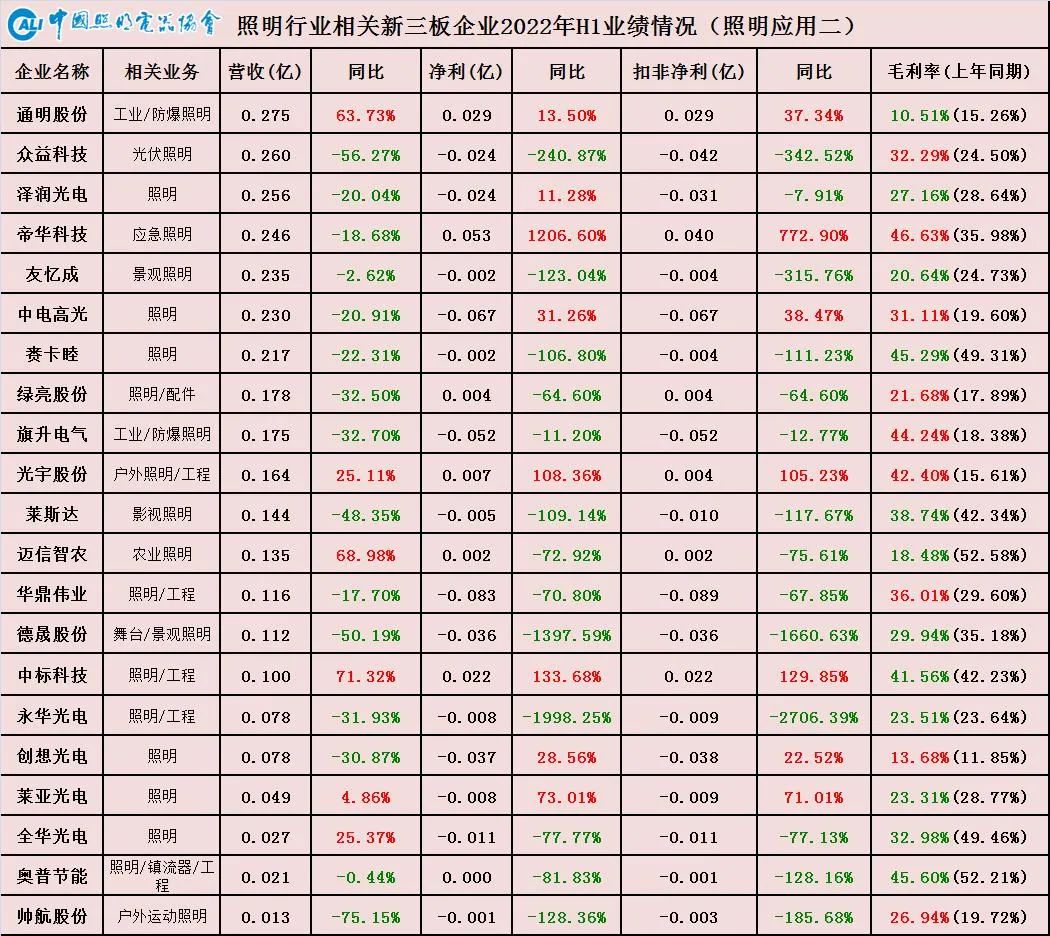
Among the 43 new third-board lighting application enterprises, revenue year-on-year decline was observed in 26 companies, accounting for over 60%, with 18 loss-making firms, representing a high of 42%. reflects the current reality that SMEs in the industry face more difficult times compared to leading enterprises.
III. Epitaxy Chip Segment
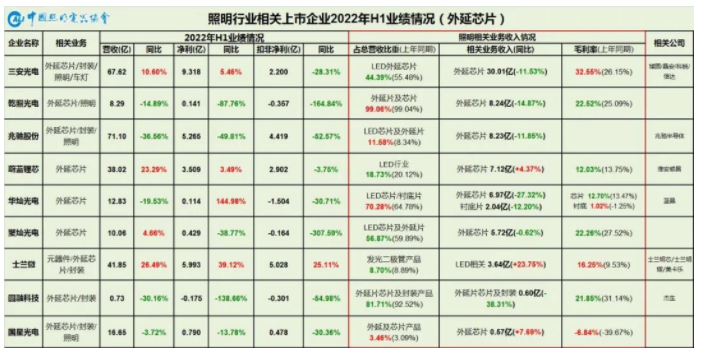
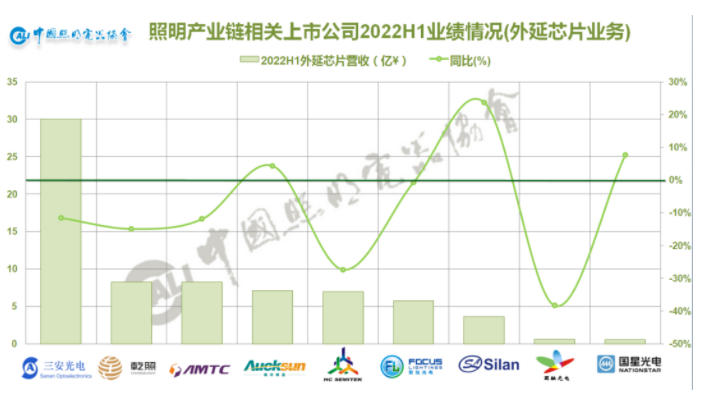
From the perspective of epitaxy chip business, among the 9 listed companies, revenue year-on-year (YoY) decline was seen in as many as 6, accounting for two-thirds; gross margin year-on-year (YoY) decline also affected 6 companies, again representing two-thirds, while loss-making companies reached as high as 4. This stands in stark contrast to the fully red trend across the entire upstream sector compared to the same period last year, primarily due to a comprehensive contraction in downstream demand. For the current highly concentrated epitaxy chip sector, further deepening of industry consolidation and integration will continue. Key focus areas for major upstream manufacturers remain reducing inventory levels, innovating new technologies, exploring new application scenarios, adjusting product structures, and enhancing sustainable profitability.
IV. Packaging Section
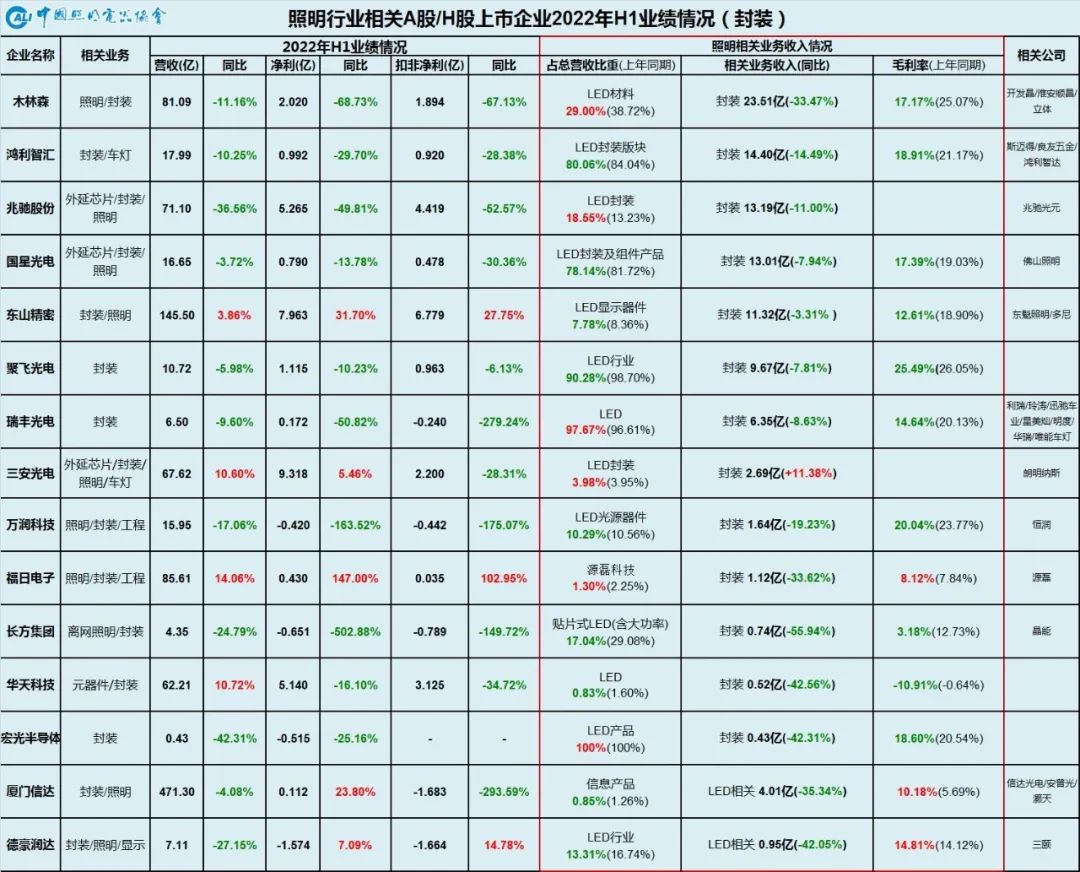
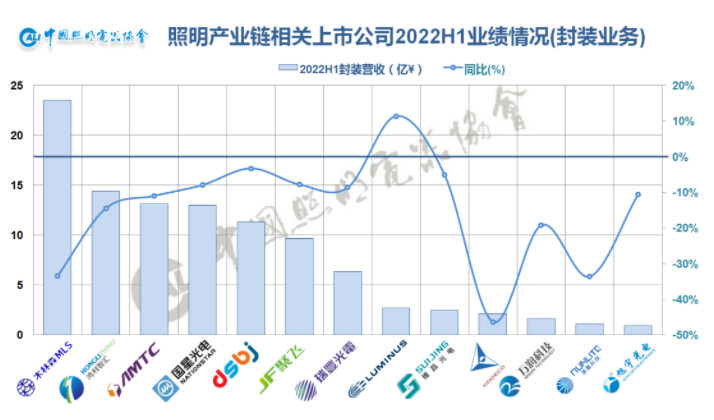
Looking at the packaging business, only 1 of the 15 companies saw year-on-year (YoY) revenue growth, while over 93% experienced a decline. Gross profit fell for 12 companies, accounting for 80%. There were 5 loss-making companies, representing one-third of the total. The only company to achieve growth was Sanan's subsidiary Lumileds, which has been continuously expanding into differentiated niche markets such as projection, flashlights, medical, UV, IR, horticultural lighting, and stage lighting in recent years, now reaping significant results.
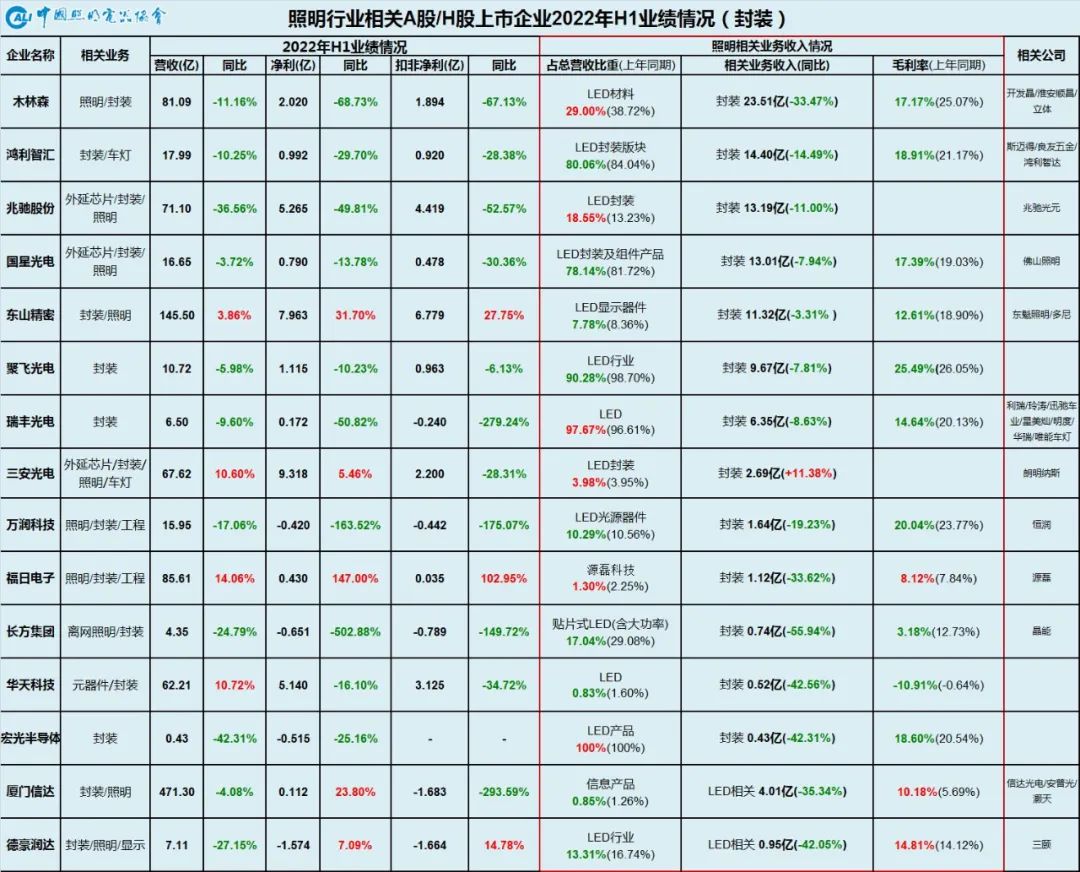
Among the 14 new third-board packaging enterprises, revenue year-on-year (YoY) declined for 12 companies, accounting for 86%; gross margin decreased for 11 companies, representing 79%; and the number of loss-making companies reached as many as 7, meaning half of the enterprises are incurring losses.
In the packaging sector with high industry concentration, the performance of leading packaging companies most intuitively reflects the sluggishness of downstream market demand. Packaging companies continue to layout in high value-added new business segments. In the general lighting field, the focus is on high luminous efficacy, high color quality, full spectrum, circadian light, and health light directions, while reducing mid-to-low-end products; in the special lighting field, greater attention is paid to high-power applications such as automotive, agricultural, industrial, road, mining, and venue lighting; additionally, efforts are being made in other niche fields including infrared, ultraviolet, laser, Mini/Micro LED, and Li-Fi.
5. Supporting Modules
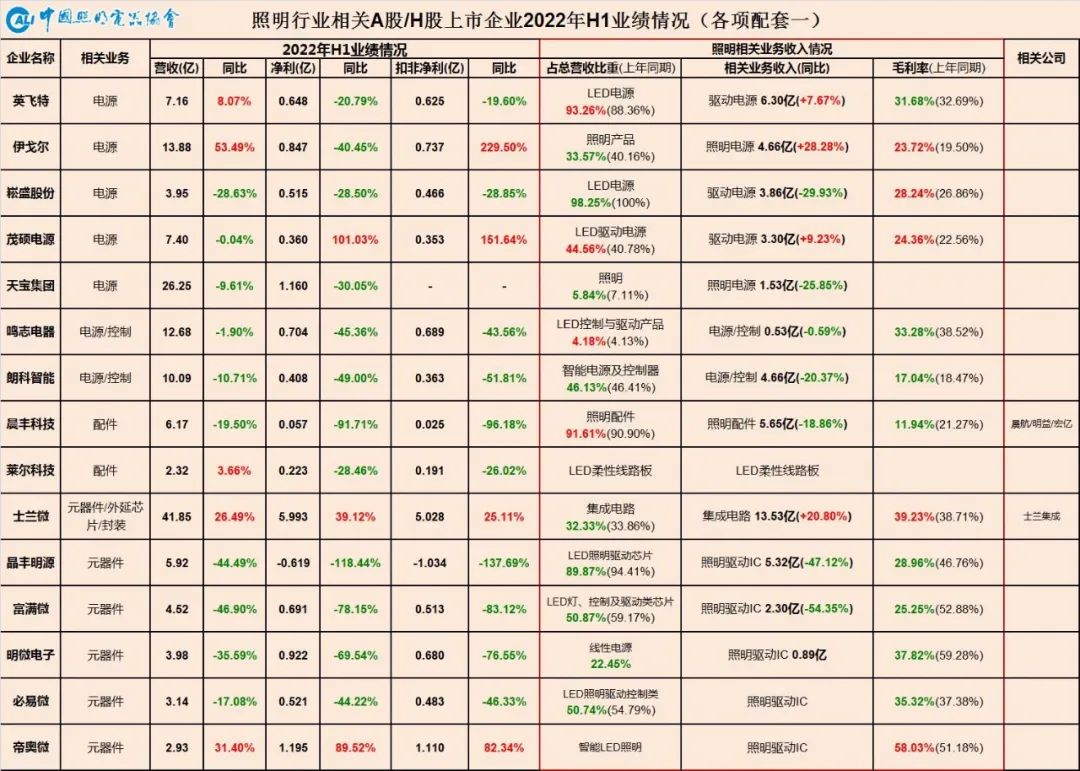
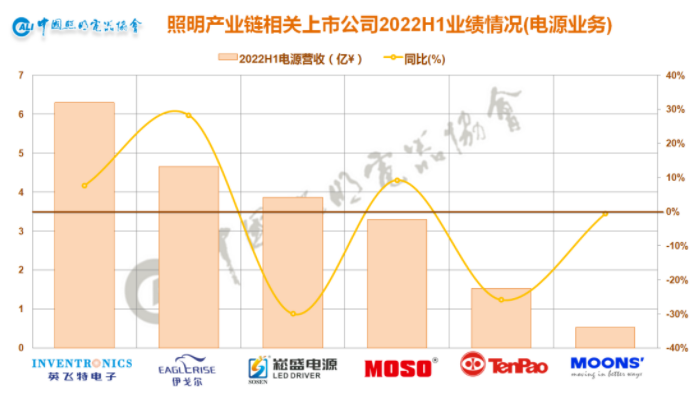
Regarding the power supply business in other supporting sectors, revenue declined year-on-year (YoY) for 4 out of 7 companies, accounting for 57%, and gross margin also decreased for the same 4 companies, representing 57%.
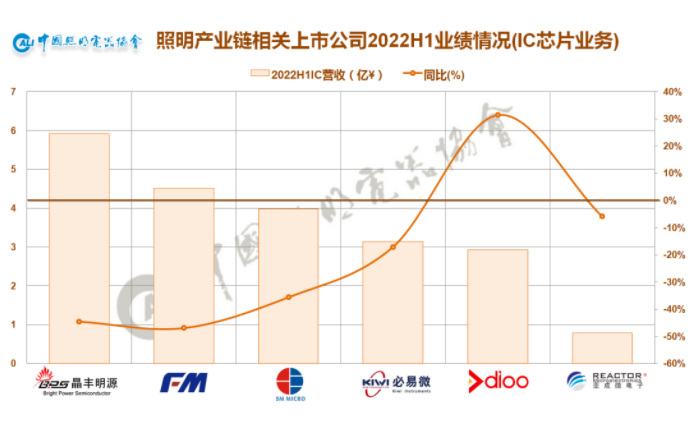
Regarding the IC business in other supporting sectors, revenue year-on-year growth was seen in only 1 company, and gross margin year-on-year growth in just 2 companies. This is worlds apart from last year's period when global chip shortages and accelerated domestic substitution drove historic performance growth for a host of IC chip companies; the cycle is unavoidable for anyone.
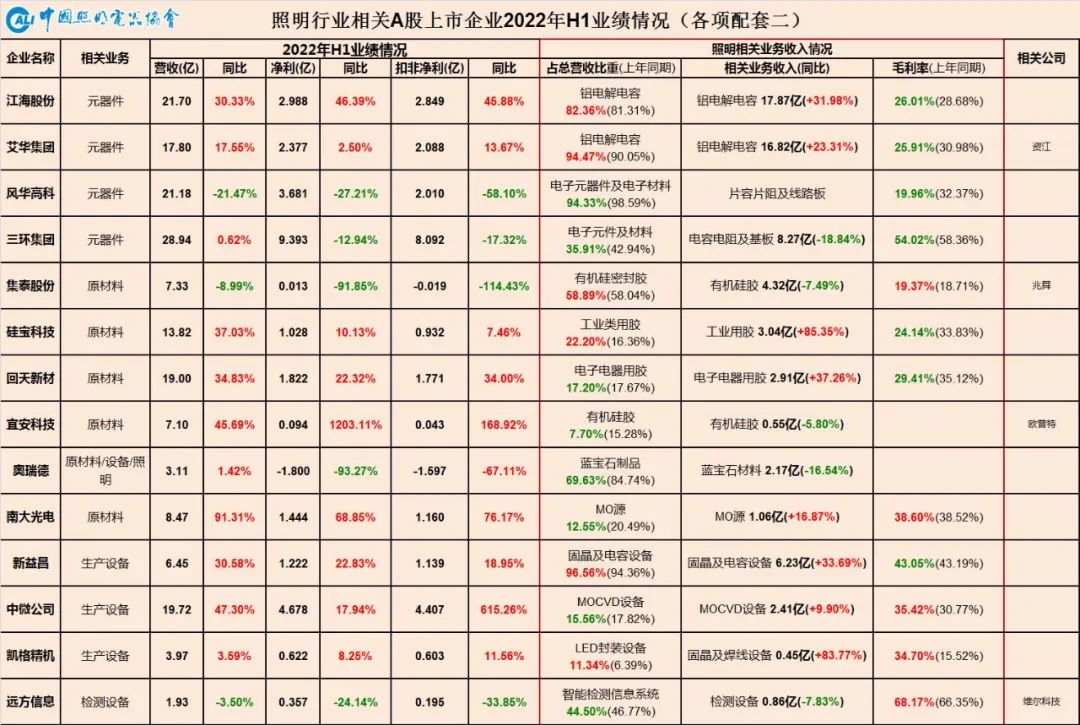
In other supporting business areas such as raw materials, components, accessories, and equipment, a total of 16 companies saw revenue decline year-on-year for 8 of them, while gross margin declined year-on-year for as many as 63%. An undeniable trend is that in the future, competition among lighting industry enterprises will increasingly manifest as a contest between supply chain systems, with limited existing demand gradually concentrating toward high-quality production capacity possessing superior supply chain control capabilities.
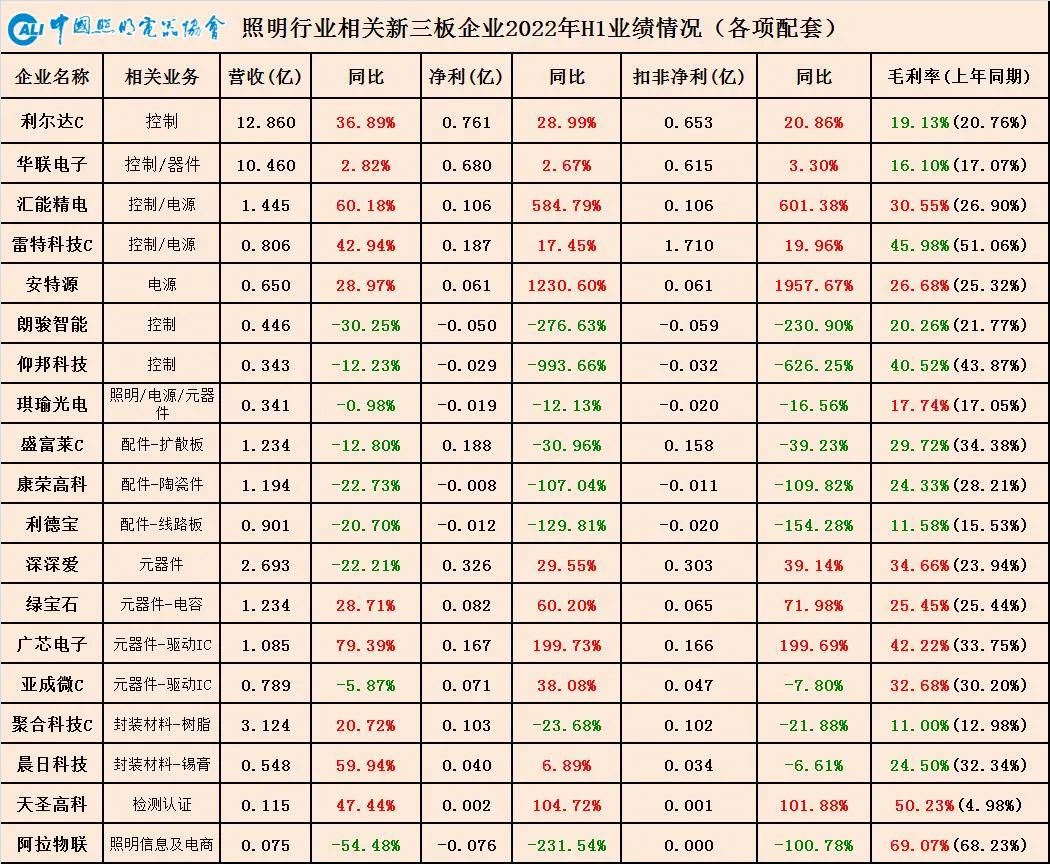
The situation of companies on the New Third Board is similar: half of them saw their revenue and gross margin decline year-on-year, while loss-making companies accounted for nearly one-third of the total.
VI. Lighting Engineering Sector
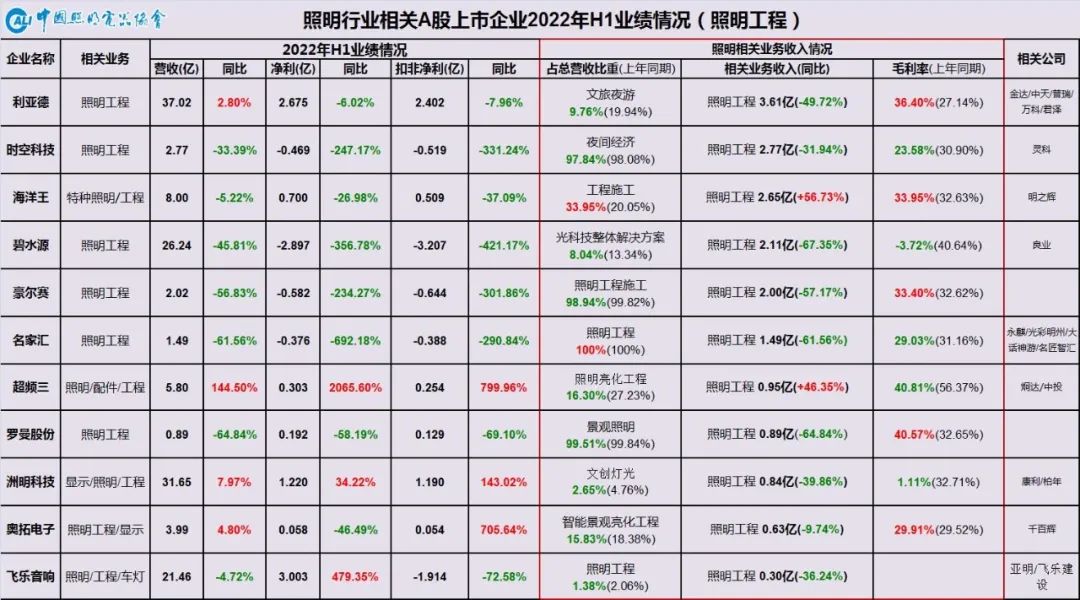
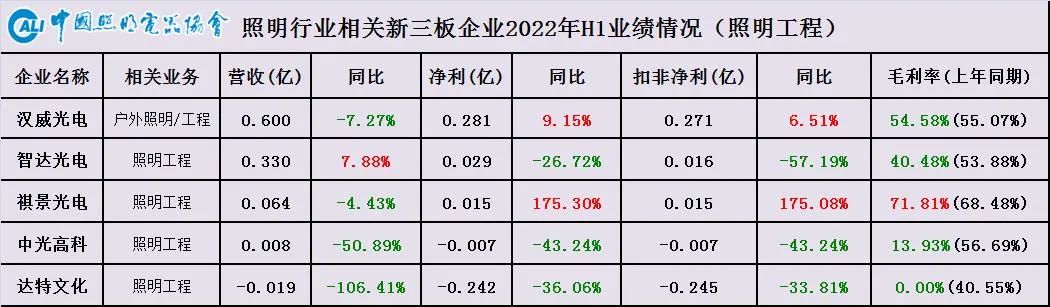
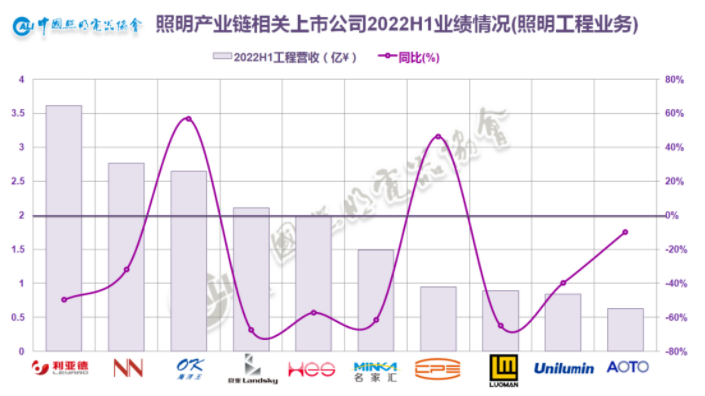
Finally, looking at the lighting engineering business (including New Third Board), a total of 16 relevant companies listed on A-shares and the New Third Board reported that their lighting engineering revenue in the first half of 2022 declined year-on-year; as many as 13 of them, representing over 80%, saw such declines, with 7 of them experiencing drops exceeding 50%. Profits fell for 11 companies, accounting for nearly 70%; meanwhile, 7 companies posted losses, representing 44% of the total.
In the first half of 2022, the lighting engineering sector, which had previously been hit by both policy and the pandemic, once again entered a downturn. The repeated domestic outbreaks caused delays in project construction, halted acceptance procedures, and obstructed market expansion. Additionally, the ban on super-high-rise buildings and energy consumption controls have imposed electricity-saving pressures that to some extent limited further development. Although relevant listed companies made numerous efforts in selecting projects, collecting receivables, and business transformation, under the current circumstances, the transformation of major engineering companies towards cultural tourism night tours and smart city construction remains 'a long and arduous journey'.
For more analysis on the semi-annual performance of listed companies related to the lighting industry supply chain in 2022, please refer to Issue No. 5 of the China Association of Lighting Industry's journal 'China Lighting', published at the end of October this year.
Further Reading: Preview of Issue 4 of "China Lighting"