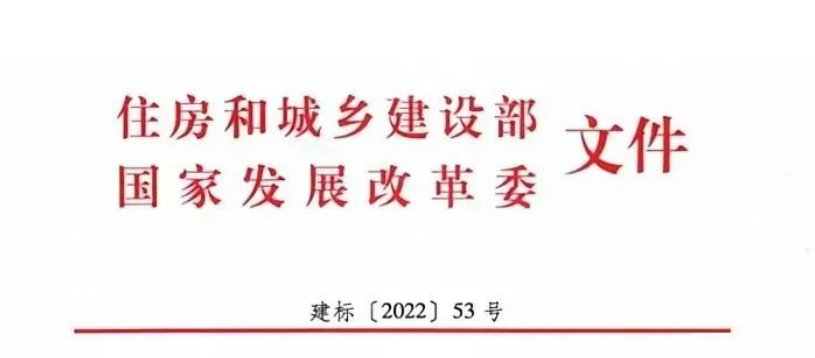
MOHURD and NDRC issue the "Implementation Plan for Carbon Peaking in Urban and Rural Construction"
The Ministry of Housing and Urban-Rural Development and the National Development and Reform Commission issued the "Implementation Plan for Carbon Peaking in the Field of Urban and Rural Construction," proposing to promote urban green lighting, strengthen whole-process management of urban lighting planning, design, construction, and operation, control excessive brightening and light pollution, achieve over 80% usage share of high-efficiency energy-saving luminaires such as LED by 2030, and have more than 30% of cities establish digital lighting systems.
Relevant departments of the State Council, housing and urban-rural development departments and development and reform commissions of all provinces, autonomous regions, municipalities directly under the Central Government, and the Housing and Urban-Rural Development Bureau and Development and Reform Commission of the Xinjiang Production and Construction Corps: The "Implementation Plan for Carbon Peaking in Urban and Rural Construction" has been reviewed and approved by the Leading Group for Carbon Peaking and Carbon Neutrality Work, and is hereby issued to you. Please implement it conscientiously. Ministry of Housing and Urban-Rural Development, National Development and Reform Commission June 30, 2022 Implementation Plan for Peaking Carbon Emissions in the Urban and Rural Construction Sector Urban and rural construction is one of the major sources of carbon emissions. With the rapid advancement of urbanization and in-depth adjustment of the industrial structure, carbon emissions from the urban and rural construction sector and their proportion of total societal carbon emissions will continue to rise. To thoroughly implement the decisions and arrangements of the CPC Central Committee and the State Council on peaking carbon emissions and achieving carbon neutrality, control the growth of carbon emissions in the urban and rural construction sector, and effectively carry out work to peak carbon emissions in this sector, this implementation plan is formulated in accordance with the "Opinions of the CPC Central Committee and the State Council on Fully, Accurately, and Comprehensively Implementing the New Development Philosophy to Achieve Peaking Carbon Emissions and Carbon Neutrality" and the "Action Plan for Peaking Carbon Emissions Before 2030." I. General Requirements (I) Guiding Principles. Guided by Xi Jinping Thought on Socialism with Chinese Characteristics for a New Era, we will fully implement the spirit of the 19th National Congress of the Communist Party of China and all its plenary sessions, deeply apply Xi Jinping Thought on Ecological Civilization, and follow the decisions and deployments of the CPC Central Committee and the State Council. Adhering to the general principle of pursuing progress while ensuring stability, we will base ourselves on the new stage of development, fully, accurately, and comprehensively apply the new development philosophy, and build a new development pattern. We will prioritize ecology, conservation, and protection, uphold harmony between humanity and nature, adhere to a systemic approach, coordinate development and security, and be guided by green and low-carbon development. We will advance urban renewal and rural construction initiatives, accelerate the transformation of urban and rural development models, enhance the quality of green and low-carbon development, and continuously meet the people's growing needs for a better life. (II) Working Principles. Adhere to systematic planning and phased implementation, strengthen top-level design, reinforce result control, reasonably determine the work pace, and coordinate efforts to achieve carbon peaking. Adhere to adapting to local conditions, distinguishing between urban areas, rural areas, and different climate zones, and scientifically determining energy saving and carbon reduction requirements. Adhere to innovation-led and transformation-driven development, strengthen breakthroughs in core technologies, improve the technical system, reinforce mechanism innovation, and improve the carbon emission reduction management system for urban and rural construction. Adhere to dual-wheel drive and joint efforts, fully leverage the leading role of the government and the role of market mechanisms, form effective incentive and constraint mechanisms, implement co-construction and sharing, and collaboratively promote various tasks. (III) Main Objectives. Before 2030, carbon emissions in the urban and rural construction sector will peak. The policy framework and institutional mechanisms for green and low-carbon development in urban and rural construction will be basically established; levels of building energy saving and waste resource utilization will significantly improve, with energy and resource utilization efficiency reaching advanced international standards; energy consumption structures and methods will be further optimized, and renewable energy applications will be more fully utilized; positive progress will be made in the green and low-carbon transformation of urban and rural construction methods, fundamentally reversing the pattern of "massive construction, massive consumption, and massive emissions"; the overall, systematic, and organic growth capacity of cities will be enhanced, and issues of "urban diseases" will be initially resolved; building quality and engineering standards will be further improved, significantly enhancing the quality of living environments; green lifestyles will become widespread, and preliminary realization of green and low-carbon operations will be achieved. Strive to fully achieve a green and low-carbon transformation in urban and rural construction methods by 2060, comprehensively realize systemic changes, fully build a beautiful living environment, fully modernize carbon emission governance in the field of urban and rural construction, and make people's lives happier. II. Building Green and Low-Carbon Cities (4) Optimize urban structure and layout. Urban form, density, functional layout, and construction methods have a fundamental and significant impact on carbon emission reduction. Actively promote the construction of green and low-carbon cities and encourage cluster-style development. The area of each cluster shall not exceed 50 square kilometers, the average population density within a cluster shall generally not exceed 10,000 people per square kilometer, and the maximum density in specific areas shall not exceed 15,000 people per square kilometer. Strengthen the coordinated layout of ecological corridors, landscape view corridors, ventilation corridors, waterfront spaces, and urban greenways, ensuring sufficient ecological space for urban rivers and lakes as well as flood control and drainage space. Ecological corridors between clusters should be continuous and connected, with a net width of no less than 100 meters. Promote urban ecological restoration and improve the urban ecosystem. Strictly control the construction of new super-high-rise buildings; generally, new super-high-rise residential buildings shall not be constructed. Reasonably control the ratio of jobs to housing in new towns and new districts to promote a balanced and integrated layout of employment opportunities and residential spaces. Reasonably lay out urban express arterial traffic, daily life distribution traffic, and green slow-moving traffic facilities; the road network density in the main urban area should be greater than 8 kilometers per square kilometer. Strictly manage the demolition of existing buildings, adhere to the principle of shifting from "demolition, renovation, and retention" to "retention, renovation, and demolition" to promote urban renewal. Except for illegal structures and buildings identified by professional institutions as dangerous houses with no value for repair or retention, do not carry out large-scale, concentrated demolition of existing buildings. The demolished building area within an urban renewal unit (area) or project shall generally not exceed 20% of the total existing building area. Revitalize existing housing stock and reduce various types of vacant housing. (五)开展绿色低碳社区建设。社区是形成简约适度、绿色低碳、文明健康生活方式的重要场所。推广功能复合的混合街区,倡导居住、商业、无污染产业等混合布局。按照《完整居住社区建设标准(试行)》配建基本公共服务设施、便民商业服务设施、市政配套基础设施和公共活动空间,到2030年地级及以上城市的完整居住社区覆盖率提高到60%以上。通过步行和骑行网络串联若干个居住社区,构建十五分钟生活圈。推进绿色社区创建行动,将绿色发展理念贯穿社区规划建设管理全过程,60%的城市社区先行达到创建要求。探索零碳社区建设。鼓励物业服务企业向业主提供居家养老、家政、托幼、健身、购物等生活服务,在步行范围内满足业主基本生活需求。鼓励选用色家电产品,减少使用一次性消费品。鼓励"部分空间、部分时间"等绿色低碳用能方式,倡导随手关灯,电视机、空调、电脑等电器不用时关闭插座电源。鼓励选用新能源汽车,推进社区充换电设施建设。 (六)全面提高绿色低碳建筑水平。持续开展绿色建筑创建行动,到2025年,城镇新建建筑全面执行绿色建筑标准,星级绿色建筑占比达到30%以上,新建政府投资公益性公共建筑和大型公共建筑全部达到一星级以上。2030年前严寒、寒冷地区新建居住建筑本体达到83%节能要求,夏热冬冷、夏热冬暖、温和地区新建居住建筑本体达到75%节能要求,新建公共建筑本体达到78%节能要求。推动低碳建筑规模化发展,鼓励建设零碳建筑和近零能耗建筑。加强节能改造鉴定评估,编制改造专项规划,对具备改造价值和条件的居住建筑要应改尽改,改造部分节能水平应达到现行标准规定。持续推进公共建筑能效提升重点城市建设,到2030年地级以上重点城市全部完成改造任务,改造后实现整体能效提升20%以上。推进公共建筑能耗监测和统计分析,逐步实施能耗限额管理。加强空调、照明、电梯等重点用能设备运行调适,提升设备能效,到2030年实现公共建筑机电系统的总体能效在现有水平上提升10%。 (7) Develop green and low-carbon housing. Improve housing quality, actively promote small- and medium-sized standard apartments, and restrict the development of ultra-large apartments. Based on local climate conditions, reasonably determine housing orientation, window-to-wall ratio, and shape coefficient to reduce energy consumption. Optimize the layout of living spaces by encouraging wide bays and shallow depths to maximize daylighting and natural ventilation. Implement flexible and adaptable residential space designs to minimize resource waste from renovations or demolitions. Promote fully finished delivery of new residential units to reduce resource consumption and environmental pollution. Actively promote prefabricated decoration, applying modular components such as integrated bathrooms and kitchens, enabling disassembly, modification, and recycling of parts. Improve maintenance levels of shared facilities and equipment, and enhance intelligence. Strengthen maintenance management of common areas in residential buildings to extend their service life. (8) Improve the operational efficiency of infrastructure. Systematic, intelligent, and eco-green construction and stable operation of infrastructure can effectively reduce energy consumption and carbon emissions. Implement renovation projects for heating networks older than 30 years, strengthen the replacement of insulation materials in heating networks, promote intelligent transformation of heating stations and networks, and ensure that by 2030, heat loss in urban heating networks decreases by 5 percentage points compared to 2020. Launch special actions for sidewalk purification and construction of dedicated bicycle lanes, improve supporting connection facilities such as corridors or underground passages linking urban rail transit stations with surrounding buildings, increase the construction of dedicated bus lanes, enhance the operational efficiency and service level of urban public transport, and steadily increase the proportion of green transportation trips in cities. Fully implement waste sorting and reduction and resource utilization, improve the system for classified disposal, collection, transportation, and treatment of municipal solid waste, and achieve a 65% resource utilization rate for urban municipal solid waste by 2030. Based on urban characteristics, fully respect nature, strengthen the effective integration of urban facilities with existing ecological backgrounds such as rivers and lakes, adapt to local conditions, systematically promote the construction of sponge cities across the entire area, comprehensively adopt methods of "infiltration, stagnation, storage, purification, use, and drainage", increase rainwater retention and utilization, and ensure that by 2030, the average proportion of permeable area in national urban built-up areas reaches 45%. Promote the construction of water-saving cities, implement renovation of old urban water supply networks, promote zoned metering of networks, improve the intelligent management level of water supply networks, and strive to control the leakage rate of urban public water supply networks within 8% by 2030. Implement renovation of sewage collection and treatment facilities and actions for resource utilization of urban sewage, and achieve an average recycled water utilization rate of 30% in national cities by 2030. Accelerate the renovation of urban gas pipelines and facilities. Promote urban green lighting, strengthen whole-process management of urban lighting planning, design, construction, and operation, control excessive brightening and light pollution, ensure that by 2030, the usage share of high-efficiency energy-saving luminaires such as LED exceeds 80%, and more than 30% of cities establish digital lighting systems. Launch urban landscaping improvement initiatives, refine the urban park system, advance greenway network construction in central and old urban areas, strengthen vertical greening, and increase the proportion of native and locally adapted plants. By 2030, the green space ratio in built-up urban areas will reach 38.9%, with greenway length exceeding 1 km per 10,000 residents. (9) Optimize the energy consumption structure for urban construction. Promote the integrated construction of building-integrated photovoltaics (BIPV). By 2025, strive to achieve a 50% rooftop PV coverage rate for newly built public institution buildings and new factory buildings. Promote the installation of solar PV systems on the roofs of existing public buildings. Accelerate the promotion of smart PV applications. Actively promote solar thermal building applications in areas with abundant solar resources and in buildings with stable hot water demand. Promote the application of geothermal energy and biomass energy according to local conditions, and promote various electric heat pump technologies such as air-source heat pumps. By 2025, the renewable energy substitution rate in urban buildings will reach 8%. Guide the electrification of building heating, domestic hot water, and cooking, so that by 2030, electricity consumption will account for more than 65% of building energy consumption. Promote the comprehensive electrification of newly built public buildings, aiming for an electrification rate of 20% by 2030. Promote heat pump water heaters, high-efficiency electric stoves, and other alternatives to gas products, and promote the application of high-efficiency DC appliances and equipment. Promote the application of technologies such as smart microgrids, "PV-storage-DC-flexibility", cold and thermal storage, flexible load regulation, and virtual power plants, prioritize the consumption of renewable energy power, and actively participate in power demand-side response. Explore intelligent group control technology for building electrical equipment, reasonably allocate electrical loads under the premise of meeting electricity demand, and achieve minimal or no increase in power capacity. According to existing energy infrastructure and economic affordability, explore distributed hydrogen fuel cell combined heat and power (CHP) supply according to local conditions. Promote low-carbon transformation at the building heat source end, comprehensively utilize waste heat from CHP, industrial waste heat, and nuclear power waste heat, and apply them to the fullest extent based on local conditions. Fully leverage urban CHP heating capacity and improve the biomass coupling capability of urban CHP. Guide buildings in cold regions that meet ultra-low energy consumption standards to no longer adopt municipal central heating. (10) Promote green and low-carbon construction. Vigorously develop prefabricated buildings, promote steel-structure housing, and ensure that prefabricated buildings account for 40% of newly built urban buildings by 2030. Promote intelligent construction, cultivate 100 intelligent construction industry bases by 2030, build a batch of construction industry internet platforms, and create a series of landmark construction robot products. Promote factory-based precision processing and refined management of building materials, reducing the loss rate of building materials at construction sites by 20% in 2030 compared to 2020. Strengthen the control of construction waste at construction sites, ensuring that construction waste emissions from new building construction sites do not exceed 300 tons per 10,000 square meters by 2030. Actively promote energy-saving construction equipment, monitor the energy consumption of key equipment, and implement group control management for multiple units of the same type of equipment. Prioritize the selection of building material products with green building material certification labels, establish a government project procurement mechanism for green building materials, and fully promote the use of green building materials in star-rated green buildings by 2030. Encourage the use of wood and bamboo building materials in regions where conditions permit. Improve the universality of prefabricated components and parts, and promote standardized designs with fewer specifications and more combinations. Promote centralized treatment and graded utilization of construction waste, achieving a resource utilization rate of 55% for construction waste by 2030. 3. Build low-carbon, green county towns and villages (11) Enhance the green and low-carbon level of county towns. Promote the construction of green and low-carbon county towns, establishing an intensive, resource-efficient, and human-scale urban pattern. Fully leverage natural conditions and adapt to existing topography and landforms to achieve integration and harmony between county towns and the natural environment. Implement a distributed infrastructure layout that combines large-scale dispersion with small-area concentration, based on local conditions, to build green and resource-saving infrastructure. Strengthen control over construction density and intensity according to local conditions: in county towns located within ecological function zones and major agricultural product production areas, control the population density of built-up areas to 0.6–10,000 people/km², and keep the ratio of total building area to construction land area between 0.6 and 0.8; building heights must match fire rescue capabilities, with new residential buildings primarily being 6 stories high, not exceeding 18 stories at maximum, and the proportion of floor area for residential buildings of 6 stories or less shall be no less than 70%; if residential buildings above 18 stories are truly necessary, rigorous and thorough justification is required, ensuring that fire emergency and municipal supporting facilities are fully in place; promote "narrow roads, dense road networks, and small blocks," with the right-of-way width of internal roads in county towns not exceeding 40 meters, the concentrated hard-surfaced area of squares not exceeding 2 hectares, and pedestrian path networks remaining continuous and unobstructed. (12) Create a natural and compact rural layout. Reasonably plan rural construction, protect the rural ecological environment, and reduce resource and energy consumption. Promote green and low-carbon village development to improve rural ecological and environmental quality. The site selection for rural housing and village construction must be safe and reliable, conform to topography and landforms, and protect the ecological fabric of mountains, rivers, forests, farmland, lakes, grasslands, and deserts. Encourage new rural housing to cluster in villages with complete infrastructure, superior natural conditions, comprehensive public service facilities, and beautiful landscapes, ensuring that rural housing clusters are natural, compact, and orderly. (13) Promote the construction of green and low-carbon rural houses. Improve the design and construction standards for green and low-carbon rural houses, enhance the energy efficiency of rural houses, and build a number of green rural houses by 2030. Encourage the construction of star-rated green rural houses and zero-carbon rural houses. Formulate and improve relevant standards for rural house construction in accordance with requirements for structural safety, functional completeness, energy saving, and carbon reduction. Guide newly built rural houses to comply with relevant standards such as the "Energy Efficiency Design Standard for Rural Residential Buildings," improve energy-saving measures for rural houses, and promote renewable energy utilization methods such as solar heating based on local conditions. Promote the use of high-energy-efficiency lighting, stoves, and other facilities and equipment. Encourage the use of locally sourced and indigenous materials, promote the use of green building materials, and encourage the adoption of construction methods such as prefabricated steel structures and wooden structures. Vigorously promote clean heating in rural areas of northern regions. Actively advance energy-saving renovations for rural houses in winter clean heating projects in northern regions, improve the comfort of regularly occupied rooms, and achieve an overall energy efficiency improvement of more than 30% after renovation. (14) Promote low-carbon treatment of municipal solid waste and sewage. Advance rural sewage treatment, reasonably determine discharge standards, and promote the localized resource utilization of rural domestic sewage. Adapt to local conditions by promoting small-scale, ecological, and decentralized sewage treatment technologies, and implement operational models with micro-power, low energy consumption, and low costs. Promote classified treatment of rural domestic waste, advocate for the resource utilization of rural domestic waste, and reduce the generation of rural domestic waste at the source. (15) Promote the application of renewable energy. Advance the use of renewable energy sources such as solar, geothermal, air-source heat, and biomass for rural gas supply, heating, and power supply. Vigorously promote the installation of solar photovoltaic systems on rural house roofs, courtyard open spaces, and agricultural facilities. Promote further electrification in rural areas, encouraging the electrification of energy use for cooking, heating, lighting, transportation, and hot water. Fully utilize solar thermal systems to provide domestic hot water, and encourage the use of equipment such as solar cookers. IV. Strengthening Safeguard Measures (16) Establish and improve the legal, regulatory, and standard metrology system. Promote the improvement of laws and regulations related to carbon peaking in urban and rural construction, establish and improve carbon emission management systems, and clarify responsible entities . Establish and improve the Energy saving and carbon reduction standard metrology system, and formulate and improve standards for green buildings, zero-carbon buildings, and green construction. Encourage regions with appropriate conditions to formulate local mandatory and recommended standards for engineering construction that are higher than the National standard (mandatory / recommended). Each locality shall reasonably determine carbon emission control targets in the field of urban and rural construction based on carbon emission control requirements and industrial structure. Establish a green and low-carbon indicator system for cities, counties, communities, administrative villages, and residential development projects. Improve provincial and municipal public building energy efficiency supervision platforms, promote the sharing of energy consumption data, and strengthen the equipment and management of measuring instruments in the building sector. Strengthen surveys and analyses of permanent residents in cities, counties, and rural areas. (17) Build a green, low-carbon transformation and development model. With green and low-carbon as the goal, build a development model that is vertically comprehensive and horizontally all-encompassing, featuring co-construction, co-governance, and shared benefits, and improve the mechanism led by the government, driven by mass organizations, and involving social participation. Establish and improve the urban physical examination and evaluation system of "one annual check-up and one five-year assessment". Establish a rural construction evaluation mechanism. Utilize Building Information Modeling (BIM) technology and City Information Modeling (CIM) platforms to promote the construction of digital buildings and digital twin cities, and accelerate the digital transformation of urban and rural construction. Vigorously develop the energy saving service industry, promote Energy performance contracting (EPC / EMC), and explore "one-stop" comprehensive service models such as energy saving consulting, diagnosis, design, financing, retrofitting, and trusteeship. (18) Establish an integrated mechanism for industry, academia, and research. Organize and carry out basic research, breakthroughs in key core technologies, engineering demonstrations, and industrial applications, promoting the coordinated development of scientific and technological R&D, achievement transformation, and industry cultivation. Integrate and optimize industry-wide science and technology resources for industry-academia-research collaboration, promote the construction of high-level innovation teams and platforms, and strengthen the cultivation of innovative leading enterprises. Encourage and support leading enterprises to join forces with universities, research institutes, industrial parks, financial institutions, and other entities to form innovation consortia in various forms, such as industrial technology innovation alliances. Encourage universities to add courses related to carbon peak and carbon neutrality, and strengthen the development of talent teams. (19) Improve financial and fiscal support policies. Improve relevant fiscal policies supporting carbon peaking in urban and rural construction, and implement tax preferential policies. Improve government procurement demand standards for green buildings and green building materials, and promote the application of green buildings and green building materials in government procurement. Strengthen green finance support, and encourage banking financial institutions to innovate credit products and services to support energy saving and carbon reduction in urban and rural construction under the principles of controllable risk and commercial autonomy. Encourage developers to insure quality insurance for fully decorated residences, strengthen insurance support, and leverage the risk protection role of green insurance products. Reasonably open up the market for investment, construction, and operation of urban infrastructure, and use means such as franchising and government purchase of services to attract social capital investment. Improve policies on differential electricity prices, time-of-use electricity prices, and residential tiered electricity prices, and accelerate the promotion of heating metering and charging based on heat supply. V. Strengthening Organization and Implementation (20) Strengthen organizational leadership. Under the leadership of the Leading Group for Carbon Peaking and Carbon Neutrality, the Ministry of Housing and Urban-Rural Development, the National Development and Reform Commission, and other departments shall strengthen collaboration to form a combined force. All regions and relevant departments shall enhance coordination, scientifically formulate detailed implementation plans for carbon peaking in the field of urban and rural construction, clarify task objectives, and establish responsibility lists. (21) Strengthen the implementation of tasks. All regions and relevant departments must clarify responsibilities, implement all tasks in detail, promptly summarize good experiences and practices, and solidly advance related work. The housing and urban-rural development and development and reform departments of each province (autonomous region, municipality) shall submit the annual implementation status to the Ministry of Housing and Urban-Rural Development and the National Development and Reform Commission by the end of November each year. (22) Strengthen training and publicity. Incorporate carbon peaking and carbon neutrality as important content in the training of cadres in the field of urban and rural construction, enhancing capabilities for green and low-carbon development. Through various methods such as professional training, competitions, and experience exchanges, improve the professional competence of personnel in units and enterprises involved in planning, design, construction, and operation. Increase publicity efforts for outstanding projects and typical cases, and actively support activities such as the "National Energy Saving Action" and "Energy Saving Publicity Week." Compile brochures on green living, actively advocate for a green and low-carbon lifestyle, mobilize all sectors of society to participate in carbon reduction actions, and create a strong atmosphere of support from all walks of life and active public participation. Launch voluntary emission reduction commitments to guide the public to consciously fulfill their responsibilities for energy saving and emission reduction.