
Research on Technology and Standardization Pathways for Achieving “Carbon Peak and Carbon Neutrality” Goals—Taking Smart Poles as an Example
Abstract: Smart poles are a typical example of the convergence of informatization and infrastructure in smart cities, and constitute an important component of smart cities. Starting from the current development status and standardization status of "carbon peaking and carbon neutrality" (hereinafter referred to as "dual carbon"), this paper outlines how standardization can serve as a key lever to promote the achievement of "dual carbon" goals, and provides recommendations on standardization for realizing these goals. Taking smart poles that prioritize energy saving and advanced control technologies as a typical case to promote the achievement of industry "dual carbon" goals, this paper analyzes several pathways by which smart poles contribute to achieving "dual carbon" goals, providing references for the transformation and upgrading of Industry / Supply chains across various sectors, with the aim of integrating the achievement of "dual carbon" goals into the overall layout of each industry.
Keywords: Dual Carbon; Smart Pole; Technical Path; Multifunctional; New Energy; Management; Standardization
Chinese Library Classification: X321; F420 Document Code: A
Preface
The contradiction between global economic development and the climate environment is becoming increasingly severe. To address the growing severity of climate change, governments around the world have successively made "dual carbon" commitments. In 2020, China's CO₂ emissions accounted for 28% of global total emissions. As a party to the Paris Agreement, in September 2020, President Xi Jinping formally announced at the 75th United Nations General Assembly that "China will strive to peak CO₂ emissions before 2030 and achieve carbon neutrality before 2060." This is a solemn commitment made by China to the international community, demonstrating its firm determination to pursue green and low-carbon development, while also reflecting the responsibility and commitment of a major country. From the central government to local authorities, intensive deployments are underway for "dual carbon" initiatives, promoting innovation-driven, high-quality green and low-carbon development. Achieving "dual carbon" goals represents both a systemic transformation of the socio-economic structure and a global competition involving new technologies and new markets.
Urban infrastructure in cities worldwide is currently being improved and constructed, propelling our lives into an era of high-speed interconnected networks. A typical example is the smart pole used in urban infrastructure construction, which integrates multiple functions such as wireless communication, smart lighting, video surveillance, traffic management, environmental monitoring, information interaction, and urban public services. By applying new technologies, integrating cross-sector capabilities, and incorporating the "dual carbon" concept, smart poles play a significant role in the urban IoT architecture. They effectively enhance the collection and reuse of green energy, help mitigate the climate crisis through technological innovation, and serve as a new multi-functional carrier within the smart city framework.[1]
1Current Status and Standardization of "Dual Carbon"
1.1 International Situation
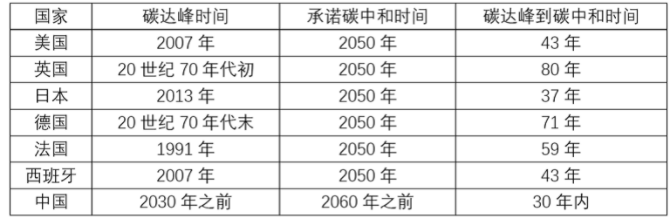
2015年12月12日巴黎召开的联合国气候峰会通过“巴黎协议”,并于2016年11月4日起生效,该协议目标是将全球平均气温上升幅度控制在2℃以内,力争控制在1.5℃以内,并在2050-2100年实现全球碳中和目标。目前各国实施情况是积极向好的,瑞典已通过立法规定在2045年实现碳中和,英国、法国、丹麦、新西兰和匈牙利等国也立法规定在2050年实现碳中和,目前已有50多个国家的碳排放实现达峰,约占全球碳排放总量的40%,其中大部分为发达国家,国际上主要国家碳达峰到碳中和时间跨度见表1。据经济合作与发展组织的数据显示,欧盟在1990年就已经实现碳达峰,峰值为48.54亿吨二氧化碳当量;美国碳达峰时间为2007年,峰值为74.16亿吨二氧化碳当量;日本碳达峰时间为2013年,峰值为14.08亿吨二氧化碳当量。[2]
Table 1 Time span from peak carbon to carbon neutrality in major countries
1.2 Domestic Situation
As early as December 18, 2017, the National Development and Reform Commission issued the "Notice on the Construction of the National Carbon Emission Trading Market for Industries (Power Generation Industry)," launching the national carbon emission trading system in the power generation industry first, gradually expanding the scope of participation in the carbon market and increasing trading varieties, and continuously improving the carbon market to steadily establish a unified national carbon trading market. On December 31, 2020, the Ministry of Ecology and Environment released the "Administrative Measures for Carbon Emission Trading (Trial)," regulating national carbon emission trading and related activities. On February 2, 2021, the State Council issued the "Guiding Opinions of the State Council on Accelerating the Establishment and Improvement of an Economic System for Green, Low-Carbon, and Circular Development," requiring the establishment and improvement of an economic system for green, low-carbon, and circular development to ensure the achievement of the "dual carbon" goals and promote China's green development to a new level.[3]According to statistics from the China Carbon Accounting Database, the comparison of carbon emissions per unit of GDP/per capita carbon emissions among the three major urban agglomerations is shown in Figure 1. The predicted peak value for China to achieve carbon peaking is approximately 10.6 billion tons of CO2 equivalent. Although China's total carbon emissions remain the largest in the world, the growth rate of carbon emissions has begun to decline. Currently, the main sources of carbon emissions are power generation, heating, transportation, and construction, accounting for more than 80% of total emissions. In 2019, China's social carbon emissions were approximately 10.5 billion tons. High-energy-consuming industries are the main carbon sources in China, with power generation, manufacturing and construction, and transportation being the three major carbon sources. According to statistics from the International Energy Agency, the three major sectors of power generation and heating, manufacturing and construction, and transportation account for 89% of China's CO2 emissions, with power generation and heating accounting for 51%, manufacturing and construction for 28%, and transportation for 10%.
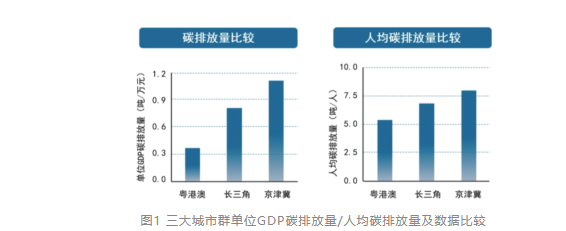
Fig. 1 Carbon emissions per unit GDP/per capita carbon emissions of the three major urban agglomerations and data comparison
1.3 Overview of the Greater Bay Area
According to data from the "White Paper on Carbon Neutrality Standardization for Industrial Internet in the Guangdong-Hong Kong-Macao Greater Bay Area," the overall trend of CO2 emissions from energy consumption in the Greater Bay Area shows that Hong Kong's absolute emissions have been continuously declining and have already peaked, Macao is in a plateau phase after peaking, while Guangdong's carbon emissions are still growing. Among cities in the Greater Bay Area, Macao has the lowest carbon emissions per unit of GDP; cities such as Shenzhen, Hong Kong, and Guangzhou also have relatively low carbon emissions per unit of GDP, comparable to emission levels in countries like the UK and Norway, and slightly lower than those in the US; whereas cities like Jiangmen and Huizhou have carbon emissions per unit of GDP that are 30%~50% higher than the national average. The tertiary industry accounts for more than 58% in cities such as Hong Kong, Macao, Shenzhen, and Guangzhou, with a significant proportion of modern service industries and high-tech manufacturing, resulting in relatively low carbon emissions per unit of GDP. In 2020, Shenzhen's energy consumption per unit of GDP was one-third of the national average, and its CO2 emissions per unit of GDP were one-fifth of the national average, having decreased by 19.3% and 23.2% respectively over five years. Shenzhen has clearly stated its goal to achieve carbon peaking between 2020 and 2025. Additionally, according to the "Huizhou Statistical Yearbook 2020," Huizhou's energy consumption per unit of GDP in 2019 was 0.698 tons of standard coal per 10,000 yuan, with a Year-on-year (YoY) growth rate of 1.7%.
2 Carbon Management Standardization
2.1 International Typical
The Subcommittee on Greenhouse Gas Management and Related Activities (ISO/TC207/SC7) under the Environmental Management Technical Committee of the International Organization for Standardization is the primary technical committee of ISO in standardization efforts to address climate change, responsible for activities related to greenhouse gas standardization. Currently, ISO/TC207/SC7 is developing a Working Draft (WD) of the internationally highly anticipated carbon neutrality international standard (ISO 14068) "Requirements and principles for achieving greenhouse gas neutrality in carbon neutrality and related claims." The ISO Technical Committee on Carbon Dioxide Capture, Transportation, and Geological Storage (ISO/TC265) has established standard working groups such as the CO2 storage group, transportation group, and capture group, and has held four working meetings. To date, four work items have been approved. In June 2021, the Market Strategy Board of the International Electrotechnical Commission IEC/TC111 proposed a white paper on zero-carbon power systems based on renewable energy.
2.2 Current Status in China
全国环境管理标准化技术委员会(SAC/TC207)主要负责全国环境管理专业领域基础性、通用性、综合性标准化工作,包括环境管理体系、环境标志和声明、环境绩效评价、环境成本和效益、生命周期评价、生态系统评估等,同时对口国际标准化组织环境管理标准化技术委员会(ISO/TC207)相关工作。全国碳排放管理标准化技术委员会(SAC/TC548)于2014年成立,对口国际标准化组织环境管理技术委员会温室气体管理和相关活动分技术委员会(ISO/TC207/SC7),主要负责碳排放管理术语、统计、监测;区域碳排放清单编制方法;企业、项目层面的碳排放核算与报告;低碳产品、碳捕获与碳储存等低碳技术与装备;碳中和与碳汇等领域的标准化工作。截至目前为止,SAC/TC548标委会已发布16项国家标准,正在制修订的标准30余项。2019年国家生态环境部发布《大型活动碳中和实施指南(试行)》文件,规范了大型活动的碳中和实施,2021年9月15日国家工信部将申请立项的《石油和化工行业碳排放核查技术规范》等197项碳达峰相关行业标准予以公示。
2.3 大湾区先行
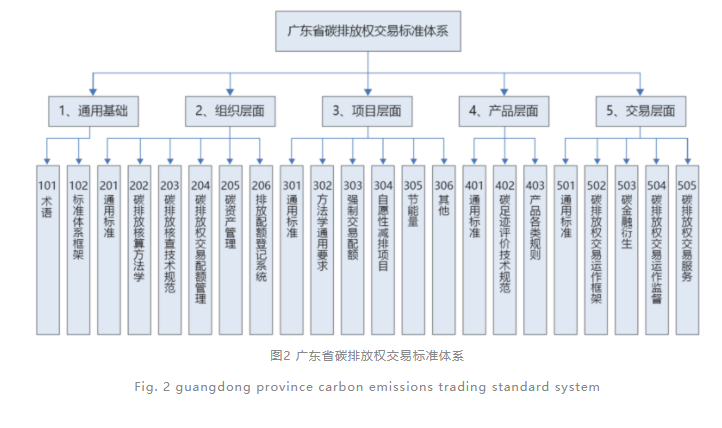
As one of the regions with the highest level of openness and strongest economic vitality in China, the Guangdong-Hong Kong-Macao Greater Bay Area saw the State Council issue the "Outline Development Plan for the Guangdong-Hong Kong-Macao Greater Bay Area" in February 2019. This plan establishes "green development and ecological protection" as a basic principle guiding the region's development, requiring it to develop based on green, low-carbon innovation. Under the guidance and support of competent authorities such as the Guangdong Provincial Administration for Market Regulation, the Provincial Development and Reform Commission, and the Provincial Department of Ecology and Environment, the nation's first provincial-level Technical Committee for Carbon Peak and Carbon Neutrality Standardization (GD/TC73) was established. Relevant organizations were organized to conduct research on the "Framework of the Standard System for Carbon Emission Rights Trading in Guangdong Province" and its standardization roadmap, compiling laws, regulations, and standards related to carbon emission rights trading. As shown in Figure 2, the standard system for carbon emission rights trading clarifies sub-categories of standards at the levels of fundamentals, organizations, projects, products, and trading. In terms of advancing standardization work, relevant statistical data shows that Guangdong Province and Shenzhen have successively issued nearly 20 local standards and nearly 20 group standards related to "Dual Carbon" goals. These efforts provide important standardized foundational support for promoting green and low-carbon technological innovation and enhancing carbon sink capacity in the Greater Bay Area, while also serving as a "processing plant" for "Dual Carbon" standards and a "connector" for standardization activities in the region.
2.3 Overall Outlook
Based on China's commitment to achieving the "Dual Carbon" goals, it is urgent to accelerate the mapping of various industries, grasp the key future development directions of carbon neutrality, identify gaps and opportunities in relevant standards, and orderly promote the development of a systematic standardization plan. Establishing and improving the "Dual Carbon" related standard system is imperative. In accordance with the national overall deployment for "Dual Carbon", we must refine and organize standardization needs across industries, fill gaps in basic standards such as emission reduction technologies, accounting, and assessment, meet the major strategic needs of "Dual Carbon" work, and drive green development in all industries through benchmarking and compliance by stakeholders in standardization. At the same time, we must accelerate the update and upgrade of energy saving standards, urgently revise national standards for energy consumption limits and mandatory product energy efficiency as basic guidelines, raise requirements for product energy consumption limits, expand the coverage of energy consumption limit standards, and improve supporting standards for energy accounting, testing and certification, assessment, and auditing. This will provide standardized support for achieving China's "Dual Carbon" targets and enhance the progress of carbon emission verification and accounting at regional, industry, and product levels through standardization improvement and refinement.
3 Smart Poles and "Dual Carbon"
3.1 环境监测
基于我国交通运输CO₂排放量处于增长的背景之下,相关行业都在研究及制定“双碳”达标规划,实施碳减排措施及进行碳抵消等工作。[4]城市中现有的各监测点是应用气体传感器较为单一地测得二氧化碳含量,未能结合该路段的交通流量、车速、周边绿植数量以及吸收二氧化碳的能力等进行综合监测。智慧城市物联网架构下的智慧杆搭载环境监测模组,有效实现收集和监测所在场景区域中的PM2.5浓度、PM10浓度、二氧化碳含量、二氧化硫含量、扬尘浓度和噪声分贝等气象及环境信息,系统管理平台通过对收集到的各类数据进行综合分析与对比,系统发出优化及调整指令,有效控制该区域的相关指标达到预定目标值,发挥智慧杆搭载环境监测模组在减碳达标过程的重要作用。
3.2 Clean Energy Powers Smart Poles
Under the major trend of high efficiency and energy saving, the application of clean energy is inevitable. Smart poles equipped with solar and wind power generation are being promoted and applied. The electricity collected by solar photovoltaic modules is used through energy storage management or directly for the operation of various matching devices mounted on smart poles, reducing carbon dioxide produced by fuel-based power generation, achieving carbon offsetting and reaching carbon balance.[5]The smart pole management platform supplements its own electricity demand based on wind and solar energy collection to reduce carbon emissions, and is equipped with energy storage devices to endow it with more profit potential, creating more commercial value for operators and achieving carbon neutrality goals. Wind and solar energy obtained are indeed cheaper than thermal power generation, but corresponding geographical environments and management methods will affect system utilization rates, such as periods without sun or wind. Issues of energy storage and unstable power supply need to be resolved through the application of new technologies, promoting the efficient use of clean energy in achieving the city's "dual carbon" goals.
3.3 Traffic Optimization for Carbon Reduction
Carbon dioxide emissions from the transportation sector account for nearly 9% of China's total national emissions, and CO₂ emissions in the transportation industry are still in a growth phase. Traffic management devices mounted on smart poles will utilize information technologies such as big data, cloud computing, and 5G to collect relevant data within their coverage area. When it is detected that carbon dioxide levels cannot achieve carbon neutrality through roadside greenery, attention is paid to data on the proportion of clean energy use in vehicles and green travel. The system management platform realizes real-time adjustment of traffic control on current roads, and the control platform adjusts and guides road traffic through vehicle-road coordination, optimizing通行 routes to reduce carbon dioxide generated by road congestion, reducing long停留 times of vehicles due to blockages, and monitoring carbon dioxide levels in the area in real time. Data is sent to the system control platform to compare with original carbon dioxide thresholds, issuing optimization commands to achieve smooth traffic flow and reduce carbon emissions.[6]
4 Carbon Reduction Outlook for the Smart Pole Industry
As smart poles serve as infrastructure for smart cities and an emerging industry characterized by cross-disciplinary technological integration, under the broader context of achieving the "Dual Carbon" goals, quantitative indicators should be adopted to assess the carbon emissions of smart poles and their systems, thereby evaluating their carbon emission levels.[7]To achieve the "Dual Carbon" goals, it is essential to leverage technologies such as carbon-free energy, low-carbon and new energy applications, technological innovation, and reuse. By combining these with local industrial structures and socio-economic development characteristics, we should strengthen in-depth cooperation between manufacturers and relevant research institutions to capitalize on complementary advantages. This includes establishing "industry-academia-research-application" technology research centers, integrating "Dual Carbon" objectives into the overall layout of urban infrastructure planning, establishing and improving standards for Industry energy saving and evaluation within the "Dual Carbon" framework, updating and upgrading these standards, raising product energy consumption limit requirements, and perfecting supporting standards for energy accounting, testing Certification, assessment, and auditing. We must innovate work methods in smart pole planning, construction management, evaluation systems, technological innovation, and urban smartization, embedding the concept of green development throughout the entire lifecycle of smart pole system solutions, and ensuring that energy saving and carbon reduction are effectively implemented across the Supply chain.
Conclusion
The "Dual Carbon" goals provide direction and a blueprint for China to address climate change and promote green development. The first three decades were the era of digitalization and informatization, while the next three decades will be the era of low-carbon transformation. Low-carbon transformation and digitalization will become the core focus of the "new integration of the two transformations." Therefore, "Dual Carbon" is not a short-term task but a long-term endeavor. Developed countries generally take 50–70 years to move from peak carbon emissions to carbon neutrality, whereas China’s target timeframe is only 30 years. In the future, China will face simultaneous pressures from energy growth demands for economic development and the significant challenge of emission reduction and carbon mitigation, which will have a profound impact on the structural adjustment of China’s economy and society, especially in energy consumption.
Smart poles are a current hotspot in the expansion of urban infrastructure. Based on their multifunctionality and integrated mounting and management, while luminaires only upgrade the basic functions of road lighting, smart poles integrate multiple functions into one. They address issues such as difficulty in leadership, division of labor, and implementation, becoming an important carrier as the nerve endings of the smart city IoT. They will play a significant role in new energy applications and system management optimization, helping to achieve China's "dual carbon" goals.
Authors: Cao Xiaobing, Lin Jintian
(Xuyu Optoelectronics (Shenzhen) Co., Ltd., Shenzhen, Guangdong 518102)
References
[1] Cao Xiaobing, Wang Hailong, Zhao Jingwen, et al. Focus on the Construction and Demonstration of Smart Poles under Urban IoT Architecture[J]. China Lighting & Electrical Apparatus, 2020(05):22-25.
[2] Xue Liang. Goals and Progress of Countries in Achieving Carbon Neutrality[J]. Shanghai People's Congress Monthly, 2021(07):53-54.
[3] The CPC Central Committee and the State Council issued "Opinions on Fully, Accurately and Comprehensively Implementing the New Development Concept to Do a Good Job in Carbon Peaking and Carbon Neutrality"[J]. Shanghai Energy Conservation, 2021(10):1054.
[4] Xu Jie. Analysis of Information Quality Control Strategies for Ambient Air Automated Monitoring Systems[J]. Sci-Tech Innovation and Application, 2021,11(31):133-136.
[5] Zhu Gang, Li Yanhe, Zhang Zhen, et al. Operation Control Technology and Application of Provincial Power Grids with Full Clean Energy Supply[J]. Electric Power, 2021, 54(05):195-205.
[6] Zhang Jin, Yuan Jiting, Zi Fengjun. Does Improving Transport Efficiency Reduce Carbon Emissions in the Transportation Industry?—An Empirical Study Based on Inter-provincial Panel Data[J]. Ecological Economy, 2021,37(11):18-24.
[7] Wang Hailong, Zhao Jingwen, Wang Heru, Cao Xiaobing. Brief Analysis on the Construction and Development of Multi-functional Smart Poles under the Smart City Architecture[J]. China Lighting & Electrical Apparatus, 2020,No.426(09):1-5.
China Light
The official website of the China Association of Lighting Industry and a full-media platform for the lighting sector. We provide authoritative and timely lighting information while striving to be a growth partner for businesses. From brand promotion and channel expansion to consulting, talent training and participation in standards development, we provide comprehensive professional services to help businesses improve quality and efficiency and jointly advance the high-quality development of the lighting industry.
Business Contacts
仇纯 (Ms.): 158 6155 3579
顾君 (Mr.): 137 7157 5253