
Scientists have grown mature rice in a plant factory with a growth cycle of just 60 days!
At the National Chengdu Agricultural Science and Technology Center located in Chengdu Science City, a batch of "special" rice is growing.
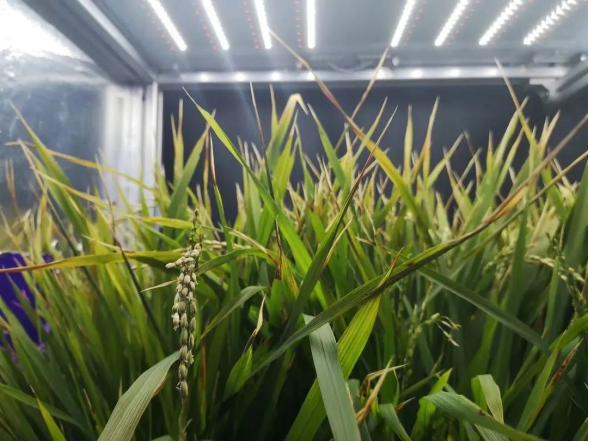
↑ Rice escapes the constraints of climate in the laboratory
With the support of technology, this batch of rice "escaped" the constraints of solar terms and grew freely and vigorously. Their growth cycle is only 60 days, allowing for 5 to 6 harvests per year.
In the dream of Researcher Yang Qichang, chief scientist of the Plant Factory Innovation Team at the Institute of Urban Agriculture, Chinese Academy of Agricultural Sciences, "Sichuan-made" rice will be produced in plant factories, enabling year-round continuous production, and may one day even "grow" in the vast Gobi Desert.
This technology is known as the "Plant Factory Rice Breeding Accelerator".
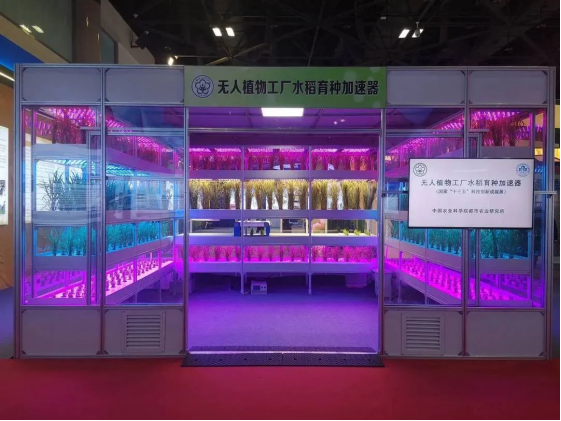
Nature's genetic code is hidden in seeds. To secure the foundation of food security, we must crack the seed's code. The "Plant Factory Rice Breeding Accelerator" is a microcosm of Sichuan's seed industry revitalization.
Sichuan, together with Hainan and Gansu, constitutes one of the three national-level seed breeding and production bases. The "Sichuan Seeds" from the "Land of Abundance" are making a strong push to crack the seed industry's "chip" for ensuring food security, fully achieving the goal of transforming from a major seed province into a leading seed powerhouse.
1 Yield can reach 650 kg per mu Rice in the laboratory can be harvested 5 to 6 times a year
Spring returns and summer arrives; rain nourishes the earth, and all grains grow.
In the laboratories of the National Chengdu Agricultural Science and Technology Center, a batch of rice is also growing. They have escaped the constraints of solar terms and climate, growing freely.
"Here, rice can be harvested in about 60 days, with the growth period reduced by half compared to traditional production methods ." Dr. Bian Zhonghua, a core researcher of the Plant Factory Innovation Team at the Institute of Urban Agriculture, Chinese Academy of Agricultural Sciences, explained that the full growth cycle, from a single rice seed to the harvest of an entire rice crop—i.e., "from seed to seed"—normally takes 120 to 160 days for outdoor-grown rice.
How is the yield after shortening the time? 650 kg per mu.
In addition, the cycle is shortened to about 60 days, which means rice can be harvested at least 5 to 6 times a year.
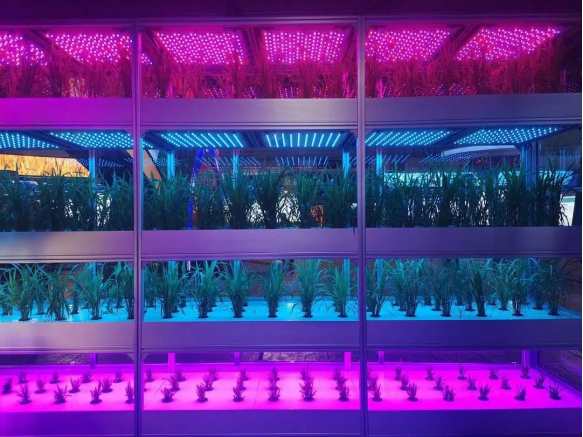
↑ Plant Factory Rice Breeding Accelerator
Bian Zhonghua and his colleagues have been conducting continuous experiments. The rice variety in the laboratory is called "Zhefu 802M," a dwarf rice with a height of only about 50 centimeters. Compared to rice grown in outdoor fields, there is no significant difference in its starch and protein content. "The taste is also good, and in the future, flavors can even be customized."
How can this result be achieved? Light, temperature, water, air, and fertilizer—these five essential elements are indispensable. By following a scientific ratio model, a series of control "formulas" are created to nurture the rice in the laboratory. In fact, these formulas can be called "secret recipes." Bian Zhonghua told reporters that they have already applied for invention patents in both China and the United States.
2 Turning the Gobi Desert into rice paddies?Promoting plant factories for rice cultivation requires solving electricity issues
In Bian Zhonghua's view, although the rice is grown in a laboratory, he is not cultivating "delicate flowers" in a greenhouse. The future of rice lies across China's vast lands, where a new planting model can reduce dependence on land and the environment.
In October 2021, the "Plant Factory Rice Breeding Accelerator" made its debut at the National "13th Five-Year Plan" Scientific and Technological Innovation Achievements Exhibition, attracting widespread public attention. At that time, it was still the second generation of rice; today, it has advanced to the fifth generation. A series of experiments have shown: the breeding cycle has been shortened, yield per mu has increased, and quality is also excellent.
The next step is mainly about promotion. "The biggest cost is electricity bills." To achieve the commercial promotion of plant factory breeding accelerators, we must first solve the electricity problem.
Looking across the country, where are the vast, sparsely populated areas with abundant power supply? Researcher Yang Qichang set his sights on Xinjiang.
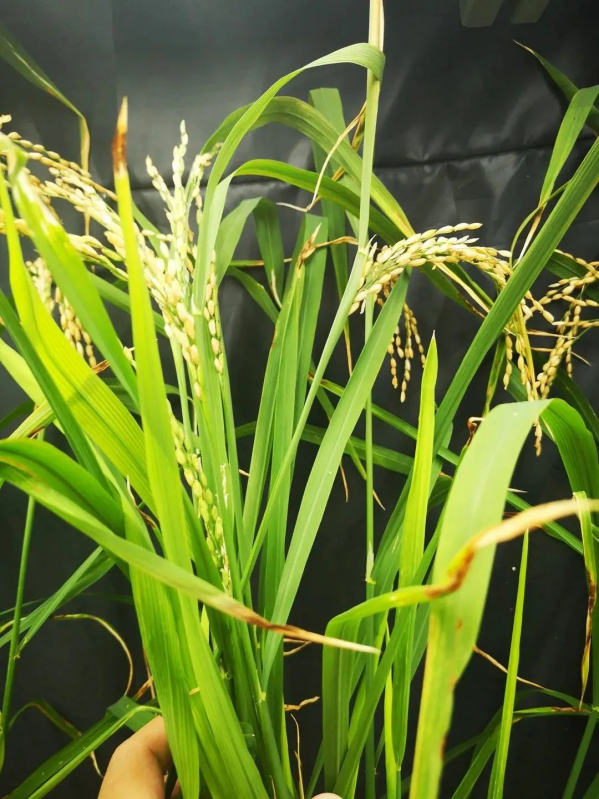
↑ Taste can be customized in the future
"Just imagine, Xinjiang is rich in solar resources, with annual sunshine hours reaching 2,550–3,500 hours, giving it strong photovoltaic power generation capacity. What a sight it would be to establish rice factories in the deserts and Gobi滩 of Xinjiang !" A great dream was brewing in the mind of Researcher Yang Qichang.
Perhaps, the dream of Researcher Yang Qichang will one day come true: rice produced in Sichuan will "grow" in the Gobi Desert in the form of plant factories. In March this year, the Chinese Academy of Agricultural Sciences signed an agreement with the Kashgar Prefecture to support high-quality development of local agriculture and rural areas, strengthen scientific and technological support for modern agricultural development and rural revitalization in Kashgar, and focus on enhancing cooperation in high-quality cotton, forestry and fruit industries, vegetables, modern animal husbandry, and modern seed industry. In April, the Ministry of Agriculture and Rural Affairs officially approved the establishment of the "Kashgar Scientific Research Base" by the Institute of Urban Agriculture of the Chinese Academy of Agricultural Sciences in Xinjiang, focusing on demonstrating facility agriculture technologies in the Gobi Desert, bringing the dream of Gobi rice one step closer.
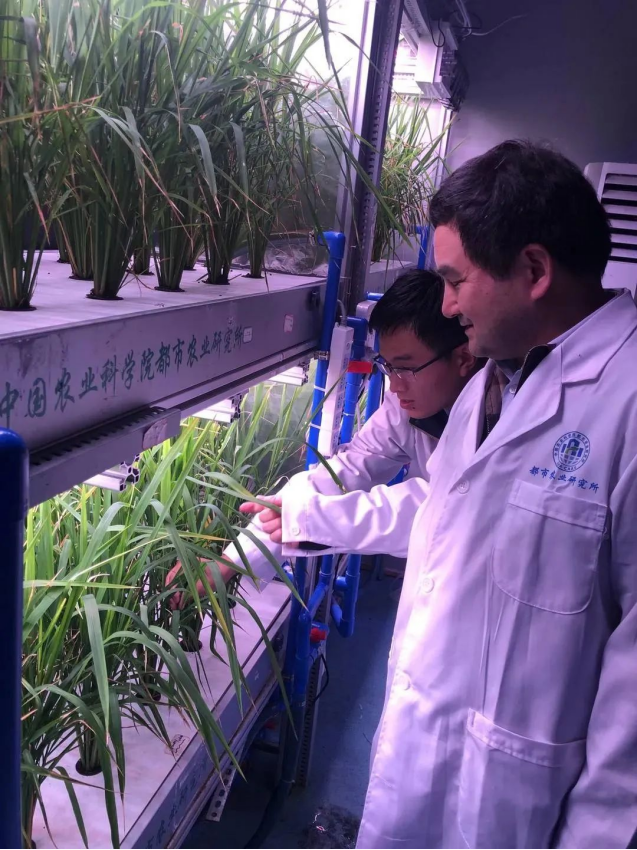
↑ Yang Qichang, Chief Scientist of the Plant Factory Innovation Team, and Dr. Bian Zhonghua, a key research member
3 From a Major Seed Industry Province to a Strong Seed Industry Province Sichuan Implements Five Major Actions for Seed Industry Revitalization
The significance of shortening the growth cycle lies not only in increasing yield, but more importantly in improving breeding efficiency.
Sichuan, together with Hainan and Gansu, is one of the three national-level seed breeding and production bases. As a major province in China’s seed industry and an important national granary, Sichuan ranks second nationwide in crop germplasm resources and local livestock and poultry genetic resources. Its hybrid rice seed production area accounts for one-fifth of the national total, while its hybrid rapeseed seed production area ranks first in the country, giving it comparative advantages and an important strategic position nationwide.
However, the shortcomings are also very obvious. Although Sichuan is a major province in agricultural germplasm resources, the utilization rate of these resources is currently not high. According to provincial introductions, less than 2% of Sichuan's germplasm resources have undergone in-depth identification, evaluation, and utilization.
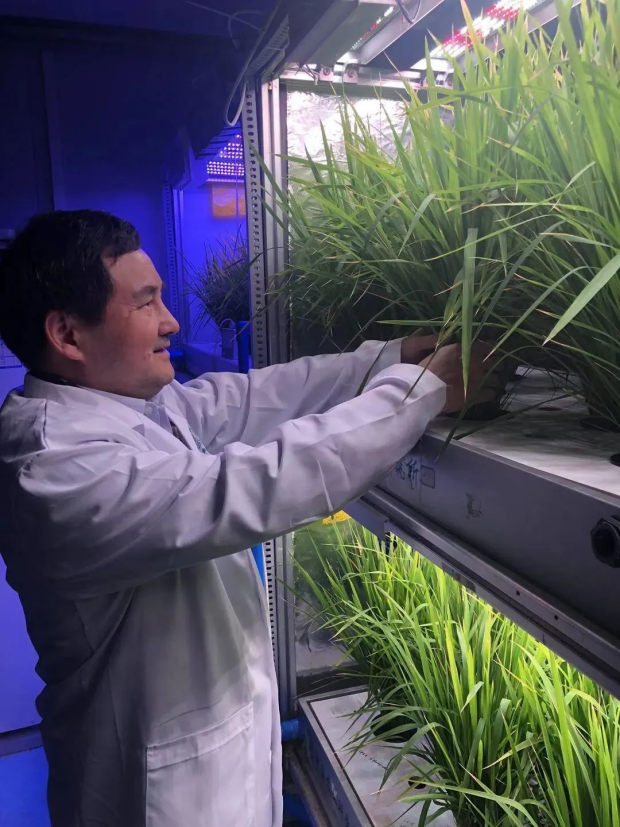
↑ Yang Qichang is researching rice in the laboratory

↑ CCTV News Broadcast Report
In 2022, Sichuan Province intensified its strategic layout for the revitalization of the seed industry, making strong efforts to enhance the competitiveness of the "seed industry" and rapidly addressing weaknesses.
The new Seed Law officially came into effect on March 1. Also in March, Sichuan Seed Industry Group was officially unveiled. In April, the "Seed Industry Revitalization Conference" was held, proposing five major actions for seed industry revitalization to fully achieve the goal of transforming from a major seed industry province to a strong seed industry province.
"Whether it is scientific research talent or seed industry enterprises, Sichuan presents a state of being small and scattered." Relevant personnel from Sichuan Seed Industry Group stated that Sichuan Seed Industry Group will optimize resource allocation and accelerate the integration of existing seed industry enterprises.
In addition, to address the "small, scattered, and weak" nature of Sichuan's seed industry enterprises, Sichuan will implement an action plan to support and optimize these enterprises, striving to have more than 10 Sichuan enterprises rank among the top 50 national seed industry enterprises by the end of the "14th Five-Year Plan" period. The goal of Sichuan Seed Industry Group is to strive to enter the top 10 national seed industry enterprises by the end of the "15th Five-Year Plan" period, with more than two of its subsidiaries achieving IPO on the STAR Market.
Sichuan Seed Industry Group plans to prioritize layout in the pig, rice, rapeseed, and soybean seed industries in 2022, establish specialized companies for exotic pigs, local pigs, and crop seeds within the year, cultivate more than one "Chuanzhong" brand, and obtain more than one variety right.
To continuously promote technological innovation and market development in the design of agricultural lighting luminaires, and to advance the level of smart agriculture in China, the China Association of Lighting Industry(中国照明电器协会) and the People's Government of Guzhen Town, Zhongshan City, are once again hosting the "2022 China International Lighting/Luminaire Design Competition - Agricultural Lighting Sub-category" this year. The event is jointly organized by the Secretariat of the China International Lighting Luminaire Design Competition, the Agricultural Lighting Professional Committee of the China Association of Lighting Industry, China Light Network, and Agricultural Lighting Network.
This event features two major awards: the Excellence Award for Commercial Agricultural Lighting Luminaires and the Excellence Award for Residential Agricultural Lighting Luminaires. Submissions are now open, and participation is welcome.
Source: Chengdu Release