
Summary and Brief Analysis of the 2021 Annual Report Performance of Listed Companies in China's Lighting Industry
Note: This annual report review sample selected listed companies related to the Chinese lighting industry, including A-shares, H-shares, and the New Third Board, totaling 180 listed companies. Due to various factors such as the pandemic, as of now, more than ten New Third Board enterprises have still not released their 2021 annual reports on schedule.
Overview:
Upstream cost inflation, downstream market deflation
Due to the massive impact of the early 2020 COVID-19 pandemic on China's social economy, the production capacity, capital, and market of all listed companies in the lighting industry throughout 2020 were affected to varying degrees. This made the comparable base for 2020 a historical low. Although facing unfavorable factors such as the pandemic, chip shortages, material scarcity, disrupted sea freight, soaring costs, and exchange rate fluctuations, it was only natural and expected that the performance of listed companies, whose operations had generally returned to normal in 2021, would see widespread growth. However, behind the digital prosperity of overall industry growth, upstream cost inflation combined with downstream demand deflation jointly squeezed the profits of manufacturers in the middle. Rising costs could not be passed on, ultimately hitting the supply side.
01 Lighting Applications Segment: Revenue growth is significant, profit margins compressed
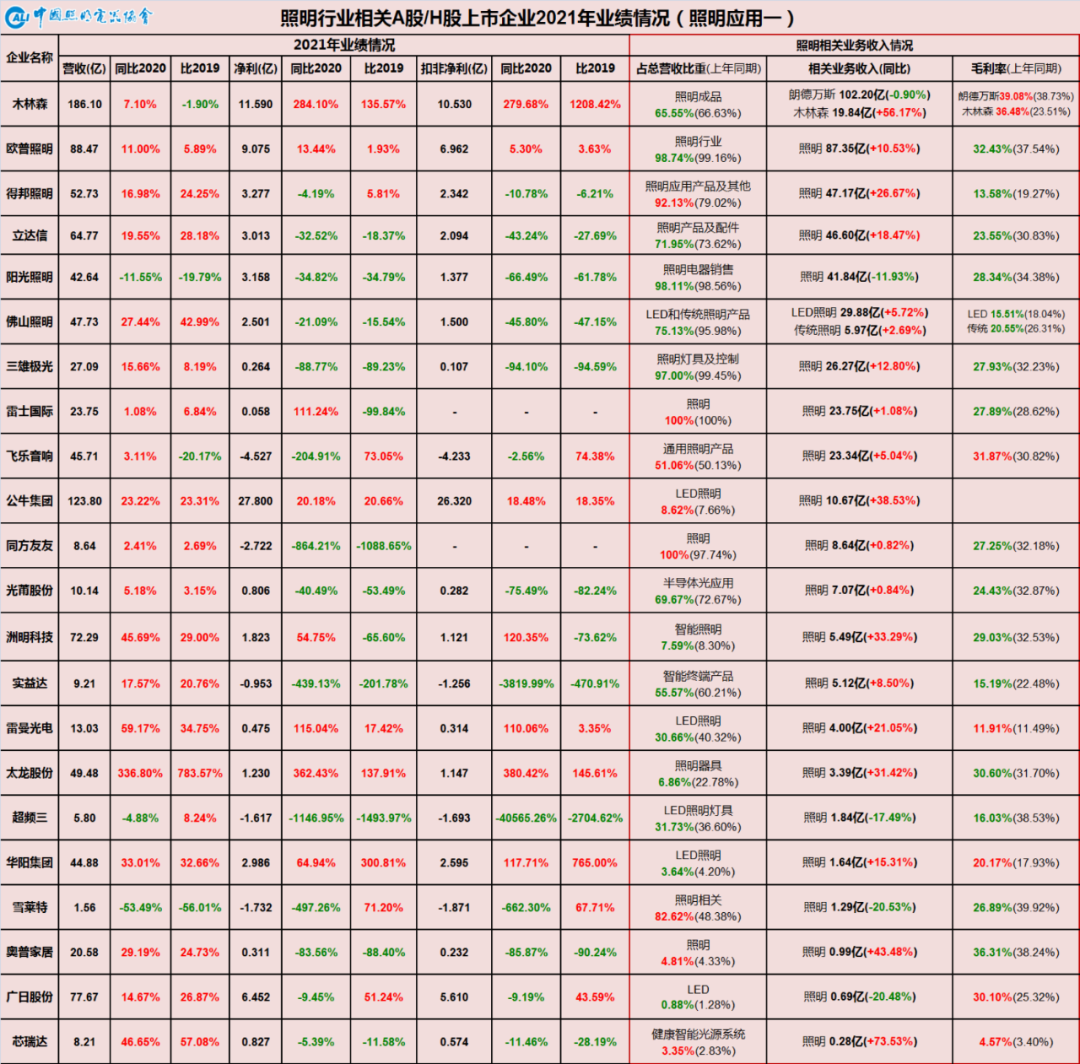
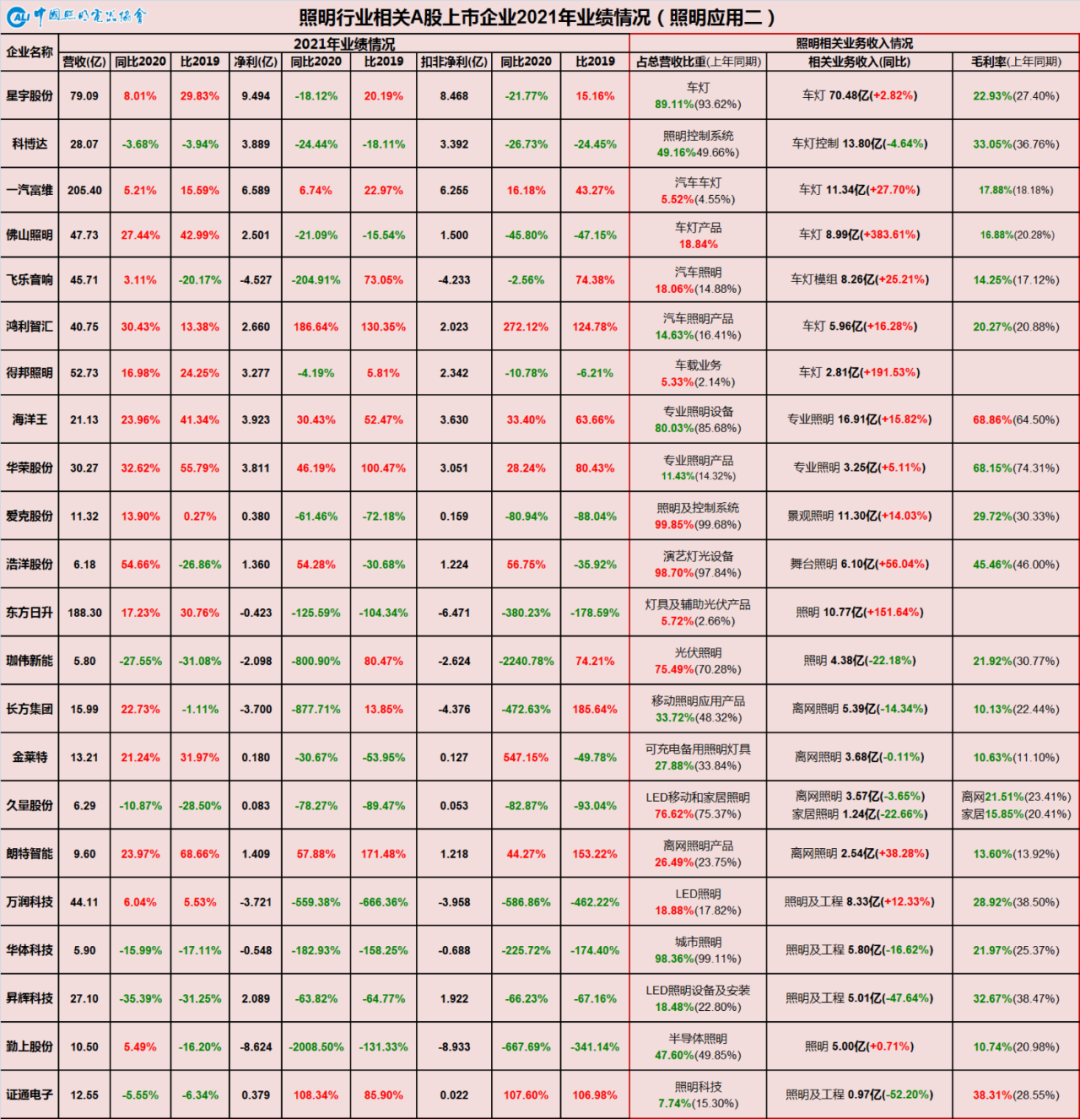
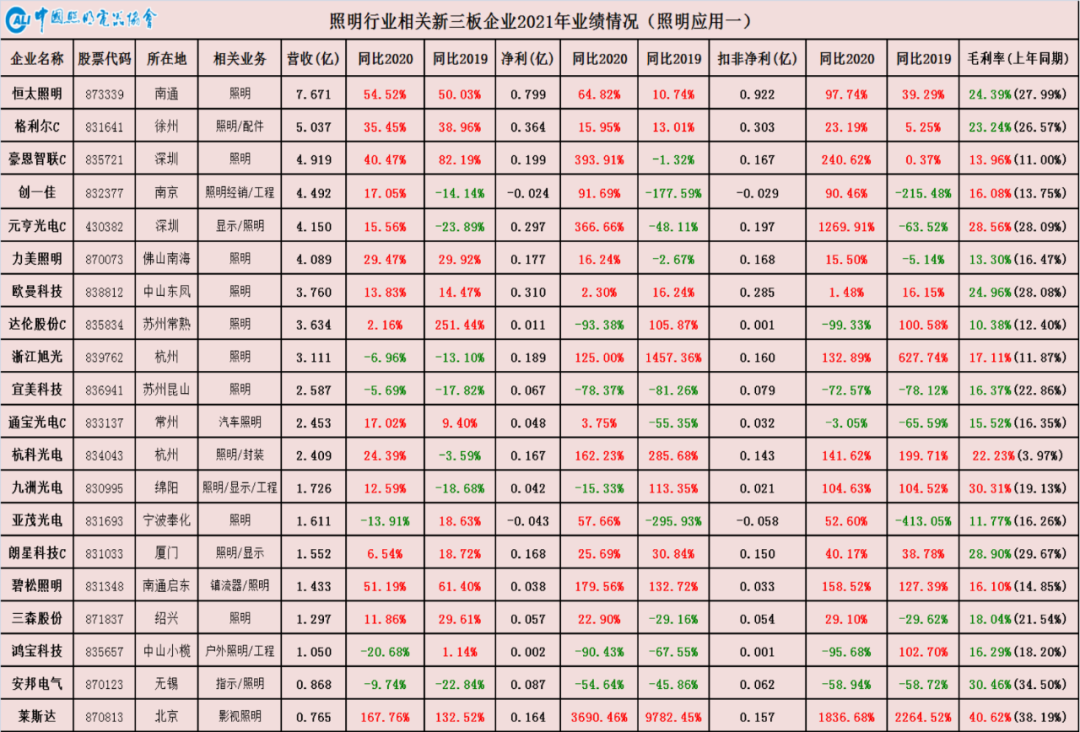
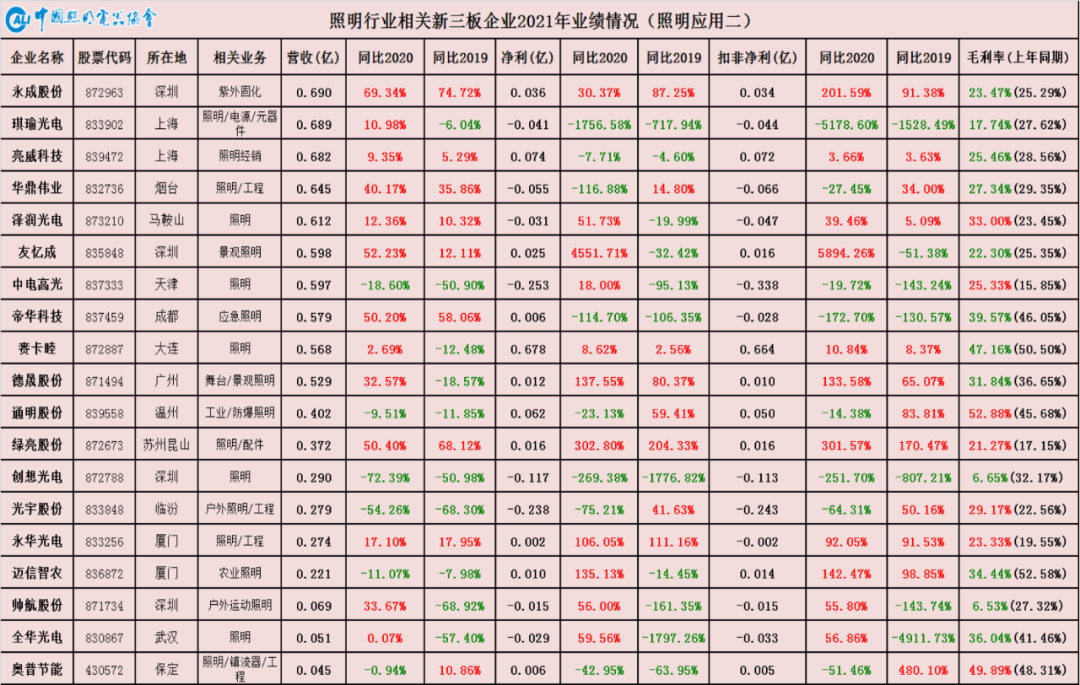
First, looking at the lighting application sector: among the 44 A-share/H-share listed companies, 30 reported revenue growth in lighting-related business, accounting for 68%; however, 36 experienced a decline in gross margin, accounting for 82%. Among the 39 companies on the New Third Board, 28 achieved revenue growth, representing 72%, while 24 saw a drop in gross margin, representing 62%. The vast majority of companies recorded double-digit revenue growth and have generally recovered to pre-pandemic revenue levels.
However, under successive blows from soaring raw material costs, chip shortages, skyrocketing freight rates, exchange rate fluctuations, and power rationing, the profit margins and production capacity delivery of lighting application enterprises have been affected to varying degrees, resulting in 'orders without profits'.
02 Packaging Sector: Supply and demand pressure mounting, innovation driving the blue ocean
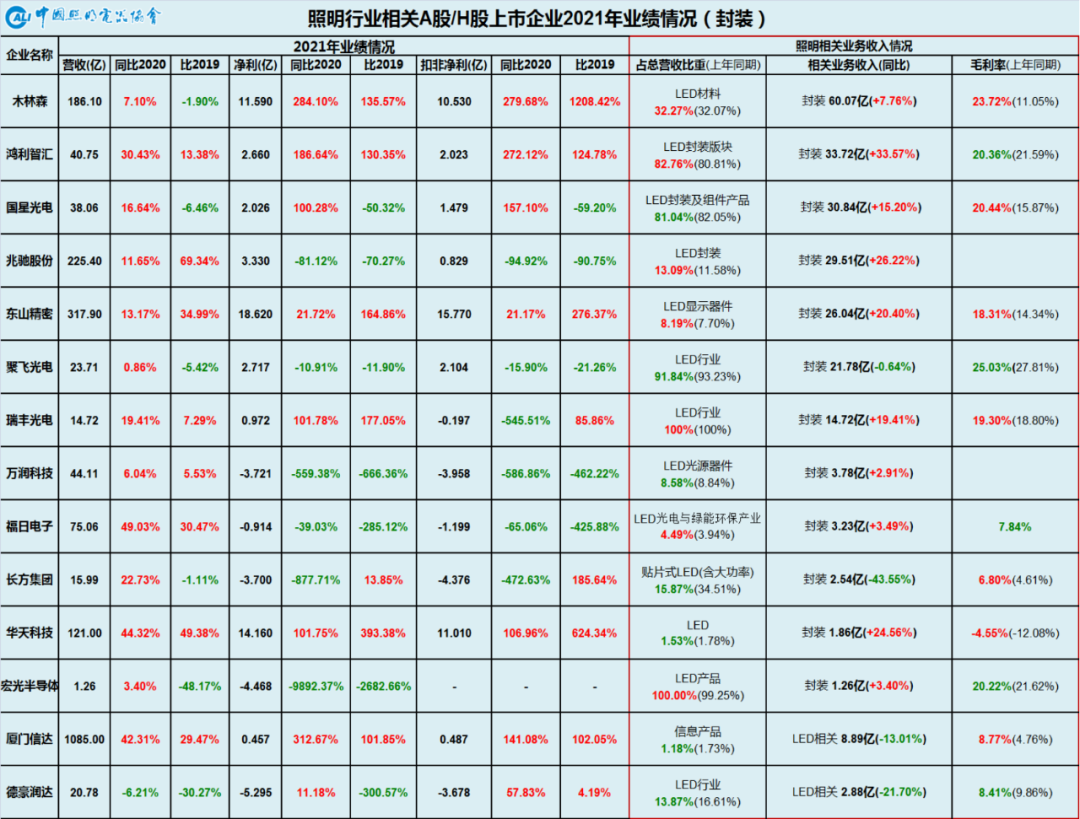
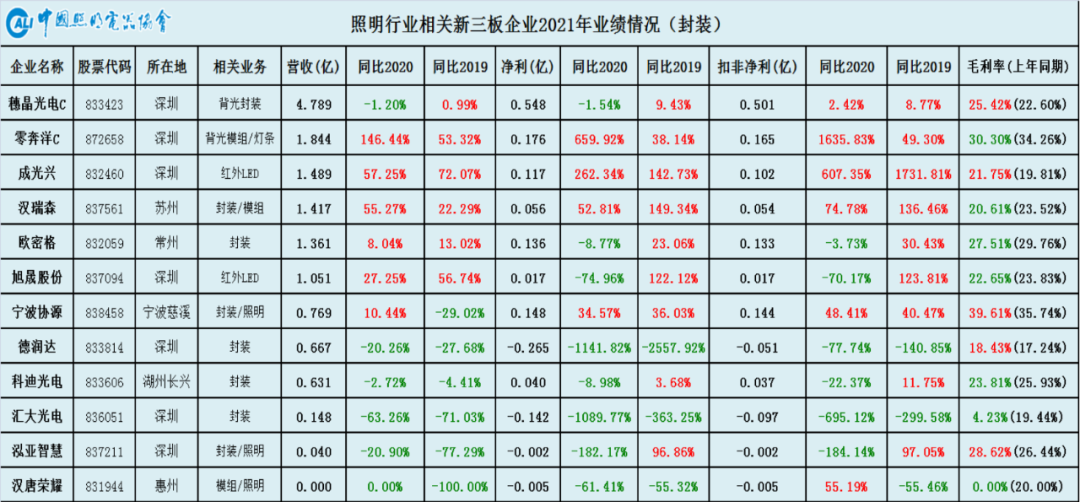
The packaging segment, benefiting from strong demand in downstream applications such as lighting, displays, backlighting, and automotive lamps, saw increased capacity utilization and rising product gross margins. Consequently, the performance of packaging businesses across manufacturers generally grew compared to the same period in 2020; however, compared to the same period in 2019, half of the manufacturers had not yet returned to pre-pandemic levels. Among 14 listed companies on A-shares/H-shares related to packaging, 10 reported revenue growth, accounting for 71%; meanwhile, 8 reported improved gross margins, accounting for 57%. Among 12 packaging enterprises on the New Third Board, polarization was evident: 6 reported revenue growth (50%), while the bottom 5 by revenue all showed negative growth; 7 reported declining gross margins, accounting for 58%.
Currently, competition among packaging manufacturers focuses more on production efficiency, manufacturing scale advantages, and cost control capabilities. The pandemic's impact on demand and rising raw material prices have further intensified this competition. In this situation, packaging companies are continuously making moves to布局 high-value-added new businesses. In the general lighting sector, the focus is on high luminous efficacy, high color quality, full spectrum, circadian light, and health-promoting light, while reducing mid-to-low-end products; in the special lighting sector, greater attention is paid to high-power applications such as automotive, agricultural, industrial, road, mining, and venue lighting; additionally, efforts are being made in other niche areas including infrared, ultraviolet, laser, Mini/Micro LED, and Li-Fi.
03 Supporting Sector: Scarcity Creates Prosperity, But Prudence Is Needed
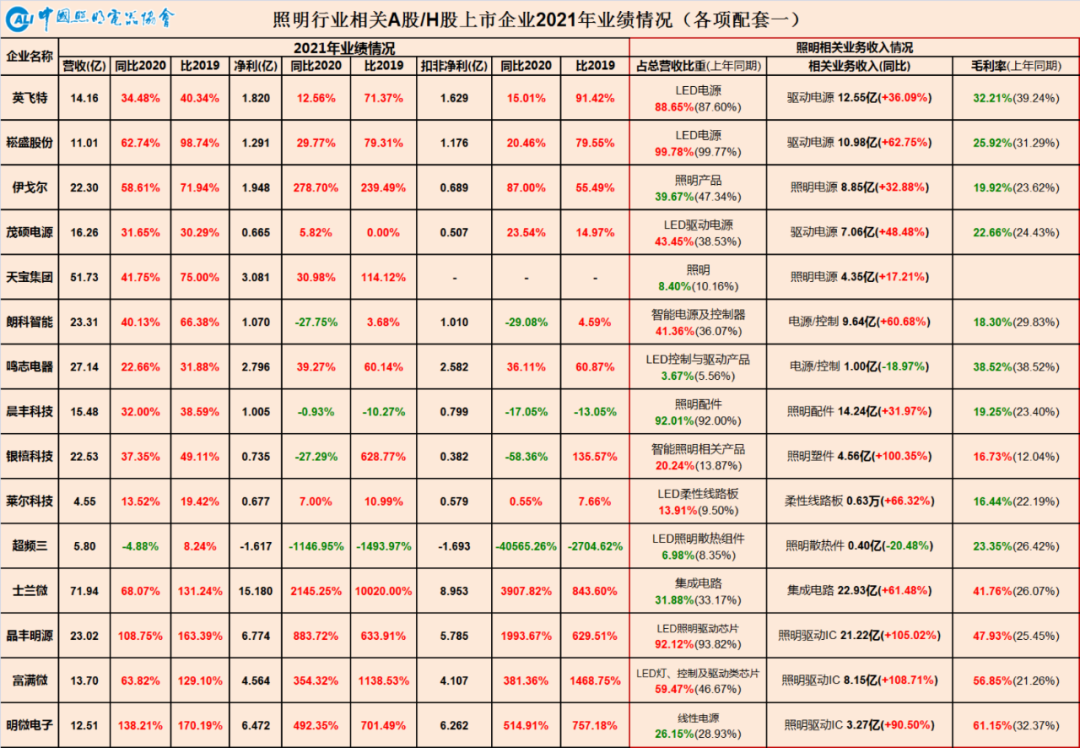
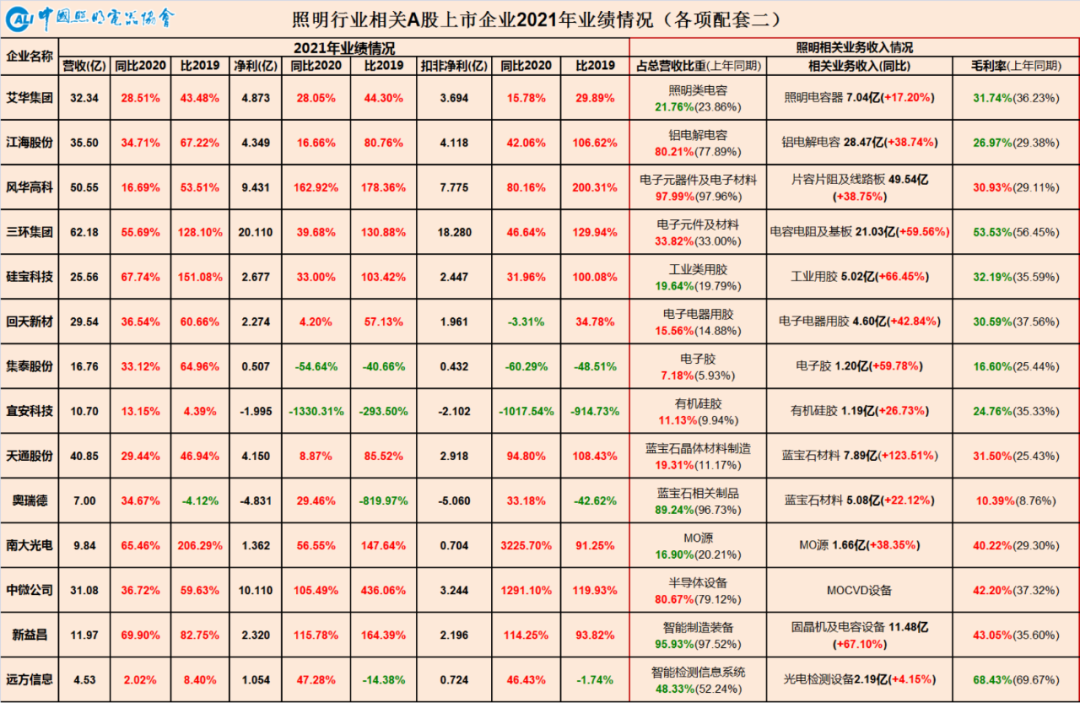
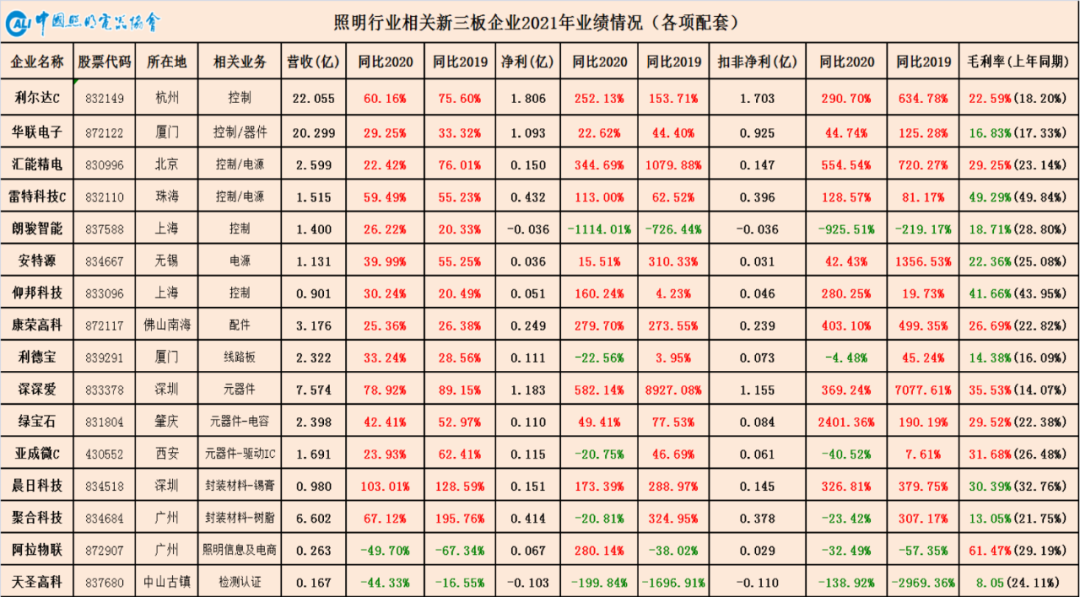
照明作为深供应链行业,配套板块涵盖原材料、元器件、电源、机械配件、光学部件、生产和检测设备、检测认证及信息服务等。
Amid the global pandemic, China was the first to curb the outbreak and resume production and work, causing global manufacturing demand to concentrate in China. This led to price increases for almost all raw material products in the lighting supply chain, accompanied by severe shortages of IC chips, MCUs, MOS transistors, and other products. Furthermore, with the continued recovery of domestic and export demand in 2021, the overall performance of supporting sectors was quite impressive.
It is worth noting that there is a divergence in profit margins between upstream and downstream enterprises. The lighting industry / supply chain is long; the transmission from upstream to downstream has a certain time lag and decreases step by step, meaning that when upstream prices rise, price transmission weakens as it moves further downstream. Therefore, in the power supply sector, which is biased toward the downstream of the industry / supply chain, enterprises have almost without exception achieved significant revenue growth. However, corresponding to this, gross profit margins have almost without exception declined. This situation is similar to what the lighting application sector encountered: both faced increased revenue but unchanged profits due to being squeezed by upstream cost inflation and downstream market deflation. In contrast, the raw materials sector, which is biased toward the upstream of the industry / supply chain, experienced a completely different situation, achieving double harvest in both revenue and profit. Additionally, the global chip shortage in 2021 and the acceleration of domestic substitution led to explosive performance for IC chip enterprises. The driver IC sector continued to be the hottest sector in 2021, with manufacturers continuing to break historical records; doubling revenue became normal, while net profit surging several-fold or even tenfold was both unexpected and reasonable.
As commodity prices approach a turning point, supply chains are being restructured, production capacity is being released on the supply side, demand growth is slowing, and market expectations are returning to rationality. The situation of sharp raw material price increases and chip shortages has been alleviated to some extent. Supporting enterprises should also prepare for a rainy day and plan for the long term; expand cautiously to avoid falling into a capacity trap; and use this opportunity to optimize customer resources and product structure, further strategically binding with high-quality downstream customers.
04 Epitaxy Chip Segment: Performance turns fully positive, entering a new cycle
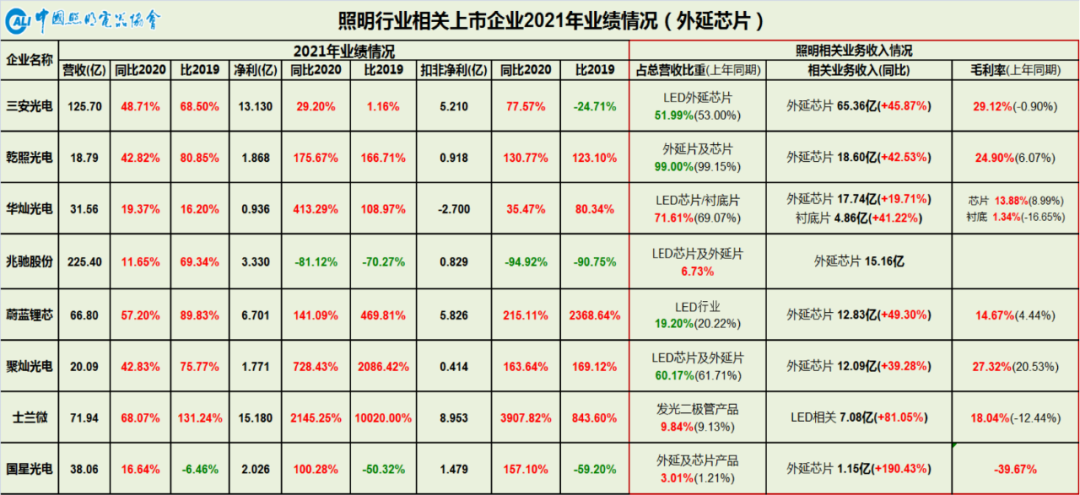
The epitaxy chip segment delivered outstanding performance in 2021, continuing the strong momentum since the second half of 2020. It not only outperformed the same period in 2020 amid the pandemic but also significantly exceeded the sluggish capacity digestion of 2019. Both revenue and profits saw nearly all leading companies posting gains. Revenue growth was primarily driven by a V-shaped recovery in downstream demand in 2020, which remained robust throughout 2021. Beyond general lighting, high-power applications with relatively higher gross margins such as automotive lighting, agricultural lighting, and industrial lighting grew rapidly. Demand in other application areas including infrared, ultraviolet, display, and backlighting also surged, particularly in the burgeoning Mini/Micro business. Profit improvement stemmed from two factors: first, manufacturers have increasingly focused on high-margin products in recent years; second, temporary supply-demand mismatches led to shortages and price hikes for certain mid-to-low-end products. Additionally, rising demand boosted capacity utilization rates, effectively releasing previously accumulated inventory, thereby enhancing upstream profitability.
In summary, the entire upstream sector has moved past the aftereffects of a three-year expansion (2017Q3-2020Q2) and entered a relatively healthy new Industry cycle. This is also an inevitable result of the Industry forming a high degree of concentration.
05 Engineering Sector: A Breathing Space Arrives, Transitioning to Smart Cultural Tourism Cities
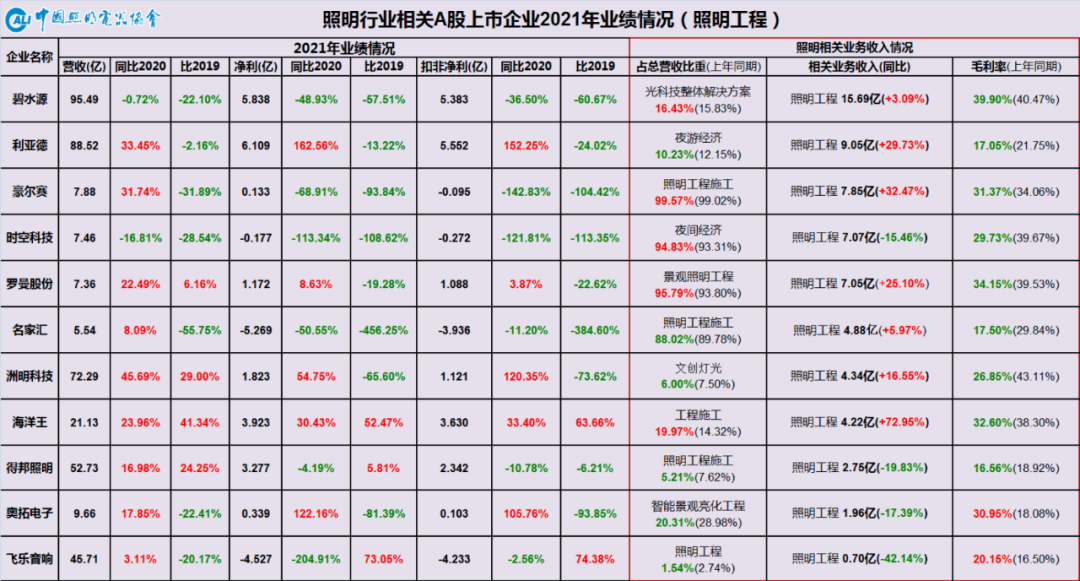
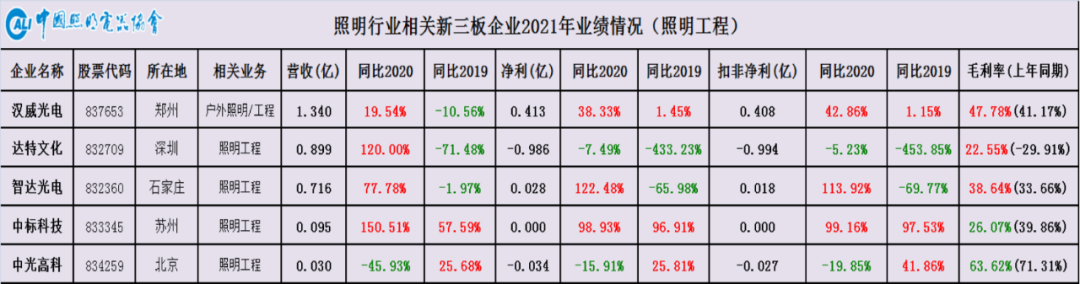
In 2021, the lighting engineering sector, previously hit by both policy and pandemic pressures, finally found some breathing room. With the national pandemic largely under control, issues such as halted project construction and acceptance, and blocked market expansion faced in the previous year were alleviated. Relevant listed companies also made numerous efforts in selecting projects, collecting receivables, and business transformation. Performance indicators improved compared to the most difficult period of 2020. Among 16 relevant enterprises, 11 reported revenue growth (69%), but 11 also experienced a decline in gross profit margins (69%). Meanwhile, overall performance had not yet returned to the level of the same period in 2019, reflecting the profound impact of policies regulating and rectifying the nightscape lighting market on the overall market direction. This further encouraged urban landscape illumination to align with the city's own level of economic and social development and its cultural characteristics. Landscape lighting has now fully returned to a new stage of rational construction. Against this backdrop, large-scale whole-city illumination projects became rare in 2021, replaced instead by cultural tourism night tours, commercial real estate, smart city projects, etc., while a significant trend of project fragmentation emerged. Leading engineering companies continued their transformation in the two directions of cultural tourism night tours and smart city construction.
Summary
Against the backdrop of slowing industry-wide growth and a trend toward high-quality development, despite facing triple pressures of supply shocks, demand contraction, and weakening expectations, both IPO companies and non-IPO companies must be guided by market demand as the core force to enter the high-quality development zone.
在此过程中,全行业需要重视细分市场的开拓,优化产品结构,进而增加产品附加值;持续投入研发,加大创新力度,以应对和开拓新的需求场景;提升生产自动化水平,从机器换人向智能制造升级,以提升生产效率和产品标准化及稳定性水平;建立安全高效的供应链体系,提升供应链掌控能力与弹性及冗余度;重视品牌建设,打造品牌生态;加强企业管理的数字化转型和信息化建设,进而提升管理水平和运营效率;从产品制造商到方案集成商再到系统服务商,未来追求的则是通过精准的照明设计,构建起能够自适应提供健康光环境的智慧化低碳系统。
For a detailed analysis, please look forward to the "2020-2021 China Lighting Industry Development White Paper"