
This mandatory engineering standard has been released, imposing more safety requirements on lighting power distribution!
According to the latest announcement published on the official website of the Ministry of Housing and Urban-Rural Development, the General Code for Building Electrical and Intelligent Systems GB 55024-2022 has been approved and will be implemented from October 1, 2022.

The "General Code for Building Electrical and Intelligent Systems" is hereby approved as a National standard (mandatory / recommended), numbered GB 55024-2022, and shall be implemented from October 1, 2022. This code is a mandatory engineering construction standard, and all provisions must be strictly enforced. Where relevant provisions in current engineering construction standards are inconsistent with this code, the provisions of this code shall prevail. The following mandatory provisions of engineering construction standards are hereby repealed:
1. Articles 3.1.5, 3.1.7, 6.1.1, 10.1.1, 11.1.1, 12.1.2, 13.1.1, 13.1.5, 14.1.1, 15.1.1, 18.1.1, 18.1.5, 19.1.1, 19.1.6, 20.1.3, 23.1.1, and 24.1.3 of the Code for Acceptance of Construction Quality of Building Electrical Engineering GB 50303-2015.
2. Articles 4.6.6 and 4.7.6 of the "Standard for Design of Intelligent Buildings" GB 50314-2015.
3. Articles 12.0.2 and 22.0.4 of the Code for Acceptance of Construction Quality of Intelligent Building Engineering GB 50339-2013.
4. Articles 3.2.3, 5.1.1 (3, 6), and 6.1.1 (1) of the Code for Construction and Quality Acceptance of Lightning Protection Engineering for Buildings GB 50601-2010.
5. Articles 3.0.9, 3.0.13, 4.5.4(6), 5.1.2, 5.1.6, 5.2.3, and 5.5.1 of GB 50575-2010 "Code for Construction and Acceptance of Wiring Engineering up to 1kV".
6. Articles 4.1.1, 8.2.5 (10), 9.2.1 (3), and 9.3.1 (2) of the Code for Construction of Intelligent Building Engineering GB 50606-2010.
7. "Code for Construction and Acceptance of Building Electrical Lighting Installations" GB 50617-2010, Articles 3.0.6, 4.1.12, 4.1.15, 4.3.3 (1, 2), 5.1.2 (1, 2, 3), 7.2.1.
8. Articles 4.1.6, 4.5.2(3), 5.1.4, and 5.3.2(3) of the "Technical Code for Lightning Protection Engineering of Ancient Buildings" GB 51017-2014.
9. Articles 3.2.1, 3.2.8, 3.3.4, 4.3.5, 4.7.3, 4.10.1, 7.2.4, 7.4.6, 7.5.2, 7.6.3, 8.1.6, 9.4.5, 11.2.3, 11.2.4, 11.8.8, 12.4.10, 12.4.14, 12.5.8, 13.4.6, 13.7.6, 14.4.3, and 14.9.4 of the Standard for Electrical Design of Civil Buildings GB 51348-2019.
10. Articles 3.1.7, 4.1.7, 4.1.9, 4.1.10, and 4.10.1 of the Technical Code for Installation of Mineral Insulated Cables JGJ 232-2011.
11. Articles 6.1.7, 7.2.1, and 9.1.4 of the "Code for Electrical Design of Sports Buildings" JGJ 354-2014.
12. Articles 3.5.4, 4.5.5, 5.3.6, 5.3.7, and 9.7.4 of the Code for Electrical Design of Store Buildings JGJ 392-2016.
According to the introduction, this specification differs from the previous collection of mandatory provisions scattered across various standards. Instead, it imposes requirements on content directly related to engineering quality that must be supervised by the government, specifically in areas necessary to safeguard personal health and the safety of life and property, national security, ecological environment security, and to meet the basic needs of economic and social management. Therefore, this specification has made many improvements and introduced new regulations based on existing mandatory provisions, aiming to ensure engineering quality through a systematic and well-defined regulatory framework.
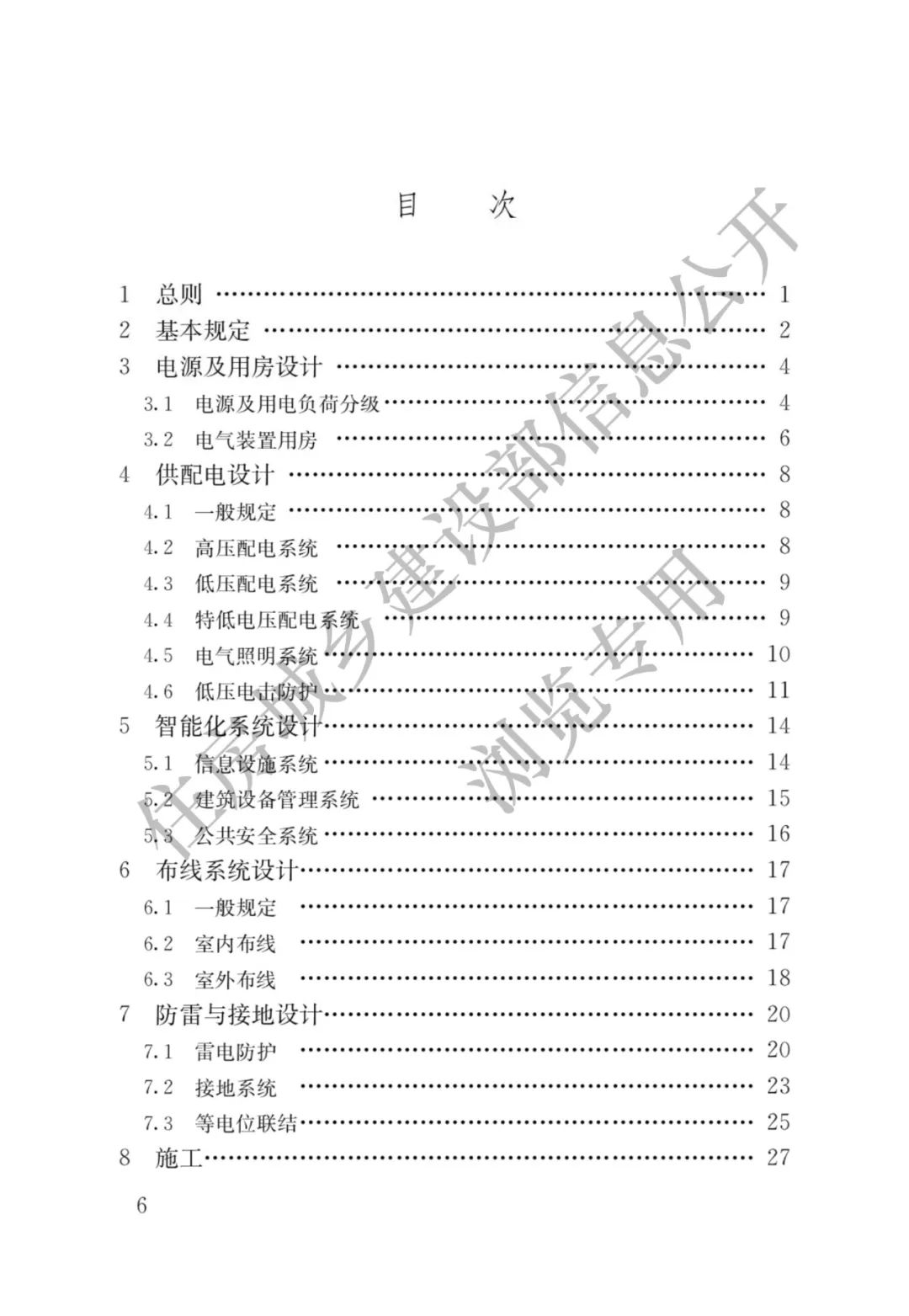
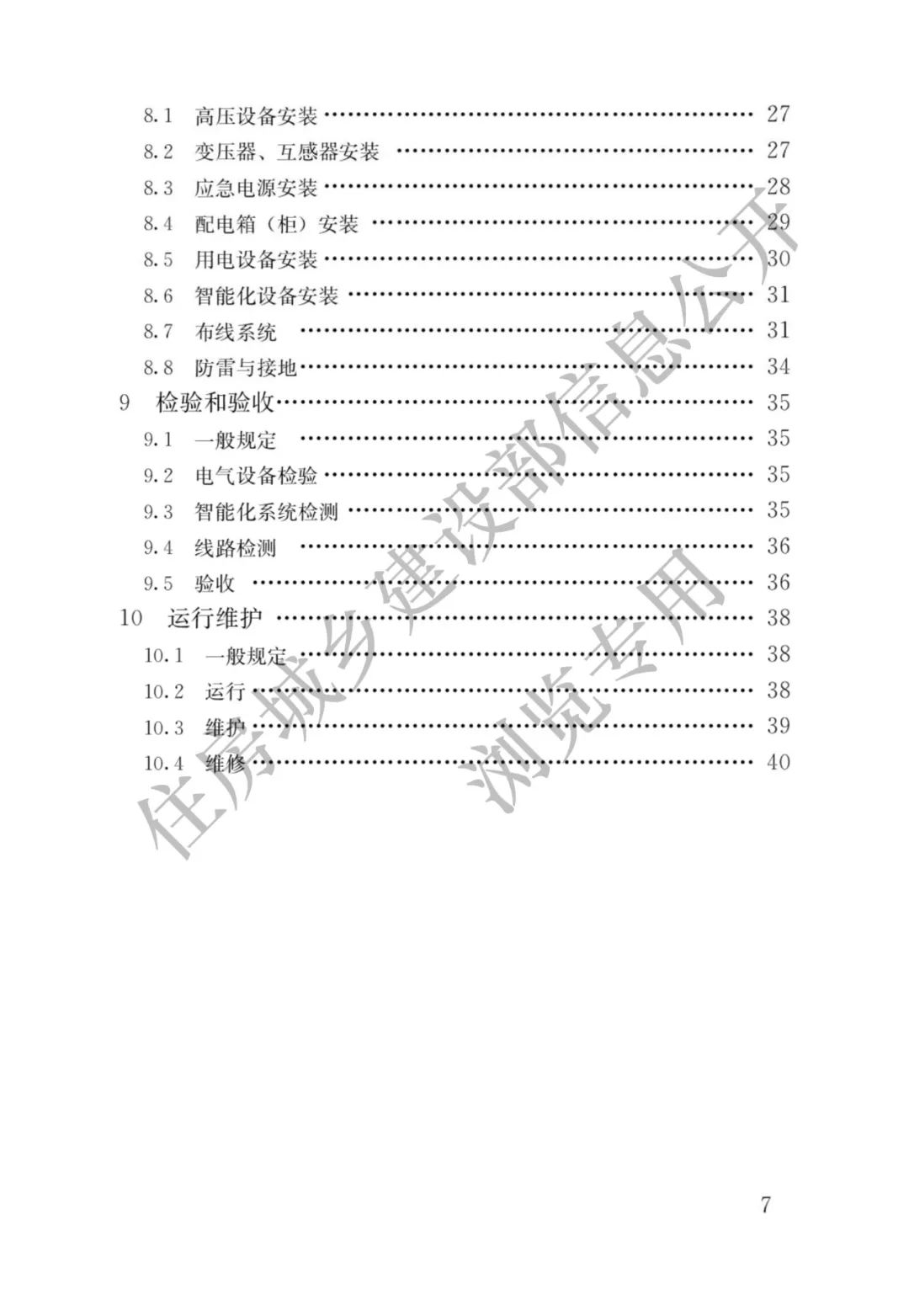
This includes enhanced safety requirements for lighting power distribution.
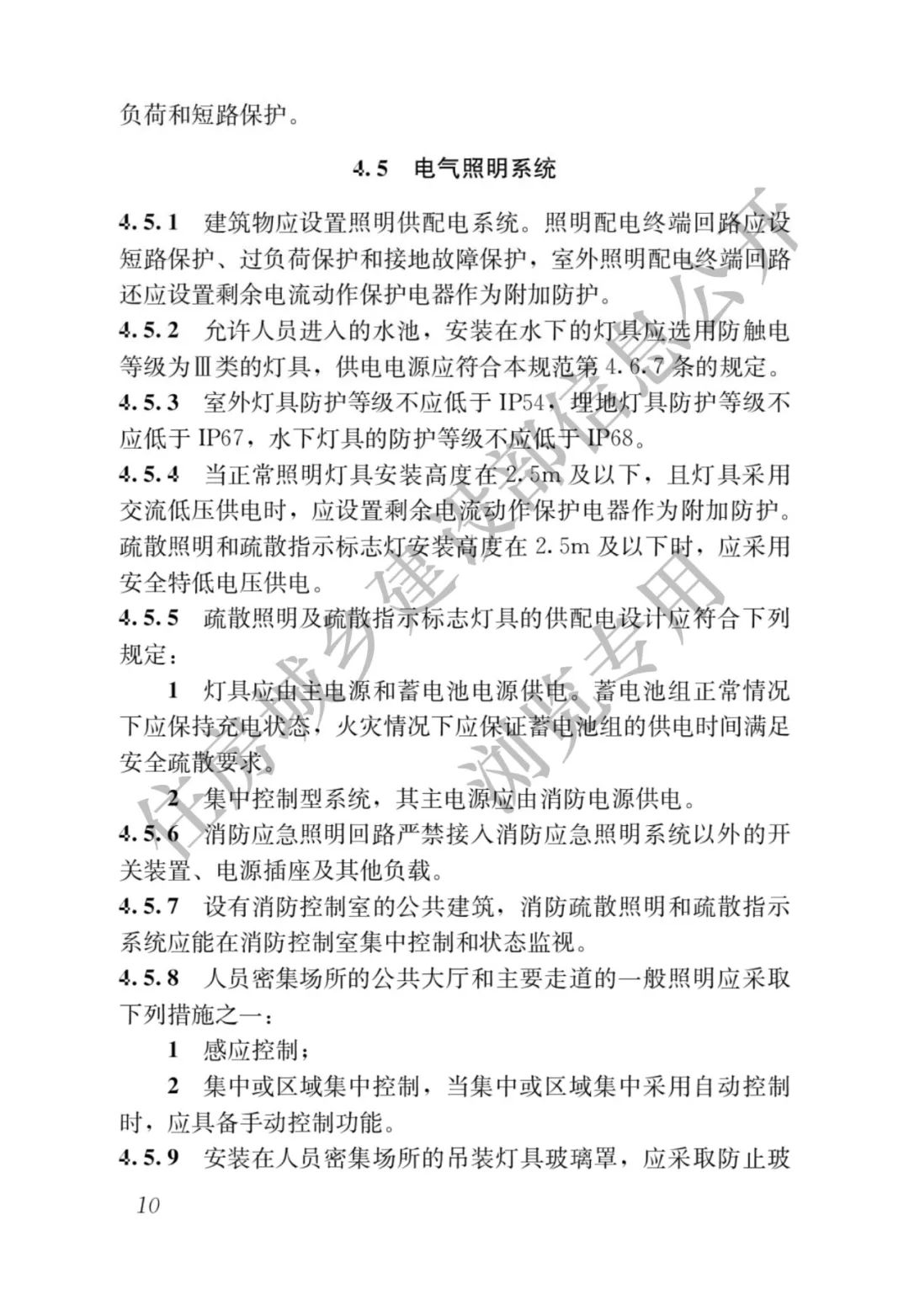
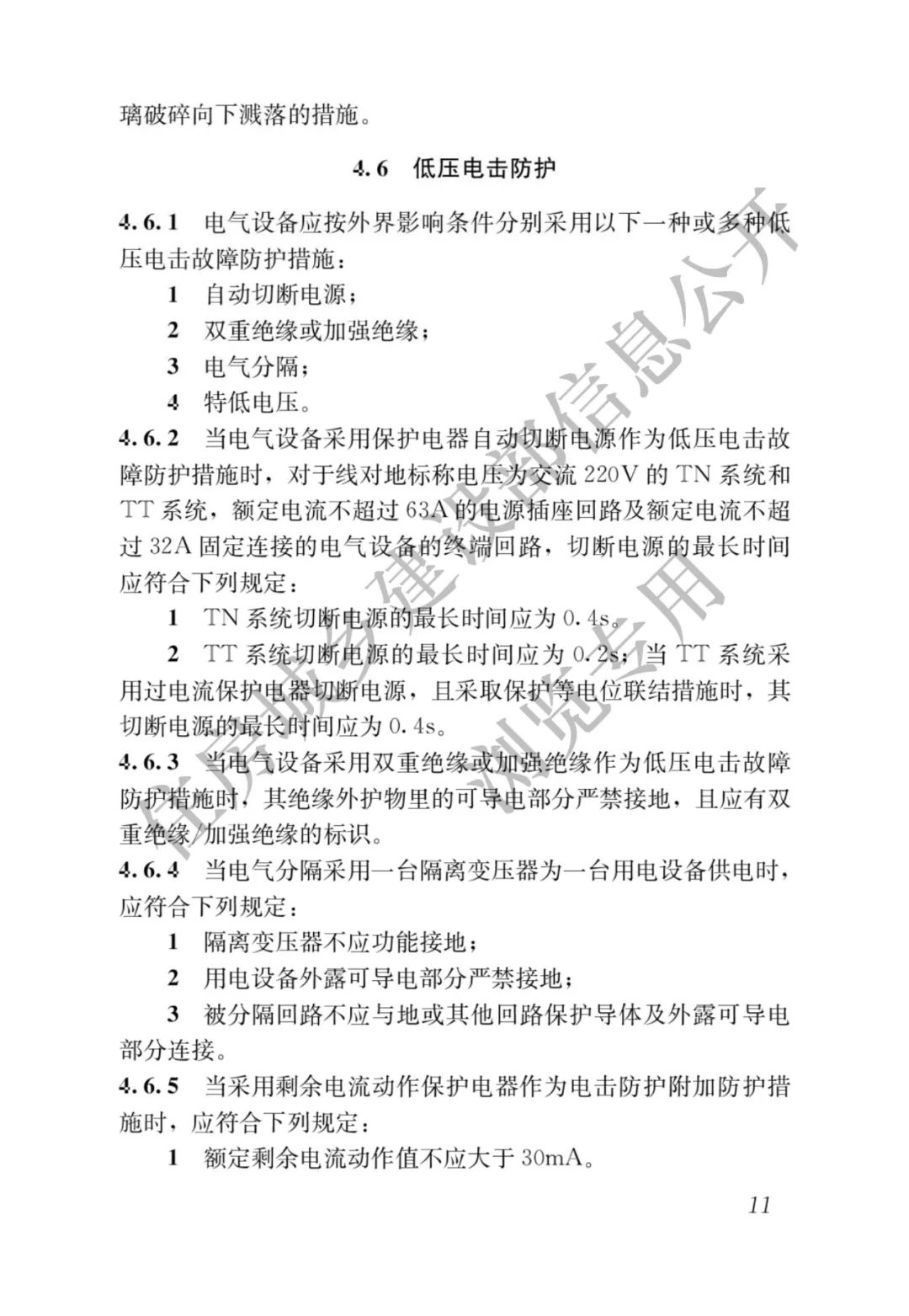
According to expert analysis, the code now requires that normal lighting luminaire circuits installed at 2.5 m or below be equipped with RCDs (Residual Current Devices/Residual Current Operated Protective Devices) as additional protection. Traditional additional protection only applied to ordinary sockets, but lighting luminaires still present a possibility of earth faults. Therefore, for lamp holders and sockets where accidental contact with live parts may occur, residual current protective devices rated at 30 mA must be installed. Circuits supplied by Safety Extra-Low Voltage (SELV) do not require such devices. This requirement poses challenges for outdoor lighting, as installing 30 mA RCDs often leads to nuisance tripping due to insulation factors; comprehensive consideration of circuit segmentation and the natural leakage current of luminaires and wiring is required from the early stages of the project. The code requires Safety Extra-Low Voltage supply for emergency lighting installed below 2.5 m; the previous mandatory requirement for installations up to 8 m is no longer enforced.
The specific terms are as follows:
Reference sources: Ministry of Housing and Urban-Rural Development, Han Shuai's Electrical Notebook, comprehensively compiled.