
Current Status of Patents and Judicial Protection in the Luminaire Lighting Industry in Zhongshan City
Zhongshan City, Guangdong Province is a traditional cluster base for China's luminaire and lighting industry, with an annual output value exceeding one trillion yuan and accounting for over 70% of the domestic market share. Currently, the luminaire and lighting industry cluster in Zhongshan has formed an integrated upstream, midstream, and downstream industry chain encompassing LED chip manufacturing, chip packaging, and luminaire production. Characteristic zones and industrial clusters are effective models for enhancing independent innovation capabilities and optimizing industrial structure. However, surveys and visits to enterprises and industry associations commonly reflect that these clusters suffer from innovation capabilities that exist but are not excellent, products that are numerous but not refined, and an industry that is large but not strong.
To achieve the transformation and upgrading of the luminaire lighting industry, it is necessary to further enhance innovation capabilities and attach importance to the significant role of intellectual property rights, primarily in the form of patents. Based on data from the China National Intellectual Property Administration database and field research, this article retrieves and analyzes the distribution of patents related to the luminaire lighting industry in Zhongshan City from 2011 to 2020.
Current Status and Analysis of the Luminaire Lighting Industry Development
1. Patent Application and Grant Status
From 2011 to 2020, the total number of patent applications in the luminaire and lighting industry in Zhongshan City was 93,848, with a total of 90,980 patents granted. During the same period, the total number of patent applications nationwide in this industry was 782,138, with 741,595 patents granted. Zhongshan City's patent applications and grants accounted for 11.99% and 12.27% of the national totals, respectively.
从统计期间发展趋势看,发明、实用新型、外观设计三类专利申请量、授权量整体均呈上升趋势,发明、实用新型专利申请量在2016-2017年达到顶峰后有所回落(发明专利2019年、2020年尚未完全公开),外观设计专利申请量在2018年达到顶峰后小幅回落;发明专利、实用新型专利授权量在2017-2018年达到顶峰后有所回落,外观设计专利授权量除2019年小幅下降总体增幅较大。由此可知,该行业十年间专利整体申请量和质量均有所上升,但是近五年来研发重点在外观设计专利且质量相对较高,而核心技术研发方面的能力较弱。
Based on the average annual number of applications per enterprise, Zhongshan City has an average of 9,385 applications and 9,098 grants per year. With approximately 16,000 manufacturing enterprises in the luminaire lighting industry in this region, the average annual number of applications and grants per enterprise is less than one.
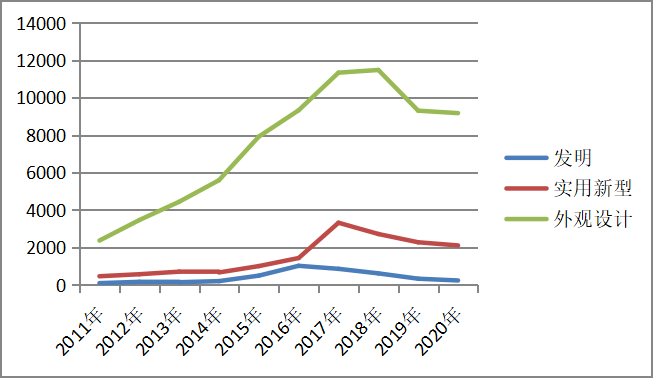
Figure 1: Patent Application Trends in the Zhongshan Luminaire Lighting Industry
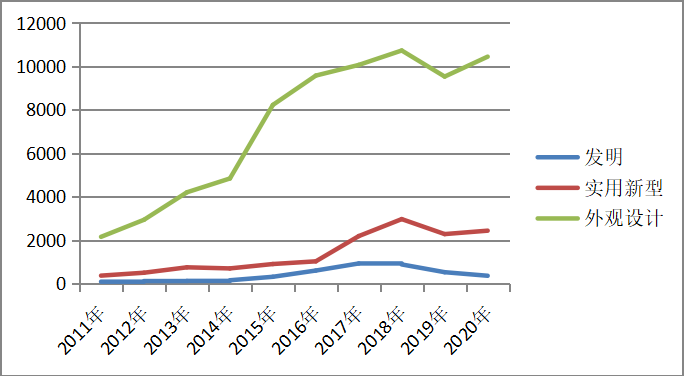
Figure 2: Patent Grant Trends in the Zhongshan Luminaire Industry
(Data from the China National Intellectual Property Administration website)
2. Patent Classification
Further analysis of the specific types of the aforementioned patent applications and grants (as shown in Figure 3) reveals a total of 4,162 invention patent applications, 15,269 utility model patent applications, and 74,417 design patent applications, accounting for 4.43%, 16.27%, and 79.3% respectively.
From the perspective of classification, lighting enterprises in Zhongshan City focus their product innovation efforts on design patents , while insufficient R&D efforts are devoted to cultivating high-value patents such as invention patents and utility model patents .
From the perspective of the technical fields involved, design patents are mainly concentrated in Class 26 Lighting Equipment, while invention patents and utility model patents are mainly concentrated in Class F21 Lighting. However, there are very few utility model and invention patents with high technological content in the upstream industry chain of this industry, such as semiconductors and chips.
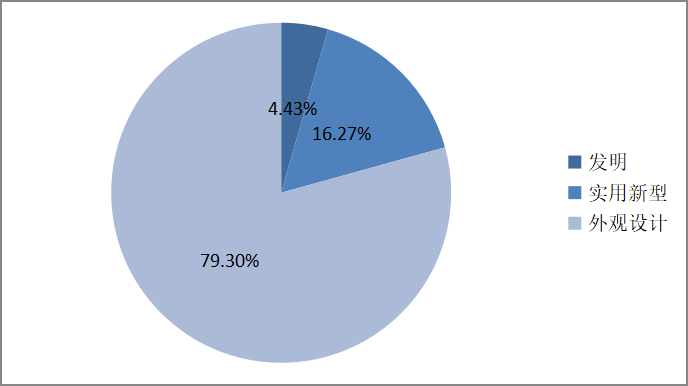
Figure 3: Statistics of Patent Types Applied for in the Luminaire Lighting Industry in Zhongshan City
(Data from the China National Intellectual Property Administration website)
Current Status of Judicial Protection
The Guangzhou Intellectual Property Court is the only specialized court for intellectual property trials in the Guangdong-Hong Kong-Macao Greater Bay Area and serves as the primary jurisdictional court for patent disputes involving the luminaire and lighting industry within Guangdong. Statistics show that the number of patent right dispute cases related to this industry handled by the Guangzhou Intellectual Property Court has increased year by year in recent years, reflecting the state of rights protection in the judicial field for this sector. To gain a more intuitive and accurate understanding of the characteristics and trends of such cases, the following section presents a sampling analysis of patent infringement dispute cases involving the luminaire and lighting industry in Zhongshan City accepted by the Guangzhou Intellectual Property Court since its establishment.
1. Case Acceptance and Closure Status
By screening and statistically analyzing the case acceptance and closure data from Guangzhiyuan, it can be seen that the number of accepted and concluded cases shows a year-on-year increasing trend (see Figure 4).
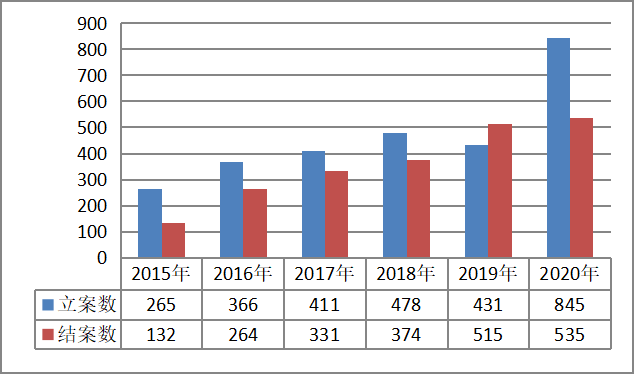
Figure 4: Statistics of Cases Received and Closed in the Past Six Years
2015年至2020年期间,受理案件数2796件,审结案件数2151件,结案率76.93%,受理案件年均增长率为26.03%,审结案件数年均增长率为32.28%。其中,2020年受理案件845件,同比建院年度增幅达218.9% ,审结案件数535件,同比建院年度增幅达305.3%。通过对近六年立案案由的统计分析(见图5),侵害外观设计专利纠纷案件占比83.23%,侵害实用新型专利纠纷案件占比9.76%,侵害发明专利纠纷案件占比7.01%,侵害外观设计专利纠纷案件占绝大多数。
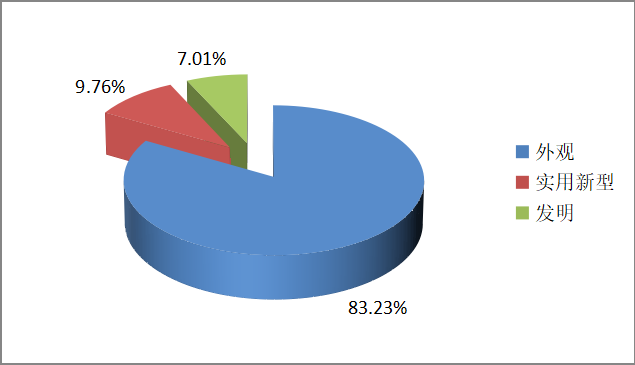
Figure 5: Distribution of Causes
2. Application of Damage Compensation Calculation Methods
Among the cases concluded between 2015 and 2020, after excluding those where claims were dismissed or withdrawn through mediation, there were 887 cases in which the court found infringement established and awarded compensation. These included 101 batches of mass litigation cases, totaling 462 cases. Statutory damages were applied in 878 cases, accounting for 98.99%, making it the dominant method of compensation. Damages based on the defendant’s infringing profits, multiplier of licensing fees, or agreed-upon compensation were applied in 9 cases. No cases used the plaintiff’s actual losses as the basis for calculation.
Further analysis of the collected case samples reveals that the high frequency with which courts apply statutory damages is mainly due to the high proportion of batch cases. In the vast majority of cases, plaintiffs fail to provide evidence for the amount of damages, and in some cases, plaintiffs actively request the court to apply statutory damages. Under such circumstances, the court can only determine the amount of damages using this method.
3. Compensation Amount and Support Rate
The compensation amounts awarded by courts and the support rate can reflect the gap between court judgments and the plaintiff's expectations.
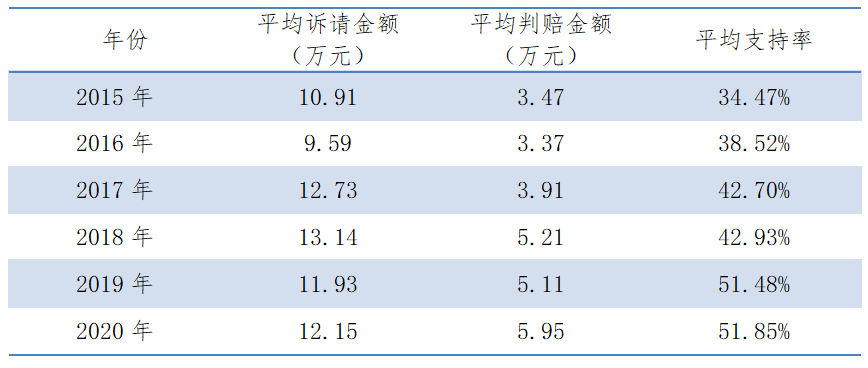
Table 1: Annual Table of Average Claim Amount and Average Award Amount
As can be seen from Table 1, the average amount claimed by the plaintiff shows an unstable trend, while the court-awarded compensation and the average support rate generally show an upward trend. Further analysis of the awarded compensation reveals that the average award for invention patents is 152,500 yuan, for utility model patents is 83,200 yuan, and for design patents is 39,400 yuan.
Due to the high proportion of disputes involving design patent infringement, the average compensation awarded in patent dispute cases over the past six years has remained relatively low. Compensation for infringement is directly related to market value; differences in average compensation across different types of patents indicate that the damages determined by courts generally align with the market value of the patents. For calculating the court's average support rate, this article uses "sum of individual case support rates / number of cases." The highest support rate was 51.85% in 2020, and the lowest was 34.47% in 2015. The average support rate over the six-year period was approximately 43.66%, which is higher than the national average support rate of 25.45%. It should be noted that compensation amounts include economic losses and reasonable expenses for rights protection. Plaintiffs claimed reasonable expenses for rights protection in 99% of their litigation requests. Where infringement is established in the judgment, claims for reasonable rights-protection expenditures are generally supported if the amount is reasonable and supported by sufficient evidence.