
Analysis of the Impact of the Russia-Ukraine Situation on China's Lighting Industry Foreign Trade
Recently, the Russia-Ukraine situation has escalated sharply, with geopolitical risks rising rapidly. Sanctions by the US and Europe against Russia have intensified, triggering severe volatility in global markets. Global stock markets are turbulent, and prices of many commodities have surged, including crude oil, natural gas, wheat, gold, soybeans, rapeseed oil, aluminum, and nickel. The gradual escalation of regional conflicts, compounded by the ongoing pandemic, has further amplified concerns about the outlook. As the saying goes, "When the nest is overturned, no egg remains intact." The impact on the foreign trade of lighting products due to the overall situation has begun to manifest.
I. Current Status of Foreign Trade with Russia and Ukraine
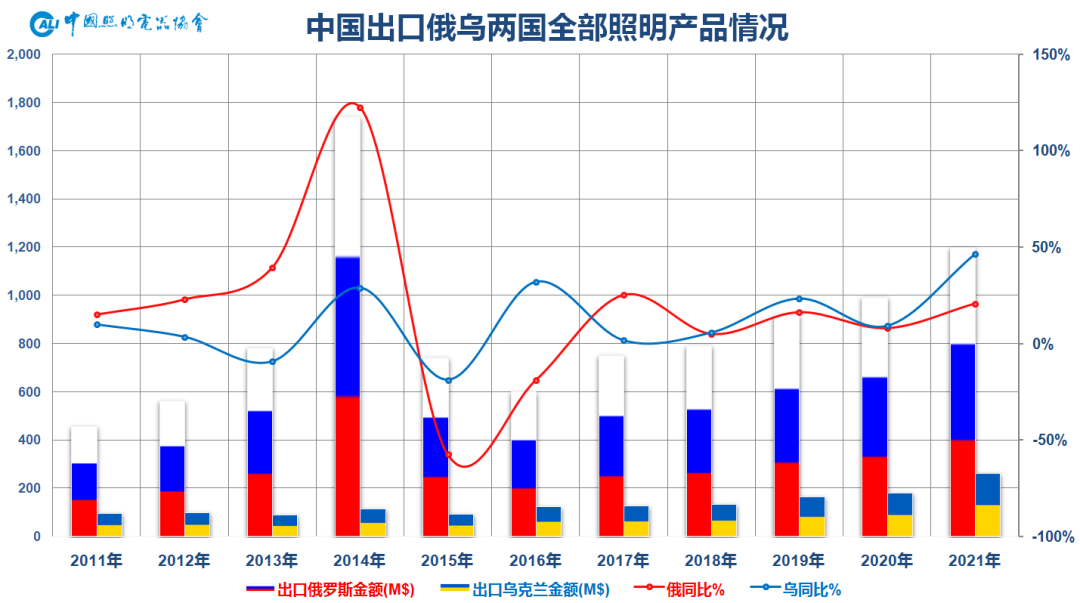
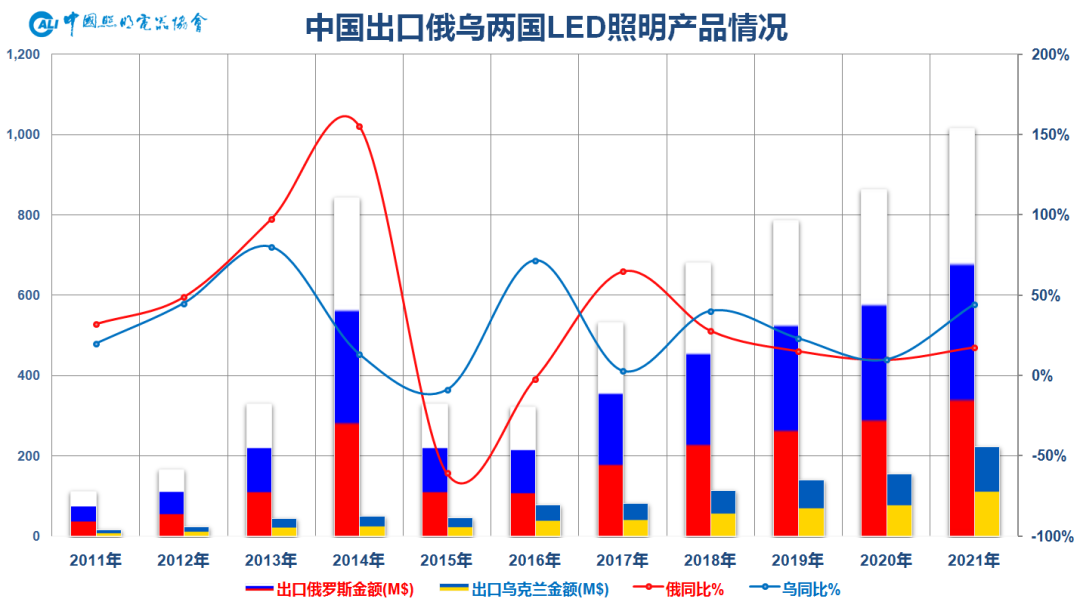
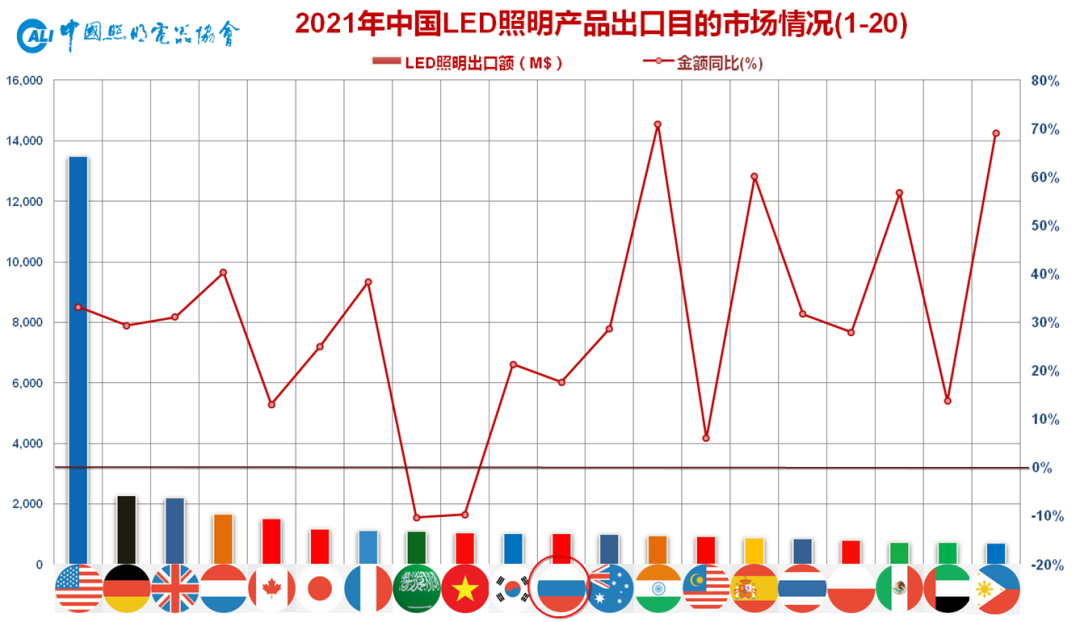
As a key region along the northern route of China's "Belt and Road" initiative, Russia has long been an important market for lighting exports. In 2014, it briefly rose to become the second-largest destination market for lighting product exports (after the United States), and currently remains stable at around 10th place among export destination markets.
In 2021, the total value of lighting products exported from China to Russia reached US$1.2 billion, a Year-on-year (YoY) increase of 20.7%. However, this figure remains significantly below the US$1.7 billion recorded in 2014, reflecting the severe economic challenges faced by Russia under Western sanctions following the Crimea crisis. Among these exports, LED lighting products accounted for US$1.02 billion, up 17.6% Year-on-year (YoY), ranking Russia as the 11th largest destination globally and the 5th largest in Europe for China's LED lighting product exports.
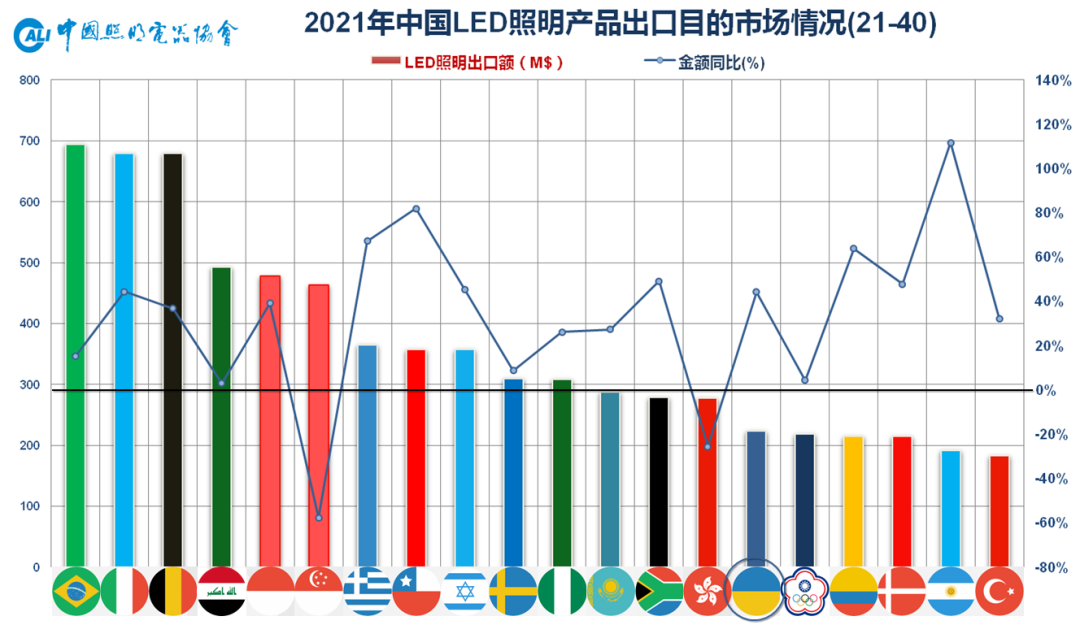
Ukraine is also an important strategic pivot of China's "Belt and Road" Initiative. Although its economic development has been relatively sluggish since the dissolution of the Soviet Union, Ukraine, known as the "breadbasket of Europe," ranks second in land area in Europe (600,000 square kilometers) and seventh in population (42 million), making it a regional power. It consistently ranks around 35th among the destination countries for China's lighting product exports. In 2021, the total value of lighting products exported from China to Ukraine reached USD 260 million, a Year-on-year (YoY) increase of 46.3%; among them, LED lighting products amounted to USD 220 million, a Year-on-year (YoY) increase of 44.2%, ranking 35th among destination markets for LED lighting product exports and 12th in Europe.
In terms of market size, lighting products exported to Russia account for approximately 1.8% of the total export volume, while exports to Ukraine are even smaller, at just 0.4%, representing a low proportion of the overall market. Furthermore, as the lighting industries in both countries are not highly developed, lighting products imported into China from these regions are negligible. Therefore, currently, the Russia-Ukraine conflict has no global impact on China's lighting foreign trade, but it significantly affects some export enterprises that primarily target the Russian and Ukrainian markets.
II. Short- to Medium-Term Impact
(1) Export to Ukraine
1 Logistics Disruptions, Trade Interruptions
The conflict has intensified tensions in international shipping. The Black Sea and the Sea of Azov have become high-risk areas, with major Ukrainian ports such as the Port of Odesa completely closed. Many vessels have been rerouted, while those already at port are stranded. There has been a sharp increase in cases where documents under letters of credit cannot be sent or negotiated. Under non-L/C payment methods, there is a heightened risk of cargo rejection, difficulties in returning or reselling goods after customs clearance, and an increased risk of customers abandoning cargo.
2 Sudden Drop in Demand
As a war zone, Ukraine is plagued by public panic, economic standstill, and business stagnation, leading to an inevitable sharp decline in foreign trade orders involving Ukraine.
3 Supply on Hold
Under the current abnormal situation in Ukraine, commercial risks such as customers refusing goods, delaying payments, or even going bankrupt and losing contact have increased significantly. Major insurance companies have stopped underwriting business related to Ukraine. With the outlook of the conflict remaining uncertain, export enterprises are inevitably adopting a wait-and-see attitude and temporarily suspending business operations with Ukraine.
(2) Export to Russia
1 Transaction difficulties
On February 26, Western countries led by the US and Europe announced a ban on certain Russian banks, including SBER and VTB, from using the Society for Worldwide Interbank Financial Telecommunication (SWIFT) international settlement system. This means that most of Russia's trade and capital flow channels with the world have been temporarily cut off, making it more difficult for Russian clients to make payments, thereby increasing the cost of foreign trade transactions with Russia and significantly suppressing its trade activities. Consequently, related export enterprises face liquidity risks due to the current inability of Russian clients to make payments.
2 Sharp Drop in Exchange Rate
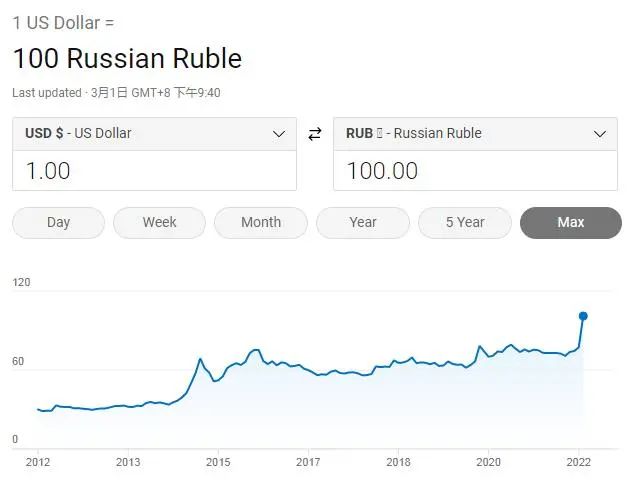
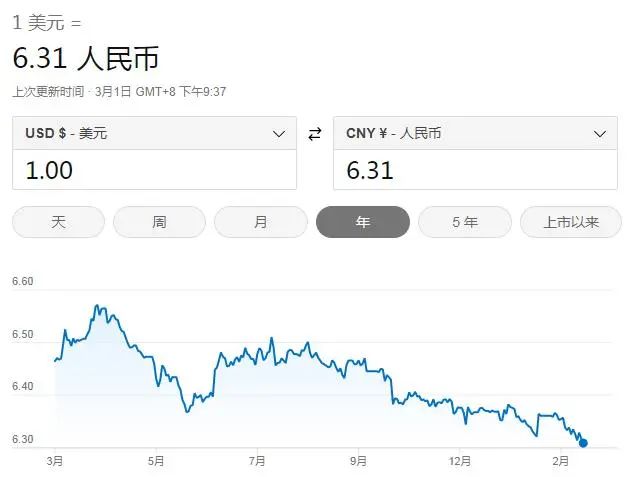
As the situation escalated, the Russian ruble depreciated significantly. The ruble-to-US dollar exchange rate once fell to a record low of 1:100; meanwhile, the Chinese yuan appreciated as a safe-haven currency, approaching the 6.3 level against the US dollar. For relevant export enterprises, the sharp drop in the Russian exchange rate drastically increased customers' import costs, suppressing demand; while the appreciation of the yuan further reduced already thin export profits.
3 Inflationary pressures
The sudden outbreak of war has led to the spread of panic and risk-aversion sentiment, with a sharp rise in capital outflows and pressure on currency depreciation, triggering a series of fluctuations in financial markets. To combat inflation, the Central Bank of Russia announced an interest rate hike on February 28, significantly raising the key rate to 20%. The markedly increased inflation risk will directly impact Russian customers' willingness to pay and their solvency.
4 Demand Contraction
It is evident that this round of Western sanctions against Russia is much stronger than during the 2014 Crimea crisis. These sanctions cover many areas, including political isolation, asset freezes, export controls, financing restrictions, and bans on settlements in US dollars and other international currencies. They will significantly hinder the recovery of the Russian market, and the one-time sharp interest rate hike by the Central Bank of Russia to combat inflation will further burden its already fragile economy. Based on the experience of the cliff-like drop in lighting exports to Russia after 2014, the outlook for exports to Russia in 2022 is not optimistic.
5 Supply Shock
The Russia-Ukraine conflict will further drive up the costs of certain raw materials and international logistics, which are already at high levels due to the pandemic. The impact on the global supply chain cannot be ignored. It will have a significant impact on the business of lighting export enterprises, especially those in downstream processing.
In response to the aforementioned short- and medium-term impacts, relevant export enterprises should closely monitor the evolving situation, comprehensively review ongoing orders and project execution progress in the Russian and Ukrainian markets, and implement robust risk prevention measures. They should strategically advance procurement of raw materials subject to significant price fluctuations. Where feasible, cross-border RMB settlement should be adopted for business with Russia. Additionally, companies should prioritize accounts receivable collection and strengthen coordination with export credit insurance providers.
III. Future Impact
In addition to the direct losses from the war, the Russia-Ukraine conflict will also bring risks of soaring raw material logistics costs, heightened inflationary pressure, tighter monetary policy, and significant exchange rate fluctuations. Currently, the world is in the post-pandemic era with a fragile foundation for economic recovery. To address high inflation risks, major Western economies are shifting towards tighter monetary policies, with more and more economies joining the rate-hike cycle. The market is also concerned that an out-of-control situation in Russia and Ukraine will drag down global economic recovery.
The medium- to long-term impact of the future Russia-Ukraine situation on the international lighting market will mainly be reflected in three aspects. First, an escalation of the situation may force economies to implement more aggressive tightening policies, further slowing global economic recovery and dragging down global commodity demand. Second, the continuation of the conflict will continue to drive up prices for commodities and logistics, further hindering the repair of global supply chains, i.e., causing long-term supply shocks. Third, the future direction of the Russia-Ukraine situation remains unclear; coupled with the ongoing impact of the pandemic, heightened uncertainty remains a major obstacle to planning and decision-making, making weakened expectations unavoidable.
In summary, the Russia-Ukraine situation may have some impact on China's external demand market for lighting. However, on one hand, the share of these two countries in the overall market is not high, so the direct impact is relatively limited; on the other hand, against the backdrop of global high inflation and constrained production capacity, the rigid demand for daily consumer goods such as lighting products remains strong in various countries. China's position as the manufacturing center and supply chain hub of the global lighting industry has been further consolidated during the pandemic. It is believed that China's lighting foreign trade will continue to maintain its consistent resilience in 2022.
Click the image for details
Booth Inquiry
Contact:
South China Contact: Liu Chang 13929902769
East China Contact: Gu Jun 13771575253
North China Contact: Qiu Chun 15861553579
Email: qiuchun@cali-light.com
China Light
The official website of the China Association of Lighting Industry and a full-media platform for the lighting sector. We provide authoritative and timely lighting information while striving to be a growth partner for businesses. From brand promotion and channel expansion to consulting, talent training and participation in standards development, we provide comprehensive professional services to help businesses improve quality and efficiency and jointly advance the high-quality development of the lighting industry.
Business Contacts
仇纯 (Ms.): 158 6155 3579
顾君 (Mr.): 137 7157 5253